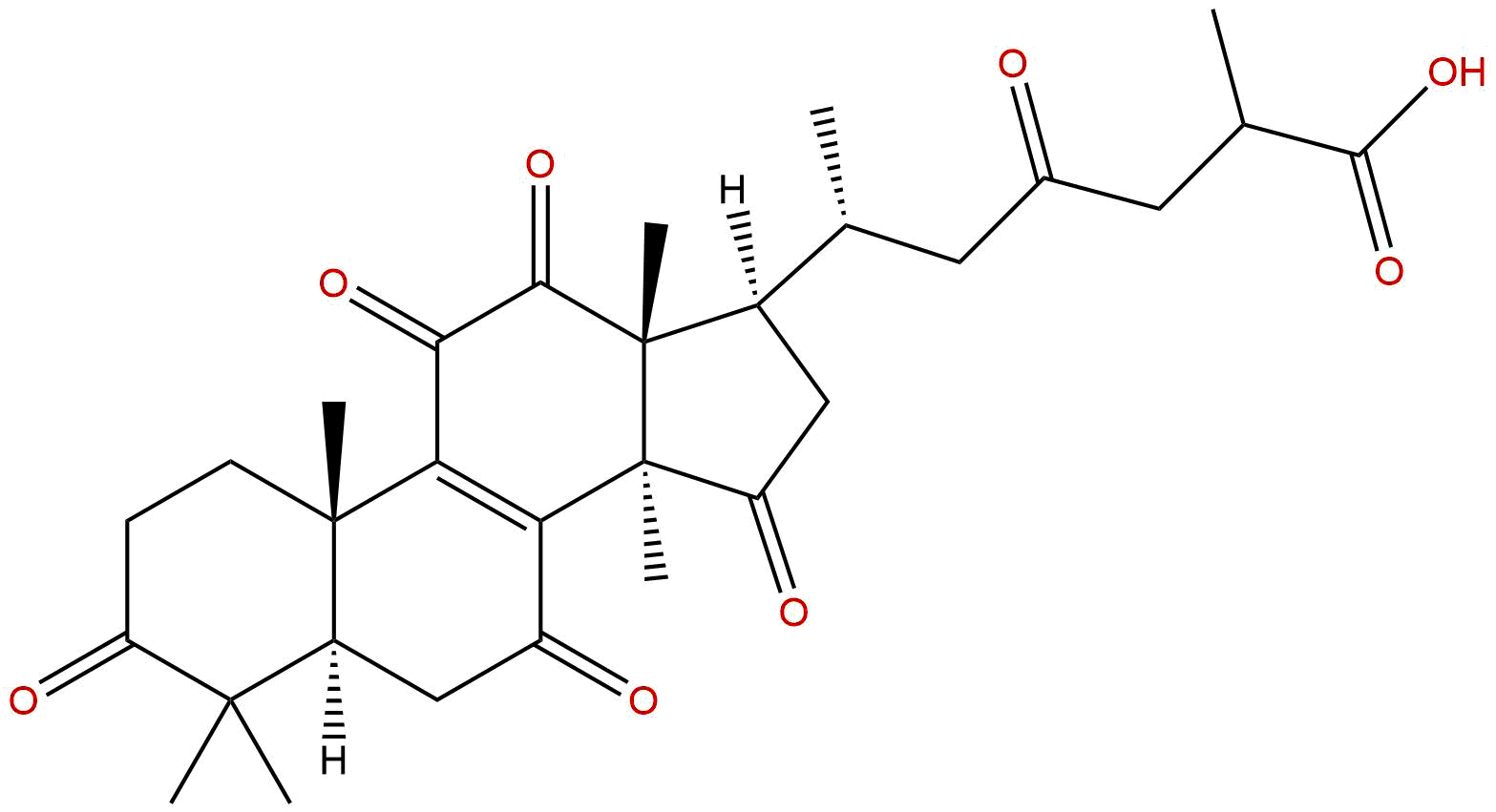
Ganoderma lucidum acid GS-1: research progress from natural triterpenoids to immune regulation and antiviral candidate molecules
Introduction/Overview
Ganoderma lucidum(Ganoderma lucidum)As one of the renowned "Shangyao" in traditional Chinese medicine, it has been widely used for thousands of years to "strengthen the body and consolidate the foundation", prolong life, and assist in the treatment of various chronic diseases. Modern pharmacological research has confirmed that the active ingredients of Ganoderma lucidum mainly include polysaccharides, triterpenoids, nucleotides, and sterols. Among them, Ganoderma triterpenoids have attracted much attention due to their structural diversity and significant biological activity. As a representative component of triterpenoids in Ganoderma lucidum, ganoderic acids have been reported to have over 150 different pharmacological effects, including anti-tumor, anti-inflammatory, hepatoprotective, antiviral, and immunomodulatory properties.
Ganoderic acid GS-1 (CAS number: 100665-45-0) is a highly oxidized lanostane triterpenoid compound found in Ganoderma lucidum. Since its isolation and identification, GS-1 has gradually become a hot molecule in natural product pharmacology research due to its unique chemical structure and potential biological activity, especially its anti-HIV-1 protease activity (IC50 of 58 μ M) and immune enhancing function. In recent years, with the increasing demand for immune regulatory mechanisms and antiviral drug development, the role of GS-1 in regulating cytokine networks and activating immune signaling pathways has been gradually revealed, demonstrating its potential as a lead compound or functional food ingredient. This article will provide a systematic review of the research progress of Ganoderma lucidum acid GS-1 from the aspects of chemical structure, source extraction, pharmacological activity, mechanism of action, medicinal properties, and clinical application prospects.
Chemical structure and physicochemical properties
Ganoderma lucidum acid GS-1 belongs to highly oxidized lanostane type tetracyclic triterpenes, with a core skeleton composed of 27 carbon atoms and typical functional groups such as C-3 carbonyl, C-7 hydroxyl, and C-11 carbonyl. Unlike most ganoderic acids, GS-1 has additional hydroxyl or carboxyl substituents at positions C-15, C-16, and C-20, forming a complex structure of multiple hydroxyl and carbonyl groups. This highly oxidized state endows it with unique polarity and biological activity. Its molecular formula is C30H46O8, with a molecular weight of 526.6260 g/mol.
From the perspective of physical and chemical properties, GS-1 exhibits moderate to high lipophilicity, with a LogP value of 2.9606, indicating that it can be moderately distributed in the lipid environment, which is beneficial for transmembrane transport and interaction with membrane receptors. The topological polar surface area (TPSA) is 139.7200 Å ², indicating that GS-1 has good hydrogen bond donor and acceptor abilities, and may specifically bind to the active site of the target protein through hydrogen bonds. In terms of water solubility, the solubility of GS-1 is only 0.0134 mg/mL, which is a poorly soluble compound, which to some extent limits its oral bioavailability and formulation development. It is worth noting that GS-1 has low permeability to the blood-brain barrier, indicating that its peripheral effects are predominant and the risk of central nervous system related side effects is low. In addition, the hERG inhibition test result was negative, indicating that GS-1 has a lower risk of inducing cardiac QT interval prolongation at therapeutic concentrations; The Ames test result is 0.0, indicating no significant mutagenicity and preliminary good safety.
Plant sources and extraction methods
Ganoderma lucidum acid GS-1 mainly comes from fungi of the Ganoderma genus, especially Ganoderma lucidum(Ganoderma lucidum)The fruiting body, mycelium, and spore powder. There are significant differences in the content of GS-1 in Ganoderma lucidum from different origins and growth stages. Research has shown that there are differences in the secondary metabolite profiles between wild Ganoderma lucidum and artificially cultivated Ganoderma lucidum, but GS-1 can be detected in both. In addition, the fermentation culture of Ganoderma lucidum, especially the mycelium obtained from deep liquid fermentation, has also been proven to produce GS-1, which provides the possibility for industrial production.
In terms of extraction methods, traditional organic solvent extraction is still the most commonly used approach. Due to GS-1 being a moderately polar compound, ethanol water mixed solvents (such as 70% -95% ethanol) are usually used for reflux extraction or cold soaking extraction. To improve extraction efficiency, researchers often use ultrasound assisted extraction (UAE) or microwave-assisted extraction (MAE) techniques, which can disrupt cell wall structure and promote the dissolution of GS-1. In recent years, supercritical CO ₂ extraction (SC-CO ₂) technology has also been attempted to be applied to the extraction of triterpenoids from Ganoderma lucidum due to its green and efficient characteristics, but it requires the addition of entrainers such as ethanol to improve the solubility of polar compounds.
The separation and purification process usually includes liquid-liquid extraction (such as petroleum ether degreasing, ethyl acetate extraction), silica gel column chromatography, ODS reverse phase column chromatography, and preparative high-performance liquid chromatography (pre HPLC). Due to the similar polarity of GS-1 and other ganoderic acids with similar structures (such as ganoderic acid A, B, C, etc.), separation is difficult, and gradient elution and multiple purifications are often required to obtain high-purity monomers. In recent years, new separation methods such as high-speed countercurrent chromatography (HSCCC) and molecular imprinting technology have also been applied to the purification of triterpenoids in Ganoderma lucidum, demonstrating good separation efficiency and purity.
Pharmacological activity research
Anti-HIV-1 protease activity
One of the most notable pharmacological activities of ganoderic acid GS-1 is its inhibitory effect on HIV-1 protease. HIV-1 protease is an essential key enzyme in the maturation process of viruses, which functions to cleave viral precursor proteins into functional proteins and assemble them into infectious viral particles. Research has shown that GS-1 can inhibit the activity of HIV-1 protease in a dose-dependent manner, with a half maximal inhibitory concentration (IC50) of 58 μ M. Although this activity is not as high as clinically used protease inhibitors such as saquinamivir, ritonavir, etc., as a natural product, its novel structure and mechanism of action may be different from synthetic drugs, providing important clues for the development of novel anti HIV lead compounds. Further structure-activity relationship (SAR) analysis suggests that the C-3 carbonyl, C-7 hydroxyl, and C-11 carbonyl groups in GS-1 molecule may participate in hydrogen bonding interactions with the protease active site Asp25/25 ', while the highly oxidized side chains enhance the binding affinity with the enzyme.
Immune enhancing activity
In addition to its antiviral effect, the role of GS-1 in immune regulation is also worthy of attention. Modern immunopharmacological studies have shown that GS-1 can significantly enhance the cellular and humoral immune functions of the body. Specifically, GS-1 can promote the proliferation of T lymphocytes, increase the proportion of CD4+and CD8+T cells, and enhance the activity of natural killer cells (NK cells). In animal models, administration of GS-1 can increase spleen index and thymus index, indicating its protective or promoting effect on immune organs.
More importantly, GS-1 has a regulatory effect on the expression of various immune related cytokines. Research has shown that GS-1 can upregulate the secretion level of interleukin-2 (IL-2). IL-2 is an important factor for T cell growth and differentiation, and its elevated level helps to enhance T cell-mediated immune response. At the same time, GS-1 can activate the phosphorylation of signal transduction and transcription activator 4 (STAT4), which is a key transcription factor in the IL-12 signaling pathway and plays a central role in Th1 cell differentiation and interferon - γ (IFN - γ) production. After GS-1 treatment, the expression level of IFN - γ significantly increased. IFN - γ is an important effector molecule for antiviral and anti-tumor immunity. In addition, GS-1 can upregulate the expression of CD4 and CD8A genes, further supporting its positive regulatory role in T cell immunity.
Other pharmacological activities
Preliminary studies also suggest that GS-1 may have anti-inflammatory and hepatoprotective activities. In the LPS induced inflammatory model, GS-1 can inhibit the production of pro-inflammatory factors such as TNF - α and IL-6, while reducing oxidative stress damage. In terms of liver protection, GS-1 has a protective effect on liver cell damage induced by carbon tetrachloride (CCl ₄), and its mechanism may be related to the upregulation of antioxidant enzyme activity and inhibition of lipid peroxidation. However, these studies are still in the preliminary stage and require more experimental data for validation.
Mechanism of action and molecular targets
The pharmacological effects of GS-1 involve multiple molecular targets and signaling pathways, and its mechanism of action can be deeply analyzed from two dimensions: antiviral and immune regulation.
The mechanism of action of anti-HIV-1 protease
The inhibitory effect of GS-1 on HIV-1 protease belongs to competitive inhibition. Molecular docking studies have shown that GS-1 can embed into the active site of proteases, and multiple hydroxyl and carbonyl groups in its molecule form hydrogen bonding networks with key amino acid residues such as Asp25, Asp25 ', Ile50, and Ile50' in the active center, thereby preventing substrate enzyme binding. Unlike synthetic protease inhibitors, the molecular skeleton of GS-1 is a natural triterpenoid structure, and its flexibility and spatial conformation may endow it with different binding modes, which can help overcome resistance mutations. In addition, GS-1 has a weak inhibitory effect on host cell proteases, indicating its certain selectivity.
Molecular mechanisms of immune regulation
The immune enhancing effect of GS-1 involves multiple signaling pathways. Firstly, GS-1 may activate downstream NF - κ B and MAPK signaling pathways by binding to pattern recognition receptors on the surface of T cells, such as TLR2 or TLR4, thereby promoting the transcription and secretion of IL-2. After binding to IL-2 receptors, IL-2 promotes T cell proliferation and survival through the JAK-STAT5 pathway. Secondly, GS-1 can activate the STAT4 signaling pathway. The phosphorylation of STAT4 depends on upstream JAK2 and TYK2 kinases, and GS-1 may promote STAT4 phosphorylation by enhancing the expression of IL-12 receptors or directly activating JAK kinases. Phosphorylated STAT4 forms a dimer and translocates to the nucleus, binding to the IFNG gene promoter to initiate the transcription of IFN - γ. The secretion of IFN - γ further activates macrophages and NK cells, forming a positive immune amplification effect.
In addition, GS-1 may also exert immunomodulatory effects by regulating the balance between Foxp3+regulatory T cells (Treg) and effector T cells (Teff). Preliminary data shows that GS-1 can reduce the proportion of Treg cells, thereby relieving inhibition of effector T cells and enhancing antiviral and anti-tumor immune responses. This mechanism is different from traditional immune enhancers such as shiitake polysaccharides, demonstrating the unique advantages of GS-1 in immune regulation.
Multi target network analysis
Based on systems pharmacology methods, the molecular targets of GS-1 may involve multiple levels. In addition to the direct targets mentioned above, GS-1 may also affect the metabolic status of immune cells by regulating redox sensitive transcription factors such as Nrf2. In addition, the bidirectional regulatory effect of GS-1 on NF - κ B (inhibiting its excessive activation in early inflammation and moderately enhancing its activity in immune activation) also deserves further investigation. Overall, the mechanism of action of GS-1 exhibits a network feature of "multi-target, multi pathway", which is consistent with its characteristics as a natural product.
Evaluation of drug properties and pharmacokinetics
Analysis of drug properties parameters
From the perspective of medicinal chemistry, the pharmacological parameters of GS-1 exhibit certain advantages and disadvantages. Its molecular weight is 526.63 Da, slightly higher than the threshold of molecular weight less than 500 in Lipinski's "Five Rules". However, considering that many active molecules in natural products with molecular weights exceeding 500 still have good oral activity, this parameter is not an absolute limitation. The LogP value is 2.96, which is within the ideal range (0-3), indicating good lipid water distribution balance. The TPSA is 139.72 Å ², which is higher than the recommended upper limit of 140 Å ² for oral medications, but still within an acceptable range. The low water solubility (0.0134 mg/mL) is the main bottleneck for the pharmacological development of GS-1, which may affect its oral absorption and bioavailability.
In terms of safety, the negative hERG inhibition test and Ames test provide important guarantees for the further development of GS-1. Low blood-brain barrier permeability suggests that peripheral effects are predominant and the risk of central nervous system side effects is low, which is a favorable feature for long-term use of immunomodulators.
Pharmacokinetic characteristics
At present, there is insufficient systematic research on the pharmacokinetics of GS-1 in vivo, but preliminary speculation can be made based on its physicochemical properties. After oral administration, the solubility of GS-1 in the gastrointestinal tract is low, which may lead to incomplete absorption. Its higher polarity (larger TPSA) may limit its passive diffusion through intestinal epithelial cells, but there may be active absorption mediated by transport proteins. After entering the bloodstream, GS-1 may highly bind to plasma proteins (especially albumin), thereby prolonging its half-life. In terms of metabolism, multiple hydroxyl and carbonyl groups in GS-1 molecules may become targets for phase I metabolism (such as oxidation and reduction) and phase II metabolism (such as glucuronidation and sulfation), leading to their rapid clearance in the body. The main excretion pathway may be bile excretion, with some being excreted through the kidneys.
To improve the oral bioavailability of GS-1, formulation strategies such as liposome encapsulation, phospholipid complexes, nanoemulsions, or solid dispersions may be employed. In addition, prodrug design (such as esterifying hydroxyl groups) or structural modification (such as introducing polar groups to improve water solubility) are also important directions for optimizing their pharmacokinetic properties.
Clinical application prospects and prospects
Potential applications of anti HIV therapy
Although the inhibitory activity of GS-1 against HIV-1 protease (IC50=58 μ M) is weaker than synthetic inhibitors used clinically, it has unique advantages as a natural product. Firstly, GS-1 may exert its effect through a binding mode different from existing drugs, and may maintain activity against drug-resistant virus strains. Secondly, the immune enhancing effect of GS-1 can synergize with antiviral effects, helping patients rebuild their immune function. Future research can focus on the combined use of GS-1 and low-dose protease inhibitors to reduce the toxic side effects of synthetic drugs and delay the development of drug resistance. In addition, GS-1 can be used as a lead compound for structural optimization, such as introducing pharmacophores through semi synthetic methods to enhance its anti HIV activity.
Immune regulation and adjuvant therapy for tumors
The immune enhancing activity of GS-1 makes it potentially applicable in tumor immunotherapy. By upregulating the levels of cytokines such as IL-2 and IFN - γ, GS-1 may enhance the body's immune surveillance and killing ability against tumor cells. After chemotherapy or radiotherapy, GS-1 may help restore damaged immune function and reduce the risk of infection. In addition, the combination of GS-1 and immune checkpoint inhibitors (such as anti-PD-1/PD-L1 antibodies) is worth exploring, as its immune activation effect may increase the response rate of immune checkpoint inhibitors.
Development of functional foods and health products
Given the widespread recognition of Ganoderma lucidum as a health food, GS-1 standardized extract can be used as a functional food ingredient. Its immune enhancing effect is suitable for daily healthcare of immunocompromised individuals, such as the elderly, postoperative patients, and patients with chronic fatigue syndrome. However, it is necessary to establish reliable quality control standards to ensure the stability and consistency of GS-1 content in different batches of products. In addition, toxicological evaluation (including long-term toxicity, reproductive toxicity, etc.) is a necessary task to be completed before the product is launched.
Challenges and Future Directions
Although GS-1 exhibits various pharmacological activities, its research still faces many challenges. Firstly, the low content of GS-1 in Ganoderma lucidum and the high cost of large-scale separation and purification limit its in-depth research and application. Developing biosynthetic or semi synthetic methods may be the key to solving the source problem. Secondly, the mechanism of action of GS-1 is not yet thoroughly studied, especially its direct molecular targets have not been clearly identified. In the future, it is necessary to combine techniques such as chemical proteomics, surface plasmon resonance (SPR), and cellular thermal transition analysis (CETSA) to systematically identify the target proteins of GS-1. Thirdly, the lack of pharmacokinetic and pharmacodynamic data in vivo is the main bottleneck restricting its clinical translation. Finally, the poor water solubility of GS-1 needs to be addressed through formulation or structural modification methods.
Conclusion
Ganoderma lucidum acid GS-1, as a highly oxidized lanostane triterpenoid compound in Ganoderma lucidum, occupies a unique position in the field of natural product pharmacology due to its anti HIV-1 protease activity and immune enhancing effect. Its chemical structure is complex and distinctive, and its physicochemical properties have both advantages (such as low hERG inhibition risk and low mutagenicity) and disadvantages (such as poor water solubility) in terms of drug formation. Pharmacological studies have revealed that GS-1 exerts biological activity through multiple mechanisms such as inhibiting HIV-1 protease, activating the IL-2/STAT4/IFN - γ signaling axis, and regulating T cell subpopulation balance. Although research on GS-1 is still in its early stages, its potential for development as a lead compound or functional component cannot be ignored. In the future, with the advancement of biosynthetic technology, the deepening of structural modification, and the improvement of in vivo research, GS-1 is expected to be transformed from laboratory to clinical in the fields of antiviral and immune regulation, making contributions to human health.