


Product name: Monotropein
Synonym name:
Catalogue No.: BP0958
Cas No.: 5945-50-6
Formula: C16H22O11
Mol Weight: 390.341
Botanical Source: Morindae Officinalis Radix
Physical Description:
Type of Compound: Iridoids
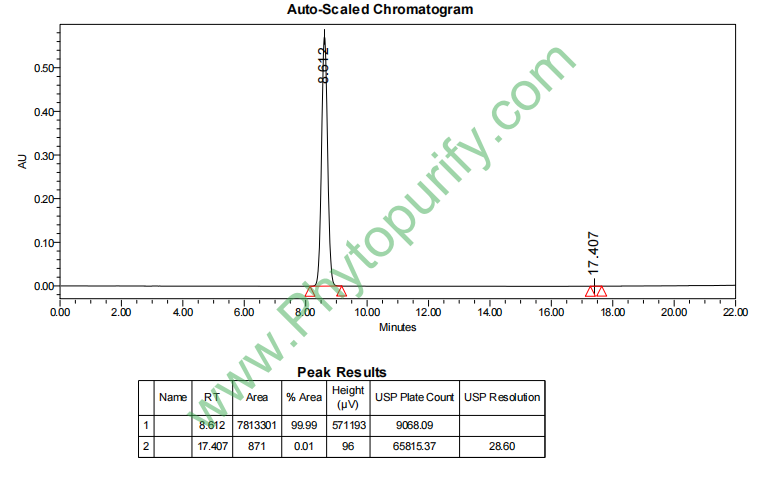
Purity: 95%~99%
Analysis Method: HPLC-DAD or/and HPLC-ELSD
Identification Method: Mass, NMR
Packing: Brown vial or HDPE plastic bottle
Storage: Store in a well closed container, protected from air and light. Put into refrigerate or freeze for long term storage.
Whenever possible, you should prepare and use solutions on the same day. However, if you need to make up stock solutions in advance, we recommend that you store the solution as aliquots in tightly sealed vials at -20℃. Generally, these will be useable for up to two weeks.
The product could be supplied from milligrams to grams
Inquire for bulk scale.
Chengdu Biopurify Phytochemicals Ltd. is a leading company in the research, development, manufacture and marketing of High Quality Phytochemicals and Extracts(especially Active Ingredients from Traditional Chinese Medicine,TCM), Natural Active Pharmaceutical Ingredients worldwide.
The main services:
A. Supply active ingredients and reference standards of TCM, from mgs to kgs scale
B. Custom extraction and purification, target Herb Active Ingredients
C. Custom synthesis and semi-synthesis for Natural Active Ingredients
D. CR(contract research), CM(contract manufacture) and PD(process development) services from lab scale, pilot scale to commercial scale(GMP is also available)
E. TCM compounds library for drug screen,more than 3000 compounds available, many of them are rare and unique.
HPLC of Monotropein
Storage conditions:Short-term storage at 2~8℃, long-term storage at -20 ~ -80℃
186.3700
-1.7433
-3.6801
47.5600
.4249
.4313
Low
36.7627
4.9822
Yes
No
No
No
No
No
0.0
Yes
Yes
Yes
Yes
Natural products, as an important source of drug discovery, have long played an irreplaceable role in human health maintenance and disease treatment. Among numerous natural compounds with biological activity, iridoid glycosides have attracted much attention due to their structural diversity and wide pharmacological activities. Monotropein, as a typical iridoid glycoside, has emerged in the field of natural product pharmacology in recent years. Its unique biological activity and potential therapeutic value have aroused widespread interest among researchers.
The chemical name of Crystal Orchid Glycoside is (1S, 4aR, 6S, 7R, 7aS) -1- (β - D-glucopyranosyl) -1,4-a, 5,6,7,7a-hexahydro-6,7-dihydroxy-7-methylcyclopentano [c] pyran-4-carboxylic acid, with a CAS number of 5945-50-6. This compound was originally derived from the crystal orchid plant of the Caryophyllaceae family(Monotropa uniflora)It was separated from the middle, hence its name. However, subsequent studies have found that crystal orchid glycosides are distributed in various medicinal plants, among which the madder plant Morinda officinalis is in the Rubiaceae family(Morinda officinalis)The roots have the richest content. The research on the active ingredients of Morinda officinalis, a traditional Chinese medicine essential for tonifying the kidneys, strengthening yang, strengthening tendons and bones, has always been an important topic in the modernization of traditional Chinese medicine. Crystal orchid glycoside, as one of the main active ingredients of Morinda officinalis, is often used as an important indicator to evaluate the quality of Morinda officinalis medicinal materials.
From a pharmacological perspective, crystal orchid glycosides exhibit various biological activities. Early research mainly focused on its anti-inflammatory and analgesic effects, but in recent years, with the deepening of research, its pharmacological spectrum has continued to expand. Of particular note is that crystal orchid glycosides have shown significant protective effects in disease models such as osteoarthritis, acute kidney injury, and acute lung injury. In the colitis model induced by dextran sulfate sodium (DSS), crystal violet glycoside can effectively inhibit the expression of inflammatory mediators; In the chondrocyte model of osteoarthritis induced by interleukin-1 β (IL-1 β), it exhibits cartilage protective activity against apoptosis and catabolism; In the cisplatin induced acute kidney injury model, crystal violet glycoside exerts renal protection by regulating oxidative stress and inflammatory response. In addition, preliminary studies suggest that crystal orchid glycosides may have neuroprotective potential, targeting multiple molecules closely related to neurodegenerative diseases such as BCL2, APP, BACE1, MAPT, NFE2L2 (Nrf2), SIRT1, MAPK1, CASP9, and GSK3B.
This review aims to systematically summarize the chemical structure, plant origin, pharmacological activity, mechanism of action, pharmacological characteristics, and clinical application prospects of crystal orchid glycoside, in order to provide comprehensive scientific basis for the in-depth research and development of this natural product.
Crystal orchid glycoside belongs to the iridoid glycoside class, and its chemical structure has typical iridoid skeleton characteristics. Structurally, crystal orchid glycoside is composed of a iridoid glycoside and a glucose group connected by a β - glycosidic bond. The aglycone portion is composed of a cyclopentano [c] pyran nucleus, with a glucose group connected to the C-1 position, a carboxyl group at the C-4 position, a hydroxyl group at each of the C-6 and C-7 positions, and a methyl substitution at the C-7 position. This structural feature endows crystal orchid glycosides with unique physicochemical properties and biological activity.
The molecular formula of crystal orchid glycoside is C ₁₆ H ₂₂ O ₁₁, with a molecular weight of 390.3410 g/mol. Its structure contains multiple hydroxyl groups and one carboxyl group, and the presence of these polar groups makes it exhibit strong hydrophilicity. The calculated LogP value is -1.7433, indicating that the compound tends to be in the aqueous phase when partitioned between the aqueous and lipid phases, i.e., it has high water solubility. Its water solubility parameter is 47.5600 mg/mL, which is beneficial for its absorption and distribution in organisms, but may also limit its ability to penetrate biofilms. The topologically polar surface area (TPSA) is 186.3700 Å ², which is much higher than the recommended upper limit of 140 Å ² for oral medications. This suggests that crystal violet glycosides may not easily diffuse through the cell membrane through passive diffusion, and their transmembrane transport may depend on specific transport proteins.
In terms of spectroscopic characteristics, the UV absorption of crystal orchid glycoside mainly comes from the conjugated double bond system in the iridoid parent nucleus. In its infrared spectrum, the characteristic absorption peaks of hydroxyl (~3400 cm ⁻¹), carboxyl (~1700 cm ⁻¹), and glycosidic bonds (~1050 cm ⁻¹) are prominent. The key features for structural identification in nuclear magnetic resonance hydrogen and carbon spectra are the signal of sugar end group protons (δ 4.5-5.0 ppm) and the signal of olefin protons on the cyclohexene ether terpene parent nucleus (δ 6.0-7.0 ppm). In mass spectrometry analysis, crystal anthocyanins usually appear in the form of [M+H] ⁺ or [M+Na] ⁺ ions, and their fragment ion peaks can provide rich structural information.
The stability of crystal orchid glycoside is influenced by various factors. Under acidic conditions, glycosidic bonds may undergo hydrolysis to produce aglycones and glucose; Under alkaline conditions, the parent nucleus of cyclohexene ether terpenes may undergo ring opening reactions. In addition, high temperature and light exposure may also cause its degradation. Therefore, during the extraction, separation, and storage processes, it is necessary to control the appropriate pH value, temperature, and light conditions to maintain the integrity of the compound.
Crystal orchid glycoside is relatively widely distributed in nature, but there are limited plant species with high content. Traditionally, crystal orchid glycosides are mainly derived from the family Pyrophyllaceae plant crystal orchid(Monotropa uniflora)Separated from the middle, this is also the origin of its name. However, due to the fact that crystal orchids are saprophytic plants with limited resources, it is difficult to collect them on a large scale. Therefore, finding other plant sources with abundant content has become the key to research.
At present, the Euphorbia species in the Rubiaceae family(Morinda officinalis)It is considered the most important natural source of crystal orchid glycoside. Morinda officinalis is a perennial vine plant, and its dried roots are commonly used in traditional Chinese medicine for tonifying kidney yang and strengthening muscles and bones. Modern research has shown that the roots of Morinda officinalis contain abundant iridoid glycosides, among which the content of crystal orchid glycosides can reach 0.5% -2.0% (based on dried medicinal materials), which is one of the main indicators for quality control of Morinda officinalis. In addition, other plants in the Rubiaceae family, such as the wisteria, are also included(Morinda umbellata)And Bai Yan Teng(Morinda parvifolia)The presence of crystal orchid glycoside was also detected in the sample. In addition to the madder family, crystal orchid glycosides are also distributed in the deer hoof grass family (such as Pyrola Belonging to plants), honeysuckle family (such as Lonicera Belonging to plants) and Gentianaceae (such as Gentiana In some species of plants, but the content is usually low.
The extraction method of crystal orchid glycoside is mainly based on its high polarity. The traditional extraction methods include solvent extraction and reflux extraction. The commonly used extraction solvents are water, methanol, ethanol, or their mixed solvents. Due to the good solubility of crystal orchid glycosides in both water and alcohol, a certain concentration of ethanol aqueous solution (such as 50% -70% ethanol) is usually used for extraction to achieve high extraction efficiency. The extraction temperature is generally controlled at 60-80 ℃ for 2-4 hours, and can be repeated 2-3 times. To improve extraction efficiency, modern extraction techniques such as ultrasound assisted extraction, microwave-assisted extraction, and enzyme assisted extraction have also been applied to the extraction of crystal orchid glycosides. Ultrasound assisted extraction can significantly shorten the extraction time and improve the extraction rate; Microwave assisted extraction accelerates cell wall rupture and promotes the dissolution of active ingredients through internal heating effect; Enzyme assisted extraction utilizes cellulases, pectinases, and other enzymes to disrupt cell wall structure, which is beneficial for the release of anthocyanins.
After concentration, the extract usually needs to undergo preliminary purification. Common methods include solvent extraction (such as using ethyl acetate or n-butanol to remove lipophilic impurities), macroporous adsorption resin column chromatography (such as D101, AB-8 resin), and polyamide column chromatography. Macroporous adsorption resin chromatography is a commonly used method for separating and purifying anthocyanins, which can be effectively enriched by gradient elution (usually in a water ethanol system). Further purification can be achieved through techniques such as silica gel column chromatography, ODS reverse phase column chromatography, and preparative high-performance liquid chromatography (HPLC). In HPLC purification, the commonly used stationary phase is a C18 reverse phase column, the mobile phase is a methanol water or acetonitrile water system, and the detection wavelength is usually set at 230-240 nm.
The qualitative and quantitative analysis methods for crystal orchid glycosides mainly include thin layer chromatography (TLC), high performance liquid chromatography (HPLC), and liquid chromatography-mass spectrometry (LC-MS). TLC method is simple, fast, and suitable for preliminary identification; HPLC method has high sensitivity and good repeatability, making it the preferred method for content determination; LC-MS method can provide more accurate structural confirmation information. In the quality control of Morinda officinalis, the Chinese Pharmacopoeia has included an HPLC method for determining the content of crystal orchid glycoside as an indicator component.
The pharmacological activity research of crystal orchid glycoside has made significant progress in recent years, and its scope of action covers multiple aspects such as anti-inflammatory, antioxidant, anti apoptotic, cartilage protection, kidney protection, lung protection, and potential neuroprotection.
anti-inflammatory activity It is one of the core pharmacological effects of crystal orchid glycoside. In DSS induced colitis mouse models, crystal orchid glycosides can significantly alleviate pathological damage to colon tissue and reduce disease activity index. Its mechanism of action is closely related to the inhibition of pro-inflammatory cytokines such as tumor necrosis factor - α (TNF - α), interleukin-6 (IL-6), and interleukin-1 β (IL-1 β) expression. In addition, crystal orchid glycoside can inhibit the activity of cyclooxygenase-2 (COX-2) and inducible nitric oxide synthase (iNOS), reduce the production of prostaglandin E ₂ (PGE ₂) and nitric oxide (NO), thereby exerting anti-inflammatory effects.
Cartilage protective activity It is an important discovery of crystal orchid glycoside in the treatment of osteoarthritis. In the IL-1 β - induced osteoarthritis chondrocyte model, crystal orchid glycoside can significantly inhibit chondrocyte apoptosis and catabolic reactions. Specifically, it manifests as reducing the expression of matrix metalloproteinases (MMPs, such as MMP-1, MMP-3, MMP-13) and decreasing the degradation of type II collagen and proteoglycans in the cartilage matrix; At the same time, upregulate the expression of cartilage protective factors such as tissue metalloproteinase inhibitors (TIMPs). These effects help maintain the homeostasis of cartilage matrix and delay the progression of osteoarthritis.
Renal protective activity This has been fully validated in the cisplatin induced acute kidney injury model. Cisplatin is a commonly used chemotherapy drug, but its nephrotoxicity limits its clinical application. Research has found that pre-treatment or simultaneous administration of crystal orchid glycosides can significantly alleviate cisplatin induced damage to renal tubular epithelial cells, reduce serum creatinine and urea nitrogen levels, and improve renal histopathological changes. Its protective mechanism involves dual pathways of antioxidant and anti-inflammatory: on the one hand, crystal orchid glycoside can activate the nuclear factor E2 related factor 2 (Nrf2)/heme oxygenase-1 (HO-1) pathway, enhance the activity of antioxidant enzymes such as superoxide dismutase (SOD), catalase (CAT), and glutathione peroxidase (GPx), and reduce the production of reactive oxygen species (ROS); On the other hand, it can inhibit the activation of the nuclear factor kappa B (NF - κ B) signaling pathway and reduce the expression of inflammatory factors.
Pulmonary protective activity It has also been confirmed in acute lung injury models. In a mouse model of acute lung injury induced by lipopolysaccharide (LPS), crystal orchid glycoside can alleviate pulmonary edema, inhibit inflammatory cell infiltration, and reduce the levels of inflammatory factors in bronchoalveolar lavage fluid. The mechanism also involves activation of the Nrf2/HO-1 pathway and inhibition of the NF - κ B pathway.
Neuroprotective potential This is a new direction in the research of crystal orchid glycosides. Based on its interactions with multiple targets related to neurodegenerative diseases, researchers speculate that crystal orchid glycosides may have neuroprotective activity. Preliminary studies have shown that crystal orchid glycoside can inhibit the neurotoxicity induced by β - amyloid protein (A β), reduce the excessive phosphorylation of tau protein, regulate the expression balance of BCL2 family proteins, and thus inhibit neuronal apoptosis. In addition, it can activate protective signaling pathways such as SIRT1 and Nrf2, enhancing the antioxidant defense ability of nerve cells. These findings suggest that crystal orchid glycosides may have potential value in the prevention and treatment of neurodegenerative diseases such as Alzheimer's disease.
The pleiotropic pharmacological effects of crystal orchid glycosides stem from their regulation of multiple signaling pathways and molecular targets. A deep understanding of its mechanism of action is of great significance for elucidating its pharmacological basis and guiding clinical translation.
Nrf2/HO-1 signaling pathway It is one of the core mechanisms by which crystal orchid glycosides exert antioxidant and cell protective effects. Nrf2 is a key transcription factor for cells to cope with oxidative stress, which binds to Kelch like ECH related protein 1 (Keap1) under normal physiological conditions and is in an inactive state. When stimulated by oxidative stress or electrophilic agents, Nrf2 dissociates from Keap1, translocates into the nucleus, binds to antioxidant response elements (ARE), and initiates the transcription of downstream antioxidant and detoxifying enzyme genes, including HO-1, NAD (P) H: quinone oxidoreductase 1 (NQO1), SOD, CAT, and glutathione synthase. Research has shown that crystal orchid glycoside can promote nuclear translocation of Nrf2, upregulate the expression of HO-1, and enhance the antioxidant capacity of cells. This mechanism has been confirmed in both cisplatin induced kidney injury and LPS induced lung injury models.
NF - κ B signaling pathway It is the core regulatory pathway of inflammatory response. In the resting state, NF - κ B binds to the inhibitory protein I κ B and exists in an inactive form in the cytoplasm. When stimulated by inflammation (such as TNF - α, IL-1 β, LPS), I κ B kinase (IKK) is activated, phosphorylates and degrades I κ B, releases NF - κ B and translocates into the nucleus, initiating the transcription of pro-inflammatory genes. Crystal orchid glycoside can inhibit the activity of IKK, reduce the phosphorylation and degradation of I κ B, thereby blocking the nuclear translocation of NF - κ B and downregulating the expression of inflammatory mediators such as TNF - α, IL-6, IL-1 β, COX-2, and iNOS. There is a cross-talk between the Nrf2 and NF - κ B pathways: activation of Nrf2 can inhibit the activity of NF - κ B, and vice versa. Crystal orchid glycoside may achieve synergistic effects of antioxidant and anti-inflammatory by simultaneously regulating these two pathways.
Apoptosis related pathways It is an important target for crystal orchid glycosides to exert cell protective effects. Apoptosis can be divided into two pathways: exogenous (death receptor mediated) and endogenous (mitochondrial mediated). Crystal orchid glycoside mainly affects the endogenous apoptotic pathway. BCL2 family proteins are key regulatory factors in the mitochondrial apoptosis pathway, including anti apoptotic proteins (such as BCL2, BCL-XL) and pro apoptotic proteins (such as BAX, BAK). Research has shown that crystal orchid glycoside can upregulate the expression of BCL2 and downregulate the expression of BAX, thereby maintaining mitochondrial membrane potential, inhibiting the release of cytochrome c, and ultimately inhibiting the activation of CASP9 and downstream CASP3, ultimately inhibiting cell apoptosis. In addition, crystal orchid glycoside can exert anti apoptotic effects by activating apoptosis related proteins such as SIRT1 and deacetylating p53.
MAPK signaling pathway Plays an important role in cell proliferation, differentiation, stress response, and apoptosis. The MAPK family mainly includes three pathways: ERK, JNK, and p38 MAPK. Research has shown that crystal orchid glycosides can regulate the activity of the MAPK pathway. Under oxidative stress and inflammatory stimulation, JNK and p38 MAPK are usually activated, promoting inflammation and apoptosis; The activation of ERK is associated with cell survival. Crystal orchid glycoside can inhibit the phosphorylation of JNK and p38 MAPK, and may activate the ERK pathway, thereby exerting anti-inflammatory and anti apoptotic effects.
GSK3B It is a multifunctional serine/threonine kinase that participates in various physiological and pathological processes such as glucose metabolism, cell apoptosis, and neurodegeneration. In neurodegenerative diseases, the overactivation of GSK3B is closely related to the excessive phosphorylation of tau protein and the production of β - amyloid protein. Crystal orchid glycoside can inhibit the activity of GSK3B, reduce the phosphorylation of tau protein at Ser396 and Ser404 sites, decrease the expression of BACE1, and thus reduce the production of A β. In addition, inhibition of GSK3B can activate the Nrf2 pathway and enhance antioxidant defense.
APP and BACE1 It is a key molecule in the pathogenesis of Alzheimer's disease. The abnormal processing of APP produces A β peptide segments with neurotoxicity, and BACE1 is the rate limiting enzyme in APP processing. Research has shown that crystal orchid glycoside can downregulate the expression of BACE1, reduce the production of A β, and thus alleviate the neurotoxicity induced by A β. This effect may be partially achieved by inhibiting GSK3B activity.
MAPT Encoding tau protein, its abnormal phosphorylation and aggregation are characteristic pathological features of Alzheimer's disease and tau protein disease. Crystal orchid glycoside can inhibit the excessive phosphorylation of tau protein, which may be related to its inhibition of GSK3B and regulation of MAPK pathway activity.
In summary, crystal orchid glycoside exerts its pharmacological activity through a multi-target and multi pathway mechanism of action. Its core mechanism includes activating the Nrf2/HO-1 antioxidant pathway, inhibiting the NF - κ B inflammatory pathway, regulating the balance of BCL2 family proteins to inhibit apoptosis, and regulating signaling molecules such as MAPK and GSK3B. These mechanisms are intertwined and together form the pharmacological network of crystal orchid glycosides.
The pharmacological evaluation of natural products is a crucial step in determining whether they can move from laboratory research to clinical application. The pharmacological characteristics of crystal orchid glycosides have both advantages and challenges.
From the perspective of physical and chemical properties, the molecular weight of Crystal Orchid Glycoside is 390.34 Da, which meets the "Five Rules for Drug Types" requirement that oral drug molecular weights are usually less than 500 Da. However, its LogP value is -1.7433, far below the lower limit of -0.4, indicating extremely low lipid solubility and high water solubility. Although this high water solubility is beneficial for dissolution and distribution in aqueous environments, it may also make it difficult to penetrate biofilms, affecting oral absorption and blood-brain barrier penetration ability. Its TPSA is 186.37 Å ², which is higher than the recommended upper limit of 140 Å ² for oral medications, further suggesting that its membrane permeability may be poor. These physicochemical properties indicate that crystal violet glycoside may belong to Class III or IV drugs in the Biopharmaceutical Classification System (BCS), namely high solubility, low permeability, or low solubility, low permeability.
In terms of safety evaluation, preliminary toxicological studies have shown that crystal orchid glycosides have good safety. The hERG inhibition test result is negative, indicating a low risk of causing QT interval prolongation in the heart. The Ames test result is 0.0, indicating that it does not have significant mutagenicity. These data provide a safety basis for the further development of crystal orchid glycosides. However, systematic toxicology research, including acute toxicity, long-term toxicity, reproductive toxicity, and genetic toxicity, still needs to be carried out.
The current research data on the pharmacokinetic characteristics of crystal orchid glycoside is relatively limited. Previous studies have shown that the absorption of crystal orchid glycosides may be limited after oral administration. Due to the high polarity of molecules, their ability to passively diffuse through intestinal epithelial cells is weak, and may require active transport or facilitated diffusion mediated by specific transporters (such as glucose transporters). In addition, crystal orchid glycosides, as glycoside compounds, may be hydrolyzed by β - glucosidase produced by gut microbiota in the intestine, producing aglycones and glucose, thereby affecting their bioavailability. Therefore, after oral administration, the concentration of the original form of crystal orchid glycoside in the systemic circulation may be lower, and its metabolites may exert some pharmacological effects.
In terms of distribution, crystal orchid glycoside is mainly distributed in extracellular fluid, and due to its high polarity, it is difficult to penetrate the cell membrane and enter the cell. Its blood-brain barrier penetration ability has been evaluated as' low ', which limits its application in the treatment of central nervous system diseases. However, under inflammatory conditions, the permeability of the blood-brain barrier may increase, which may provide an opportunity for crystal orchid glycosides to enter the central nervous system.
In terms of metabolism, crystal orchid glycosides may undergo metabolism by the liver and gut microbiota. Phase II metabolic enzymes in the liver, such as UDP glucuronosyltransferase and sulfotransferase, may undergo binding reactions with their hydroxyl and carboxyl groups to generate glucuronic acid or sulfate complexes, thereby increasing water solubility and promoting excretion. The gut microbiota may hydrolyze its glycosidic bonds and release aglycones.
In terms of excretion, crystal orchid glycoside and its metabolites are mainly excreted through the kidneys in the form of urine. Due to its high water solubility, renal tubular reabsorption may be less, which is beneficial for rapid clearance.
Overall, the pharmacological evaluation of crystal orchid glycoside shows that it has good safety, but its low oral bioavailability and poor blood-brain barrier penetration ability are its main challenges. Future research needs to explore strategies to improve its pharmacokinetic characteristics, such as using novel drug delivery systems (such as liposomes, nanoparticles, phospholipid complexes), structural modifications (such as prodrug design), or changing the route of administration (such as transdermal or nasal administration).
Based on the rich pharmacological activity and preliminary safety data of crystal orchid glycoside, it has shown broad clinical application prospects in the treatment of various diseases.
Osteoarthritis It is one of the most promising indications for the conversion of crystal orchid glycosides. Osteoarthritis is a chronic joint disease characterized by degenerative changes in articular cartilage, and there is currently no drug that can reverse disease progression. The cartilage protective activity of crystal orchid glycoside, including inhibiting chondrocyte apoptosis, reducing matrix degradation, and promoting matrix synthesis, makes it a potential disease modifying osteoarthritis drug (DMOAD). Unlike traditional nonsteroidal anti-inflammatory drugs (NSAIDs) that only relieve symptoms, crystal orchid glycosides may delay disease progression by protecting cartilage structure. In the future, it is necessary to conduct preclinical animal model studies and clinical trials to verify their effectiveness and safety.
acute kidney injury It is another important potential indication for crystal orchid glycoside. The nephrotoxicity caused by chemotherapy drugs such as cisplatin is a thorny issue in clinical practice. Crystal orchid glycoside protects renal tubular epithelial cells through antioxidant and anti-inflammatory mechanisms, and is expected to be developed as an adjuvant chemotherapy drug to reduce the nephrotoxicity of cisplatin without affecting its anti-tumor effect. In addition, crystal orchid glycosides may also have a protective effect against acute kidney injury caused by other reasons such as ischemia-reperfusion and sepsis.
acute lung injury and Inflammatory bowel disease It is also a potential application area for crystal orchid glycosides. In these two diseases, excessive inflammatory response is the core pathological mechanism. The anti-inflammatory activity of crystal orchid glycosides, especially their inhibition of the NF - κ B pathway, makes them potentially effective in treating these diseases.
Neurodegenerative diseases It is a new direction in the research of crystal orchid glycoside, but its clinical application faces the challenge of poor blood-brain barrier penetration ability. However, considering that neurodegenerative diseases are often accompanied by dysfunction of the blood-brain barrier, and that crystal violet may indirectly affect the central nervous system by regulating peripheral immunity and metabolism, its neuroprotective potential is still worth exploring. Developing crystal orchid glycoside derivatives or delivery systems that can penetrate the blood-brain barrier may be a breakthrough direction.
Looking ahead to the future, research and development of crystal orchid glycosides need to be in-depth in the following areas:
Pharmacokinetic optimization Improve its oral bioavailability and tissue distribution characteristics through structural modifications (such as introducing lipophilic groups, designing prodrugs) or novel delivery systems (such as nanocarriers, liposomes, phospholipid complexes).
In depth analysis of the mechanism of action Using modern molecular biology techniques such as gene knockout, proteomics, and metabolomics, systematically elucidate the molecular targets and signaling networks of crystal orchid glycosides, particularly their direct interaction patterns with key proteins such as Nrf2, NF - κ B, and BCL2.
Study on Structure Activity Relationship Systematically synthesize derivatives and analogues of crystal orchid glycoside, explore the relationship between their chemical structure and biological activity, and provide guidance for structural optimization.
Preclinical safety evaluation Conduct systematic toxicology research, including long-term toxicity, reproductive toxicity, immunotoxicity, and carcinogenicity, to provide sufficient safety data for clinical trials.
Clinical trial design Select specific indications (such as osteoarthritis, chemotherapy related kidney injury) to conduct standardized clinical trials to verify their clinical efficacy and safety.
Resource sustainability Establish chemical synthesis or biosynthetic methods for crystal orchid glycosides to reduce dependence on natural resources and ensure the supply of raw materials for drug development.
Crystal orchid glycoside, as a typical natural product of iridoid glycosides, has shown significant research value and application potential in the field of natural product pharmacology due to its unique chemical structure and multifaceted pharmacological activities. This active ingredient, isolated from traditional Chinese medicines such as Morinda officinalis, exerts pharmacological effects such as anti-inflammatory, antioxidant, anti apoptotic, and cartilage protection by regulating multiple signaling pathways and molecular targets such as Nrf2/HO-1, NF - κ B, BCL2/CASP9, MAPK, and GSK3B. It has shown promising application prospects in the treatment of osteoarthritis, acute kidney injury, acute lung injury, and potential neurodegenerative diseases.
However, the clinical translation of crystal orchid glycoside still faces many challenges, especially its low oral bioavailability and poor blood-brain barrier penetration ability, which are pharmacokinetic defects. Future research needs to further elucidate its mechanism of action, overcome these obstacles through structural optimization and innovative delivery systems, and promote the transition of crystal orchid glycosides from laboratory research to clinical applications. At the same time, establishing a sustainable raw material supply system, conducting systematic safety evaluations and standardized clinical trials are also key steps in realizing its clinical value.
In summary, as a lead compound in the development of natural product drugs, crystal orchid glycosides have important research value and development potential. With the continuous deepening of research and the continuous advancement of technology, the active ingredients in this ancient Chinese medicine are expected to shine with new vitality in modern medicine and contribute to the cause of human health.
