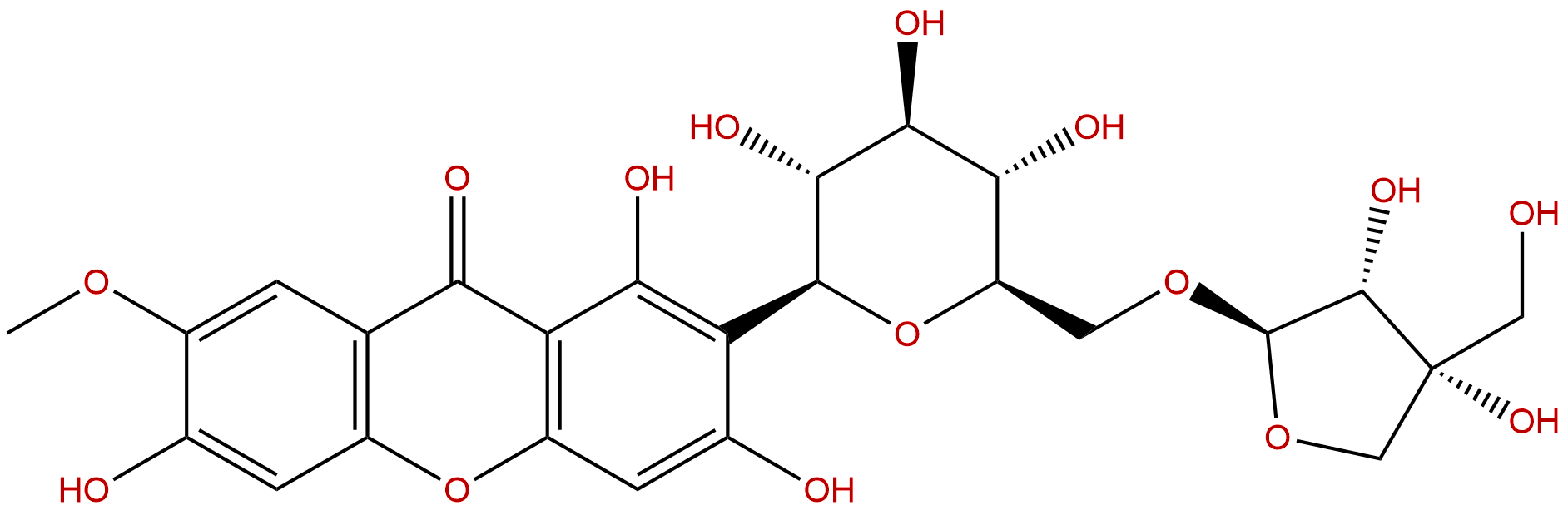


Synonym name:
Catalogue No.: BP1123
Cas No.: 162857-78-5
Formula: C25H28O15
Mol Weight: 568.484
Botanical Source: Root of Polygala tenuifolia
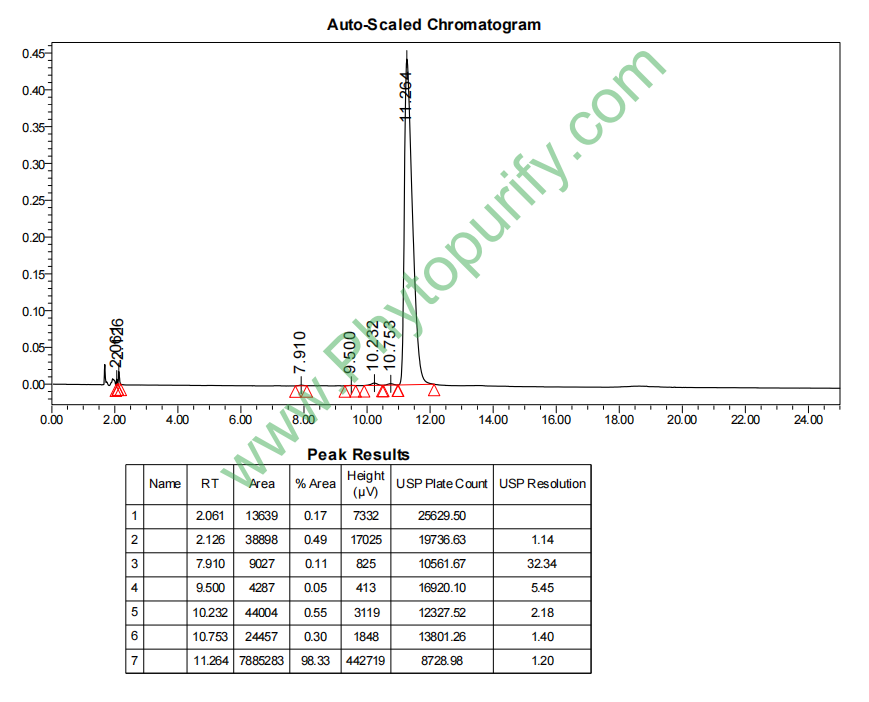
Purity: 95%~99%
Analysis Method: HPLC-DAD or/and HPLC-ELSD
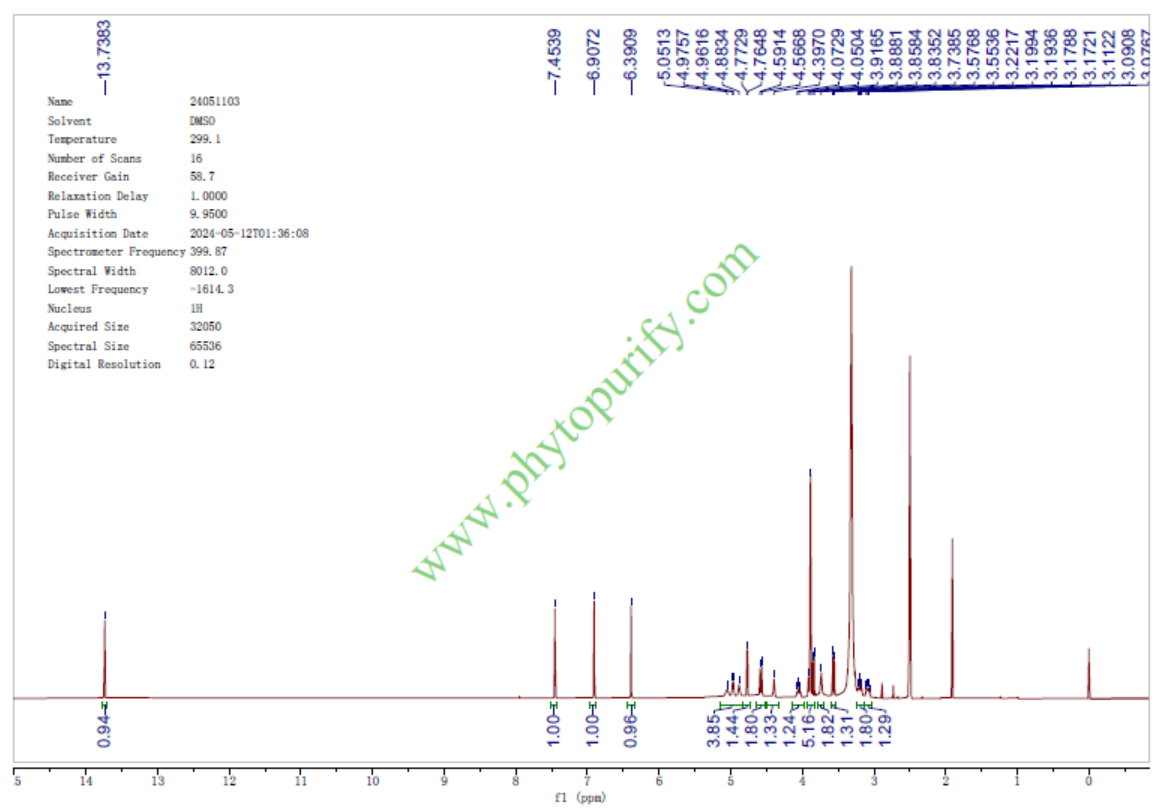
Identification Method: Mass, NMR
Packing: Brown vial or HDPE plastic bottle
Can be supplied from milligrams to grams.
For Reference Standard and R&D, Not for Human Use Directly.
Inquire for bulk scale.
Description:
Polygalaxanthone III can significantly inhibit chlorzoxazone 6-hydroxylation catalyzed by CYP2E1.
References:
Zhongguo Zhong Yao Za Zhi. 2014 Nov;39(22):4459-63.
[Effect of oligosaccharide esters and polygalaxanthone Ill from Polygala tenuifolia willd towards cytochrome P450].
METHODS AND RESULTS:
Five compounds (tenuifoliside C, tenuifoliside D, telephiose A, telephiose C and Polygalaxanthone III) from polygala tenuifolia wild were incubated together with CYP probe substrate in human liver microsomes to investigate the inhibitory effect towards CYP450 enzyme. Phenacetin (CYP1A2), coumarin (CYP2A6), paclitaxel (CYP2C8), diclofenac (CYP2C9), S-mepheriytoin (CYP2C19), dextromethorphan (CYP2D6), chlorzoxazone (CYP2E1), midazolam (CYP3A) were selected as the isoforfn specific substrate. And the formation of paracetamol, 7-hydroxycoumarin, 6alpha-hydroxy paclitaxel, 4'-hydroxydiclofenac, dextrorphan, 6-hydroxychlorzoxazone, 1'-hydroxymidazolam, 4'-hydroxymephenytoin were detected respectively to measure the effect towards CYP450 by high-pressure liquid chromatography (HPLC).
CONCLUSIONS:
The result shows that five compounds from polygala tenuifolia willd significantly inhibit chlorzoxazone 6-hydroxylation catalyzed by CYP2E1, while showed no effect towards CYP1A2, CYP2A6, CYP2C8, CYP2C9, CYP2C19, CYP2D6, CYP3A. And IC50 value was 38.73, 54.14, 61.77, 62.22, 50.56 micromol x L(-1), respectively.
HPLC of Polygalaxanthone III
HNMR of Polygalaxanthone III
Storage conditions:Short-term storage at 2~8℃, long-term storage at -20 ~ -80℃
249.2000
-.6058
-.6828
1.6210
.5995
.1693
Low
75.7896
4.8133
Yes
No
Yes
No
Yes
No
1.5
Yes
No
Yes
No
Natural products, as an important source of drug discovery, play an irreplaceable role in the history of human disease treatment. Yuanzhi(Polygala tenuifolia Willd., as a traditional Chinese medicine, has the effects of calming the mind, improving intelligence, dispelling phlegm, and opening the orifices. Modern pharmacological studies have revealed that it has significant activities in various aspects such as nervous system protection, anti-inflammatory, and anti-tumor. Polygalaxanone III (PX III) is a characteristic xanthone compound isolated from the roots of Polygalaxanone, with a CAS number of 162857-78-5. Early studies have found that it has inhibitory effects on the cytochrome P450 (CYP450) enzyme system, especially CYP2E1 (IC50=50.56 μ M), suggesting that it may be involved in regulating drug metabolism interactions. In recent years, with the deepening of research, the anti-tumor potential of Yuanzhishan ketone III has become increasingly prominent. Its effects involve inducing apoptosis, inhibiting proliferation, invasion and metastasis, and point to multiple key tumor related targets such as MCL1, STAT3, HIF1A, etc. The purpose of this article is to systematically review the chemical properties, plant sources, pharmacological activities, mechanisms of action, and medicinal properties of Yuanzhishanketone III, in order to provide comprehensive scientific references for the in-depth research and potential drug development of this compound.
Yuanzhi Mountain Ketone III belongs to the class of xanthenone compounds, with a molecular formula of C27H28O14 and a molecular weight of 568.4840. Its core structure is a tricyclic xanthenone skeleton, with multiple hydroxyl groups, methoxy groups, and a key glycosidic side chain (usually glucose or celery sugar group) connected to it. This highly oxidized structure is an important material basis for its biological activity.
From the analysis of the parameters related to drug properties, Yuanzhishan ketone III exhibits typical polar molecular characteristics. Its lipid water partition coefficient (LogP) is -0.6058, indicating strong hydrophilicity. The topologically polar surface area (TPSA) is as high as 249.2000 Å ², mainly attributed to the abundant hydroxyl and glycoside structures in the molecule, which are the main sites for hydrogen bonding. Correspondingly, its theoretical water solubility value is 1.6210 mg/mL, indicating good water solubility. However, high polarity and large TPSA also pose challenges to its biofilm permeability. The predictive model shows that its blood-brain barrier (BBB) permeability is low, which is consistent with its high polarity, suggesting that its direct effect on central nervous system diseases may be limited, but it may also reduce the risk of central nervous system side effects. In terms of early safety indicators, the hERG inhibition prediction of resveratrol III is negative, indicating a lower risk of causing cardiac QT interval prolongation. The Ames test value is 1.5 (usually considered to be potentially mutagenic positive and should be interpreted with caution), indicating that the mutagenic risk signal is weak at the standard test concentration, but further experimental verification is still needed. Overall, Yuanzhi Mountain Ketone III has good water solubility and preliminary safety prediction, but permeability and bioavailability may be the bottlenecks that need to be focused on in its development process.
Yuanzhi Mountain Ketone III mainly comes from the Yuanzhi genus of plants in the Yuanzhi family, Yuanzhi(Polygala tenuifolia The dry roots of Willd. are mainly distributed in East Asian regions such as China and South Korea. In traditional Chinese medicine, Yuanzhi root is often used to treat insomnia, forgetfulness, cough, and phlegm. Modern research has confirmed that its active ingredients mainly include triterpenoid saponins, oligosaccharide esters, alkaloids, and xanthones, among which xanthones are one of its characteristic components.
The extraction of resveratrol III from plant materials is usually carried out using organic solvent extraction method. The common process is as follows: Grind the dried roots of Eucommia ulmoides, and first degrease them with petroleum ether or n-hexane to remove fat soluble impurities. Subsequently, medium polarity solvents such as methanol, ethanol, or aqueous ethanol (such as 70% -95% ethanol) are used for reflux extraction or ultrasound assisted extraction. The extract is concentrated under reduced pressure to obtain a crude extract. The crude extract is further dispersed in water and subjected to liquid-liquid extraction using solvents such as ethyl acetate and n-butanol. Yuanzhi Mountain Ketone III is mainly enriched in the ethyl acetate or n-butanol fractions. After obtaining the active part, it needs to be separated and purified by means of a variety of modern chromatographic technologies, including silica gel column chromatography, reverse phase C18 column chromatography, Sephadex LH-20 column chromatography and high performance liquid chromatography (HPLC). By using techniques such as nuclear magnetic resonance (NMR) and mass spectrometry (MS) for structural identification, high-purity Yuanzhishanketone III monomer was ultimately obtained. Optimizing the extraction process (such as solvent ratio, temperature, time) and adopting new separation technologies such as macroporous adsorption resin and high-speed countercurrent chromatography are key research directions to improve its yield and purity.
The pharmacological activity research of Yuanzhi Mountain Ketone III has expanded from the initial metabolic enzyme inhibition to multiple fields such as anti-tumor, demonstrating various biological effects.
1. CYP450 enzyme inhibition
This is the activity of Yuanzhi Mountain Ketone III, which was discovered earlier. CYP450 enzyme is a key enzyme system responsible for drug metabolism in the liver. Research has shown that Yuanzhishan ketone III can specifically inhibit the 6-hydroxylation reaction of chlorzoxazone catalyzed by CYP2E1 subtype, with an IC50 value of 50.56 μ M. CYP2E1 is involved in the metabolism of various pre carcinogens and small molecule organic compounds, and its inhibition may affect the toxicity or carcinogenic process of related substances. At the same time, it also suggests the risk of drug drug interactions when combined with drugs metabolized by CYP2E1.
2. Antitumor activity
This is the core focus of current pharmacological research on Yuanzhi Mountain Ketone III. A large number of in vitro studies have shown that Polygalanone III has significant proliferation inhibition and apoptosis inducing effects on a variety of human tumor cell lines, including but not limited to breast cancer, liver cancer, lung cancer, colon cancer and leukemia cells. Its anti-tumor effect is concentration - and time-dependent. In addition to directly killing tumor cells, research has also found that resveratrol III can inhibit the migration and invasion ability of tumor cells, suggesting its potential for anti metastasis. In addition, some studies have reported that it can reverse the multidrug resistance of tumor cells and enhance the sensitivity of traditional chemotherapy drugs.
3. Other potential activities
Based on the traditional use of Yuanzhi and the commonality of xanthenone compounds, there have also been research reports on the neuroprotective, anti-inflammatory, antioxidant and other aspects of Yuanzhi Mountain Ketone III. For example, it has shown the potential to alleviate oxidative damage to nerve cells and inhibit neuroinflammation caused by excessive activation of microglia in certain models, which may be related to the cognitive and calming effects of its source plant, Yuanzhi. However, the specific role and mechanism require further systematic research.
The anti-tumor effect of Yuanzhi Mountain Ketone III involves a complex regulatory network of multiple targets and pathways, and significant progress has been made in its mechanism research, mainly focusing on the following aspects:
1. Inducing cell apoptosis and regulating Bcl-2 family proteins
Apoptosis is one of the main ways in which Yuanzhishan ketone III exerts anti-tumor effects. Research has found that it can upregulate pro apoptotic proteins (such as Bax) while downregulating anti apoptotic proteins, especially MCL1 and BCL2 MCL1 and BCL2 are key anti apoptotic members of the Bcl-2 family, and their overexpression is closely related to tumor development and chemotherapy resistance. Yuanzhi Mountain Ketone III inhibits their expression, disrupts mitochondrial membrane potential, promotes cytochrome C release, activates caspase cascade reaction, and ultimately leads to cell apoptosis.
2. Inhibit the STAT3 signaling pathway
Signal Transduction and Transcription Activation Factor 3(STAT3)It is an important oncogenic transcription factor that is continuously activated in various tumors. Research has shown that resveratrol III can inhibit the phosphorylation (activated form) of STAT3, block its nuclear translocation, and inhibit the transcription of downstream target genes such as Cyclin D1, Bcl-2, VEGF, etc. This not only inhibits cell proliferation, but also promotes apoptosis and inhibits angiogenesis.
3. Inhibit tumor invasion and metastasis related molecules
Yuanzhi Mountain Ketone III can downregulate matrix metalloproteinases MMP2 and MMP9 The expression. MMPs are key enzymes that degrade extracellular matrix, and their excessive activation is closely related to tumor invasion and metastasis. By inhibiting MMPs, resveratrol III weakened the migration and invasion ability of tumor cells. In addition, it can also inhibit hypoxia inducible factors HIF1A Stability and activity. HIF1A is activated in the hypoxic microenvironment of tumors, upregulating genes such as VEGF and GLUT1, promoting angiogenesis and glucose metabolism recombination, and is a core regulatory factor for tumor adaptation to harsh environments.
4. Affects the activity of DNA topoisomerases and kinases
Research suggests that Yuanzhi Mountain Ketone III may interfere TOP1 and TOP2A The activity. DNA topoisomerases are key enzymes involved in DNA replication, transcription, and repair, and are targets of various chemotherapy drugs. Inhibition of it can lead to DNA damage and cell death. At the same time, it has been reported that Yuanzhi Mountain Ketone III can affect mitogen activated protein kinase MAPK1 The phosphorylation level of ERK2 interferes with the MAPK/ERK signaling pathway, which regulates cell growth and differentiation.
5. Regulating hormone related pathways
In hormone dependent tumors, such as breast cancer, polyglycone III shows a positive effect on estrogen receptor ESR1 Interference in signal pathways and inhibition of aromatase CYP19A1 The activity. CYP19A1 is a key enzyme in estrogen synthesis, and its inhibition can reduce estrogen levels in the body, thereby inhibiting the growth of estrogen dependent tumors.
In summary, Yuanzhishanketone III forms a multi-target synergistic anti-tumor network by simultaneously acting on multiple key nodes such as apoptosis regulation, signal transduction, invasion and metastasis, DNA metabolism, and hormone regulation. This provides potential advantages for it to overcome the disadvantage of single target drug resistance.
Although Yuanzhishan ketone III exhibits excellent anti-tumor activity in vitro, its development into a drug largely depends on its pharmacological properties, including pharmacokinetic (ADME: absorption, distribution, metabolism, excretion) properties and safety.
Pharmacodynamics (Prediction and Preliminary Study)
* Absorption and oral bioavailability As mentioned earlier, its high polarity (low LogP, high TPSA) may limit its passive diffusion across the gastrointestinal epithelial cell membrane, indicating that its oral absorption may be poor and its bioavailability may be low. Formulation technology (such as nanocrystals, liposomes, phospholipid complexes) or structural modification (prodrug preparation) may be effective strategies to improve their absorption.
* distribution Predict that its blood-brain barrier permeability is low, mainly distributed in the blood and systemic circulatory system, making it difficult to enter the central nervous system. This is an unfavorable factor for its use in brain tumor treatment, but it may reduce central side effects. The binding rate between it and plasma proteins is not yet clear and needs to be experimentally determined.
* Metabolism Yuanzhishan ketone III itself is an inhibitor of CYP2E1, but it may also be metabolized by other CYP450 isoenzymes (such as CYP3A4). Its glycoside structure may be hydrolyzed by β - glucosidase in the intestine or liver to generate aglycones. The physicochemical properties and activities of aglycones may differ significantly from those of the prototype compound, which is a key focus in their metabolic research.
* excretion It is expected that its prototype or metabolites will mainly be excreted through the kidneys (via urine) or bile (via feces). The specific pathway and rate need to be confirmed through in vivo experiments.
safety evaluation
Preliminary computer predictions indicate no significant risk of hERG channel inhibition and strong genotoxic signals (Ames test value 1.5). However, this cannot replace comprehensive preclinical safety evaluation. In the future, it is necessary to conduct systematic research on acute toxicity, long-term toxicity, reproductive toxicity, etc. to evaluate their safety window. Its inhibitory activity on CYP450 enzyme also suggests the need for detailed drug drug interaction studies.
Challenges and optimization directions in drug development
The main challenge lies in its poor membrane permeability and potentially low oral bioavailability. Future research should focus on:
1. In depth pharmacokinetic studies in vivo Comprehensively evaluate its ADME characteristics in animal models (mice, rats).
2. Pharmaceutical research Develop new drug delivery systems, such as nano delivery systems, to improve their solubility, stability, and targeting.
3. structural optimization Reasonably modify the core pharmacophore while preserving its lipid solubility and pharmacokinetic properties.
Yuanzhi Mountain Ketone III, as a natural compound with multi-target anti-tumor activity, has broad clinical application prospects, but also faces many challenges.
Potential application directions:
1. Antitumor adjuvant therapy or combination therapy Given its multi-target nature and potential to reverse drug resistance, Yuanzhishantong III is expected to be used in combination with existing chemotherapy drugs (such as topoisomerase inhibitors, paclitaxel, etc.) or targeted drugs to achieve synergistic effects, reduce dosage, and overcome drug resistance.
2. Tumors with abnormally active specific targets For tumor subtypes with sustained activation of STAT3, high expression of MCL1/BCL2, or overactive HIF1A signaling pathway, tanshinone III may have more precise therapeutic potential.
3. Developed as a chemical preventive agent Its CYP2E1 inhibition and antioxidant activity may make it valuable in the field of tumor chemoprevention caused by specific toxins or metabolic abnormalities.
4. Neurological disorders Although BBB has poor permeability, its application in neuroprotection may still be explored through formulation technology modification or targeting peripheral neuroinflammation related diseases.
Future research prospects:
1. Deep exploration of mechanisms Using chemical biology methods (such as chemical proteomics) to identify its direct target and elucidate its initial molecular events of action.
2. Pharmacodynamic validation in vivo Confirmed its in vivo anti-tumor effect and inhibitory effect on metastasis in various human tumor xenograft (PDX) or transgenic mouse models.
3. Pharmacokinetic and Formulation Research and Development This is the core link that drives it towards clinical practice. It is necessary to address the issue of low bioavailability and clarify its in vivo metabolic profile.
4. Security system evaluation Complete standardized preclinical safety pharmacology and toxicology studies.
5. Research on Structural Derivatives and Structure Activity Relationships Synthesize a series of derivatives, clarify their pharmacophores, in order to obtain candidate compounds with stronger activity and better drug properties.
Yuanzhi Mountain Ketone III is a highly bioactive xanthone compound isolated from the traditional Chinese medicine Yuanzhi. From the initial discovery of CYP450 enzyme inhibitory activity to the widely studied broad-spectrum anti-tumor effect, its research value is constantly being revealed. Existing studies have shown that Yuanzhishanketone III exhibits unique advantages in multiple anti-tumor pathways by synergistically targeting key targets such as MCL1, BCL2, STAT3, HIF1A, MMP2, etc., inducing apoptosis, inhibiting proliferation and invasion. However, its high polarity and potential pharmacokinetic defects are the main bottlenecks restricting its translation into clinical applications. Future research needs to focus on solving the problem of drug formation based on a deep understanding of its molecular mechanism, and optimize its pharmaceutical properties through rational drug chemical modification or advanced formulation technology. The research on Yuanzhi Mountain Ketone III not only provides promising lead compounds for the development of new multi-target anti-tumor drugs, but also serves as a typical case in the modernization research of traditional Chinese medicine, reflecting the enormous potential of exploring modern innovative drugs from traditional medicinal plants.
