Introduction/Overview
Natural products, as an important source of drug discovery, play an irreplaceable role in the long history of human fight against diseases. Among them, isoquinoline alkaloids have attracted much attention due to their structural diversity and wide range of biological activities. Scoulerine, as an isoquinoline alkaloid with a tetracyclic berberine skeleton, has gradually revealed its unique pharmacological activities since its discovery in the 19th century, especially its potential in anti mitosis, neuroprotection, and analgesia, making it a research hotspot in the field of natural product pharmacology.
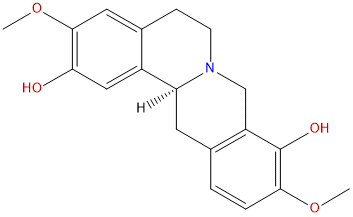
The chemical name of golden violet alkaloid is (13aS) -5,8,13a-13a tetrahydro-2,3,9,10-tetramethoxy-6H-dibenzo [a, g] quinoline, with the molecular formula C ₁₉ H ₂₁ NO ₄ and CAS number 6451-73-6. This compound was initially isolated from poppy plants (such as Corydalis and Corydalis) and is one of the important active ingredients in various medicinal plants. Modern pharmacological studies have shown that berberine has multiple pharmacological effects, including but not limited to: acting as an effective anti mitotic agent, inhibiting tumor cell proliferation by interfering with microtubule dynamics; As an inhibitor of β - secretase 1 (BACE1), it has shown potential value in the treatment of Alzheimer's disease; In addition, it can exert analgesic, anti-inflammatory, and neuroregulatory effects by acting on targets such as dopamine receptors, opioid receptors, and transient receptor potential (TRP) channels.
This article aims to systematically review the chemical structure, physicochemical properties, plant sources, extraction methods, pharmacological activity, mechanism of action, pharmacological evaluation, and clinical application prospects of Lonicera japonica alkaloids, in order to provide comprehensive scientific basis for the in-depth research and development of this natural product.
Chemical structure and physicochemical properties
Golden purple violet alkaloid belongs to the berberine alkaloids, and its core skeleton is composed of two fused isoquinoline rings, forming a four ring system. Its structure contains four methoxy groups (- OCH ∝) located at C-2, C-3, C-9, and C-10 positions, as well as a chiral center (C-13a position). The naturally occurring active form is usually (-) - Scoulerine (left-handed). This structural feature endows it with unique chemical properties and biological activity.
From the perspective of physical and chemical properties, the molecular weight of golden violet alkaloids is 327.3800 g/mol, belonging to the category of small molecule compounds. Its lipid water partition coefficient (LogP) is 2.5742, indicating that the compound has moderate lipophilicity, which is beneficial for transmembrane transport and interaction with biological targets. The polar surface area (TPSA) is 62.1600 Å ², which is lower than the commonly believed passive diffusion upper limit (about 140 Å ²), indicating its good oral absorption potential. The water solubility data is 0.1009 mg/mL, indicating its low solubility in water, which may affect its formulation development and bioavailability. It is worth noting that berberine has a high blood-brain barrier (BBB) penetration ability, which is consistent with its LogP value and molecular weight, and provides a theoretical basis for its application in central nervous system diseases such as analgesia and Alzheimer's disease. In addition, the prediction result of hERG inhibition is "no", and the Ames test result is 0.6, indicating a low risk of cardiac toxicity and mutagenicity, but further experimental verification is needed.
Plant sources and extraction methods
Golden violet alkaloids are mainly found in Papaveraceae plants, especially in the genus Corydalis(Corydalis)And the purple violet genus(Dactylicapnos)Plants. For example, Yanhusuo(Corydalis yanhusuo)Northeast Yanhusuo(Corydalis ambigua)Not available in summer(Corydalis decumbens)And purple violet(Dactylicapnos scandens)All of them have been reported to contain this ingredient. In addition, in some poppy species(Papaver)It has also been found in plants. These plants are often used in traditional medicine for pain relief, blood circulation, qi circulation, and other treatments, and berberine is considered one of its important active ingredients.
The method of extracting golden violet alkaloids usually follows the general principle of alkaloid extraction, which is to utilize the difference in solubility between acidic and alkaline conditions. The classic extraction process involves crushing the dried plant material and soaking it in an acidic aqueous solution (such as 0.5-1% hydrochloric acid or sulfuric acid) to dissolve the alkaloids in salt form. After filtration, adjust the acidic extract to alkaline (pH 9-10) with alkali (such as ammonia or sodium hydroxide), and then perform liquid-liquid extraction with organic solvents (such as chloroform, ethyl acetate, or ether) to obtain the total alkaloid extract. Subsequently, separation and purification can be performed by column chromatography (such as silica gel column, alumina column) or high performance liquid chromatography (HPLC). In recent years, with the promotion of green chemistry concepts, modern technologies such as ultrasound assisted extraction, microwave-assisted extraction, and supercritical fluid extraction have also been applied to the extraction of golden violet alkaloids to improve extraction efficiency and purity, and reduce the use of organic solvents.
Pharmacological activity research
In recent years, significant progress has been made in the pharmacological activity research of berberine, mainly focusing on its anti-tumor, neuroprotective, and analgesic effects.
1. Antitumor activity
Golden violet alkaloid is described as an effective anti mitotic compound. Studies have shown that it can significantly inhibit the proliferation of a variety of cancer cells, including breast cancer, lung cancer, liver cancer and leukemia cell lines. Its main mechanism of action is to interfere with the polymerization and depolymerization kinetics of microtubules, leading to cell cycle arrest in the G2/M phase and inducing cell apoptosis. Specifically, golden violet alkaloids can bind to microtubule proteins, disrupt the normal formation of spindles, halt mitosis, and ultimately induce tumor cell apoptosis by activating the caspase cascade reaction (such as caspase-3, caspase-9) and upregulating the expression of pro apoptotic proteins (such as Bax), downregulating the expression of anti apoptotic proteins (such as Bcl-2). In addition, it may further exacerbate DNA damage and cell death by inhibiting the activity of topoisomerase I/II.
2. Neuroprotection and anti Alzheimer's disease activity
Golden violet alkaloid is an inhibitor of BACE1 (β - secretase 1). BACE1 is a key enzyme involved in the cleavage of amyloid precursor protein (APP) to generate A β peptide, and abnormal aggregation of A β is one of the core pathological features of Alzheimer's disease (AD). By inhibiting BACE1 activity, berberine can reduce the production of A β, which may delay or prevent the pathological process of AD. In addition, its excellent blood-brain barrier penetration ability enables it to effectively reach central nervous system targets. Some in vitro experiments have also found that berberine can protect neurons from oxidative stress and glutamate excitotoxicity, which may be related to its antioxidant and anti-inflammatory properties.
3. Analgesic activity
Traditionally, plants containing berberine, such as Corydalis yanhusuo, have been widely used for pain relief. Modern pharmacological research has confirmed its analgesic effect and revealed its complex molecular mechanism. The analgesic effect of Huangjin Zijin alkaloid is not mediated by a single target, but is achieved through the synergistic action of multiple targets. It can act on various receptors and enzymes related to pain signal transduction, including:
- Opioid receptor As a ligand for the μ - opioid receptor (OPRM1), the κ - opioid receptor (OPRK1), and the δ - opioid receptor (OPRD1), berberine may produce analgesic effects similar to morphine by activating these receptors, but may have lower addiction and tolerance.
- Dopamine receptor By acting on the dopamine D2 receptor (DRD2), it regulates the dopaminergic pathway in the midbrain limbic system and participates in the regulation of emotional and motivational components of pain.
- TRP channel As a regulator of TRPV1 and TRPA1 channels, berberine may alleviate inflammatory and neuropathic pain by inhibiting the excessive activation of these channels.
- Cyclooxygenase Inhibiting the activity of cyclooxygenase-1 (PTGS1) and cyclooxygenase-2 (PTGS2), reducing the synthesis of prostaglandins, thereby exerting peripheral anti-inflammatory and analgesic effects.
- 5-hydroxytryptamine transporter By acting on the serotonin transporter (SLC6A4), it affects serotonin levels and participates in the regulation of the downregulation pathway.
Mechanism of action and molecular targets
The pharmacological activity of Huangjin Zijin alkaloid is the result of its interaction with multiple molecular targets, exhibiting typical "multi-target drug" characteristics.
Core mechanism: microtubule dynamics interference
In terms of anti-tumor effects, the main target of golden violet alkaloids is microtubule proteins. It binds to the colchicine binding site of microtubules, inhibiting microtubule polymerization and disrupting the dynamic balance of microtubules. This leads to the inability of the mitotic spindle to form normally, causing the cell cycle to stagnate in the G2/M phase, ultimately triggering the disaster of mitosis and cell apoptosis. This mechanism is similar to many anti microtubule drugs used clinically, such as vinblastine and paclitaxel, but with different binding sites, which may mean that it has a unique anti-tumor spectrum and lower cross resistance.
Key target: BACE1 inhibition
In terms of neuroprotection, BACE1 is its key target. Golden violet alkaloids competitively inhibit the cleavage of APP by binding to the active site of BACE1, thereby reducing the generation of A β. Molecular docking and enzyme kinetics studies revealed its interaction mode with BACE1, providing a structural basis for designing more efficient BACE1 inhibitors.
Multi target analgesia network
In terms of pain relief, the mechanism of action of berberine is more complex, involving multiple signaling pathways and receptor systems. The analgesic effect is the result of the synergistic action of the following targets:
- Opioid system Activate OPRM1, OPRK1, and OPRD1 receptors, activate the G protein coupled signaling pathway, inhibit adenylate cyclase activity, reduce cAMP production, thereby inhibiting calcium ion influx and promoting potassium ion efflux, reducing neuronal excitability, and blocking pain signal transmission.
- Dopamine system Antagonism or partial activation of DRD2 receptors, regulation of dopamine release, and impact the reward and motivation dimensions of pain.
- TRP channel Inhibit the opening of TRPV1 and TRPA1 channels, reduce calcium ion influx, and alleviate pain caused by capsaicin, heat, acid, or inflammatory mediators.
- Inflammatory pathway Inhibit the activity of PTGS1 and PTGS2, reduce the synthesis of pain inducing substances such as prostaglandin E2, and exert peripheral anti-inflammatory and analgesic effects.
- Monoamine energy system By inhibiting SLC6A4, increasing the concentration of serotonin in the synaptic cleft, activating the descending inhibitory pathway, and exerting central analgesic effects.
Evaluation of drug properties and pharmacokinetics
The evaluation of drug properties is a crucial step in determining whether natural products can be transported from the laboratory to clinical practice. According to the provided parameters, Huangjin Zijin alkaloid has shown certain potential as a drug, but also faces challenges.
Favorable factors:
- Moderate molecular weight(327.38 Da), Complies with the Lipinski Rule for Class 5 Drugs.
- LogP value(2.57) Moderate, with both hydrophilicity and lipophilicity, conducive to absorption and distribution.
- Low TPSA(62.16 Å ²), indicating good oral absorption and blood-brain barrier penetration ability.
- Low risk of hERG inhibition Reduced the risk of cardiac toxicity.
- Ames test negative(0.6), preliminarily indicating no mutagenicity.
Challenges and Shortcomings:
- Poor water solubility(0.1009 mg/mL), It is the main obstacle that limits its oral bioavailability and formulation development. Solubilization techniques such as cyclodextrin inclusion, solid dispersion, lipid nanoparticles, etc. are needed to improve its solubility.
- Lack of pharmacokinetic data At present, there is insufficient research on the absorption, distribution, metabolism, and excretion (ADME) process of berberine in the body. The key parameters such as metabolic stability, plasma protein binding rate, half-life, and main metabolic pathways need to be systematically elucidated. Preliminary speculation suggests that due to its multiple methoxy groups, it may undergo O-demethylation metabolism through the liver cytochrome P450 enzyme system (such as CYP3A4, CYP2D6).
- bioavailability Due to its poor water solubility and potential first pass effects, oral bioavailability may be low. Improvement needs to be achieved through prodrug design, dosage form optimization, or non oral administration routes such as transdermal or nasal administration.
Clinical application prospects and prospects
Based on its unique pharmacological activity and multi-target action characteristics, golden violet alkaloids have shown broad clinical application prospects in the following fields:
1. Anti tumor therapy
As a novel anti mitotic agent, berberine has the potential to be developed as a chemotherapy drug for various solid tumors and hematological malignancies. Its different binding sites from existing anti microtubule drugs may make it effective against drug-resistant tumor cells. Future research should focus on determining its anti-tumor spectrum, evaluating its synergistic effect with existing chemotherapy drugs such as paclitaxel and vincristine, and developing targeted delivery systems such as antibody coupled drugs and nanocarriers to improve efficacy and reduce systemic toxicity.
2. Treatment of Alzheimer's disease
As a BACE1 inhibitor, berberine is a potential candidate drug for the treatment of Alzheimer's disease. Its excellent ability to penetrate the blood-brain barrier is one of its major advantages. However, BACE1 inhibitors have encountered safety issues in clinical trials, such as impaired synaptic plasticity and retinal toxicity. Therefore, it is necessary to further evaluate the selectivity of berberine on BACE1 and its effects on other aspartic proteases, such as BACE2 and protease D, in order to reduce off target toxicity. In addition, its neuroprotective effect may make it a multi-target anti AD drug.
3. Pain management
Golden violet alkaloids exert analgesic effects through multiple targets (opioid, dopamine, TRP, cyclooxygenase, 5-hydroxytryptamine system), which gives them unique advantages in treating chronic pain (such as neuropathic pain and inflammatory pain). Compared to single target opioid drugs, it may have lower addiction and tolerance risks, and fewer side effects. Future research should focus on evaluating its efficacy in various pain models and exploring its combination with existing analgesics such as nonsteroidal anti-inflammatory drugs and gabapentin.
Future research directions:
- Research on Structure Modification and Structure Activity Relationship Chemical modification of the mother nucleus of golden violet alkaloids, such as changing the position of methoxy groups and introducing new functional groups, to optimize their activity, selectivity, solubility, and pharmacokinetic properties.
- In depth mechanism research Using omics techniques such as proteomics and metabolomics to comprehensively reveal its functional network and elucidate its specific signaling pathways within cells.
- In vivo efficacy and safety evaluation Systematically evaluate its anti-tumor, anti AD, and analgesic efficacy in various animal models, and conduct safety evaluations such as long-term toxicity, reproductive toxicity, and immunotoxicity.
- Formulation development Develop new drug delivery systems (such as nanoemulsions, liposomes, and polymer micelles) to address the issues of poor water solubility and low bioavailability.
Conclusion
As an isoquinoline alkaloid derived from traditional medicinal plants, golden purple violet alkaloid has become a highly valuable molecule in the field of natural product pharmacology due to its significant pharmacological activities such as anti mitosis, BACE1 inhibition, and multi-target analgesia. Its chemical structure is clear, its physical and chemical properties are basically clear, and preliminary drug evaluation shows certain potential, especially in terms of blood-brain barrier penetration and low cardiac toxicity. However, its poor water solubility and lack of pharmacokinetic data are the main bottlenecks restricting its further development.
In the future, with the in-depth analysis of its mechanism of action, systematic research on its structure-activity relationship, and the application of modern formulation technology, berberine is expected to be developed as a new drug lead compound for the treatment of tumors, Alzheimer's disease, and chronic pain. From traditional herbal medicine to modern medicine, the research process of berberine once again confirms the core position of natural products in innovative drug discovery, and also indicates its broad application prospects in precision medicine and complex disease treatment in the future.