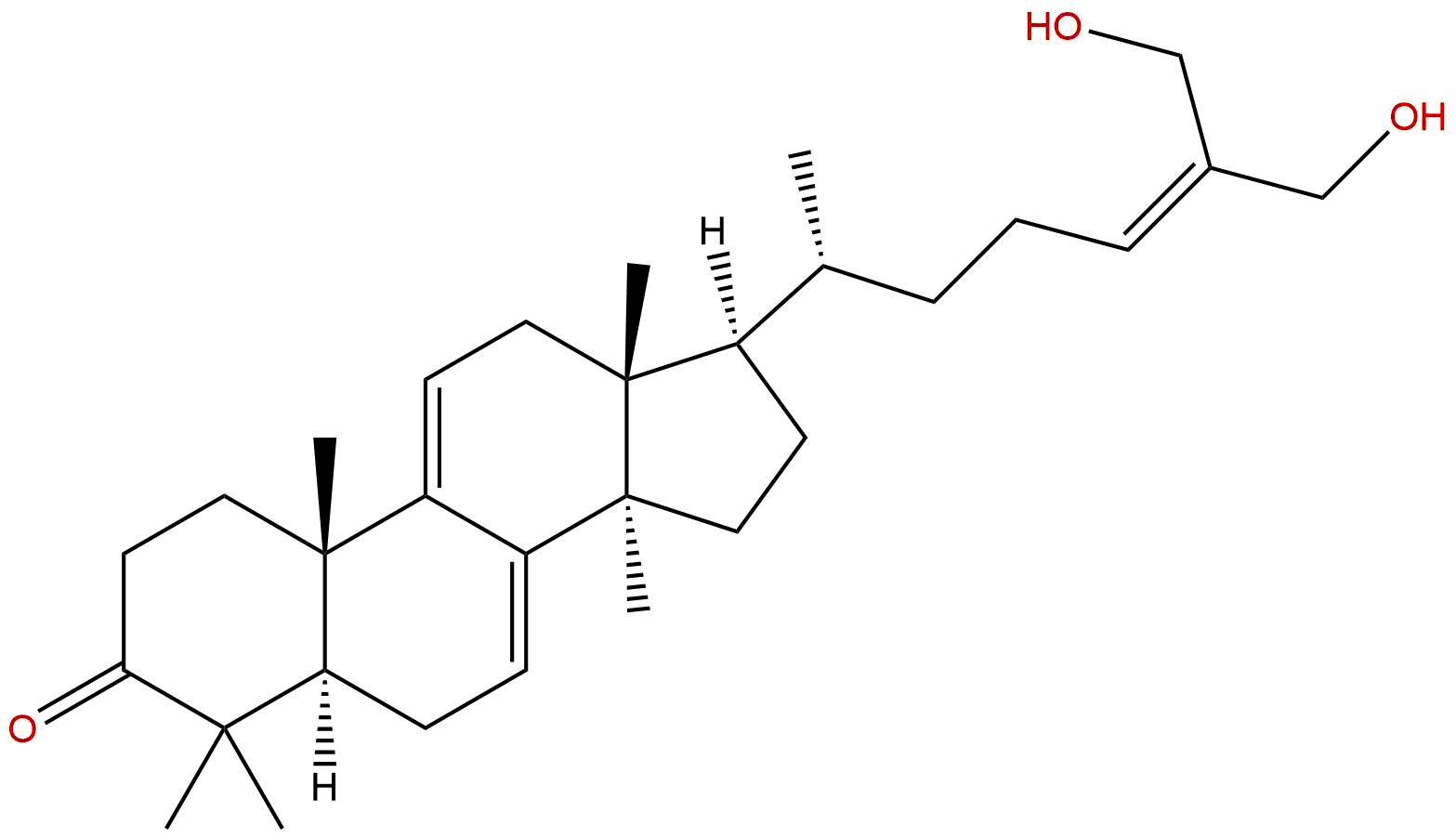


Product name: Ganoderiol F
Synonym name:
Catalogue No.: SBP00787
Cas No.: 114567-47-4
Formula: C30H46O3
Mol Weight: 454.695
Botanical Source: Ganoderma
Type of Compound: Triterpenoids
Purity: 95%~99%
Analysis Method: HPLC-DAD or/and HPLC-ELSD
Identification Method: Mass, NMR
Packing: Brown vial or HDPE plastic bottle
Storage: Store in a well closed container, protected from air and light. Put into refrigerate or freeze for long term storage.
Whenever possible, you should prepare and use solutions on the same day. However, if you need to make up stock solutions in advance, we recommend that you store the solution as aliquots in tightly sealed vials at -20℃. Generally, these will be useable for up to two weeks.
The product could be supplied from milligrams to grams
Inquire for bulk scale.
For Reference Standard and R&D, Not for Human Use Directly.
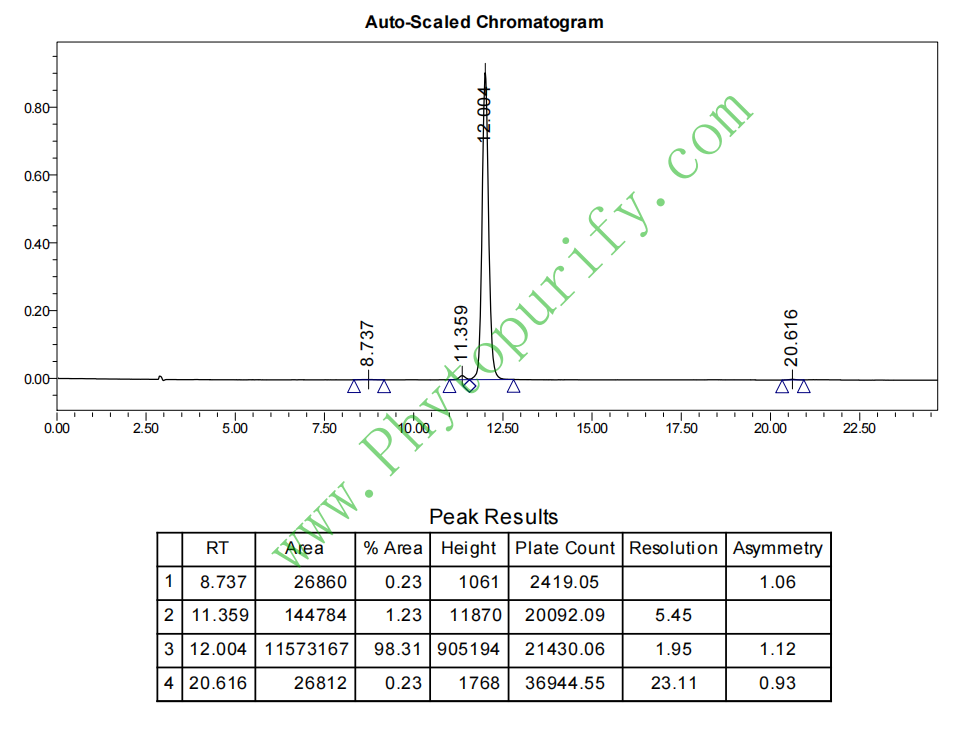
HPLC of Ganoderiol F
Storage conditions:Short-term storage at 2~8℃, long-term storage at -20 ~ -80℃
57.5300
5.7945
5.7945
.0023
4.7086
12.4499
High
88.0655
4.9083
No
Yes
No
No
No
No
0.0
No
No
Yes
Yes
Ganoderiol F, CAS number 114567-47-4, is a traditional and precious medicinal fungus called Ganoderma lucidum(Ganoderma lucidum)Tetracyclic triterpenoids isolated from the middle. As one of the many bioactive components in Ganoderma lucidum, ganoderic acid F has attracted much attention in the fields of natural product chemistry and tumor pharmacology research in recent years due to its unique chemical structure and significant pharmacological activity. Its molecular formula is C30H46O3, with a molecular weight of 454.6950 g/mol, and it belongs to the highly oxidized lanostane type triterpenoid.
Lingzhi is known as the "fairy grass" and has a history of more than two thousand years of application in Eastern medicine. It is commonly used to replenish qi and calm the mind, relieve cough and asthma, and prolong life. Modern pharmacological research reveals that its extensive health benefits are closely related to its rich active ingredients such as triterpenoids and polysaccharides. Lingzhi alcohol F is one of the representative triterpenoid monomers. Early research found that it Ganoderma amboinense First isolated from a fungus of the Ganoderma genus and confirmed to be capable of Inducing cancer cell senescence Subsequent research further expanded its activity spectrum, including Anti inflammatory, cytotoxic, and anti human immunodeficiency virus (HIV)Waiting for action. Its mechanism of action involves inhibiting topoisomerase activity, suppressing HIV-1 protease, inducing heme oxygenase-1 (HO-1) expression, activating MAPK/ERK signaling pathway, upregulating cyclin dependent kinase inhibitor p16, and inhibiting lipopolysaccharide (LPS) - induced nitric oxide (NO) production. These findings position Ganoderma lucidum alcohol F as a lead compound with multi-target and multi pathway regulatory potential, particularly in the field of anti-tumor drug development, showing promising prospects.
The chemical structure of Ganoderma lucidum alcohol F belongs to tetracyclic triterpenoids, and its skeleton is highly modified lanostane type. From the provided SMILES string (C C@H[C @ H] 1CC [C @ @] 2 (C) C3=CCC4C (C) (C) C (=O) CC [C @] 4 (C) C3=CC [C @] 12C) can be analyzed for its structural characteristics: the molecule contains four fused rings (A, B, C, D rings), forming the classic triterpenoid core skeleton. In addition, there are multiple methyl groups, one terminal double bond, two hydroxyl groups (- OH), and one carbonyl group (C=O) structurally connected. These functional groups, especially multiple oxygen-containing groups, play a decisive role in their biological activity and physicochemical properties. The "@" and "@ @" symbols in SMILES indicate the absolute configuration of the chiral center, indicating that ganoderic acid F is a natural product with a specific stereoconfiguration, which is crucial for its specific recognition with biological targets.
Analyzing its physicochemical properties from the parameters of drug properties:
- Molecular weight (MW):454.70 g/mol, Slightly higher than conventional small molecule drugs (usually<500 Da), but still within an acceptable range.
- Lipid water partition coefficient (LogP/LogD): 5.79. This is a relatively high value, indicating that Ganoderma lucidum alcohol F Strong fat solubility, extremely poor water solubility This is consistent with the measured water solubility data (0.0023, usually measured in mg/mL or mol/L, indicating extremely difficult solubility in water). A high LogP value usually indicates that the compound is easily able to penetrate the cell membrane, but it may also lead to poor oral absorption, a tendency towards adipose tissue distribution in the body, and increased metabolic burden.
- Topological Polarity Surface Area (TPSA)57.53 Å ². This value reflects the degree to which polar atoms (such as O, N) in the molecule are exposed to the surface. 57.53 Å ² is at a moderately low level, combined with its high LogP value, indicating its Good membrane permeability。
- Caco-2 permeability 12.45 (usually measured in 10 ⁻⁶ cm/s), with a relatively high value, further confirms its good intestinal epithelial cell penetration potential, which is a positive signal for its oral absorption.
- Blood-brain barrier (BBB) penetrability Predicted as' high '. This is closely related to its high lipid solubility and moderately low TPSA, suggesting that ganoderic acid F may enter the central nervous system, which may be an advantage for treating brain tumors or central nervous system related diseases, but potential neurotoxic risks should also be monitored.
In summary, Ganoderma lucidum alcohol F is a lipid soluble triterpenoid molecule with medium molecular weight, high lipid solubility, low water solubility, and good membrane permeability.
The plant source of Ganoderma lucidum alcohol F is clearly defined as Reishi Mushroom, scientific name Ganoderma lucidum (Curtis) P. Karst., Belonging to the Ganoderma family. Lingzhi is a woody saprophytic fungus that mainly grows on the dead wood or tree stumps of broad-leaved trees. Its fruiting body has a lacquer like luster and cloud like ring patterns, which are its unique morphological characteristics in the fungal kingdom.
Lingzhi has a long history of application and is known as the "auspicious grass" and "immortal grass". It is listed as a top-grade herb in the "Shennong Bencao Jing", which records that it is "used to nourish the heart and qi, nourish the middle, increase wisdom, and never forget. Long term consumption can lighten the body and prevent aging, and prolong the life of the immortal". In traditional Chinese medicine theory, Ganoderma lucidum has a flat nature, a sweet taste, and is associated with the heart, lungs, liver, and kidney meridians Tonifying qi and calming the mind, relieving cough and asthma Its efficacy is commonly used to treat symptoms such as restlessness, insomnia, palpitations, fatigue, coughing and wheezing, and lack of appetite. Its medicinal forms are diverse, including decoction, soaking in wine, brewing tea, or making pills and powders.
Modern scientific research has confirmed that the medicinal value of Ganoderma lucidum is mainly attributed to its two main active ingredient groups:Polysaccharides and triterpenoids Polysaccharides are mainly composed of β - glucan, which plays a major role in immune regulation; And triterpenoids, especially ganoderic acid, ganoderic acid, etc., are considered to be their Anti tumor, hepatoprotective, anti-inflammatory, analgesic The main material basis for activity. Lingzhi alcohol F is an important member of the Ganoderma triterpenoid family. from Ganoderma amboinense The compound was isolated from Ganoderma lucidum (belonging to the same genus), reflecting the similarity and diversity in chemical composition of Ganoderma fungi. The description of Ganoderma lucidum in traditional applications as "supporting the body and strengthening the foundation" and "prolonging life" coincides with the modern research finding that its components (including Ganoderma lucidum alcohol F) have the functions of regulating immunity, inducing cancer cell aging, and antioxidation, providing strong evidence for the modern scientific interpretation of traditional wisdom.
Lingzhi alcohol F exhibits various pharmacological activities, with its core being antitumor Function. The existing description and target information together outline a multi target, multi pathway synergistic anti-tumor mechanism network.
Core pharmacological activity:
1. Inducing cancer cell senescence This is one of the most significant characteristics of Ganoderma lucidum alcohol F. Cellular aging is a stable state of cell cycle arrest and an important barrier for the body to inhibit the occurrence and development of tumors. Lingzhi alcohol F can push proliferating cancer cells towards an aging state, thereby inhibiting their unlimited proliferation.
2. cytotoxicity Has direct growth inhibition or killing effects on multiple cancer cell lines.
3. anti-inflammatory activity Reduce inflammatory response by inhibiting LPS induced NO production. Excessive inflammation is closely related to the formation of tumor microenvironment and tumor progression.
4. Antiviral activity In vitro experiments have shown that it can inhibit HIV-1 protease activity (IC50 20-40 μ M) and has certain anti HIV potential.
Mechanism of action and target analysis:
The five target information provided (TP53, CASP3, MYC, BAX, CDKN1A) provide key clues for a deeper understanding of their anti-tumor mechanisms. These targets do not exist in isolation, but form a core network that regulates cell fate (proliferation, apoptosis, aging).
Mechanism integration:
Based on existing descriptions and target information, it can be inferred that the anti-tumor mechanism of Ganoderma lucidum alcohol F may be as follows: after entering cells, the compound may induce certain intracellular stress (such as oxidative stress, which can be inferred from inducing HO-1 expression),Activate p53 (TP53)Activated p53 upregulates transcription on one hand p21(CDKN1A)Along with the known upregulation of p16, it strongly inhibits the cell cycle progression and induces cell aging; On the other hand, p53 can also transcribe upregulated pro apoptotic proteins such as BAX And may inhibit MYC The expression. The activation of BAX leads to the initiation of mitochondrial apoptosis pathway, ultimately resulting in activation Caspase-3(CASP3)Execute the apoptosis program. At the same time, its inhibitory effects on topoisomerases (affecting DNA replication and repair) and anti-inflammatory effects (improving the tumor microenvironment) also contribute to its anti-tumor effects from different perspectives. Therefore, Ganoderma lucidum alcohol F intervenes simultaneously through simultaneous intervention Cell cycle (aging), apoptosis, and oncogene signaling Wait for multiple key nodes and unleash the anti-tumor effect of a multi pronged approach.
Based on the provided pharmacological parameters and classic drug design principles (such as Lipinski's Five Rules), a preliminary evaluation of the potential of Ganoderma lucidum alcohol F as an oral drug lead compound can be conducted.
Lipinski's Five Rules Analysis ("Five Principles of Similar Drugs"):
1. Number of hydrogen bond donors (HBD)From the structural formula, it contains 2 hydroxyl groups (- OH), so HBD ≤ 5,Comply with。
2. Number of hydrogen bond acceptors (HBA)Containing 3 oxygen atoms (2 OH, 1 C=O), therefore HBA ≤ 10,Comply with。
3. Molecular weight (MW):454.70 > 500,not conform to(Slightly exceeding the standard).
4. Lipid water partition coefficient (LogP):5.79 > 5,not conform to(Significantly exceeding the standard).
5. Number of rotatable keys Based on structural inference, the quantity is moderate and usually does not become a major obstacle.
According to the rules, if a compound violates two or more of the above criteria (usually referring to MW>500, LogP>5, HBD>5, HBA>10), there may be oral absorption or permeability issues. Lingzhi alcohol F Violation of MW and LogP, remind them Oral bioavailability may face challenges High LogP (5.79) and extremely low water solubility (0.0023) are its main shortcomings, which may lead to poor solubility and irregular absorption in the gastrointestinal tract.
Evaluation of other key pharmacological parameters:
- Absorption and penetration The high Caco-2 permeability (12.45) and predicted high BBB permeability indicate excellent transmembrane permeability once dissolved. The rate limiting step for oral absorption is likely to be Dissolution rate But not permeability.
- Distribution and Metabolism A high plasma protein binding rate (PPB: 88.07%) means a low concentration of free drugs in the blood, which may affect their efficacy and tissue distribution. The lack of inhibition of hERG channels reduces the risk of cardiac toxicity (long QT syndrome), which is a positive signal.
- toxicity AMES test negative (0.0) and chromosomal aberration negative, preliminarily indicating no genetic toxicity. However, it should be noted that,Skin sensitization (Skid_Sens: Yes) And potential Elevated liver toxicity markers (Ser_SST/ALT: Yes) It is an important safety warning for it. The latter suggests that long-term or high-dose use may cause liver damage, which is not uncommon in natural triterpenoids and must be closely monitored in subsequent development.
- Feasibility of synthesis The values of synthetic accessibility score (SyneAccess: 4.91) and effective permeability (Peff: 4.71) need to be interpreted in conjunction with specific scales, but typically lower synthetic accessibility means higher costs for obtaining the compound from natural extraction or total synthesis.
comprehensive evaluation:
Lingzhi alcohol F is a compound with Strong multi-target anti-tumor pharmacological activity, but there are significant deficiencies in drug efficacy The lead compound. Its advantages lie in its unique mechanism of action (inducing aging+apoptosis), good membrane permeability, and central penetration potential. The main challenge lies in Poor water solubility, high fat solubility, potential liver toxicity, and skin sensitization In medicinal chemistry optimization, modifying its structure to Reduce LogP and improve water solubility The key direction to enhance its pharmacological properties is to introduce polar groups, prepare prodrugs or salt forms. Meanwhile, it is necessary to conduct in-depth preclinical toxicology studies to clarify the dose-dependent and reversible nature of its liver toxicity.
At present, research on Ganoderma lucidum alcohol F is mainly focused on Preclinical research stage This includes in vitro cell model studies and a small number of animal in vivo experiments. The research focus is on exploring the mechanism of its anti-tumor effect (especially inducing aging), gradually revealing its network of key targets such as p53, p21, MYC, BAX through modern molecular biology techniques. Its anti-inflammatory and anti HIV activities also provide clues for expanding its application fields.
However, there are also some limitations to the research: firstly, most of the activity data comes from in vitro experiments, lacking strong evidence Pharmacodynamic validation in vivo Especially based on its poor solubility, the selection of dosage forms and efficacy evaluation in animal models need to be carefully designed. Secondly, it The study of pharmacokinetic (ADME) properties is not yet systematic However, little is known about its absorption, distribution, metabolism, and excretion processes in the body. Finally, as mentioned earlier, its inherent Physical and chemical properties and potential toxicity This is the main obstacle to clinical application.
Future research directions and application prospects:
1. Structural optimization and derivative development This is the core path to promote the application of Ganoderma lucidum alcohol F. Pharmaceutical chemists can use it as a parent nucleus to prepare a series of derivatives or analogues through semi synthetic or total synthetic methods, aiming to maintain or enhance its anti-tumor activity while significantly improving its water solubility and reducing LogP, and eliminating or reducing liver toxicity and sensitization.
2. Research on a new drug delivery system Using nanotechnology, such as liposomes, polymer micelles, nanoemulsions, etc., to encapsulate Ganoderma lucidum alcohol F can effectively improve its water dispersibility, stability, targeting, and bioavailability, while potentially reducing its systemic toxicity. This may be a practical strategy to bypass its inherent rationalization defects and accelerate its transformation.
3. Combination therapy research Explore the combined application of Ganoderma lucidum alcohol F with existing chemotherapy drugs, targeted drugs, or immunotherapy. Its unique mechanism of inducing aging may have a synergistic effect with traditional chemotherapy that induces apoptosis, or help overcome tumor drug resistance.
4. Deep exploration of the mechanism of action By utilizing proteomics, metabolomics and other technologies, a more comprehensive intracellular action map of Ganoderma lucidum alcohol F can be drawn, and new targets and signaling pathways can be discovered to provide theoretical basis for its precise application.
5. Expand the field of diseases Based on its anti-inflammatory and neuroprotective potential (high BBB penetration), explore its application value in neurodegenerative diseases (such as Alzheimer's disease), autoimmune diseases, and other fields.
In summary, Ganoderma lucidum alcohol F, as an active molecule derived from the traditional treasure Ganoderma lucidum, is a model for modern natural medicine research to move from traditional experience to scientific interpretation. Although it faces challenges in drug development, its unique chemical structure and multi-target anti-tumor mechanism endow it with high research value and development potential. Through interdisciplinary and modern research methods, reasonable modification and optimization of it are expected to give birth to a class of anti-tumor candidate drugs based on natural triterpenoid skeletons with novel mechanisms of action in the future, or as important pharmacological tool molecules, continuing to contribute to revealing the mysteries of life and overcoming diseases.
