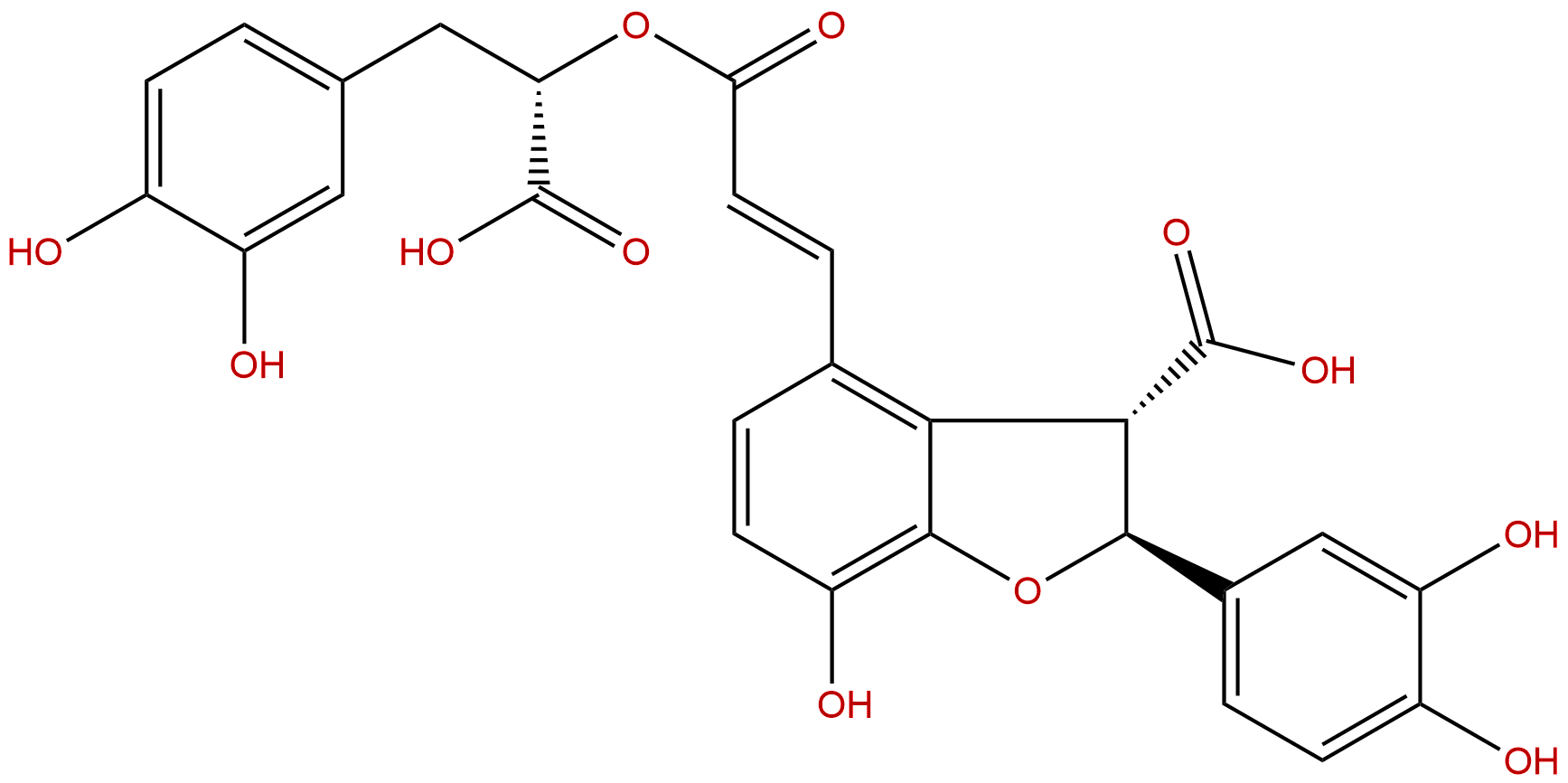


Product name: Lithospermic acid
Synonym name: Lithospermic acid A; Clinopodic acid H
Catalogue No.: BP0878
Cas No.: 28831-65-4
Formula: C27H22O12
Mol Weight: 538.461
Botanical Source: Clinopodium chinense var. parviflorum, Cynoglossum officinale, Cordia spinescens, Lycopus europeus, Salvia miltiorrhiza, Lithospermum ruderale and Lithospermum officinale
Physical Description: Powder
Type of Compound: Phenylpropanoids
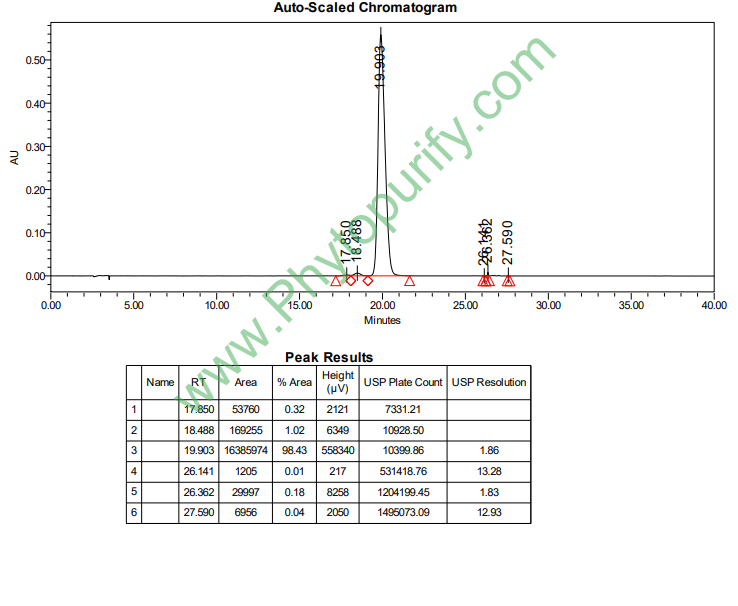
Purity: 95%~99%
Analysis Method: HPLC-DAD or/and HPLC-ELSD
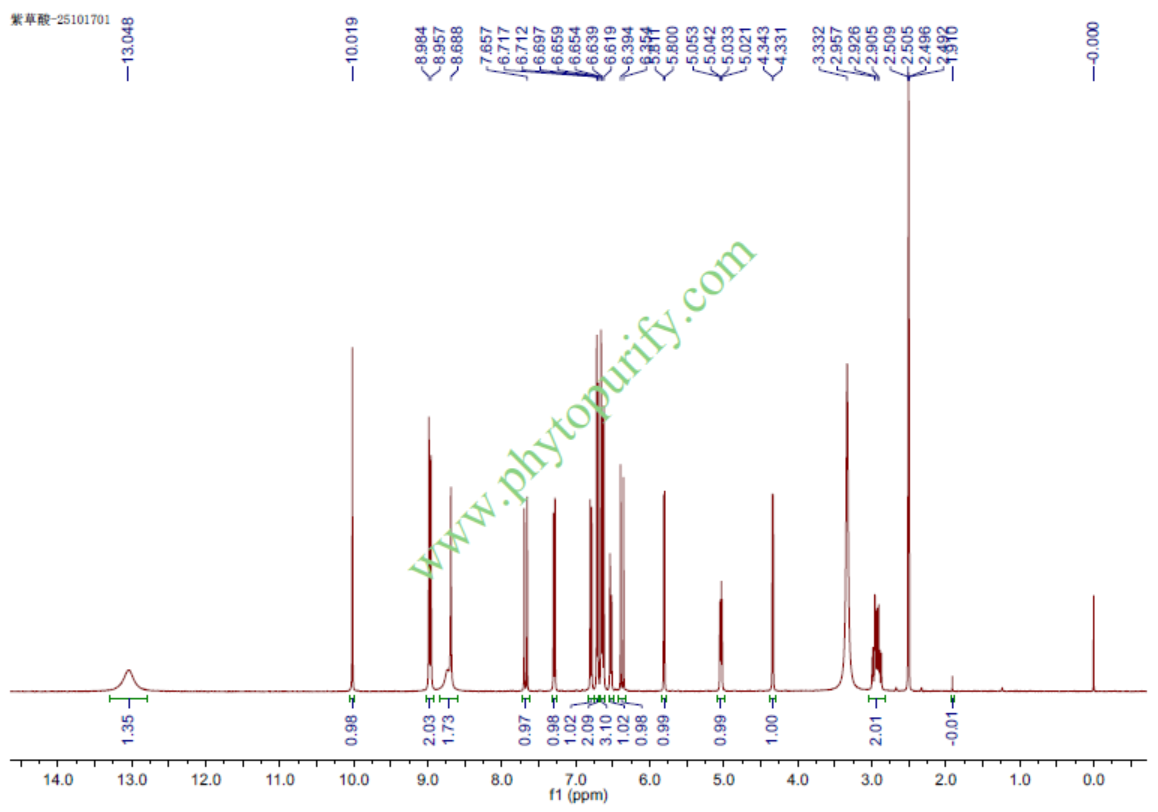
Identification Method: Mass, NMR
Packing: Brown vial or HDPE plastic bottle
Storage: Store in a well closed container, protected from air and light. Put into refrigerate or freeze for long term storage.
Whenever possible, you should prepare and use solutions on the same day. However, if you need to make up stock solutions in advance, we recommend that you store the solution as aliquots in tightly sealed vials at -20℃. Generally, these will be useable for up to two weeks.
The product could be supplied from milligrams to grams, up to kilograms
Inquire for bulk scale.
Descriptions:
Lithospermic acid (LSA) was originally isolated from the roots of Salvia mitiorrhiza ,
has antioxidant effects, is a competitive inhibitor of xanthine oxidase (XO), can directly scavenge superoxide and inhibit superoxide production in vitro, and presents hypouricemic and anti-inflammatory actions in vivo.[1]
Lithospermic acid has inhibitory effects on proliferation and migration of rat vascular smooth muscle cells.[2]
Lithospermic acid derivatives from Lithospermum erythrorhizon can increase expression of serine palmitoyltransferase in human HaCaT cells.[3]
Lithospermic acid possesses anti-HIV activity.[4]
Treatment with lithospermic acid B has a preventive effect on the development of diabetic retinopathy in this animal model, probably because of its antioxidative effects and anti-inflammatory effects.[5]
Lithospermic acid can attenuate 1-methyl-4-phenylpyridine-induced neurotoxicity by blocking neuronal apoptotic and neuroinflammatory pathways.[6]
Lithospermic acid has hepatoprotective effects against carbon tetrachloride-induced liver oxidative damage in vitro and in vivo.[7]
Lithospermic acid can attenuate mesenteric ischemia reperfusion injury in rat intestines by increasing tissue SOD and GPx activities and decreasing MDA and MPO levels, also improves morphological alterations which occurred after periods of reperfusion.[8]
References:
[1] Liu X, Chen R, Shang Y, et al. Chem Bioll Interact, 2008, 176(2–3):137-42.
[2] CHEN, Wen-yi, WANG, et al. Acta Pharmacol Sin, 2009, 30(9):1245-52.
[3] Thuong P T, Kang K W, Kim J K, et al. Bioorg Med Chem Lett, 2009, 19(6):1815-7.
[4] Varadaraju T G, Hwu J R. Org Biomol Chem, 2012, 10(28):5456-65.
[5] Jin C J, Yu S H, Wang X M, et al. Plos One, 2014, 9(6):e98232-e98232.
[6] Lin Y L, Tsay H J, Lai T H, et al. J Biomed Sci, 2015, 22(1):1-13.
[7] Chan, Ho. Oncol Rep, 2015,34(2):673-80.
[8] Ozturk H, Terzi E H, Ozgen U, et al. Adv Clin Exp Med, 2012, 21(4):433-9.
[9] Yan L U, Sai-Wei W U, Dan-Hua X U. China j Chinese Materia Medica, 2015, 40(9):1744-6.
HPLC of Lithospermic acid
HNMR of Lithospermic acid
Storage conditions:Short-term storage at 2~8℃, long-term storage at -20 ~ -80℃
Lithospermic acid (CAS number: 28831-65-4) is a polycyclic phenolic carboxylic acid compound derived from Salvia miltiorrhiza. Danshen, as a traditional Chinese medicinal herb, is widely used in clinical practice due to its significant cardiovascular and cerebrovascular protective effects. In recent years, with the deepening of research on the active ingredients of Danshen, shikonin has received widespread attention due to its unique chemical structure and multiple biological activities. A large number of in vitro and in vivo experiments have shown that oxalic acid exhibits good pharmacological activities in antioxidant, anti-inflammatory, and hepatoprotective aspects, especially in the acute liver injury model induced by carbon tetrachloride (CCl4), showing significant protective effects. In addition, shikonin exerts its anti-inflammatory effects by regulating various inflammation related signaling pathways and key molecular targets, providing a theoretical basis for its potential development as a natural medicine.
This article aims to systematically review the chemical structure and physicochemical properties, plant sources and extraction methods, pharmacological activity and mechanism of action, drug evaluation and pharmacokinetic characteristics of purple oxalic acid. Combined with its clinical application prospects, it comprehensively summarizes the research progress of purple oxalic acid and provides reference for subsequent basic and clinical research.
Purple oxalic acid is a polycyclic phenolic carboxylic acid with a molecular formula of C27H22O12 and a molecular weight of 538.4610. Its structure contains multiple phenolic hydroxyl and carboxyl groups, endowing it with excellent antioxidant capacity. The LogP value of purple oxalic acid is about 2.08, indicating its moderate lipid solubility, which is beneficial for cell membrane penetration, but its water solubility is low (0.2089), suggesting its limited solubility in vivo. Its topological polar surface area (TPSA) is 211.28 Å ², and a higher polarity surface area may limit its ability to pass through the blood-brain barrier, which is consistent with its low blood-brain barrier permeability characteristics.
Zicao acid does not exhibit hERG channel inhibition, indicating a low risk of cardiac toxicity. The Ames mutagenicity test result is 0.0, indicating that there is no significant genetic toxicity risk of shikonin acid. These physicochemical properties and safety indicators have laid a solid foundation for the drug development of purple oxalic acid.
Purple oxalic acid is mainly isolated from the roots and rhizomes of Salvia miltiorrhiza. Salvia miltiorrhiza is the dried root of Salvia miliotrhiza Bunge, a plant in the family Lamiaceae, widely distributed in northern China and the Korean Peninsula. Danshen contains various phenolic compounds, among which purple oxalic acid is one of the important active ingredients.
Traditional extraction methods often use water extraction or ethanol extraction, combined with liquid-liquid distribution, column chromatography and other techniques to purify purple oxalic acid. Modern extraction processes are gradually introducing ultrasonic assisted extraction, microwave-assisted extraction, and high-performance liquid chromatography (HPLC) separation techniques to improve extraction efficiency and purity. The specific steps include:
This method can obtain high-purity purple oxalic acid, meeting the needs of pharmacological research and formulation development.
Purple oxalic acid exhibits significant antioxidant activity, capable of clearing free radicals and reducing cellular damage caused by oxidative stress. In the CCl4 induced liver injury model, shikonin significantly reduces liver cell necrosis and inflammatory response by reducing the level of malondialdehyde (MDA) in liver tissue, increasing the activity of superoxide dismutase (SOD) and glutathione peroxidase (GSH Px), and promoting liver tissue repair.
In vitro experiments have shown that oxalic acid can inhibit CCl4 induced apoptosis of liver cells, protect mitochondrial function, reduce intracellular ROS generation, and maintain intracellular redox balance.
Zicao acid exerts a wide range of anti-inflammatory effects by regulating various inflammatory factors and signaling pathways. Its target involves key inflammatory mediators such as IL-6, TNF - α, STAT3, NFKB1, etc. Research has shown that oxalic acid can inhibit the expression and release of inflammatory factors, alleviate inflammatory reactions, and improve tissue damage.
In addition, purple oxalic acid has a regulatory effect on inflammation related ion channels TRPV1 and TRPA1, reducing neuroinflammation and pain response. Its inhibitory effect on cyclooxygenases PTGS1 and PTGS2 further illustrates the multi-target nature of its anti-inflammatory mechanism.
Zicao acid also exhibits certain anti-tumor, antibacterial, and neuroprotective activities. Although related research is still in its early stages, its polyphenol structure endows it with broad potential for biological activity.
The pharmacological effects of oxalic acid are mainly achieved by regulating oxidative stress and inflammatory signaling pathways. Its mechanism of action includes:
Antioxidant mechanism Zicao acid directly scavenges free radicals and activates endogenous antioxidant enzyme systems (such as SOD and GSH Px), reducing ROS levels and protecting cells from oxidative damage.
Anti inflammatory mechanism Purple oxalic acid inhibits the nuclear factor kappa B (NF - κ B) signaling pathway, reduces the expression of pro-inflammatory factors TNF - α and IL-6, blocks STAT3 signaling, and alleviates inflammatory responses. Its regulation of CASP1 (inflammasome component) helps to inhibit the mature release of inflammatory mediator IL-1 β.
Adjusting ion channels By acting on TRPV1 and TRPA1, purple oxalic acid regulates calcium ion influx, relieving neuroinflammation and pain.
Inhibition of cyclooxygenase Inhibition of PTGS1 and PTGS2, reduction of prostaglandin synthesis, exerting anti-inflammatory and analgesic effects.
Regulating nitric oxide synthase Inhibit inducible nitric oxide synthase (NOS2), reduce excessive NO production, alleviate inflammation and oxidative damage.
The synergistic effects of these multiple targets and pathways have shown promising therapeutic potential for purple oxalic acid in various disease models.
The pharmacological evaluation of purple oxalic acid shows that it has certain potential for drug development. Its molecular weight of 538.46 is slightly higher than the ideal range of traditional oral drugs, but its LogP value is moderate, indicating that its lipid solubility is suitable for cell membrane penetration. High TPSA values and low blood-brain barrier permeability suggest that it mainly acts on peripheral tissues, reducing the risk of adverse reactions in the central nervous system.
Zicao acid does not inhibit hERG channels and reduces the risk of cardiac toxicity; Ames test negative, with high safety. Its low water solubility may limit oral bioavailability and needs to be improved through formulation optimization or structural modification.
Pharmacokinetic studies have shown that oral absorption of shikonin is slow and its bioavailability is limited. It is mainly metabolized by the liver and excreted through bile and urine. Its half-life is moderate and suitable for daily administration.
In the future, further research on in vivo pharmacokinetics and toxicology systems is needed to clarify their metabolic pathways and safe dosage ranges.
Purple oxalic acid, as an important active ingredient in Danshen, has broad clinical application prospects due to its significant antioxidant, anti-inflammatory, and hepatoprotective effects. Its therapeutic potential in liver diseases, especially acute and chronic liver injury, liver fibrosis, etc., is worth further exploration.
In addition, purple oxalic acid regulates multiple inflammation related targets, demonstrating the potential for treating inflammatory diseases such as arthritis, neuroinflammation, and cardiovascular inflammation. Its low toxicity and good safety provide assurance for its clinical translation.
Future research should focus on:
Through interdisciplinary collaboration, purple oxalic acid is expected to become an important candidate molecule in the development of natural product drugs.
Purple oxalic acid, as a polycyclic phenolic carboxylic acid derived from Salvia miltiorrhiza, exhibits extensive and significant antioxidant, anti-inflammatory, and hepatoprotective activities. Its multi-target mechanism of action and good safety provide a solid foundation for its drug development. Although further breakthroughs are needed in pharmacokinetics and clinical research, shikonin has significant potential as a new natural medicine due to its unique biological properties and traditional medicinal value. In the future, through in-depth mechanism research and clinical verification, purple oxalic acid is expected to bring new hope for the treatment of various inflammations and liver diseases.
