Introduction/Overview
Natural products, as an important source of drug discovery, play an irreplaceable role in the long history of human fight against diseases. Among them, triterpenoids have always been a hot topic in medicinal chemistry and pharmacology research due to their structural diversity and wide range of biological activities. Ganoderma lucidum(Ganoderma lucidum)As a rare fungus with thousands of years of medicinal history, it is known as the "fairy grass". Its pharmacological active substances are mainly concentrated in polysaccharides and triterpenoids. Ganoderma triterpenoids, especially ganoderic acid compounds, have been proven to have various biological activities such as anti-tumor, anti-inflammatory, hepatoprotective, and antiviral effects. They are one of the core substances for Ganoderma to exert its "strengthening the body and consolidating the foundation" effect.
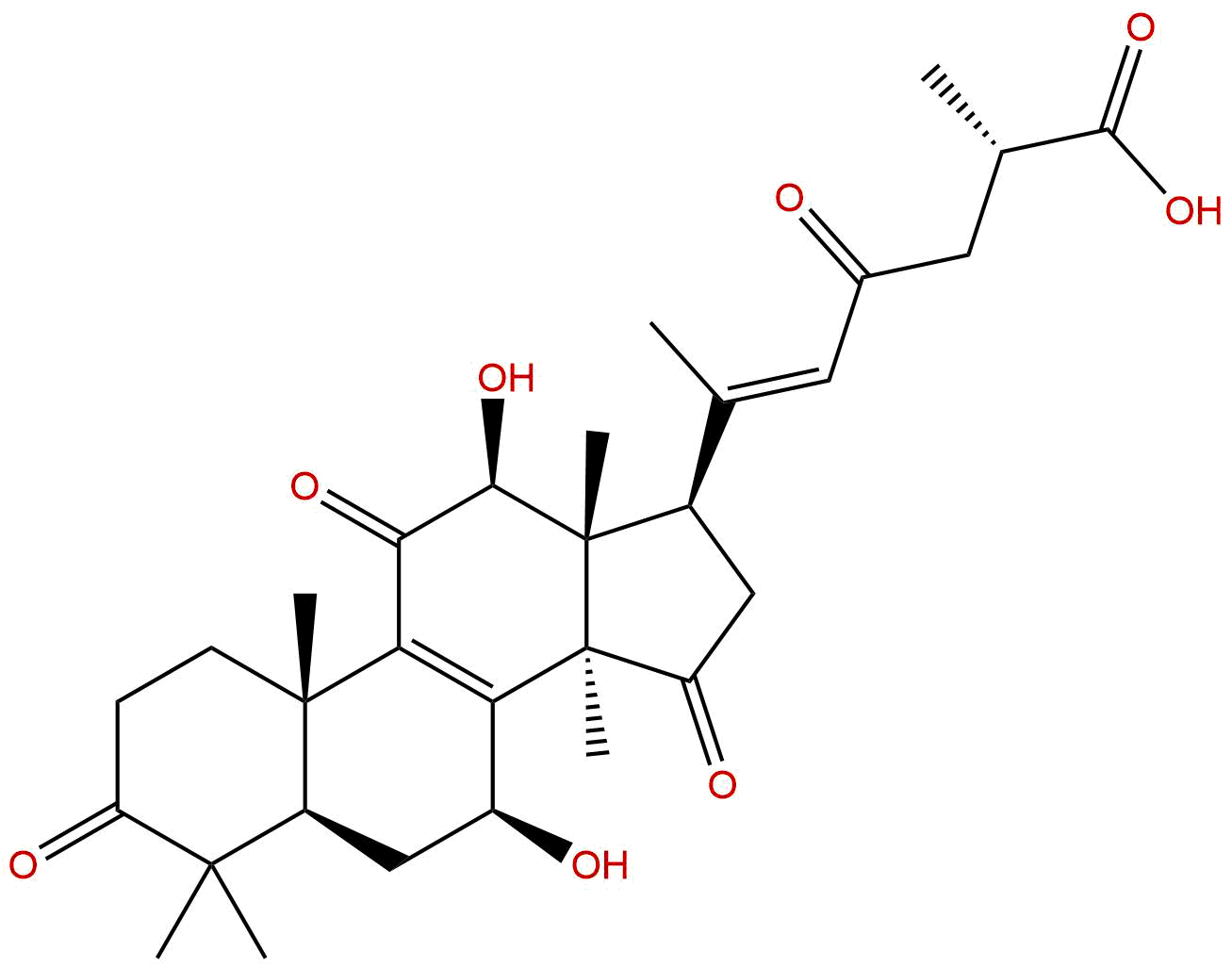
Ganoderma acid E (CAS number: 110241-23-1) is a lanostane type triterpenoid acid with significant biological activity isolated from Ganoderma lucidum. In recent years, with the advancement of isolation and identification techniques and the expansion of pharmacological research models, the antiviral potential of ganoderic acid E, especially its inhibitory effect on herpes virus and human immunodeficiency virus (HIV), has gradually attracted high attention from researchers. Its function involves key links in the lifecycle of multiple viruses, exhibiting the characteristic of multi-target action, which provides a valuable lead compound template for the development of new, efficient, and low toxicity antiviral drugs. This article aims to systematically review the chemical structure, plant origin, pharmacological activity, mechanism of action, pharmacological evaluation, and clinical application prospects of ganoderic acid E, in order to provide comprehensive scientific references for the in-depth research and development of this compound.
Chemical structure and physicochemical properties
Lingzhi acid E belongs to highly oxidized lanostane type tetracyclic triterpenoids. Its basic skeleton consists of four rings A, B, C, and D, with a characteristic 5/6/6/6 ring system. Similar to many ganoderic acids, its C-17 side chain is a carboxylic acid group, which is the basis for its acidity and naming. Its molecular structure usually contains multiple hydroxyl, carbonyl, and possibly double bonds, and the presence of these functional groups not only determines its physicochemical properties, but also closely relates to its biological activity.
According to its pharmacological parameters, the molecular weight of ganoderic acid E is 528.6420, which belongs to the category of medium molecular weight compounds. The calculated lipid water partition coefficient (LogP) is 2.3259, indicating that the compound has a certain lipophilicity but is not highly hydrophobic, which is beneficial for its penetration and distribution in biofilms. Its topological polar surface area (TPSA) is 146.0400 Å ², which is relatively high. This is mainly attributed to the presence of multiple polar groups such as hydroxyl and carboxyl groups in the molecule, which are key sites for hydrogen bonding but may also affect its transmembrane permeability. The water solubility parameter is 0.0579, indicating that it has low solubility in water and belongs to a poorly soluble compound. This is a key issue that needs to be considered and addressed in the development of its formulation.
In terms of preliminary toxicity prediction, the Ames test predicted a value of 0.0, indicating that it may not have a direct genetic toxicity risk. The prediction of hERG inhibition as' no 'indicates a low potential risk of causing QT interval prolongation in the heart, which is a positive signal for its cardiovascular safety as a candidate drug. However, its blood-brain barrier permeability prediction is "low", which means that the compound may have difficulty entering the central nervous system, which may be a limitation for treating central nervous system viral infections, but may also reduce its potential side effects on the central nervous system.
Plant sources and extraction methods
Lingzhi acid E mainly comes from fungi of the Ganoderma genus in the family Polyporus, including Ganoderma lucidum(Ganoderma lucidum)And Zizhi(Ganoderma sinense)As the main source. This compound is distributed in the fruiting body, mycelium, and spore powder of Ganoderma lucidum, but the content is usually low and is influenced by various factors such as strain, cultivation conditions (such as temperature, humidity, light, and culture medium), growth stage, and harvesting time.
Extracting ganoderic acid E from Ganoderma lucidum materials usually follows the conventional process of natural product chemistry. Firstly, it is necessary to crush the dried fruiting body or mycelium of Ganoderma lucidum to increase the solvent contact area. The extraction methods mainly include:
1. Solvent extraction method The most commonly used method. Reflux extraction or ultrasound assisted extraction is performed using methanol, ethanol, ethyl acetate, or mixed solvents of alcohol and water in different ratios. Ethanol is often preferred due to its low toxicity and high extraction efficiency.
2. Supercritical fluid extraction method Supercritical CO ₂ is used as the extractant, and sometimes ethanol or other entrainers are added to improve the extraction rate of polar components. This method has mild conditions, no solvent residue, and good selectivity, making it an advanced technology for obtaining high-purity triterpenoid components, but the equipment cost is relatively high.
After obtaining the crude extract, a series of separation and purification steps are required to obtain the monomeric compound ganoderic acid E. The conventional process includes:
- Liquid-liquid distribution extraction Using the difference in solubility of crude extracts in different polar solvents (such as petroleum ether, ethyl acetate, n-butanol, water) for preliminary separation, ganoderic acid E is mainly enriched in the ethyl acetate fraction.
- column chromatography It is the core purification method. Silica gel column chromatography is commonly used, with different ratios of petroleum ether ethyl acetate or chloroform methanol gradient elution. For further purification, reversed phase silica gel (such as ODS) and Sephadex gel (LH-20) column chromatography can be used.
- Preparation type high-performance liquid chromatography The removal of trace impurities and the preparation of monomers in the final stage are crucial for efficiently and high-resolution separation of structurally similar ganoderic acid homologues.
The entire separation process requires real-time monitoring using thin-layer chromatography (TLC) or high-performance liquid chromatography (HPLC), and final structural confirmation through techniques such as nuclear magnetic resonance (NMR) and mass spectrometry (MS).
Pharmacological activity research
The pharmacological activity research of ganoderic acid E mainly focuses on its antiviral The role and evidence are relatively concentrated and prominent. Current research suggests that it exhibits inhibitory potential against various viruses, particularly herpes virus and HIV.
1. Antiherpesvirus activity
Herpesvirus is a type of large double stranded DNA virus, including herpes simplex virus type 1 (HSV-1), herpes simplex virus type 2 (HSV-2), and varicella zoster virus (VZV). Research has shown that ganoderic acid E has a significant inhibitory effect on HSV-1 and HSV-2. Its function is not only reflected in inhibiting virus replication in host cells, reducing virus titers, but may also affect the maturation and release of virus particles. For VZV, the compound also showed the ability to inhibit viral plaque formation. Its anti herpesvirus activity may be achieved by interfering with multiple processes such as viral DNA replication, viral gene expression, or viral protein function.
2. Anti human immunodeficiency virus (HIV) activity
HIV is the pathogen that causes AIDS. The study on the anti HIV activity of ganoderic acid E reveals its potential for multi-target action. Experiments have shown that it can inhibit the replication of HIV in host cell lines. Its mechanism of action may involve two aspects: firstly, as Virus entry inhibitor By acting on the co receptors CCR5 and/or CXCR4 on the surface of host cells, the binding of virus envelope glycoprotein gp120 to these receptors is blocked, thereby preventing the virus from entering the cell; Secondly, as Viral enzyme inhibitor It may inhibit the activity of HIV protease (HIV1-PR) or integrase (INT), interfering with the lifecycle of the virus. This dual action mode makes it promising for development as a novel anti HIV drug.
3. Other potential activities
In addition to its clear antiviral activity, based on the commonality of triterpenoids in Ganoderma lucidum, ganoderic acid E may also have other potential pharmacological activities, such as anti-inflammatory, hepatoprotective, anti-tumor, etc., but these activities need further experimental research to confirm and clarify.
Mechanism of action and molecular targets
The antiviral mechanism of ganoderic acid E exhibits multi-target and multi link characteristics, which may have the advantage of less resistance compared to traditional single target antiviral drugs. According to existing research, its molecular targets are mainly divided into two categories: viral targets and host cell targets.
Virus target:
1. Virus DNA polymerase and its auxiliary proteins Regarding herpes virus, ganoderic acid E may act on the viral DNA replication complex. The relevant targets include UL42 (HSV DNA polymerase auxiliary subunit, enhancing the sustained synthesis ability of polymerase), UL54 (human cytomegalovirus DNA polymerase catalytic subunit), etc. Interfering with the function of these proteins can directly inhibit the replication of the viral genome.
2. Viral thymidine kinase (TK)Herpesvirus TK is a key enzyme activated by viral nucleoside analogue drugs such as acyclovir, and is also an important factor in the virus's neuronal latency and reactivation. Lingzhi acid E may affect the activity or expression of TK.
3. Virus immediate early protein ICP27 The ICP27 protein of HSV is an important posttranscriptional regulator, which participates in mRNA splicing, output and translation. Inhibiting the function of ICP27 can widely disrupt the virus gene expression program.
4. Virus envelope glycoprotein D (gD)The gD protein of HSV is a key protein that binds to host cell receptors and is an essential factor for virus entry into cells. Lingzhi acid E may interfere with the interaction between gD and receptors.
5. HIV protease (HIV1-PR) and integrase (INT)These two enzymes are key enzymes for HIV replication. HIV1-PR is responsible for cleaving viral precursor proteins to produce mature functional proteins; INT is responsible for integrating virus cDNA into the host genome. Lingzhi acid E may block the maturation and integration process of HIV by inhibiting the activity of these two enzymes.
Host cell targets:
1. Chemokine receptor CCR5 and CXCR4 This is the main co receptor for HIV to enter host cells. Lingzhi acid E may act as an antagonist or allosteric regulator of these receptors, blocking the binding of HIV gp120 to the receptors and effectively inhibiting virus entry, especially for R5 (using CCR5) and X4 (using CXCR4) virus strains.
2. Myeloperoxidase (MPO)MPO is an enzyme produced by neutrophils that generates oxidants such as hypochlorous acid in inflammatory reactions. The infection of certain viruses (such as HIV) is closely related to the inflammatory microenvironment. Regulating MPO activity may indirectly affect virus replication or disease progression, but the specific underlying mechanisms still need to be studied.
In summary, ganoderic acid E constructs a synergistic antiviral network by simultaneously targeting multiple key proteins (replication, assembly, entry) in the virus lifecycle and factors (receptors) that the virus relies on for survival in host cells. This lays the molecular foundation for its development into drugs with broad-spectrum or synergistic antiviral effects.
Evaluation of drug properties and pharmacokinetics
Although ganoderic acid E has shown encouraging antiviral activity in vitro, its ultimate development into a clinical drug depends on systematic pharmacological evaluation and pharmacokinetic studies. At present, there is a lack of in vivo pharmacokinetic data for this compound, and preliminary evaluations are mainly based on its physicochemical parameters and in vitro data.
Advantage:
1. Security potential Preliminary computer predictions indicate that it has no genetic toxicity (Ames test negative) and low risk of cardiac toxicity (hERG inhibition negative), which is a good starting point.
2. Clear activity and target It has a clear antiviral activity spectrum and relatively clear target of action, which provides direction for subsequent structural optimization and mechanism research.
3. Natural source, novel structure As a natural product, its skeletal structure provides a novel template for drug design.
Challenges and shortcomings:
1. Solubility and permeability Low water solubility (0.0579) and high TPSA (146.04) may lead to low oral bioavailability. This is one of the main obstacles on its path to becoming a drug.
2. Metabolic stability Triterpenoids typically contain multiple metabolic sites (such as hydroxyl groups) and are easily metabolized rapidly by phase I and phase II metabolic enzymes (such as CYP450 enzymes, UGT enzymes) in the body, resulting in short half lives and insufficient exposure.
3. Poor blood-brain barrier permeability The predicted BBB permeability is low, which limits its therapeutic application for central nervous system viral infections.
4. Low natural content Extracting and isolating sufficient compounds directly from Ganoderma lucidum for in-depth research and development is costly and requires the development of chemical synthesis or biosynthetic methods.
Prospects of Pharmacokinetic Research:
In the future, comprehensive preclinical pharmacokinetic studies are needed, including:
- absorb Examine its absorption degree and rate under different administration routes (oral, intravenous, etc.).
- distribution Study its distribution in major tissues and organs such as liver, kidney, lung, and lymphoid tissue to verify its BBB permeability.
- Metabolism Identify its main metabolites, key enzyme systems involved in metabolism, and evaluate its metabolic stability.
- excretion Identify its main excretion pathways (bile, urine) and excretion rate.
These studies will provide insights for future research structural optimization Provide key guidance. For example, improving its water solubility and oral absorption through esterification, salt formation, or prodrug strategies; By introducing or modifying specific functional groups, reduce TPSA and improve metabolic stability; Alternatively, drug delivery systems such as nano formulations (such as liposomes, polymer micelles) and solid dispersions can be used to enhance their overall bioavailability and targeting.
Clinical application prospects and prospects
Lingzhi acid E, as a natural triterpenoid with multi-target antiviral activity, has the following clinical application prospects:
1. Lead compounds of novel antiviral drugs
It is crucial to develop antiviral drugs with new mechanisms of action to address the increasingly severe problem of viral drug resistance. Lingzhi acid E acts simultaneously on virus entry (CCR5/CXCR4) and viral enzymes (HIV1-PR/INT, herpes virus DNA replication mechanism). This multi-target characteristic makes it less likely to induce viral resistance, or it can be combined with drugs with other mechanisms of action to delay the development of resistance. It is expected to be developed as a new generation of HIV entry inhibitors or broad-spectrum antiviral drugs.
2. Potential components of combination therapy
Under the concept of "cocktail therapy", ganoderic acid E can be combined with existing nucleoside reverse transcriptase inhibitors, protease inhibitors, etc., which may produce synergistic or additive effects, reduce the dosage and toxic side effects of each individual drug, and improve overall efficacy. Especially for patients with drug-resistant infections or treatment failures, provide new treatment options.
3. Application in functional foods and health products
Given the long history of consumption of Ganoderma lucidum and its traditional understanding of "strengthening the body and eliminating evil", Ganoderma lucidum extracts or refined products rich in ganoderic acid E can be developed as functional foods or health products to enhance immunity and assist in antiviral treatment (such as assisting in the treatment of herpes zoster and recurrent oral herpes), with high market acceptance.
4. Structural optimization and derivative development
Its chemical structure is an excellent starting point for optimizing drug chemistry. By using semi synthetic or fully synthetic methods, its structure can be systematically modified:
- Improve activity and selectivity By modifying the functional groups on the side chains or loops, the affinity and selectivity for specific targets can be enhanced.
- Improve pharmacokinetic properties As mentioned earlier, the focus is on addressing issues of solubility, metabolic stability, and BBB permeability.
- Reduce potential toxicity Continuously monitor and mitigate potential toxicity risks during the optimization process.
Challenges and future research directions:
- In depth study on the mechanism of action It is necessary to use techniques such as molecular docking, surface plasmon resonance, and co crystallization to accurately elucidate the binding modes and details of its interactions with various target proteins.
- In vitro and in vivo pharmacological validation of the system Validate its efficacy in more clinical disease models, such as humanized mouse HIV models.
- Comprehensive preclinical safety evaluation Complete standardized GLP safety evaluations for acute toxicity, chronic toxicity, and reproductive toxicity.
- Sustainable supply of raw materials Develop efficient chemical total synthesis routes or microbial heterologous synthesis systems to solve the problem of raw material sources.
Conclusion
As an active triterpenoid compound discovered from the traditional medicinal fungus Ganoderma lucidum, ganoderic acid E has become a highlight in the field of natural product antiviral research due to its unique chemical structure and multi-target antiviral pharmacological activity. Its inhibitory effect on herpes virus and HIV, especially its dual intervention ability in key stages of virus entry and replication, demonstrates great potential for development into a new type of antiviral drug. Despite facing challenges such as poor water solubility and metabolic stability in drug development, these are precisely the areas that modern medicinal chemistry and pharmacy can focus on addressing. Through in-depth analysis of its mechanism of action, rational structural optimization, and advanced formulation technology, it is expected to transform this ancient natural molecule into a modern drug with clinical application value. The continuous research on ganoderic acid E not only helps enrich the antiviral drug library, but also provides a successful example for systematically exploring innovative drugs from the traditional Chinese medicine treasure trove, reflecting the eternal value of natural products in responding to the threat of new and recurrent viral infectious diseases. Future research should be dedicated to driving it from the laboratory to clinical practice, ultimately benefiting human health.