Introduction/Overview
Natural products, as an important source of drug discovery, play an irreplaceable role in the long history of human struggle against diseases. Especially for complex pathological processes such as cardiovascular diseases and inflammatory diseases, active ingredients derived from traditional medicinal plants often exhibit advantages in multi-target and multi pathway integrated regulation. Licorice(Glycyrrhiza uralensis Fisch.), As one of the most frequently used herbs in traditional Chinese medicine clinical practice, it is known as the "old man of the country". Its roots and rhizomes are rich in triterpenoid saponins (such as glycyrrhizic acid) and flavonoids, which have a wide range of pharmacological activities, including anti-inflammatory, antiviral, hepatoprotective, anti ulcer, and cardiovascular protection. Among the numerous flavonoids in licorice, neoglycyrrhetin has gradually attracted the attention of researchers in recent years due to its unique biological activity.
New glycyrrhetinic acid is a naturally occurring flavonoid compound that was first isolated and identified from licorice roots. Its research background is closely related to the modernization process of traditional Chinese medicine. Especially in the systematic chemical and pharmacological research on the traditional patented drug Tongmai Yangxin Wan (TMYXP), the new glycyrrhizin was screened and identified as a potential cardioprotective compound. As a classic prescription for treating coronary heart disease and myocardial ischemia, Tongmai Yangxin Pill has always been a research hotspot in terms of the material basis of its therapeutic effect. The discovery of new glycyrrhetinic acid provides key clues for elucidating the pharmacological substance basis of this compound, and also indicates its important development value as a lead compound or candidate drug in the fields of myocardial protection and anti-inflammatory. This article aims to comprehensively review the chemical properties, plant sources, pharmacological activities, mechanisms of action, and potential medicinal properties of new licorice phenol, in order to provide a systematic academic reference for the in-depth research and development of this natural product.
Chemical structure and physicochemical properties
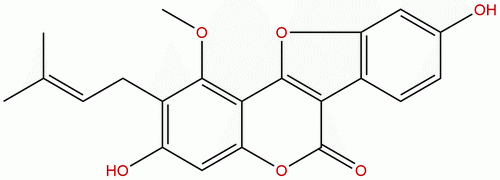
Neoglycyrrhetin belongs to the flavonoid class of compounds, and its chemical structure has a typical flavonoid mother nucleus, namely the 3-phenylchromenone skeleton. Compared with common isoflavones such as daidzein and genistein, the structural characteristics of neoglycyrrhetinic acid are specific substitution patterns on its A and B rings. Specifically, its structure typically contains multiple hydroxyl and methoxy substituents, which play a decisive role in its biological activity and physicochemical properties. Accurate chemical structure analysis relies on spectroscopic techniques such as nuclear magnetic resonance (NMR) and mass spectrometry (MS), with a molecular formula of C ₂₁ H ₁₈ O ₆ and a molecular weight of 366.3690 g/mol.
From the perspective of physical and chemical properties, the new licorice phenol exhibits typical flavonoid compound characteristics. Its lipid water partition coefficient (LogP) is 4.0877, indicating that it has strong lipophilicity, which is beneficial for its penetration into biological membranes, but may also lead to poor water solubility. In fact, its water solubility parameter is only 0.0160 mg/mL, which is a difficult to dissolve compound, posing a challenge to its formulation development and in vivo absorption. The polar surface area (TPSA) is 93.0400 Å ², which is at a moderate level and suggests that it may have some oral absorption potential, but may be influenced by intestinal transporters and efflux mechanisms. In addition, the predictive model shows that the blood-brain barrier (BBB) penetration ability of neoglycyrrhetinic acid is relatively low, suggesting that its pharmacological effects may mainly be concentrated in peripheral tissues, while the risk of central nervous system side effects is relatively low. The negative prediction result of hERG inhibition indicates a low risk of causing QT interval prolongation and arrhythmia in the heart, which is an important safety advantage. The Ames test predicted a value of 0.9 (usually considered negative if less than 0.5 and positive if greater than 0.5), indicating a possible genetic toxicity risk, but further in vitro and in vivo experiments are needed to verify and confirm this. These physical and chemical properties together outline the basic outline of the new licorice phenol as a drug candidate molecule, demonstrating its potential therapeutic advantages and revealing the obstacles that need to be overcome in terms of solubility, genetic toxicity, and other aspects.
Plant sources and extraction methods
The new glycyrrhetinic acid was initially isolated from plants of the licorice genus, and its main source is Ural licorice(Glycyrrhiza uralensis The roots and rhizomes of Fisch. In addition, in other licorice varieties such as swollen fruit licorice(G. inflata Bat. and licorice with light fruit(G. glabra L. It may also exist, but the content may vary depending on the variety, place of origin, harvest season, and processing method. As a trace flavonoid component with relatively low content in licorice, its extraction and purification require efficient and specific methods.
The traditional extraction method is usually based on solvent extraction. Due to the weak acidity (phenolic hydroxyl group) and moderate polarity of new licorice phenol, ethanol or methanol is often used as the extraction solvent. The classic process includes crushing dried licorice roots, refluxing with a certain concentration (such as 70% -95%) of ethanol for extraction, concentrating the extract, and sequentially using solvents of different polarities such as petroleum ether, ethyl acetate, n-butanol for extraction and classification. New glycyrrhetinic acid is usually enriched in the ethyl acetate extraction site. Further separation and purification require the use of modern chromatographic techniques. Silica gel column chromatography is the most commonly used preliminary separation method. By adjusting the polarity gradient of the eluent (such as chloroform methanol, petroleum ether acetone), it is possible to achieve preliminary separation of neoglycyrrhetinic acid from other flavonoid components. Subsequently, Sephadex LH-20 gel column chromatography is often used for further purification by molecular sieve and adsorption. For the separation of isomers with extremely low content or similar structures, high-performance liquid chromatography (HPLC) or preparative HPLC is a necessary means to ultimately obtain high-purity neoglycyrrhetinic acid. In recent years, with the promotion of green chemistry concepts, some new extraction techniques such as ultrasound assisted extraction, microwave-assisted extraction, and supercritical fluid extraction have also been attempted to be applied to the extraction of licorice flavonoids. These methods have the advantages of high extraction efficiency, short time, and low solvent consumption, and are expected to become alternative solutions for efficient extraction of new licorice phenols. However, due to the low natural abundance of neoglycyrrhetinic acid in licorice, its large-scale preparation still faces challenges of high cost and low yield, which also promotes research on its biosynthetic pathway and heterologous synthesis strategy.
Pharmacological activity research
The pharmacological activity research of new licorice phenol mainly focuses on two fields: anti-inflammatory and myocardial protection, which is highly consistent with the traditional efficacy of Tongmai Yangxin Pill.
1. Anti inflammatory activity
Inflammation is a defensive response of the body to injury and infection, but excessive or persistent inflammation is a core pathological link in various diseases such as cardiovascular disease, autoimmune disease, and neurodegenerative disease. Research has shown that neoglycyrrhetinic acid exhibits significant anti-inflammatory activity. In the classic lipopolysaccharide (LPS) - induced macrophage inflammation model, neoglycyrrhetinic acid can dose dependently inhibit the production of pro-inflammatory cytokines such as tumor necrosis factor - α (TNF - α), interleukin-6 (IL-6), and nitric oxide (NO). In addition, it can downregulate the expression of inducible nitric oxide synthase (iNOS, encoded by NOS2 gene) and cyclooxygenase-2 (COX-2, encoded by PTGS1/2 gene), thereby reducing the synthesis of inflammatory mediator prostaglandin E ₂ (PGE ₂). These effects collectively form the cellular basis for its anti-inflammatory effects.
2. Myocardial protective activity
The most notable pharmacological activity of New Glycyrrhizic Acid is its protective effect on myocardial cells, which is also the main reason why it was selected from Tongmai Yangxin Pills. In models of myocardial cell injury induced by hypoxia/reoxygenation (H/R) or hydrogen peroxide (H ₂ O ₂), neoglycyrrhetinic acid pretreatment can significantly improve the survival rate of myocardial cells, reduce the release of lactate dehydrogenase (LDH), and inhibit cell apoptosis. Its protective mechanism is related to inhibiting oxidative stress, reducing endoplasmic reticulum stress, and regulating cellular autophagy levels. More importantly, in the overall animal model, neoglycyrrhetinic acid can reduce the size of myocardial infarction, improve heart function, and demonstrate clear in vivo efficacy. These findings provide strong evidence for the potential use of neoglycyrrhetinic acid as a drug for treating ischemic heart disease, such as myocardial infarction.
3. Other potential activities
In addition to anti-inflammatory and cardioprotective effects, preliminary studies also suggest that neoglycyrrhetinic acid may have other pharmacological activities. For example, based on its isoflavone structure, it may have certain estrogenic or anti estrogenic effects, which requires further research. In addition, it has been reported that certain licorice flavonoids have antiviral and hepatoprotective activities. It is worth exploring whether new licorice phenols also possess these functions.
Mechanism of action and molecular targets
The pharmacological activity of neoglycyrrhetinic acid is not achieved through a single target, but through the regulation of multiple signaling pathways and molecular targets, exhibiting network pharmacology characteristics. According to existing research, its core mechanism of action mainly revolves around the following key targets and pathways:
1. Inhibit the NF - κ B signaling pathway
Nuclear factor kappa B (NF - κ B) is the core transcription factor in inflammatory response. In the resting state, NF - κ B (usually a p50/p65 heterodimer encoded by the RELA gene) binds to its inhibitory protein I κ B and exists in an inactive form in the cytoplasm. When stimulated by inflammation such as LPS and TNF - α, I κ B kinase (IKK, encoded by the IKBKB gene) is activated, phosphorylates and degrades I κ B, and the released NF - κ B is subsequently translocated into the nucleus, initiating the transcription of various pro-inflammatory genes (such as TNF - α, IL-6, iNOS, COX-2). Research has shown that neoglycyrrhetinic acid can inhibit the activity of IKK, thereby blocking the phosphorylation and degradation of I κ B, ultimately inhibiting the nuclear translocation and transcriptional activity of NF - κ B. This is one of the core mechanisms by which it exerts anti-inflammatory effects.
2. Regulating the STAT3 signaling pathway
Signal transducer and activator of transcription factor 3 (STAT3) plays a crucial role in inflammation, cell proliferation, and apoptosis. Cytokines such as IL-6 activate JAK kinase, leading to phosphorylation of STAT3 (p-STAT3). Activated STAT3 forms dimers and merges into the nucleus, regulating downstream gene expression. Overactivation of STAT3 is closely related to inflammatory response and cell apoptosis in myocardial ischemia-reperfusion injury. New glycyrrhetinic acid has been found to inhibit the phosphorylation level of STAT3, thereby blocking its signaling pathway. This inhibitory effect may be achieved by directly acting on JAK kinases or upregulating negative regulatory factors such as SOCS3. By inhibiting STAT3, neoglycyrrhetinic acid can reduce the production of inflammatory factors such as IL-6 and promote the survival of myocardial cells.
3. Adjust TRP ion channel
Transient receptor potential (TRP) channels are a class of non selective cation channels that play important roles in sensory conduction, inflammation, and pain. Among them, TRPV1 and TRPA1 are the two most widely studied. TRPV1 can be activated by capsaicin, heat, acid, and other factors, and is involved in neurogenic inflammation and pain. TRPA1 is sensitive to various environmental stimuli and inflammatory mediators. New glycyrrhetinic acid is predicted to potentially act on TRPV1 and TRPA1 channels. Although the specific binding mode and regulatory mode (excitation or antagonism) still need experimental confirmation, regulating the activity of these channels may be a new pathway for them to exert anti-inflammatory and analgesic effects. In particular, the activation of TRPV1 can induce myocardial protective preconditioning in some cases, while inhibiting its excessive activation can alleviate inflammatory damage. The precise regulatory effect of neoglycyrrhetinic acid on TRPV1 deserves further exploration.
4. Inhibit Caspase-1 and pyroptosis
Cellular pyroptosis is a pro-inflammatory programmed cell death characterized by activation of Caspase-1 (encoded by the CASP1 gene). After activation by inflammasomes such as NLRP3, Caspase-1 cleaves and activates the precursors of pro-inflammatory cytokines IL-1 β and IL-18, as well as cleaves Gasdermin D (GSDMD) to form cell membrane pores, leading to cell rupture and release of a large amount of inflammatory contents. New glycyrrhetinic acid can inhibit the activity of Caspase-1, thereby blocking the occurrence of cell apoptosis. This mechanism not only explains the reason for its reduced release of IL-1 β, but also provides a new explanation for its inhibition of excessive inflammation and cell death in myocardial ischemia-reperfusion injury.
In summary, the new licorice phenol exerts its pharmacological effects through multi-target and multi pathway synergistic effects. The core mechanism can be summarized as follows:By inhibiting the IKK/NF - κ B and JAK/STAT3 signaling pathways, the expression of pro-inflammatory factors is downregulated; By regulating TRPV1/TRPA1 channels, it affects neurogenic inflammation; By inhibiting Caspase-1, cell pyroptosis is blocked. This multi-target mode of action gives it unique advantages in treating complex diseases such as myocardial ischemia-reperfusion injury and chronic inflammation.
Evaluation of drug properties and pharmacokinetics
The conversion of new glycyrrhetinic acid from an active natural product into a clinically available drug requires a systematic evaluation of its drug like and pharmacokinetic (ADME) properties.
1. Evaluation of drug properties
According to Lipinski's "Rule of Five", the molecular weight (366.37<500), LogP (4.09<5), and number of hydrogen bond donors/acceptors (meeting the requirements) of neoglycyrrhetinic acid meet the basic requirements for oral medication. However, its extremely poor water solubility (0.016 mg/mL) is a significant shortcoming that may lead to low oral bioavailability. The TPSA value (93.04 Å ²) is within an acceptable range (<140 Å ²), indicating good membrane permeability potential, but actual absorption may be limited by solubility. In addition, the positive predictive result of Ames test (0.9) is a significant safety warning that must be validated through rigorous genetic toxicity tests such as Ames test, micronucleus test, and chromosome aberration test. If genetic toxicity is confirmed, it will seriously hinder its development as an oral medication. If hERG inhibition is negative, it is a positive signal that reduces the risk of cardiac toxicity.
2. Pharmacokinetic characteristics
At present, there is very limited publicly available research data on the pharmacokinetics of neoglycyrrhetinic acid in vivo, and most of the information comes from computer simulation predictions. The predicted results show that:
- absorb Due to poor water solubility, its oral absorption may not be complete and the absorption rate may be slow. It may be necessary to use formulation techniques such as solid dispersions, liposomes, and nanocrystals to improve their solubility and bioavailability.
- distribution A higher LogP value suggests that it tends to be distributed to adipose tissue and lipid rich organs. Low BBB penetration makes it difficult for it to enter the central nervous system, which is both an advantage (reducing central side effects) and a disadvantage (unable to treat central diseases).
- Metabolism As an isoflavone, neoglycyrrhetinic acid is likely to undergo extensive phase II metabolism in the liver, such as glucuronidation and sulfation, producing more polar metabolites that are easily excreted. Its phenolic hydroxyl group is also a potential site for oxidative metabolism of CYP450 enzymes, especially CYP1A2 and CYP3A4.
- excretion Metabolites and small amounts of prototype drugs are mainly excreted through bile and urine.
3. Challenges and Strategies Faced
The main challenges for the commercialization of new licorice phenols are:Low water solubility, potential genetic toxicity, and unclear in vivo pharmacokinetic behavior In response to these challenges, future research strategies should include:
- Prodrug design By introducing water-soluble groups such as phosphate esters and amino acid esters, its water solubility can be improved, and in vivo enzymes can be used to explain the active ingredients.
- Formulation innovation Develop liposomes, cyclodextrin inclusion complexes, amorphous solid dispersions, etc. to improve their solubility and oral bioavailability.
- structural optimization On the basis of retaining the core pharmacophore, modify the molecular structure to reduce its genetic toxicity potential and improve ADME properties.
- In depth toxicological research Conduct systematic in vitro and in vivo genetic toxicity, reproductive toxicity, and long-term toxicity studies to clarify their safety boundaries.
Clinical application prospects and prospects
Based on the unique pharmacological activity and mechanism of action of neoglycyrrhetinic acid, it has shown broad clinical application prospects in the following fields:
1. Cardiovascular disease treatment
This is the most direct application direction of new licorice phenol. Its strong myocardial protective effect, especially in ischemia-reperfusion injury, makes it potential to be developed as a drug for treating acute myocardial infarction, coronary heart disease, and preventing myocardial injury after cardiac surgery (such as bypass grafting and intervention). Compared with existing drugs such as nitrates and beta blockers, the multi-target anti-inflammatory and anti apoptotic mechanisms of neoglycyrrhetinic acid may provide more comprehensive protection. In the future, the combined application effect with standard treatment plans can be explored.
2. Chronic inflammatory diseases
Given its significant anti-inflammatory activity, neoglycyrrhetinic acid has potential value in the treatment of chronic inflammatory diseases such as rheumatoid arthritis, inflammatory bowel disease, and chronic obstructive pulmonary disease. It can effectively block the inflammatory cascade by inhibiting the NF - κ B and STAT3 pathways. Especially its inhibitory effect on cell pyroptosis provides a new approach for the treatment of NLRP3 inflammasome related diseases such as gout, Alzheimer's disease, and metabolic syndrome.
3. Optimize the structure as a lead compound
New glycyrrhetinic acid itself may not be the ultimate ideal drug, but its unique chemical skeleton and clear pharmacological activity make it an ideal lead compound for medicinal chemists to optimize its structure. By studying the structure-activity relationship (SAR) of the system, a series of new glycyrrhetinic acid analogues can be designed and synthesized with the aim of enhancing activity, improving water solubility, and reducing toxicity. For example, polar groups can be introduced into the A or B ring to increase solubility, or the isoflavone core can be modified to alter its binding mode with the target.
prospect
Despite the bright prospects, the clinical translation of new glycyrrhizin still faces many challenges. First,Lack of pharmacokinetic and toxicological data It is the biggest bottleneck. Systematic preclinical ADME and toxicology studies must be conducted, especially for the determination of oral bioavailability and confirmation of genetic toxicity. Secondly,Large scale preparation The problem urgently needs to be solved. Due to its low natural content, the development of chemical synthesis or semi synthesis routes, as well as the application of biosynthetic technology, will be the key to ensuring its supply. Finally,Accurate molecular mechanism Further clarification is still needed. Although multiple targets have been identified, determining the protein targets to which they directly bind (such as through drug affinity reaction target stability DARTS, cell thermal transition analysis CETSA, etc.) and analyzing their complex crystal structures with the targets are crucial for rational drug design.
Conclusion
As a flavonoid active ingredient derived from traditional Chinese medicine licorice, neoglycyrrhetinic acid has become a remarkable research object in the field of natural product pharmacology due to its unique background screened from Tongmai Yangxin Pill and significant anti-inflammatory and cardioprotective activities. Its mechanism of regulating multiple targets and pathways such as NF - κ B, STAT3, Caspase-1, and TRP channels reflects the unique advantages of natural product integration regulation. Despite facing challenges such as poor water solubility and potential genetic toxicity in drug development, its clear pharmacological activity, good hERG safety, and enormous potential as a lead compound make it of significant research value and development prospects. Future research should focus on addressing key pharmacokinetic and toxicological issues, and utilizing modern medicinal chemistry methods for structural optimization. It can be foreseen that with the deepening of research, new licorice phenols and their derivatives are expected to open up new chapters in the treatment of cardiovascular and inflammatory diseases, contributing to the modernization and internationalization of traditional Chinese medicine.