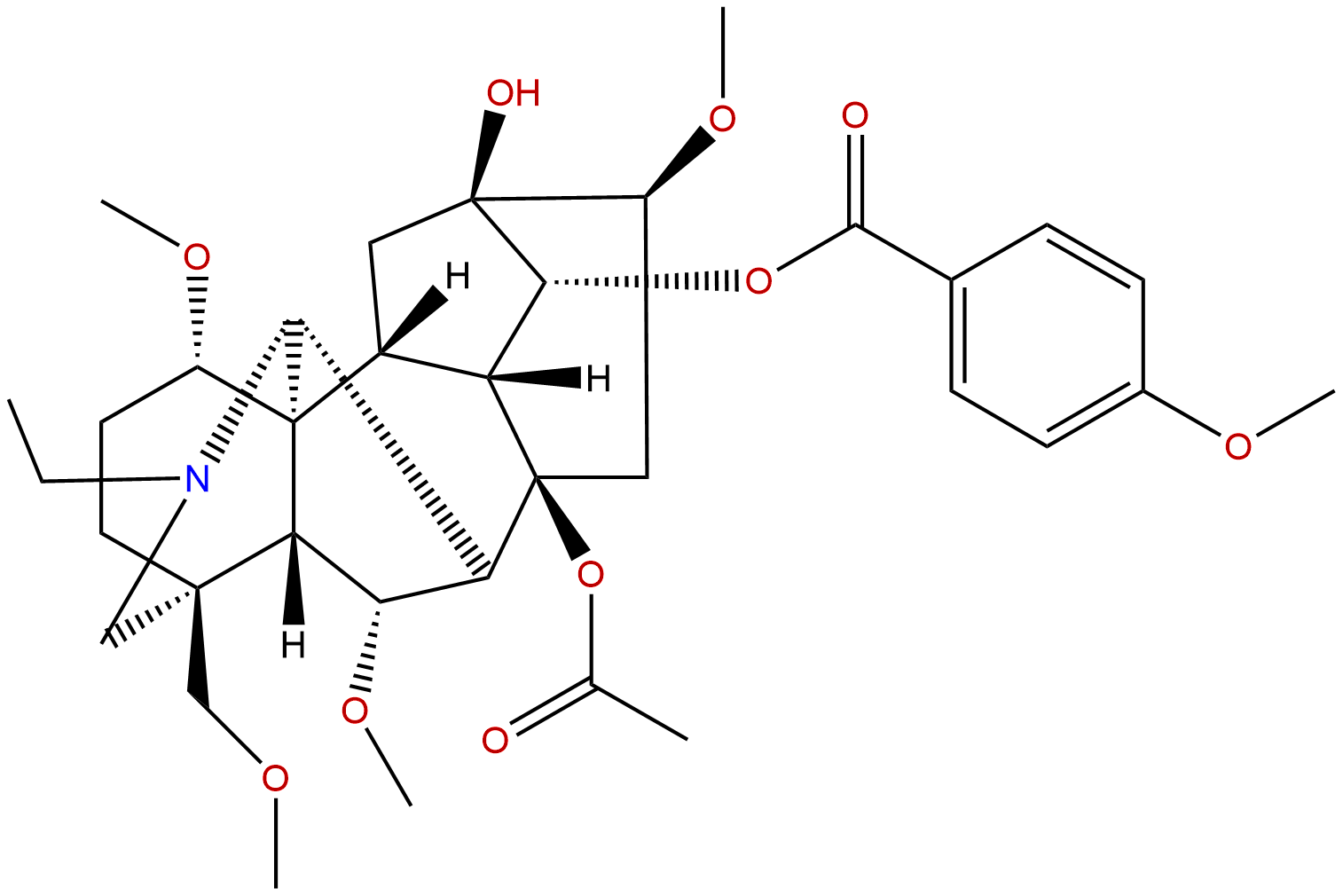


Synonym name: Bulleyaconitine A; Crassicauline I; 3-Deoxyyunaconitine
Catalogue No.: BP0403
Cas No.: 79592-91-9
Formula: C35H49NO10
Mol Weight: 643.774
Botanical Source: Alkaloid from Root of Aconitum crassicaule, Aconitum forrestii, Aconitum pseudogeniculatum and Aconitum dolichorhynchum var. subglabratum (Ranunculaceae)
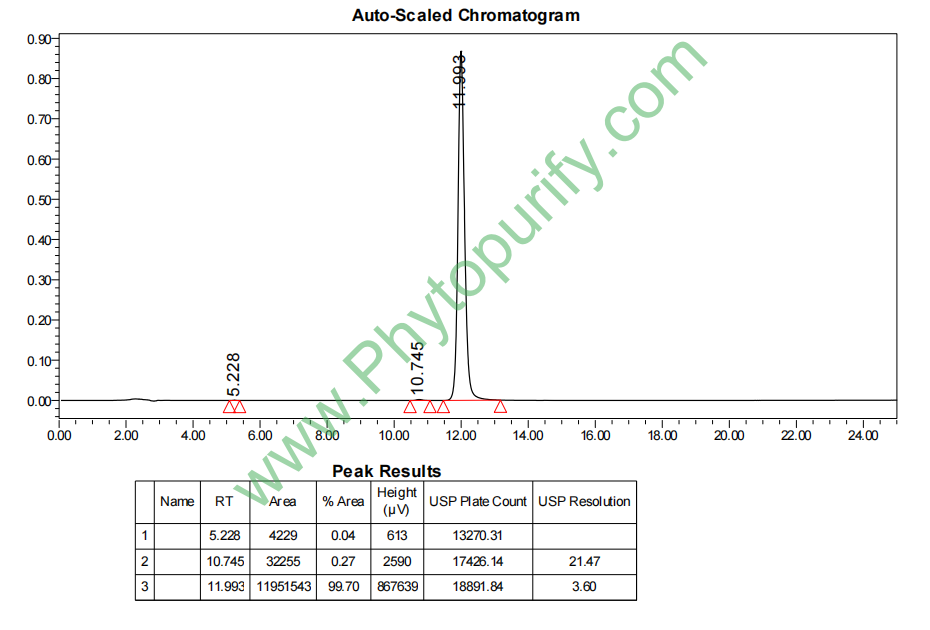
Purity: 95%~99%
Analysis Method: HPLC-DAD or/and HPLC-ELSD
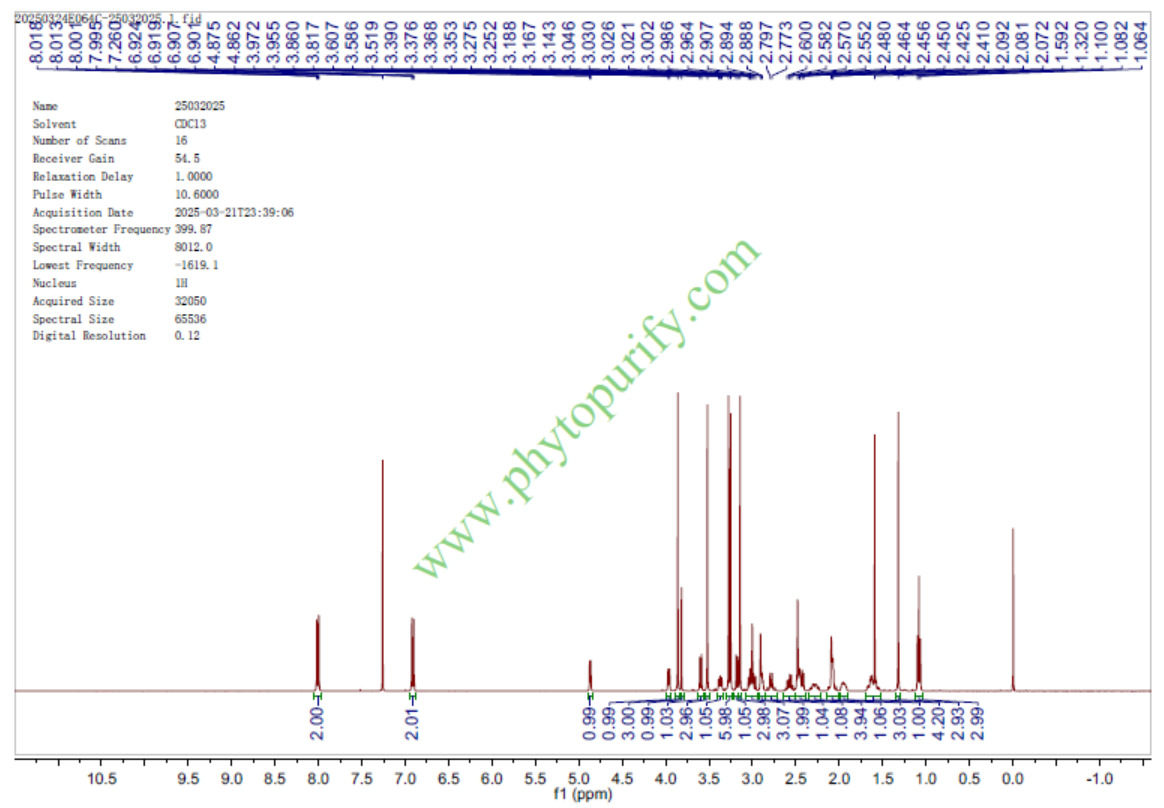
Identification Method: Mass, NMR
Packing: Brown vial or HDPE plastic bottle
Can be supplied from milligrams to grams.
For Reference Standard and R&D, Not for Human Use Directly.
Inquire for bulk scale.
HPLC of Crassicauline A
HNMR of Crassicauline A
Storage conditions:Short-term storage at 2~8℃, long-term storage at -20 ~ -80℃
Crassicaulin A (CAS number: 79592-91-9) is a natural alkaloid extracted from the roots of Aconitum plants. Aconitum plants have a long history of application in traditional Chinese medicine due to their complex alkaloid components, especially exhibiting significant pharmacological activities in pain relief, anti-inflammatory, and adjunctive treatment of neurological diseases. Caowujia, as one of the important active ingredients in Aconitum roots, has received widespread attention in recent years due to its unique biological functions. Previous studies have shown that Aconitum carmichaelii not only exhibits significant anti food activity (EC50 value of 1134.5 ppm) against the agricultural pest Sitophilus zeamais, but also shows potential pharmacological effects in the field of analgesia, involving multiple molecular targets related to pain regulation, such as TRPV1, CNR1, OPRD1, etc.
This review aims to systematically summarize the chemical structure and physicochemical properties, plant sources and extraction processes, pharmacological activity and mechanism of action, pharmacological evaluation and pharmacokinetic characteristics of Aconitum carmichaelii, combined with its potential application value in analgesic therapy, explore its future development prospects and challenges, and provide theoretical basis and reference for related research.
Caowujia is a complex alkaloid with a molecular weight of 643.76, possessing a high molecular weight and a complex molecular structure. Its LogP value is 3.51, indicating moderate lipid solubility, which is beneficial for penetrating cell membranes but not prone to excessive lipid solubility, which may affect its distribution and metabolism in vivo. The TPSA (topological polar surface area) is 136.95 Å ², indicating that the molecule has a large number of polar groups, and the number of hydrogen bond acceptors binding to it reaches 10, indicating that the molecule of Aconitum carmichaelii contains abundant polar functional groups, which is of great significance for its binding to biomolecule targets.
Structurally speaking, Aconitum carmichaelii belongs to the Aconitum alkaloid family, which typically consists of polycyclic structures and nitrogen-containing heterocycles. This structural feature endows it with strong biological activity. Its complex cyclic skeleton and multipole functional groups provide possibilities for its binding to various protein targets, but at the same time, they also bring challenges in synthesis and pharmacokinetics.
Aconitum kusnezoffi Reichb. is mainly found in the roots of Aconitum plants, especially in Aconitum kusnezoffi Reichb., where its content is relatively abundant. Aconitum plants are widely distributed in temperate and subarctic regions of Asia, and are widely collected and studied for their medicinal value. In traditional Chinese medicine, Aconitum root is used as a medicinal herb for pain relief, anti-inflammatory, and anti rheumatic effects. However, due to its high toxicity, modern research is dedicated to isolating and purifying active ingredients from it to reduce low toxicity and side effects.
The common methods for extracting Aconitum carmichaelii include solvent extraction, column chromatography separation, and high-performance liquid chromatography (HPLC) purification. Generally, ethanol or methanol is used as the extraction solvent, and ultrasonic assisted extraction is used to improve the extraction efficiency. Subsequently, separation and purification were performed using silica gel column chromatography or reverse phase C18 column, followed by structural identification using mass spectrometry and nuclear magnetic resonance (NMR) techniques. In recent years, supercritical fluid extraction and microwave-assisted extraction techniques have also been attempted to be applied to the extraction of berberine, in order to improve purity and yield while reducing solvent use and environmental pollution.
Cao Wu Jia Su showed significant anti food activity against adult Sitophilus zeamais, with an EC50 value of 1134.5 ppm, indicating its potential application value in agricultural pest control. This activity may be related to its interference with the nerve conduction or taste receptors of pests, and the specific mechanism remains to be further elucidated.
The research on the analgesic effect of Aconitum carmichaelii is relatively preliminary, but its targets include various proteins related to pain perception and regulation, including TRPV1 (capsaicin receptor), CNR1 (cannabinoid receptor 1), OPRD1 (delta opioid receptor), PTGS1/PTGS2 (cyclooxygenase 1/2), TRPA1 (transient receptor potential channel A1), SLC6A4 (serotonin transporter), OPRM1 (μ - opioid receptor), OPRK1 (κ - opioid receptor), and DRD2 (dopamine D2 receptor). These targets play key roles in pain transmission, inflammatory response, and neural regulation, suggesting that berberine may achieve analgesic effects through multi-target synergistic effects.
Except for its analgesic and anti food activity, the other pharmacological effects of Aconitum carmichaelii have not been systematically studied. Given its structural characteristics and target spectrum, it is expected to be further explored in the fields of anti-inflammatory, neuroprotective, and psychiatric regulation in the future.
The analgesic mechanism of Aconitum carmichaelii may involve the regulation of multiple molecular targets, as follows:
TRPV1 and TRPA1 As ion channels for perceiving thermal and chemical stimuli, TRPV1 and TRPA1 play a central role in the primary perception of pain and inflammatory response. Caowujia Su may reduce the excitability of nerve endings and alleviate pain by regulating the activity of these channels.
Opioid receptors (OPRD1, OPRM1, OPRK1)The opioid receptor family is a classic analgesic target that mediates the analgesic effects of endogenous and exogenous opioid substances. The binding of berberine to these receptors may enhance endogenous analgesic signals and exert central and peripheral analgesic effects.
CNR1 (cannabinoid receptor 1)Participate in regulating pain, emotions, and inflammatory responses. Caowujia Su may exert analgesic and anti-inflammatory effects by activating or regulating CNR1.
PTGS1/PTGS2 (cyclooxygenase 1/2)Participate in the synthesis of inflammatory mediators prostaglandin, regulate inflammation and pain response. Caowujia Su may inhibit the activity of these two enzymes and reduce the production of inflammatory mediators.
SLC6A4 (serotonin transporter) and DRD2 (dopamine D2 receptor)Participate in the regulation of neurotransmitters, affecting emotions and pain perception. Caowujia Su may improve pain related emotional disorders by regulating these neurotransmitter systems.
In summary, the analgesic effect of Aconitum carmichaelii may be the result of multi-target and multi pathway synergistic effects, including direct regulation of peripheral nerves and neurotransmitter regulation of the central nervous system.
The pharmacological parameters of Caowujia Su show that its molecular weight is relatively high (643.76), with a LogP of 3.51, indicating that it has moderate lipid solubility and theoretically facilitates cell membrane penetration. However, its high polarity and number of hydrogen bond receptors (10) may limit its oral bioavailability. In addition, it is predicted that Aconitum carmichaelii is not easily able to pass through the blood-brain barrier, suggesting that its analgesic effect may rely more on peripheral mechanisms and reduce the risk of central nervous system toxic side effects.
At present, there is a lack of safety data on the hepatotoxicity, cardiotoxicity (including hERG channel inhibition), and genotoxicity (Ames test) of Aconitum carmichaelii, and further systematic evaluation is needed. In terms of pharmacokinetics, there are no publicly reported absorption, distribution, metabolism, and excretion (ADME) characteristics. Future research should focus on the in vivo metabolic pathways, half-life, and toxicological properties of potential metabolites.
Due to the complex structure, difficult synthesis, and unknown toxicity of Aconitum carmichaelii, the development of drugs requires overcoming multiple challenges such as optimizing synthesis processes, evaluating toxicity, and improving pharmacokinetics.
Caowujia, as an important active ingredient in Aconitum roots, has shown broad application prospects due to its multi-target analgesic mechanism and significant anti food activity. In the field of analgesic treatment, Aconitum carmichaelii may serve as a candidate molecule for novel analgesic drugs, particularly suitable for peripheral pain management, which may reduce the risk of dependence and side effects of traditional opioid drugs.
In addition, the anti food activity of Aconitum carmichaelii provides a natural and environmentally friendly candidate for agricultural pest control, which helps reduce the use of chemical pesticides and promote the development of green agriculture.
Future research should focus on the following directions:
Pharmacological and toxicological studies of the system Clarify the safety profile of Aconitum carmichaelii, especially in assessing its liver and cardiac toxicity, to ensure its clinical safety.
Pharmacokinetic optimization Improve its bioavailability and in vivo stability through structural modification or drug carrier technology.
In depth analysis of the mechanism of action Using molecular biology and structural biology methods, elucidate the binding mode and signaling pathway regulation mechanism of Aconitum carmichaelii with targets.
Preclinical and clinical research Conduct animal models and human trials to verify its analgesic efficacy and safety, laying the foundation for clinical application.
Optimization of synthesis and preparation processes Develop efficient and green synthetic routes and extraction and purification technologies to ensure stable drug supply and quality.
Caowujia, as an important alkaloid in Aconitum roots, has demonstrated the potential to become a new type of analgesic drug and agricultural food repellent due to its unique chemical structure and multi-target analgesic activity. Although the current understanding of its pharmacological mechanism and safety is not comprehensive, its multi-target mode of action provides new ideas for the development of efficient and low side effect analgesic drugs. In the future, through systematic pharmacological research, toxicological evaluation, and clinical validation, Caowujia Su is expected to be widely applied in the fields of medicine and agriculture, promoting the innovative development of natural product drugs.
