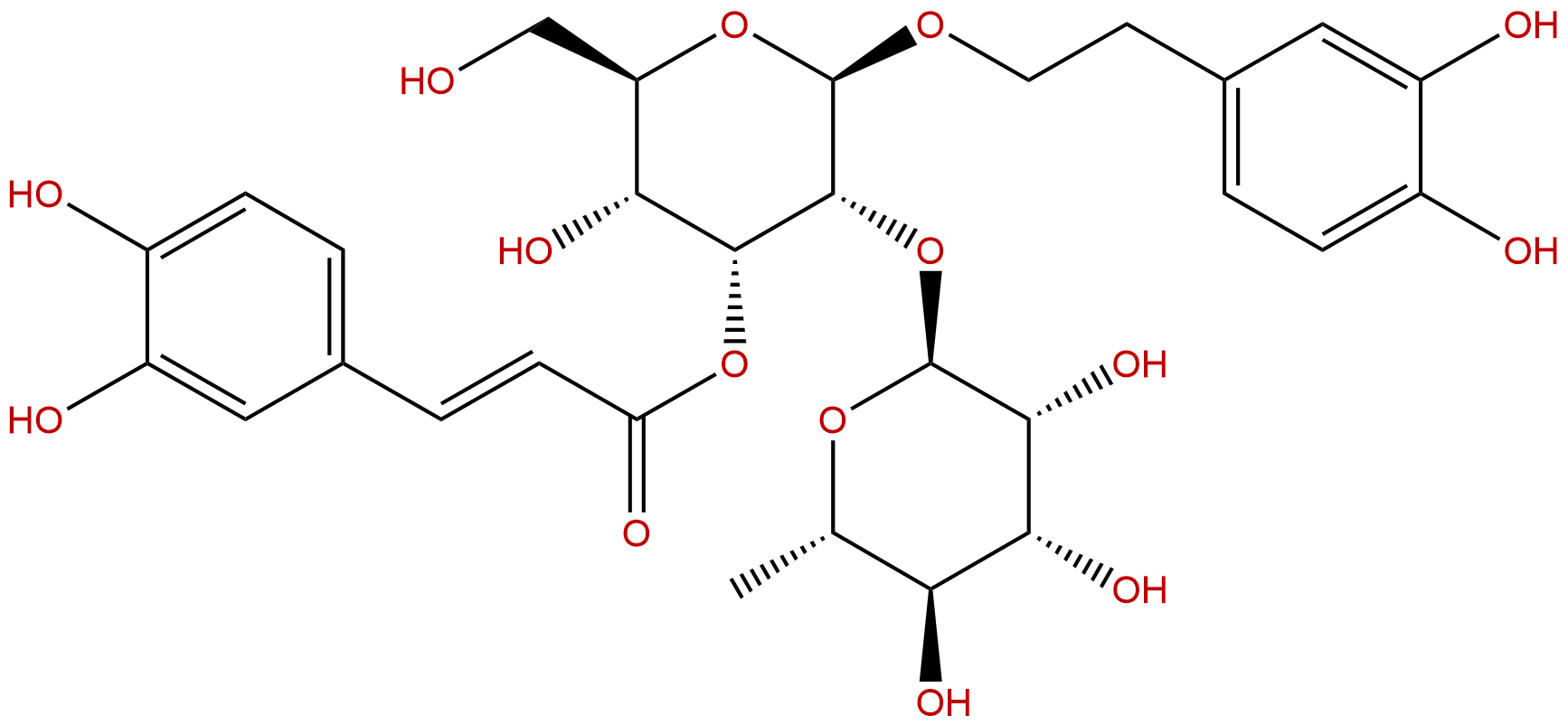


Product name: Magnoloside A
Synonym name: Magloside A
Catalogue No.: SBP00414
Cas No.: 113557-95-2
Formula: C29H36O15
Mol Weight: 624.592
Botanical Source:
Physical Description: Powder
Type of Compound: Phenylpropanoids
Purity: 95%~99%
Analysis Method: HPLC-DAD or/and HPLC-ELSD
Identification Method: Mass, NMR
Packing: Brown vial or HDPE plastic bottle
The product could be supplied from milligrams to grams. Inquire for bulk scale.
We provide solution to improve the water-solubility of compounds, thereby facilitating the variety of activity tests and clinic uses.
For Reference Standard and R&D, Not for Human Use Directly.
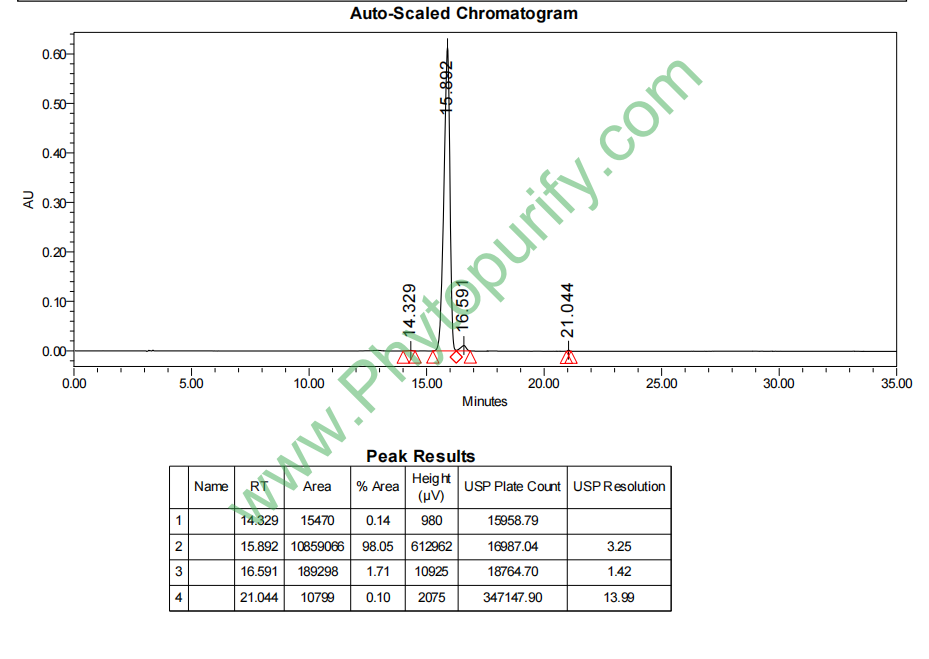
HPLC of Magnoloside A
Storage conditions:Short-term storage at 2~8℃, long-term storage at -20 ~ -80℃
245.2900
.1400
.1285
6.2016
.5454
.0657
Low
74.4750
4.7343
Yes
No
No
No
No
No
0.0
Yes
No
Yes
Yes
Magnoloside A, CAS number 113557-95-2, is a traditional Chinese medicine derived from Magnolia officinalis(Magnolia officinalis)The main phenylethanolic glycosides isolated from tree bark. Its molecular formula is C29H36O15, with a molecular weight of 624.5920 g/mol. As one of the key active ingredients of Magnolia officinalis, magnolol A not only embodies the profound heritage of traditional Chinese medicine's "medicinal and edible homology", but also has become a hot topic in modern natural product pharmaceutical research due to its unique chemical structure and extensive biological activity.
Phenylethanolic glycosides are a type of natural product widely present in the plant kingdom. Their structure is usually composed of phenylethanolic glycosides and glycosyl moieties connected by glycosidic bonds, and are known for their significant antioxidant, anti-inflammatory, and neuroprotective activities. Magnolia glycoside A is an outstanding representative of this type of compound. Early research has revealed its potential application value in functional dyspepsia (FD) models. More notably, its English description clearly states that magnolol A has an effect on various Cryptococcus species(Cryptococcus)The strain exhibits strong antifungal activity, with a minimum inhibitory concentration (MIC) value between 1.0 and 4.0 μ g/ml, indicating its potential in the field of anti infection.
However, in recent years, the expansion of research perspectives, especially the revelation of its multi-target mechanism of action, has pushed the study of magnolol A to a more cutting-edge field - neuroprotection. The database information shows that magnolol A interacts with multiple key neuroprotective targets such as SIRT1, MAPK1, CREB1, BDNF, and NGF. This suggests that it may play a therapeutic role in neurodegenerative diseases such as Alzheimer's disease, Parkinson's disease, stroke, and brain injury by regulating cell survival, synaptic plasticity, and neurotrophic factor networks. This article will start from its chemical essence, systematically review the plant sources, pharmacological mechanisms, and pharmacological evaluation of magnolol A, and look forward to its future research prospects.
The chemical structure of magnolol A is the material basis for its biological activity. The SMILES string provides a detailed description of its stereochemical structure:C[C@@H]1O[C@@H](O[C@H]2[C@H](OCCc3ccc(O)c(O)c3)O[C@H](CO)[C@@H](O)[C@H]2OC(=O)/C=C/c2ccc(O)c(O)c2)[C@H](O)[C@H](O)[C@H]1OBy analyzing this structure, it can be concluded that magnolol A is a relatively complex molecule, with its core consisting of a phenylethanolic glycoside (connected to the benzene ring via OCC) and a caffeoyl group(/C=C/c2ccc(O)c(O)c2The caffeic acid residue is connected to the sugar moiety through ester bonds. The sugar moiety may contain glucose, rhamnose, etc., with multiple chiral centers on it (composed of...)@@Hand@HThe representation determines the specific stereoconfiguration of the molecule, which is crucial for its specific recognition with biological targets.
According to the analysis of drug parameters, its molecular weight (MW) is 624.59 Da, slightly exceeding the common recommendation of "less than 500 Da" in Lipinski's five rules, which usually affects its oral absorption. However, rules are not absolute, and many natural products, although overweight, still have good biological activity. Its topological polar surface area (TPSA) is as high as 245.29 Å ², much higher than the threshold commonly believed to be easy to penetrate cell membranes (below about 140 Å ²), which clearly explains its Caco-2 cells have low permeability (0.0657) and The blood-brain barrier (BBB) penetration is marked as' low ' The reason. High TPSA originates from the abundant hydroxyl (- OH) and sugar moieties in the molecule, which enhance water solubility (water_stolubility: 6.2016, indicating a certain degree of water solubility) but are not conducive to passive transmembrane transport.
The LogP value of its lipid water partition coefficient is 0.14, and the LogD value is 0.1285, both indicating that the compound is highly hydrophilic at physiological pH, consistent with the conclusion of high TPSA. The plasma protein binding rate (PPB) is 74.48%, which is a moderately high level. This means that about three-quarters of drugs in the bloodstream bind to plasma proteins, which may affect their free concentration and tissue distribution. The predicted oral effective permeability (Peff) is 0.5454, which is low and confirms that its oral absorption may face challenges.
In terms of toxicity, the data is encouraging: the Ames test (detecting mutagenicity) results in 0.0 (negative), no chromosomal abnormalities, no hERG inhibition (indicating low risk of cardiac toxicity), no skin and respiratory sensitization, and no phototoxicity. Although there are indications in serum biochemical indicators that alkaline phosphatase (Ser_LK), aspartate aminotransferase (Ser_ST), and alanine aminotransferase (Ser_LT) may be affected (marked as "Yes"), and further experiments are needed to verify their potential liver effects, there are few overall toxicity warning signals. The Maximum Recommended Treatment Dose (MRTD) is marked as "Yes", indicating an acceptable treatment window at a reasonable dose.
The plant source of magnolol A is single and clear - Magnolia officinalis, scientific name Magnolia officinalis It belongs to the Magnoliaceae family. Houpu is a famous traditional Chinese medicinal herb in China. Its dried bark, root bark, and branch bark have been used as medicine for over two thousand years. It was first recorded in the "Shennong Bencao Jing" and is classified as a middle grade herb.
In traditional Chinese medicine theory, Magnolia officinalis is warm in nature, bitter and pungent in taste, and belongs to the spleen, stomach, lungs, and large intestine meridians. Its core function lies in Dry dampness, eliminate phlegm, and eliminate excess qi It is widely used in clinical practice to treat symptoms such as dampness stagnation injury, abdominal distension, constipation, phlegm retention, wheezing, and cough. This is highly consistent with the research direction of using magnolol A for functional dyspepsia (FD) discovered in modern studies. FD belongs to the modern medical disease name, with symptoms such as postprandial fullness, early satiety, upper abdominal pain, and burning sensation in the upper abdomen, corresponding to the categories of "fullness" and "epigastric pain" in traditional Chinese medicine. Magnolia officinalis can effectively alleviate gastrointestinal motility disorders and sensory abnormalities through its functions of promoting qi circulation, reducing accumulation, and eliminating fullness. Magnolia glycoside A, as one of its main active ingredients, is likely to be the material basis for achieving this therapeutic effect.
Traditionally, Houpu is often combined with medicinal herbs such as Atractylodes macrocephala and Chenpi, such as the classic formulas "Pingwei San" and "Banxia Houpu Tang". These formulas embody the holistic view and compatibility concept of traditional Chinese medicine, and also suggest that the action of magnolol A in the body may have a synergistic effect with other components. In addition to digestive system diseases, Magnolia officinalis is also used in cough and asthma relief formulas, suggesting that its ingredients may have anti-inflammatory and smooth muscle function regulating effects, which is indirectly related to the potential anti-inflammatory and neuroprotective activities of Magnolia glycoside A.
The systematic isolation and identification of phenylethanoid glycosides from Magnolia officinalis is a modern interpretation of traditional Chinese medicine through natural medicinal chemistry research. The discovery of magnolol A not only clarifies the partial material basis of the pharmacological effects of Magnolia officinalis, but also provides a starting point for the development of new modern drugs based on this lead compound.
The pharmacological activity research of magnolol A has expanded from its initial antifungal and digestive effects to more complex neuroprotective fields. Its mechanism of action exhibits multi-target and multi pathway characteristics, mainly focusing on five key targets: SIRT1, MAPK1, CREB1, BDNF, and NGF, which together form a network that promotes neuronal survival, enhances synaptic plasticity, and resists stress damage.
Core target analysis:
SIRT1 (Silent Information Regulatory Factor 1)SIRT1 is a NAD+- dependent class III histone deacetylase that is a core regulatory factor in cellular energy metabolism, stress resistance, and aging processes. In the nervous system, SIRT1 activation can regulate downstream targets such as PGC-1 α and FOXO transcription factors through deacetylation, thereby Enhance mitochondrial biosynthesis, alleviate oxidative stress, inhibit inflammatory response and apoptosis signaling If magnolol A can activate SIRT1, it may provide strong endogenous protection for neurons, combating mitochondrial dysfunction and oxidative damage commonly seen in diseases such as Alzheimer's disease and Parkinson's disease.
MAPK1 (mitogen activated protein kinase 1, also known as ERK2)The MAPK/ERK signaling pathway is a critical pathway for cells to respond to external stimuli such as growth factors and neurotransmitters. Moderate ERK activation is important for The growth, differentiation, survival, and synaptic plasticity (such as long-term potentiation, LTP) of neurons are crucial LTP is the cellular foundation of learning and memory. Magnolia glycoside A may enhance the signaling of neurotrophic factors such as BDNF and NGF by regulating the activity of MAPK1, thereby promoting neuronal survival and functional maintenance.
CREB1 (cAMP response element binding protein 1)CREB is a key transcription factor located in the nucleus of the cell, often activated by kinase phosphorylation such as ERK. Activated CREB can bind to the promoter region of specific genes, initiating transcription. One of its most important downstream target genes is Brain derived neurotrophic factor (BDNF)Therefore, CREB is an important bridge connecting cell membrane signaling and nuclear gene expression. Magnolia glycoside A may activate CREB through upstream signaling, thereby initiating the expression of various neuroprotective genes and plasticity related genes, including BDNF.
BDNF (brain-derived neurotrophic factor) and NGF (nerve growth factor)Both of these are important neurotrophic factors. BDNF is highly expressed in brain regions closely related to learning and memory, such as the hippocampus and cerebral cortex. It activates its receptor TrkB and initiates intracellular pathways such as PI3K/Akt and MAPK/ERK,Strong support for neuronal survival, promotion of synaptic formation and strengthening, and regulation of neurotransmitter release NGF is particularly important for the survival of cholinergic neurons in the basal forebrain, and the degeneration of these neurons is a significant cause of early cognitive impairment in Alzheimer's disease. If magnolol A can upregulate the expression of BDNF and NGF or enhance their signaling, it will directly provide nutritional support for damaged neurons.
Integration of mechanism of action and association with neuroprotection:
Based on the above targets, a potential neuroprotective mechanism network of magnolol A can be outlined: magnolol A may directly or indirectly activate the SIRT1 and MAPK/ERK pathways. The activation of SIRT1 brings basic metabolic and stress resistance protection. Meanwhile, the activation of MAPK1 (ERK) directly promotes neuronal survival and plasticity, while phosphorylating and activating the transcription factor CREB. Activated CREB enters the nucleus and initiates transcriptional expression of neurotrophic factor genes such as BDNF and NGF. The increased secretion of BDNF and NGF further activates their respective receptors through autocrine or paracrine pathways, enhancing survival promoting pathways such as PI3K/Akt and MAPK/ERK, forming a Positive feedback neuroprotective cycle。
This network precisely targets multiple core pathological processes of neurodegenerative diseases and brain injuries: energy metabolism imbalance, oxidative stress, neurotrophic factor deficiency, synaptic loss, and neuronal apoptosis. Therefore, magnolol A is expected to achieve multidimensional protection of the nervous system through multi-target synergistic effects.
In addition, it Antifungal activity The mechanism of (targeting Cryptococcus) may be independent of the above-mentioned neuroprotective pathways, and may involve the destruction of fungal cell walls or membrane structures, inhibition of fungal specific enzyme systems, etc., demonstrating the multifunctionality of natural product chemical structures. And its impact on Functional dyspepsia The role of this may be related to regulating local neurotransmitters in the gastrointestinal tract, anti-inflammatory effects, or regulating smooth muscle movement, and this mechanism needs further clarification.
To develop magnolol A from a potential natural product into a candidate drug, its pharmacological properties must be systematically evaluated. Based on Lipinski's Rule of Five (Ro5) and other ADMET (absorption, distribution, metabolism, excretion, toxicity) parameters, a comprehensive analysis is conducted as follows:
Lipinski Five Rule Compliance:
Absorption and distribution:
Metabolism and toxicity:
Comprehensive Assessment:
Magnolia glycoside A is a compound with Clear and attractive multi-target neuroprotective activity The natural lead compound, but its Poor drug like properties There are significant challenges, especially in terms of oral absorption and BBB penetration. It does not conform to the typical characteristics of traditional small molecule oral drugs. Its development path may be more inclined towards:
* As a precursor or lead compound Chemical modification based on its structure to optimize pharmacokinetic properties.
* Study its active metabolites Pay attention to the phenylethanolic glycosides and caffeic acid produced after hydrolysis, which may have better membrane permeability.
* Exploring new routes of administration and formulations Such as injectable formulations, nasal administration (bypassing the BBB), or advanced oral delivery systems.
* As an important component of traditional Chinese medicine formulas In the context of compound formulations, other ingredients may promote their absorption and utilization by affecting metabolic enzymes or membrane transporters, which deserves further investigation.
At present, research on magnolol A is still in the preclinical stage, mainly focusing on activity screening, preliminary mechanism exploration, and compound isolation and purification. Its antifungal activity and effects on functional dyspepsia have been reported in literature, while research on its neuroprotective effects and multi-target mechanisms is still ongoing. More evidence comes from database prediction and correlation analysis, requiring a large number of solid in vitro and in vivo experiments (such as using neural cell lines, brain slice culture, Alzheimer's disease or cerebral ischemia animal models) for verification.
Future research directions can focus on the following points:
Application prospects:
Magnolia glycoside A represents a successful case of discovering multi-target therapeutic drugs from the treasure trove of traditional Chinese medicine. Despite facing challenges in drug development, its unique Multi target neuroprotective mechanism Endowing it with immense appeal. In the treatment of complex diseases such as Alzheimer's disease today, multi-target drugs may have advantages over single target drugs. With the deepening of the research paradigm of "component group multi-target integration effect" in traditional Chinese medicine, magnolol A is expected to:
*Become a new type of development Anti neurodegenerative disease drugs The precious lead compound.
*As Dietary supplements or functional foods The components play a role in maintaining neurological health (requiring addressing their bioavailability issues).
*To provide key clues for explaining the modern scientific connotation of the efficacy of Magnolia officinalis in "calming the mind" (traditional records also state that Magnolia officinalis has the ability to regulate the mind and calm the mind), in addition to its ability to dispel qi.
In summary, the research on magnolol A spans the bridge from traditional medicinal experience to modern molecular pharmacology. It is both a scientific problem that requires in-depth exploration and a promising starting point for drug development. Through interdisciplinary collaboration and overcoming the limitations of its physical and chemical properties, this natural molecule derived from Magnolia officinalis has the potential to shine in the field of brain health in the future.
