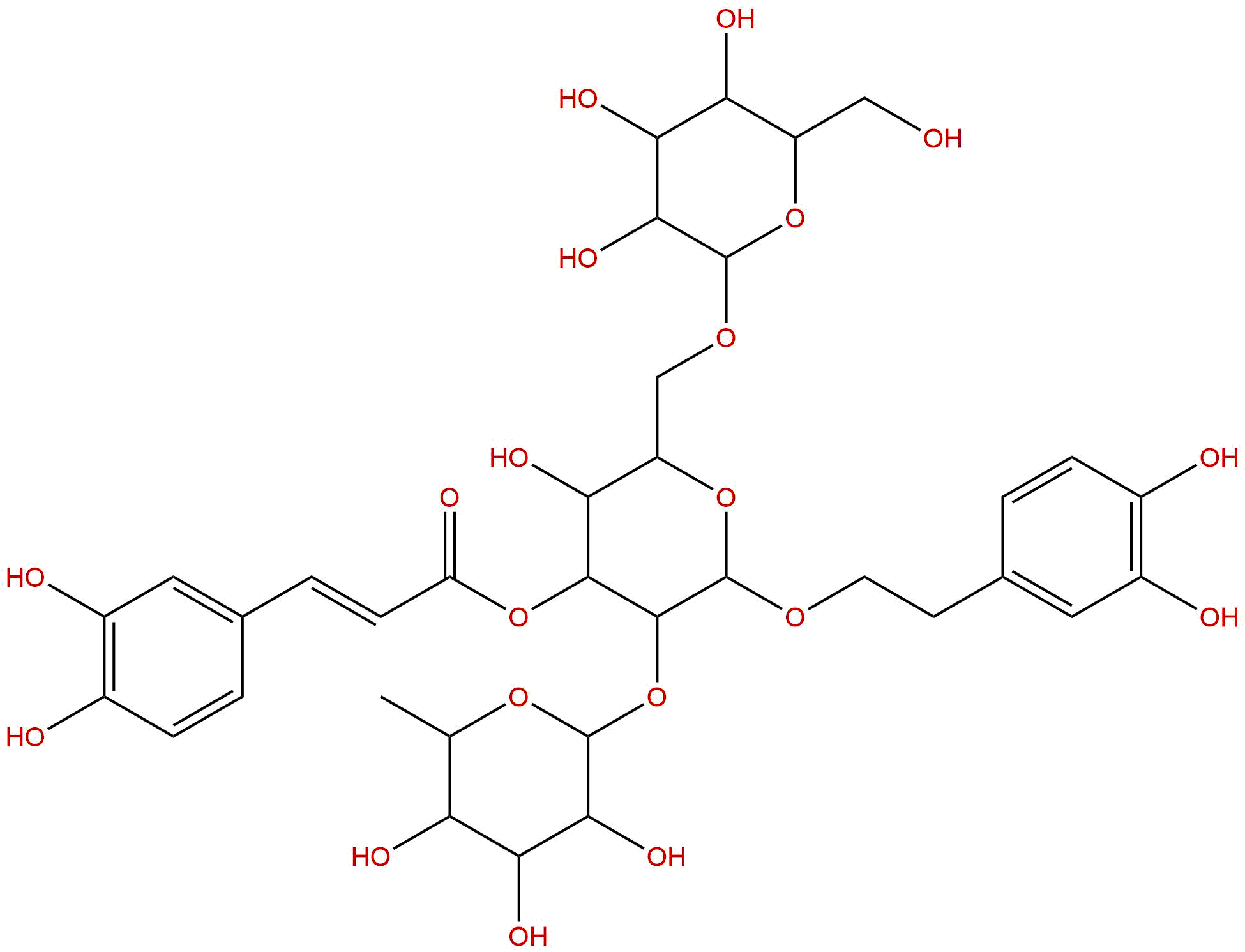


Product name: Magnoloside B
Synonym name:
Catalogue No.: BP4753
Cas No.: 116872-05-0
Formula: C35H46O20
Mol Weight: 786.733
Botanical Source: Magnoliae officinalis cortex
Type of Compound:
Purity: 95%~99%
Analysis Method: HPLC-DAD or/and HPLC-ELSD
Identification Method: Mass, NMR
Packing: Brown vial or HDPE plastic bottle
Storage: Store in a well closed container, protected from air and light. Put into refrigerate or freeze for long term storage.
Whenever possible, you should prepare and use solutions on the same day. However, if you need to make up stock solutions in advance, we recommend that you store the solution as aliquots in tightly sealed vials at -20℃. Generally, these will be useable for up to two weeks.
The product could be supplied from milligrams to grams
Inquire for bulk scale.
For Reference Standard and R&D, Not for Human Use Directly.
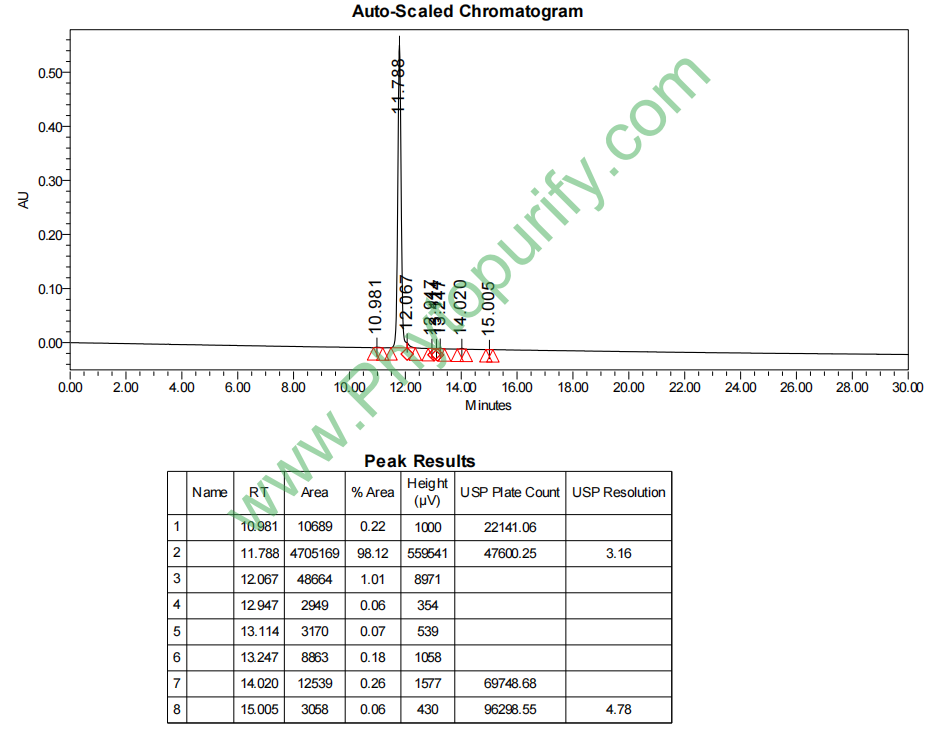
HPLC of Magnoloside B
Storage conditions:Short-term storage at 2~8℃, long-term storage at -20 ~ -80℃
324.4400
-.6774
-.6865
9.6466
.4476
.0533
Low
67.0858
5.3847
Yes
No
No
No
No
No
0.0
Yes
No
Yes
Yes
Diabetes and cancer are the two major chronic diseases that seriously threaten human health in the world today. Therefore, finding efficient and low toxicity new therapeutic molecules from natural products has always been an important direction for drug development. Magnolia officinalis(Magnolia officinalis)As a traditional Chinese medicinal herb, its bark (Magnolia officinalis) has the effects of drying dampness, eliminating phlegm, and removing excess qi. Modern pharmacological research has revealed that it is rich in various bioactive lignans and phenolic glycosides. Magnoloside B is a phenylethanolic glycoside compound with significant α - glucosidase inhibitory activity isolated from the bark of Magnolia officinalis. Since its structure was identified, the potential of magnoside B in the field of anti diabetes and anti-tumor has gradually attracted attention. Its unique dual pharmacological activity - regulating postprandial blood glucose by inhibiting alpha glucosidase, as well as moderate inhibitory activity against cancer cell lines such as gastric cancer MGC-803 and liver cancer HepG2- makes it a highly valuable lead compound for research. In addition, preliminary pharmacological network analysis suggests that it may play an anti-inflammatory role by regulating multiple key inflammatory targets such as IL-6, STAT3, TNF - α, and the inflammatory pathway is the common soil connecting the complications of diabetes and the occurrence and development of tumors. This article aims to systematically review the chemical properties, plant sources, pharmacological activities, mechanisms of action, pharmacological evaluation, and clinical application prospects of magnolol B, in order to provide comprehensive scientific references for the in-depth research and development of this compound.
Magnolia glycoside B (CAS number: 116872-05-0) is a phenylethanoid glycoside compound. Its chemical structure consists of a caffeoyl group, a phenylethanolic glycoside (Tyrosol or its derivatives), and multiple sugar units. The typical structure of magnolol B includes a molecule of caffeic acid connected to the sugar chain of phenylethanolic aglycone through ester bonds. The sugar chain is usually composed of glucose, rhamnose, etc., forming a complex glycoside structure with multiple hydroxyl and aromatic rings. This structural feature determines its unique physicochemical properties.
Its molecular weight is 786.7330, which belongs to a medium to large polar molecule. The calculated logarithmic value of the lipid water partition coefficient (LogP) is -0.6774, indicating that the compound has good hydrophilicity, which is consistent with the structure rich in multiple hydroxyl and sugar groups in the molecule. The topologically polar surface area (TPSA) is as high as 324.4400 Å ², further confirming its strong polarity and the presence of numerous hydrogen bond donors and acceptors on the molecular surface. The theoretically calculated water solubility value is 9.6466 mg/L, indicating that it has a certain solubility in water. However, as a highly polar glycoside, its actual solubility may be affected by crystal morphology and solvent. These physicochemical parameters collectively indicate that magnolol B belongs to compounds outside the "five rules of class drugs" (molecular weight>500, TPSA>140), suggesting that its oral absorption may face challenges, but providing a structural basis for its development as an injectable or topical drug. The clarification of its chemical structure lays the foundation for subsequent studies on structure-activity relationships and structural modifications to improve bioavailability.
Magnolia glycoside B is mainly derived from the Magnoliaceae plant Magnolia officinalis(Magnolia officinalis Dried bark, root bark, and branch bark from Rehd. et Wils. Magnolia officinalis is mainly distributed in the Yangtze River Basin and southern regions of China, and is a famous traditional Chinese medicinal herb. In addition to magnolol B, Magnolia officinalis is also rich in lignans such as magnolol and magnolol, which together form the material basis for the pharmacological activity of Magnolia officinalis.
The extraction and separation of magnolol B from Magnolia officinalis usually follows the conventional process of natural product chemistry, but it needs to be optimized for its high polarity and potential instability to heat, acid, and alkali. The common extraction methods are as follows:
1. Solvent extraction Usually, methanol, ethanol, or ethanol water mixed solvents are used for cold soaking or heating reflux extraction of Magnolia officinalis powder. High proportion alcohol solvents can effectively extract polar and moderately polar components, including magnolol B.
2. Extraction enrichment Concentrate the alcohol extract and suspend it in water, then perform liquid-liquid extraction using petroleum ether, ethyl acetate, n-butanol, etc. in sequence. Due to the strong polarity of magnolol B, it is mainly enriched in the n-butanol layer and water layer.
3. chromatographic separation The n-butanol extract is a key component for further isolation and purification of magnolol B. Silica gel column chromatography, reversed phase silica gel (such as ODS) column chromatography, dextran gel (such as Sephadex LH-20) column chromatography and other chromatographic techniques are often used for repeated separation. Among them, reverse phase chromatography (using methanol water or acetonitrile water as mobile phase) is the key purification step due to its high polarity matching with magnolol B.
4. appraisal The final pure product was subjected to structural identification using modern spectroscopic techniques, including mass spectrometry (MS) to determine molecular weight, nuclear magnetic resonance hydrogen (¹ H NMR) and carbon (¹ ³ C NMR) to analyze the carbon hydrogen skeleton and connection mode, and two-dimensional nuclear magnetic resonance techniques (such as HSQC, HMBC, COSY) to confirm bonding relationships.
At present, the content of magnolol B in Magnolia officinalis is relatively low, and large-scale acquisition still relies on a combination of plant extraction and chemical separation. In the future, the analysis of biosynthetic pathways and the application of synthetic biology techniques may provide new strategies for sustainable and large-scale production of magnolol B.
The pharmacological activity research of magnolol B mainly focuses on its hypoglycemic and anti-tumor aspects, while its potential anti-inflammatory activity is also beginning to emerge.
α - glucosidase inhibition and anti diabetes potential:
The most prominent activity of magnoside B is to inhibit α - glucosidase, and its half inhibitory concentration (IC ₀) is 0.69 mM. α - glucosidase is the key enzyme responsible for the decomposition of oligosaccharides and disaccharides into monosaccharides (such as glucose) on the brush edge of the small intestine. Inhibiting its activity can delay the digestion and absorption of carbohydrate compounds, effectively reduce the peak postprandial blood glucose, and is one of the important strategies for the treatment of type II diabetes (such as acarbose). Although the inhibitory strength of magnolol B is not as strong as some potent synthetic drugs, its natural source and unique structure provide lead compounds for the development of new hypoglycemic drugs. In vivo animal experiments (such as diabetes model mice) will be the key next step to verify its oral hypoglycemic effect.
Anti tumor cell proliferation activity:
In vitro cell experiments have shown that magnolol B has moderate inhibitory activity on the proliferation of various human tumor cell lines. Among them, the inhibitory activity against gastric cancer MGC-803 cells and liver cancer HepG2 cells has been specifically reported. This anti-tumor activity is not a broad-spectrum potent cytotoxic effect, but may manifest in relatively specific ways such as cell cycle arrest or induction of apoptosis. Its activity intensity suggests that magnolol B may serve as an adjuvant therapy or require structural optimization to enhance its potency.
Potential anti-inflammatory activity:
Based on network pharmacology and molecular docking prediction, there are potential interactions between the structure of magnolol B and various key inflammatory targets. Inflammation is the core feature of complications of diabetes (such as diabetes nephropathy, neuropathy) and tumor microenvironment. Magnoside B may play an indirect role in the prevention and treatment of chronic complications of diabetes and enhance its anti-tumor effect by intervening in these inflammatory pathways. However, this speculation urgently needs to be experimentally validated in cellular and animal inflammation models, such as investigating its inhibitory effect on lipopolysaccharide (LPS) - induced macrophage cytokine release.
The multiple pharmacological activities of magnolol B are closely related to its action on multiple molecular targets. At present, although the research is in its early stages, its possible functional network has been outlined.
Core enzyme target: α - glucosidase:
Magnolia glycoside B, as a competitive or non competitive inhibitor, directly binds to the active center or conformational site of alpha glucosidase, hindering its binding or catalytic process with substrates such as maltose and sucrose, thereby delaying glucose production and absorption. The sugar and phenolic hydroxyl groups in its molecule may form hydrogen bonds or hydrophobic interactions with the amino acid residues in the enzyme's active center.
Anti inflammatory and anti-tumor related signal network:
Prediction and preliminary research suggest that the effect of magnolol B goes far beyond single enzyme inhibition, and it may regulate a complex inflammation tumor related signaling network:
In tumor cells, inhibition of the above pathways can synergistically lead to cell cycle arrest, increased apoptosis, and decreased invasion and metastasis ability. The inhibitory effect on MGC-803 and HepG2 cells is likely directly related to the inhibition of STAT3 and NF - κ B pathways.
Based on computational chemistry and preliminary experimental data, a preliminary evaluation of the pharmacological properties of magnolol B was conducted, with mixed results.
Advantage:
* High potential for safety The calculation prediction shows that there is no risk of hERG potassium channel inhibition (low arrhythmogenic potential), and the Ames test prediction result is negative (low mutagenic risk), which provides a good initial prediction for the safety of long-term medication.
* Water solubility is still acceptable Has a certain degree of water solubility, which is beneficial for the development of formulations.
challenge:
* Oral absorption disorder High molecular weight (>500) and high polarity (LogP is negative, TPSA is extremely high) indicate poor transmembrane permeability, and oral bioavailability may be extremely low. The calculation predicts that its blood-brain barrier permeability is "low", which indirectly confirms its poor permeability.
* Metabolism and stability As a glycoside compound, magnolol B is highly susceptible to hydrolysis by β - glucosidase and other enzymes in the gastrointestinal tract and liver, resulting in loss of active aglycones or structural damage. The key pharmacokinetic parameters such as metabolic pathways, major metabolites, and half-life in the body are currently completely blank.
* Formulation restrictions Due to its inherent limitations in oral absorption, traditional oral tablets or capsules may not be the best choice. It may be necessary to consider developing enteric coated formulations, prodrug strategies (such as esterification modification to improve lipid solubility and stability), or switching to injection administration routes (such as intravenous or local injection). However, injection administration requires extremely high purity and sterility.
At present, there have been no reports on the systematic pharmacokinetic studies of magnolol B, including absorption, distribution, metabolism, and excretion. This is the core data gap that must be filled in the process of transitioning from active compounds to candidate drugs. The next key step is to evaluate its intestinal permeability using the Caco-2 cell model, investigate its metabolic stability using liver microsomes, and conduct pharmacokinetic studies in rats or mice.
Magnolia glycoside B, as a natural product with clear α - glucosidase inhibitory activity and moderate anti-tumor activity, has broad clinical application prospects but a tortuous path.
Direct development:
Structural optimization as a lead compound:
Given the shortcomings of its pharmacological parameters, the more practical value of magnolol B is as an excellent lead compound. Pharmaceutical chemists can systematically modify its structure:
Multi target collaborative therapy strategy:
The characteristic of magnolol B acting on multiple pathways including blood glucose regulation, inflammation, and tumors makes it particularly suitable for developing drugs targeting the "metabolism inflammation cancer" axis diseases. For example, it is used to treat patients with diabetes and high risk of cancer, or diabetes related complications (such as diabetes nephropathy, involving inflammatory mechanisms).
Modernization of Traditional Chinese Medicine and Quality Markers:
As one of the characteristic components of Magnolia officinalis, magnolol B can become a potential chemical marker for quality control of Magnolia officinalis and its compound preparations (such as Banxia Houpu Tang), associated with its hypoglycemic and qi regulating effects, promoting the upgrading of traditional Chinese medicine quality control from indicator components to active ingredients.
Magnolia glycoside B is a phenylethanolic glycoside compound with dual pharmacological activities discovered from the traditional Chinese medicine Magnolia officinalis. It shows clear anti diabetes potential by inhibiting α - glucosidase, and shows the application prospect of anti-inflammatory and anti-tumor by inhibiting the proliferation of tumor cells such as MGC-803 and HepG2, and regulating key inflammatory signaling pathways such as IL-6/STAT3, NF - κ B, etc. Its chemical structure is clear and its plant origin is clear, laying a material foundation for subsequent research. However, its high polarity and high molecular weight lead to potential drug defects such as poor oral absorption and metabolic instability, which are the main bottlenecks restricting its direct conversion into drugs. Future research should be conducted in a dual track and parallel way: on the one hand, in-depth research on the mechanism of action at the cellular and animal levels, especially in vivo efficacy verification in diabetes complications and tumor models; On the other hand, it is necessary to conduct systematic pharmacokinetic studies and actively utilize medicinal chemical methods for structural optimization to improve its pharmaceutical properties. Magnolia glycoside B is like a bridge, connecting the wisdom of traditional Chinese medicine with the target network of modern disease treatment. Its subsequent development may not only give birth to new therapeutic drugs, but also provide new molecular basis for interpreting the scientific connotation of traditional effects such as "removing qi and fullness" of Magnolia officinalis.
