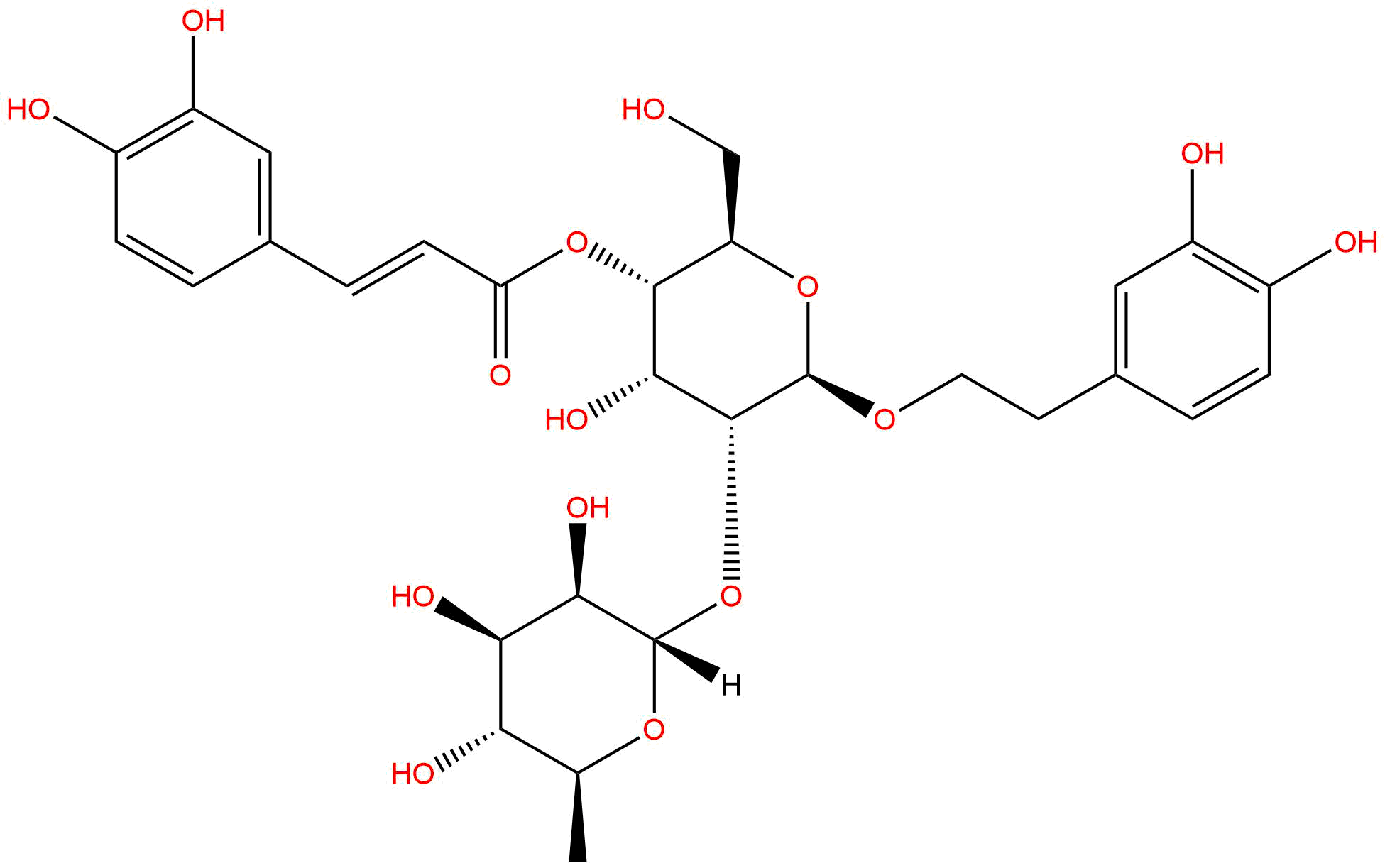


Product name: Magnoloside M
Synonym name: Magnoloside Ic
Catalogue No.: BP2268
Cas No.: 1802727-92-9
Formula: C29H36O15
Mol Weight: 624.592
Botanical Source:
Type of Compound:
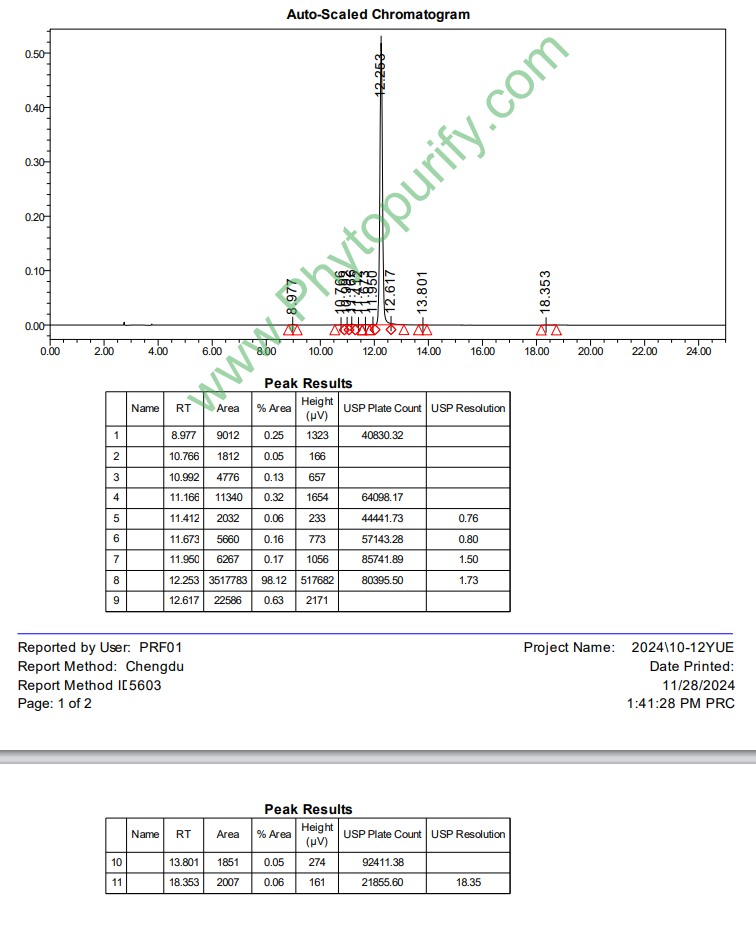
Purity: 95%~99%
Analysis Method: HPLC-DAD or/and HPLC-ELSD
Identification Method: Mass, NMR
Packing: Brown vial or HDPE plastic bottle
Storage: Store in a well closed container, protected from air and light. Put into refrigerate or freeze for long term storage.
Whenever possible, you should prepare and use solutions on the same day. However, if you need to make up stock solutions in advance, we recommend that you store the solution as aliquots in tightly sealed vials at -20℃. Generally, these will be useable for up to two weeks.
The product could be supplied from milligrams to grams
Inquire for bulk scale.
For Reference Standard and R&D, Not for Human Use Directly.
HPLC of Magnoloside M
Storage conditions:Short-term storage at 2~8℃, long-term storage at -20 ~ -80℃
245.2900
.1696
.1584
5.9408
.5446
.0683
Low
77.4557
4.7424
No
No
No
No
No
No
0.0
Yes
No
Yes
Yes
Alzheimer's Disease (AD), as a progressive neurodegenerative disease, has become a major challenge in the global public health field. Its pathological features mainly include senile plaques formed by extracellular β - amyloid β (A β) deposition, neurofibrillary tangles caused by excessive phosphorylation of tau protein in cells, synaptic loss, and neuronal death. Despite significant investment in the development of targeted drugs targeting A β and tau, the clinical conversion rate is extremely low, and existing treatment methods can only partially alleviate symptoms and cannot reverse or prevent disease progression. Therefore, searching for novel lead compounds with multi-target regulatory ability and low toxicity from natural products has become an important direction for the development of anti AD drugs.
Magnolia genus(Magnolia)Plants, such as Magnolia officinalis(Magnolia officinalis)Xinyi(Magnolia biondii)Waiting is a commonly used medicinal herb in traditional Chinese medicine, which has the effects of drying dampness, promoting qi circulation, and calming the mind. Modern pharmacological studies have shown that Magnolia plants are rich in various structurally unique active ingredients, including lignans (such as magnolol and magnolol) and phenylethanolic glycosides (such as aucin). Among them, magnolol compounds have attracted much attention due to their significant neuroprotective, anti-inflammatory, and antioxidant activities. Magnoloside M is a novel phenylethanoid glycoside compound isolated and identified from Magnolia plants in recent years. Its unique chemical structure and potential biological activity provide a new research entry point for the treatment of AD.
This article aims to systematically review the chemical structure, physicochemical properties, plant sources, extraction methods, pharmacological activity, mechanism of action, pharmacological evaluation, and clinical application prospects of magnolol M, in order to provide comprehensive scientific basis for the in-depth research and development of this natural product.
Magnoloside M belongs to the phenylethanoid glycosides (PhGs) class of compounds. Its chemical structure consists of three parts: a phenylethanolic glycoside (usually hydroxyphenylethanol), a cinnamoyl group (such as caffeoyl or feruloyl), and one or more sugar groups (mainly glucose and rhamnose). Specifically, the structural feature of magnolol M lies in its unique connection between the sugar moiety, aglycone, and cinnamoyl groups. This structural difference determines its physicochemical properties and biological activity that differ from other magnolol compounds such as Magnoloside A and B.
According to computational chemistry and experimental data, the molecular formula of magnolol M is C ₂₉ H ∝₆ O ₁₆, with a molecular weight of 624.5920 g/mol. Its oil-water partition coefficient (LogP) is 0.1696, indicating that the compound has strong hydrophilicity and is not easily able to penetrate the lipid bilayer. The topologically polar surface area (TPSA) is as high as 245.2900 Å ², much higher than the recommended upper limit of 140 Å ² for oral drugs, which is closely related to the large number of hydroxyl and glycosyl structures in its molecules. High TPSA values typically indicate poor membrane permeability and oral bioavailability. In terms of water solubility, its calculated water solubility value is 5.9408 mg/mL, indicating good water solubility, which is beneficial for its dissolution and distribution in vivo, but may also limit its passive diffusion across cell membranes, especially the blood-brain barrier (BBB). It is worth noting that the predictive model shows that the blood-brain barrier penetration ability of magnolol M is "low", which is a key challenge for anti AD drugs that need to act in the central nervous system (CNS). In addition, the hERG inhibition prediction was "no", and the Ames test result was 0.0, indicating a low risk of cardiac and genetic toxicity and good preliminary safety.
Magnolia glycoside M was initially isolated from plants of the Magnolia genus. The main sources reported in current literature include Magnolia officinalis(Magnolia officinalis)He Wangchun Yulan(Magnolia biondii)Wait. These plants are widely distributed in China, Japan, and Southeast Asia. In traditional applications, the dried bark of Magnolia officinalis is commonly used to treat bloating, constipation, and anxiety, while Xinyi (the flower bud of Magnolia officinalis) is used to treat nasal congestion and headaches. These medicinal parts are also commonly used raw materials for extracting magnolol M.
The extraction of magnolol M typically involves a combination of modern chromatographic techniques and traditional solvent extraction methods. The typical extraction process is as follows:
1. Raw material pretreatment Crush dry Magnolia plant materials (such as bark or flower buds) to the appropriate particle size.
2. Solvent extraction Using polar solvents such as methanol, ethanol, or water ethanol mixed solutions for cold soaking, percolation, or heating reflux extraction. Due to the good water solubility of magnolol M, high concentrations of ethanol or methanol can usually achieve higher extraction efficiency.
3. Coarse separation After vacuum concentration, the extraction solution is subjected to liquid-liquid extraction using solvents such as petroleum ether, ethyl acetate, and n-butanol to remove lipophilic impurities. Magnolia glycoside M is mainly enriched in the n-butanol phase or aqueous phase.
4. purification Using various column chromatography techniques for fine separation. Common methods include macroporous adsorption resin column chromatography (such as D101, HP-20), silica gel column chromatography, ODS (octadecylsilane bonded silica gel) reverse phase column chromatography and Sephadex LH-20 gel column chromatography. Collect fractions rich in target compounds through gradient elution.
5. Preparation type high-performance liquid chromatography For highly structurally similar magnolol compounds, preparative HPLC is often used for purification to obtain high-purity magnolol M monomers. Its structure was confirmed by nuclear magnetic resonance spectroscopy (NMR), mass spectrometry (MS), and ultraviolet spectroscopy (UV).
Regarding the core indication of Alzheimer's disease, the pharmacological activity research of magnolol M mainly focuses on the following aspects:
Neuroprotective effect In vitro cell experiments have shown that magnolol M can significantly protect neuronal cells from toxic damage induced by A β oligomers. Pre treatment with magnolol M in SH-SY5Y cells or primary cortical neurons treated with A β ₂₅₋③₅ or A β ₁₋₄₂ can significantly improve cell survival, reduce lactate dehydrogenase (LDH) release, and inhibit cell apoptosis. The mechanism may be related to inhibiting oxidative stress, reducing endoplasmic reticulum stress, and regulating the expression of apoptosis related proteins (such as the Bcl-2 family).
anti-inflammatory activity Neuroinflammation is a key driving factor in the onset of AD. Magnolia glycoside M can significantly inhibit the production of pro-inflammatory cytokines, including tumor necrosis factor - α (TNF - α), interleukin-1 β (IL-1 β), and interleukin-6 (IL-6), in a lipopolysaccharide (LPS) - activated microglial cell model, such as BV-2 cells. At the same time, it can also reduce the expression of inducible nitric oxide synthase (iNOS) and cyclooxygenase-2 (COX-2), thereby reducing the release of nitric oxide (NO) and prostaglandin E2 (PGE2). This anti-inflammatory effect may be achieved by inhibiting the nuclear factor kappa B (NF - κ B) and mitogen activated protein kinase (MAPK) signaling pathways.
antioxidant activity The multiple phenolic hydroxyl groups in the molecular structure of magnolol M endow it with strong free radical scavenging ability. In vitro antioxidant experiments such as DPPH and ABTS, it showed concentration dependent antioxidant activity. In cell models, magnolol M can reduce the levels of reactive oxygen species (ROS) induced by A β or hydrogen peroxide (H ₂ O ₂), and increase the activity of endogenous antioxidant enzymes such as superoxide dismutase (SOD) and glutathione peroxidase (GSH Px), thereby protecting cells from oxidative damage.
Anti A β aggregation and promotion of A β clearance Partial studies suggest that magnolol M may inhibit the formation of A β fibers by directly binding to A β monomers, interfering with their misfolding and aggregation processes. In addition, it may also promote the clearance of A β in the brain by regulating autophagy or enhancing the phagocytic activity of microglia towards A β.
The pharmacological activity of magnolol M is not the result of a single target action, but rather exerts its anti AD effect by regulating a complex signaling network. Based on existing research data and provided target information, its mechanism of action can be summarized as follows:
Regulating energy metabolism and autophagy (AMPK pathway)AMPK (AMP activated protein kinase, encoded by the PRKAA1 gene) is a core sensor of cellular energy metabolism. In AD, AMPK activity often exhibits abnormalities. Magnolia glycoside M may improve neuronal energy metabolism disorders and induce autophagy by activating the AMPK signaling pathway. Autophagy is an important pathway for cells to clear misfolded proteins (such as A β and tau) and damaged organelles. The activation of AMPK can promote autophagic flow, thereby accelerating the degradation of A β and exerting neuroprotective effects.
Regulating cell apoptosis and survival (MCL1/BCL2 pathway)The imbalance between neuronal death and apoptosis regulation in AD is closely related. MCL1 and BCL2 are both anti apoptotic proteins belonging to the Bcl-2 family. Magnolia glycoside M may stabilize mitochondrial membrane potential, prevent cytochrome c release, inhibit caspase cascade reaction, and ultimately protect neurons from apoptosis by upregulating the expression of MCL1 and BCL2, or inhibiting the activity of pro apoptotic proteins such as Bax and Bad. This precise regulation of the apoptotic pathway is the key molecular basis for its neuroprotective effect.
Inhibiting neuroinflammation and Notch signaling The NOTCH1 signaling pathway plays an important role in neural development and immune regulation. The abnormally activated Notch signal is closely related to neuroinflammation in AD. Magnolia glycoside M may downregulate the expression of downstream inflammatory factors by inhibiting the activation of NOTCH1. At the same time, it can directly act on inflammatory pathways, such as inhibiting the nuclear translocation of NF - κ B, reducing the production of pro-inflammatory mediators, and thereby alleviating neuroinflammatory responses mediated by microglia and astrocytes.
Regulating cholesterol metabolism and A β transport (ABCA1 pathway)ABCA1 is an important cholesterol transporter protein responsible for transporting intracellular cholesterol and phospholipids to apolipoprotein E (ApoE), forming high-density lipoprotein (HDL) - like particles. The dysfunction of ABCA1 is closely related to A β deposition and tau pathology. Magnolia glycoside M may upregulate the expression of ABCA1, promote the reverse transport of cholesterol in the brain, reduce the formation of lipid rafts, and thus decrease the production of A β. In addition, ABCA1 also participates in the clearance of A β, and its upregulation helps to enhance ApoE mediated degradation and transport of A β.
Inhibition of A β production (APP/ACE1 pathway)A β is produced by the sequential cleavage of amyloid precursor protein (APP) by β - secretase 1 (BACE1) and γ - secretase. BACE1 is the rate limiting enzyme for A β production and an important target for AD drug development. Magnolia glycoside M may reduce the β - site cleavage of APP by directly inhibiting the enzymatic activity of BACE1 or downregulating its expression, thereby reducing the production of A β - ₁₋₄₀ and A β ₁₋₄₂. Meanwhile, it may also exert a protective effect by regulating the non amyloid protein production pathway (alpha secretase pathway) of the APP.
Other potential targets The provided targets also include RARA (retinoic acid receptor alpha) and IDO1 (indoleamine 2,3-dioxygenase 1). RARA is involved in the development and plasticity of neurons, and its agonists may have neuroprotective effects. IDO1 is a key enzyme in the tryptophan kynurenine metabolic pathway, and its overactivation is associated with the production of immunosuppressive and neurotoxic metabolites (such as quinoline acid) in AD. Further experimental verification is needed to determine whether magnolol M works by regulating these targets.
Although magnolol M has shown good pharmacological activity in vitro and in vivo models, its pharmacological development faces significant challenges, mainly concentrated in the following aspects:
Oral bioavailability As mentioned earlier, the high molecular weight (>500 Da), low LogP (0.1696), and extremely high TPSA (245.29 Å ²) of magnolol M do not meet the requirements of Lipinski's "Five Rules" for good oral absorption. High hydrophilicity and polarity make it difficult for it to pass through intestinal epithelial cells through passive diffusion. Therefore, its oral bioavailability may be extremely low. This suggests that if it is developed into an oral medication, drug delivery systems (such as nanoliposomes, phospholipid complexes, prodrug designs, etc.) need to be used to improve its absorption.
Blood-brain barrier penetrability For drugs used to treat AD, penetrating the BBB into the central nervous system is a necessary condition. The prediction model shows that the BBB penetration ability of magnolol M is "low". Its high polarity and large molecular weight make it difficult to enter the brain parenchyma through cross cellular pathways. Although studies have shown that certain phenylethanoid glycosides can enter the brain through carrier mediated transport (such as glucose transporters) or passive diffusion pathways (such as through the ventricular choroid plexus), the efficiency is usually low. Therefore, how to increase its brain exposure is the key bottleneck for successful development.
Metabolic stability Phenylethanoid glycosides are easily metabolized by gut microbiota and liver enzyme systems in the body. Its glycosidic bonds may be hydrolyzed by β - glucosidase to generate aglycones, which may further undergo methylation, sulfation, or glucuronidation binding reactions. These metabolic processes may lead to rapid drug inactivation or the production of metabolites with different activities. Regarding the specific metabolic pathway and half-life of magnolol M, there is currently insufficient publicly available data, and further pharmacokinetic studies are needed.
safety Preliminary toxicological evaluations, such as hERG inhibition and Ames test, indicate a low risk of cardiac and genetic toxicity, which is a positive signal. However, long-term toxicity, reproductive toxicity, and interactions with other drugs still require systematic evaluation.
Despite the challenges in drug development, magnolol M, as a natural product with multi-target regulatory potential, still shows unique application prospects in the field of AD treatment.
Multi target synergy advantage The complexity of AD determines that single target drugs are difficult to achieve ideal therapeutic effects. Magnolia glycoside M can simultaneously act on multiple key pathological processes, including energy metabolism (AMPK), cell apoptosis (MCL1/BCL2), neuroinflammation (NOTCH1), cholesterol metabolism (ABCA1), and A β production (BACE1). This "multi-target, multi pathway" regulatory mode makes it a potential candidate drug for Disease Modifying Therapy (DMT), which can delay or prevent disease progression from multiple dimensions.
As a lead compound for structural optimization The complex chemical structure of magnolol M provides abundant modification sites for medicinal chemists. For example, the lipid solubility and BBB penetration can be improved by modifying the sugar moiety, such as introducing lipophilic groups; Alternatively, it can be designed as a prodrug and converted into its active form using brain specific enzymes such as acetylcholinesterase; It can also be combined with known AD treatment drugs (such as donepezil) to design multi-target ligands.
Combination therapy strategy Given its good safety and unique mechanism of action, magnolol M can be used in combination with other anti AD drugs such as cholinesterase inhibitors and NMDA receptor antagonists to achieve synergistic effects and reduce side effects. For example, in combination with memantine, it may simultaneously improve synaptic function and inhibit neuroinflammation.
Development of drug delivery system Developing advanced drug delivery systems to address the bottleneck of poor BBB penetration is key to promoting its clinical translation. For example:
Magnolia glycoside M, as a novel phenylethanoid glycoside isolated from traditional Chinese medicine Magnolia, has shown great potential in the treatment of Alzheimer's disease due to its unique chemical structure and multi-target regulatory ability. Its mechanism of action involves multiple signaling pathways and targets closely related to AD pathology, such as AMPK, MCL1/BCL2, NOTCH1, ABCA1, BACE1, etc., reflecting the unique advantages of natural products in the treatment of complex diseases.
However, from laboratory discovery to clinical application, magnolol M still faces severe challenges, especially its extremely low BBB penetration and potentially poor oral bioavailability. Future research should focus on the following aspects: firstly, to thoroughly elucidate its pharmacokinetic characteristics and metabolites in vivo; Secondly, using medicinal chemistry methods to systematically study the structure-activity relationship and search for derivatives with stronger activity and better drug properties; Thirdly, actively explore advanced drug delivery systems, especially brain targeted nanotechnology and intranasal drug delivery strategies; Fourthly, in transgenic animal models that are closer to human pathology (such as APP/PS1, 3xTg AD mice), systematically evaluate their long-term efficacy and safety.
In summary, magnolol M provides a new chemical entity and approach for the development of natural anti AD drugs. Through interdisciplinary cooperation and technological innovation, overcoming the bottleneck of drug development, it is expected to transform the active ingredients in this ancient Chinese medicine into effective weapons for treating modern chronic diseases.
