
| Catalog No | Package | Original Price | Price | Inventory | Quantity | Operating |
|---|---|---|---|---|---|---|
| BP0916-20mg | 20mg | $30.00 | Sign in |
|


Product name: Magnolol
Synonym name: 2,2′-Bichavicol
Catalogue No.: BP0916
Cas No.: 528-43-8
Formula: C18H18O2
Mol Weight: 266.34
Botanical Source: Magnoliae officinalis cortex
Physical Description:
Type of Compound: Lignans
Purity: 95%~99%
Analysis Method: HPLC-DAD or/and HPLC-ELSD
Identification Method: Mass, NMR
Packing: Brown vial or HDPE plastic bottle
The product could be supplied from milligrams to grams
Inquire for bulk scale.
Description:
Magnolol is a dual agonist of both RXRα and PPARγ, with EC50 values of 10.4 μM and 17.7 μM, respectively. Magnolol has antifungal, antibacterial, anti-oxidative, antidepressant-like, anti- tumor, and neuroprotective effects, it also prevents skin photoaging in UVB-irradiated hairless mice. Magnolol has a wide spectrum of targets including TNF-α, NF-KB, GSK3β.
References:
J Nat Prod. 2015 Jan 23;78(1):61-8.
Magnolol Inhibits RANKL-induced osteoclast differentiation of raw 264.7 macrophages through heme oxygenase-1-dependent inhibition of NFATc1 expression.
Magnolol (1) isolated from Magnolia officinalis exhibits many beneficial effects such as anti-inflammatory and antioxidant activity. The aim of this study was to evaluate the effects of Magnolol (1) on RANKL-induced osteoclast differentiation and investigate the underlying molecular mechanisms.
METHODS AND RESULTS:
Treatment with Magnolol (1) significantly inhibited osteoclast differentiation of RAW 264.7 macrophages and bone-resorbing activity of osteoclasts in the RANKL-induced system. Moreover, RANKL-activated JNK/ERK/AP-1 and NF-κB signaling, ROS formation, and NFATc1 activation were attenuated by Magnolol (1). A novel finding of this study is that Magnolol (1) can increase heme oxygenase-1 (HO-1) expression and Nrf2 activation in RANKL-stimulated cells. Blocking HO-1 activity with tin protoporphyrin IX markedly reversed Magnolol (1)-mediated inhibition of osteoclast differentiation, NFATc1 nuclear translocation, and MMP-9 activity, suggesting that HO-1 contributes to the attenuation of NFATc1-mediated osteoclastogenesis by Magnolol (1). Therefore, the inhibitory effect of Magnolol (1) on osteoclast differentiation is due to inhibition of MAPK/c-fos/AP-1 and NF-κB signaling as well as ROS production and up-regulation of HO-1 expression, which ultimately suppresses NFATc1 induction.
CONCLUSIONS:
These findings indicate that Magnolol (1) may have potential to treat bone diseases associated with excessive osteoclastogenesis.
Arch Pharm Res. 2000 Feb;23(1):46-9.
Antifungal activity of magnolol and honokiol.
Two neolignan compounds, Magnolol (5,5'-diallyl-2,2'-dihydroxybiphenyl, 1) and honokiol (5,5'-diallyl-2,4'-dihydroxybiphenyl, 2), were isolated from the stem bark of Magnolia obovata and evaluated for antifungal activity against various human pathogenic fungi.
METHODS AND RESULTS:
Compound 1 and 2 showed significant inhibitory activities against Trichophyton mentagrophytes, Microsporium gypseum, Epidermophyton floccosum, Aspergillus niger, Cryptococcus neoformans, and Candida albicans with minimum inhibitory concentrations (MIC) in a range of 25-100 microg/ml.
CONCLUSIONS:
Therefore, compound 1 and 2 could be used as lead compounds for the development of novel antifungal agents.
Eur J Pharmacol. 2004 Aug 2;496(1-3):189-95.
In vitro antibacterial and anti-inflammatory effects of honokiol and magnolol against Propionibacterium sp.
Honokiol and Magnolol, two major phenolic constituents of Magnolia sp., have been known to exhibit antibacterial activities. However, until now, their antibacterial activity against Propionibacterium sp. has not been reported.
METHODS AND RESULTS:
To this end, the antibacterial activities of honokiol and Magnolol were detected using the disk diffusion method and a two-fold serial dilution assay. Honokiol and Magnolol showed strong antibacterial activities against both Propionibacterium acnes and Propionibacterium granulosum, which are acne-causing bacteria. The minimum inhibitory concentrations (MIC) of honokiol and Magnolol was 3-4 microg/ml (11.3-15 microM) and 9 microg/ml (33.8 microM), respectively. In addition, the killing curve analysis showed that Magnolol and honokiol killed P. acnes rapidly, with 10(5) organisms/ml eliminated within 10 min of treatment with either 45 microg (169.2 microM) of Magnolol or 20 microg (75.2 microM) of honokiol per ml. The cytotoxic effect of honokiol and Magnolol was determined by a colorimetric (3-(4,5-dimetyl-2-thiazolyl)-2,5-diphenyl-2H-tetrazolium bromide) (MTT) assay using two animal cell lines, human normal fibroblasts and HaCaT. In this experiment, Magnolol exhibited lower cytotoxic effects than honokiol at the same concentration, but they showed similar cytotoxicity when triclosan was employed as an acne-mitigating agent. In addition, they reduced secretion of interleukin-8 and tumor necrosis factor alpha (TNF-alpha) induced by P. acnes in THP-1 cells indicating the anti-inflammatory effects of them. When applied topically, neither phenolic compound induced any adverse reactions in a human skin primary irritation test.
CONCLUSIONS:
Therefore, based on these results, we suggest the possibility that Magnolol and honokiol may be considered as attractive acne-mitigating candidates for topical application.
Toxicol Appl Pharmacol. 2014 Sep 15;279(3):294-302.
Magnolol protects neurons against ischemia injury via the downregulation of p38/MAPK, CHOP and nitrotyrosine.
Magnolol is isolated from the herb Magnolia officinalis, which has been demonstrated to exert pharmacological effects. Our aim was to investigate whether Magnolol is able to act as an anti-inflammatory agent that brings about neuroprotection using a global ischemic stroke model and to determine the mechanisms involved.
METHODS AND RESULTS:
Rats were treated with and without Magnolol after ischemia reperfusion brain injury by occlusion of the two common carotid arteries. The inflammatory cytokine production in serum and the volume of infarction in the brain were measured. The proteins present in the brains obtained from the stroke animal model (SAM) and control animal groups with and without Magnolol treatment were compared. Magnolol reduces the total infarcted volume by 15% and 30% at dosages of 10 and 30mg/kg, respectively, compared to the untreated SAM group. The levels of acute inflammatory cytokines, including interleukin-1 beta, tumor necrosis factor alpha, and interleukin-6 were attenuated by Magnolol. Magnolol was also able to suppress the production of nitrotyrosine, 4-hydroxy-2-nonenal (4-HNE), inducible NO synthase (iNOS), various phosphorylated p38 mitogen-activated protein kinases and various C/EBP homologues. Furthermore, this modulation of ischemia injury factors in the SAM model group treated with Magnolol seems to result from a suppression of reactive oxygen species production and the upregulation of p-Akt and nuclear factor kappa-light-chain-enhancer of activated B cells (NF-κB).
CONCLUSIONS:
These findings confirm the anti-oxidative properties of Magnolol, including the inhibition of ischemic injury to neurons; this protective effect seems to involve changes in the in vivo activity of Akt, GSK3β and NF-κB.
Prog Neuropsychopharmacol Biol Psychiatry. 2008 Apr 1;32(3):715-25.
Antidepressant-like effects of the mixture of honokiol and magnolol from the barks of Magnolia officinalis in stressed rodents.
Honokiol and Magnolol are the main constituents simultaneously identified in the barks of Magnolia officinalis, which have been used in traditional Chinese medicine to treat a variety of mental disorders including depression. In the present study, we reported on the antidepressant-like effects of oral administration of the mixture of honokiol and Magnolol in well-validated models of depression in rodents: forced swimming test (FST), tail suspension test (TST) and chronic mild stress (CMS) model.
METHODS AND RESULTS:
The mixture of honokiol and Magnolol significantly decreased immobility time in the mouse FST and TST, and reversed CMS-induced reduction in sucrose consumption to prevent anhedonia in rats. However, this mixture was unable to affect ambulatory or rearing behavior in the mouse open-field test. CMS induced alterations in 5-hydroxytryptamine (5-HT) and its metabolite 5-hydroxyindoleacetic acid (5-HIAA) levels in various brain regions of rats. An increase in serum corticosterone concentrations and a reduction in platelet adenylyl cyclase (AC) activity were simultaneously found in the CMS rats. The mixture of honokiol and Magnolol at 20 and 40 mg/kg significantly attenuated CMS-induced decreases of 5-HT levels in frontal cortex, hippocampus, striatum, hypothalamus and nucleus accumbens. And it markedly increased 5-HIAA levels in frontal cortex, striatum and nucleus accumbens at 40 mg/kg and in frontal cortex at 20 mg/kg in the CMS rats. A subsequent reduction in 5-HIAA/5-HT ratio was found in hippocampus and nucleus accumbens in the CMS rats receiving this mixture. Furthermore, the mixture of honokiol and Magnolol reduced elevated corticosterone concentrations in serum to normalize the hypothalamic-pituitary-adrenal (HPA) hyperactivity in the CMS rats. It also reversed CMS-induced reduction in platelet AC activity, via upregulating the cyclic adenosine monophosphate (cAMP) pathway. These results suggested that the mixture of honokiol and Magnolol possessed potent antidepressant-like properties in behaviors involved in normalization of biochemical abnormalities in brain 5-HT and 5-HIAA, serum corticosterone levels and platelet AC activity in the CMS rats.
CONCLUSIONS:
Our findings could provide a basis for examining directly the interaction of the serotonergic system, the HPA axis and AC-cAMP pathway underlying the link between depression and treatment with the mixture of honokiol and Magnolol.
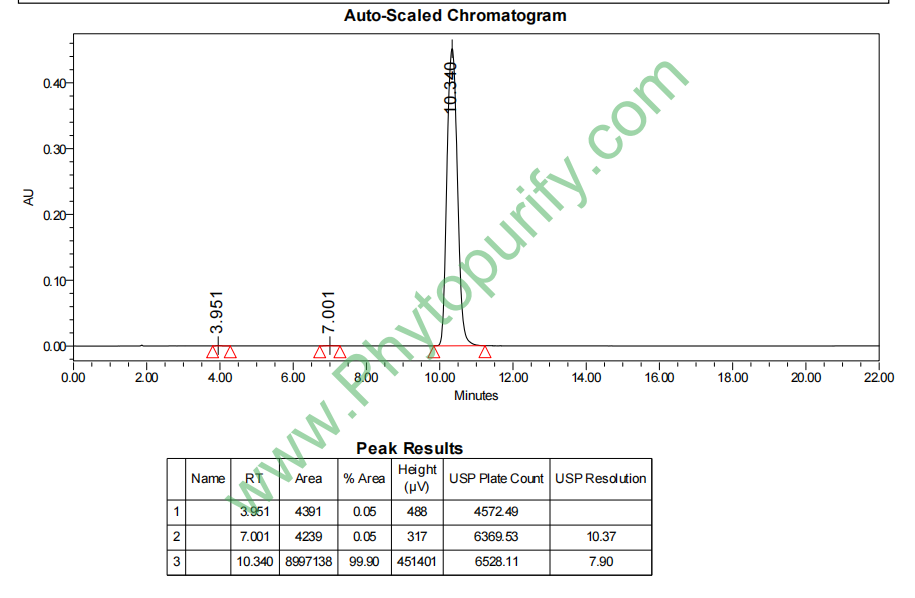
HPLC of Magnolol
Storage conditions:Short-term storage at 2~8℃, long-term storage at -20 ~ -80℃
40.4600
4.2190
4.2164
.0315
7.6150
14.7782
High
92.1308
2.4904
Yes
Yes
No
No
Yes
Yes
0.0
Yes
Yes
Yes
Yes
Natural products, as an important source of drug discovery, have always played an indispensable role in the long struggle between humans and diseases. From the practical experience of traditional medicine to the precise analysis of modern pharmacology, many active ingredients derived from plants have developed into first-line drugs or lead compounds in clinical practice. Among numerous biologically active natural products, magnolol has become one of the research hotspots in the field of natural product pharmacology due to its unique chemical structure, extensive pharmacological activity, and clear molecular targets.
Houpo phenol is a biphenyl type lignan compound, mainly derived from the Magnoliaceae plant Houpo(Magnolia officinalis Rehd. et Wils. or Magnolia officinalis with concave leaves(Magnolia officinalis var. biloba Dried bark, root bark, and branch bark from Rehd. et Wils. Magnolia officinalis, as a traditional Chinese medicine, was first recorded in the "Shennong Bencao Jing". It has the effects of drying dampness, eliminating phlegm, and removing excess qi. It is commonly used to treat digestive system diseases such as dampness stagnation, abdominal distension, and constipation. Modern pharmacological research has confirmed that magnolol is one of the main active ingredients in Magnolia officinalis to exert its pharmacological effects, with various biological activities such as anti-inflammatory, antioxidant, anti-tumor, antibacterial, anti anxiety, neuroprotective, and regulating gastrointestinal function.
Of particular note, magnolol has been identified as a dual agonist of retinol X receptor alpha (RXR alpha) and peroxisome proliferator activated receptor gamma (PPAR gamma), with EC50 values of 10.4 µ M and 17.7 µ M, respectively. This discovery not only provides a molecular explanation for the complex pharmacological effects of magnolol, but also opens up new possibilities for its application in metabolic diseases, inflammation related diseases, and cancer. In particular, the significant regulatory effect of magnolol on gastrointestinal dysfunction is closely related to its action on multiple gastrointestinal related targets (such as TRPV1, PTGS1/2, CHRM3, SLC6A4, DRD2, etc.), which makes it show great potential in the treatment of functional dyspepsia, irritable bowel syndrome and other diseases.
This article aims to provide a systematic professional review of magnolol, covering its chemical structure and physicochemical properties, plant sources and extraction methods, pharmacological activity, mechanism of action and molecular targets, pharmacological evaluation and pharmacokinetic properties, as well as its clinical application prospects, in order to provide comprehensive reference for the in-depth research and development of this natural product.
The chemical name of magnolol is 5,5 '- diallyl-2,2' - hydroquinone, and its chemical structure consists of two benzene rings connected by a single bond, with one allyl group and one phenolic hydroxyl group attached to each benzene ring. This biphenyl structure endows magnolol with unique chemical properties and biological activity.
From the perspective of structural characteristics, magnolol belongs to the class of new lignans, and its core skeleton is a biphenyl structure. The single bond between two benzene rings can rotate freely, allowing the molecule to have multiple conformations, which may be related to its flexible binding with different target proteins. The two phenolic hydroxyl groups (- OH) are important active groups that not only impart a certain acidity to the molecule, allowing it to form intramolecular or intermolecular hydrogen bonds, but also serve as key sites for its antioxidant activity and interaction with target proteins. Two allyl groups (- CH ₂ - CH=CH ₂) act as hydrophobic side chains, increasing the lipophilicity of the molecule and helping it penetrate biofilms.
In terms of physicochemical properties, the molecular formula of magnolol is C ₁₈ H ₁₈ O ₂, with a molecular weight of 266.34. Its lipophilic water partition coefficient (LogP) is 4.219, indicating that the compound has high lipophilicity and is easy to dissolve in organic solvents, while its solubility in water is relatively low. Its water solubility value is only 0.0315 mg/mL, which poses a challenge to its absorption and formulation development in vivo. The topological polar surface area (TPSA) of magnolol is 40.46 Å ², which is relatively small and usually indicates that the molecule has good cell membrane permeability, which is consistent with its predicted high blood-brain barrier penetration ability. In addition, the chemical structure of magnolol is relatively stable, but it may degrade under strong acid, strong base, or light conditions. Its UV absorption characteristics can be used for qualitative and quantitative analysis.
The main plant sources of magnolol are Magnoliaceae plants Magnolia officinalis and Magnolia officinalis. In addition, in other Magnolia plants such as Japanese Magnolia(Magnolia obovata)Wei's Mulan(Magnolia wilsonii)It also contains a certain amount of magnolol. The quality of Magnolia officinalis is closely related to its place of origin, harvesting time, tree age, and processing methods. It is generally believed that the total content of magnolol and honokiol in Magnolia officinalis, which has a longer growth period, thicker skin, and is oily, is higher.
The traditional extraction method of magnolol is mainly based on its lipid solubility characteristics. Common extraction solvents include organic solvents such as ethanol, methanol, and ethyl acetate. The classic extraction process is as follows: after crushing the dried bark of Magnolia officinalis, it is heated and refluxed with a certain concentration of ethanol (such as 70% -95% ethanol) for extraction. After concentration, the extract is extracted with solvents such as ethyl acetate or chloroform, and finally separated and purified by silica gel column chromatography, recrystallization and other methods to obtain high-purity Magnolia officinalis monomer. Although this traditional method is effective, it has disadvantages such as high consumption of organic solvents, long extraction time, and low efficiency.
With the development of modern separation technology, some more efficient and environmentally friendly extraction techniques have been applied to the preparation of magnolol. For example, supercritical fluid extraction technology, especially using carbon dioxide as an extractant, can efficiently extract magnolol at lower temperatures, avoiding residual organic solvents and degradation of thermosensitive components. In addition, ultrasound assisted extraction and microwave-assisted extraction techniques can significantly damage plant cell walls and accelerate the dissolution of target components by utilizing the cavitation effect of ultrasound or the heating effect of microwave, thereby shortening extraction time, improving extraction rate and purity. In recent years, high-speed countercurrent chromatography technology has also been successfully applied to the rapid separation and purification of magnolol. This technology is based on the liquid-liquid distribution principle and can achieve one-step preparation of high-purity monomer compounds from crude extracts.
The pharmacological activity of magnolol is extremely broad, covering multiple systems such as digestion, nervous system, cardiovascular system, endocrine system, and immune system.
In terms of digestive system, magnolol has a significant regulatory effect on gastrointestinal dysfunction. Research has shown that magnolol can improve gastrointestinal motility disorders through various mechanisms. It can regulate smooth muscle contraction and alleviate gastrointestinal spasms by antagonizing the muscarinic acetylcholine receptor M3 (CHRM3). At the same time, it can also act on dopamine D2 receptor (DRD2) and serotonin transporter (SLC6A4), affecting the neurotransmitter balance in the gastrointestinal tract, thereby promoting gastric emptying and intestinal peristalsis. In addition, the inhibitory effect of magnolol on cyclooxygenase-1 (PTGS1/COX-1) and cyclooxygenase-2 (PTGS2/COX-2), as well as its regulation of transient receptor potential vanillic acid subtype 1 (TRPV1), enable it to effectively alleviate gastrointestinal inflammation and visceral hypersensitivity, which is of great significance for the treatment of functional gastrointestinal diseases such as irritable bowel syndrome.
In terms of the nervous system, magnolol exhibits significant neuroprotective effects. Its high blood-brain barrier penetration ability allows it to directly act on the central nervous system. Houpo phenol can protect neurons from damage through pathways such as antioxidant stress, inhibition of neuroinflammation, and anti apoptosis. In the Alzheimer's disease model, magnolol can inhibit the aggregation of β - amyloid protein and the excessive phosphorylation of tau protein. In the model of cerebral ischemia-reperfusion injury, it can reduce the volume of cerebral infarction and improve neurological deficits. In addition, magnolol also has anti anxiety and anti depression effects, and its mechanism may be related to the regulation of the gamma aminobutyric acid (GABA) system and monoamine neurotransmitters.
In the cardiovascular system, magnolol has the effects of protecting myocardium, anti atherosclerosis, lowering blood pressure and anti platelet aggregation. It can improve lipid metabolism and inhibit the proliferation and migration of vascular smooth muscle cells by activating nuclear receptors such as PPAR γ, thus delaying the process of atherosclerosis. Its antioxidant activity helps to eliminate free radicals and protect the function of vascular endothelial cells.
In terms of anti-tumor, magnolol has shown inhibitory effects on proliferation, apoptosis and metastasis of various cancer cell lines (such as breast cancer, prostate cancer, lung cancer, colon cancer, skin cancer, etc.). Its mechanism involves multiple signaling pathways, including regulating cell differentiation and apoptosis by activating RXR α and PPAR γ, inhibiting pro cancer signaling pathways such as NF - κ B and STAT3, and regulating the expression of cell cycle related proteins.
In addition, magnolol also exhibits broad-spectrum antibacterial activity, especially strong inhibitory effects on oral pathogenic bacteria such as Streptococcus mutans and Helicobacter pylori. Its anti-inflammatory activity is also reflected in the various pharmacological effects mentioned above, mainly achieved by inhibiting the production of inflammatory mediators such as prostaglandins, nitric oxide, and pro-inflammatory cytokines.
The diverse pharmacological activities of magnolol stem from its ability to interact with multiple molecular targets. Among them, being a dual agonist of RXR α and PPAR γ is one of its most core molecular mechanisms.
RXR α and PPAR γ both belong to the nuclear receptor superfamily and are ligand activated transcription factors. PPAR γ plays a key role in adipocyte differentiation, glycolipid metabolism and inflammation regulation, and is an important target for the treatment of type 2 diabetes and metabolic syndrome. RXR α serves as a universal heterodimeric partner for various nuclear receptors, including PPAR γ, RAR, LXR, FXR, etc., and is involved in regulating cell proliferation, differentiation, apoptosis, and metabolic homeostasis. Houpo phenol activates RXR α with an EC50 of 10.4 µ M and PPAR γ with an EC50 of 17.7 µ M. This dual excitatory effect means that magnolol can not only activate PPAR γ/RXR α heterodimers alone, but may also affect other nuclear receptor pathways that form dimers with RXR α, resulting in broader biological effects. For example, by activating PPAR γ, magnolol can improve insulin sensitivity and inhibit inflammatory responses; By activating RXR α, it may affect the retinoic acid signaling pathway, thereby regulating cell differentiation.
In terms of regulating gastrointestinal function, the mechanism of action of magnolol is multi-target and multi pathway. It exerts antispasmodic effects by antagonizing the CHRM3 receptor and inhibiting excessive smooth muscle contraction mediated by acetylcholine. By antagonizing DRD2 receptors, it can regulate the inhibitory effect of dopamine on gastrointestinal motility and promote gastric emptying. Inhibition of SLC6A4 can increase the level of serotonin in the synaptic cleft, which is a key neurotransmitter regulating gastrointestinal motility and secretion. In addition, the inhibitory effect of magnolol on PTGS1/PTGS2 is similar to that of nonsteroidal anti-inflammatory drugs, which can reduce the synthesis of prostaglandins and alleviate gastrointestinal inflammation and pain. The regulatory effect on TRPV1 can help reduce visceral hypersensitivity and improve symptoms such as abdominal pain and bloating. The inhibition of voltage dependent L-type calcium channel CACNA1C and the regulation of calcium regulated phosphatase PPP3CA are also involved in their regulation of smooth muscle contraction and signal transduction. The effects on cholecystokinin B receptor (CCKBR) and histamine H2 receptor (HRH2) may affect gastric acid secretion and gallbladder contraction.
The antioxidant and anti-inflammatory mechanisms of magnolol are also related to its multiple targets. It can directly eliminate free radicals and activate the nuclear factor E2 related factor 2 (Nrf2) pathway, enhancing the expression of endogenous antioxidant enzymes. Meanwhile, it reduces the production of pro-inflammatory cytokines (such as TNF - α, IL-6, IL-1 β) and inflammatory mediators (such as iNOS, COX-2) by inhibiting signaling pathways such as NF - κ B and MAPK.
Evaluating the pharmacological properties of magnolol is a crucial step in transitioning it from laboratory research to clinical application. Based on its physical and chemical properties and preliminary pharmacokinetic studies, its potential for drug development can be preliminarily evaluated.
From the perspective of the "Five Principles of Similar Drugs", the molecular weight of magnolol (266.34) is less than 500, and the LogP (4.219) is slightly higher than the recommended upper limit of 5, indicating its high lipid solubility. The number of hydrogen bond donors (2 phenolic hydroxyl groups) and hydrogen bond acceptors (2 oxygen atoms) conforms to the rules. TPSA (40.46 Å ²) less than 140 Å ² indicates good oral absorption and membrane permeability. However, its extremely poor water solubility (0.0315 mg/mL) poses a significant pharmaceutical challenge. Low water solubility may lead to low oral bioavailability, affecting the efficacy of the drug in vivo.
In terms of safety, preliminary toxicological evaluations have shown that magnolol has no inhibitory activity on hERG potassium channels, which means its risk of causing cardiac QT interval prolongation and fatal arrhythmias is low. The Ames test result was 0.0, indicating that it did not show mutagenicity in the bacterial recovery mutation test, suggesting a low risk of genetic toxicity. These preliminary safety data are positive, but more comprehensive in vitro and in vivo toxicology studies are still needed, including acute toxicity, chronic toxicity, reproductive toxicity, etc.
Regarding pharmacokinetic properties, the high LogP value and low TPSA value of magnolol indicate its high blood-brain barrier penetration ability, which is consistent with its pharmacological activity in neuroprotection. However, high lipid solubility also means that its metabolism in the body may be faster, mainly through the liver's glucuronidation and sulfation binding reactions for phase II metabolism, or through the cytochrome P450 enzyme system for phase I oxidative metabolism. Its oral bioavailability may be limited due to first pass effects and poor water solubility. Previous studies have attempted to improve its solubility and bioavailability by preparing novel drug delivery systems such as nanoparticles, liposomes, cyclodextrin inclusion complexes, or phospholipid complexes. In addition, its high protein binding rate may also affect its free drug concentration and distribution volume. Therefore, conducting systematic pharmacokinetic studies on magnolol and clarifying its absorption, distribution, metabolism, and excretion characteristics in animals and humans is the key to future development.
Based on the extensive pharmacological activity and clear molecular mechanism of magnolol, its clinical application prospects in multiple disease fields are very broad.
Firstly, in the treatment of gastrointestinal disorders, magnolol has unique advantages. Given its ability to simultaneously act on multiple targets related to gastrointestinal motility, secretion, sensation, and inflammation, such as CHRM3, DRD2, SLC6A4, PTGS1/2, TRPV1, etc., it is expected to be developed as a multi-target drug for the treatment of functional dyspepsia, irritable bowel syndrome, chronic gastritis, and other diseases. Compared with existing single target drugs such as prokinetic drugs, antispasmodics, and antidepressants, magnolol may provide more comprehensive symptom improvement and may have fewer side effects. Especially, its anti-inflammatory and visceral hypersensitivity reducing effects are particularly important for relieving symptoms such as abdominal pain and bloating.
Secondly, in the field of metabolic diseases, magnolol, as a dual agonist of PPAR γ and RXR α, provides a leading structure for the development of new anti diabetes and anti obesity drugs. Although traditional PPAR γ total agonists (such as thiazolidinediones) are effective, they have side effects such as weight gain, water sodium retention, cardiovascular risk, etc. Houpo phenol, as a partial agonist or selective PPAR γ modulator, may reduce side effects while retaining its hypoglycemic and insulin sensitivity effects through different co regulatory factor recruitment patterns. In addition, its activation effect on RXR α may synergistically enhance the regulation of lipid metabolism and energy balance.
Again, in terms of neurodegenerative diseases and stroke, the neuroprotective, anti-inflammatory, antioxidant, and high blood-brain barrier penetration ability of magnolol make it a potential candidate drug for the treatment of Alzheimer's disease, Parkinson's disease, and stroke. It can simultaneously act on multiple pathological processes, such as A β deposition, tau protein phosphorylation, oxidative stress, and neuroinflammation, demonstrating the advantages of multi-target therapy.
In addition, magnolol has shown potential applications in anti-tumor, cardiovascular protection, antibacterial (especially against Helicobacter pylori) and other fields. In the future, combining modern medicinal chemistry methods to modify the structure of magnolol, such as introducing hydrophilic groups to improve water solubility or optimizing its pharmacokinetic properties, will be an important research direction. At the same time, developing oral, transdermal, or targeted drug delivery systems is also the key to overcoming the bottleneck of drug development.
Houpo phenol, a natural lignan derived from the traditional Chinese medicine Houpo, exhibits remarkable multi effect pharmacological activity due to its unique hydroquinone structure and molecular characteristics as a dual agonist of RXR α/PPAR γ. From regulating gastrointestinal function, protecting nerves, improving metabolism to anti-tumor effects, its mechanism of action involves multiple signaling pathways and molecular targets, reflecting the characteristic of natural products with multiple targets and pathways. Despite the challenges of poor water solubility and low oral bioavailability, the preliminary safety evaluation results are encouraging, and the development of modern pharmaceutical technology provides the possibility to address these issues.
The research process of magnolol is a model for the modernization of traditional Chinese medicine. It not only provides modern scientific explanations for understanding the traditional functions of Magnolia officinalis, but also provides valuable lead compounds for developing innovative drugs for complex diseases such as functional gastrointestinal diseases, metabolic syndrome, and neurodegenerative diseases. In the future, with the in-depth analysis of its mechanism of action, continuous optimization of structural modifications, and successful development of new drug delivery systems, magnolol and its derivatives are expected to play a greater role in clinical applications and contribute to human health. The continuous exploration of magnolol will undoubtedly deepen our understanding of the interaction between natural products and complex human systems, and promote the transformation process from natural products to innovative drugs.
