


Synonym name: Giganteaside J; Giganteoside J
Catalogue No.: BP0908
Cas No.: 140360-29-8
Formula: C59H96O27
Mol Weight: 1237.39
Botanical Source: Dipsacus asper, Aralia elata, Cephalaria gigantea and Lonicera macranthoides
Purity: 95%~99%
Analysis Method: HPLC-DAD or/and HPLC-ELSD
Identification Method: Mass, NMR
Packing: Brown vial or HDPE plastic bottle
Can be supplied from milligrams to grams.
For Reference Standard and R&D, Not for Human Use Directly.
Inquire for bulk scale.
Description:
Macranthoidin A, found in the herbs of Lonicera japonica Thunb., has anti-inflammation activity.
References:
Journal of Chromatography B Volume 877, Issue 3, 15 January 2009, Pages 159–165
Liquid chromatography–mass spectrometry analysis of macranthoidin B, macranthoidin A, dipsacoside B, and macranthoside B in rat plasma for the pharmacokinetic investigation
METHODS AND RESULTS:
A liquid chromatography-electrospray ionization–mass spectrometry method has been developed and validated for identification and quantification of four major bioactive saponins in rat plasma after oral administration of extraction of saponins from Flos Lonicerae, i.e., macranthoidin B, Macranthoidin A, dipsacoside B, and macranthoside B. Plasma samples were extracted with solid-phase extraction, separated on a Shim-pack CLC-ODS column and detected by MS in negative selective ion monitoring mode. Calibration curves offered linear ranges of two orders of magnitude with r2 > 0.999. The method showed the low limit quantification of 7.72, 6.06, 7.16, and 1.43 ng/mL for macranthoidin B, Macranthoidin A, dipsacoside B, and macranthoside B, respectively. The inter- and intra-CV precision (R.S.D.) were all within 10% and accuracy (% bias) ranged from −10 to 10%. The overall recovery was more than 70%.
CONCLUSIONS:
This developed method was subsequently successfully applied to pharmacokinetic profiles of the four saponins in rats. After oral administration of extraction of saponins in rats, the concentration–time course was found to be the double peaks of curve.
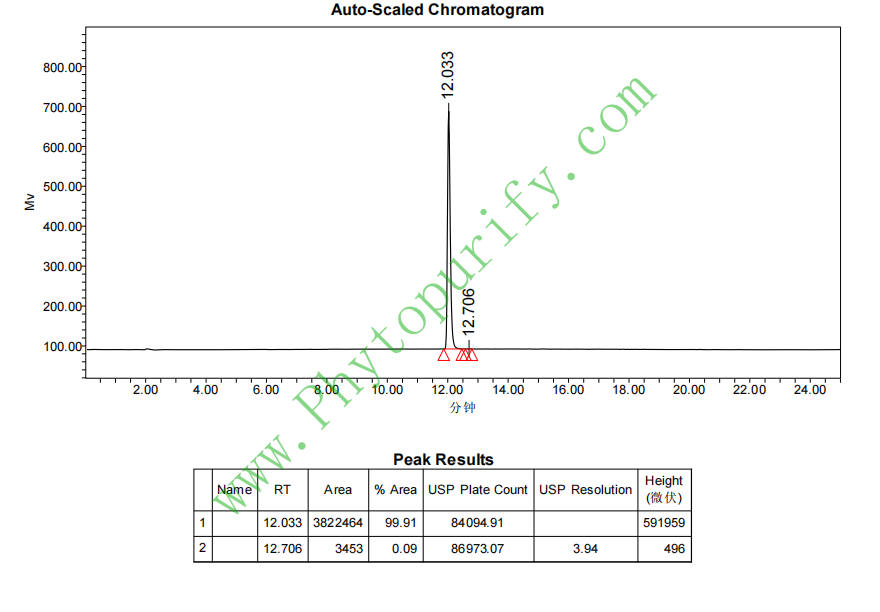
HPLC of Macranthoidin A
Storage conditions:Short-term storage at 2~8℃, long-term storage at -20 ~ -80℃
433.0500
1.4427
1.4427
.5502
.4734
.1452
Low
67.4490
7.2796
Yes
No
No
No
No
No
0.0
Yes
No
No
Yes
Natural products, as an important source of drug discovery, have written a brilliant chapter in the history of human health. Among numerous natural compounds with biological activity, saponins have attracted much attention due to their structural diversity and extensive pharmacological activities. Macranthoidin A, derived from the traditional Chinese medicine honeysuckle, is a type of saponin found in honeysuckle(Lonicera japonica The pentacyclic triterpenoid saponins isolated from Thunb. have gradually become a hot topic in natural product pharmacology research in recent years. Its unique chemical structure, significant liver protective effect, and potential antiviral activity make it an attractive prospect in the field of drug development.
Honeysuckle, as a commonly used heat clearing and detoxifying medicine in traditional Chinese medicine, has a medicinal history dating back thousands of years. Modern pharmacological research has confirmed that honeysuckle has various pharmacological effects such as anti-inflammatory, antibacterial, antiviral, hepatoprotective, and choleretic. As one of the active ingredients with high content in honeysuckle, Lonicera japonica saponin A is considered an important material basis for its pharmacological effects. This compound was originally derived from Lonicera japonica in the 1990s(Lonicera macranthoides It is named after the separation and identification in Hand. - Mazz. Subsequent research has found that it is distributed in various plants of the Lonicera genus, and the content differences are significant.
The most notable pharmacological activity of Lonicera japonica saponin A is its protective effect against various chemical liver injuries. Research has shown that this compound exhibits significant intervention effects on liver injury models induced by acetaminophen (APAP), carbon tetrachloride (CCl ₄), and heavy metal cadmium (Cd). This discovery not only provides modern scientific explanations for the hepatoprotective effects of traditional Chinese medicine honeysuckle, but also provides lead compounds for the development of new hepatoprotective drugs. In addition, preliminary studies suggest that Lonicera japonica saponin A has potential anti-inflammatory and antiviral activities, and its mechanism of action involves multiple signaling pathways and molecular targets, exhibiting a multi-target and multi pathway characteristic of action.
This article will systematically review the research progress of Lonicera japonica saponin A from the aspects of chemical structure and physicochemical properties, plant sources and extraction methods, pharmacological activity research, mechanism of action and molecular targets, drug evaluation and pharmacokinetics, clinical application prospects and prospects, in order to provide reference for the in-depth research and development of this natural product.
Gray felt honeysuckle saponin A belongs to the oleanane type pentacyclic triterpenoid saponin, and its chemical structure has typical saponin characteristics. The glycoside of this compound is oleanolic acid, which is a widely distributed pentacyclic triterpenoid acid in nature and has various biological activities. There are two sugar chains connected to the C-3 and C-28 positions of oleanolic acid, forming the complete structure of Lonicera japonica saponin A. Specifically, the sugar chain at C-3 is composed of glucuronic acid (GlcA) and glucose (Glc), while the sugar chain at C-28 is more complex, containing various monosaccharide units such as glucose, rhamnose (Rha), and arabinose (Ara). This complex sugar chain structure not only endows the compound with good water solubility, but also has a significant impact on its biological activity and pharmacokinetic properties.
From the perspective of physical and chemical properties, the molecular formula of Lonicera japonica saponin A is C ₅₉ H ₉₆ O ₂₇, with a molecular weight of up to 1237.3900 Da, belonging to large molecule natural products. The LogP of its lipid water partition coefficient is 1.4427, indicating that the compound has a certain degree of lipophilicity, but overall tends to be hydrophilic. The topologically polar surface area (TPSA) is as high as 433.0500 Å ², which is much higher than the recommended upper limit of 140 Å ² for oral drugs, indicating that the compound may have difficulty diffusing through the cell membrane through passive diffusion. The water solubility parameter is 0.5502, which belongs to the category of moderately water-soluble compounds. It is worth noting that the blood-brain barrier permeability of this compound is evaluated as "low", which to some extent limits its application in the treatment of central nervous system diseases, but may also indicate a higher selectivity for its peripheral effects.
In terms of stability, Lonicera japonica saponin A, as a saponin compound, is relatively stable under acidic conditions, but may undergo hydrolysis reactions in strongly alkaline environments, leading to sugar chain breakage. In addition, the compound is sensitive to heat, and high-temperature treatment may cause structural changes or reduced activity. Therefore, during the extraction, separation, and storage processes, it is necessary to control appropriate pH and temperature conditions to maintain its structural integrity and biological activity.
The main source of saponin A in Lonicera japonica var. gracilis comes from the Caprifoliaceae family and the Lonicera genus(Lonicera)Plants, including honeysuckle(L. japonica)Honeysuckle with Grey Felt Hair(L. macranthoides)As the main source. There are significant differences in the content of saponin A in honeysuckle with different varieties, origins, and harvesting periods. Generally speaking, the content of this compound in dried honeysuckle medicinal materials is between 0.1% and 0.5%, while the content may be higher in honeysuckle with grey felt hair. In addition, research has found that the bud and initial flowering stages of honeysuckle are critical periods for the accumulation of this compound, and timely harvesting can help obtain high levels of raw materials.
The classic methods for extracting saponin A from Lonicera japonica Thunb. include solvent extraction, ultrasound assisted extraction, and microwave-assisted extraction. The traditional solvent extraction method usually uses methanol or ethanol as the extraction solvent, and is carried out by heating reflux or cold soaking. Due to the good solubility of saponin compounds in alcohol water mixed solvents, 70% -80% ethanol water solutions are often used as extraction solvents. The extraction temperature is generally controlled at 60-80 ℃, the extraction time is 2-4 hours, and the solid-liquid ratio is 1:10-1:20. This method is easy to operate and cost-effective, but the extraction efficiency is relatively low and time-consuming.
In order to improve extraction efficiency and selectivity, modern extraction techniques have been widely used for the extraction of saponin A from Lonicera japonica. The ultrasound assisted extraction method utilizes the cavitation effect and mechanical vibration of ultrasound to effectively destroy plant cell walls and promote the dissolution of target compounds. Research has shown that under the conditions of ultrasound power of 300-500W and temperature of 50-60 ℃, a high extraction rate can be obtained after 30-60 minutes of extraction. The microwave-assisted extraction method utilizes the penetrability and selective heating characteristics of microwaves to quickly and efficiently extract target compounds. These modern extraction techniques not only shorten the extraction time, but also reduce the amount of solvent used, which is in line with the concept of green chemistry.
The crude extract after extraction needs further separation and purification to obtain high-purity Lonicera japonica saponin A. Common separation methods include macroporous adsorption resin column chromatography, silica gel column chromatography, high-performance liquid chromatography (HPLC), etc. Macroporous adsorption resins (such as D101, AB-8, etc.) are widely used for the preliminary purification of saponin compounds due to their advantages of large adsorption capacity, mild desorption conditions, and reusability. By gradient elution, the target saponin component can be enriched. Subsequently, fine separation can be achieved using silica gel column chromatography or preparative HPLC, resulting in a purity of over 98% for the monomers of Lonicera japonica saponins A. The entire extraction and separation process requires real-time monitoring using thin-layer chromatography (TLC) and HPLC to ensure separation efficiency and product quality.
The hepatoprotective effect is one of the most concerned pharmacological activities of Lonicera japonica saponin A. Multiple in vitro and in vivo studies have confirmed that this compound has significant protective effects against various chemical liver injuries.
Gray felt honeysuckle saponin A showed a dose-dependent protective effect against acetaminophen (APAP) - induced liver injury. APAP excess is a common cause of acute liver injury in clinical practice, and its mechanism mainly involves the depletion of glutathione (GSH) by the toxic intermediate N-acetylbenzoquinone imine (NAPQI) produced by metabolic activation, leading to oxidative stress and mitochondrial dysfunction. Research has shown that pre-treatment with Lonicera japonica saponin A can significantly reduce APAP induced apoptosis and necrosis of liver cells, lower serum transaminase (ALT, AST) levels, and alleviate pathological damage to liver tissue. Mechanism studies have found that this compound can upregulate GSH levels, enhance antioxidant enzyme activity, inhibit mitochondrial permeability transition pore (mPTP) opening, and thus protect mitochondrial function.
Gray felt honeysuckle saponin A also showed a protective effect against liver injury induced by carbon tetrachloride (CCl ₄). After being metabolized and activated by liver cytochrome P450 enzymes, CCl ₄ generates trichloromethyl radicals (· CCl ∝), triggering a chain reaction of lipid peroxidation and leading to liver cell damage. The experimental results showed that Lonicera japonica saponin A can significantly reduce the serum ALT and AST levels of CCl ₄ - treated mice, alleviate liver cell steatosis and necrosis, reduce liver malondialdehyde (MDA) content, and increase the activities of superoxide dismutase (SOD) and catalase (CAT). These results indicate that its hepatoprotective mechanism is closely related to its antioxidant effect.
Gray felt honeysuckle saponin A also showed protective potential against cadmium (Cd) - induced liver damage. Cadmium is an environmental pollutant, and long-term exposure can cause liver damage. Research has found that Lonicera japonica saponin A can alleviate cadmium induced liver cell toxicity, reduce intracellular reactive oxygen species (ROS) levels, inhibit mitochondrial membrane potential decline, reduce cytochrome c release and caspase-3 activation, thereby inhibiting cell apoptosis. In addition, the compound can regulate the expression of metallothionein (MT), promote cadmium detoxification and excretion.
Gray felt honeysuckle saponin A has significant anti-inflammatory activity. In the mouse ear swelling model induced by ear oil, this compound can significantly inhibit inflammatory response, alleviate ear tissue edema and inflammatory cell infiltration. This effect may be related to its inhibition of inflammatory mediators such as prostaglandin E ₂ (PGE ₂), tumor necrosis factor - α (TNF - α), and interleukin-6 (IL-6) production. Further in vitro experiments have shown that Lonicera japonica saponin A can inhibit the release of nitric oxide (NO) and pro-inflammatory cytokines in macrophages stimulated by lipopolysaccharide (LPS), and its mechanism involves the regulation of nuclear factor kappa B (NF - κ B) and mitogen activated protein kinase (MAPK) signaling pathways.
In recent years, the antiviral activity of Lonicera japonica saponins A has gradually attracted the interest of researchers. Preliminary studies have shown that the compound has inhibitory effects on various viruses, and its potential targets involve multiple stages of the virus replication cycle. According to existing information, Lonicera japonica saponin A may exert antiviral effects by acting on targets such as myeloperoxidase (MPO), viral DNA polymerases (such as UL42, UL54), transcription regulators (such as ICP27), thymidine kinase (TK), envelope glycoproteins (such as gD), and chemokine receptors (CCR5, CXCR4). Especially its inhibitory effect on HIV-1 protease (HIV1-PR) and integrase (INT) suggests that it may have anti HIV potential. However, these antiviral activities are currently mostly based on computer simulations and preliminary experiments, and more systematic in vitro and in vivo studies are needed to verify them.
The pharmacological effects of Lonicera japonica saponin A involve multiple molecular targets and signaling pathways, exhibiting characteristics of multi-target and multi pathway action. A deep understanding of its mechanism of action is of great significance for the further development and clinical application of this compound.
In terms of liver protection, Lonicera japonica saponins mainly exert their effects through the following mechanisms: firstly, antioxidant stress is one of its core mechanisms. This compound can directly scavenge free radicals and enhance the endogenous antioxidant defense system of cells, including upregulating glutathione (GSH) levels, enhancing the activity of antioxidant enzymes such as superoxide dismutase (SOD), catalase (CAT), and glutathione peroxidase (GPx). Secondly, Lonicera japonica saponin A can inhibit the mitochondrial mediated apoptosis pathway. By stabilizing mitochondrial membrane potential, inhibiting mPTP opening, reducing cytochrome c release, and subsequently inhibiting caspase cascade reaction, liver cell apoptosis is ultimately suppressed. In addition, the compound can regulate the nuclear factor E2 related factor 2 (Nrf2) signaling pathway, promote gene expression driven by antioxidant response elements (ARE), and enhance the cell's defense against oxidative stress.
In terms of anti-inflammatory effects, Lonicera japonica saponin A can inhibit the activation of NF - κ B and MAPK signaling pathways. NF - κ B is the core transcription factor of inflammatory response, regulating the expression of various pro-inflammatory cytokines and chemokines. Research has shown that Lonicera japonica saponin A can inhibit the phosphorylation and degradation of I κ B α, prevent the nuclear translocation of NF - κ B p65 subunit, and thus reduce the production of inflammatory mediators such as TNF - α, IL-6, IL-1 β. Meanwhile, the compound can also inhibit the phosphorylation of p38 MAPK and JNK, further suppressing inflammatory responses.
In terms of antiviral effects, the potential targets of Lonicera japonica saponins A are relatively broad. For herpes virus, it may interfere with the replication and transcription of the viral genome by inhibiting the activity of viral DNA polymerases (UL42, UL54) and transcription regulatory factors (ICP27). For HIV, this compound may block the maturation and integration process of the virus by inhibiting the activity of HIV-1 protease (HIV1-PR) and integrase (INT). In addition, the antagonistic effects on chemokine receptors CCR5 and CXCR4 may prevent HIV from entering host cells. These multi-target effects endow Lonicera japonica saponin A with broad-spectrum antiviral potential, but also increase the complexity of studying its mechanism of action.
It is worth noting that the inhibitory effect of Lonicera japonica saponins on MPO is also worthy of attention. MPO is a heme peroxidase expressed in neutrophils and monocytes, involved in inflammatory responses and oxidative stress. Inhibiting MPO activity may help alleviate inflammation related tissue damage, which may be another mechanism of the compound's anti-inflammatory and hepatoprotective effects.
The evaluation of drug properties is a crucial step in the transition of natural products from laboratory research to clinical applications. Although Lonicera japonica saponin A has significant pharmacological activity, its medicinal properties face many challenges.
From the perspective of molecular properties, the molecular weight of Lonicera japonica saponin A (1237.39 Da) far exceeds the recommended upper limit of 500 Da for oral medication, making it a macromolecular compound. Its high TPSA value (433.05 Å ²) and moderate LogP value (1.44) indicate that the compound has high polarity, good water solubility but insufficient lipid solubility. These properties result in poor membrane permeability and potentially lower oral bioavailability. In addition, the blood-brain barrier permeability of this compound is evaluated as "low", which, although beneficial for reducing central nervous system side effects, also limits its application in the treatment of brain diseases.
In terms of safety, the Ames test result is 0.0, indicating that Lonicera japonica saponin A has no mutagenicity and a low risk of genetic toxicity. The hERG inhibition evaluation is' no ', indicating a low risk of cardiac toxicity. These preliminary safety data provide favorable conditions for further development of the compound. However, a comprehensive toxicological evaluation, including acute toxicity, chronic toxicity, reproductive toxicity, etc., still needs to be systematically carried out.
Pharmacokinetic studies are key to understanding the in vivo processes of Lonicera japonica saponins. At present, the pharmacokinetic research on this compound is not sufficient, but based on its physicochemical properties and research experience of similar compounds, its pharmacokinetic characteristics can be inferred. After oral administration, Lonicera japonica saponin A may partially hydrolyze in the gastrointestinal tract, and the sugar chains are metabolized by gut microbiota to produce secondary glycosides or aglycones, which may have different biological activities. In terms of absorption, due to its high molecular weight and polarity, this compound may mainly pass through intestinal epithelial cells through passive diffusion and/or carrier mediated transport, but the absorption rate may be low. In terms of distribution, the compound may mainly be distributed in peripheral tissues such as blood and liver, making it difficult to enter the central nervous system. In terms of metabolism, the liver and gut microbiota are the main metabolic sites, and metabolic reactions such as hydrolysis, oxidation, and reduction may occur. In terms of excretion, the compound and its metabolites may be mainly excreted through bile and urine.
To improve the oral bioavailability of Lonicera japonica saponin A, drug delivery systems such as liposomes, nanoparticles, phospholipid complexes, etc. can be considered. These technologies can improve the solubility and membrane permeability of drugs, enhancing their oral absorption. In addition, structural modification is also an important strategy for improving drug properties, such as optimizing their pharmacokinetic properties through prodrug design, sugar chain modification, and other methods.
As a natural product with multiple pharmacological activities, Lonicera japonica saponins have shown broad prospects in clinical applications, but also face many challenges.
In the field of liver protection, Lonicera japonica saponin A has clear development value. At present, the types of drugs used to treat liver injury in clinical practice are limited, and there are problems such as uncertain efficacy and significant side effects. The protective effect of Lonicera japonica saponin A on various chemical liver injuries makes it a promising new hepatoprotective drug. Especially for acute liver injury caused by excessive APAP, this compound may become an effective antidote. In addition, for chronic liver diseases such as alcoholic liver disease and non-alcoholic fatty liver disease, Lonicera japonica saponins A may also have therapeutic effects. However, from laboratory research to clinical application, key issues such as dose determination, administration routes, and long-term safety still need to be addressed.
In the field of anti-inflammatory, the anti-inflammatory activity of Lonicera japonica saponin A provides the possibility for its application in the treatment of inflammatory diseases. For example, for chronic inflammatory diseases such as rheumatoid arthritis, inflammatory bowel disease, dermatitis, etc., this compound may exert therapeutic effects by inhibiting inflammatory mediators and regulating immune responses. However, the advantages and characteristics of its anti-inflammatory activity compared to other known anti-inflammatory drugs require further comparative research.
In the field of antiviral therapy, the broad-spectrum antiviral potential of Lonicera japonica saponins A is highly anticipated. Especially for difficult to treat viral infections such as herpes virus and HIV, this compound may provide new treatment options. However, current antiviral research is mostly in the preliminary stage, and more systematic in vitro and in vivo experiments are needed to verify its antiviral effect, clarify its mechanism of action and targets. In addition, the development of antiviral drugs also needs to consider the issue of drug resistance. The multi-target action characteristics of Lonicera japonica saponins may help reduce the risk of drug resistance.
Looking ahead to the future, research on saponin A in Lonicera japonica should focus on the following aspects: firstly, conducting in-depth pharmacokinetic studies to clarify its absorption, distribution, metabolism, and excretion characteristics in vivo, providing a basis for drug administration design. Secondly, the system conducts toxicological evaluations, including acute toxicity, chronic toxicity, reproductive toxicity, etc., to ensure the safety of its clinical application. Thirdly, utilizing modern medicinal chemistry methods to modify and optimize the structure of Lonicera japonica saponin A, in order to enhance its medicinal properties. Fourthly, explore its synergistic effects with other drugs and develop combination therapy plans. Fifth, utilize drug delivery systems to improve their oral bioavailability and targeting. Finally, conduct preclinical and clinical studies to verify its efficacy and safety, and promote its translation into clinical applications.
As an important active ingredient in honeysuckle, Lonicera japonica saponin A has shown significant value in the field of natural product drug development due to its unique chemical structure and significant pharmacological activity. This article systematically reviews the research progress on the chemical structure, physicochemical properties, plant origin, extraction methods, pharmacological activity, mechanism of action, drug evaluation, and clinical application prospects of the compound. The protective effect, anti-inflammatory activity, and potential antiviral effect of Lonicera japonica saponin A on various chemical liver injuries make it a promising lead compound for the development of novel hepatoprotective, anti-inflammatory, and antiviral drugs.
However, the development of Lonicera japonica saponin A from natural products to innovative drugs still faces many challenges. Its complex chemical structure, large molecular weight, low membrane permeability, and oral bioavailability are all key factors limiting its drug development. Future research needs to further elucidate its mechanism of action, combined with modern medicinal chemistry and pharmaceutical technology, optimize its pharmacokinetic properties, and improve its bioavailability and targeting. At the same time, comprehensive toxicological evaluation and clinical research are also necessary to promote its clinical application.
With the continuous advancement of modern analytical techniques, medicinal chemistry, and pharmacology research, it is believed that the natural product of Lonicera japonica saponins A is expected to play a greater role in human health. The modern research on the active ingredients of traditional Chinese medicine not only helps to reveal the scientific connotation of Chinese medicine, but also provides a valuable source for innovative drug discovery. The research process of saponin A in Lonicera japonica is a microcosm of the modernization of traditional Chinese medicine, reflecting the research paradigm of the intersection of natural product chemistry and pharmacology.
