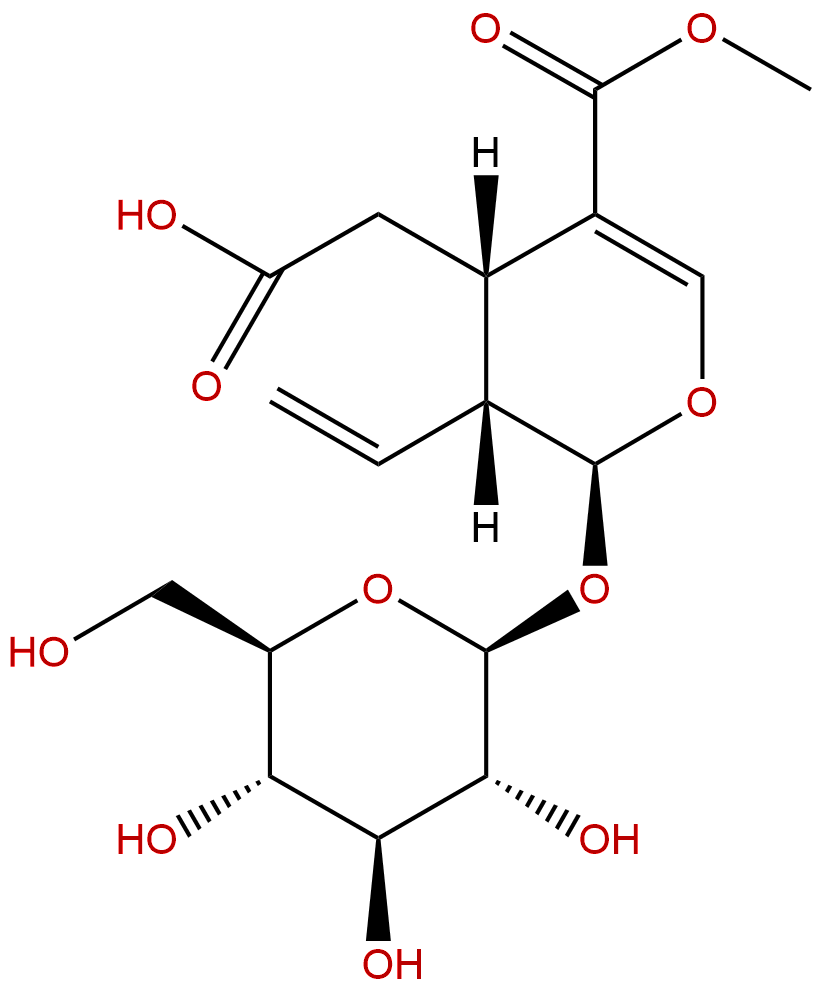


Product name: Secoxyloganin
Synonym name:
Catalogue No.: BP1721
Cas No.: 58822-47-2
Formula: C17H24O11
Mol Weight: 404.368
Botanical Source: Lonicera japonica
Physical Description: Powder
Type of Compound: Iridoids
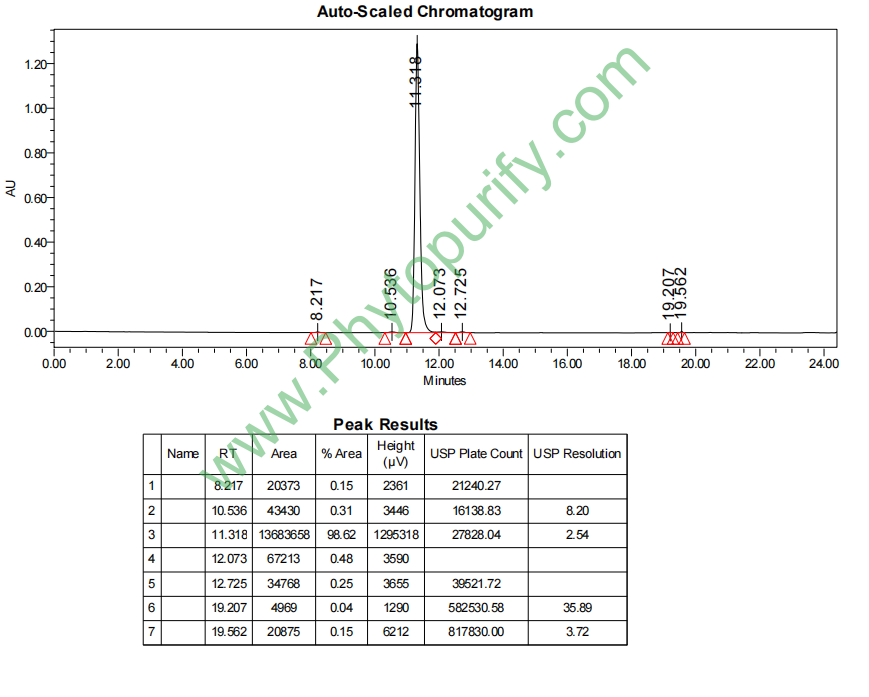
Purity: 95%~99%
Analysis Method: HPLC-DAD or/and HPLC-ELSD
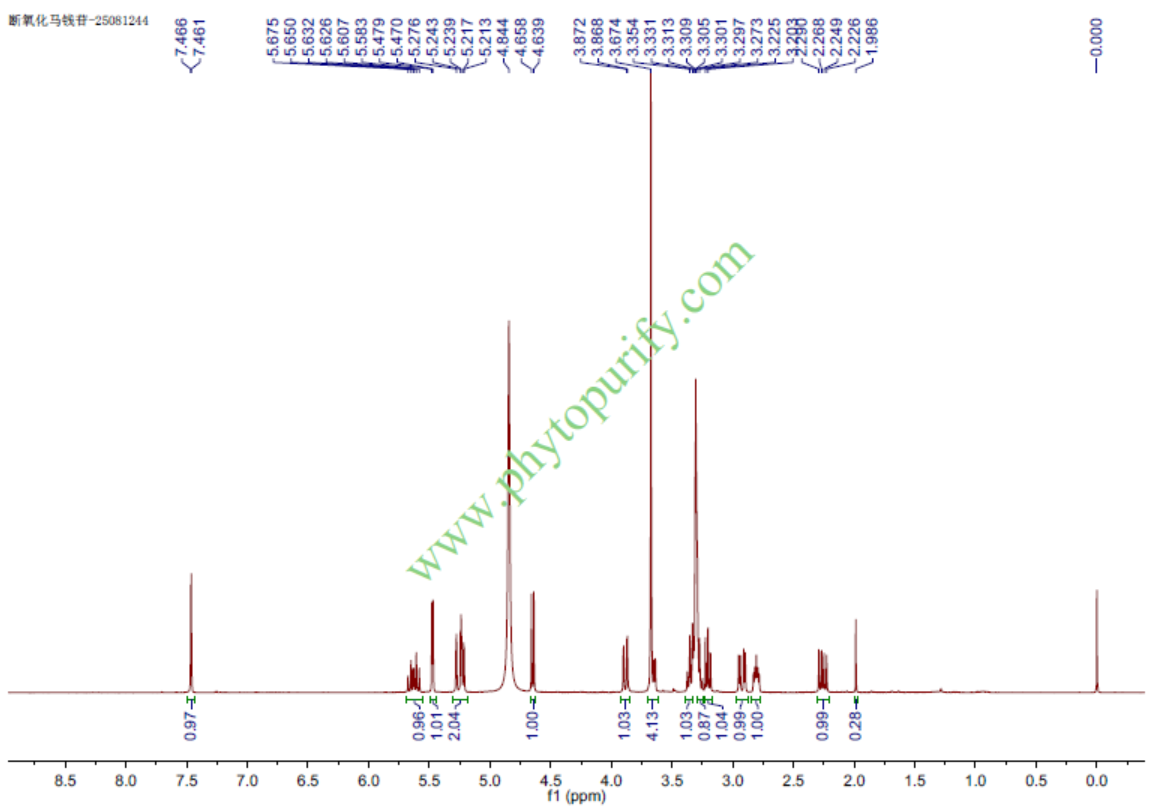
Identification Method: Mass, NMR
Packing: Brown vial or HDPE plastic bottle
The product could be supplied from milligrams to grams. Inquire for bulk scale.
We provide solution to improve the water-solubility of compounds, thereby facilitating the variety of activity tests and clinic uses.
For Reference Standard and R&D, Not for Human Use Directly.
HPLC of Secoxyloganin
HNMR of Secoxyloganin
Storage conditions:Short-term storage at 2~8℃, long-term storage at -20 ~ -80℃
172.2100
-1.0527
-3.0950
65.1687
.5090
.3222
Low
43.2938
4.5663
Yes
No
No
No
No
No
0.0
Yes
Yes
Yes
Yes
Cycloterpenoid glycosides are a class of monoterpene secondary metabolites widely present in nature, especially in dicotyledonous plants, with rich chemical structures and diverse biological activities. Secoxyloganin (CAS number: 58822-47-2), as one of its members, has attracted much attention in recent years due to its significant anti-inflammatory, antioxidant, and anti allergic pharmacological effects. This compound was originally derived from the honeysuckle plant in the family Lonicera(Lonicera japonica Thunb. was isolated and subsequently found to exist in various medicinal plants such as the Cornaceae and Rubiaceae families. Traditionally, these plants have been used to treat inflammatory diseases, allergic reactions, and infections, providing traditional medical evidence for the biological activity of quercetin. Modern pharmacological studies have shown that catabolin can effectively inhibit the production of key inflammatory mediators such as tumor necrosis factor - α (TNF - α) and interleukin-6 (IL-6), and demonstrate its ability to regulate the nuclear factor kappa B (NF - κ B) signaling pathway, suggesting its great potential in the treatment of chronic inflammatory diseases, especially arthritis. This article aims to provide a systematic review of the chemical structure, plant origin, pharmacological activity, mechanism of action, and medicinal properties of oxidized loganin, in order to provide comprehensive scientific references for the in-depth research, development, and application of this natural product.
Oxidized loganin is a typical iridoid glycoside compound. Its systematic chemical name is [(2R, 3R, 4S) -2-hydroxy-5- (methoxycarbonyl) -3-vinyl-3,4-dihydro-2H-pyran-4-yl] acetic acid β - D-glucoside. Its molecular formula is C17H24O11 and its molecular weight is 404.3680 g/mol.
From a structural perspective, the core of oxidized horsehair glycosides is a dihydropyran ring (a characteristic structure of cyclohexene ether terpenes), which is connected to a hydroxyl group, a methoxycarbonyl group (- COOCH3), and an vinyl group (- CH=CH2) substituent. In addition, the core ring is connected to a β - D-glucosyl group through an acetate chain, forming a glycosidic structure. This glycosylation is the main contributing factor to its water solubility and an important characteristic of its use as a storage and transportation form in plants.
Theoretical physical and chemical parameters calculated based on its chemical structure show that oxidized loganin has high polarity. Its topological polar surface area (TPSA) is as high as 172.21 Å ², mainly attributed to the numerous oxygen atoms in the molecule (from hydroxyl groups, sugar units, and ester bonds). The calculated value of its lipid water partition coefficient (LogP) is -1.0527, indicating that the compound has hydrophilicity. The theoretical water solubility prediction value is 65.1687 mg/mL, further confirming its good water solubility. These physicochemical properties determine the distribution characteristics of oxidized loganin in organisms, for example, its predicted blood-brain barrier permeability is low and mainly distributed in the peripheral system. In addition, preliminary pharmacological risk assessment showed that the hERG inhibition risk and Ames mutagenicity risk were both negative (0.0), providing preliminary positive signals for its safety.
Oxidized loganin is relatively widely distributed in nature and mainly exists in various traditional medicinal plants.
1. Main source:
* Honeysuckle family: Honeysuckle(Lonicera japonica Thunb.), Honeysuckle, also known as honeysuckle, is the earliest plant source to be isolated. Honeysuckle is renowned for its ability to clear heat, detoxify, and reduce inflammation and swelling. The antioxidant properties of loganin are one of the important material foundations for its anti-inflammatory activity.
* Cornaceae family: Cornus officinalis(Cornus officinalis The fruit of Sieb. et Zucc. also contains this ingredient. Cornus officinalis is commonly used to nourish the liver and kidneys, and its anti-inflammatory and antioxidant activities are closely related to the iridoid glycosides it contains.
* Rubiaceae family In some parts of the madder genus(Rubia)It has also been detected in plants.
2. Extraction and Separation:
The extraction and separation of oxidized loganin usually follow the conventional process of natural product chemistry.
* Extract Solvent extraction method is often used. Due to its high polarity as a glycoside, methanol, ethanol, or ethanol water mixed solvents are commonly used for reflux extraction or ultrasound assisted extraction of dried plant materials (such as flowers and fruits). These methods can effectively extract oxidized loganin along with other polar components.
* Separation and purification After vacuum concentration, the crude extract was subjected to liquid-liquid extraction segmentation using solvents such as petroleum ether, ethyl acetate, and n-butanol in sequence. Oxidized loganin is mainly enriched in the n-butanol extraction site or aqueous layer. Further purification depends on column chromatography technology. Silica gel, reverse phase silica gel (such as ODS-C18), macroporous adsorption resin (such as D101, AB-8) or dextran gel (such as Sephadex LH-20) are often used as stationary phases, and chloroform methanol, methanol water or acetonitrile water systems with different proportions are used for gradient elution. High performance liquid chromatography (HPLC), especially preparative HPLC, is the final key step in obtaining high-purity fumarate monomers. Its structure was identified by nuclear magnetic resonance (NMR, including 1H-NMR, 13C-NMR, 2D-NMR), mass spectrometry (MS), and comparison with literature data.
A large number of in vitro and in vivo pharmacological experiments have confirmed that oxidized loganin has various biological activities, among which anti-inflammatory, antioxidant, and anti allergic effects are the most prominent.
anti-inflammatory activity:
This is the most in-depth and promising pharmacological activity in the study of oxidized loganin. In the lipopolysaccharide (LPS) - induced macrophage (such as RAW 264.7 cells) inflammation model, the production of inflammatory mediators such as nitric oxide (NO) and prostaglandin E2 (PGE2) can be dose dependently inhibited by discontinuing oxidized loganin. More importantly, it can significantly downregulate the gene expression and protein secretion of various pro-inflammatory cytokines, including TNF-α、IL-6、IL-1βWait. In animal models, the use of oxidized loganin has shown good improvement effects on various acute and chronic inflammation models. For example, in a rat paw swelling model induced by carrageenan or Freund's complete adjuvant, it can effectively reduce tissue edema and inflammatory infiltration. The description of its inhibition of "blood flow (BF) reduction" may be related to its improvement of local microcirculation disorders and resistance to vascular constriction caused by inflammation.
antioxidant activity:
Breaking the phenolic hydroxyl and glycosidic bonds in the molecular structure of oxidized loganin endows it with the ability to scavenge free radicals. In vitro experiments have shown that it exhibits certain scavenging activity against 1,1-diphenyl-2-trinitrophenylhydrazine (DPPH) free radicals, 2,2 '- diazobis (3-ethylbenzothiazoline-6-sulfonic acid) cationic free radicals, and superoxide anion free radicals. Its antioxidant effect not only lies in directly clearing free radicals, but may also be achieved by upregulating the activity of endogenous antioxidant defense systems in cells, such as superoxide dismutase (SOD) and glutathione peroxidase (GSH Px), and reducing the levels of lipid peroxidation products such as malondialdehyde (MDA). The antioxidant activity and anti-inflammatory effect complement each other, as oxidative stress is one of the key driving factors of inflammatory response.
Antiallergic activity:
Oxidized loganin has a clear "anti allergic effect". In the degranulation model of mast cells (such as RBL-2H3 cells) induced by compound 48/80 or anti IgE, it can inhibit the release of β - aminoglucosidase and the secretion of histamine, which are the core components of allergic reactions. In the passive skin allergic reaction (PCA) mouse model, pre-treatment with deoxyriboside significantly reduced the increase in vascular permeability and pigment exudation, confirming its anti allergic effect in vivo. Its function may be related to stabilizing the mast cell membrane, inhibiting intracellular calcium ion mobilization, and downregulating inflammatory mediators.
Potential therapeutic effects on arthritis:
Combined with its anti-inflammatory, antioxidant, and regulatory effects on specific targets (see below), the use of deoxyriboside in the treatment of arthritis (such as rheumatoid arthritis and osteoarthritis) shows promising prospects. The pathological process of arthritis involves synovitis, cartilage degradation, and bone destruction, and the key factors driving this process are TNF - α, IL-6, IL-1 β, and matrix metalloproteinases (MMP-3, MMP-13) that are inhibited by oxidized quercetin. Although direct research on arthritis models is still accumulating, its extensive anti-inflammatory spectrum suggests that it may alleviate joint swelling, pain, and delay joint destruction through multi-target synergy.
The pharmacological effects of quercetin, especially its strong anti-inflammatory effect, are achieved by regulating the complex intracellular signaling network. Existing research has revealed that it acts on multiple key inflammation related targets and pathways.
Core signaling pathway: NF - κ B pathway inhibition
Nuclear factor kappa B (NF - κ B) It is a core transcription factor that regulates inflammation, immunity, and cell survival. In the resting state, NF - κ B (usually referring to the p50/p65 dimer) binds to the inhibitory protein I κ B and exists in the cytoplasm. When stimulated by LPS, TNF - α, etc., the I κ B kinase (IKK) complex is activated, phosphorylated, and degraded, allowing NF - κ B to enter the nucleus and initiate the transcription of numerous downstream pro-inflammatory genes (such as TNF, IL6, IL1B, PTGS2). Research has shown that the cleavage of loganin can effectively inhibit the phosphorylation and degradation of I κ B α, thereby preventing the nuclear translocation of NF - κ B p65 subunit. This is its downward adjustment TNF-α、IL-6、IL-1βWaiting for cytokines and Cyclooxygenase-2 (COX-2, encoded by the PTGS2 gene) The upstream mechanism of expression. COX-2 is the rate limiting enzyme for PGE2 synthesis, and its inhibition directly leads to a decrease in the inflammatory mediator PGE2.
Regulation of key enzymes and effector proteins
Multi target synergistic mode
In summary, the mechanism of action of oxidized loganin exhibits the characteristics of multi-target and multi pathway synergy. It may NF - κ B signaling pathway As the core hub, by inhibiting its activation, a series of downstream pro-inflammatory mediators are extensively downregulated(TNF-α、IL-6、IL-1β)Inflammatory enzymes(COX-2、iNOS)And tissue destructive enzymes(MMP-3、MMP-13)The expression. This "multi-point intervention" model enables it to contain inflammation from multiple stages, which may have better comprehensive efficacy and lower resistance risk than single target inhibitors. In addition, its potential regulatory role on MAPK pathways such as p38 and JNK also needs further clarification.
Although quercetin has shown good activity in vitro and some in vivo models, its potential as a drug still requires systematic pharmacological evaluation and pharmacokinetic studies.
Physicochemical and Preliminary ADMET Properties:
As mentioned earlier, oxidized kaempferol has high hydrophilicity (LogP-1.05, TPSA 172 Å ²) and good theoretical water solubility, which is beneficial for its dissolution in aqueous media and the development of formulations. However, high polarity and larger molecular weight may also limit its passive transmembrane diffusion ability. Computer predictions show that Low blood-brain barrier permeability This is not beneficial for its treatment of central nervous system diseases, but may reduce related side effects. Preliminary screening of key toxicity risks(HERG inhibition negative, Ames test negative)Early positive data has been provided for its safety, but comprehensive toxicological assessments (such as acute toxicity, long-term toxicity, and reproductive toxicity) are essential.
Pharmacokinetic challenges and strategies:
The pharmacokinetic behavior of cyclohexene ether terpenoid glycosides in vivo usually faces the following challenges, and the cleavage of oxidized loganin is likely no exception:
Pharmaceutical Strategy:
Possible strategies to enhance its medicinal properties include:
As a natural product with clear multi-target anti-inflammatory activity, the clinical application prospects of catarrhizin mainly focus on chronic inflammatory diseases, while also facing challenges and opportunities.
Potential application directions:
challenges faced:
Future research directions:
As a cyclohexene ether terpenoid glycoside found in traditional medicinal plants, the antioxidant, anti-inflammatory, and anti allergic properties of catalpol have made it a highlight compound in natural product pharmacology research due to its significant multiple pharmacological activities. It has shown great potential in treating chronic inflammatory diseases such as arthritis by inhibiting key signaling pathways such as NF - κ B, downregulating the expression of various inflammatory mediators such as TNF - α, IL-6, IL-1 β, COX-2, and MMPs. Although it shows positive signals in theoretical safety, poor prediction of membrane permeability and unclear systemic pharmacokinetic properties are the main obstacles to its conversion to drugs. Future research should focus on further elucidating its molecular action network, systematically evaluating its in vivo processes, and overcoming its pharmacological shortcomings through rational structural modifications or advanced formulation techniques. By combining traditional medical wisdom with modern science and technology, it is expected that oxidized quercetin will gradually develop from a potential natural active molecule into an innovative drug or health product raw material with clinical application value, providing a new option for the treatment of inflammatory diseases.
