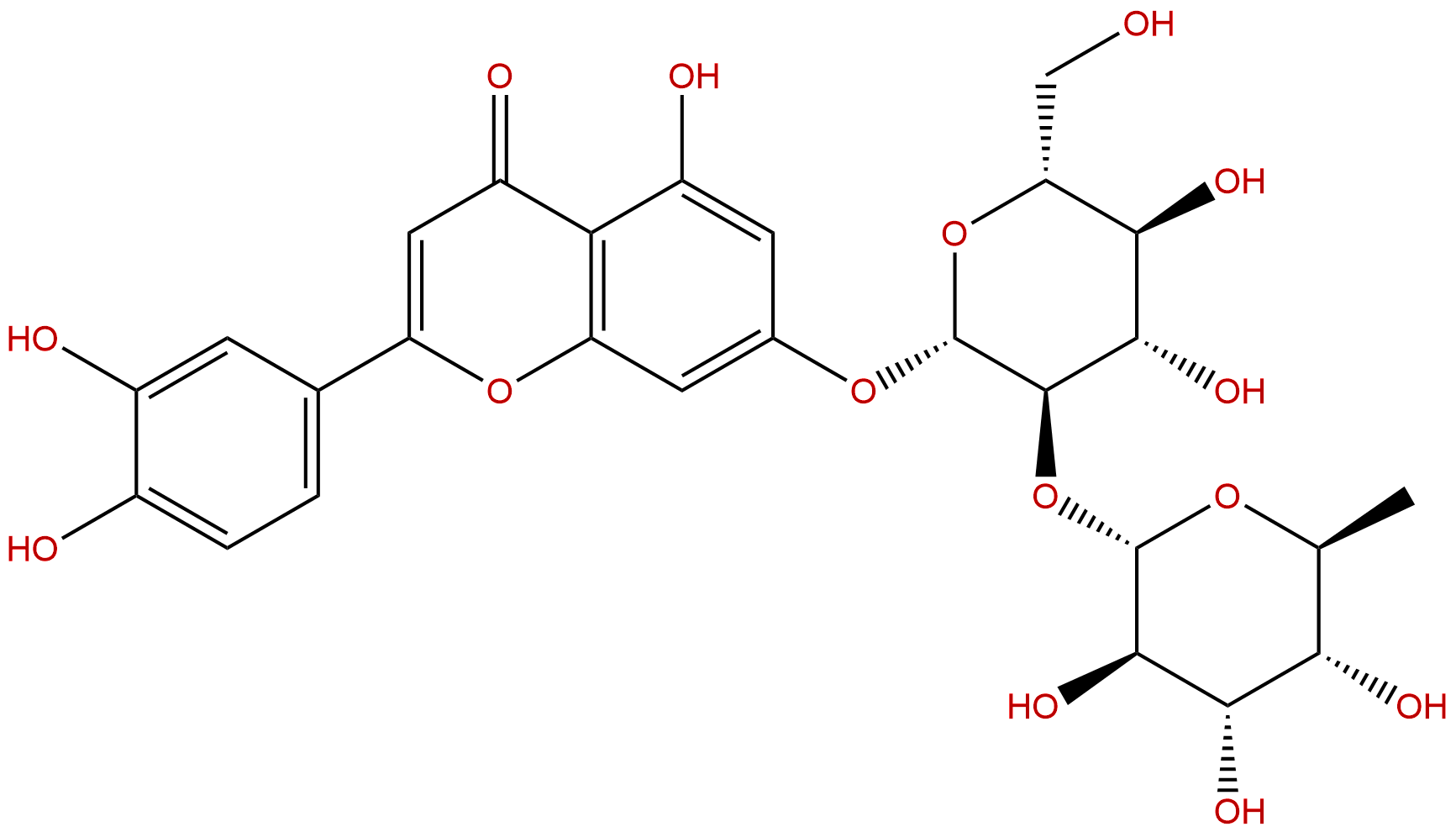


Product name: Lonicerin
Synonym name: Luteolin 7-neohesperidoside
Catalogue No.: BP2007
Cas No.: 25694-72-8
Formula: C27H30O15
Mol Weight: 594.522
Botanical Source:
Physical Description:
Type of Compound:
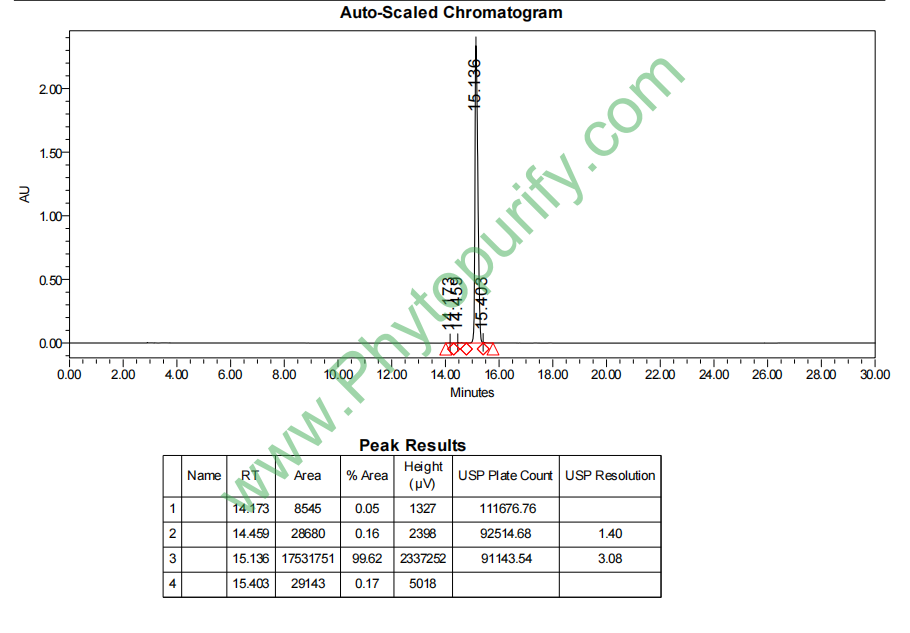
Purity: 95%~99%
Analysis Method: HPLC-DAD or/and HPLC-ELSD
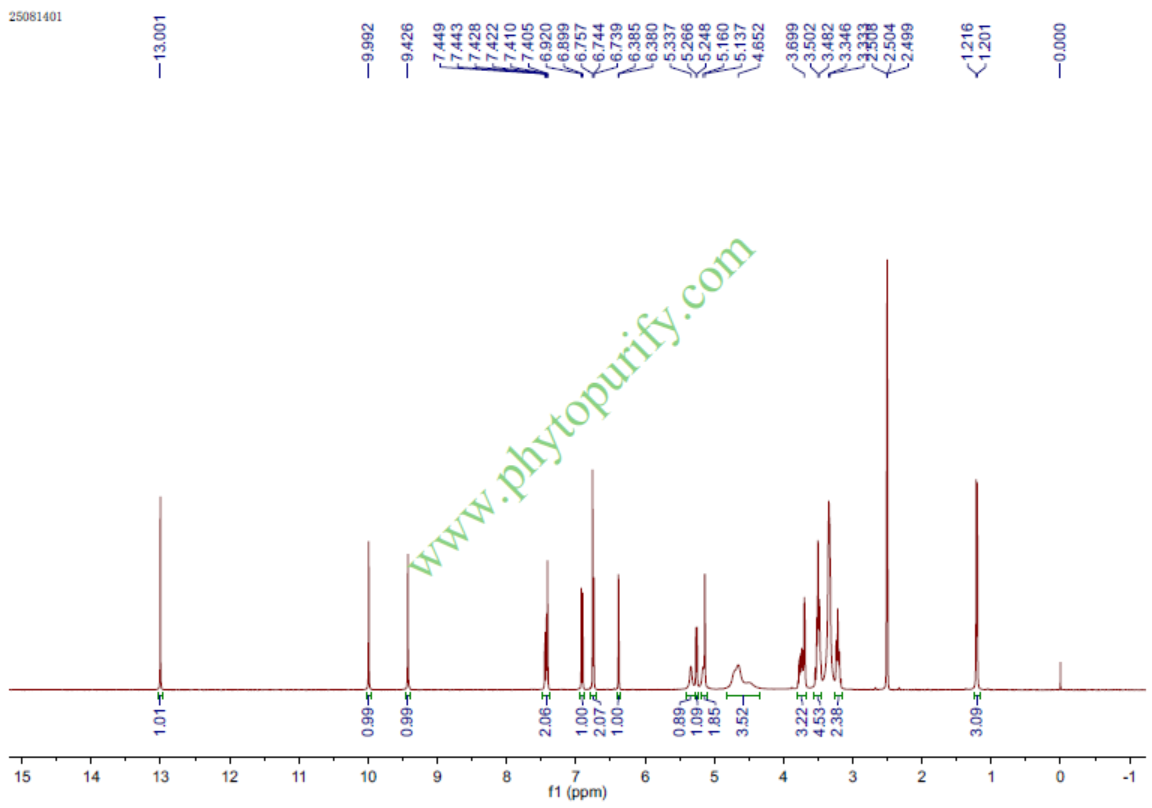
Identification Method: Mass, NMR
Packing: Brown vial or HDPE plastic bottle
The product could be supplied from milligrams to grams. Inquire for bulk scale.
We provide solution to improve the water-solubility of compounds, thereby facilitating the variety of activity tests and clinic uses.
For Reference Standard and R&D, Not for Human Use Directly.
HPLC of Lonicerin
HNMR of Lonicerin
Storage conditions:Short-term storage at 2~8℃, long-term storage at -20 ~ -80℃
249.2000
-.2246
-.2494
3.1191
.4831
.1338
Low
79.0285
4.7052
Yes
No
Yes
No
Yes
No
0.6
Yes
No
Yes
No
Natural products, as an important source of drug discovery, play an irreplaceable role in the long history of human fight against diseases. Flavonoids, as an important component of plant secondary metabolites, have attracted much attention due to their structural diversity and wide range of biological activities. Lonicalin, also known as Veronica stroside, is a naturally occurring flavonoid glycoside compound that was first isolated and identified from plants in the Lonicera family. With the deepening of modern pharmacological research, Lonicera japonica glycosides have demonstrated remarkable multiple biological activities, including anti-inflammatory, antioxidant, anti arthritis, antibacterial, antifungal, and neuroprotective effects, especially showing unique advantages in anti influenza virus and regulating related signaling pathways.
In recent years, the continuous mutation and drug resistance of influenza viruses worldwide have become increasingly severe, making the development of new anti influenza drugs an urgent medical need. Traditional anti influenza drugs such as neuraminidase inhibitors (oseltamivir) and M2 ion channel inhibitors (amantadine) are facing the dilemma of the continuous emergence of drug-resistant virus strains. In this context, natural products have become an important direction for the development of anti influenza drugs due to their multi-target effects and low risk of drug resistance. Lonicera japonica glycoside exhibits great potential as a multi-target anti influenza lead compound by regulating multiple targets closely related to influenza virus infection and inflammatory response, such as NFE2L2, RELA, MAPK8, NFKB1, etc.
In addition, the inhibitory effect of honeysuckle glycoside on xanthine oxidase (IC50 of 37.4 µ g/mL) suggests its potential application in the treatment of gout and hyperuricemia; Its inhibitory activity on the alginate secretion protein AlgE reveals a potential mechanism for the formation of biofilms against Pseudomonas aeruginosa. These findings collectively outline the research value of honeysuckle glycoside as a multifunctional natural medicine. This article will provide a systematic review of the research progress of Lonicera japonica glycosides from the aspects of chemical structure, plant origin, pharmacological activity, mechanism of action, pharmacological evaluation, and clinical application prospects.
The chemical name of honeysuckle glycoside is 5,7-dihydroxy-2- (4-hydroxyphenyl) -4H-1-benzopyran-4-one-7-O - β - D-glucoside, which belongs to the flavonoid glycoside class. Its aglycone is Luteolin, and its sugar moiety is glucose. From structural analysis, it can be seen that the parent nucleus of Lonicera japonica glycosides is a 2-phenylchromenone structure, with one hydroxyl group at each of the C-5 and C-7 positions of the A ring. The C-7 hydroxyl group forms an O-glycosidic bond with glucose. The B ring is a 4 '- hydroxyphenyl group, forming a typical flavonoid skeleton.
The molecular formula of honeysuckle glycoside is C27H30O15, with a molecular weight of 594.5220 Da. This compound contains multiple phenolic hydroxyl and sugar groups, endowing it with good water solubility and antioxidant activity. From the perspective of structure-activity relationship, glycosylation modification at the C-7 position not only affects the solubility and bioavailability of compounds, but may also alter their interaction mode with target proteins. Compared with the glycoside luteolin, the glycosyl portion of honeysuckle glycoside may reduce its cell membrane permeability, but it may also enhance its affinity for certain cell surface receptors or transporters.
According to the results of computational chemistry and experimental measurements, the main physicochemical properties of Lonicera japonica glycosides are as follows:
These physicochemical properties provide important reference for the drug development of Lonicera japonica glycosides. Its good water solubility and safety characteristics are beneficial for formulation development, but low oral bioavailability and blood-brain barrier penetration are challenges that need to be overcome.
Lonicera japonica glycoside was initially isolated and identified from plants in the Caprifoliaceae family, hence its name. Its main plant sources include:
Lonicera japonica Thunb Also known as honeysuckle, it is one of the most abundant sources of honeysuckle glycosides. Honeysuckle, as a traditional Chinese medicinal herb, has the effects of clearing heat, detoxifying, and dispersing wind and heat. It is commonly used to treat diseases such as colds, fever, and sore throat. Honeysuckle glycoside is considered one of the important active ingredients in honeysuckle, closely related to its anti-inflammatory and antiviral effects.
Veronica linariifolia Pall. ex Link This plant is another important source of honeysuckle glycosides, and the compound is therefore named Veronica stroside. Shui Man Jing is used in folk medicine to treat respiratory infections and inflammatory diseases.
Other sources Lonicera glycosides are also present in other plants of the Lonicera genus (such as Lonicera macranthoides, Lonicera conflusa) and some plants of the Scrophulariaceae family. The content of honeysuckle glycosides varies greatly among different plant sources, usually higher in flower buds and leaves.
The extraction of honeysuckle glycosides is usually carried out using solvent extraction combined with modern separation and purification techniques to obtain high-purity compounds.
extraction process:
- Solvent selection Due to its good water and alcohol solubility, commonly used extraction solvents for honeysuckle include water, methanol, ethanol, and their mixed solvents. Research has shown that a 50% -70% ethanol aqueous solution has a higher extraction efficiency for honeysuckle glycosides.
- extraction method Traditional methods include cold soaking, reflux extraction, and ultrasound assisted extraction. Ultrasound assisted extraction can significantly shorten extraction time and improve extraction efficiency. In recent years, green extraction techniques such as microwave-assisted extraction and enzyme assisted extraction have also been applied to the extraction of honeysuckle glycosides, which have the advantages of low solvent consumption and high extraction rate.
- Optimization of extraction conditions The key factors affecting extraction efficiency include solvent concentration, solid-liquid ratio, extraction temperature, extraction time, and extraction times. Taking honeysuckle as an example, the optimized extraction conditions are: 60% ethanol, solid-liquid ratio of 1:20, ultrasonic extraction at 60 ℃ for 30 minutes, and extraction twice.
Purification Method:
- Macroporous adsorption resin One of the most commonly used methods for purifying honeysuckle glycosides. HPD-100, D101, AB-8 and other types of macroporous resins have good adsorption and desorption properties for honeysuckle glycosides. High purity crude honeysuckle glycoside can be obtained through gradient elution (usually using an ethanol water system).
- column chromatography: Silica gel column chromatography, polyamide column chromatography and dextran gel column chromatography (Sephadex LH-20) are commonly used for further purification of honeysuckle glycosides. Polyamide has specific adsorption and good separation effect on flavonoids.
- Preparation type high performance liquid chromatography (Prep HPLC)For the preparation of high-purity honeysuckle glycosides, Prep HPLC is the most effective method. Usually, a C18 reverse phase chromatography column is used, with acetonitrile water or methanol water as the mobile phase, combined with a UV detector for separation.
quality control:
The identification and content determination of Lonicera japonica glycosides mainly use high-performance liquid chromatography (HPLC) and liquid chromatography-mass spectrometry (LC-MS) methods. The UV detection wavelength is usually set at 254 nm or 350 nm for qualitative and quantitative analysis using honeysuckle glycoside standard. In addition, nuclear magnetic resonance spectroscopy (NMR) and mass spectrometry (MS) are used for structural confirmation.
Lonicera japonica glycoside exhibits significant anti-inflammatory activity in various inflammatory models. In the lipopolysaccharide (LPS) - induced macrophage inflammation model, honeysuckle glycosides can dose dependently inhibit the production of pro-inflammatory cytokines such as tumor necrosis factor - α (TNF - α), interleukin-6 (IL-6), and interleukin-1 β (IL-1 β). Meanwhile, honeysuckle glycosides can reduce the production of nitric oxide (NO) and prostaglandin E2 (PGE2), which is related to the inhibition of the expression of inducible nitric oxide synthase (iNOS) and cyclooxygenase-2 (COX-2).
In animal models of rheumatoid arthritis, oral administration of honeysuckle can significantly reduce joint swelling, bone erosion, and cartilage damage in collagen induced arthritis (CIA) rats. Histopathological analysis showed that the infiltration of inflammatory cells in the synovial tissue of the joint was reduced and the formation of vascular opacities was inhibited in the honeysuckle glycoside treatment group. In addition, honeysuckle glycoside can reduce the levels of rheumatoid factor (RF) and anti cyclic citrullinated peptide (CCP) antibodies in serum, indicating its regulatory effect on autoimmune response.
The antioxidant activity of honeysuckle glycoside originates from multiple phenolic hydroxyl groups in its molecular structure. In vitro experiments have shown that honeysuckle glycoside can effectively scavenge 1,1-diphenyl-2-trinitrophenylhydrazine (DPPH) free radicals, 2,2 '- diazobis (3-ethylbenzothiazoline-6-sulfonic acid) (ABTS) free radicals, and superoxide anion free radicals. Its antioxidant capacity is positively correlated with concentration, exhibiting significant free radical scavenging activity in the concentration range of 10-100 μ M.
In the cellular oxidative stress model, honeysuckle glycoside pretreatment can reduce the levels of reactive oxygen species (ROS) induced by hydrogen peroxide (H ₂ O ₂), increase the activities of superoxide dismutase (SOD), glutathione peroxidase (GSH Px), and catalase (CAT), and increase the content of reduced glutathione (GSH). These results indicate that honeysuckle exerts antioxidant effects by directly scavenging free radicals and enhancing the endogenous antioxidant defense system.
Lonicera japonica glycoside has inhibitory effects on various pathogenic microorganisms. Research has found that honeysuckle glycosides exhibit significant antibacterial activity against Pseudomonas aeruginosa and Candida albicans. The mechanism of its resistance to Pseudomonas aeruginosa is partially attributed to the inhibition of alginate secretion protein AlgE. AlgE is a key protein in the formation of biofilms in Pseudomonas aeruginosa. Lonicera japonica glycosides inhibit the secretion of alginate by binding to the active site of AlgE, thereby disrupting the formation of biofilms and enhancing bacterial immune defense and sensitivity to antibiotics.
The inhibitory effect on Candida albicans involves the destruction of cell membrane integrity and inhibition of hyphal formation. Honeysuckle glycosides can interact with ergosterol in fungal cell membranes, increasing membrane permeability and leading to leakage of intracellular substances. At the same time, honeysuckle glycosides can downregulate the expression of hyphal specific genes (such as HWP1, ALS3), inhibit the transition of yeast to hyphal phase, and thus reduce the pathogenicity of fungi.
Lonicera japonica glycosides have shown protective effects in neurodegenerative disease models. In the glutamate induced neuronal injury model, honeysuckle glycoside pretreatment can alleviate neuronal apoptosis and reduce lactate dehydrogenase (LDH) release rate. Its neuroprotective mechanism is related to inhibiting oxidative stress, reducing intracellular calcium overload, and regulating apoptosis related proteins (Bax/Bcl-2 ratio).
In addition, honeysuckle glycosides can inhibit the aggregation of β - amyloid protein (A β) and fiber formation, which is of great significance in the treatment of Alzheimer's disease. By combining with A β monomer, honeysuckle glycoside prevents its transformation into toxic oligomers and fibers, while promoting the depolymerization of formed A β fibers. These findings suggest that honeysuckle glycosides may have the potential to prevent and treat Alzheimer's disease.
Honeysuckle glycosides exhibit multi-target effects in combating influenza viruses. Research has shown that honeysuckle glycosides can inhibit the replication of influenza A virus (H1N1, H3N2 subtypes) in MDCK cells, with a half maximal inhibitory concentration (IC50) at the micromolar level. The mechanism of action involves multiple levels:
Lonicera japonica glycoside has an inhibitory effect on xanthine oxidase (XO) with an IC50 of 37.4 µ g/mL (approximately 62.9 μ M). XO is a key enzyme in purine metabolism, catalyzing the conversion of hypoxanthine and xanthine to uric acid. Overactivation of XO leads to an increase in uric acid production, which is an important pathological mechanism in gout and hyperuricemia. Molecular docking studies have shown that the B ring 4 '- hydroxyl and C ring carbonyl groups of Lonicera japonica glycosides form hydrogen bonds and π - π stacking interactions with the active site of the molybdate cofactor of XO, competitively inhibiting substrate enzyme binding. Compared with the commonly used XO inhibitor allopurinol in clinical practice, the inhibitory activity of honeysuckle glycoside is relatively weak, but its safety advantage as a natural product deserves attention.
AlgE is an alginate secretion channel protein on the outer membrane of Pseudomonas aeruginosa, responsible for transporting alginate from the periplasmic space to the extracellular space. Lonicera japonica glycoside inhibits the formation of biofilms by binding to the pore regions of AlgE, blocking the secretion of alginate. The surface plasmon resonance (SPR) experiment confirmed that the binding constant between honeysuckle glycoside and AlgE is in the micromolar range. This discovery provides a new lead compound for the development of anti Pseudomonas aeruginosa biofilm drugs.
The multi-target regulation of honeysuckle glycoside on influenza virus and host immune system is the core mechanism of its anti influenza activity:
NFE2L2 (Nrf2) pathway activation Lonicera japonica glycoside can promote the dissociation of NFE2L2 and Keap1, increase their nuclear translocation, and then bind to antioxidant response elements (ARE), initiating the transcription of downstream antioxidant enzyme genes (such as HO-1, NQO1). This mechanism helps to alleviate oxidative stress damage caused by influenza virus infection and protect host cells.
Inhibition of NF - κ B pathway Lonicera japonica glycoside inhibits the phosphorylation and degradation of I κ B α, preventing the nuclear translocation of RELA (p65) and NFKB1 (p50), thereby reducing the expression of pro-inflammatory cytokines (TNF - α, IL-6, IL-1 β) and chemokines. Moderate NF - κ B inhibition can help control excessive inflammatory responses caused by viral infections and avoid cytokine storms.
MAPK8 (JNK) signal regulation Lonicera japonica glycoside can inhibit the phosphorylation of MAPK8 (c-Jun N-terminal kinase), regulate cellular stress response and apoptosis signaling. The excessive activation of the JNK pathway is closely related to influenza virus induced cell apoptosis and tissue damage, and the inhibition of this pathway by honeysuckle helps protect lung tissue integrity.
IRF3 activation Lonicera japonica glycoside can promote phosphorylation and dimerization of IRF3, enhance its nuclear translocation and transcriptional activity, thereby upregulating the expression of type I interferon (IFN - α/β). Type I interferon is a key effector molecule of antiviral innate immunity, and its induction helps to inhibit virus replication and clear infected cells.
Direct antiviral effect The binding of honeysuckle glycoside to the surface proteins HA and NA of influenza virus can block the adsorption and release process of the virus. In addition, honeysuckle glycosides can interfere with the replication and transcription of the viral genome by affecting the interaction between the internal proteins NP and PB2 of the virus.
The mechanism of action of honeysuckle glycosides exhibits complex signal network regulatory features. During the process of influenza virus infection, honeysuckle glycosides simultaneously act on the virus lifecycle and host immune response, forming a multi-level defense system. By activating the NFE2L2 antioxidant pathway and the IRF3 interferon pathway, while inhibiting the NF - κ B and MAPK8 inflammatory pathways, honeysuckle achieves precise regulation of host immune response - enhancing antiviral immunity while avoiding excessive inflammatory damage. This multi-target and multi pathway regulatory mode gives honeysuckle a unique advantage in anti influenza treatment, which may reduce the risk of viral drug resistance.
Based on computational medicinal chemistry and early experimental data, the pharmacological characteristics of honeysuckle glycoside are as follows:
Overall, honeysuckle glycosides do not meet multiple criteria in Lipinski's Five Rules, indicating that their oral bioavailability may be low. However, many successful drugs in natural products, such as paclitaxel and cyclosporine, also do not comply with the Lipinski rule, so their pharmacological properties cannot be denied solely based on this. In recent years, prodrug design, nano formulations, and structural modification strategies for flavonoid glycosides have provided possibilities for improving their pharmacokinetic properties.
At present, there is insufficient systematic research on the pharmacokinetics of Lonicera japonica glycoside in vivo, but based on its physicochemical properties and studies of similar compounds, the following characteristics can be inferred:
To overcome the pharmacokinetic limitations of honeysuckle glycosides, the following strategies can be considered:
Lonicera japonica glycoside, as a multi-target anti influenza lead compound, has the following unique advantages:
However, there are still many challenges in transitioning from lead compounds to clinical drugs, such as improving oral bioavailability, optimizing antiviral activity, and conducting systematic evaluations of in vivo pharmacodynamics and toxicology. In the future, derivatives or analogues of honeysuckle with better pharmacokinetic properties can be developed through structural modification and formulation technology.
The application prospects of honeysuckle glycosides in the treatment of rheumatoid arthritis are broad. Its anti-inflammatory mechanism involves the regulation of NF - κ B and MAPK pathways, which complement the mechanism of action of current clinical biologics such as TNF - α inhibitors. In addition, the antioxidant activity of honeysuckle glycosides helps alleviate oxidative stress damage in joint tissues. Developing honeysuckle glycoside as an adjuvant therapy may reduce the dosage and side effects of traditional anti rheumatic drugs.
The inhibitory effect of honeysuckle glycoside on Pseudomonas aeruginosa and Candida albicans, especially its anti biofilm activity, provides a new approach for the treatment of refractory infections. Pseudomonas aeruginosa is the main pathogen of hospital acquired infections, and its biofilm formation leads to antibiotic resistance and chronic infections. Lonicera japonica glycoside, as an AlgE inhibitor, can be used in combination with traditional antibiotics to enhance its anti infective effect. In terms of antifungal activity, the inhibitory effect of honeysuckle on the formation of Candida albicans hyphae can be used to treat Candida infections, especially biofilm related infections.
Although honeysuckle glycosides have low blood-brain barrier penetration, their neuroprotective effects still deserve attention. By designing prodrugs or nano delivery systems, improving the distribution of honeysuckle in the central nervous system may lead to the development of candidate drugs for the treatment of neurodegenerative diseases such as Alzheimer's disease and Parkinson's disease. In addition, the antioxidant and anti-inflammatory activities of honeysuckle glycosides make them potentially valuable for anti-aging and prevention of age-related diseases.
Lonicera japonica glycoside, as a natural flavonoid glycoside compound, has shown significant research value in various therapeutic fields such as anti influenza, anti-inflammatory, antioxidant, antibacterial, and neuroprotective effects due to its diverse biological activities and multi-target mechanisms of action. Its unique chemical structure endows it with good water solubility and safety characteristics, but also brings challenges such as low oral bioavailability. Through modern medicinal chemistry, pharmacology, and pharmacology methods, honeysuckle glycosides are expected to be developed as a novel drug for treating influenza, rheumatoid arthritis, and refractory infections.
The research process of honeysuckle glycosides, from the active ingredients in traditional Chinese medicine honeysuckle to the leading compounds in modern drug development, reflects the classic path of natural product drug discovery. In the future, with the deepening understanding of the mechanism of action of honeysuckle and the advancement of formulation technology, this natural product is expected to play a greater value in clinical applications and contribute to human health. At the same time, the study of honeysuckle glycosides also provides useful reference and guidance for the development of other natural flavonoid glycosides.
