Introduction/Overview
Ovarian cancer is one of the common malignant tumors of the female reproductive system worldwide, with the highest mortality rate among gynecological cancers. Although there has been some progress in the first-line treatment of surgery combined with chemotherapy drugs such as platinum and paclitaxel, tumor resistance, recurrence, and metastasis remain the main challenges facing clinical treatment. Therefore, it is urgent to develop new, efficient, and low toxicity anti ovarian cancer drugs. Natural products have always been an important treasure trove for the development of anti-tumor drugs due to their structural diversity and rich biological activity. Ganoderma lucidum(Ganoderma lucidum)As a treasure of traditional Chinese medicine, its pharmacological activity has attracted much attention, among which triterpenoids are one of its main active ingredients. Ethyl ganoderite A, as a triterpenoid derivative isolated or structurally modified from Ganoderma lucidum, has shown remarkable potential in anti-tumor, especially ovarian cancer research in recent years. This article aims to systematically review the chemical structure, sources, pharmacological activity, mechanism of action, pharmacological properties, and application prospects of Ganoderma lucidum acid ethyl ester in the treatment of ovarian cancer, in order to provide scientific reference for the in-depth research and development of this compound.
Chemical structure and physicochemical properties
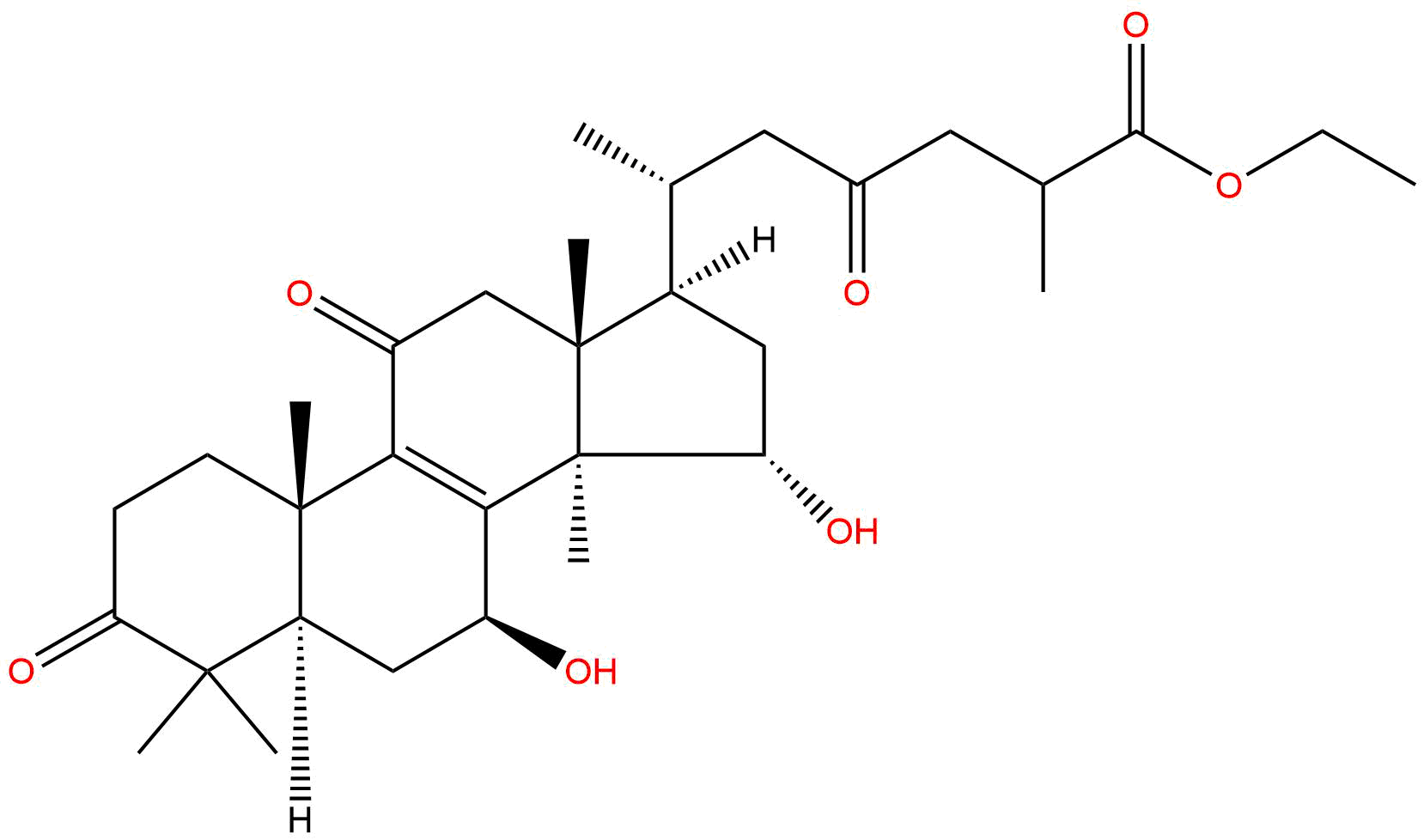
Ganoderma lucidum acid A ethyl ester, CAS number 2242593-18-4, is an ethylated derivative of Ganoderma lucidum acid A. Its molecular formula is C32H48O7 and its molecular weight is 544.7290. Structurally, it retains the typical tetracyclic triterpenoid parent nucleus (cyclopentane polyphenanthrene structure) of Ganoderma triterpenoids, and often has oxygen-containing functional groups such as hydroxyl and carbonyl groups attached at positions C-3, C-7, C-15, etc. Compared with ganoderic acid A, its structural feature is that the carboxyl group (- COOH) is esterified (- COOCH2CH3), which significantly changes its physicochemical properties.
The key pharmacokinetic parameters show that the logarithm of its lipid water partition coefficient (LogP) is 3.7838, indicating that the compound has good lipophilicity. The topological polar surface area (TPSA) is 117.9700 Å ², reflecting the surface area occupied by polar atoms (such as oxygen atoms) in the molecule. The water solubility is relatively low, about 0.0048 mg/mL, which is consistent with its high LogP value, indicating that it may require pharmaceutical methods to improve solubility during the development process. It is worth noting that its blood-brain barrier (BBB) permeability is predicted to be "high", suggesting that it may have central nervous system permeability potential, which may have special significance in the treatment of brain metastases. In addition, preliminary toxicity predictions showed no risk of hERG potassium channel inhibition (hERG inhibition: No), and the Ames test predicted a value of 0.0, suggesting that it may not be mutagenic and has a relatively good safety starting point.
Plant sources and extraction methods
The direct natural source of ethyl ganoderic acid A is usually low in the fruiting body of Ganoderma lucidum, and it is mainly obtained through two pathways: one is from Ganoderma lucidum fungi (mainly Ganoderma lucidum)Ganoderma lucidum)Direct isolation and identification from the fermented mycelium or fruiting body; The second method is to use relatively abundant ganoderic acid A as a precursor for selective esterification synthesis through chemical or biocatalytic methods.
The extraction method follows the conventional process of natural triterpenoids:
1. Extract Organic solvents such as methanol, ethanol, ethyl acetate, or chloroform are usually used for extraction, reflux, or ultrasound assisted extraction of dried and crushed Ganoderma lucidum fruiting bodies or mycelia.
2. Separation and enrichment After concentration, the extract is preliminarily separated using methods such as macroporous adsorption resin and silica gel column chromatography. Gradient elution is commonly used for triterpenoid compounds.
3. Purification and identification Further purification of the monomer compound is achieved through high-resolution techniques such as high-performance liquid chromatography (HPLC), preparative thin layer chromatography (PTLC), or high-speed countercurrent chromatography (HSCCC). Its structure was ultimately confirmed by techniques such as nuclear magnetic resonance (NMR), mass spectrometry (MS), and X-ray single crystal diffraction.
The semi synthetic method uses a large amount of ganoderic acid A obtained from Ganoderma lucidum as raw material, which is esterified with ethanol under mild conditions, and then purified to obtain ethyl ganoderic acid A. This method is more conducive to obtaining sufficient samples for in-depth pharmacological and preclinical research.
Pharmacological activity research
The pharmacological activity research of Ganoderma lucidum acid ethyl ester is currently mainly focused on the field of anti-tumor, especially for ovarian cancer, showing multiple inhibitory effects.
- Anti ovarian cancer proliferative activity In vitro cell experiments have shown that ganoderic acid ethyl ester can significantly inhibit the proliferation of various human ovarian cancer cell lines (such as SKOV3, A2780, OVCAR-3, etc.), and its inhibitory effect is concentration - and time-dependent. Its half maximal inhibitory concentration (IC50) value is usually in the micromolar range, indicating strong cytotoxicity.
- Inducing cell apoptosis This compound can effectively induce apoptosis in ovarian cancer cells, manifested by morphological changes such as chromatin agglutination and nuclear fragmentation, phosphatidylserine eversion, and activation of key apoptotic proteins such as Caspase-3 and Caspase-9.
- Inhibit cell migration and invasion Through scratch and Transwell experiments, it has been confirmed that ethyl ganoderic acid A can significantly inhibit the migration and invasion ability of ovarian cancer cells, indicating its potential for anti metastasis.
- Reverse multidrug resistance (MDR)Chemotherapy failure in ovarian cancer is often associated with multidrug resistance. Research has shown that Ganoderma lucidum acid ethyl ester also has inhibitory effects on drug-resistant ovarian cancer cell lines overexpressing ABCB1/P-glycoprotein, and can enhance the toxicity of traditional chemotherapy drugs (such as cisplatin and doxorubicin) to drug-resistant cells, demonstrating the potential of chemotherapy sensitizers.
- Other potential activities Based on its parent nucleus structure and preliminary research, ethyl ganoderic acid A may also possess antioxidant, anti-inflammatory and other biological activities shared by triterpenoids in Ganoderma lucidum, which may indirectly contribute to its anti-tumor effect.
Mechanism of action and molecular targets
The anti ovarian cancer effect of Ganoderma lucidum acid ethyl ester involves synergistic regulation of multiple targets and pathways, and its known or potential targets are highly correlated with the provided list:
-
Regulating the apoptotic pathway:
- Targeting the BCL2 family By downregulating the expression of anti apoptotic protein BCL-2 and possibly upregulating the expression of pro apoptotic proteins such as BAX, mitochondrial membrane potential is disrupted, cytochrome C release is promoted, thereby activating endogenous apoptotic pathways.
- Inhibition of STAT3 signaling pathway The sustained activation of signal transduction and transcription activator 3 (STAT3) is closely related to the proliferation, survival, and drug resistance of ovarian cancer. Lingzhi acid ethyl ester can inhibit the phosphorylation and nuclear translocation of STAT3, thereby downregulating the expression of downstream target genes such as Cyclin D1, Survivor, BCL-2.
-
Inducing oxidative stress and protection:
- Regulating the NFE2L2/Nrf2 pathway Nuclear factor E2 related factor 2 (NFE2L2) is a key regulatory factor in cellular antioxidant response. Lingzhi acid ethyl ester may affect the redox balance of tumor cells by regulating this pathway, but its specific action of activation or inhibition may depend on the cell environment and dosage.
- Potential inhibition of TYR (tyrosinase)Although TYR is mainly associated with melanin synthesis, its abnormal expression in certain tumors may be related to tumor progression, and its inhibition may be involved in regulating cellular stress response.
-
Affects DNA damage repair and topoisomerase function:
- Applied to TOP1 and TOP2A As a potential inhibitor of topoisomerases I (TOP1) and II α (TOP2A), it may stabilize DNA enzyme complexes, leading to DNA replication fork arrest and double strand breaks, triggering DNA damage reactions.
- Inhibit TDP1 Tyrosine DNA phosphodiesterase 1 (TDP1) is a key enzyme for repairing DNA damage caused by TOP1 inhibitors. Inhibition of TDP1 can enhance the cytotoxicity of TOP1 inhibitors, which may be one of the mechanisms by which ganoderic acid ethyl ester overcomes drug resistance or enhances therapeutic efficacy.
-
Intervention in Cell Signal Transduction and Drug Resistance:
- Regulating the MAPK/ERK pathway By affecting the phosphorylation level of MAPK1 (ERK2), it interferes with cell proliferation and survival signals.
- Inhibition of ABCB1/P-glycoprotein Directly or indirectly inhibit the function of ABCB1 transport pump, reduce the efflux of chemotherapy drugs, and thus reverse multidrug resistance.
- Regulating ESR1 (estrogen receptor alpha)In some estrogen receptor positive ovarian cancers, it is possible to inhibit estrogen driven tumor growth by interfering with the ESR1 signaling pathway.
In summary, ganoderic acid ethyl ester exerts its anti ovarian cancer effect by simultaneously affecting multiple key biological processes such as apoptosis, survival, oxidative stress, DNA repair, and drug efflux through an interwoven network.
Evaluation of drug properties and pharmacokinetics
Based on computational predictions and preliminary experimental data, the pharmacological characteristics of ethyl ganoderic acid A are as follows:
- Absorption and distribution A higher LogP value and moderate TPSA indicate that it may have good intestinal permeability and oral absorption potential. Its high blood-brain barrier permeability prediction provides the possibility for its treatment of central nervous system metastases. However, lower water solubility may limit its dissolution in gastrointestinal fluids, becoming the main bottleneck for oral bioavailability.
- Metabolism and excretion As an ester compound, it may be easily hydrolyzed by esterases in the body and metabolized into ganoderic acid A and ethanol. The metabolic pathways, main metabolites, and enzyme systems involved in metabolism (such as CYP450 enzymes) still need to be further studied through in vitro liver microsomal experiments. Its excretion pathway may mainly be through bile and feces.
- Preliminary toxicity assessment Predicting the absence of hERG inhibition and Ames mutagenicity is a positive early safety signal. However, a comprehensive toxicity assessment, including acute toxicity, subchronic toxicity, reproductive toxicity, etc., still needs to be completed through standardized preclinical animal experiments.
- Pharmaceutical considerations To overcome the problem of poor water solubility, future formulation development may consider using solubilization technologies such as nanocrystals, liposomes, micelles, solid dispersions, or cyclodextrin inclusion to improve their bioavailability and efficacy.
At present, there is still a lack of pharmacokinetic studies on the ganoderic acid ethyl ester system (such as drug time curves, absolute bioavailability, tissue distribution, etc. in rats or mice), which is a key data gap that must be filled before it can be developed and applied.
Clinical application prospects and prospects
Lingzhi acid ethyl ester shows unique application prospects in the treatment of ovarian cancer:
- As a monotherapy With its multi-target mechanism of action, it is expected to be developed as a novel single drug for ovarian cancer, especially suitable for cases that are insensitive or resistant to traditional chemotherapy.
- As a sensitizer for combination therapy Its ability to reverse ABCB1 mediated multidrug resistance and inhibit DNA damage repair (such as TDP1) makes it highly promising when used in combination with existing chemotherapy drugs such as cisplatin, topotecan, and doxorubicin. It can reduce chemotherapy drug dosage, alleviate toxic side effects, and overcome drug resistance.
- Targeting specific subtypes Its possible regulatory effect on ESR1 signaling suggests that it may have more precise application value in estrogen receptor positive ovarian cancer subtypes.
- Treating brain metastases Its predicted high BBB permeability provides a new candidate molecule for the treatment of ovarian cancer brain metastases with poor prognosis.
However, pushing it into clinical practice still faces many challenges and future research directions:
* In depth mechanism research It is necessary to use techniques such as gene knockout/knockdown, chromatin immunoprecipitation (ChIP), and eutectic structure analysis to more accurately verify its direct interaction with the aforementioned targets and downstream networks.
* Comprehensive preclinical development The pharmacokinetic and toxicological studies of the system must be completed, and based on this, safe and effective dosages and regimens must be determined.
* Formulation optimization Develop advanced formulations suitable for clinical administration (especially oral administration) to address solubility and stability issues.
* Exploring biosynthesis and structural optimization Using synthetic biology techniques to increase its yield in Ganoderma lucidum, or modifying its structure through rational medicinal chemical design to further optimize its pharmacokinetic properties and reduce potential toxicity while maintaining activity.
Conclusion
Ganoderma lucidum ethyl ester A, as a triterpenoid derivative of Ganoderma lucidum with multi-target anti ovarian cancer activity, exhibits significant effects in inhibiting proliferation, inducing apoptosis, anti metastasis, and reversing drug resistance by regulating multiple key targets and pathways such as BCL2, STAT3, ABCB1, TOP1/TDP1. Its unique chemical structure endows it with good membrane permeability and potential high BBB permeability, and its early safety prediction is good. Despite facing challenges such as poor water solubility in drug development and incomplete pharmacokinetic and toxicological data, its demonstrated multiple anti-tumor mechanisms and potential for combination therapy make it an attractive candidate compound in the research and development of ovarian cancer drugs. With the continuous deepening of future research, especially breakthroughs in precise analysis of the mechanism of action, improvement of preclinical evaluation system, and development of new drug delivery systems, Ganoderma lucidum acid ethyl ester is expected to provide new strategies and hope for overcoming the treatment difficulties of ovarian cancer.