| Catalog No | Package | Original Price | Price | Inventory | Quantity | Operating |
|---|---|---|---|---|---|---|
| BPF0294-5mg | 5mg | $350.00 | Sign in |
|


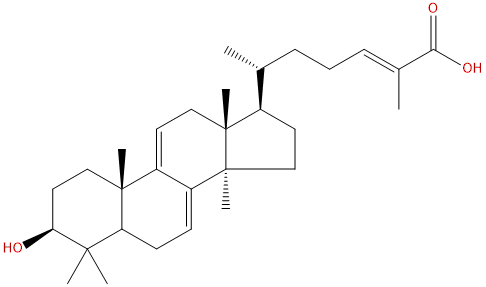
Product name: Ganoderic acid Y
Synonym name:
Catalogue No.: BPF0294
Cas No.: 86377-52-8
Formula: C30H46O3
Mol Weight: 454.695
Botanical Source: Ganoderma
Type of Compound: Triterpenoids
Purity: 95%~99%
Analysis Method: HPLC-DAD or/and HPLC-ELSD
Identification Method: Mass, NMR
Packing: Brown vial or HDPE plastic bottle
Storage: Store in a well closed container, protected from air and light. Put into refrigerate or freeze for long term storage.
Whenever possible, you should prepare and use solutions on the same day. However, if you need to make up stock solutions in advance, we recommend that you store the solution as aliquots in tightly sealed vials at -20℃. Generally, these will be useable for up to two weeks.
The product could be supplied from milligrams to grams
Inquire for bulk scale.
For Reference Standard and R&D, Not for Human Use Directly.
Storage conditions:Short-term storage at 2~8℃, long-term storage at -20 ~ -80℃
57.5300
6.9404
4.2859
.0042
4.7652
6.3448
Low
93.9568
4.8052
No
Yes
Yes
No
No
No
0.0
No
No
Yes
Yes
Ganoderma lucidum(Ganoderma lucidum)As a traditional and precious medicinal fungus, it has been used for thousands of years in East Asia and is known as the "fairy grass" or "auspicious grass". Modern pharmacological research has confirmed that Ganoderma lucidum contains various bioactive components, including polysaccharides, triterpenoids, sterols, nucleotides, and polyphenols. Among them, triterpenoids from Ganoderma lucidum have attracted much attention due to their significant pharmacological activities such as anti-tumor, anti-inflammatory, immune regulation, liver protection, and antiviral effects. Ganoderma acids are the most important type of triterpenoid compounds in Ganoderma lucidum. Currently, over 150 Ganoderma acid compounds with different structures have been isolated and identified from Ganoderma lucidum fruiting bodies, mycelia, and spores.
Ganoderic acid Y (GA-Y) is an important member of the triterpenoid family of Ganoderma lucidum, and its chemical structure belongs to the lanostane type triterpenoid acid. Since its first isolation and identification from Ganoderma lucidum fruiting bodies in 1986, GA-Y has gradually exhibited a diverse spectrum of biological activities. Early studies focused on its potential as an α - glucosidase inhibitor, which makes it a promising candidate in the treatment of diabetes. However, in recent years, studies have found that GA-Y also has anti replication activity against enterovirus 71 (EV71), and its mechanism of action involves inhibition of the virus shedding process. More importantly, GA-Y exhibits multi-target regulatory capabilities in the anti-inflammatory field, involving multiple key inflammatory signaling nodes such as IL-6, STAT3, TNF, and NF - κ B pathways. These findings expand the research on GA-Y from single enzyme inhibitors to multi-target antiviral and anti-inflammatory drug lead compounds, making it a research hotspot in the field of natural product drug development.
This review aims to systematically summarize the chemical structure characteristics, plant sources and extraction methods, pharmacological activity spectrum, molecular mechanism of action, pharmacological evaluation, and clinical application prospects of GA-Y, in order to provide comprehensive academic references for the in-depth research and development of this compound.
The chemical name of ganoderic acid Y is (24E) -3,7,11,15,23-pentaoxolanostane-8-ene-26-oic acid, which belongs to the highly oxidized lanostane type triterpenoid acid. Its molecular skeleton is composed of a tetracyclic triterpenoid core structure, consisting of four ring systems A, B, C, and D, with the B ring containing a Δ 8 (9) double bond. There is a ketone group (C=O) at positions C-3, C-7, C-11, C-15, and C-23, a carboxylic acid group at position C-26, and a trans double bond (24E configuration) between side chains C-24 and C-25. This highly oxidized structural feature endows GA-Y with unique chemical properties and biological activity.
The molecular formula of GA-Y is C ∝₀ H ∝₈ O ₇, with a molecular weight of 454.6950 g/mol. The multiple carbonyl and carboxyl groups in its structure give it the coexistence of polar and non-polar regions, which is of great significance for its interaction with biological targets due to its amphiphilic nature.
According to computational chemistry and experimental measurement data, the physicochemical properties of GA-Y are as follows:
Lipid water partition coefficient (LogP): 6.9404. This value indicates that GA-Y has high lipid solubility and tends to be distributed in lipid environments. A high LogP value is beneficial for its interaction with cell membranes and lipid binding proteins, but it may also lead to poor water solubility.
Polarized surface area (TPSA): 57.5300 Å ². The TPSA value reflects the ability of molecules to form hydrogen bonds, and the moderate TPSA value of GA-Y indicates that it has certain polarity characteristics, mainly derived from carboxyl and carbonyl oxygen atoms. The TPSA value suggests that GA-Y may have a moderate degree of cell membrane permeability.
Water solubility:0.0042 mg/mL。 GA-Y has extremely low water solubility, which is consistent with its high LogP value. Low water solubility is a common characteristic of natural triterpenoids and one of the main challenges facing their oral bioavailability.
Blood-brain barrier permeability: Low. The molecular weight of GA-Y (454.7 Da) exceeds 400 Da, and its TPSA value is greater than 40 Å ², which limits its ability to pass through the blood-brain barrier. Low blood-brain barrier permeability may be beneficial for drugs that require peripheral effects, such as anti-inflammatory and hypoglycemic drugs, and can reduce central nervous system side effects.
HERG inhibition: No. HERG potassium channel inhibition is an important predictor of drug cardiac toxicity. GA-Y does not inhibit hERG channels, indicating a lower risk of cardiac toxicity.
Ames test: 0.0. The Ames test result is negative, indicating that GA-Y has no significant mutagenicity and a low risk of genetic toxicity.
GA-Y mainly comes from fungi of the Ganoderma genus, including Ganoderma lucidum(Ganoderma lucidum)Purple Zhi(Ganoderma sinense)And Songshan Lingzhi(Ganoderma tsugae)Wait. In the fruiting body of Ganoderma lucidum, the content of GA-Y is usually low, about 0.01% -0.05% of dry weight, belonging to trace components. In addition, GA-Y is also present in the fermentation products of Ganoderma lucidum mycelium and Ganoderma lucidum spore powder, but the content varies significantly depending on the strain, culture conditions, and extraction process.
It is worth noting that the content of GA-Y in Ganoderma lucidum is influenced by various factors, including Ganoderma lucidum variety, growth stage, cultivation substrate, harvesting time, and processing method. Research has shown that using liquid deep fermentation technology to cultivate Ganoderma lucidum mycelium and optimizing the composition of the culture medium and fermentation conditions can significantly increase the yield of GA-Y.
The extraction of GA-Y is usually carried out using organic solvent extraction, and its basic process includes steps such as raw material pretreatment, solvent extraction, concentration, and purification.
Raw material pretreatment After drying and crushing the fruiting body or mycelium of Ganoderma lucidum, pass it through a 40-60 mesh sieve to obtain Ganoderma powder. For spore powder, it is necessary to first perform wall breaking treatment to improve extraction efficiency.
Solvent extraction Common extraction solvents include ethanol, methanol, ethyl acetate, and chloroform. Among them, ethanol water mixed solvents (70% -95% ethanol) are widely used due to their high extraction efficiency and good safety. The extraction methods can be cold soaking, hot reflux extraction, or ultrasound assisted extraction. Ultrasound assisted extraction can significantly shorten extraction time and improve yield. The extraction conditions are usually: a solid-liquid ratio of 1:10-1:20 (w/v), a temperature of 40-60 ℃, a time of 1-3 hours, and repeated extraction 2-3 times.
Preliminary purification After the extraction solution is concentrated under reduced pressure, liquid-liquid extraction is used for preliminary separation. Usually, the concentrated solution is suspended in water and extracted sequentially with petroleum ether, ethyl acetate, and n-butanol. GA-Y is mainly enriched in the ethyl acetate extraction phase.
chromatographic separation: The ethyl acetate extract is further separated by silica gel column chromatography, ODS reverse phase column chromatography or Sephadex LH-20 gel column chromatography. The commonly used elution systems are chloroform methanol or n-hexane ethyl acetate gradient elution. High performance liquid chromatography (HPLC) is a key step in obtaining high-purity GA-Y. It typically uses a C18 reverse phase column with acetonitrile water or methanol water system as the mobile phase, and detection wavelengths of 254 nm or 210 nm.
Structural Identification The purified GA-Y was structurally confirmed by techniques such as nuclear magnetic resonance spectroscopy (¹ H-NMR, ¹ ³ C-NMR, DEPT, HMBC, HSQC), mass spectrometry (HR-ESI-MS), and infrared spectroscopy (IR).
In recent years, new separation methods such as high-speed countercurrent chromatography (HSCCC) and molecular imprinting technology have also been applied to the separation and purification of GA-Y. These methods have the advantages of easy operation and high recovery rate, and are expected to achieve efficient preparation of GA-Y.
Alpha glucosidase is a key digestive enzyme located on the brush border membrane of the small intestine, responsible for hydrolyzing oligosaccharides into monosaccharides, thereby promoting glucose absorption. α - glucosidase inhibitors can competitively inhibit the activity of this enzyme, delay the digestion and absorption of carbohydrates, and reduce the peak postprandial blood sugar. They are important drugs for the treatment of type 2 diabetes.
GA-Y exhibits significant inhibitory activity against yeast derived alpha glucosidase, with a half maximal inhibitory concentration (IC ₅₀) of 170 μ M. Compared with the commonly used alpha glucosidase inhibitor acarbose (IC ₅₀ is about 1 μ M) in clinical practice, GA-Y has relatively weaker inhibitory activity, but its safety advantage as a natural product still makes it valuable for development. It is worth noting that the inhibitory activity of GA-Y on mammalian derived alpha glucosidase (such as rat small intestine alpha glucosidase) may differ from yeast enzymes, and further research is needed in this area.
Enterovirus 71 (EV71) is one of the main pathogens causing hand, foot, and mouth disease in infants and young children. Severe infection can lead to fatal complications such as brainstem encephalitis and neurogenic pulmonary edema. At present, there are no specific anti EV71 drugs, and clinical treatment mainly relies on symptomatic support.
Research has found that GA-Y can effectively inhibit the replication of EV71 in host cells such as RD cells and Vero cells. Its antiviral mechanism is closely related to the process of virus shedding. The replication cycle of EV71 includes steps such as adsorption, entry, detachment, genome release, translation, replication, assembly, and release. GA-Y interferes with the viral shedding process, preventing the release of viral RNA into the cytoplasm and thus blocking the viral replication cycle. Specifically, GA-Y may stabilize the structure of viral particles and inhibit conformational changes induced by acidic environments by interacting with viral capsid proteins, thereby preventing the release of viral genomes from the capsid.
The anti EV71 activity of GA-Y is dose-dependent and can exert antiviral effects within a non cytotoxic concentration range. Its selectivity index (SI) is relatively high, indicating that GA-Y has a specific inhibitory effect on virus replication and low toxicity to host cells.
Inflammation is the body's defense response to injury or infection, but excessive or sustained inflammatory response is closely related to the occurrence and development of many diseases, including rheumatoid arthritis, inflammatory bowel disease, atherosclerosis, neurodegenerative diseases and cancer.
GA-Y exhibits significant anti-inflammatory activity in various inflammatory models. In the macrophage model stimulated by lipopolysaccharide (LPS), GA-Y can significantly inhibit the production of pro-inflammatory cytokines, including tumor necrosis factor - α (TNF - α), interleukin-6 (IL-6), and nitric oxide (NO). In addition, GA-Y can inhibit the expression of cyclooxygenase-2 (COX-2) and inducible nitric oxide synthase (iNOS), thereby reducing the production of prostaglandin E ₂ (PGE ₂) and NO.
In an in vivo inflammatory model, GA-Y can alleviate carrageenan induced toe swelling in rats, reduce myeloperoxidase (MPO) activity and malondialdehyde (MDA) levels in inflammatory tissues, indicating its dual antioxidant and anti-inflammatory effects.
In addition to the main activities mentioned above, GA-Y also exhibits other potential pharmacological effects. Preliminary studies have shown that GA-Y has cytotoxic effects on certain tumor cell lines, such as liver cancer HepG2 cells and lung cancer A549 cells, and may exert anti-tumor activity by inducing apoptosis or cell cycle arrest. In addition, GA-Y also exhibits certain antibacterial activity and has inhibitory effects on Gram positive bacteria such as Staphylococcus aureus and Bacillus subtilis.
The inhibition mechanism of GA-Y on α - glucosidase belongs to reversible competitive inhibition. Molecular docking studies have shown that the carboxylic acid group and multiple carbonyl groups of GA-Y can form hydrogen bonds with key amino acid residues at the active site of α - glucosidase, such as Asp214, Glu276, Asp349, etc. At the same time, its hydrophobic triterpenoid skeleton interacts with the hydrophobic pocket of the enzyme through van der Waals forces, stabilizing the enzyme inhibitor complex. This multiple non covalent interaction allows GA-Y to occupy the active site of the enzyme, preventing the binding of substrates (oligosaccharides) to the enzyme, thereby inhibiting enzymatic reactions.
The specific molecular mechanism by which GA-Y inhibits EV71 delamination has not been fully elucidated, but the following hypotheses have been proposed in previous studies:
Clothing shell stabilization effect GA-Y may bind to the hydrophobic pocket of EV71 capsid protein VP1, similar to the mode of action of "pocket binding inhibitors". This binding increases the rigidity of the capsid, making it difficult for it to undergo conformational changes in acidic endosomes, thereby preventing the release of viral RNA.
Inhibition of acid induced conformational changes After EV71 enters the cell, the acidic environment of the endosome (pH 5.0-6.0) triggers irreversible conformational changes in the capsid protein, forming altered particles that release RNA. GA-Y may enhance the conformational stability of the capsid, increase the acidity threshold required for viral shedding, and thus inhibit the shedding process.
Interference with virus membrane interaction During the process of viral shedding, the capsid protein interacts with the inner membrane to form pores for RNA release. GA-Y may interfere with this process by inserting into the membrane lipid bilayer or interacting with viral proteins.
The anti-inflammatory effect of GA-Y involves multiple molecular targets and signaling pathways, forming a complex regulatory network:
NF - κ B pathway NF - κ B is the core transcription factor of inflammatory response. GA-Y can inhibit the activity of I κ B kinase (IKK, encoded by IKBKB), prevent the phosphorylation and degradation of I κ B α, and thus inhibit the nuclear translocation and transcriptional activity of NF - κ B (RELA/p65). This leads to downregulation of downstream pro-inflammatory genes such as TNF, IL6, NOS2, PTGS1.
STAT3 pathway Signal transducer and activator of transcription factor 3 (STAT3) plays an important role in inflammation and immune regulation. GA-Y can inhibit the phosphorylation of STAT3 (Tyr705 site), reduce its transcriptional activity, and thus decrease the production of cytokines such as IL-6. It is worth noting that the IL-6/STAT3 signaling axis is an important driving factor for inflammation cancer transition, and the regulation of this pathway by GA-Y may have dual anti-inflammatory and anti-tumor significance.
CASP1 and inflammasome Cysteine aspartate protease 1 (CASP1) is a key effector molecule for inflammasome activation, responsible for the maturation and secretion of IL-1 β and IL-18. GA-Y may reduce the production of IL-1 β by inhibiting the assembly of NLRP3 inflammasomes or directly suppressing CASP1 activity.
TRP channel Transient receptor potential (TRP) channels, including TRPV1 and TRPA1, are non selective cation channels on sensory neurons involved in the transmission of pain and inflammatory signals. GA-Y may exert analgesic and anti-inflammatory effects by antagonizing the activity of TRPV1 and TRPA1.
COX and NO pathways GA-Y reduces inflammation by inhibiting the expression of PTGS1 (COX-1) and NOS2 (iNOS), decreasing the production of prostaglandins and nitric oxide.
In summary, GA-Y exerts anti-inflammatory effects through multiple targets and pathways, and this "multi-directional pharmacology" feature makes it potentially advantageous in the treatment of complex inflammatory diseases.
Based on Lipinski's Rule of Five and Veber Rule, evaluate the pharmacological properties of GA-Y:
GA-Y mainly violates the LogP rule (>5), indicating that its lipid solubility is too high, which may lead to poor water solubility and poor oral absorption. In addition, its water solubility (0.0042 mg/mL) is much lower than the ideal value (>0.1 mg/mL), which is the main obstacle to its oral administration.
However, GA-Y performed well in terms of safety: no hERG inhibitory activity, no mutagenicity (Ames test negative), indicating a low risk of cardiac and genetic toxicity. These security advantages lay the foundation for its further development.
At present, there is insufficient systematic research on the pharmacokinetics of GA-Y in vivo, but based on its physicochemical properties and studies of similar compounds, the following characteristics can be inferred:
absorb The high lipid solubility and low water solubility of GA-Y may result in poor oral absorption and low bioavailability. Its molecular weight is moderate (454.7 Da) and theoretically can penetrate intestinal epithelial cells through passive diffusion, but its low water solubility limits solubility and dissolution rate. The use of formulation techniques such as solid dispersions, liposomes, nanoemulsions, etc. may improve their oral absorption.
distribution The high LogP value of GA-Y suggests that it tends to bind to plasma proteins (especially albumin) and may have a larger distribution volume. Low blood-brain barrier permeability indicates limited distribution of the central nervous system, mainly in peripheral tissues.
Metabolism The metabolism of GA-Y may mainly occur in the liver, involving oxidation (such as hydroxylation, ketone reduction) and binding reactions (such as glucuronidation, sulfation). The multiple carbonyl and carboxyl groups in its structure are potential sites for metabolic modification.
excretion GA-Y and its metabolites may be mainly excreted into the intestine through bile and partially excreted from the body through feces. Renal excretion may not be the main pathway due to its high molecular weight and lipid solubility.
To improve the pharmacological properties of GA-Y, the following structural modification strategies can be considered:
Improve water solubility Introducing polar groups (such as hydroxyl, amino, phosphate) at carboxyl or ketone sites, or preparing prodrugs (such as carboxylic acid esters, phosphate esters) to improve water solubility.
Reduce LogP Reduce hydrophobic groups (such as methyl) or introduce polar substituents to optimize the lipid water distribution balance.
Improve metabolic stability Structural modification of metabolic sensitive sites (such as side chain double bonds and ketone groups) to reduce first pass metabolism.
Targeted delivery Using nanocarriers such as liposomes and polymer nanoparticles to achieve targeted delivery of GA-Y, improving bioavailability and reducing side effects.
As an α - glucosidase inhibitor, GA-Y has potential application value in the treatment of type 2 diabetes. Compared with existing drugs such as acarbose and miglitol, GA-Y as a natural product has significant safety advantages and may reduce gastrointestinal side effects such as bloating and diarrhea. However, its low inhibitory activity (IC ₅₀=170 μ M) and poor oral bioavailability are the main challenges. In the future, activity can be improved through structural optimization or developed as an adjuvant therapy drug in combination with existing hypoglycemic drugs.
The unique anti EV71 mechanism of GA-Y (inhibition of viral shedding) makes it a candidate lead compound for the development of anti enterovirus drugs. Given the current lack of specific anti EV71 drugs, GA-Y and its derivatives have important clinical translational value. In addition, the antiviral mechanism of GA-Y may also have inhibitory effects on other enteroviruses, such as the COVID-19 A16 type, which is worth further exploration.
The multi-target anti-inflammatory activity of GA-Y makes it have broad prospects in the treatment of inflammatory diseases. It simultaneously regulates multiple inflammatory targets such as NF - κ B, STAT3, CASP1, TRPV1, etc., which conforms to the concept of multi-target therapy for complex diseases. GA-Y may play a unique advantage in the treatment of diseases such as rheumatoid arthritis, inflammatory bowel disease, and neuroinflammation. However, further comparative studies are needed to compare its anti-inflammatory activity with known anti-inflammatory drugs such as NSAIDs and glucocorticoids.
Based on the multiple pharmacological activities of GA-Y, the following combination therapy strategies can be considered:
Anti inflammatory and hypoglycemic combination GA-Y is used in combination with metformin or sulfonylurea drugs to reduce blood sugar and anti-inflammatory effects and improve the complications of diabetes.
Combination of antiviral and immune regulation GA-Y is used in combination with interferon or immune enhancers to enhance antiviral effects and reduce inflammatory damage.
Anti inflammatory anti-tumor combination GA-Y is used in combination with chemotherapy drugs to enhance anti-tumor effects by inhibiting the inflammatory microenvironment.
Study on Structure Activity Relationship Systematically investigate the effects of structural modifications of GA-Y on its α - glucosidase inhibition, antiviral, and anti-inflammatory activities, and identify key pharmacophores.
Pharmacokinetic optimization Develop oral formulations of GA-Y (such as phospholipid complexes, self microemulsifying drug delivery systems) to improve bioavailability.
Pharmacodynamic study in vivo: To verify the efficacy and safety of GA-Y in vivo in animal models of diabetes, EV71 infection and inflammatory diseases.
Analysis of multi-target mechanism Using omics techniques (proteomics, metabolomics) and systems pharmacology methods, comprehensively analyze the molecular target network of GA-Y.
Preclinical safety evaluation Conduct long-term toxicity, reproductive toxicity, and immunotoxicity studies on GA-Y to lay the foundation for clinical trials.
Lingzhi acid Y, as an important member of the Ganoderma triterpenoid family, has attracted widespread attention for its unique chemical structure and diverse pharmacological activities. The research process of GA-Y, from α - glucosidase inhibitors to anti EV71 virus drugs, and then to multi-target anti-inflammatory molecules, reflects the evolution of natural products from single activity discovery to multi effect cognition.
The chemical structural characteristics of GA-Y (highly oxidized lanostane skeleton, multiple carbonyl and carboxyl groups) determine its ability to interact with various biological targets. Its pharmacological activity spectrum covers multiple fields such as metabolic regulation, antiviral and anti-inflammatory effects, demonstrating the characteristic of natural products with multiple targets and pathways. However, the high lipid solubility, low water solubility, and potential oral absorption barriers of GA-Y are the main challenges facing its drug development, which need to be overcome through structural modification and formulation techniques.
Looking ahead to the future, research on GA-Y should focus on the following aspects: deepening the molecular mechanisms of its antiviral and anti-inflammatory effects; Guiding structural optimization through structure-activity relationship research; Developing new drug delivery systems to improve pharmacokinetic characteristics; And validate its therapeutic potential in various disease models. With the deepening of research, GA-Y is expected to become a new candidate drug for the treatment of diabetes, viral infection and inflammatory diseases, providing new ideas and directions for the development of natural product drugs.
The research process of ganoderic acid Y also enlightens us that the active ingredients in traditional Chinese medicine contain rich chemical diversity and biological activity diversity. The systematic study of these natural products through modern pharmacology and medicinal chemistry methods not only helps to reveal the scientific connotation of traditional Chinese medicine, but also provides valuable lead compound resources for innovative drug discovery. In today's world where the concepts of "returning to nature" and "multi-target drugs" are increasingly valued, the research on ganoderic acid Y has important theoretical significance and practical application value.
Batch can search by a CAS number,one per line
