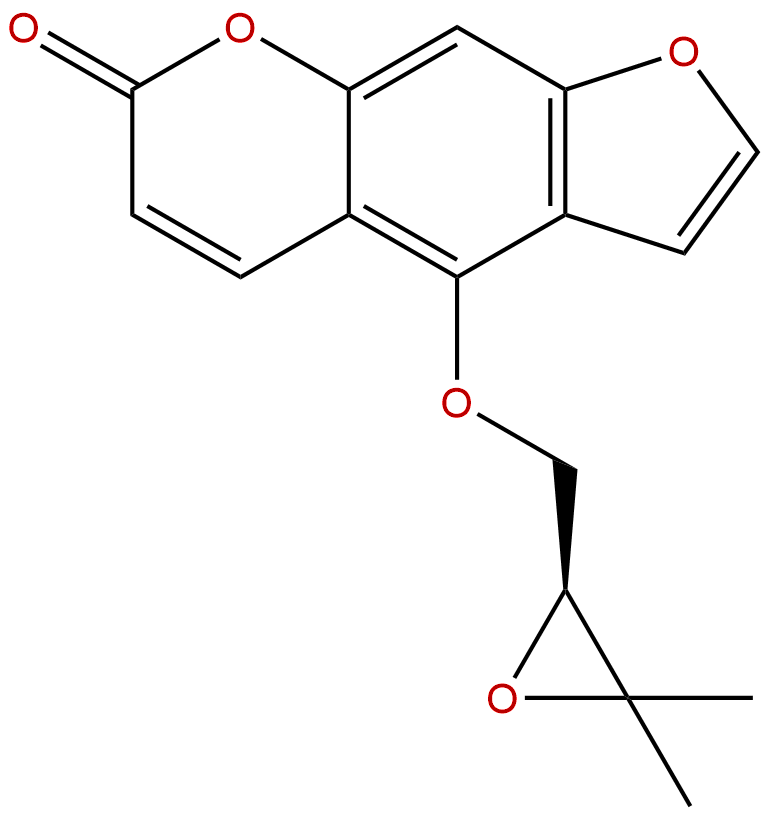


Product name: Oxypeucedanin
Synonym name:
Catalogue No.: BP3302
Cas No.: 737-52-0
Formula: C16H14O5
Mol Weight: 286.283
Botanical Source:
Physical Description:
Type of Compound: Coumarins
Purity: 95%~99%
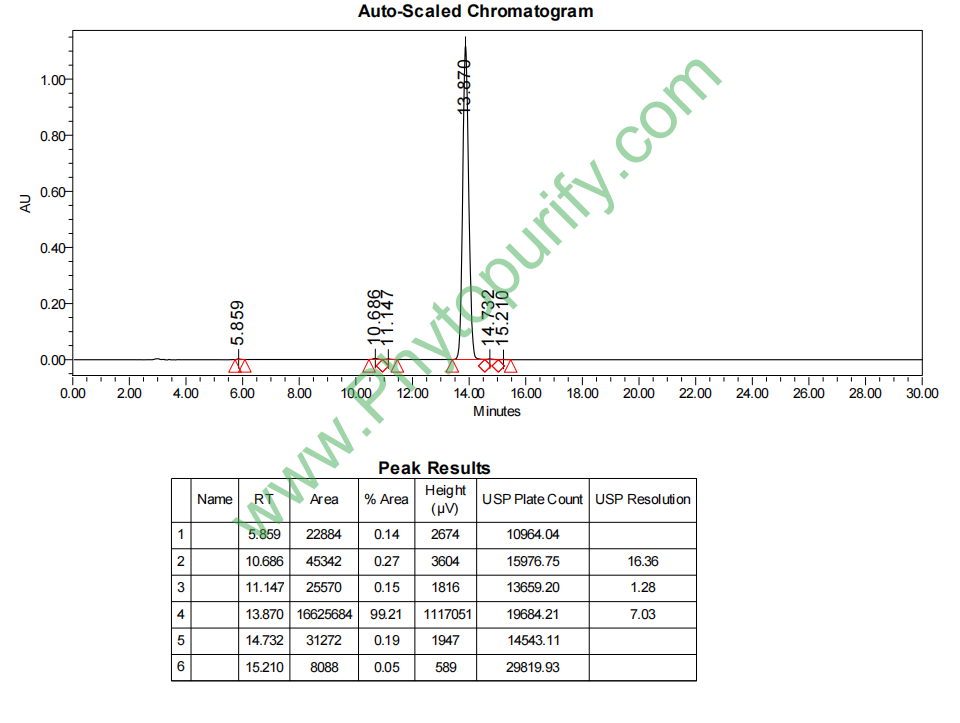
Analysis Method: HPLC-DAD or/and HPLC-ELSD
Identification Method: Mass, NMR
Packing: Brown vial or HDPE plastic bottle
Storage: Store in a well closed container, protected from air and light. Put into refrigerate or freeze for long term storage.
Whenever possible, you should prepare and use solutions on the same day. However, if you need to make up stock solutions in advance, we recommend that you store the solution as aliquots in tightly sealed vials at -20℃. Generally, these will be useable for up to two weeks.
The product could be supplied from milligrams to grams, up to kilograms
Inquire for bulk scale.
Descriptions:
Oxypeucedanin is a major coumarin aglycone that can be extracted from Ostericum koreanum, coumarin aglycones have demonstrated various pharmacological effects, including anti-proliferation, anti-inflammation, and anti-pain; based on transcriptional alteration and complicated modulation of MAPK signaling, might be underlying mechanisms responsible for the various pharmacological effects of oxypeucedanin.[1]
Oxypeucedanina has a novel anticancer effect, mediated via induction of G2-M cell cycle arrest and apoptosis in human prostate carcinoma DU145 cells.[2]
Oxypeucedanin is a kind of open-channel blocker of the hKv1.5 channel and it prolongs the APD, therefore, it is an excellent candidate as an antiarrhythmic drug for atrial fibrillation.[3]
Oxypeucedanin and osthole have protective effects on doxorubicin -induced apoptosis in PC12 cells.[4]
Oxypeucedanin has hypotensive effects , the effect is related to dilate blood vessels.[5]
Oxypeucedanin has antidiarrheal and anti-inflammatory effects .[6]
References:
[1] Choi J S, Shin H Y, Kwon K S, et al. Planta Med, 2011, 77(13):1512-8.
[2] Kang T J, Lee S Y, Singh R P, et al. Acta Oncologica, 2009, 48(6):895-900.
[3] Eun J S, Park J A, Choi B H, et al. Biol Pharm Bull, 2005, 28(4):657-60.
[4] Moieniarya M, Shookohinia Y, Hosseinzadeh L, et al. Res Pharm Sci, 2012, 7(5).
[5] Tang C. Chinese Journal of Modern Applied Pharmacy, 1994(01):14-16.
[6] Zhang M, Shen Y. Chinese Traditional & Herbal Drugs, 1996(12):727-9.
[7] Paramapojn S, Gritsanapan W, Ganzera M, et al. Planta Med, 2008, 74(9):1089.
HPLC of Oxypeucedanin
Storage conditions:Short-term storage at 2~8℃, long-term storage at -20 ~ -80℃
65.1100
2.7735
2.7735
.0080
2.6472
11.2282
High
83.5403
3.2648
Yes
No
Yes
No
Yes
Yes
1.5
Yes
No
Yes
Yes
Natural products, as an important source of drug discovery, play an irreplaceable role in the long struggle between humans and diseases. Among them, furan coumarin compounds have attracted much attention due to their structural diversity and wide range of biological activities. Oxypeucedanin, as an important member of the furanocoumarin family, is mainly found in plants of the Umbelliferae family, such as Angelica dahurica Angelica dahurica)Natural active ingredients in. Since its isolation and identification, oxytetracycline has gradually become one of the hotspots in natural product pharmacology research due to its unique chemical structure and significant pharmacological activity.
The research history of oxytetracycline can be traced back to the mid-20th century, when scientists discovered this compound while systematically studying the chemical composition of traditional Chinese medicine Bai Zhi. Bai Zhi, as a commonly used traditional Chinese medicine, is widely used in clinical practice to treat symptoms such as colds, headaches, nasal congestion, toothache, and sore and painful sores. Its anti-inflammatory, analgesic, and antibacterial effects have been proven through practical experience. Modern pharmacological research has revealed that oxytetracycline is one of the key material foundations for Bai Zhi to exert the above-mentioned effects. In recent years, with the rapid development of molecular biology and chemical biology techniques, research on oxidized resveratrol has progressed from the initial observation of crude extract activity to the detailed analysis of molecular targets and signaling pathways. Research has shown that oxytetracycline is a multi-target natural product with oral activity, which can exert various pharmacological effects such as anti-cancer, anti-inflammatory, antioxidant, and antiarrhythmic effects by inhibiting the PI3K/AKT/NF - κ B, MAPK signaling pathways, and regulating reactive oxygen species (ROS) levels. Especially as a highly efficient inhibitor of the human Kv1.5 (hKv1.5) potassium channel (IC50 as low as 76 nM), it provides an important lead compound for the development of novel antiarrhythmic drugs.
This review aims to systematically review the research progress of oxytetracycline, from multiple dimensions such as chemical structure and physicochemical properties, plant sources and extraction methods, pharmacological activity, mechanism of action, drug evaluation, and clinical application prospects, in order to provide in-depth analysis of this natural product with important development value, in order to provide reference for subsequent basic research and drug development.
The chemical name of Oxypeucedanin is 5- [(2S) -2,3-epoxy-3-methylbutoxy] psoralen, which belongs to linear furan coumarin derivatives. Its molecular formula is C ₁₆ H ₁₄ O ₅, and its molecular weight is 286.2830 g/mol. Its core skeleton is composed of a coumarin mother nucleus (benzo [a] - pyranone) linearly fused with a furan ring. At the C-5 position of the coumarin parent nucleus, there is an ether bond connecting an epoxy side chain derived from the oxidation of isopentenyl, namely (2S) -2,3-epoxy-3-methylbutoxy. This unique epoxy side chain is a key structural feature that distinguishes oxytetracycline from other furanocoumarins such as psoralen and eugenol, and is considered an important pharmacophore for its various biological activities.
In terms of physical and chemical properties, pre oxidized quercetin is a white or off white crystalline powder with a certain degree of lipid solubility. Its oil-water partition coefficient (LogP) is 2.7735, indicating moderate lipophilicity and favorable penetration of biofilms. The topological polar surface area (TPSA) is 65.11 Å ², which meets the general requirements for oral drugs (usually TPSA<140 Å ²), indicating good cell membrane permeability. However, the water solubility of oxytetracycline is poor, with an experimentally measured solubility of only 0.0080 mg/mL, which to some extent limits its bioavailability. It is worth noting that the predictive model shows that oxytetracycline has a high blood-brain barrier (BBB) penetration ability, suggesting that it may act on central nervous system targets, which is consistent with its efficacy in treating headaches in traditional applications. In addition, the negative prediction result of hERG inhibition indicates a low risk of causing QT interval prolongation and apical torsion type ventricular tachycardia, which is a favorable safety feature. The Ames test result is 1.5, indicating that there may be a certain genetic toxicity risk that needs to be addressed in subsequent development.
Pre oxidized carotenoids are mainly found in Apiaceae plants, with Bai Zhi being the most abundant in terms of content(Angelica dahurica). The dried roots of Bai Zhi are the original medicinal material of traditional Chinese medicine Bai Zhi, widely distributed in northeastern, northern, and Sichuan provinces of China. In addition, pre oxidized quercetin also exists in other categories(Angelica)Plants, such as Hangbaizhi(A. dahurica var. formosana)Japanese Angelica sinensis(A. acutiloba)And the Pre Hu genus(Peucedanum)In plants. There are significant differences in the content of oxytetracycline in different regions, harvesting seasons, and medicinal parts (roots, stems, leaves, fruits). Usually, the content of Bai Zhi root is relatively high and it is the main raw material for extracting this compound.
The traditional extraction method is mainly based on solvent extraction. Given that pre oxidized Hu Su is easily soluble in organic solvents such as methanol, ethanol, and chloroform, high concentration ethanol (such as 95% ethanol) or methanol is commonly used for cold soaking or hot reflux extraction of Bai Zhi medicinal powder. After the extraction solution is concentrated under reduced pressure, the total extract is obtained. Subsequently, the extract was preliminarily separated using liquid-liquid extraction methods (such as sequential extraction with petroleum ether, ethyl acetate, and n-butanol), and pre oxidized quercetin was usually enriched in the ethyl acetate extraction site. Further purification relies on various chromatographic techniques. Silica gel column chromatography is the most commonly used separation method, often using solvent systems such as petroleum ether ethyl acetate or chloroform methanol for gradient elution. For furan coumarin compounds with similar structures, high performance liquid chromatography (HPLC) or preparative HPLC can achieve high-purity separation. In addition, high-speed countercurrent chromatography (HSCCC), as an efficient liquid-liquid distribution chromatography technique, has also been successfully applied to the large-scale preparation of oxytetracycline, with advantages such as high sample recovery rate and low solvent consumption.
In recent years, in order to improve extraction efficiency and environmental friendliness, some new extraction techniques have also been applied to the extraction of oxidized resveratrol, such as ultrasound assisted extraction (UAE) and microwave-assisted extraction (MAE). These techniques significantly shorten the extraction time and improve the extraction rate by disrupting the cell wall structure, accelerating solvent penetration. Supercritical fluid extraction (SFE), especially using carbon dioxide as a solvent, has shown great potential in extracting thermosensitive natural products due to its non-toxic, residue free, and low operating temperature advantages. It has also been successfully used for the extraction of pre oxidized carotenoids.
Pre oxidized resveratrol exhibits broad and significant pharmacological activities, mainly focused on anti-cancer, anti-inflammatory, antioxidant, and antiarrhythmic effects.
1. Anti cancer activity
Numerous in vitro and in vivo studies have shown that oxytetracycline has inhibitory effects on proliferation and induces apoptosis in various cancer cell lines. In liver cancer (HepG2, Huh7), lung cancer (A549, H1299), breast cancer (MCF-7, MDA MB-231), colorectal cancer (HCT116, SW480), gastric cancer (SGC-7901), melanoma (B16F10) and other cell models, oxidized imperatorin showed dose and time-dependent cytotoxicity. Its mechanism of action involves multiple levels: firstly, it can induce cell cycle arrest, mainly blocking cells in the G0/G1 phase or G2/M phase, thereby inhibiting the disorderly proliferation of cancer cells. Secondly, oxytetracycline is a powerful inducer of cell apoptosis, which can initiate the apoptotic process by activating the mitochondrial pathway (endogenous pathway) and the death receptor pathway (exogenous pathway). Specifically, it manifests as upregulation of pro apoptotic proteins Bax and Bad, downregulation of anti apoptotic proteins Bcl-2 and Bcl xL, leading to loss of mitochondrial membrane potential, release of cytochrome c, and activation of the Caspase-9 and Caspase-3 cascade reactions. Meanwhile, it can also upregulate the expression of death receptor Fas and its ligand FasL, activating Caspase-8. In addition, oxytetracycline can also inhibit the migration and invasion ability of cancer cells, demonstrating the potential for anti metastasis.
2. Anti inflammatory activity
The anti-inflammatory effect of oxytetracycline is a modern pharmacological interpretation of its traditional efficacy. In the inflammatory model of macrophages (such as RAW264.7 cells) stimulated by lipopolysaccharides (LPS), oxytetracycline can significantly inhibit the production of pro-inflammatory cytokines such as tumor necrosis factor - α (TNF - α), interleukin-6 (IL-6), and interleukin-1 β (IL-1 β). Meanwhile, it can also downregulate the expression of inducible nitric oxide synthase (iNOS/NOS2) and cyclooxygenase-2 (COX-2/PTGS2), thereby reducing the release of inflammatory mediators such as nitric oxide (NO) and prostaglandin E2 (PGE2). In animal models in vivo, oxytetracycline has shown good therapeutic effects on various acute inflammation models (such as carrageenan induced toe swelling and xylene induced ear swelling) and chronic inflammation models (such as adjuvant arthritis), with a strength of action comparable to positive control drugs.
3. Antioxidant activity
Pre oxidized resveratrol has been proven to be an effective inhibitor of reactive oxygen species (ROS). In the oxidative stress model, it can eliminate excessive ROS in cells and alleviate cell damage induced by hydrogen peroxide (H ₂ O ₂) or other oxidants. Its antioxidant mechanism may include direct clearance of free radicals, chelation of transition metal ions, and activation of endogenous antioxidant defense systems (such as increasing the activity of superoxide dismutase (SOD) and glutathione peroxidase (GSH Px)). This antioxidant activity is closely related to its anti-inflammatory and anticancer effects, as sustained oxidative stress is an important driving factor for inflammation and carcinogenesis.
4. Antiarrhythmic activity
Pre oxidized resveratrol exhibits unique and powerful activity in the cardiovascular system, particularly in anti arrhythmic effects. Research has found that oxytetracycline can efficiently inhibit the potassium channel current of human Kv1.5 (hKv1.5), with a half maximal inhibitory concentration (IC50) as low as 76 nM. hKv1.5 channels are mainly expressed in atrial myocytes and are responsible for generating ultra fast delayed rectifier potassium current (I2 Kur), which is a key determinant of atrial action potential repolarization. Therefore, specific blockade of hKv1.5 channels is considered an ideal strategy for treating atrial arrhythmias such as atrial fibrillation (AF), as this strategy can prolong atrial refractory period without affecting ventricular repolarization, thereby avoiding the risk of arrhythmia. The highly efficient inhibitory activity of oxytetracycline on the hKv1.5 channel makes it a highly promising lead compound for anti atrial fibrillation.
The pharmacological activity of oxytetracycline is the result of the synergistic effect of multiple targets and pathways. The core molecular mechanism can be summarized as the regulation of several key signaling pathways.
1. PI3K/AKT/NF - κ B signaling pathway
This is one of the core pathways through which oxytetracycline exerts its anti-cancer and anti-inflammatory effects. The phosphatidylinositol 3-kinase (PI3K)/protein kinase B (AKT) signaling pathway is a key pathway regulating cell survival, proliferation, and metabolism, and is overactivated in various tumors. Pre oxidized quercetin can inhibit the activity of PI3K, thereby reducing the phosphorylation level of AKT (p-AKT). The inactivation of AKT will release its inhibition on downstream substrates, thereby promoting apoptosis. More importantly, inhibition of AKT weakens its positive regulation of the nuclear factor kappa B (NF - κ B) signaling pathway. NF - κ B (usually referring to the p65/RELA subunit) binds to the inhibitory protein I κ B in the cytoplasm at rest. The decrease in AKT activity reduces the phosphorylation of I κ B kinase (IKK/IKBKB), thereby stabilizing I κ B and preventing nuclear translocation of NF - κ B. After entering the nucleus, NF - κ B transcribes and activates a series of pro-inflammatory factors (such as TNF - α, IL-6), anti apoptotic proteins (such as Bcl xL), and pro proliferative genes. Therefore, oxytetracycline achieves dual effects of inducing apoptosis and inhibiting inflammation by inhibiting the PI3K/AKT/NF - κ B axis.
2. MAPK signaling pathway
The mitogen activated protein kinase (MAPK) family includes ERK, JNK, and p38 MAPK, which are involved in regulating cell proliferation, differentiation, stress response, and apoptosis. The effect of oxytetracycline on the MAPK pathway has cell type and stimulus specificity. In various cancer cells, it can inhibit the phosphorylation of ERK, thereby suppressing proliferation. Meanwhile, it often activates JNK and p38 MAPK pathways, which are typically associated with stress-induced apoptosis. Therefore, oxytetracycline synergistically promotes cancer cell death by differentially regulating the MAPK subfamily.
3. Regulation of ROS
Pre oxidized resveratrol is described as a ROS inhibitor. In normal cells or inflammatory models, it exerts a cell protective effect by clearing excess ROS. However, in some cancer cells, it may trigger apoptosis by inducing ROS production, reflecting its selectivity and complexity of action. This bidirectional regulation ability of ROS enables it to exert different biological effects based on cellular states.
4. Ion channel targets
As mentioned earlier, oxytetracycline is a highly effective inhibitor of the hKv1.5 potassium channel. This is the direct molecular basis of its antiarrhythmic activity. In addition, the study suggests that it may act on other ion channels or receptors, such as transient receptor potential channels (TRPV1, TRPA1), which are associated with pain and inflammation perception and may partially explain its analgesic and anti-inflammatory effects.
5. Other molecular targets
Pre oxidized resveratrol can also directly or indirectly affect various other targets. For example, it can inhibit the phosphorylation of signal transduction and transcription activator 3 (STAT3), another transcription factor closely associated with inflammation and cancer. It can also regulate the activity of Caspase-1 (CASP1) and affect cell apoptosis. In addition, inhibition of cyclooxygenase-1 (COX-1/PTGS1) is also associated with its anti-inflammatory activity.
Developing natural products into clinical drugs requires a systematic evaluation of their pharmacological properties. While exhibiting strong pharmacological activity, oxytetracycline also faces some challenges in drug development.
1. Analysis of drug properties
According to the Lipinski Five Rules, the molecular weight (286.28<500), LogP (2.77<5), and number of hydrogen bond donors/acceptors of oxytetracycline meet the requirements, indicating its good drug like properties. Its TPSA value also suggests that it has good oral absorption potential. However, its extremely low water solubility (0.008 mg/mL) is a significant shortcoming, which may lead to low oral bioavailability and affect the efficacy of the drug in vivo.
2. Pharmacokinetic characteristics
At present, there is insufficient systematic research on the pharmacokinetics of oxytetracycline, but some preliminary findings have been made. After oral administration, oxytetracycline can be absorbed in the body and widely distributed in various tissues, including brain tissue (consistent with its high BBB penetration prediction). Its metabolism mainly occurs in the liver, involving phase I metabolism (such as hydrolysis and hydroxylation of epoxides) and phase II metabolism (such as glucuronic acid binding). Epoxide hydrolases may convert epoxy side chains into diol structures, which may be one of their main metabolic pathways. The activity of metabolites needs further research. The key parameters such as elimination half-life and absolute bioavailability still need to be determined through more rigorous pharmacokinetic experiments.
3. Safety evaluation
HERG inhibition prediction is negative, which is an important safety advantage and reduces the risk of cardiac toxicity. However, the Ames test result was 1.5, indicating that it may have potential genetic toxicity. This may be due to the formation of active intermediates with DNA binding ability after metabolic activation of its furan coumarin skeleton. Therefore, in subsequent development, more comprehensive genetic toxicity assessments (such as in vivo micronucleus tests, chromosome aberration tests) and long-term toxicity studies must be conducted to clarify its safety window.
4. Structural modification and formulation optimization
In order to overcome the problems of poor water solubility and potential genetic toxicity, structural modification of oxytetracycline is a key strategy to enhance its pharmacological properties. For example, modifying the epoxy side chain by introducing polar groups such as hydroxyl and amino, or making it into a prodrug, may improve water solubility and reduce toxicity. Meanwhile, adopting modern drug delivery systems such as liposomes, nanoparticles, cyclodextrin inclusion complexes, etc. is also an effective way to improve their solubility and bioavailability.
Based on its unique pharmacological activity and mechanism of action, oxytetracycline has shown broad application prospects in multiple therapeutic fields.
1. Development of anti-tumor drugs
Given its ability to inhibit tumor proliferation, induce apoptosis, and suppress metastasis through multiple targets, oxytetracycline or its derivatives are expected to be developed as novel anticancer drugs. Especially as a PI3K/AKT pathway inhibitor, it can be used in combination with chemotherapy drugs or targeted drugs to synergistically enhance efficacy and reduce drug resistance. Developing prodrugs or nano formulations to address its water solubility issues is a key direction for promoting its clinical translation.
2. Development of antiarrhythmic drugs
The efficient and specific inhibition of hKv1.5 channel by oxytetracycline makes it a candidate drug for the treatment of atrial fibrillation (AF). At present, there is a lack of ideal drugs for the treatment of atrial fibrillation in clinical practice, and existing drugs (such as amiodarone and dofetide) are often limited due to ventricular toxicity. As a selective inhibitor of I2 Kur, oxytetracycline has the potential to fill this gap. Optimizing medicinal chemistry based on its structure and searching for derivatives with stronger activity, higher selectivity, and better pharmacokinetic properties is currently a hot research topic.
3. Development of anti-inflammatory drugs
Its strong anti-inflammatory activity, especially its inhibition of the NF - κ B and STAT3 pathways, makes it potential for the treatment of chronic inflammatory diseases such as rheumatoid arthritis and inflammatory bowel disease. It may be used to treat skin inflammation or systemic inflammation through local administration (such as topical patches, gel) or oral preparations.
4. Neuroprotective effect
The high BBB penetration and antioxidant and anti-inflammatory activities of oxytetracycline suggest that it may have a protective effect on neurodegenerative diseases such as Alzheimer's disease and Parkinson's disease. More neuropharmacological research is needed in the future to explore its role in models such as cerebral ischemia-reperfusion injury and neuroinflammation.
Outlook: Despite the promising prospects of oxytetracycline, there are still many challenges from the laboratory to clinical practice. Firstly, it is necessary to establish an efficient and environmentally friendly large-scale preparation process. Secondly, in-depth pharmacokinetic and toxicological studies must be conducted, especially long-term toxicity and genotoxicity assessments. Finally, conducting systematic structure-activity relationship (SAR) studies based on its structure and developing derivatives with higher activity, lower toxicity, and better pharmacokinetic properties is the key to promoting its ultimate clinical application.
As a natural furan coumarin derived from the traditional Chinese medicine Bai Zhi, oxidized pre Hu Su exhibits multidimensional and multi-target pharmacological activity due to its unique epoxy side chain structure. It not only exerts anti-cancer, anti-inflammatory, and antioxidant effects by inhibiting the PI3K/AKT/NF - κ B and MAPK signaling pathways, regulating ROS levels, but also provides valuable lead compounds for the development of antiarrhythmic drugs through its efficient inhibition of hKv1.5 potassium channels. Despite shortcomings in solubility and potential genetic toxicity, these obstacles are expected to be overcome through modern medicinal chemical modifications and the application of novel drug delivery systems. The in-depth study of oxytetracycline not only helps to clarify the pharmacological substance basis of traditional Chinese medicine Bai Zhi, but also opens up new paths for the development of innovative drugs derived from natural products. In the future, with further clarification of its mechanism of action and gradual resolution of the issue of drug properties, oxytetracycline and its derivatives are expected to play an important role in multiple therapeutic fields such as tumors, cardiovascular diseases, and inflammatory diseases, achieving a magnificent transformation from ancient Chinese medicine to modern drugs.
