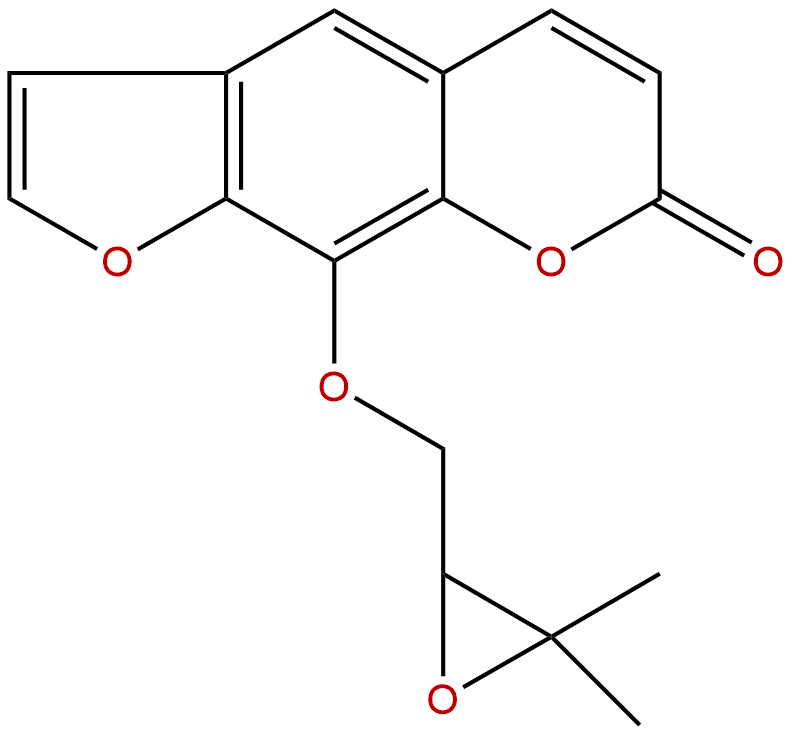


Product name: oxyimperatorin
Synonym name: (+/-)-prangenin; imperatorin epoxide; 9-((3,3-dimethyl-2-oxiranyl)methoxy)-7h-furo(3,2-g)(1)benzopyran-7-one
Catalogue No.: BP3301
Cas No.: 35740-18-2
Formula: C16H14O5
Mol Weight: 286.283
Botanical Source:
Physical Description: Cryst.
Type of Compound: Coumarins
Purity: 95%~99%
Analysis Method: HPLC-DAD or/and HPLC-ELSD
Identification Method: Mass, NMR
Packing: Brown vial or HDPE plastic bottle
The product could be supplied from milligrams to grams. Inquire for bulk scale.
We provide solution to improve the water-solubility of compounds, thereby facilitating the variety of activity tests and clinic uses.
For Reference Standard and R&D, Not for Human Use Directly.
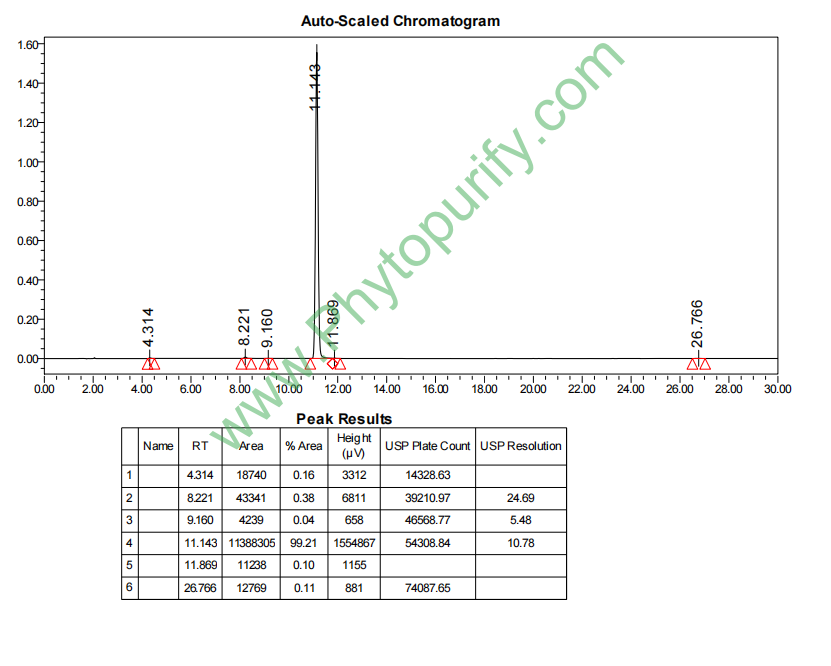
HPLC of oxyimperatorin
Storage conditions:Short-term storage at 2~8℃, long-term storage at -20 ~ -80℃
65.1100
2.8750
2.8747
.0093
3.8793
19.3387
High
82.0275
3.3690
Yes
No
Yes
No
Yes
Yes
1.5
Yes
No
Yes
Yes
Natural products have always been an important treasure trove for innovative drug discovery, among which coumarin compounds have attracted much attention due to their extensive and significant biological activities. Oxymperatin (±) - Heraclenin, CAS number 35740-18-2), as a furan coumarin derivative isolated from traditional Chinese medicine Angelica sinensis and other plants in the Umbelliferae family, has shown great research potential in the field of anti-tumor pharmacology in recent years. Its unique chemical structure - the introduction of epoxy groups on the classical linear furanocoumarin skeleton - not only endows it with physicochemical properties distinct from analogs such as Imperatorin, but also may be associated with novel and diverse biological activities. Modern pharmacological research has preliminarily revealed that epoxyprednisolone exhibits inhibitory activity against various malignant tumor cells through various pathways such as intervening in cell apoptosis, inhibiting tumor invasion and metastasis, and regulating key signaling pathways. Its effects involve multiple key molecular targets such as MCL1, STAT3, MMP2, TOP1/2A, etc. This article aims to systematically review the chemical properties, plant sources, pharmacological activities, mechanisms of action, pharmacological evaluation, and clinical application prospects of epoxyphenyl ether, in order to provide comprehensive scientific references for the deep development and utilization of this natural product.
The chemical name of epoxy ether is 9- [(3,3-dimethylepoxyethane-2-yl) methoxy] -7-furan [3,2-g] chromene-2-one, with a molecular formula of C16H14O5 and a molecular weight of 286.2830. Its core structure is linear furanocoumarin (i.e. psoralenone type), which is connected to a 2,3-epoxy-3-methylbutoxide group at the C-5 'position (furan ring side chain) of the parent nucleus. This epoxy structure is the most significant feature that distinguishes it from other simple furanocoumarins (such as tetrahydropalmatine), and is also a key functional group that affects its chemical reactivity and biological activity.
From the analysis of physical and chemical properties, the calculated value of the lipid water partition coefficient (LogP) of epoxyphenyl ether is about 2.8750, indicating that it has moderate lipophilicity, which is conducive to transmembrane transport and intracellular distribution. Its topological polar surface area (TPSA) is 65.11 Å ², which is relatively small, further confirming its good lipid solubility. However, its water solubility is poor, with a predicted value of only 0.0093 mg/mL, which may pose challenges in formulation development. In pharmacokinetic predictions, epoxyprednisolone exhibits high blood-brain barrier permeability potential, suggesting its potential application value in central nervous system related tumors or diseases. Preliminary safety predictions indicate that the hERG channel inhibition risk is negative, reducing the potential risk of inducing QT interval prolongation in the heart. The simulated value of Ames test is 1.5 (usually the threshold is about 1.1-1.2), indicating that there may be a slight risk of mutagenicity, which needs to be confirmed and evaluated through more comprehensive genetic toxicity tests in subsequent preclinical development.
Epoxy ether mainly exists in various medicinal plants of the Apiaceae family, among which the most famous source is the root of the traditional Chinese medicine Angelica sinensis (Oliv.) Diels. In addition, it has also been reported in plants such as Angelica dahurica, Glehnia littoralis, and Peucedanum. In these plants, epoxytetrahydropalmatine often coexists with other coumarin compounds such as eugenol, isoeugenol, and tetrahydropalmatine.
Its extraction and separation usually follow the conventional process of natural product chemistry. Firstly, the dried plant material (such as when it comes to root) is crushed and subjected to cold soaking, reflux, or ultrasound assisted extraction using organic solvents (such as methanol, ethanol, or ethyl acetate). After vacuum concentration, the crude extract obtained was preliminarily enriched using solvent partitioning methods (such as petroleum ether, ethyl acetate, n-butanol fractionation extraction), and coumarin components were mostly concentrated in the ethyl acetate fraction. Subsequently, a series of column chromatography techniques were used for separation and purification, often using silica gel column chromatography with different ratios of petroleum ether ethyl acetate or chloroform methanol gradient elution. High performance liquid chromatography (HPLC), especially preparative HPLC, is a key step in obtaining high-purity epoxy ether monomers. It typically uses a reverse phase C18 column with methanol water or acetonitrile water as the mobile phase. The structural identification comprehensively utilizes techniques such as ultraviolet spectroscopy (UV), infrared spectroscopy (IR), mass spectrometry (MS), nuclear magnetic resonance spectroscopy (NMR, especially 1H NMR and 13C NMR), and the confirmation of the epoxy structure is the focus of analysis.
A large number of in vitro and partially in vivo studies have confirmed that epoxyphenyl ether has a wide range of pharmacological activities, among which its anti-tumor effect is the most prominent and profound.
1. Antitumor activity:
Epoxy ether exhibits broad-spectrum growth inhibition and cytotoxicity against various human tumor cell lines. Research shows that it can effectively inhibit the proliferation of breast cancer (such as MCF-7, MDA-MB-231 cells), liver cancer (such as HepG2, SMMC-7721 cells), lung cancer (such as A549 cells), colon cancer (such as HT-29, HCT116 cells), gastric cancer, ovarian cancer and other cancer cells, and its effect is concentration and time dependent. Animal model experiments further supported its in vivo anti-tumor effect. For example, in the nude mouse model of transplanted tumor, the administration of epioxide can significantly inhibit the growth of breast cancer or liver cancer, and show lower systemic toxicity compared with some chemotherapy drugs.
2. Other potential activities:
In addition to its core anti-tumor effect, based on the commonality and preliminary research of coumarin compounds, epoxyprednisolone may also have auxiliary pharmacological activities such as anti-inflammatory, antioxidant, and antibacterial effects. These activities may synergize with their anti-tumor effects, such as indirectly inhibiting tumor progression by reducing inflammatory responses in the tumor microenvironment, but further systematic research is needed.
The anti-tumor effect of epoxy ether is not achieved through a single pathway, but rather through the synergistic action of multiple targets and pathways, and its molecular mechanism is complex and interrelated.
1. Inducing cell apoptosis: This is one of the core mechanisms of action of epoxy ether. It can upregulate pro apoptotic proteins such as Bax and Bak, while downregulating anti apoptotic proteins Bcl-2 and MCL1 The expression of caspase disrupts mitochondrial membrane potential, leading to the release of cytochrome C, which in turn activates the caspase cascade reaction and ultimately triggers cell apoptosis. In addition, it can also inhibit STAT3 Signal pathways are used to promote apoptosis. STAT3 is an important transcription factor, and its sustained activation is closely related to the survival and proliferation of tumor cells. Epoxyprednisolone can inhibit the phosphorylation of STAT3 and the expression of downstream target genes such as Survivor and Bcl-2, thereby weakening the anti apoptotic ability of cells.
2. Inhibit tumor invasion and metastasis: Tumor metastasis is the main cause of treatment failure. Epoxy ether can significantly inhibit the migration and invasion ability of tumor cells. Its mechanism involves downregulating matrix metalloproteinases MMP2 The expression and activity of MMP9. MMP2/9 can degrade extracellular matrix and open channels for tumor cell invasion. Epoxy prednisolone inhibits tumor invasiveness by intervening in related signaling pathways, such as the MAPK/ERK pathway, to reduce the production of MMPs.
3. Inhibit topoisomerase and DNA damage: Research suggests that epoxy ether may serve as a potential Topoisomerase I (TOP1)and Topoisomerase II alpha (TOP2A)The inhibitor. Topoisomerases play a crucial role in DNA replication and transcription, and are targets of many chemotherapy drugs. Epoxy ether can cleave complexes by stabilizing topoisomerase DNA, hindering DNA reconnection, causing DNA double strand breaks, triggering DNA damage reactions, and cell death.
4. Regulating hormones and related signaling pathways: In hormone dependent tumors, such as breast cancer, epoxypyrrhizin has shown a positive effect on estrogen receptors ESR1 Regulating the signaling pathway and inhibiting aromatase CYP19A1 The activity. CYP19A1 is a key enzyme in estrogen synthesis, and its inhibition can reduce estrogen levels in the body, thereby inhibiting the growth of estrogen dependent tumors. At the same time, it can also inhibit MAPK1(ERK2)The activity of kinases interferes with the proliferation and survival signals of tumor cells.
5. Inhibit tumor angiogenesis and adapt to hypoxia: Tumor growth requires neovascularization supply. Epoxy ether can be inhibited by Hypoxia inducible factor-1 alpha (HIF-1A)To exert its effect through stability and activation. HIF-1A is a core regulatory factor for cells to adapt to hypoxic environments, which can upregulate the expression of angiogenic genes such as vascular endothelial growth factor (VEGF). Epoxyprednisolone indirectly inhibits tumor angiogenesis and cuts off tumor nutrition supply by inhibiting HIF-1A.
Despite its significant pharmacological activity, the drug like and pharmacokinetic (PK) properties of epoxyprednisolone are the key factors determining its successful development as a drug.
1. Preliminary evaluation of drug properties: Based on its molecular weight (<500), LogP (between 2-3), and low number of rotatable bonds, epoxyphenyl ether basically conforms to Lipinski's "five rules" and has the basic chemical space to become an oral drug. However, its poor water solubility and potential genetic toxicity (Ames test simulated positive) are the two main drawbacks. Poor water solubility can affect its oral bioavailability and may require improvement through formulation techniques such as making nanocrystals, cyclodextrin inclusion complexes, solid dispersions, etc. The genetic toxicity risk must be clearly evaluated through a complete set of studies such as Ames test and micronucleus test under standardized GLP conditions.
2. Current status of pharmacokinetic research: At present, there are relatively limited reports on the pharmacokinetic studies of epoxy ether systems, mainly focusing on their preliminary ADME (absorption, distribution, metabolism, excretion) characteristics in animal bodies. Due to its good lipid solubility, it is speculated that it is well absorbed in the small intestine after oral administration, but the first pass effect may be significant. Coumarin compounds are typically substrates and/or regulators of cytochrome P450 enzymes (especially CYP3A4), and epoxides are likely to be widely metabolized in the body. Their epoxy structure may be one of the metabolic sites, and the metabolites may be active or toxic. The prediction of high blood-brain barrier permeability has been preliminarily confirmed in some studies, which provides the possibility for its treatment of brain tumors. Detailed parameters such as in vivo distribution, plasma protein binding rate, major metabolic pathways, excretion pathways, and half-life need to be further studied through radioactive labeling or high-sensitivity LC-MS/MS methods.
Epoxy ether, as a natural lead compound with multi-target anti-tumor activity, has broad clinical application prospects, but the road ahead is long and full of challenges.
As a lead compound for novel anti-tumor drugs: Its greatest potential lies in the development of single or combined drugs for refractory tumors (such as triple negative breast cancer, liver cancer, drug-resistant tumors). Its multi-target characteristics may help overcome the problem of resistance that single target drugs are prone to. Future research directions include: a) optimizing its activity and drug properties through systematic structural modification and structure-activity relationship studies, such as introducing hydrophilic groups to improve solubility while retaining epoxy group activity, or modifying the structure to reduce potential toxicity; b) Deeply explore its synergistic effects with existing chemotherapy drugs (such as topoisomerase inhibitors, paclitaxel, etc.) or targeted drugs, and develop low toxicity and efficient combination therapy regimens.
2. Modernization of Traditional Chinese Medicine and Quality Markers: As one of the effective ingredients of traditional Chinese medicine such as Angelica sinensis, clarifying the pharmacological substance basis and mechanism of action of epoxyprednisolone will help promote the modernization and internationalization of related Chinese medicine. It is expected to become one of the key chemical markers (Q-Marker) for evaluating the quality of Angelica sinensis medicinal materials and their preparations.
3. Challenges faced:
- Toxicity issue: Potential genetic toxicity is one of the biggest obstacles to its clinical application, and its safety window must be clarified through comprehensive preclinical safety evaluations (including acute toxicity, chronic toxicity, reproductive toxicity, etc.).
- Pharmacokinetic defects: The problems of poor water solubility, rapid metabolism, and possible low bioavailability urgently need to be solved through formulation and prodrug strategies.
- Complexity of mechanism of action: Multi targeting is both an advantage and a challenge, requiring a more precise elucidation of its core functional targets and pathway networks to avoid unpredictable off target effects.
4. Future prospects: With the development of systems pharmacology, network pharmacology, computational chemistry, and advanced formulation technology, research on epoxyphenyl ether will become more in-depth. The use of artificial intelligence to assist in the design of its derivatives, combined with nano targeted delivery systems such as liposomes and albumin nanoparticles, to improve its tumor targeting and efficacy, and reduce systemic toxicity, is a highly promising development strategy. The transition from laboratory research to clinical application requires close collaboration and continuous investment from multiple disciplines such as pharmacology, chemistry, pharmacy, and toxicology.
Epoxy tetrahydropalmatine is a furan coumarin compound with distinct chemical characteristics and rich pharmacological activity discovered from traditional Chinese medicine Angelica sinensis. By intervening in multiple key targets such as MCL1, STAT3, MMP2, TOP1/2A, HIF-1 α, etc., it exhibits a multi pathway and multi link inhibitory effect in the field of anti-tumor therapy, demonstrating the unique advantage of natural products in multi-target action. Despite facing challenges such as poor water solubility and potential toxicity in drug development, these have not obscured its brilliance as an excellent lead compound. Through modern medicinal chemistry methods for structural optimization, combined with new drug delivery technologies, it is expected to overcome existing deficiencies and maximize its therapeutic potential. The continuous in-depth research on epoxy ether not only helps to develop new anti-tumor drugs with independent intellectual property rights, but also provides an important example for clarifying the scientific connotation of traditional Chinese medicine such as Angelica sinensis and promoting the modernization of traditional Chinese medicine. In the future, interdisciplinary collaborative innovation will be the key to achieving a leap from "active natural products" to "clinical candidate drugs" for epoxy ether.
