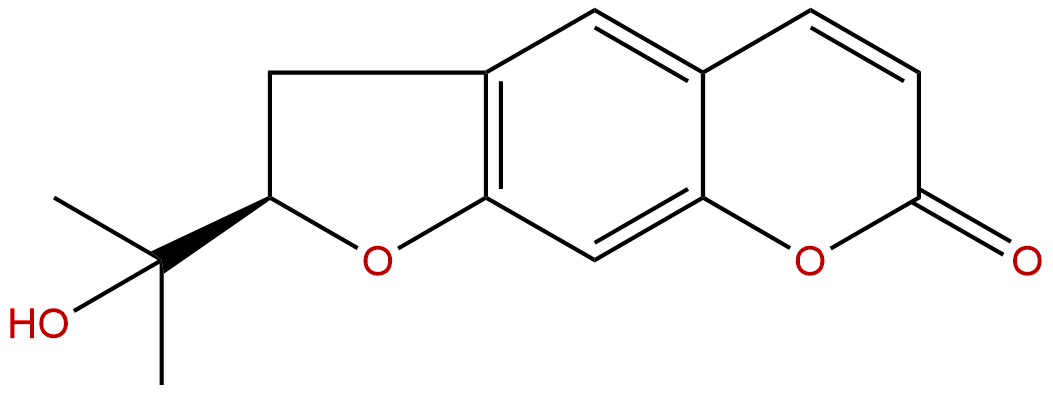


Product name: Nodakenetin
Synonym name: Nodakenitin; (-)-Marmesin
Catalogue No.: BP3273
Cas No.: 495-32-9
Formula: C14H14O4
Mol Weight: 246.262
Botanical Source:
Physical Description: Powder
Type of Compound: Coumarins
Purity: 95%~99%
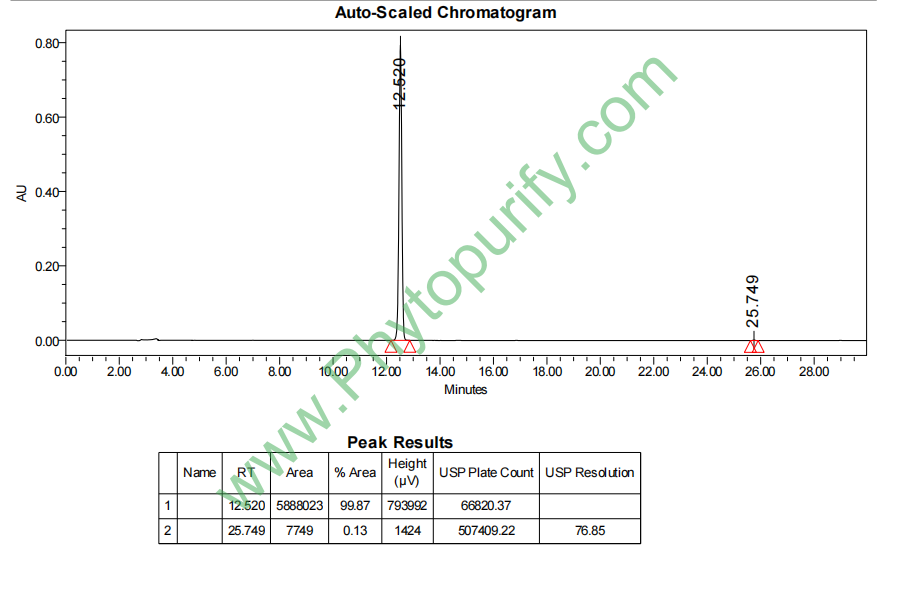
Analysis Method: HPLC-DAD or/and HPLC-ELSD
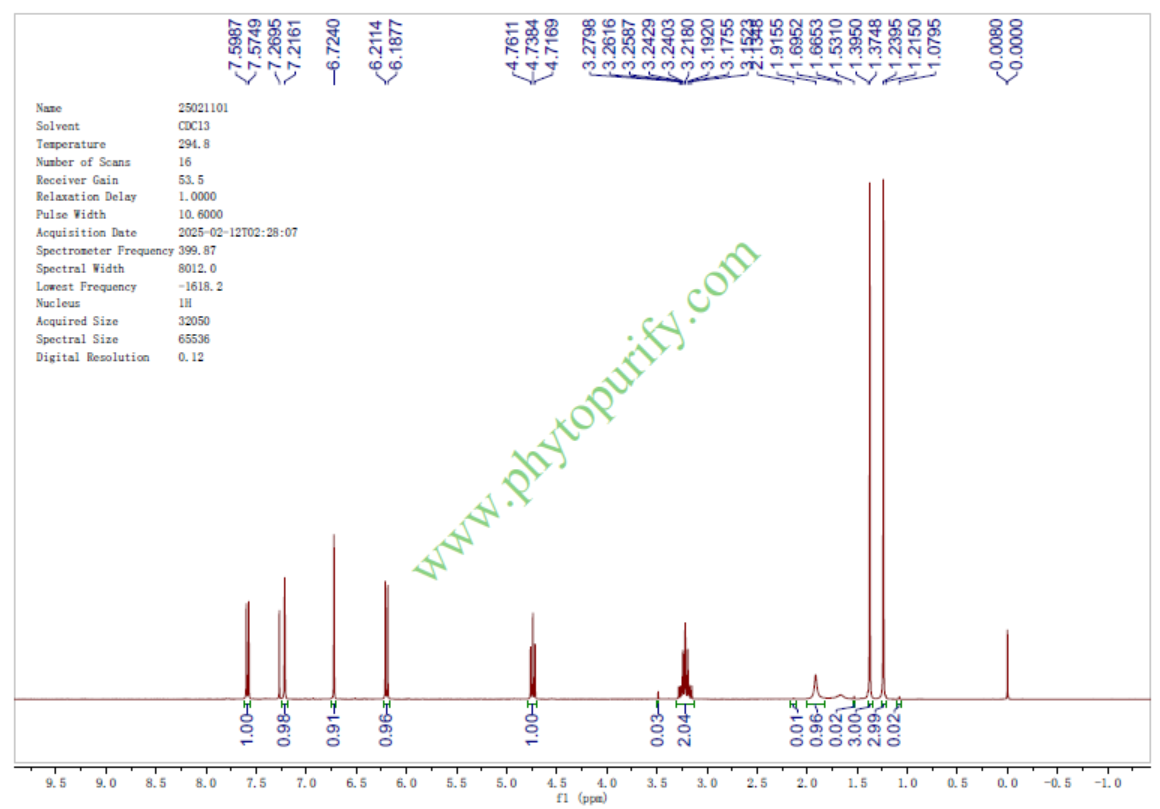
Identification Method: Mass, NMR
Packing: Brown vial or HDPE plastic bottle
Storage: Store in a well closed container, protected from air and light. Put into refrigerate or freeze for long term storage.
Whenever possible, you should prepare and use solutions on the same day. However, if you need to make up stock solutions in advance, we recommend that you store the solution as aliquots in tightly sealed vials at -20℃. Generally, these will be useable for up to two weeks.
The product could be supplied from milligrams to grams, up to kilograms
Inquire for bulk scale.
Descriptions:
Nodakenetin displays the least irritant and least persistent reactions on mouse ears, and exhibits the least cytotoxic capacity against brine shrimp larvae.[1]
Nodakenetin angelate, extracted from seeds of Heracleum candolleaum , is used as an antiarthritic and nerve tonic. [2]
Nodakenetin has antioxidant activity.[3]
References:
[1] Saeed M A, Sabir A W. J Asian Nat Prod Res, 2008, 10(10):49-58.
[2] Binoy J, Abraham J P, Joe I H, et al. J Raman Spectrosc, 2005, 36(1):63-72.
[3] Zhao D, Islam M N, Bo R A, et al. Arch Pharml Res, 2012, 35(1):179-92.
[4] Zhang P, Yang X W. Biomed Chromatogr, 2009, 24(2):216-21.
HPLC of Nodakenetin
HNMR of Nodakenetin
Storage conditions:Short-term storage at 2~8℃, long-term storage at -20 ~ -80℃
59.6700
2.0795
2.0795
.0488
2.3074
9.1136
High
81.4477
3.1731
Yes
No
No
No
Yes
Yes
0.9
Yes
No
Yes
Yes
Natural products have long been an important source of innovative drug discovery, among which coumarin compounds have attracted much attention due to their extensive and significant biological activities. Nodakenetin, also known as (2S) -2-hydroxy-2-methylbutyric acid (2S, 3R) -3- (2,4-dihydroxyphenyl) -7-hydroxy-2,3-dihydro-1-benzofuran-5-yl ester, is a natural active molecule with a unique dihydrobenzofuran coumarin skeleton. Its CAS number is 495-32-9, mainly isolated from plants belonging to the Umbelliferae family such as Angelica decorsifa. Early studies have revealed its basic pharmacological activities such as antioxidant and anti-inflammatory properties, and suggested its potential in anti arthritis and neuroprotection. In recent years, with the development of molecular pharmacology and tumor biology, the value of anthocyanins in the treatment of major diseases such as lung cancer has been re examined. Research has shown that it can regulate pathological processes such as cell apoptosis, inflammatory response, oxidative stress, and metastasis by acting on multiple key targets such as BCL2, STAT3, NFE2L2, TLR4, demonstrating the characteristics of multi-target and multi pathway intervention in diseases. This article aims to provide a systematic review of the chemical properties, plant sources, pharmacological activities, molecular mechanisms of action, medicinal properties, and clinical application prospects of anthocyanins from Scutellaria baicalensis, in order to provide comprehensive scientific references for the in-depth research and development of this compound.
Purple flowered Houttuynia cordata belongs to the dihydrobenzofuran coumarin subclass of linear furan coumarins. Its molecular formula is C14H14O4 and its molecular weight is 246.2620 g/mol. Its core structure is formed by the combination of benzo [a] - pyranone (coumarin nucleus) and a dihydrofuran ring at the C-7 and C-8 positions, with a 2,4-dihydroxyphenyl group connected at the C-3 'position, forming a complex stereostructure with multiple chiral centers. This unique structure is the material basis for its biological activity.
In terms of physical and chemical properties, the calculated lipid water partition coefficient (LogP) of anthocyanins in purple clover is 2.0795, indicating that it has moderate lipophilicity and is conducive to transmembrane transport and absorption. Its topological polar surface area (TPSA) is 59.6700 Å ², which is relatively small and further supports its good membrane permeability. The water solubility data shows that its solubility is relatively low (about 0.0488 mg/mL), which is consistent with the characteristics of most coumarin compounds and is also a factor that needs to be considered in their formulation development. This compound is usually a white or off white crystalline powder at room temperature, and the phenolic hydroxyl groups in its structure give it a certain degree of acidity and antioxidant capacity. In terms of spectroscopic characteristics, the UV absorption of coumarin has a maximum absorption peak around the typical 300-320 nm range. The nuclear magnetic resonance hydrogen spectrum and carbon spectrum can clearly display the signals of its benzene ring, furan ring, and side chain protons and carbons, which is the key basis for identifying the compound.
Purple flowered Houttuynia cordata mainly exists in various plants belonging to the Angelica and Peucedanum genera of the Umbelliferae family, among which Angelica decorsifa, also commonly identified as Peucedanum decorsifum, is the main source. This plant is commonly used in traditional East Asian medicine to treat cough, phlegm, headache, and other symptoms. Its medicinal parts are mainly the roots. Purple flowered Primulaceae often coexists with its glycoside form, Nodakenin, in plants. Nodakenin is a glycoside of the former that is linked to a glucose group at the C-2 'position and can be converted into its glycoside form through enzymatic or acid hydrolysis in vitro and in vivo.
The extraction of anthocyanins from plant materials is usually carried out using organic solvent extraction method. The classic process is as follows: Grind the dried roots of Platycodon grandiflorus, first use methanol or ethanol for heating reflux or ultrasound assisted extraction, and concentrate to obtain the crude extract. The crude extract was subsequently subjected to gradient extraction using solvents such as petroleum ether, ethyl acetate, and n-butanol. Due to its equipolarity, the nucleosides in the purple flower stem are mainly enriched in the ethyl acetate extraction site. For further purification, various chromatographic techniques such as silica gel column chromatography, reverse phase silica gel (such as ODS) column chromatography, and preparative high-performance liquid chromatography (HPLC) are commonly used in combination. Taking silica gel column chromatography as an example, gradient elution is commonly performed using chloroform methanol or petroleum ether ethyl acetate systems, and the combined target fractions are detected by thin layer chromatography (TLC). Modern separation technologies such as high-speed countercurrent chromatography (HSCCC) are increasingly being applied for the efficient preparation of such natural products due to their advantages of irreversible adsorption and high recovery rates. The optimization of extraction processes, such as combining enzyme pretreatment or using green solvents (such as deep eutectic solvents), is a research direction for improving yield and sustainability.
A large number of pharmacological studies in vitro and in vivo have confirmed that the anthocyanins in purple clover have diverse biological activities, and their application potential has surpassed the traditional cough suppressant and expectorant categories.
Anti inflammatory and immune regulatory activity Purple flowered Houttuynia cordata exhibits significant anti-inflammatory effects. In the lipopolysaccharide (LPS) - induced macrophage (such as RAW264.7) inflammation model, it can dose dependently inhibit the production of key inflammatory mediators such as nitric oxide (NO), prostaglandin E2 (PGE2), tumor necrosis factor - α (TNF - α), interleukin-6 (IL-6), etc. In the rat arthritis model induced by carrageenan or Freund's complete adjuvant, the administration of purple flowered paeoniflorin can effectively reduce paw swelling, synovial inflammation cell infiltration, and cartilage damage, verifying its "anti arthritis" effect.
Neuroprotection and neural reinforcement effects Purple flowered Houttuynia cordata has good blood-brain barrier permeability, laying the foundation for its central nervous system activity. Research has shown that it can improve neuronal survival rate, alleviate oxidative stress, and enhance learning and memory abilities in β - amyloid protein induced neuronal injury models, glutamate excitotoxicity models, and scopolamine induced memory impairment mouse models. Its neural strengthening effect may be related to regulating the expression of neurotrophic factors, inhibiting abnormal phosphorylation of tau protein (related to the target MAPT), and the cholinergic system.
Antitumor activity Purple flowered Houttuynia cordata has inhibitory effects on various tumor cell lines, with the most in-depth research on lung cancer cells. It can significantly inhibit the proliferation of human non-small cell lung cancer cells (such as A549, H460) and induce cell apoptosis. In addition, the compound can also inhibit the migration and invasion of lung cancer cells, indicating its potential for anti metastasis. Its inhibitory effect on lung cancer is not an isolated phenomenon, and similar effects have also been observed in other cancers, such as breast cancer and liver cancer.
Antioxidant and Cardiovascular Protective Activities As a compound containing phenolic hydroxyl groups, anthocyanins have direct free radical scavenging ability and can enhance the activity of intracellular antioxidant enzymes such as superoxide dismutase (SOD) and glutathione peroxidase (GSH Px). In the animal models of myocardial ischemia-reperfusion injury and atherosclerosis, it plays a protective role in the heart and blood vessels by alleviating oxidative damage and inflammatory reaction.
Other activities Preliminary studies also suggest that the nucleoside elements of Scutellaria baicalensis may have anti osteoporosis, anti fibrosis and other activities, expanding its potential therapeutic applications.
The pharmacological effects of purple clover stem from its precise regulation of multiple intracellular signaling pathways, and its mechanism of action exhibits multi-target characteristics. Based on the provided target information, its main mechanism of action can be summarized as follows:
Regulating cell apoptosis and survival (targeting BCL2 and STAT3)In tumor cells such as lung cancer, purple flowered Houttuynia cordata can downregulate the expression of anti apoptotic protein Bcl-2 (encoded by BCL2 gene), and may also affect pro apoptotic proteins, thereby breaking the balance of apoptosis and activating the mitochondrial apoptosis pathway. It can also inhibit the phosphorylation and nuclear translocation of signal transduction and transcription activator 3 (STAT3). STAT3 is an important oncogenic transcription factor that continuously activates to promote cell proliferation, survival, and inhibit apoptosis. Purple flowered Houttuynia cordata inhibits the STAT3 pathway, thereby downregulating the expression of downstream target genes such as Cyclin D1 and Survivin, and synergistically inducing tumor cell apoptosis.
Activate endogenous antioxidant pathway (targeting NFE2L2)Nuclear factor E2 related factor 2 (Nrf2, encoded by the NFE2L2 gene) is a central regulator of cellular antioxidant stress response. Purple flowered Houttuynia cordata aglycone can promote the dissociation and transfer of Nrf2 from the cytoplasm to the nucleus, binding to antioxidant response elements (ARE), thereby upregulating the expression of phase II detoxifying enzymes such as heme oxygenase-1 (HO-1), NAD (P) H quinone oxidoreductase 1 (NQO1), and antioxidant proteins. This is one of the core mechanisms by which it exerts antioxidant, anti-inflammatory, and chemopreventive effects.
Inhibiting inflammatory signaling pathways (targeting TLR4, PIK3CG)Toll like receptor 4 (TLR4) is a key receptor that recognizes pathogen related molecular patterns such as LPS and initiates innate immune inflammatory responses. Purple flowered Houttuynia cordata glycoside can interfere with the interaction between TLR4 and its downstream myeloid differentiation factor 88 (MyD88), thereby inhibiting the activation of nuclear factor kappa B (NF - κ B) and mitogen activated protein kinases (MAPKs) pathways, ultimately reducing the transcription and release of inflammatory mediators. In addition, it may also affect the PI3K/Akt signaling pathway, which is closely related to cell survival and inflammation, by inhibiting the catalytic subunit gamma of phosphatidylinositol 3-kinase (PIK3CG).
Affects extracellular matrix remodeling and metastasis (targeting MMP2)Matrix metalloproteinase-2 (MMP2) can degrade type IV collagen in the extracellular matrix and is a key enzyme for tumor cell invasion and metastasis. Purple flowered Houttuynia cordata has been shown to downregulate the expression and activity of MMP2, while upregulating its tissue inhibitor TIMP-1/2, thereby inhibiting the migration and invasion ability of tumor cells.
Other potential targets Purple flowered Houttuynia cordata can also interact with estrogen receptor beta (ESR2), which may be related to its neuroprotective and skeletal metabolic regulatory effects. Its regulation of microtubule associated protein tau (MAPT) is directly related to its ability to improve tau protein pathology and protect nerve cells. The potential impact on ATP binding cassette transporter A1 (ABCA1) may involve the reverse transport of cholesterol, which is related to the anti atherosclerosis effect.
Based on the provided pharmacological parameters and existing research, the preliminary evaluation of the pharmacological properties of anthocyanins in Scutellaria baicalensis is as follows:
Preliminary analysis of drug properties Its molecular weight (246) is moderate, with a LogP value (~2.08) in the ideal range (usually considered 1-3 to be optimal), and its TPSA (~59.7) is relatively small, in line with Lipinski's "Five Rules", indicating that it has good oral absorption potential. Its poor water solubility is the main limiting factor affecting its bioavailability, and future formulation development (such as making nanocrystals, cyclodextrin inclusion complexes, solid dispersions, or prodrugs) is the key to improving this problem.
Pharmacokinetic characteristics Current limited pharmacokinetic studies have shown that the nucleoside of purple flowered Houttuynia cordata can be absorbed in the gastrointestinal tract after oral administration, but its absolute bioavailability may be limited by first pass effects and solubility. It is widely distributed in the body, and its prediction of "high" blood-brain barrier permeability is consistent with the observed central nervous system activity, which is a major advantage. In terms of metabolism, coumarin compounds are mainly metabolized by the liver cytochrome P450 enzyme system (such as CYP3A4, CYP2C9), undergo hydroxylation, dealkylation and other reactions, and combine with glucuronic acid or sulfuric acid to form water-soluble metabolites, which are excreted through the kidneys or bile. The specific metabolic profile, main metabolic enzymes, and activity of metabolites need to be further studied.
Preliminary safety assessment Inhibition of hERG potassium channels is a significant risk for prolonging the QT interval and causing apical torsion type ventricular tachycardia in the heart. The data shows that the inhibition of hERG by the purple flowered pre Hu element indicates a low risk of cardiac toxicity and a positive signal in terms of safety. The Ames test is a standard method for detecting the mutagenicity of compounds, and the results are usually expressed as the number of revertant colonies. The value of "0.9" needs to be interpreted in conjunction with specific experimental design and historical control data. If it is below the critical value, it indicates that there is no mutagenicity, but more genetic toxicity tests are needed for verification.
Summary Purple flowered Houttuynia cordata has shown advantages in terms of drug properties, blood-brain barrier permeability, and preliminary cardiac safety. However, research on its water solubility and systemic pharmacokinetics (including absorption, distribution, metabolism, and excretion processes) is not yet sufficient, and it is a key link that must be supplemented before its clinical development.
The multi-target and multi pathway action characteristics of the nucleoside element in purple clover provide broad prospects for its application in the treatment of complex diseases, but also bring challenges.
Potential therapeutic areas:
Challenges faced and future research directions:
As a type of dihydrobenzofuran coumarin derived from traditional medicinal plants, purple flowered pre Hu nucleoside has become a highlight in natural product pharmacology research due to its unique chemical structure and multifaceted pharmacological activities. From basic antioxidant and anti-inflammatory properties to in-depth exploration of mechanisms for major diseases such as lung cancer and neurodegenerative diseases, research continuously reveals the scientific connotation of intervening in core pathological processes such as cell apoptosis, inflammation, oxidative stress, and metastasis by regulating key targets such as BCL2, STAT3, NFE2L2, TLR4, etc. Although further exploration is needed in terms of drug properties, especially in terms of water solubility and systemic pharmacokinetics, its excellent drug like properties, blood-brain barrier permeability, and preliminary safety signals have laid a positive foundation for its further development. In the future, through interdisciplinary integration, in-depth analysis of its molecular mechanism, innovative formulation strategies, and promotion of standardized preclinical and clinical research, purple flowered pre Hu Yuan is expected to develop from a promising lead compound into a new type of drug for the treatment of lung cancer, neurological diseases, and chronic inflammatory diseases, demonstrating the sustained vitality of natural products in modern drug development.
