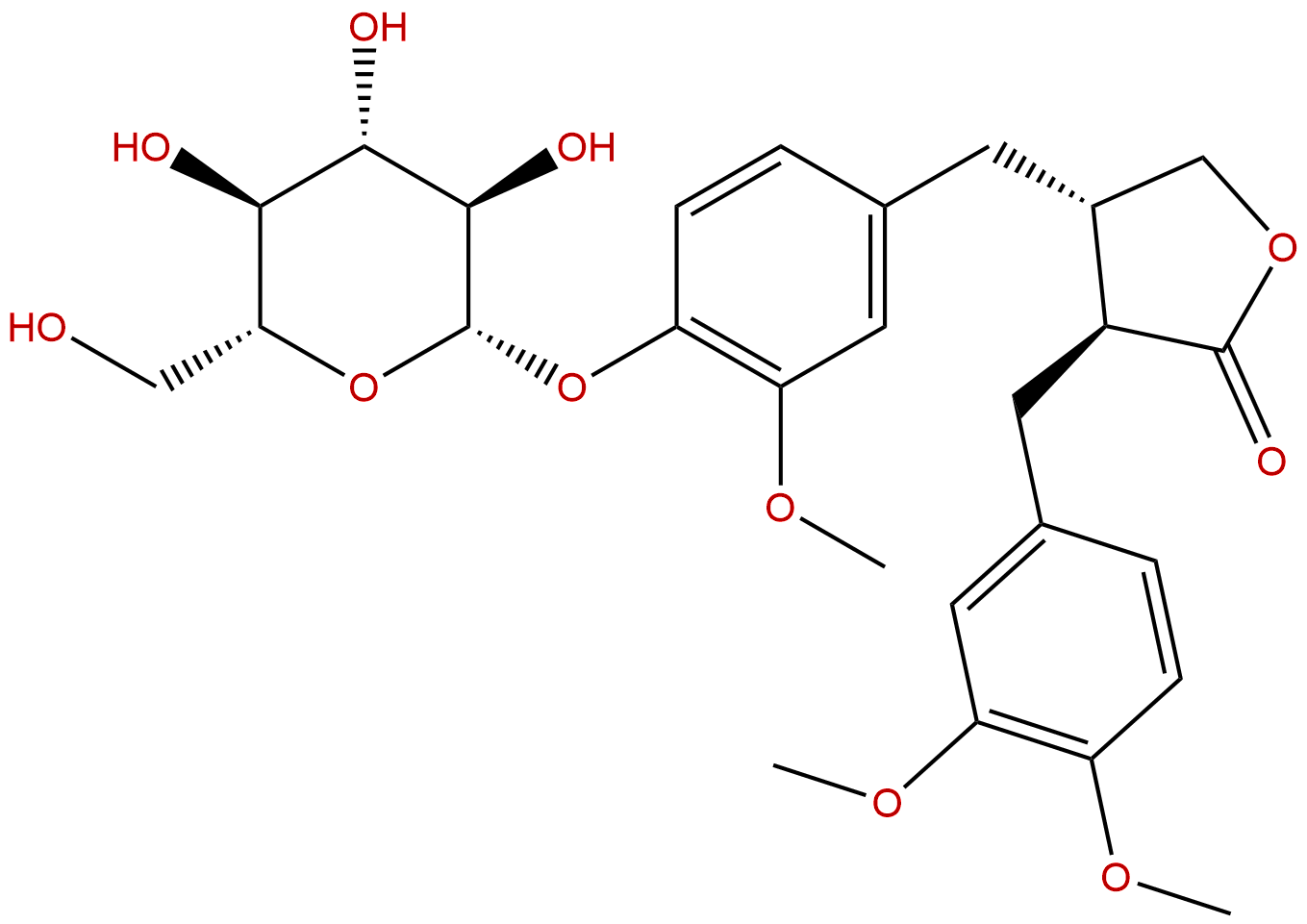


Product name: Styraxlignolide F
Synonym name:
Catalogue No.: BP1757
Cas No.: 823214-06-8
Formula: C27H34O11
Mol Weight: 534.558
Botanical Source: Styrax japonica
Physical Description:
Type of Compound: Lignans
Purity: 95%~99%
Analysis Method: HPLC-DAD or/and HPLC-ELSD
Identification Method: Mass, NMR
Packing: Brown vial or HDPE plastic bottle
The product could be supplied from milligrams to grams. Inquire for bulk scale.
We provide solution to improve the water-solubility of compounds, thereby facilitating the variety of activity tests and clinic uses.
For Reference Standard and R&D, Not for Human Use Directly.
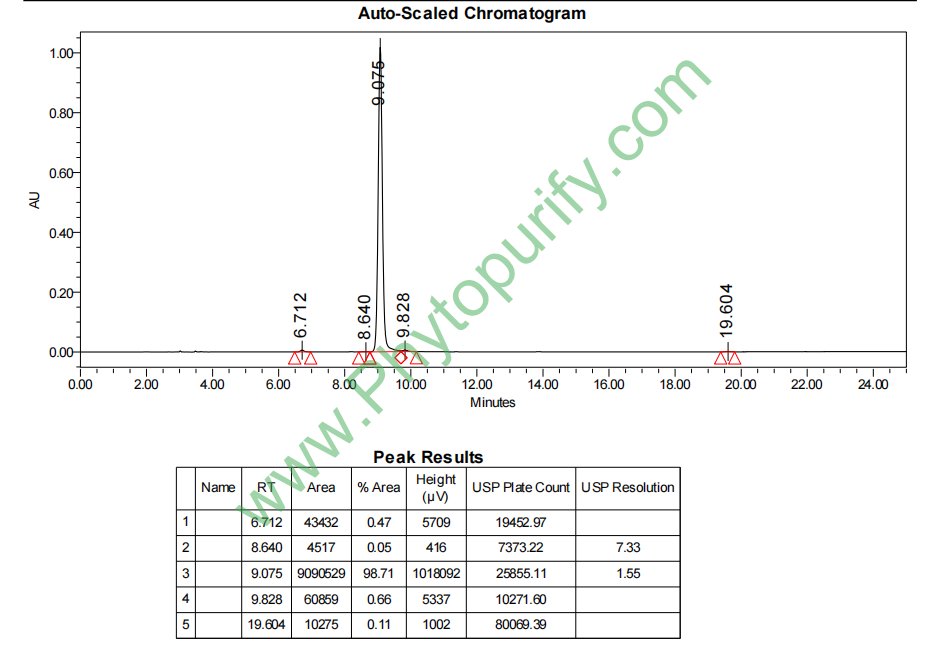
HPLC of Styraxlignolide F
Storage conditions:Short-term storage at 2~8℃, long-term storage at -20 ~ -80℃
153.3700
1.0541
1.0541
1.8289
.6836
.2377
Low
78.3987
4.1080
No
No
No
No
No
No
0.0
Yes
Yes
No
Yes
Arthritis is a chronic degenerative disease characterized by joint inflammation, pain, swelling, and loss of function. Its pathological process involves complex inflammatory cascades, cartilage degradation, and bone destruction. Common types include osteoarthritis (OA) and rheumatoid arthritis (RA). At present, clinical treatment drugs such as nonsteroidal anti-inflammatory drugs (NSAIDs), glucocorticoids, and disease modified anti rheumatic drugs (DMARDs) can alleviate symptoms, but long-term use often accompanies serious side effects such as gastrointestinal injury, cardiovascular risk, and immune suppression. Therefore, searching for efficient and low toxicity new anti arthritis lead compounds from natural products has become an important direction for drug development.
Benzoin genus(Styrax)Plants are commonly used in traditional medicine to treat inflammatory diseases. In recent years, from Japan, benzoin(Styrax japonica)A series of lignin lactones isolated from the middle have attracted much attention due to their significant anti-inflammatory activity. Among them, Styraxilinolide F (CAS number: 823214-06-8), as a structurally novel natural product, has shown great potential in the study of inflammatory targets related to arthritis. This article aims to provide a systematic review of the chemical structure, plant origin, pharmacological activity, mechanism of action, pharmacological properties, and application prospects of Styraxilinolide F as a candidate anti arthritis drug, in order to provide scientific reference for related research and development.
Styraxylenol F is a lignan lactone compound with the molecular formula C28H30O11 and a molecular weight of 534.5580. Its core structure is composed of two phenylpropanoid units (C6-C3) connected by specific carbon carbon bonds, forming a typical dibenzylbutyrolactone skeleton, which is further cyclized to form a lactone ring. The structure usually contains multiple methoxy and hydroxyl substituents, and these polar groups have a decisive impact on its biological activity and physicochemical properties.
According to the analysis of the parameters related to drug properties, the lipid water partition coefficient (LogP) of the compound is 1.0541, indicating that it has moderate lipophilicity and is conducive to transmembrane absorption. The topologically polar surface area (TPSA) is 153.3700 Å ², which is relatively high and mainly attributed to the presence of multiple oxygen atoms (from hydroxyl, methoxy, and lactone carbonyl groups) in the molecule, suggesting that it may have good water solubility. The calculated water solubility value is 1.8289 (usually expressed in log mol/L or similar units, specific models may vary), further confirming its solubility in aqueous media. These properties fall within the typical range of the "Five Principles of Similar Drugs", providing possibilities for their oral absorption. However, the higher polarity also leads to a predicted "low" blood-brain barrier (BBB) permeability, indicating that it mainly acts on the peripheral system and has a lower risk of central nervous system side effects, which may be an advantage for treating peripheral diseases such as arthritis. In addition, preliminary toxicity predictions indicate that the risk of hERG inhibition is "no", and the Ames test result is 0.0 (usually indicating no mutagenicity), providing preliminary positive signals for its safety.
Styraxylinolide F is mainly derived from the Styracaceae family of plants in the genus Styracaceae Japanese benzoin(Styrax japonica)Separated from the bark or branches of trees. This plant is widely distributed in East Asia and is commonly used for garden viewing in China, Japan, and Korea. Its resin (benzoin) has also been recorded as medicinal in history.
Its extraction and separation usually follow the classic process of natural product chemistry:
1. Extract Dry and crushed plant materials (such as bark) are extracted or refluxed using polar organic solvents (such as methanol, ethanol, or acetone) at room temperature or under heating conditions. Sometimes methanol water mixed solvents are used to increase the extraction efficiency of polar components.
2. Rough classification The extract is concentrated under reduced pressure to obtain a paste. The extract is often suspended in water and subjected to liquid-liquid extraction and classification using solvents such as petroleum ether, ethyl acetate, and n-butanol in sequence. Styraxylinolide F is usually enriched in the ethyl acetate extraction site due to its equipolarity.
3. Separation and Purification The ethyl acetate fraction was further separated and purified using various chromatographic techniques. Usually, silica gel column chromatography is used first, with different ratios of petroleum ether ethyl acetate or chloroform methanol gradient elution for preliminary separation. Subsequently, the fraction rich in the target compound needs to undergo repeated preparative high-performance liquid chromatography (HPLC), typically using a reverse phase C18 column with methanol water or acetonitrile water as the mobile phase, to ultimately obtain high-purity Styraxilinolide F monomer compounds. Structural identification involves the comprehensive use of spectroscopic techniques such as nuclear magnetic resonance (NMR, including 1H, 13C, and 2D-NMR), mass spectrometry (MS), and optical rotation.
Numerous in vitro and in vivo pharmacological studies have shown that the core pharmacological activity of Styraxilinolide F is concentrated in anti-inflammatory and Anti arthritis aspect.
The anti arthritis effect of Styraxilinolide F is not achieved through a single target, but rather through the synergistic intervention of multiple targets and pathways, with its core mechanism revolving around inhibition Nuclear factor kappa B (NF - κ B) and Cyclooxygenase-2 (COX-2/PTGS2) The signal pathway unfolds.
Inhibition of NF - κ B signaling pathway NF - κ B is a core transcription factor that regulates inflammatory responses. In the resting state, NF - κ B (usually in the form of p50/p65 dimer) binds to the inhibitory protein I κ B and exists in the cytoplasm. When stimulated by TNF - α, IL-1 β, or LPS, I κ B is phosphorylated and degraded, and NF - κ B is activated and transferred into the nucleus, initiating the transcription of numerous pro-inflammatory genes downstream. Research has shown that Styraxilinolide F can inhibit the phosphorylation and degradation of I κ B α, thereby preventing the nuclear translocation of NF - κ B p65 subunit. This directly leads to downstream target genes, including TNF-α、IL-6、IL-1β、MMP-3、MMP-13 The transcription of waiting is inhibited. Therefore, by targeting the NF - κ B pathway, this compound can inhibit the amplification of inflammatory cascade reactions and the production of cartilage damaging factors from the source.
Inhibition of COX-2 (PTGS2) activity COX-2 is a key enzyme induced expression at the site of inflammation, responsible for converting arachidonic acid into prostaglandin E2 (PGE2), which is an important mediator of pain, fever, and vasodilation. Styraxilinolide F not only inhibits the gene expression of COX-2 (partially through the NF - κ B pathway), but may also directly or indirectly affect its enzyme activity, thereby reducing the synthesis of PGE2 and exerting anti-inflammatory and analgesic effects.
Multi target synergistic effect In summary, the target network of Styraxilinolide F can be summarized as: through inhibition NF-κB1(NFKB1) Activation and downregulation of its control TNF、IL6、IL1B Waiting for cytokines and MMP3、MMP13 Transcription of proteolytic enzymes; Simultaneously suppress PTGS2(COX-2) Expression and function. This simultaneous intervention on the "upstream" (transcription factors) and "downstream" (effector enzymes and cytokines) of inflammation enables it to more comprehensively and effectively block the pathological process of arthritis.
The pharmacological evaluation based on calculations and preliminary experimental data shows that Styraxilinolide F has certain development potential, but still faces challenges.
Advantage:
Challenges and unknowns:
Styraxilinolide F, as a natural lead compound derived from traditional medicinal plants, has shown clear application prospects in the field of anti arthritis drug development.
As a novel anti arthritis lead compound Its multi-target mechanism of action, especially its dual inhibition of NF - κ B and COX-2, may make it more effective than selective COX-2 inhibitors and safer than traditional NSAIDs. It is expected to be developed into a new type of small molecule drug for the treatment of diseases such as rheumatoid arthritis and osteoarthritis.
Potential for combination therapy Considering the complexity of arthritis treatment, Styraxilinolide F or structurally optimized compounds based on it may be combined with existing DMARDs (such as methotrexate) in the future to enhance efficacy, reduce dosage and side effects.
Research direction and prospects:
Styraxilinolide F is a natural lignan lactone with significant anti arthritis potential isolated from Japanese benzoin. The core of its pharmacological action lies in inhibiting the NF - κ B signaling pathway, thereby downregulating key pro-inflammatory factors such as TNF - α, IL-6, IL-1 β, as well as the expression of cartilage degrading enzymes such as MMP-3 and MMP-13. At the same time, it inhibits COX-2 activity, thereby intervening in the inflammatory and destructive processes of arthritis at multiple stages. The preliminary prediction of drug properties parameters shows that it has good drug like properties and safety warnings. However, there are still many challenges to successfully push this promising natural lead compound into clinical applications, especially its pharmacokinetic properties are still blank, and metabolic stability may become a bottleneck. Future research should focus on in-depth analysis of the mechanism of action, comprehensive preclinical efficacy and safety evaluation, and structural optimization based on drug chemistry strategies, in order to ultimately develop novel anti arthritis drugs that are derived from nature and have excellent efficacy and low toxicity.
