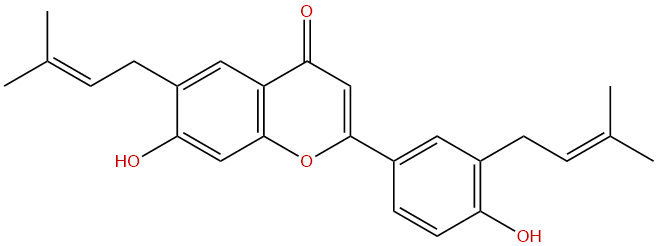


Product name: Licoflavone B
Synonym name: Prenyllicoflavone A
Catalogue No.: BP4007
Cas No.: 91433-17-9
Formula: C25H26O4
Mol Weight: 390.479
Botanical Source: Radix Glycyrrhizae
Physical Description:
Type of Compound: Flavonoids
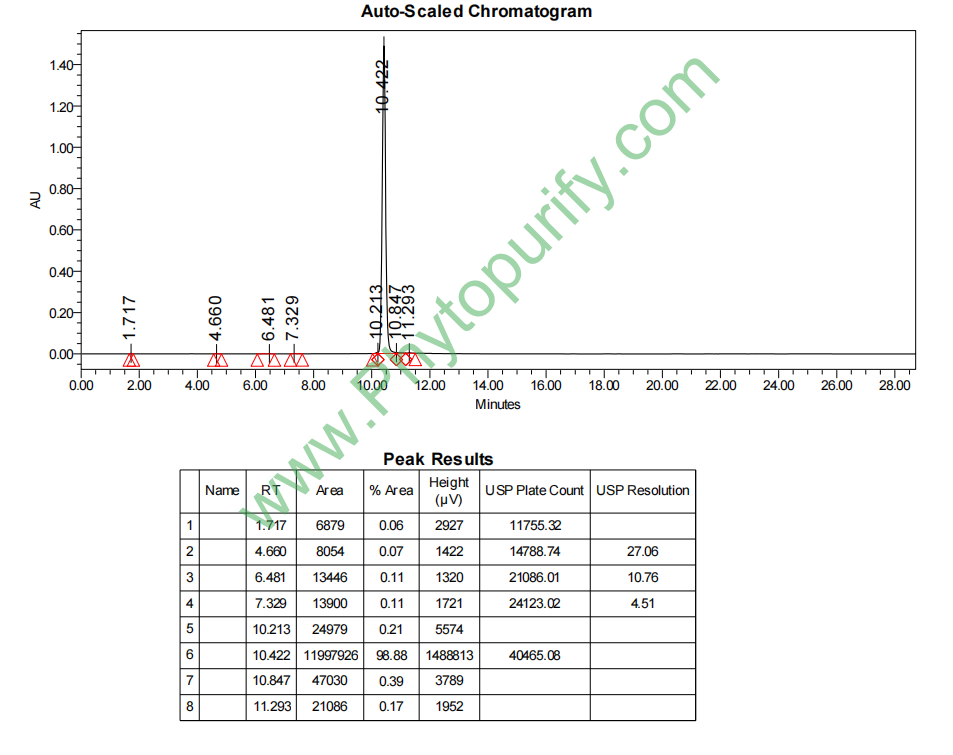
Purity: 95%~99%
Analysis Method: HPLC-DAD or/and HPLC-ELSD
Identification Method: Mass, NMR
Packing: Brown vial or HDPE plastic bottle
Storage: Store in a well closed container, protected from air and light. Put into refrigerate or freeze for long term storage.
Whenever possible, you should prepare and use solutions on the same day. However, if you need to make up stock solutions in advance, we recommend that you store the solution as aliquots in tightly sealed vials at -20℃. Generally, these will be useable for up to two weeks.
The product could be supplied from milligrams to grams
Inquire for bulk scale.
For Reference Standard and R&D, Not for Human Use Directly.
HPLC of Licoflavone B
Storage conditions:Short-term storage at 2~8℃, long-term storage at -20 ~ -80℃
70.6700
5.3964
5.3446
.0048
2.4799
8.8384
Low
93.3570
2.8434
Yes
No
Yes
No
Yes
Yes
0.0
Yes
Yes
Yes
Yes
Natural products have always been an important source of drug discovery and development, especially demonstrating unique advantages in the fields of anti infection and anti-inflammatory. Flavonoids, as a class of secondary metabolites widely present in plants, have attracted much attention due to their structural diversity and broad biological activities. Licorice(Glycyrrhiza As a medicinal plant with a long history, it is used in the traditional medical system to treat various diseases such as cough, gastric ulcer, inflammation, etc. Modern pharmacological research has revealed that licorice is rich in various active ingredients, including triterpenoid saponins (such as glycyrrhizic acid) and flavonoids. Among them, Licoflavone B is a type of licorice extracted from the swollen fruit of licorice(Glycyrrhiza inflata)The specific flavonoids isolated from the middle have gradually entered the field of researchers in recent years due to their unique anti schistosomiasis activity and potential anti-inflammatory effects.
Schistosomiasis is a disease caused by the presence of blood flukes(Schistosoma Parasitic diseases caused by (genus) and seriously endangering human health are listed as one of the neglected tropical diseases by the World Health Organization. At present, praziquantel is the preferred drug for treating schistosomiasis, but its long-term and large-scale use has raised concerns about drug resistance and has poor efficacy in the childhood stage. Therefore, finding anti schistosomiasis drugs with new mechanisms of action has become an urgent task. Licorice flavonoids B have been found to effectively inhibit Schistosoma mansoni(Schistosoma mansoni)The activity of ATPase and ADPase provides important evidence for its potential as a novel candidate drug for anti schistosomiasis. In addition, based on the anti-inflammatory activity of flavonoids, the potential of licorice flavonoids B in regulating inflammation related signaling pathways is also worth further exploration. This article will provide a systematic review of the research progress of licorice flavonoid B from the aspects of chemical structure, plant origin, pharmacological activity, mechanism of action, medicinal properties, and clinical application prospects, aiming to provide reference for the in-depth research and development of this compound.
The chemical name of licorice flavonoid B is 5,7-dihydroxy-2- (4-hydroxy-3-isopentenyl phenyl) -4H-1-benzopyran-4-one, which belongs to the typical prenylated flavonoids. Its molecular formula is C ₂₅ H ₂₆ O ₅, and its molecular weight is 390.4790 g/mol. Structurally, the core skeleton of licorice flavonoid B is the flavonoid mother nucleus (2-phenylchromenone), with one hydroxyl group (- OH) at positions 5 and 7 of the A ring, one hydroxyl group at position 4 'of the B ring, and an isopentenyl group (3,3-dimethylallyl) connected at position 3'. This isopentenyl side chain is a key structural feature that distinguishes it from other common flavonoids such as apigenin and luteolin, and is generally believed to significantly enhance the compound's lipid solubility and ability to interact with biofilms or proteins.
In terms of physicochemical properties, licorice flavonoids B exhibit typical lipophilic characteristics. Its lipid water partition coefficient (LogP) is 5.3964, indicating strong hydrophobicity, which is consistent with the presence of multiple aromatic rings and isopentenyl side chains in its molecular structure. A higher LogP value means that the solubility of the compound in water is extremely low, with a water solubility parameter of only 0.0048 mg/mL. This characteristic is both an advantage and a challenge in drug development: good lipid solubility is beneficial for penetrating cell membranes and the stratum corneum of parasites, but poor water solubility can seriously affect their oral absorption and bioavailability. The polar surface area (TPSA) is 70.67 Å ², which is at a moderate level, indicating that it may have some potential for oral absorption. However, combined with a high LogP value, overall absorption may be limited. In addition, the predicted results showed that licorice flavonoids B have a lower ability to penetrate the blood-brain barrier, which to some extent reduces the risk of central nervous system toxicity. In terms of safety prediction, the hERG inhibition risk assessment was negative (No), and the Ames test result was 0.0, indicating a low genetic toxicity risk. This provides preliminary positive signals for its subsequent toxicological evaluation.
Licorice flavonoids B were originally derived from the swollen fruit licorice(Glycyrrhiza inflata Separated and identified from Batalin. Swelling fruit licorice is one of the three licorice based original plants included in the Chinese Pharmacopoeia (the other two are Ural licorice) G. uralensis He Guangguo Licorice G. glabra)It is mainly distributed in arid areas such as Xinjiang and Gansu in China. Compared with other licorice species, the content of flavonoids in swollen licorice is more abundant, especially containing various isopentenyl flavonoids such as licorice chalcone A, licorice flavonoids A, etc. Licorice flavonoids B is a representative one among them.
The content of glycyrrhizin B in plants is usually low, and its extraction and purification process requires the combination of various modern chromatographic techniques. The typical extraction process is as follows:
1. Raw material pretreatment Dry swollen licorice rhizomes are crushed and soaked or refluxed with organic solvents (such as ethanol, methanol, or their aqueous solutions) for extraction. Due to the strong lipid solubility of licorice flavonoids B, high concentration ethanol (such as 70% -95%) usually has higher extraction efficiency than pure water or low concentration alcohol.
2. Rough extraction and allocation The extract is concentrated under reduced pressure to obtain a paste. Disperse the extract in water and perform liquid-liquid extraction using solvents of different polarities such as petroleum ether, ethyl acetate, and n-butanol in sequence. Licorice flavonoids B are mainly enriched in the ethyl acetate extraction layer due to their equipolarity.
3. Column chromatography separation The ethyl acetate extract was preliminarily separated by silica gel column chromatography, polyamide column chromatography, or ODS (octadecylsilane bonded silica gel) reverse phase column chromatography. Usually gradient elution systems such as chloroform methanol, petroleum ether acetone, or methanol water are used.
4. Purification by High Performance Liquid Chromatography (HPLC)To further obtain high-purity monomer compounds, preparative HPLC purification is required. The commonly used stationary phase is a C18 reverse phase column, and the mobile phase is an acetonitrile water or methanol water system. By adjusting the ratio and flow rate, baseline separation of licorice flavonoid B from other structurally similar compounds can be achieved. Its structure was ultimately confirmed by spectroscopic methods such as nuclear magnetic resonance (NMR) and mass spectrometry (MS).
It is worth noting that due to the low content of licorice flavonoid B in plants and its coexistence with multiple structurally similar flavonoids (such as licorice flavonoid A, licorice flavonoid A, etc.), its separation and purification process is cumbersome and the yield is not high. In recent years, new separation methods such as high-speed countercurrent chromatography (HSCCC) and molecular imprinting technology have also been attempted for the enrichment of flavonoids in licorice, which is expected to improve separation efficiency and purity.
The most notable pharmacological activity of licorice flavonoids B is its inhibitory effect on schistosomiasis. Research has confirmed that licorice flavonoids B can significantly inhibit Schistosoma mansoni(Schistosoma mansoni)The survival ability of adult insects. Its target is mainly concentrated in the nucleotide hydrolase system of the insect body. Specifically, glycyrrhizin B exhibited inhibitory effects on the ATPase and ADPase activities of Schistosoma mansoni, with half maximal inhibitory concentrations (IC ₅₀) of 23.78 µ M and 31.50 µ M, respectively.
ATPase and ADPase are key enzymes involved in energy metabolism and purine nucleotide recovery and utilization in schistosomiasis. Schistosomes cannot synthesize purine nucleotides from scratch and must rely on host derived ATP and ADP to hydrolyze them into adenosine through exogenous nucleases (such as ATPase and ADPase) on the surface of the parasite, which are then taken up by specific transporters. Therefore, inhibiting the activity of these enzymes directly blocks the energy supply and nucleic acid synthesis of the parasite, leading to paralysis, metabolic disorders, and even death. Licorice flavonoids B may have stronger insect resistance and lower resistance risk than single target inhibitors by dual inhibition of ATPase and ADPase. This discovery provides lead compounds for the development of drugs targeting new energy metabolism targets in schistosomiasis.
In addition to its antiparasitic effect, the anti-inflammatory activity of licorice flavonoids B has also attracted much attention based on the commonality of flavonoids. Inflammation is the body's defense response to infection, injury, or stimulation, but excessive or persistent inflammation can lead to various diseases such as arthritis, asthma, cardiovascular disease, and neurodegenerative diseases. Licorice flavonoids B are predicted to act on multiple key inflammation related targets, including:
- Cytokines and transcription factors Such as interleukin-6 (IL-6), tumor necrosis factor (TNF), signal transduction and transcription activator 3 (STAT3), and nuclear factor kappa B subunit RELA (p65). IL-6 and TNF are core members of pro-inflammatory cytokines, while STAT3 and NF - κ B are key transcription factors that regulate the expression of these cytokines.
- Inflammatory bodies and enzymes Such as caspase 1 (CASP1) and nitric oxide synthase 2 (NOS2). CASP1 is involved in the maturation of IL-1 β and IL-18 mediated by inflammasomes, while NOS2 is responsible for the production of inducible nitric oxide (NO), which is an important signaling and effector molecule in inflammatory responses.
- ion channel Such as transient receptor potential vanillic acid subtype 1 (TRPV1) and anchor protein subtype 1 (TRPA1). These channels are expressed on sensory neurons and participate in the transmission of pain and neurogenic inflammation.
Although there is currently limited in vitro and in vivo experimental data directly targeting the anti-inflammatory activity of licorice flavonoid B, its structural analogues (such as licorice chalcone A and isoliquiritigenin) have been proven to have strong anti-inflammatory activity. It can be reasonably speculated that licorice flavonoid B may exert anti-inflammatory effects by inhibiting the NF - κ B and STAT3 signaling pathways, downregulating the expression of pro-inflammatory factors such as IL-6 and TNF, and inhibiting NOS2 activity to reduce NO production. In addition, its potential regulatory effects on TRPV1 and TRPA1 may provide new directions for their application in the treatment of inflammatory pain.
The mechanism of action of licorice flavonoids B exhibits multi-target and multi pathway characteristics, which is consistent with the mode of action of most natural flavonoids.
In terms of anti schistosomiasis, the core mechanism is to inhibit exogenous nucleases on the surface of the parasite. The ATPase and ADPase of Schistosoma mansoni belong to the E-NTPDase (exogenous nucleoside triphosphate diphosphate hydrolase) family. These enzymes are highly expressed on the surface of the insect and are responsible for gradually hydrolyzing ATP and ADP in the host microenvironment into AMP and adenosine. Adenosine is then taken up by the balanced nucleoside transporter (ENT) on the surface of the parasite and enters the parasite cells for salvage synthesis of purine nucleotides. Licorice flavonoids B competitively or non competitively inhibit their hydrolytic activity by binding to the active sites of these enzymes. When ATPase and ADPase are inhibited, the ATP concentration around the insect increases, while adenosine supply is insufficient. High concentrations of ATP are inherently toxic and can cause calcium influx, muscle contraction, and metabolic disorders in insects by activating purinergic receptors (P2X/P2Y); Meanwhile, the deficiency of adenosine leads to the inability of worms to effectively synthesize DNA and RNA, thereby inhibiting their growth and reproduction. This dual strike mechanism makes licorice flavonoids B highly selectively toxic to schistosomiasis.
In terms of anti-inflammatory effects, licorice flavonoids B may exert their effects through the following pathways:
1. Inhibition of NF - κ B signaling pathway NF - κ B is the core transcription factor of inflammatory response. In the resting state, NF - κ B (usually a p50/p65 heterodimer) binds to the inhibitory protein I κ B and exists in the cytoplasm. When stimulated by TNF, IL-1, or LPS, I κ B kinase (IKBKB, also known as IKK β) is activated, phosphorylating and degrading I κ B, releasing NF - κ B into the nucleus and initiating the transcription of pro-inflammatory genes such as IL-6, TNF, NOS2, COX-2. Licorice flavonoids B may inhibit the activity of IKBKB, block the phosphorylation of I κ B, and thus prevent the nuclear translocation and transcriptional activity of NF - κ B.
2. Regulating the STAT3 signaling pathway STAT3 is a key transcription factor that mediates IL-6 family cytokine signaling. After binding to its receptor, IL-6 activates JAK kinase, which then phosphorylates STAT3 to form a dimer that is incorporated into the nucleus, regulating downstream gene expression. The sustained activation of STAT3 is closely related to chronic inflammation and cancer. Licorice flavonoids B may inhibit IL-6 mediated inflammatory response by inhibiting JAK kinase or directly interacting with STAT3, blocking its phosphorylation and dimerization.
3. Inhibit inflammasome activation CASP1 is a key effector enzyme of inflammasomes, such as NLRP3 inflammasome. After inflammasome activation, CASP1 is cleaved and activated, which then cleaves pro-IL-1 β and pro-IL-18, producing mature pro-inflammatory cytokines. Licorice flavonoids B may reduce the release of IL-1 β and IL-18 by interfering with the assembly of NLRP3 inflammasomes or inhibiting the activity of CASP1.
4. Adjusting ion channels TRPV1 and TRPA1 are non selective cation channels expressed on primary sensory neurons, which can be activated by various inflammatory mediators (such as bradykinin, prostaglandins) and harmful chemicals, mediating pain and neurogenic inflammation. Licorice flavonoids B may act as antagonists of these channels, blocking the influx of calcium ions and alleviating inflammatory pain.
The evaluation of drug properties is a crucial step in determining whether natural products can be transported from the laboratory to clinical practice. Based on existing physicochemical properties and predicted data, the medicinal properties of licorice flavonoids B exhibit a clear "double-edged sword" characteristic.
Advantage aspects:
- Clear and novel targets Its anti schistosomiasis target (ATPase/ADPase) is different from the existing drug praziquantel and has the potential to overcome drug resistance.
- Preliminary safety is good The low risk of hERG inhibition and negative Ames test indicate a low risk of cardiac and genetic toxicity, which is an important prerequisite for drug development.
- Low blood-brain barrier permeability Reducing the risk of central nervous system side effects, especially for the treatment of peripheral parasitic diseases and inflammation, is a beneficial characteristic.
Challenges and Shortcomings:
- Extremely poor water solubility The water solubility is only 0.0048 mg/mL, which is the biggest obstacle to its medicinal properties. Extremely low water solubility can lead to poor dissolution, incomplete absorption, and extremely low bioavailability after oral administration. This severely limits the development of its oral formulations.
- High LogP value LogP is 5.3964, which is beneficial for penetrating biological membranes, but may also lead to the widespread distribution of compounds in the body, highly binding to plasma proteins, reducing free drug concentrations, and increasing the likelihood of liver metabolism and bile excretion. High lipophilicity may also lead to drug accumulation in adipose tissue, posing potential toxicity risks.
- Metabolic stability unknown Currently, there is a lack of data on the metabolic stability of glycyrrhizin B in liver microsomes or in vivo. Isopentenyl side chains are usually metabolic hotspots and are easily oxidized by cytochrome P450 enzymes, leading to rapid clearance. In addition, the phenolic hydroxyl groups on the flavonoid mother nucleus are also prone to undergo glucuronidation and sulfation binding reactions, further accelerating their elimination.
- Lack of pharmacokinetic data in vivo Currently, all activity data on licorice flavonoids B are obtained from in vitro experiments. Its absorption, distribution, metabolism, and excretion (ADME) processes in animal bodies are completely unknown. For example, can it be absorbed in the intestine after oral administration? Can the blood drug concentration required to effectively inhibit schistosomiasis be achieved after absorption? These are urgent questions that need to be answered.
Improvement strategy Given the aforementioned challenges, the development of licorice flavonoid B as a clinical drug requires systematic structural modification and dosage form optimization. Possible strategies include:
1. Prodrug design Esterification or phosphorylation modification of phenolic hydroxyl groups to improve water solubility, and enzymatic interpretation of the original drug in vivo.
2. nano-formulation Using liposomes, polymer nanoparticles, or solid lipid nanoparticles to encapsulate glycyrrhizin B and improve its water dispersibility and oral bioavailability.
3. Cyclodextrin inclusion complex Using hydroxypropyl - β - cyclodextrin and other substances to increase its apparent solubility.
4. Simplification and optimization of structure Retain key isopentenyl and phenolic hydroxyl groups, simplify the molecular skeleton, or introduce hydrophilic groups (such as amino and carboxyl groups) to improve physicochemical properties while maintaining activity.
Licorice flavonoids B, as a natural product with unique anti schistosomiasis activity, have two main clinical application prospects:
1. Development of new anti schistosomiasis drugs
This is the most direct and distinctive application direction of licorice flavonoids B. Given the potential threat of resistance to praziquantel, it is crucial to develop drugs with new mechanisms of action. Licorice flavonoids B interfere with the energy metabolism of schistosomiasis by inhibiting ATPase/ADPase, providing a new chemotype for the development of anti schistosomiasis drugs. Future research should focus on addressing the following issues:
- In vivo efficacy verification Establish animal models of Schistosoma mansoni or Schistosoma japonicum infection, evaluate the in vivo anti insect effect (worm reduction rate, egg reduction rate) of glycyrrhizin B by oral or injection administration, and observe its improvement effect on pathological changes such as hepatosplenomegaly.
- Combination therapy research Exploring the synergistic effect of licorice flavonoids B and praziquantel. Due to different mechanisms of action, the combination of the two may produce synergistic effects, reduce dosage, and delay drug resistance.
- Formulation development To address the issue of poor water solubility, priority should be given to developing injections (such as liposomes or nanoemulsions) or transdermal formulations to bypass oral absorption barriers and quickly validate their in vivo efficacy.
2. Adjuvant or alternative treatment with anti-inflammatory drugs
Although anti schistosomiasis is its core highlight, its anti-inflammatory potential cannot be ignored. Based on its predicted multiple anti-inflammatory targets, glycyrrhizin B or its structural analogues may have application prospects in the following fields:
- Chronic inflammatory diseases Such as inflammatory bowel disease (IBD) and rheumatoid arthritis. By inhibiting the NF - κ B and STAT3 pathways, it may effectively alleviate the inflammatory response in the intestine and joints.
- Neuropathic Pain Its potential antagonistic effect on TRPV1 and TRPA1 makes it a candidate molecule for treating chronic pain, especially pain related to inflammation.
- Metabolic inflammation Such as non-alcoholic steatohepatitis (NASH). By inhibiting inflammasome activation and macrophage infiltration, liver inflammation and fibrosis may be improved.
prospect:
The future research on licorice flavonoids B should follow the path of "from mechanism to application". Firstly, it is necessary to use techniques such as molecular docking, surface plasmon resonance (SPR), or cellular thermal transition analysis (CETSA) to confirm its direct binding mode with ATPase/ADPase and key inflammatory targets such as IKBKB and STAT3. Secondly, through systematic structure-activity relationship (SAR) studies, the contributions of isopentenyl, phenolic hydroxyl, and different substituents on the flavonoid nucleus to activity were clarified, providing guidance for structural optimization. Finally, by combining modern medicinal chemistry and pharmaceutical methods, we can overcome its solubility and metabolic stability deficiencies, and promote its entry into the preclinical development stage as a lead compound. In addition, utilizing systems pharmacology and network pharmacology methods to comprehensively reveal the "multi-target multi pathway" action network of licorice flavonoids B can help clarify its overall pharmacological characteristics and potential off target effects.
Licorice flavonoids B is a "leftover pearl" discovered from the traditional Chinese medicine licorice. It exhibits dual pharmacological activities with its unique isopentenyl flavonoid structure: on the one hand, it opens up new avenues for the development of anti schistosomiasis drugs by inhibiting the ATPase and ADPase of Schistosoma mansoni; On the other hand, by acting on multiple inflammation related targets such as NF - κ B, STAT3, TRPV1, etc., it exhibits broad anti-inflammatory potential. However, the pharmacokinetic defects caused by its extremely poor water solubility and high lipophilicity are the main obstacles for its transition from active compounds to clinical drugs.
Overall, glycyrrhizin B is a highly valuable natural product lead compound for research. Future research should focus on confirming its in vivo efficacy, elucidating its detailed mechanism of action, and improving its drug properties through structural modifications or novel drug delivery systems. With the deepening of research, licorice flavonoids B and its derivatives are expected to play an important role in the fields of anti parasitic and anti-inflammatory treatment, contributing to human health. The in-depth exploration of such natural products once again confirms that traditional medicinal plants are an inexhaustible source of modern innovative drug discovery.
