


Product name: Rutin
Synonym name:
Catalogue No.: BP1234
Cas No.: 153-18-4
Formula: C27H30O16
Mol Weight: 610.521
Botanical Source: many plants. Presence in over 30 families, mostly dicotyledons, demonstrated by 1955. First Ruta graveolens (rue) (Weiss, 1842)
Physical Description: Yellow powder
Type of Compound: Flavonoids
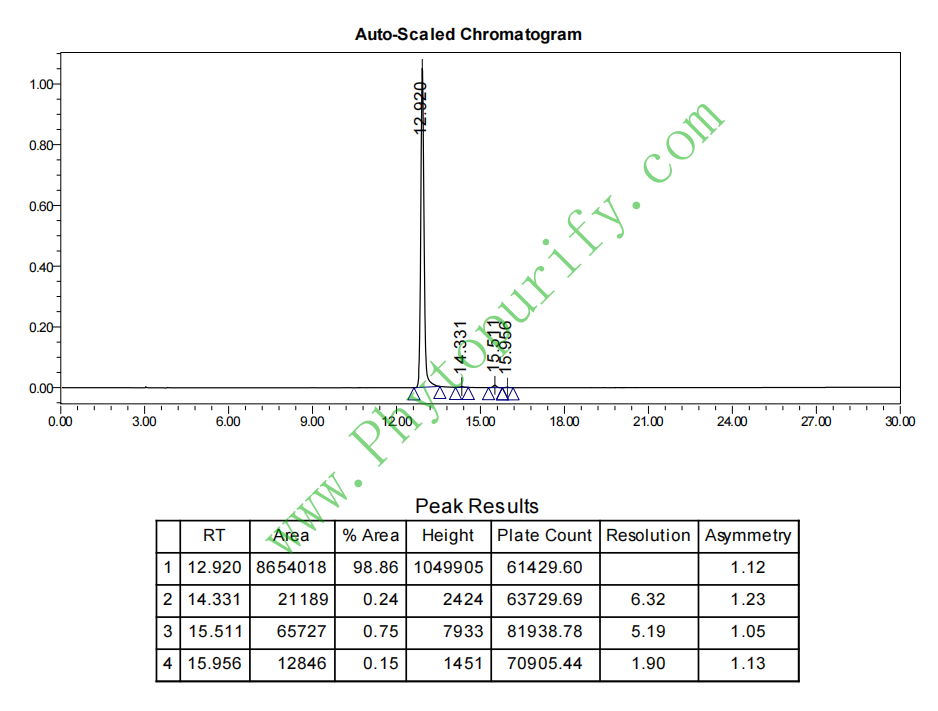
Purity: 95%~99%
Analysis Method: HPLC-DAD or/and HPLC-ELSD
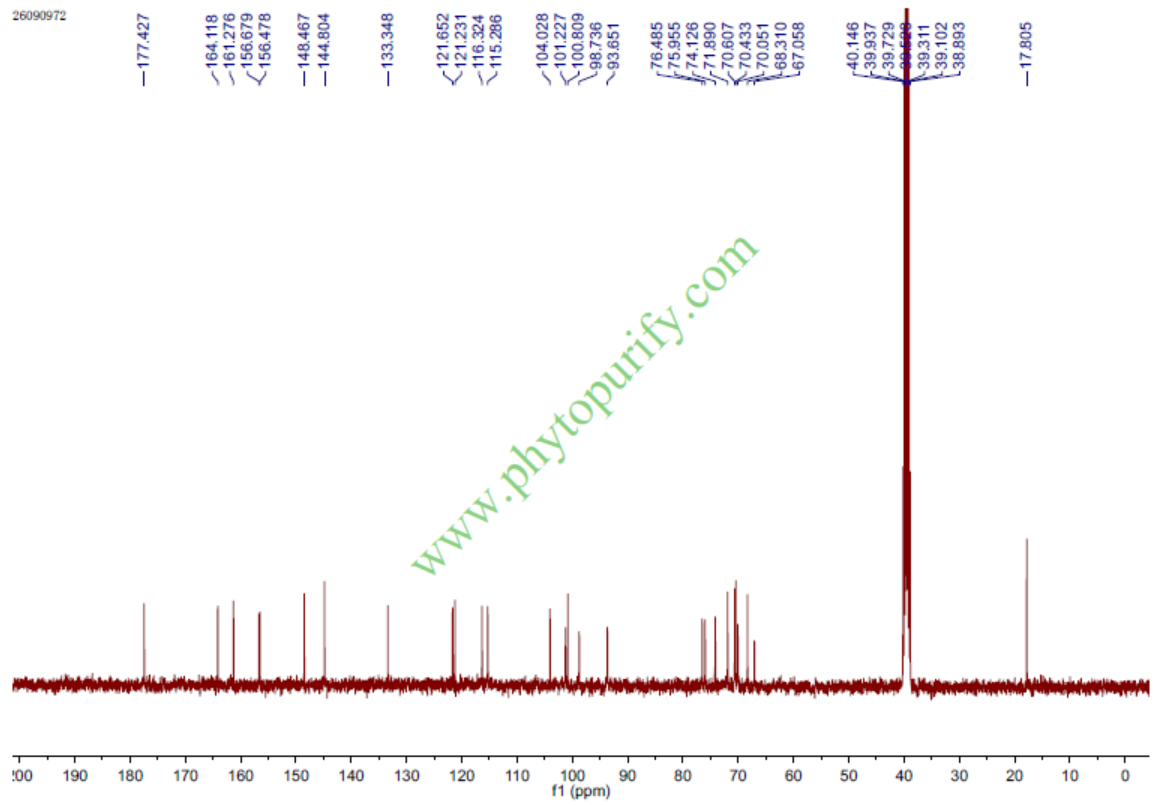
Identification Method: Mass, NMR
Packing: Brown vial or HDPE plastic bottle
Storage: Store in a well closed container, protected from air and light. Put into refrigerate or freeze for long term storage.
Whenever possible, you should prepare and use solutions on the same day. However, if you need to make up stock solutions in advance, we recommend that you store the solution as aliquots in tightly sealed vials at -20℃. Generally, these will be useable for up to two weeks.
The product could be supplied from milligrams to grams, up to kilograms
Inquire for bulk scale.
Descriptions:
Rutin is a natural antioxidant, all doses can diminish reactive oxygen species and high doses (10-100 microM) decrease malondialdehyde concentration; induce favorable changes in the antioxidant defense system of cultured HepG2 that prevent or delay conditions which favor cellular oxidative stress.[1]
Rutin, can dose-dependently inhibit Aβ42 fibrillization and attenuate Aβ42-induced cytotoxicity in SH-SY5Y neuroblastoma cells, and decrease the formation of reactive oxygen species (ROS), NO, glutathione disulfide (GSSG), and malondialdehyde (MDA), reduce inducible nitric oxide synthase (iNOS) activity, attenuate mitochondrial damage, increase the glutathione (GSH)/GSSG ratio, enhance the activities of super oxide dismutase (SOD), catalase (CAT) and glutathione peroxidase (GPx), and modulate the production of proinflammatory cytokines by decreasing TNF-α and IL-1β generation in microglia.[2]
Rutin(200 mg/kg) has gastroprotective effect through an anti-lipoperoxidant effect, and also by enhancement of the anti-oxidant enzymatic (GSH-Px) activity.[3]
Rutin (R) in combination with vitamin E (VE) synergistically inhibit oxidative damage, attenuates expression in -60 cells and that this effect is mediated by a decreased activity of through down-regulation of protein expression of (-R)/, while the of R+VE appears to play a minor role.[4]
Rutin attenuates ischemic neural apoptosis by reducing the expression of p53, preventing morphological changes and increasing endogenous antioxidant enzymatic activities, thus, rutin treatment may represent a novel approach in lowering the risk or improving the function of ischemia–reperfusion brain injury-related disorders.[5]
References:
[1] Alía M, Mateos R, Ramos S, et al. Eur J Nutr , 2006, 45(1):19-28.
[2] Wang S W, Wang Y J, Su Y J, et al. Neurotoxicology, 2012, 33(3):482-90.
[3] Kreft I, Fabjan N, Yasumoto K. Food Chem, 2006, 98(3):508-512.
[4] Mondul A M, Rager H C, Kopp W, et al. J Nutr, 2011, 141(11):2030-4.
[5] Khan M M, Ahmad A, Ishrat T, et al. Brain Res, 2009, 9(1292):123-35.
[6] Athar M T. J Liq Chromatogr R T, 2011, 34(6):446-455.
HPLC of Rutin
NMR of Rutin
Storage conditions:Short-term storage at 2~8℃, long-term storage at -20 ~ -80℃
269.4300
-.3105
-.4460
3.2627
.4362
.1864
Low
75.0498
4.7828
Yes
No
Yes
No
Yes
No
0.6
Yes
No
Yes
Yes
In the vast treasure trove of natural products, flavonoids have always been an important source for drug research and functional food development due to their wide biological activity and low toxicity. Rutin, also known as rutoside, as one of the most representative members, has attracted much attention since its discovery in 1842 due to its wide range of plant sources and diverse pharmacological effects. Its CAS number is 153-18-4, and it is a flavonoid glycoside composed of Quercetin and Rutinose. Rutin is not only found in traditional medicinal plants such as locust, buckwheat, and ginkgo, but also commonly found in daily fruits and vegetables such as asparagus and citrus. It is an important polyphenolic component in human diet. Modern pharmacological research constantly reveals that rutin has excellent multiple biological activities such as antioxidant, anti-inflammatory, neuroprotective, organ protective (such as heart, liver, kidney), and potential metabolic regulation. Of particular note is that rutin can cross the blood-brain barrier and exhibit unique effects such as inhibiting CBR1 (carbonyl reductase 1), which provides the possibility for its application in central nervous system diseases and tumors. This article aims to systematically review the chemical properties, plant sources, pharmacological activities, molecular mechanisms of action, pharmacological evaluation, and clinical application prospects of rutin, in order to provide comprehensive scientific references for the deep development and transformation research of this natural product.
The chemical name of rutin is Quercetin-3-O-Rutinoside, with a molecular formula of C27H30O16 and a molecular weight of 610.5210. The core of its structure is the flavonoid mother nucleus (2-phenylchromenone), which has two hydroxyl groups at positions 5 and 7 of the A ring and ortho dihydroxy groups at positions 3 'and 4' of the B ring. These are the key pharmacophores that exert strong antioxidant activity. Unlike many free flavonoid glycosides, rutin is linked to a disaccharide called rutin at the 3rd oxygen atom of the C ring (formed by the α -1,6 glycosidic bond between rhamnose and glucose). This glycosylation structure significantly affects its physicochemical properties.
From the perspective of pharmacological parameters, the theoretical lipid water partition coefficient (LogP) of rutin is -0.3105, indicating its strong hydrophilicity. Its topological polar surface area (TPSA) is as high as 269.4300 Å ², mainly attributed to the large number of hydroxyl and glycosyl oxygen atoms in the molecule. These data are consistent with the measured water solubility (about 3.26 mg/mL), indicating that rutin has a certain solubility in water, but not extremely high. The high polarity and molecular weight also pose challenges for its transmembrane absorption, and oral bioavailability is usually low. In the preliminary safety screening, rutin showed no significant inhibitory effect on hERG potassium channels (hERG inhibition: No), indicating a low risk of cardiac toxicity. The Ames test result was 0.6, indicating no significant mutagenicity under the testing conditions, providing some support for its long-term safety. However, the parameter of "blood-brain barrier permeability: low" suggests that although research has shown that it can enter brain tissue, its efficiency may be limited, which poses a challenge to its direct neuroprotective effect and is also a difficulty that needs to be overcome in formulation improvement.
Rutin is widely distributed in nature and is a secondary metabolite of many plants. Its abundant plant sources have laid the foundation for its large-scale acquisition.
1. Main plant sources:
* Leguminous plants Sophora japonica L. flower buds are the traditional and most abundant commercial source, with a rutin content of over 20%.
* Polygonaceae plants The seeds and leaves of buckwheat (Fagopyrum esculentum Moench), especially tartary buckwheat, are rich in rutin.
* Rutaceae plants Ruta graveolens L., etc.
* Other medicinal plants Ginkgo biloba leaves, tobacco leaves, and Forsythia suspensa.
* Daily fruits and vegetables Asparagus, citrus fruits (skin and inner lining), apples, tea, etc.
A large number of in vitro and in vivo studies have confirmed that rutin has broad and significant pharmacological activities, covering multiple organ systems and disease fields.
Antioxidant damage This is the most fundamental and core activity of rutin. The hydroxyl group structure in its molecule can effectively scavenge free radicals (such as superoxide anions and hydroxyl radicals), inhibit lipid peroxidation, and protect biological membranes and DNA from oxidative damage. Research has shown that rutin can significantly improve the survival rate of various oxidative stress model cells or tissues.
anti-inflammatory effect Rutin exerts anti-inflammatory effects through multiple pathways. It can inhibit the expression of pro-inflammatory mediators such as tumor necrosis factor - α (TNF - α), interleukin-6 (IL-6), nitric oxide (NO), cyclooxygenase-2 (COX-2), and inducible nitric oxide synthase (iNOS), thereby reducing acute and chronic inflammatory responses.
Neuroprotective effect Rutin can cross the blood-brain barrier and has a protective effect on various models of neurological damage. Research has shown that it can improve cognitive function in Alzheimer's disease model animals, and its mechanism is closely related to inhibiting the toxicity of beta amyloid (A β) oligomers, reducing tau protein hyperphosphorylation, alleviating neuroinflammation, and oxidative stress. In Parkinson's disease and cerebral ischemia-reperfusion injury models, rutin has also shown the potential to protect neurons and reduce apoptosis.
Organ protection function:
Metabolic regulation effect Rutin exhibits certain hypoglycemic and lipid-lowering activities. It can inhibit the activity of intestinal alpha glucosidase and delay carbohydrate absorption; Improve insulin sensitivity; Regulate the activity of enzymes related to lipid metabolism, reduce serum total cholesterol, triglycerides, and low-density lipoprotein levels.
Other activities The study also suggests that rutin has anti-tumor (inducing apoptosis, inhibiting proliferation and metastasis), antiviral, antibacterial, anti allergic and other activities. As a CBR1 inhibitor, it may affect the metabolism of certain chemotherapy drugs (such as doxorubicin) and has the potential to serve as a chemotherapy sensitizer.
The multiple pharmacological activities of rutin stem from its interactions with multiple cellular signaling pathways and molecular targets, with its core mechanisms revolving around antioxidant and anti-inflammatory properties.
Activate Nrf2/ARE antioxidant defense pathway This is the most critical mechanism by which rutin combats oxidative damage. Under oxidative stress, rutin can promote the dissociation of nuclear factor E2 related factor 2 (Nrf2, encoded by NFE2L2 gene) from cytoplasmic chaperone Keap1 and translocate to the nucleus. In the nucleus, Nrf2 binds to antioxidant response elements (ARE) and initiates the transcriptional expression of a series of downstream phase II detoxifying enzymes and antioxidant proteins, including:
Regulating the inflammatory signaling pathway:
Anti apoptotic and mitochondrial protective mechanisms Rutin can upregulate the expression of Bcl-2 (anti apoptotic protein) and downregulate the expression of Bax (pro apoptotic protein), inhibit the activation of caspase-3, and thus suppress cell apoptosis. At the same time, it can stabilize mitochondrial membrane potential, reduce the opening of mitochondrial membrane permeability transition pores (mPTP), inhibit the release of cytochrome C, and maintain mitochondrial function, which is particularly prominent in vancomycin nephrotoxicity protection.
Inhibit the toxicity of A β oligomers In Alzheimer's disease, rutin may interact with A β peptide to inhibit its aggregation and formation of toxic oligomers and fibers, and alleviate the damage of formed oligomers to neuronal synaptic function and cell membrane.
Enzyme inhibition Rutin is an effective inhibitor of CBR1, which may affect the metabolism of endogenous and exogenous carbonyl substrates. It can also inhibit the activities of α - glucosidase, aldose reductase, xanthine oxidase and other enzymes, which are related to the activities of reducing blood sugar, preventing and treating complications of diabetes.
Although rutin has a wide range of pharmacological activities, its pharmacological properties, especially oral bioavailability, are the main bottleneck restricting its conversion into drugs.
absorb After oral administration, the complete glycoside form of rutin is poorly absorbed in the upper gastrointestinal tract. The main absorption sites are in the lower part of the small intestine and the large intestine, which rely on the secretion of β - glucosidase and α - rhamnosidase by the gut microbiota to hydrolyze it into quercetin and glycosides. Quercetin has higher lipid solubility and is more easily absorbed. Therefore, rutin belongs to prodrugs, and many of its systemic activities may be attributed to its metabolite quercetin.
distribution After absorption, quercetin rapidly binds with glucuronic acid, sulfuric acid, and other metabolites in the body, forming various metabolites. Although the blood-brain barrier permeability parameter shows "low", animal experiments have confirmed that rutin and its metabolites can still enter brain tissue at lower concentrations and exert neuroprotective effects. It can also be distributed to target organs such as the liver, kidneys, and heart.
Metabolism Rutin undergoes extensive phase II metabolism in the body, mainly through glucuronidation and sulfation in the liver and intestines. CBR1 is also one of its potential metabolic targets.
excretion Metabolites are mainly excreted through urine and bile.
Challenges and improvement strategies for drug development:
Rutin's transition from a dietary ingredient to a clinical drug or high-end functional ingredient has broad prospects, but the path needs to be clearly planned.
Current Application:
Future research and development directions and prospects:
Rutin, a classic flavonoid glycoside found in many plants, has been studied for nearly two centuries and its veil has gradually been lifted. From the initial simple understanding of vascular protection to today's profound understanding of its multidimensional and multi-level pharmacological effects in antioxidant, anti-inflammatory, neuroprotective, organ protective, and other fields, rutin has demonstrated the enormous potential of natural products as lead compounds. The cellular protective effect exerted by activating core pathways such as Nrf2 constitutes the molecular basis of its pleiotropy. However, lower bioavailability remains the main obstacle on its path from "active molecules" to "highly effective drugs". Future research should focus on utilizing modern pharmaceutical, medicinal chemistry, and molecular biology methods to overcome its drug weakness, and expand its application in major chronic diseases, degenerative diseases, and adjuvant therapies based on precise molecular targets. The research process of rutin inspires us that deep exploration and modernization of natural products are still valuable sources for discovering new drugs and developing new treatment strategies. With the continuous advancement of science and technology, rutin is expected to transform from a well-known health ingredient into a modern drug with clear clinical value, better serving human health.
