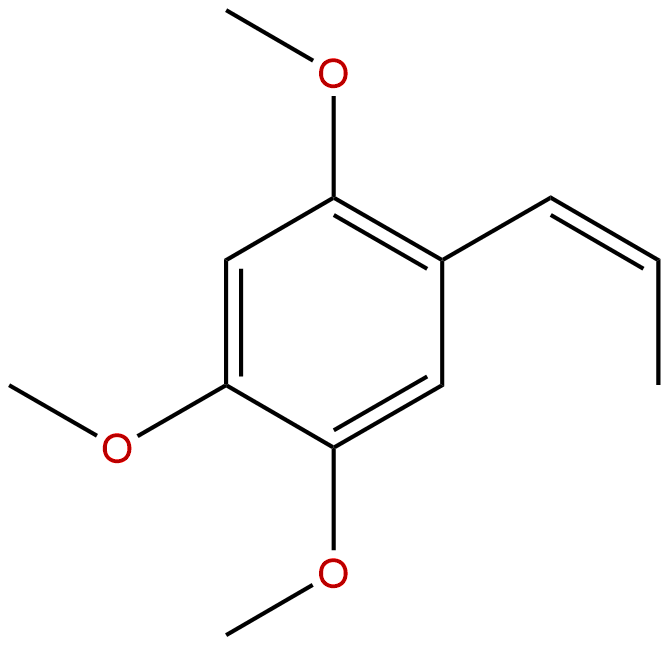


Product name: Beta-Asarone
Synonym name: Cis-Asarone
Catalogue No.: BP1852
Cas No.: 5273-86-9
Formula: C12H16O3
Mol Weight: 208.257
Botanical Source:
Physical Description: Oil
Type of Compound: Phenylpropanoids
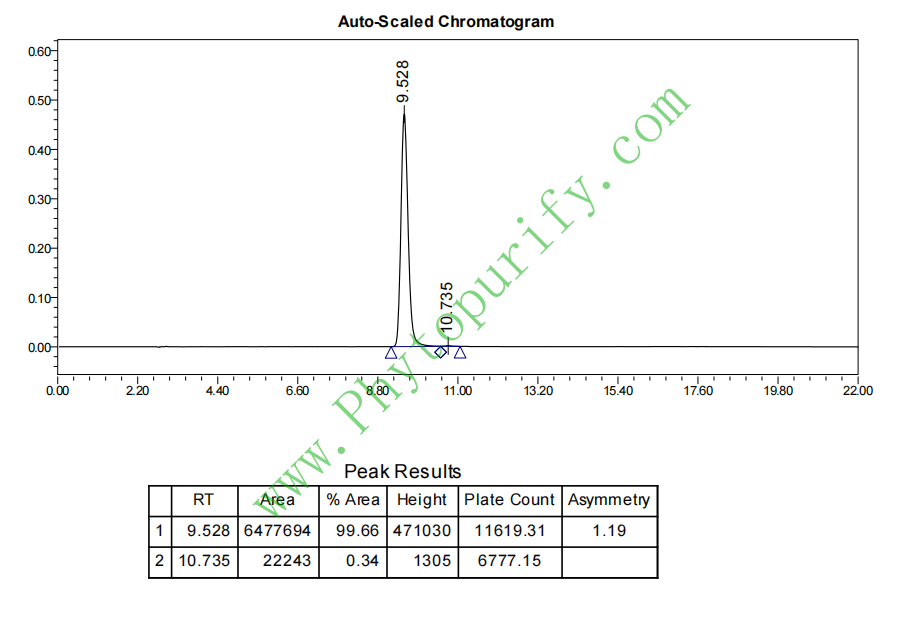
Purity: 95%~99%
Analysis Method: HPLC-DAD or/and HPLC-ELSD
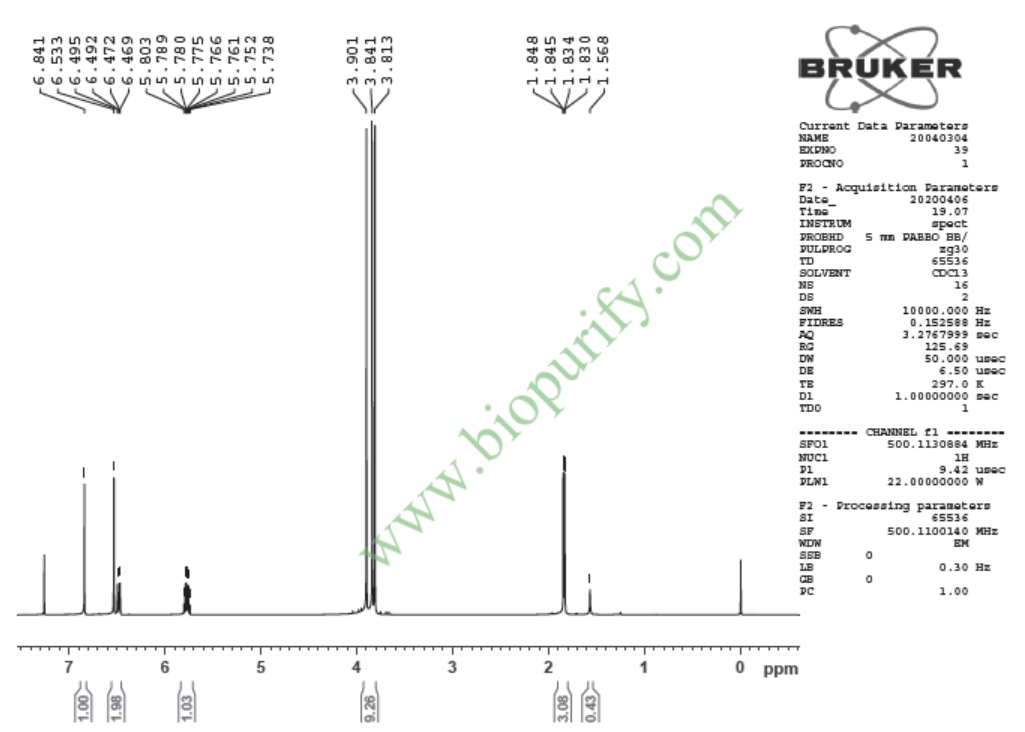
Identification Method: Mass, NMR
Packing: Brown vial or HDPE plastic bottle
The product could be supplied from milligrams to grams. Inquire for bulk scale.
We provide solution to improve the water-solubility of compounds, thereby facilitating the variety of activity tests and clinic uses.
For Reference Standard and R&D, Not for Human Use Directly.
Description:
beta-Asarone has neuroprotection, anti-tumor, anthelmintic, anti-inflammary, and anticoagulant effects, it can afford a beneficial inhibition on both mRNA and protein expression of Bad, Bax, and cleavage of caspases 9 in rat hippocampus following intrahippocampal injections of Abeta (1-42).beta-Asarone prevents autophagy and synaptic loss by reducing ROCK expression in SAMP8 mice. beta Asarone can cause liver and cardiac damages, it also has reproductive toxicity.
References:
Nat Prod Commun. 2009 Feb;4(2):275-8.
Compositional variations and anthelmentic activity of essential oils from rhizomes of different wild populations of Acorus calamus L. and its major component, beta-Asarone.
Hydro-distilled essential oils from Acorus calamus rhizomes collected from six different geographical zones in the northwest Himalayan region of Uttarakhand have been analyzed by GC and GC/MS.
METHODS AND RESULTS:
All the oils differed in their qualitative and quantitative make up, although beta-Asarone was the major constituent of all of them. The essential oils and the isolated beta-Asarone were screened for anthelmintic activity using contractility of Ascaridia galli. beta-Asarone, in particular, showed potent activity with IC50 values of 75.4 +/- 61.8 ng/mL.
Food Chem Toxicol. 2014 Oct;72:265-72.
β-Asarone (cis-2,4,5-trimethoxy-1-allyl phenyl), attenuates pro-inflammatory mediators by inhibiting NF-κB signaling and the JNK pathway in LPS activated BV-2 microglia cells.
Acorus species contains diverse pharmacologically active phytochemicals including α-asarone, beta-Asarone, and eugenol.
METHODS AND RESULTS:
We determined if beta-Asarone isolated from Acorus gramineus (AG) Solander would be efficacious in protecting BV-2 microglia cells from lipopolysaccharide (LPS)-induced stress signaling. BV-2 microglial cells were pretreated with an AG ethanol extract (1, 10, and 100 μg/mL) or beta-Asarone (10, 50, and 100 μM) prior to exposure to LPS (100 ng/mL). AG and beta-Asarone inhibited LPS-induced production of nitric oxide in a dose-dependent manner. The mRNA and protein levels of inducible nitric oxide synthase and cyclooxygenase-2 also decreased dose dependently following AG and beta-Asarone treatments. Immunostaining and immunoblot studies revealed that beta-Asarone also suppressed nuclear factor (NF)-κB activation by blocking IkB degradation. Further mechanistic studies revealed that beta-Asarone acted through the JNK/MAPK pathway.
CONCLUSIONS:
Taken together, our findings demonstrate that beta-Asarone exhibits anti-inflammatory effects by suppressing the production of pro-inflammatory mediators through NF-κB signaling and the JNK pathways in activated microglial cells and might be developed as a promising candidate to treat various neuroinflammatory diseases.
Phytomedicine. 2013 Apr 15;20(6):512-20.
β-Asarone induces senescence in colorectal cancer cells by inducing lamin B1 expression.
Colorectal cancer is a leading cause of cancer mortality with a complex carcinogenesis that includes reduced cellular senescence. Lamin proteins are decreased in senescing cells, and frequently decreased in malignancies.
METHODS AND RESULTS:
This study identified a new drug candidate for colorectal cancer that appears to target cell senescence via a lamin protein. beta-Asarone (1-propenyl-2,4,5-methoxybenzol) is a compound from the traditional medical herb Acorus calamus Linn. This study tested the in vitro and in vivo effects of beta-Asarone on colorectal cancer cells by testing cell viability using human colorectal cell lines HT29 and SW480 in MTT assays; tumorigenesis using xenografts in nude mice and a mouse model of colorectal cancer; cell senescence using senescence-associated β-galactosidase activity; and expression of cancer and senescence-related proteins, specifically lamins, Oct-1, p53, p21, and p15, by Western blot. beta-Asarone appeared to increase expression of lamin B1, p53, p21, but not lamin A/C. beta-Asarone regulates p15 expression by regulation of Oct-1 binding.
CONCLUSIONS:
Collectively, the results suggested that beta-Asarone inhibits colon cancer formation in vivo and in vitro by inducing senescence. Since beta-Asarone induced lamin B1 expression, a model is proposed in which beta-Asarone inhibits colorectal cancer by inducing senescence through lamin B1.
HPLC of Beta-Asarone
HNMR of Beta-Asarone
Storage conditions:Short-term storage at 2~8℃, long-term storage at -20 ~ -80℃
27.6900
3.0124
3.0129
.0542
9.1313
27.5641
High
83.5470
1.9589
Yes
Yes
No
No
No
No
0.6
No
Yes
Yes
Yes
Beta Asarone (CAS number: 5273-86-9) is a natural phenylpropanoid compound with important biological activity, with a molecular formula of C12H16O3 and a molecular weight of 208.2570 g/mol. As one of the main active ingredients of traditional Chinese medicine Acorus tatarinowii, it has long been used in East Asian traditional medicine to treat neurological related diseases. Modern pharmacological research has revealed that Beta Asarone is an orally effective multifunctional active molecule that can penetrate the blood-brain barrier and exhibit significant efficacy Neuroprotection, anti-inflammatory, anti-tumor, anticoagulant, and deworming Multiple pharmacological effects. Especially in the field of neurological diseases, it has shown potential therapeutic value for neurodegenerative diseases such as Alzheimer's disease and Parkinson's disease by regulating neuronal apoptosis, autophagy processes, and alpha synuclein expression. Meanwhile, its regulatory effect on ion channels such as GABAA receptors, sodium ion channels, and potassium ion channels has attracted much attention in epilepsy treatment research. However, this compound also has certain limitations Hepatotoxicity, cardiotoxicity, and reproductive toxicity This poses challenges for its clinical application. This article will provide a systematic and professional interpretation of Beta Asarone from the aspects of chemical structure, plant origin, pharmacological mechanism, pharmacological evaluation, and research prospects.
The chemical structure of Beta Asarone belongs to the class of allyl benzene compounds, specifically 1,2,4-trimethoxy-5-propenylbenzene. Its SMILES is represented asC/C=C\c1cc(OC)c(OC)cc1OCClearly demonstrating the molecules Acrylic side chain and Three methoxy groups on the benzene ring The replacement mode. This structure endows molecules with specific spatial configurations and electron distributions, which are the basis for their interactions with biological targets.
According to the analysis of drug parameters, its molecular weight (MW) is 208.2570, which meets the requirement of "MW<500" in Lipinski's five rules. The calculated lipid water partition coefficient (LogP) is 3.0124, indicating that the compound has Moderate lipophilicity This is beneficial for it to penetrate cell membranes and the blood-brain barrier. In fact, its blood-brain barrier penetrability (BBB-permeability) is labeled as "high", which is directly related to its in vivo effectiveness in neuroprotection. The topologically polar surface area (TPSA) is 27.69 Å ², which is a relatively small value, further supporting its good membrane permeability.
The water solubility parameter (water_stolubility) is 0.0542, indicating poor water solubility, which is a common feature of many lipophilic natural products. In the development of formulations, it may be necessary to improve their bioavailability through techniques such as salt formation, cyclodextrin inclusion, or nanoformulation. The permeability of Caco-2 cells is 27.5641, which is a relatively high value, indicating that it has Good intestinal absorption potential The plasma protein binding rate (PPB) is 83.547%, which is a relatively high level and may affect its free blood drug concentration and efficacy rate.
Beta Asarone mainly comes from Acorus tatarinowii, a plant of the Acorus genus in the Araceae family Dry roots and stems. Acorus tatarinowii has a long history of medicinal use in China, first recorded in the "Shennong Bencao Jing" and classified as a top grade. It has a warm nature, a spicy and bitter taste, and is suitable for the heart and stomach meridians. Its traditional functions mainly include Open the orifices and expel phlegm, awaken the mind and enhance intelligence, dissolve dampness and stimulate appetite In clinical practice of traditional Chinese medicine, it is commonly used to treat symptoms such as dizziness, epilepsy, forgetfulness, insomnia, tinnitus, and hearing loss caused by phlegm blocking and clearing the orifices, as well as symptoms such as abdominal distension and diarrhea caused by dampness obstructing the middle burner. In the famous calming and puzzle solving formula "Kong Sheng Zhen Zhong Dan" and the awakening formula "Chang Pu Yu Jin Tang", Shi Chang Pu is both a royal medicine or an important imperial medicine.
Modern plant chemistry research has confirmed that the volatile oil of Acorus tatarinowii is the main substance basis for its pharmacological activity, and Beta Asarone and Alpha Asarone together constitute the core components of the volatile oil. The proportion of the two is significantly affected by the place of origin, harvesting season, and processing method. It is worth noting that Acorus calamus in Europe also contains asarone compounds, but many countries have strict restrictions on its use due to the fact that the isomer of β - asarone, α - asarone, is considered to have stronger mutagenicity and potential carcinogenic risks. In contrast, the content of β - Asarone in Chinese Acorus tatarinowii is relatively high, and its safety is relatively more concerned, which is also the main source of current research.
Beta Asarone has a wide range of pharmacological activities, among which the most prominent is its neuroprotection and Antiepileptic The effects are closely related to their precise regulation of specific ion channels and intracellular signaling pathways.
4.1 Mechanism of neuroprotective effect
Research has shown that Beta Asarone can effectively protect nerve cells from apoptosis and autophagic death. In Alzheimer's disease models (such as rats injected with A β 1-42 into the brain), it can significantly inhibit the mRNA and protein expression of pro apoptotic proteins Bad and Bax in the hippocampus, and reduce the cleavage activation of caspase-9, thereby blocking the mitochondrial mediated apoptotic pathway. In the aging accelerated model SAMP8 mice, it prevents autophagy and synaptic loss by reducing the expression of ROCK (Rho associated coiled coil containing protein kinase), maintaining neuronal structure and functional integrity. In addition, it can also inhibit the abnormal aggregation of alpha synuclein, which has potential intervention value for the pathological process of Parkinson's disease.
4.2 Antiepileptic effects and target analysis
The target information provided by the database clearly points to the molecular basis of Beta Asarone's antiepileptic effect. The five key targets of its action are ion channels closely related to the regulation of neuronal excitability:
- GABRA1 and GABRB2 They are the alpha 1 and beta 2 subunits of GABAA receptors, respectively. GABAA receptor is the most important inhibitory neurotransmitter receptor in the brain, and its activation leads to chloride ion influx, causing neuronal hyperpolarization and inhibiting action potential generation. Beta Asarone may serve as Positive allosteric regulator Enhance the binding of GABA to receptors or prolong the opening time of channels, thereby enhancing central inhibitory function and combating neuronal abnormal synchronous discharge during epileptic seizures.
- SCN1A and SCN2A Encode the alpha subunits of voltage-gated sodium ion channels Nav1.1 and Nav1.2 respectively. Sodium channels play a central role in the initiation and propagation of action potentials. Certain functional acquired SCN1A mutations lead to severe epilepsy such as Dravet syndrome. Beta Asarone may pass through Moderate blockade These sodium channels reduce the high-frequency and sustained discharge of neurons, playing a role in stabilizing membrane potential, which is similar to the mechanism of action of classical antiepileptic drugs such as phenytoin and carbamazepine.
- KCNQ2 Encoding voltage-gated potassium ion channel Kv7.2. This channel generates neuronal M currents, which have a critical inhibitory effect on regulating neuronal excitability and explosive discharges. Enhancing the function of KCNQ2 channel is the mechanism of action of the antiepileptic drug ritigabine. Beta Asarone may activate or positively regulate KCNQ2 channels, promote potassium ion efflux, stabilize resting membrane potential, and inhibit epileptic like activity.
By synergistically acting on the inhibitory (GABA receptors, potassium channels) and excitatory (sodium channels) systems mentioned above, Beta Asarone reconstructed the excitatory inhibitory balance of neural networks at the multi-target level, providing a reasonable scientific explanation for its treatment of complex epilepsy.
4.3 Other pharmacological activities
In addition to its neurological effects, Beta Asarone also exhibits anti-inflammatory (inhibiting inflammatory pathways such as NF - κ B), anti-tumor (inducing tumor cell apoptosis, inhibiting proliferation), anticoagulant, and anthelmintic activities. Its cardioprotective effect has also been reported, which may be related to antioxidant and anti apoptotic mechanisms.
4.4 Toxic effects
It must be acknowledged that Beta Asarone has clear toxicity. Its liver toxicity (manifested as elevated serum ALT, AST, GGT) may be related to oxidative stress or direct cell damage caused by metabolites. Cardiac toxicity, reproductive toxicity, and potential mutagenicity (Ames test value of 0.6, indicating caution) limit its high-dose or long-term use. These toxicities are the key obstacles that must be overcome to transition from natural products to safe drugs.
We can systematically evaluate the potential of Beta Asarone as a candidate drug based on the pharmacological parameters provided by the comprehensive database.
5.1 Lipinski Five Rule Compliance Analysis
The Lipinski Five Rules are empirical rules for evaluating the oral activity of small molecules. The situation of Beta Asarone is as follows:
1. Molecular weight (MW)208.2570 (<500), compliant.
2. Lipid water partition coefficient (LogP)3.0124 (<5), compliant.
3. Number of hydrogen bond donors (HBDs)There is no - OH or - NH in the molecular structure, and HBD is 0 (<5), which is consistent.
4. Number of hydrogen bond acceptors (HBA)3 oxygen atoms in 3 methoxy groups, a total of 3 (<10), comply.
5. Number of rotatable keys Acrylic and methoxy linking bonds, approximately 4-5 (<10), comply.
Therefore, Beta Asarone fully complies with Lipinski's five rules, indicating its good performance Oral absorption potential。
5.2 Deep interpretation of ADMET properties
- Absorption The high Caco-2 permeability (27.5641) and effective permeability (Peff: 9.1313) strongly suggest its excellent passive diffusion absorption ability in the small intestine.
- Distribution The high blood-brain barrier penetration is its core advantage as a neuroprotective agent, allowing drugs to effectively enter the central nervous system targets. A high plasma protein binding rate (83.55%) may prolong its half-life, but it may also affect the onset rate and free drug concentration.
- Metabolism As a phenylpropanoid compound, its acrylic side chain may be the main site of metabolism (such as epoxidation and hydroxylation), and the activity and toxicity of its metabolites need to be considered.
- Excretion The relevant parameters were not provided, but based on their LogP values, it is speculated that they may be mainly metabolized by the liver and excreted by bile or kidneys.
- Toxicity This is the biggest bottleneck in the commercialization of Beta Asarone. Although the Ames test value (0.6) is not clearly positive, it suggests the need for further genetic toxicity assessment. Clear liver toxicity biomarkers (Ser_LT/AST/GGT as "Yes") warn of potential liver injury risks. The absence of hERG inhibition (no) is a positive signal that reduces the risk of causing QT interval prolongation and apical torsion ventricular tachycardia in the heart. Skin sensitization (Skid_Sens: Yes) suggests caution in formulation and topical development. The absence of chromosomal aberrations and phototoxicity is an advantage in terms of safety.
5.3 Comprehensive evaluation
Beta Asarone in Pharmacodynamics (PK) Excellent performance in various aspects: small molecule, suitable lipid solubility, high absorption, high BBB penetration, fully possessing the physical and chemical basis to become an oral central nervous system drug. However, it Toxicology of Drugs (Tox) The hidden dangers, especially liver toxicity and potential genetic toxicity, constitute the main obstacles to its clinical translation. Future research must focus on: 1) elucidating the specific molecular mechanisms underlying toxicity; 2) Dissecting its efficacy and toxicity through structural modifications, such as synthesizing derivatives or prodrugs with lower toxicity and higher activity; 3) Explore safe drug delivery windows and treatment courses.
At present, research on Beta Asarone has progressed from early chemical composition identification and crude extract efficacy observation to Molecular target identification, signal pathway analysis, and toxicity mechanism exploration At the level of. It has accumulated rich preclinical research data in areas such as anti epilepsy, anti Alzheimer's disease, and anti depression, demonstrating broad application prospects. Researchers are trying various strategies to address its toxicity issues: firstly, using it as a lead compound for systematic analysis Research on Structural Optimization and Structure Performance Relationship Intended to preserve neural activity while reducing toxicity; The second is to utilize New drug delivery system(such as liposomes, nanoparticles, targeted agents) to improve their targeting and reduce their distribution in non target organs such as the liver and heart; Thirdly, exploration Low dose combination therapy Combine it with other antiepileptic or neuroprotective drugs to achieve synergistic effects while reducing their respective dosages and toxic side effects.
In terms of application prospects, the most likely breakthrough direction for Beta Asarone is as Multi targeted antiepileptic Chinese medicine or Adjuvant therapy drugs for neurodegenerative diseases Standardized symbol components. With the advancement of modernization and internationalization of traditional Chinese medicine, it is crucial to clarify key active ingredients such as Beta Asarone and their mechanisms of action in order to improve the quality standards, clinical efficacy, and scientific connotation of Acorus tatarinowii and related compound preparations. In addition, it serves as a tool for studying the GABAergic system and ion channel functions Tool compound It also has significant value.
In summary, Beta Asarone is a highly representative "double-edged sword" natural product: it has excellent ability to penetrate the blood-brain barrier and multi-target neuroprotective pharmacological activity, bringing new hope for the treatment of refractory neurological diseases; But the accompanying toxic shadow also requires researchers to adopt a more rigorous and rational attitude, and transform and domesticate it through modern pharmaceutical methods, with the ultimate goal of transforming it from a potential "natural creation" into a safe, effective, and controllable "modern drug"This transformation path is full of challenges, but it is also the charm and value of natural product pharmaceutical research.
