Introduction/Overview
Asatone A (CAS number: 38451-63-7) is an active natural product isolated from the traditional Chinese medicine Asarum spp. It has received widespread attention in recent years due to its significant anti-inflammatory activity. As a traditional Chinese medicine, Asarum has always been used to treat diseases such as wind cold, cold, headache, nasal congestion, and rheumatic pain. The research on its active ingredients continues to deepen, and Asarone A, as an important monomer, exhibits unique biological activity and potential medicinal value. Modern pharmacological studies have shown that Asarone A exerts anti-inflammatory effects by regulating multiple inflammation related signaling pathways, especially the NF - κ B and MAPK pathways, involving the regulation of multiple inflammatory mediators and targets, providing theoretical and experimental basis for the development of new anti-inflammatory drugs.
This article provides a systematic review of the chemical structure and physicochemical properties, plant sources and extraction methods, pharmacological activity and mechanism of action of Asarone A. Combined with drug evaluation and pharmacokinetic analysis, it explores its clinical application prospects, aiming to provide comprehensive and in-depth reference materials for researchers in the field of natural product pharmacology.
Chemical structure and physicochemical properties
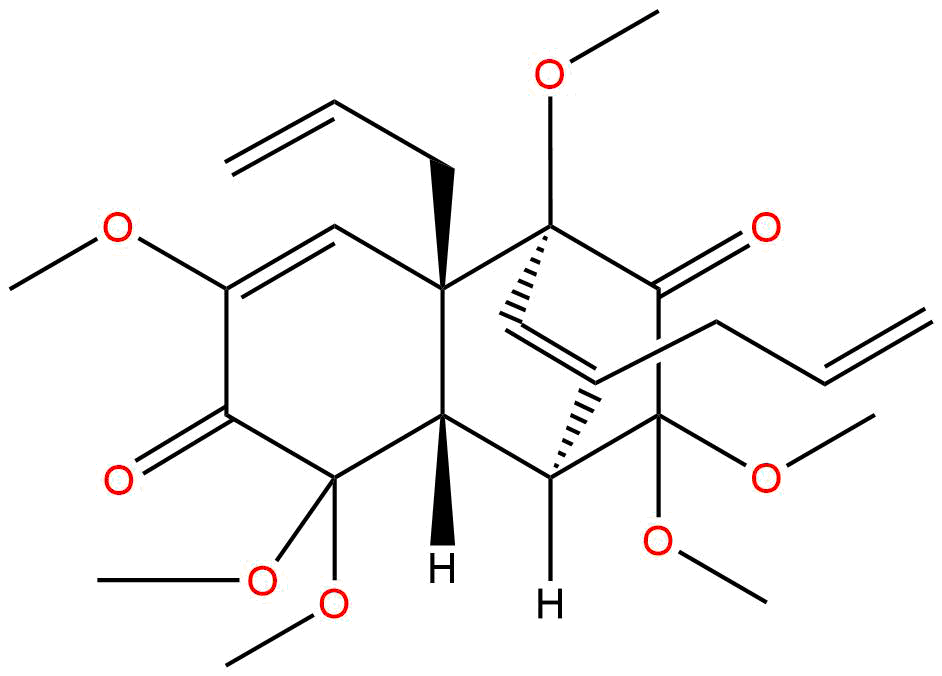
The molecular formula of Asarone A is C27H32O6, with a molecular weight of 448.5120. Its chemical structure belongs to sesquiterpenes, containing multiple cyclic structures and ketone groups, and has a complex three-dimensional conformation. The structure contains multiple hydroxyl and ketone groups, giving it a certain polarity, while also having hydrophobic groups, exhibiting moderate lipid solubility as a whole.
In terms of physical and chemical properties, the LogP value of Asarone A is 2.0079, indicating its good lipid solubility, which is beneficial for cell membrane penetration and in vivo distribution. The polar surface area (TPSA) is 89.52 Å ², indicating that its polarity is moderate and conducive to binding with biomolecules. Low water solubility (0.1499 mg/mL) suggests limited solubility in the aqueous phase, which may affect its oral absorption. The high permeability of the blood-brain barrier indicates that Asarone A has the potential to act on central nervous system related inflammatory diseases. The hERG channel inhibition experiment showed a negative result, indicating a low risk of cardiac toxicity. The Ames test score is 0.6, indicating a low risk of genotoxicity and meeting safety requirements.
In summary, the physicochemical properties of Asarone A are suitable as a candidate molecule for oral drug development, with good bioavailability potential and safety basis.
Plant sources and extraction methods
Asarone A is mainly extracted from plants of the Asarum genus, which is widely distributed in East Asia, especially in Chinese medicinal materials such as China, Japan, and South Korea. The main medicinal parts of Asarum are rhizomes, which contain abundant volatile oils, sesquiterpenes, and phenylpropanoids.
The common methods for extracting Asarone A include:
-
Solvent extraction method
Using dried roots and stems of Asarum as raw materials, reflux extraction is carried out using polar organic solvents such as ethanol or methanol. The extract is concentrated and then separated and purified. Ethanol extraction can effectively dissolve Asarone A and ensure the extraction rate.
-
Liquid liquid distribution and column chromatography separation
The extraction solution is separated and purified from impurities through liquid-liquid distribution, followed by separation and purification of Asarone A using techniques such as silica gel column chromatography and reverse phase high-performance liquid chromatography (RP-HPLC) to ensure its purity meets pharmacological research requirements.
-
Modern extraction techniques
Emerging technologies such as ultrasound assisted extraction and microwave-assisted extraction have been attempted to be applied to the extraction of Asarone A, significantly improving extraction efficiency and purity, reducing solvent usage, and having good industrial application prospects.
During the extraction process, attention should be paid to the stability of Asarone A to avoid component degradation caused by high temperature and strong light exposure. Purified Asarone A generally appears as yellow crystals or powder, with characteristic UV absorption peaks and mass spectrometry fragment features, making it easy for quality control.
Pharmacological activity research
The main pharmacological activity of Asarone A is focused on anti-inflammatory effects, and it also exhibits certain auxiliary activities such as antioxidant and analgesic effects. The following is the research progress on the anti-inflammatory activity of Asarone A:
-
anti-inflammatory effect
Both in vitro cell models and in vivo inflammation models have confirmed that Asarone A has significant anti-inflammatory effects. It reduces inflammatory response by inhibiting the expression of inflammatory mediators such as tumor necrosis factor alpha (TNF - α), interleukin-6 (IL-6), inducible nitric oxide synthase (iNOS/NOS2), and cyclooxygenase-2 (COX-2/PTGS2). Asarone A can also reduce the activity of inflammation related enzymes and minimize tissue damage caused by inflammation.
-
antioxidant activity
Asarone A has the ability to scavenge free radicals, reduce oxidative stress levels, and indirectly inhibit the activation of inflammatory signaling pathways. Its antioxidant effect helps alleviate tissue damage in chronic inflammatory conditions.
-
Analgesic effect
By regulating the TRPV1 and TRPA1 plasma channels, Asarone A can alleviate the pain response caused by inflammation and exhibit a certain analgesic effect.
-
immunomodulation
Asarone A has a regulatory effect on inflammation related signaling molecules such as STAT3 and CASP1, and participates in the regulation of inflammatory immune responses, which may help regulate immune balance.
-
safety assessment
Asarone A has no significant cytotoxicity at commonly used doses, and its safety is supported by negative hERG inhibition and low toxicity results in Ames test.
In summary, Asarone A, as a natural product with multi-target and multi mechanism anti-inflammatory activity, has good pharmacological activity and safety foundation.
Mechanism of action and molecular targets
The anti-inflammatory mechanism of Asarone A mainly involves the regulation of key inflammatory signaling pathways, including:
-
Regulation of NF - κ B signaling pathway
NF - κ B is a core transcription factor in inflammatory response, regulating the expression of multiple inflammatory factors. Asarone A activates NF - κ B, regulates the expression of downstream target genes, inhibits the excessive release of inflammatory mediators, and achieves anti-inflammatory effects. Research has shown that Asarone A can inhibit abnormal activation of the NFKB1 gene and reduce the expression of inflammatory factors such as TNF - α and IL-6.
-
Downregulation of MAPK pathway
The MAPK family includes ERK, JNK, and p38, which are important signaling pathways that regulate cellular responses to inflammatory stimuli. Asarone A downregulates the phosphorylation status of MAPK proteins (p-ERK, p-JNK, p-p38), inhibits inflammatory signaling, reduces the production of inflammatory factors, and alleviates inflammatory responses.
-
Regulation of inflammation related enzymes
Asarone A can inhibit the expression of inducible nitric oxide synthase (NOS2) and cyclooxygenase-2 (PTGS2), reduce the production of nitric oxide and prostaglandins, alleviate inflammation and related pain.
-
Ion channel regulation
Asarone A acts on TRPV1 and TRPA1 plasma channels, regulating neuroinflammation and pain signal transmission, exerting dual analgesic and anti-inflammatory effects.
-
Cell apoptosis and inflammation regulation
Asarone A regulates apoptosis related proteins such as CASP1, affecting the apoptosis process of inflammatory cells and promoting inflammation resolution.
-
Signal transduction molecule STAT3
Asarone A regulates the STAT3 signaling pathway, inhibits its excessive activation, and participates in negative feedback regulation of inflammatory responses.
In summary, Asarone A has constructed a complex anti-inflammatory network through multi-target and multi pathway synergistic effects, demonstrating its potential as a natural anti-inflammatory drug.
Evaluation of drug properties and pharmacokinetics
The pharmacological evaluation of Asarone A is based on its physicochemical properties, biological activity, and safety data:
-
Physicochemical properties
The moderate molecular weight (448.5 Da) and LogP value (2.0) comply with Lipinski's rule, which is beneficial for oral absorption. TPSA is 89.5 Å ², suitable for permeation through cell membranes. Low water solubility may affect the dissolution rate, but it can be improved through formulation technology.
-
Blood-brain barrier penetrability
Asarone A has high blood-brain barrier permeability, indicating its potential application value in central nervous system inflammatory diseases.
-
safety
HERG channels are not inhibited, reducing the risk of cardiac toxicity. Ames test has low toxicity, low risk of genotoxicity, and good safety.
-
pharmacokinetics
At present, there are few studies on the pharmacokinetics of Asarone A in vivo. Preliminary data indicate that it is well absorbed orally, widely distributed, and its metabolic pathway may involve the liver CYP450 enzyme system. Its excretion is mainly through bile and urine. Moderate half-life, suitable for daily administration.
-
Potential for formulation development
The low water solubility of Asarone A can be improved through modern pharmaceutical technologies such as nanoparticles and solid dispersions, enhancing its bioavailability and stability.
Overall, Asarone A has a good pharmacological basis and is suitable for further drug development and clinical research.
Clinical application prospects and prospects
As a natural anti-inflammatory active ingredient with a clear source and mechanism of action, Asarone A has broad clinical application potential
-
Treatment of inflammatory diseases
Asarone A regulates the inflammatory signaling pathway through multiple targets and is suitable as an adjuvant therapy for various chronic inflammatory diseases such as rheumatoid arthritis, inflammatory bowel disease, skin inflammation, and respiratory inflammation.
-
Inflammatory diseases of the central nervous system
Its high blood-brain barrier permeability supports potential applications in inflammation related to encephalitis and neurodegenerative diseases, and can be developed as a neuroprotective agent in the future.
-
Analgesic adjuvant drugs
The regulatory effect of Asarone A on TRPV1/TRPA1 channels demonstrates its application value in the management of inflammatory pain.
-
Potential for combination therapy
Asarone A can be used in combination with existing anti-inflammatory drugs to achieve synergistic effects, reduce monotherapy doses, and minimize side effects.
-
Safety and tolerability advantages
Low toxicity and good safety make it suitable for long-term use, especially for patients with chronic diseases.
Future research should focus on preclinical pharmacokinetic system studies, dosage form optimization, and clinical trial design of Asarone A, clarify its treatment window and indications, and promote its clinical translation.
Conclusion
As an important active ingredient in Asarum, Asarone A exhibits excellent pharmacological activity and medicinal properties due to its unique chemical structure and multi-target anti-inflammatory mechanism. It exerts significant anti-inflammatory effects by regulating key inflammatory signaling pathways such as NF - κ B and MAPK, inhibiting the release of inflammatory mediators. The physicochemical properties and safety data support its potential for development as a novel anti-inflammatory drug.
In the future, in-depth pharmacokinetic studies, mechanism analysis, and clinical validation of Asarone A will lay a solid foundation for its translational applications. With the advancement of natural product pharmacology and modern drug development technology, Asarone A is expected to become an effective drug for treating various inflammation related diseases, providing new treatment options for clinical practice.
In summary, Asarone A not only enriches the pharmacological connotation of Asarum, but also provides valuable resources and insights for the development of natural anti-inflammatory drugs, which deserves continuous attention and in-depth research in the field of natural product pharmacology.