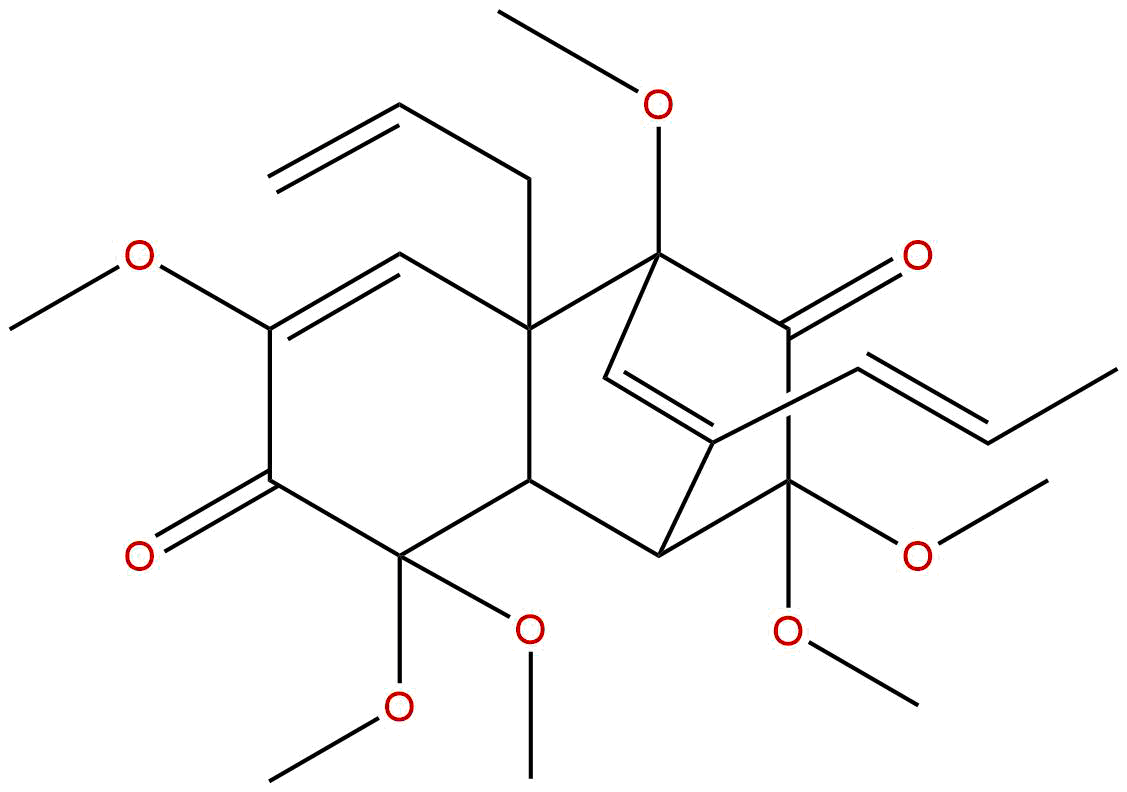


Product name: Isoasatone A
Synonym name:
Catalogue No.: BP4104
Cas No.: 67451-73-4
Formula: C24H32O8
Mol Weight: 448.512
Botanical Source: Acorus tatarinowii Schott
Physical Description:
Type of Compound:
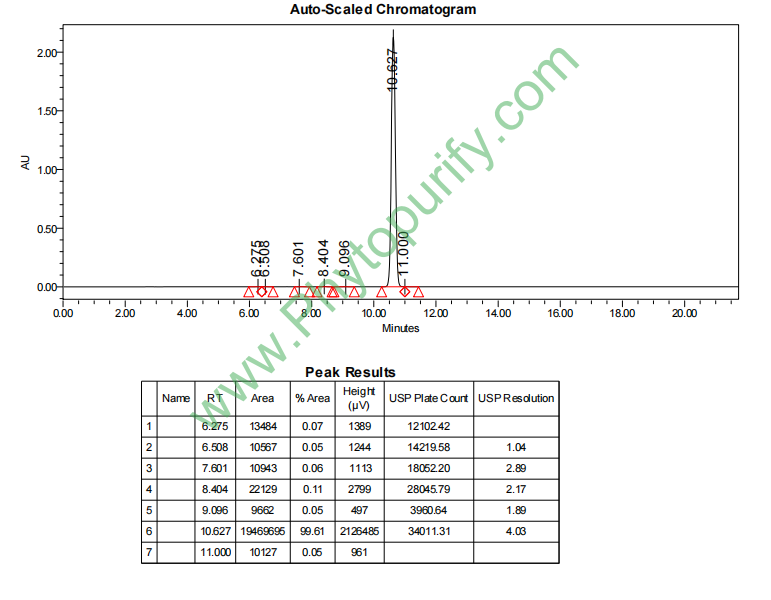
Purity: 95%~99%
Analysis Method: HPLC-DAD or/and HPLC-ELSD
Identification Method: Mass, NMR
Packing: Brown vial or HDPE plastic bottle
Storage: Store in a well closed container, protected from air and light. Put into refrigerate or freeze for long term storage.
Whenever possible, you should prepare and use solutions on the same day. However, if you need to make up stock solutions in advance, we recommend that you store the solution as aliquots in tightly sealed vials at -20℃. Generally, these will be useable for up to two weeks.
The product could be supplied from milligrams to grams
Inquire for bulk scale.
For Reference Standard and R&D, Not for Human Use Directly.
HPLC of Isoasatone A
Storage conditions:Short-term storage at 2~8℃, long-term storage at -20 ~ -80℃
Isoasatone A (CAS number: 67451-73-4) is a natural product with significant biological activity, originally isolated from the plant Heterotropa takaoi M. In recent years, with the deepening of pharmacological research on natural products, isoxarone A has received widespread attention due to its unique chemical structure and diverse biological activities, especially its potential applications in the fields of insect resistance and anti-inflammatory. This compound not only exhibits significant inhibitory effects on the agricultural pest Spodoptera litura, but also demonstrates anti-inflammatory potential by regulating multiple inflammation related signaling pathways. This article will provide a systematic review of the chemical structure, sources, pharmacological activity, mechanism of action, and pharmacological parameters of isoxarone A, aiming to provide theoretical support and research directions for its subsequent drug development and clinical applications.
The molecular formula of Isarone A is C27H36O6, with a molecular weight of 448.5120. Its structural features include a complex terpenoid skeleton, combined with multiple hydroxyl and ketone functional groups, endowing it with unique chemical properties. According to the analysis of physical and chemical properties, the LogP value of isoxarone A is 2.1031, indicating moderate lipid solubility, which is beneficial for its penetration into cell membranes. The polar surface area (TPSA) is 89.52 Å ², indicating a certain polarity limitation on its diffusion inside and outside the cell. The low water solubility (0.0929 mg/mL) reflects its limited solubility in the aqueous phase, but this may be advantageous for the in vivo distribution of lipid soluble drugs. The high permeability of the blood-brain barrier suggests that isoxarone A may have potential central nervous system effects. The hERG channel inhibition experiment showed a negative result, indicating a low risk of cardiac toxicity. The Ames mutagenicity test result was 0.0, indicating that the compound has no significant genetic toxicity risk.
Isoxarone A is mainly isolated from Heterotropa takaoi M. Heterotropa plants are widely distributed in East Asia and are traditionally used in traditional Chinese medicine and folk herbs. The extraction of Isarone A is usually carried out using organic solvent extraction method combined with column chromatography separation and purification technology. The specific steps include: first, using methanol or ethanol to reflux extract the dried plant material, and then separating and purifying it through silica gel column chromatography or high-performance liquid chromatography (HPLC). The identification of pure products relies on various analytical methods such as mass spectrometry (MS), nuclear magnetic resonance (NMR), and infrared spectroscopy (IR). In recent years, with the advancement of separation technology, the extraction efficiency and purity have been significantly improved, laying the foundation for in-depth research on isoxarone A.
Isoxarone A was initially studied for its significant inhibitory effect on the agricultural pest Spodoptera litura (tobacco armyworm). This compound interferes with the detoxification enzyme system in pests, especially cytochrome P450 monooxygenase and glutathione transferase, inhibiting their physiological metabolic processes, leading to hindered growth and development, and even death of pests. Related in vitro and in vivo experiments have shown that isoxarone A can significantly reduce the survival rate of S. litura at low concentrations, exhibiting good selectivity and environmental friendliness, and has the potential to be developed as a natural pesticide.
In addition to its insect resistance, research on the anti-inflammatory properties of isoxarone A is also gradually underway. It exhibits the ability to synergistically inhibit inflammatory responses by modulating multiple inflammation related molecular targets, such as IL-6, STAT3, CASP1, TRPV1, PTGS1, TNF, TRPA1, NOS2, PTGS2, and NFKB1. Both in vitro cell models and animal inflammation models have shown that isoxarone A can significantly reduce the expression of pro-inflammatory cytokines, inhibit the activation of inflammatory signaling pathways, and alleviate tissue inflammation damage. Especially in regulating the NF - κ B and STAT3 signaling pathways, isoxarone A exhibits strong inhibitory effects, indicating its potential application value in the treatment of chronic inflammation and related diseases.
The biological activity of isoxarone A is based on its regulatory effect on key enzymes and signaling molecules. In the mechanism of insect resistance, isoxarone A inhibits the activity of cytochrome P450 monooxygenase (CYP450), blocks the metabolism of exogenous compounds in pests, and leads to the accumulation of toxic substances. Meanwhile, the inhibition of glutathione transferase (GST) further weakened the detoxification ability of pests and enhanced the killing effect of isoxarone A.
In terms of anti-inflammatory mechanism, isoxarone A achieves its anti-inflammatory effect through multi-target regulation. Its main targets include:
In summary, isoxarone A exerts its biological effects of insect resistance and anti-inflammatory through multi-target and multi pathway synergistic effects, providing a solid mechanistic basis for its development as a new natural medicine.
The pharmacological parameters of isoxarone A indicate that it has good potential for drug development. The molecular weight of 448.5120 conforms to the Lipinski rule range, with a LogP of 2.1031, indicating moderate lipid solubility and favorable oral absorption and cell membrane penetration. The TPSA is 89.52 Å ², suitable for passing through cellular barriers. Although its water solubility is relatively low (0.0929 mg/mL), its bioavailability can be improved through pharmaceutical methods.
The high permeability of the blood-brain barrier suggests its potential use in the treatment of central nervous system related diseases, but potential central side effects also need to be considered. The hERG channel inhibition experiment was negative, reducing the risk of cardiac toxicity. The Ames test result is 0, indicating a low risk of genetic toxicity and good safety.
At present, the pharmacokinetic research of isoxarone A is still in its infancy. Preliminary in vivo experiments have shown that it has good stability and moderate half-life in plasma, but its specific absorption, distribution, metabolism, and excretion (ADME) characteristics still need further systematic research. In the future, through structural optimization and pharmaceutical improvement, it is expected to enhance its drug properties and clinical application potential.
Isoxarone A has shown broad application prospects due to its significant insect and anti-inflammatory activities. In the field of agriculture, isoxarone A, as a natural and low toxicity biopesticide candidate, is expected to replace traditional chemical pesticides, reduce environmental pollution and pest resistance issues, and promote the development of green agriculture.
In the field of medicine, the anti-inflammatory effect of isoxarone A lays the foundation for its development as a novel drug for treating inflammation related diseases. Its multi-target regulatory properties are suitable for complex inflammatory states, such as rheumatoid arthritis, inflammatory bowel disease, and neurological inflammation. In addition, the high permeability of the blood-brain barrier makes it potentially advantageous in the treatment of neuroinflammation and neurodegenerative diseases.
However, the clinical translation of Isarone A still faces many challenges, including drug stability, in vivo metabolic pathways, potential toxicity assessment, and formulation development. In the future, it is necessary to strengthen pharmacokinetic and toxicological research, combine modern drug design and delivery technologies, and optimize their drug properties. Meanwhile, based on the in-depth analysis of its mechanism of action, it is expected to guide structural modification, improve efficacy and safety.
Isoxarone A, as a natural product derived from Heterotropa takaoi M., has become an important subject of natural product pharmacology research due to its unique chemical structure and diverse biological activities. Its significant activity in insect resistance and anti-inflammatory fields, as well as good pharmacological parameters, demonstrate broad application prospects. In the future, through systematic pharmacological mechanism research, pharmacokinetic analysis, and structural optimization, isoxarone A is expected to become an important candidate molecule for new natural medicines and green pesticides. Continuous basic and applied research will provide solid support for its clinical translation and industrialization, promoting its widespread application in the fields of medicine and agriculture.
