Introduction/Overview
Cancer is one of the leading causes of death worldwide, and its treatment has always been a core challenge in medical research. Chemotherapy, as a traditional method, often fails due to the development of multidrug resistance in tumor cells, with drug efflux mediated by efflux pumps such as P-glycoprotein being an important mechanism. Therefore, the development of new anti-tumor drugs that can overcome drug resistance has significant clinical significance. Natural products have always been an important source of innovative drug discovery due to their structural diversity and rich biological activity. Taccalonolide A, a unique steroid derivative isolated from plants in the arrowroot family, is a highly promising candidate molecule. Since its discovery, research has revealed that as an efficient microtubule stabilizer, it not only exhibits significant cytotoxicity against various tumor cells, but also remains effective against drug-resistant cell lines overexpressing P-glycoprotein and multidrug resistance protein 7, making it stand out in the field of overcoming tumor multidrug resistance. This article aims to systematically review the chemical properties, plant sources, pharmacological activities, mechanisms of action, medicinal properties, and clinical application prospects of Rhizoctone A, in order to provide comprehensive academic references for the in-depth research and development of this compound.
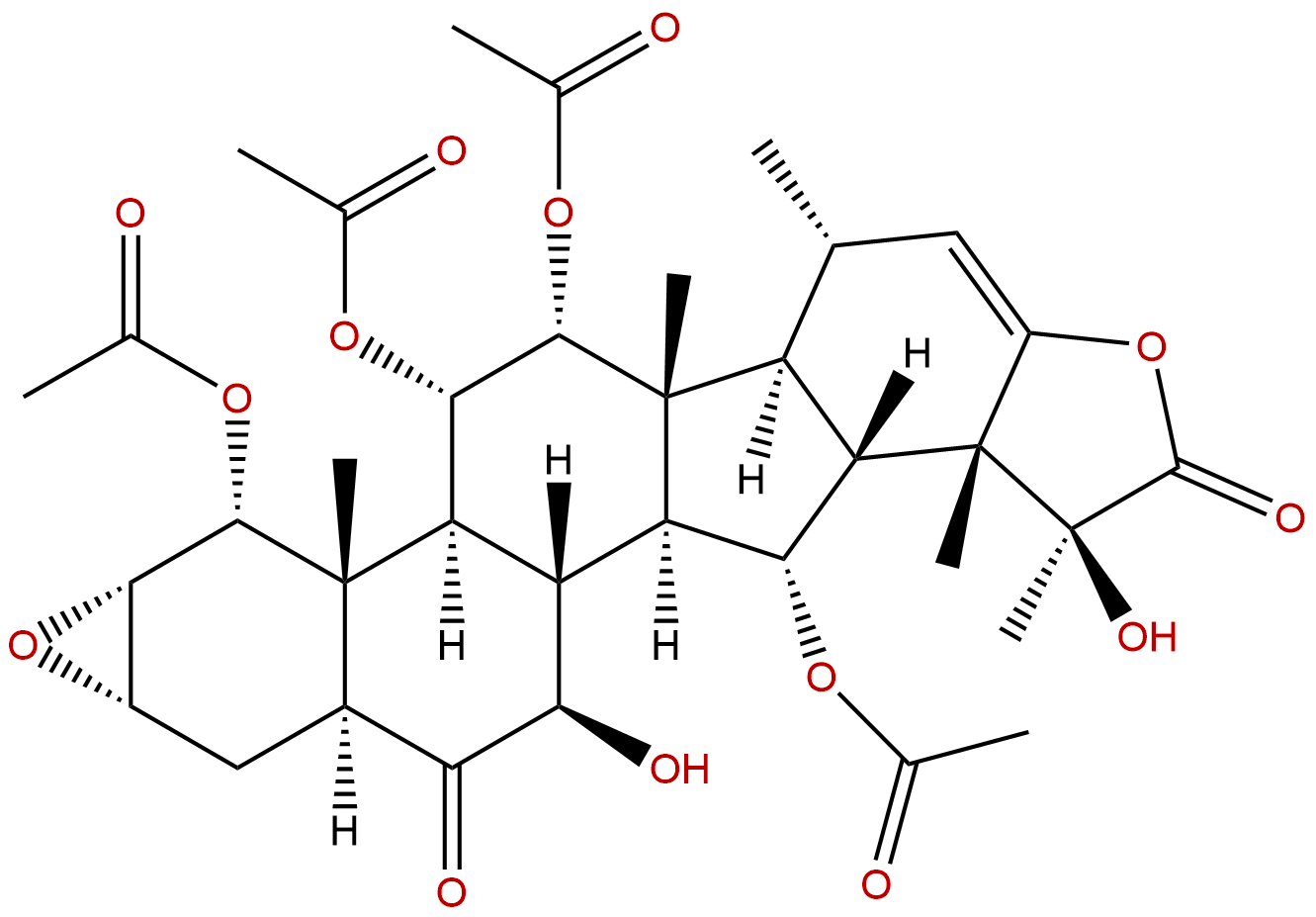
Chemical structure and physicochemical properties
The CAS number for Rhizoctone A is 108885-68-3, with a molecular formula of C ∝₇ H ₅₀ O ₁∝ and a molecular weight of 702.7500. This compound belongs to a class of highly modified steroids, which are representative members of the Taccalonolides class. Its core skeleton is not a typical tetracyclic triterpenoid or steroid, but rather a highly oxidized, condensed and complex polycyclic system, connected by multiple acetoxy groups and unique oxygen-containing heterocycles (such as lactone rings), which are the material basis for its unique biological activity.
From the analysis of physical and chemical properties, the calculated lipid water partition coefficient (LogP) is 1.4052, indicating that it has a certain degree of lipophilicity, but not extreme hydrophobicity. Its topological polar surface area (TPSA) is as high as 201.56 Å ², mainly attributed to the presence of a large number of oxygen atoms and polar groups (such as hydroxyl, acetoxy, carbonyl, and lactone rings) in the molecule. High TPSA is usually associated with lower membrane permeability. Consistent with this, its predicted water solubility is low, around 0.0309 mg/mL, which may pose challenges in formulation development. In early drug risk assessment, Rhizoctone A was predicted to have no hERG potassium channel inhibitory activity (low risk of arrhythmia), and the Ames test predicted a negative result (0.0), indicating a low potential genotoxicity risk. However, its blood-brain barrier permeability prediction is' low ', which means it may not be suitable for treating primary brain tumors or brain metastases, but also reduces the risk of central nervous system side effects. These physicochemical and preliminary toxicological parameters provide important directions for subsequent chemical modifications and formulation optimization.
Plant sources and extraction methods
Root tuber ketone lactone A is mainly derived from the Taccaceae family, genus Taccaceae(Tacca)Plants, especially from Arrow root potato(Tacca chantrieri)It was isolated for the first time from the rhizome.Tacca chantrieri It is a perennial herb mainly distributed in Southeast Asia and southern China (such as Yunnan and Guangxi). In folk medicine, its rhizome is often used to treat ulcers, gastritis and some infectious diseases, which indirectly suggests that it contains bioactive ingredients.
Extracting and isolating root tuber ketone lactone A from plant materials is a complex process involving multi-step chromatographic techniques. The typical extraction process is as follows: first, the dried and crushed roots and tubers of arrowroot potatoes are subjected to cold soaking or reflux extraction with organic solvents such as methanol or ethanol to obtain the crude extract. Subsequently, the crude extract was subjected to preliminary fractionation using solvent partitioning method (such as extraction with petroleum ether, ethyl acetate, and n-butanol in sequence), and the root tuber ketone lactones were usually enriched in the ethyl acetate fraction. Further purification is highly dependent on various column chromatography techniques, including silica gel column chromatography, reverse phase C18 column chromatography, and high-performance liquid chromatography (HPLC). Due to the numerous homologous compounds with similar structures, separating and purifying a single component, especially obtaining high-purity root tuber ketone lactone A, is quite challenging. The application of modern separation technologies, such as high-speed countercurrent chromatography (HSCCC) and preparative high-performance liquid chromatography (pre HPLC), has significantly improved separation efficiency and product purity. It is worth noting that the content of resveratrol A in plants is usually very low, which makes chemical synthesis or semi synthesis research crucial for ensuring sufficient drug supply in the future, although its complex molecular structure makes total synthesis routes extremely difficult.
Pharmacological activity research
Rhizoctone A exhibits broad and significant pharmacological activities, with the most notable being its powerful anti-tumor effect.
-
In vitro cytotoxicity Rhizoctone A exhibits nanomolar level cell growth inhibitory activity against various human cancer cell lines. For example, its half maximal inhibitory concentration (IC ₅₀) against ovarian cancer SK-OV-3 cell line is 622 nM, demonstrating potent proliferation inhibition ability. More importantly, it is equally effective against drug-resistant cell lines overexpressing P-glycoprotein (Pgp) or multidrug resistance protein 7 (MRP7), which distinguishes it from classical microtubule stabilizers such as paclitaxel, which are often resistant due to Pgp efflux. This suggests that resveratrol A may overcome multidrug resistance mediated by drug efflux pumps through a unique mechanism.
-
Cell cycle and apoptosis induction Mechanism studies have shown that treatment of cells with resveratrol A can lead to cell cycle arrest in the G2/M phase. This is a typical manifestation of microtubule stabilizers interfering with the function of mitotic spindles. Cycle arrest ultimately leads to cell apoptosis. Research has confirmed that resveratrol A can induce phosphorylation of Bcl-2 protein, thereby inhibiting its anti apoptotic function and promoting mitochondrial pathway apoptosis.
-
In vivo anti-tumor activity In animal models, resveratrol A also showed anti-tumor effects. For example, in nude mouse transplant tumor models, it can dose dependently inhibit tumor growth, and its effect is comparable or better than paclitaxel, especially in certain drug-resistant models.
-
Other pharmacological activities In addition to its core anti-tumor activity, early studies have also reported that resveratrol A has certain antimalarial activity. Although its strength and mechanism of action still need further exploration, this suggests that it may have a broader spectrum of biological activities.
Mechanism of action and molecular targets
The core mechanism of action of root tuber ketone lactone A is as follows:Microtubule stabilizer It binds to a unique site on β - tubulin, promoting microtubule polymerization and inhibiting its depolymerization, thereby stabilizing microtubule structure. This excessive stabilization disrupts the microtubule dynamics balance, especially during mitosis, leading to abnormal spindle function and inability of chromosomes to separate normally, thereby activating spindle assembly checkpoints, triggering G2/M phase arrest of the cell cycle, and ultimately clearing cells through the apoptotic pathway.
However, the role of root tuber ketone lactone A goes far beyond simple microtubule stabilization. Its anti-tumor effect involves a complex multi-target regulatory network, which is highly consistent with the target information you provided:
- Apoptosis regulatory targets In addition to indirectly activating the apoptotic pathway through microtubule interference, resveratrol A can directly act on apoptotic regulatory proteins. It induces Bcl-2 Phosphorylation renders it inactive and may also downregulate it MCL1 The expression or function of both are key anti apoptotic proteins, and their inhibition together weakens the survival signal of tumor cells and promotes cell apoptosis.
- Signal transduction and transcription targets Root tuber ketone lactone A can inhibit STAT3 The activation. STAT3 is an important oncogenic transcription factor, and sustained activation can promote cell proliferation, survival, and angiogenesis. Its inhibition further enhances the pro apoptotic effect. Meanwhile, it can also have an impact MAPK1 The ERK2 signaling pathway is involved in regulating cell growth and differentiation.
- Tumor invasion and metastasis related targets Research has shown that root tuber ketone lactone A can downregulate matrix metalloproteinases MMP2 Expression and activity. MMP2 is responsible for degrading the extracellular matrix and plays a crucial role in tumor invasion and metastasis. Its inhibition indicates that the compound has potential anti metastatic ability.
- Tumor microenvironment and metabolic targets Root tuber ketone lactone A may inhibit hypoxia inducible factors HIF1A The activity. HIF1A is activated in hypoxic areas of tumors, regulating gene expression that adapts to hypoxia such as angiogenesis and glucose metabolism. Its inhibition helps to disrupt the tumor microenvironment.
- Nuclear action targets Research suggests that high concentrations of root tuber ketone lactone A may affect TOP1 and TOP2A The activity of topoisomerases I and II α may be a secondary mechanism leading to DNA damage, but whether this effect is the main pathway of action remains controversial.
- Hormone related targets: Yes ESR1(Estrogen receptor alpha) and CYP19A1 The potential role of aromatase suggests that it may have additional therapeutic value in hormone dependent tumors (such as breast cancer), but this research is still in the preliminary stage.
In summary, root tuber ketone lactone A exerts anti-tumor effects through a mode of "main target (microtubule) stability, multi-target (apoptosis, signaling, invasion) synergy". This multi-path intervention may be the reason for its high efficiency and ability to overcome drug resistance.
Evaluation of drug properties and pharmacokinetics
Based on its physicochemical properties, the medicinal properties of Rhizoctone A have both advantages and challenges.
Advantage:
1. Efficient and low drug resistance Its core advantage lies in its effectiveness against multidrug-resistant cells, solving a major pain point in current chemotherapy.
2. Better security warning Predicting the absence of hERG inhibition and Ames mutagenicity reduces the risk of cardiac and genetic toxicity in early development.
3. Clear mechanism of action As a microtubule stabilizer, its mechanism of action has been validated and is similar to successful drugs such as paclitaxel and erythromycin, reducing development uncertainty.
Challenges and research questions:
1. Solubility and permeability Low water solubility and high TPSA may result in extremely low oral bioavailability and difficulty in penetrating cell membranes. This may require the development of special drug delivery systems, such as nano formulations (liposomes, albumin nanoparticles, polymer micelles) or prodrug strategies, to improve their solubility and delivery efficiency.
2. Lack of pharmacokinetic data Currently, there is very limited publicly available data on the systematic pharmacokinetics of Rhizoctone A, including absorption, distribution, metabolism, and excretion. Key parameters such as metabolic stability, major metabolic enzymes (such as CYP450 enzyme system), in vivo half-life, and tissue distribution characteristics urgently need to be elucidated through preclinical animal experiments.
3. therapeutic window Although it has strong in vitro activity, the window (therapeutic index) between its effective dose and toxic dose in vivo needs to be rigorously evaluated. As a cytotoxic drug, its potential toxicity to rapidly proliferating normal cells such as bone marrow cells and gastrointestinal epithelial cells cannot be ignored.
4. blood-brain barrier Low BBB permeability limits its application in the treatment of brain tumors, but as mentioned earlier, it also reduces central side effects.
Therefore, future pharmaceutical optimization work should focus on: ① improving its physicochemical defects through formulation methods; ② Systematically conduct preclinical pharmacokinetic and toxicological studies; ③ Under the premise of maintaining activity, structural modifications are carried out to optimize its ADMET (absorption, distribution, metabolism, excretion, toxicity) properties.
Clinical application prospects and prospects
The clinical application prospects of Rhizoctone A mainly revolve around its Overcoming multidrug resistance in tumors This unique advantage unfolds.
- Treatment of drug-resistant tumors For advanced ovarian cancer, breast cancer, lung cancer and other solid tumors resistant to taxanes, anthracyclines and other traditional chemotherapy drugs, Rhizoctone A or its derivatives may provide new treatment options. It has no cross resistance with existing drugs and can be used as a second-line or follow-up treatment strategy.
- combination therapy Given its unique mechanism of action and multi-target properties, the combination of Rhizoctone A with other drugs with different mechanisms of action (such as DNA damaging agents, targeted drugs, immune checkpoint inhibitors) may produce synergistic effects, improve therapeutic efficacy, and delay the occurrence of drug resistance.
- Drug development direction:
- structural optimization Structural modification of root tuber ketone lactone A aims to improve its water solubility, metabolic stability, and targeting, while reducing toxicity. Several derivatives have been synthesized in previous studies, some of which have shown superior activity and selectivity.
- Development of new formulations Develop a targeted delivery system based on nanotechnology to deliver drugs specifically to tumor tissues, increase local drug concentration, and reduce systemic exposure and side effects.
- Biological synthesis research Exploring its biosynthetic pathway is expected to achieve efficient production in microorganisms through synthetic biology methods, solving the bottleneck of limited plant sources.
However, pushing it into clinical practice still faces enormous challenges: it requires completing a systematic preclinical safety assessment (GLP toxicology), developing processes that comply with Good Manufacturing Practice (GMP), and ultimately conducting costly and lengthy Phase I-III clinical trials. The synthesis and production difficulties brought about by its complex chemical structure are obstacles that must be overcome in the industrialization process.
Conclusion
Rhizoctone A, as a natural microtubule stabilizer derived from plants, occupies a unique and important position in the field of anti-tumor drug development due to its strong cytotoxicity, unique multi-target mechanism of action, and especially its effective inhibitory effect on drug-resistant tumor cells overexpressing drug efflux pumps. It is not only a valuable tool molecule for studying the mechanism of multidrug resistance in tumors and developing new strategies to overcome resistance, but also a candidate drug with great potential for development. Despite facing challenges in solubility, pharmacokinetics, and other aspects of drug development, these challenges are expected to be gradually overcome through interdisciplinary efforts in modern medicinal chemistry, formulation, and synthetic biology. In the future, with further analysis of its mechanism of action and continuous advancement of preclinical research, Rhizoctone A or its optimized derivatives are expected to provide a new and powerful weapon for clinical tumor treatment, especially for the treatment of refractory and drug-resistant tumors.