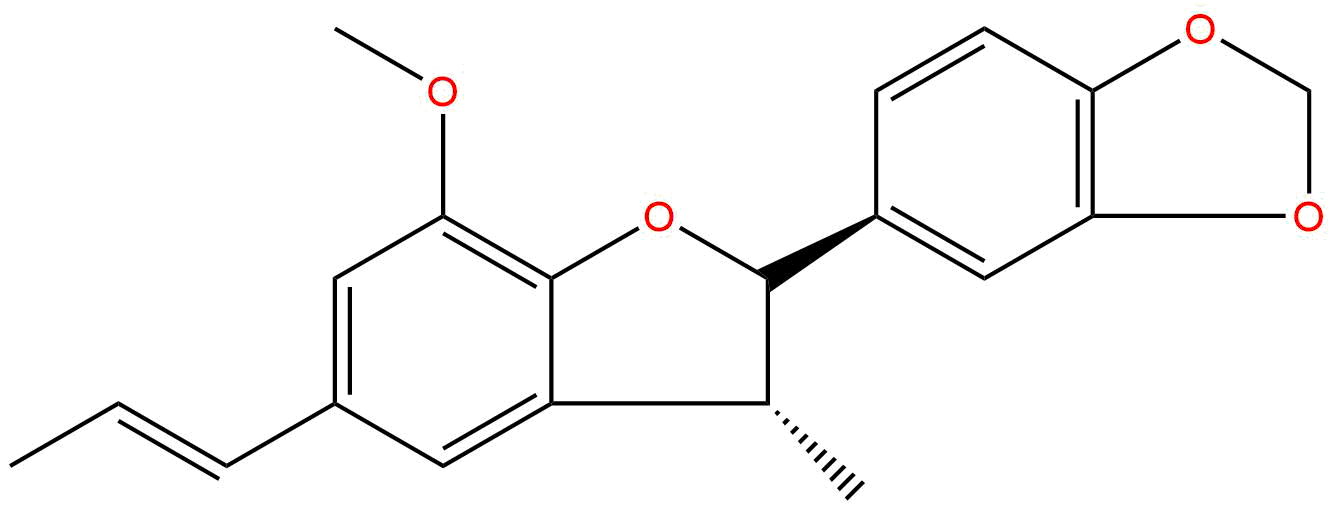


Product name: Licarin B
Synonym name: (-)-Licarin B
Catalogue No.: BP1862
Cas No.: 51020-87-2
Formula: C20H20O4
Mol Weight: 324.376
Botanical Source:
Physical Description:
Type of Compound: Lignans
Purity: 95%~99%
Analysis Method: HPLC-DAD or/and HPLC-ELSD
Identification Method: Mass, NMR
Packing: Brown vial or HDPE plastic bottle
Storage: Store in a well closed container, protected from air and light. Put into refrigerate or freeze for long term storage.
Whenever possible, you should prepare and use solutions on the same day. However, if you need to make up stock solutions in advance, we recommend that you store the solution as aliquots in tightly sealed vials at -20℃. Generally, these will be useable for up to two weeks.
The product could be supplied from milligrams to grams
Inquire for bulk scale.
For Reference Standard and R&D, Not for Human Use Directly.
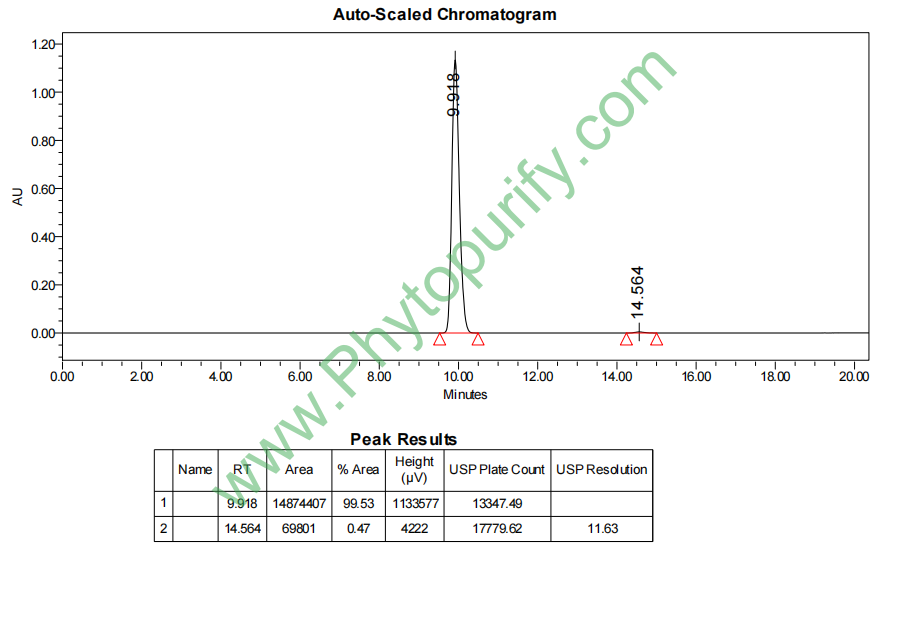
HPLC of Licarin B
Storage conditions:Short-term storage at 2~8℃, long-term storage at -20 ~ -80℃
36.9200
4.4576
4.4585
.0013
7.8931
20.9648
High
92.5839
3.3348
No
Yes
Yes
No
No
No
0.0
No
Yes
Yes
Yes
Natural products, as an important source of drug discovery, play an irreplaceable role in the long history of human fight against diseases. Among numerous natural small molecules with biological activity, Licarin B is derived from nutmeg as a source(Myristica fragrans)The new lignans in seeds have attracted widespread attention in the field of pharmacology in recent years. The chemical name of Licalin B is (2R, 3R) -2,3-dihydro-2- (4-hydroxy-3-methoxyphenyl) -3-methyl-5- ((E) -1-propenyl) -7-methoxybenzofuran, and its unique benzofuran skeleton structure endows it with diverse biological activities.
Licalin B was initially recognized for its function as an inhibitor of nitric oxide (NO) production, and subsequent studies have found that it can improve insulin sensitivity by activating peroxisome proliferator activated receptor gamma (PPAR gamma) and glucose transporter 4 (GLUT4) in the insulin receptor substrate 1 (IRS-1)/phosphatidylinositol 3-kinase (PI3K)/protein kinase B (AKT) signaling pathway, revealing its potential value in the treatment of metabolic diseases. What is even more remarkable is that recent studies have shown that Licalin B exhibits significant anti-tumor activity in various malignant tumors such as ovarian cancer. Its targets involve multiple key molecules closely related to tumor occurrence and development, such as BCL2, STAT3, ESR2, MMP2, HIF1A, etc.
This article aims to systematically review the chemical structure characteristics, plant sources and extraction methods, pharmacological activity, mechanism of action, pharmacological evaluation, and clinical application prospects of Licalin B, in order to provide comprehensive academic references for the in-depth research and development of this natural product.
Licalin B belongs to the class of new lignans, and its core structure is a 2,3-dihydrobenzofuran skeleton. Specifically, the molecule is polymerized from two phenylpropanoid units through C8-C3 'linkage, forming a unique benzofuran ring system. In terms of stereochemistry, the C2 and C3 positions of Licalin B are both in the R configuration, which has a significant impact on its biological activity. The key functional groups in the molecule include the phenolic hydroxyl group at the C4 'position, the methoxy groups at the C3' and C7 positions, and the (E) -1-propenyl side chain connected at the C5 position. These functional groups not only determine the chemical reactivity of the molecule, but also provide the structural basis for its interaction with biological targets.
The molecular formula of Licalin B is C20H20O4, with a molecular weight of 324.3760 g/mol. Its lipophilic water partition coefficient (LogP) is 4.4576, indicating that the compound has strong lipophilicity, which is consistent with the hydrophobic properties of its benzofuran skeleton and acrylic side chain. The topological polar surface area (TPSA) is 36.9200 Å ², which is lower than the commonly recognized threshold for good oral absorption (140 Å ²), indicating good membrane permeability. However, the water solubility data (0.0013 mg/mL) indicates that the solubility of Licalin B in water is extremely low, which poses a challenge for its formulation development and in vivo bioavailability.
It is worth noting that the blood-brain barrier penetration ability of Licalin B has been rated as "high", which not only provides the possibility for its application in the treatment of central nervous system diseases, but also suggests the need to pay attention to potential central nervous system side effects. In addition, the hERG inhibition assessment result was negative, and the Ames test result was 0.0, indicating that the compound did not exhibit significant risks of cardiotoxicity and genotoxicity in the preliminary safety evaluation. These data provide a favorable safety basis for its further development.
The main natural source of Licalin B is the nutmeg plant in the nutmeg family(Myristica fragrans The seeds of Houtt. Nutmeg is native to the Maluku Islands in Indonesia and is now widely cultivated in tropical regions, including India, Sri Lanka, Malaysia, and the Caribbean. In China, nutmeg is mainly introduced in provinces such as Hainan, Yunnan, and Guangdong. In addition to nutmeg, Licalin B is also found in other plants of the nutmeg genus, such as Myristica cinnamomea、Myristica malabarica Wait, but the content is usually low.
The content of icarin B in nutmeg seeds varies depending on the variety, place of origin, harvesting time, and processing method. Research has shown that the content in mature seeds is usually higher than that in immature seeds, and the content after drying treatment is relatively stable. It is worth noting that the nutmeg seed coat (false seed coat) also contains Licalin B, but the content is lower than that of the seed kernel.
The extraction of Licalin B is usually carried out using organic solvent extraction method. Due to its strong lipophilicity, non-polar or moderately polar solvents such as n-hexane, petroleum ether, dichloromethane, ethyl acetate, etc. are commonly used as extraction solvents. The classic extraction process includes soaking and extracting dried and crushed nutmeg seed powder in n-hexane or petroleum ether at room temperature or heating conditions, filtering and concentrating under reduced pressure to obtain the crude extract. To improve extraction efficiency, ultrasound assisted extraction or microwave-assisted extraction techniques can be used, which can shorten extraction time and increase yield.
The crude extract contains a large amount of lipophilic components, including fatty acids, volatile oils, and other lignans, thus requiring further purification steps. Silica gel column chromatography is the most commonly used separation method, typically using n-hexane ethyl acetate or n-hexane acetone gradient elution systems. The Rf value of Licalin B in thin layer chromatography (n-hexane: ethyl acetate=4:1) is approximately 0.3-0.4, which can be detected by UV lamp (254 nm) or color reagent (such as 10% sulfuric acid ethanol solution). High performance liquid chromatography (HPLC) can be used for preparative purification, with a commonly used stationary phase of C18 reverse phase column and a mobile phase of acetonitrile water or methanol water system.
In recent years, modern separation techniques such as high-speed counter current chromatography (HSCCC) and preparative ultra-high performance liquid chromatography (pre HPLC) have also been applied to the efficient purification of Licalin B. These methods have the advantages of high separation efficiency and good sample recovery rate. The structural confirmation of the final product is usually accomplished through nuclear magnetic resonance spectroscopy (¹ H-NMR, ¹ ³ C-NMR, HMBC, HSQC) and high-resolution mass spectrometry (HR-MS).
Licalin B was initially identified as an inhibitor of NO production, laying the foundation for its anti-inflammatory activity. In a macrophage model stimulated by lipopolysaccharide (LPS), Licalin B can concentration dependently inhibit the expression of inducible nitric oxide synthase (iNOS) and the production of NO, while reducing the synthesis of prostaglandin E2 (PGE2). Further mechanistic studies have shown that this effect is related to the inhibition of the nuclear factor kappa B (NF - κ B) signaling pathway. Licalin B can block the phosphorylation and degradation of I κ B α, thereby inhibiting the nuclear translocation of the p65 subunit. In addition, Licalin B can downregulate the expression of pro-inflammatory cytokines such as tumor necrosis factor alpha (TNF - α), interleukin-1 β (IL-1 β), and interleukin-6 (IL-6), demonstrating a comprehensive anti-inflammatory effect.
The role of Licalin B in metabolic regulation is particularly noteworthy. Research has shown that this compound can significantly improve glucose uptake capacity under insulin resistance conditions. In 3T3-L1 adipocytes and C2C12 myotubes, treatment with lidocaine B enhances insulin stimulated glucose uptake, which is closely related to the activation of PPAR γ. PPAR γ, as a member of the nuclear receptor superfamily, is a key transcription factor that regulates adipocyte differentiation, lipid metabolism, and insulin sensitivity. Licalin B activates PPAR γ, upregulates the expression of its downstream target gene GLUT4, and promotes glucose transport into cells.
More importantly, Licalin B can activate the IRS-1/PI3K/AKT signaling pathway. After the tyrosine phosphorylation level of IRS-1 increases, it can recruit and activate PI3K, which in turn produces phosphatidylinositol-3,4,5-triphosphate (PIP3), activating downstream AKT. Activated AKT can promote the translocation of GLUT4 to the cell membrane, thereby enhancing glucose uptake. This mechanism of action is similar to the classical insulin sensitizer thiazolidinedione drugs (TZDs), but Licarin B may have better safety characteristics.
In recent years, the potential of Licalin B in the field of cancer treatment has gradually been revealed. Multiple studies have confirmed that Licalin B has inhibitory effects on proliferation and induces apoptosis in various cancer cell lines, with the most in-depth research on ovarian cancer.
In ovarian cancer cell lines such as SKOV3, A2780, and OVCAR3, treatment with lidocaine B can significantly inhibit cell viability, induce cell cycle arrest in the G0/G1 phase, and promote apoptosis. Its anti ovarian cancer effect involves multiple molecular targets: firstly, Licalin B can downregulate the expression of anti apoptotic protein BCL2, while upregulating the level of pro apoptotic protein BAX, leading to loss of mitochondrial membrane potential and release of cytochrome c, activating the caspase cascade reaction. Secondly, Licalin B can inhibit the phosphorylation of STAT3, block its nuclear translocation and transcriptional activity, thereby downregulating the expression of STAT3 target genes such as Cyclin D1, Survivor, and VEGF. In addition, Licalin B can regulate the activity of estrogen receptor beta (ESR2) and affect the growth of hormone dependent ovarian cancer cells.
In terms of invasion and metastasis, Licalin B can inhibit the expression and activity of matrix metalloproteinase 2 (MMP2), reducing the migration and invasion ability of cancer cells. Meanwhile, the compound can exert anti angiogenic effects by inhibiting the accumulation of hypoxia inducible factor 1 alpha (HIF1A) and reducing the secretion of vascular endothelial growth factor (VEGF) under hypoxic conditions. It is worth noting that Licalin B can also regulate the activity of nuclear factor E2 related factor 2 (NFE2L2, also known as NRF2), affecting cellular oxidative stress response and drug sensitivity.
Besides ovarian cancer, Licalin B has also shown certain activity against other types of tumors. For example, in breast cancer cells, Ricarin B can inhibit cell proliferation and induce apoptosis, which is related to the inhibition of topoisomerase I (TOP1). In melanoma cells, Licalin B can inhibit the activity of tyrosinase (TYR), reduce melanin synthesis, and demonstrate potential anti melanoma effects. In addition, Licalin B can also interact with P-glycoprotein (ABCB1), which may affect the multidrug resistance phenotype.
Given the excellent blood-brain barrier penetration ability of Licalin B, its neuroprotective activity has also received attention. Research has shown that Licalin B can protect neurons from oxidative stress and excitotoxic damage. In the neurotoxic model induced by β - amyloid protein (A β), Licalin B can reduce the production of reactive oxygen species (ROS), maintain mitochondrial function, and inhibit the activation of apoptotic signaling pathways. In addition, Licalin B can also regulate the phosphorylation status of microtubule associated protein Tau (MAPT), which suggests its potential value in the treatment of Alzheimer's disease.
The mechanism of action of Licalin B exhibits multi-target and multi pathway characteristics, among which the IRS-1/PI3K/AKT signaling pathway and PPAR γ/GLUT4 pathway constitute its core mechanism for improving insulin sensitivity. In insulin resistance, serine phosphorylation of IRS-1 increases, leading to a decrease in its binding ability to insulin receptors and subsequently weakening downstream signaling. Licalin B can reverse this abnormal modification, restore tyrosine phosphorylation levels of IRS-1, and reactivate the PI3K/AKT pathway. Activated AKT promotes membrane translocation of GLUT4 and regulates the expression of gluconeogenesis related genes by phosphorylating FOXO transcription factors.
The activation of PPAR γ is another important mechanism of Ritalin B. Unlike classical PPAR gamma agonists such as Rosiglitazone, Ritalin B may act as a partial agonist or selective PPAR gamma modulator (SPPARM) to activate PPAR gamma while avoiding serious side effects such as weight gain, edema, and cardiovascular risk. This hypothesis requires further experimental and structural biology research to verify.
In ovarian cancer, the anti-tumor mechanism of Licalin B involves the regulation of multiple key signaling nodes. Inhibition of the STAT3 signaling pathway is one of its core functions. STAT3, as an oncogenic transcription factor, is often continuously activated in ovarian cancer, promoting cell proliferation, inhibiting apoptosis, promoting angiogenesis, and immune escape. Licalin B inhibits the activity of JAK kinase or directly binds to the SH2 domain of STAT3, blocking STAT3 dimerization and nuclear translocation, thereby downregulating the expression of its target genes.
The regulation of BCL2 family proteins is a key link in the induction of apoptosis by Licalin B. This compound can downregulate the expression of BCL2 and upregulate the expression of BAX, alter the BCL2/BAX ratio, promote mitochondrial outer membrane permeability, release cytochrome c and apoptosis inducing factor (AIF), activate caspase-9 and caspase-3, ultimately leading to cell apoptosis. In addition, Licalin B can induce apoptosis through the endoplasmic reticulum stress pathway, manifested by upregulation of CHOP and GRP78 expression.
The inhibition of HIF1A is the basis of the anti angiogenic effect of Licalin B. Under hypoxic conditions, HIF1A is stably expressed and transcriptionally activated to promote the expression of angiogenic factors such as VEGF and PDGF. Licalin B can inhibit tumor angiogenesis by promoting the ubiquitination degradation of HIF1A or inhibiting its transcriptional activity, reducing the secretion of VEGF.
The interaction between Licalin B and ABCB1 (P-glycoprotein) has a dual significance. On the one hand, Licalin B may act as a substrate for ABCB1, affecting its own cellular uptake and distribution; On the other hand, Licalin B may reverse the multidrug resistance phenotype of tumor cells and enhance the efficacy of chemotherapy drugs by inhibiting the activity of ABCB1. Similarly, the inhibitory activity of Licalin B on TOP1 suggests that it may have an anti-tumor mechanism similar to that of camptothecin drugs, but the specific binding mode and inhibition kinetics need to be elucidated.
In terms of oxidative stress regulation, the regulatory effect of Licalin B on NFE2L2 (NRF2) deserves attention. NRF2 is the main regulator of cellular antioxidant defense, protecting cells from oxidative damage in normal cells, but may promote drug resistance and tumor progression in certain tumor cells. The regulation of NRF2 by Licalin B may have cell type specificity, and this complexity requires in-depth research in different disease contexts.
Based on the physicochemical properties parameters of Licalin B, a preliminary evaluation of its pharmacological properties can be conducted. According to Lipinski's "Rule of Five", the molecular weight of Licalin B (324.38 Da) is less than 500 Da, LogP (4.46) is less than 5, the number of hydrogen bond donors (1 phenolic hydroxyl group) is less than 5, and the number of hydrogen bond acceptors (4 oxygen atoms) is less than 10, meeting the basic requirements for oral medication. However, its extremely low water solubility (0.0013 mg/mL) is a significant drawback that may lead to incomplete oral absorption and low bioavailability.
The TPSA value is 36.92 Å ², far below the threshold of 140 Å ², indicating that the compound has good membrane permeability, which is consistent with its high blood-brain barrier penetration ability. The negative results of hERG inhibition and Ames test provide preliminary safety assurance, but a more comprehensive toxicological evaluation is needed to confirm its safety characteristics.
At present, there is relatively limited systematic research on the pharmacokinetics of Licalin B, but based on its physicochemical properties and preliminary animal experimental data, its pharmacokinetic characteristics can be inferred. The oral absorption of lidocaine B may be limited by its low water solubility, but its high lipophilicity facilitates its passive diffusion through intestinal epithelial cells. In terms of in vivo distribution, the high blood-brain barrier penetration ability suggests that the compound can enter the central nervous system, which provides a pharmacokinetic basis for its neuroprotective activity and also suggests the need to pay attention to potential central nervous system toxicity.
In terms of metabolism, the phenolic hydroxyl and methoxy groups of Licalin B are potential sites for phase I metabolism (such as oxidation and demethylation) and phase II metabolism (such as glucuronic acid binding and sulfuric acid binding). The cytochrome P450 enzyme system (especially CYP3A4 and CYP2C9) may be involved in its metabolism. The main excretion pathways may be bile excretion and fecal excretion, with less renal excretion.
To address the issue of poor water solubility of Licalin B, various formulation techniques can be used to improve its bioavailability. Liposomes, nanoparticles, solid dispersions, cyclodextrin inclusion complexes and other formulation technologies have been successfully applied in the development of lipophilic natural products. For example, encapsulating lidocaine B in polylactic acid hydroxyacetic acid copolymer (PLGA) nanoparticles can improve its water dispersibility and stability, and prolong its in vivo circulation time. In addition, phospholipid complex technology can also enhance the oral absorption of lipid soluble drugs.
Riccarin B improves insulin sensitivity by activating PPAR γ and IRS-1/PI3K/AKT pathways, making it a potential candidate drug for the treatment of type 2 diabetes and metabolic syndrome. Compared to existing TZD drugs, Licalin B may have better safety features, particularly avoiding the common risks of weight gain, edema, and cardiovascular disease associated with TZD drugs. However, this hypothesis requires rigorous preclinical and clinical studies to validate. Future research directions should include verifying its efficacy in various animal models of insulin resistance, evaluating the safety of long-term administration, and exploring its synergistic effects with other hypoglycemic drugs.
The potential of Licalin B is particularly prominent in the treatment of ovarian cancer. Its multi-target mechanism of action (simultaneously acting on BCL2, STAT3, HIF1A, MMP2, etc.) gives it the advantage of overcoming single target drug resistance. In addition, the combination of Licalin B with existing chemotherapy drugs such as paclitaxel and platinum based drugs may produce synergistic effects, improve efficacy, and reduce toxicity. It is worth noting that the regulatory effect of Licalin B on ABCB1 suggests that it may reverse the multidrug resistance phenotype, which has important value in the treatment of drug-resistant ovarian cancer.
In addition to ovarian cancer, the potential application of Ricarin B in breast cancer, melanoma, glioma and other tumors is also worth exploring. Especially its high blood-brain barrier penetration ability gives it unique advantages in the treatment of brain tumors.
The neuroprotective activity, antioxidant effect, and regulation of MAPT phosphorylation of Licalin B suggest its potential application in neurodegenerative diseases such as Alzheimer's disease and Parkinson's disease. However, from the current preliminary research to clinical application, a large amount of translational studies are still needed, including verifying its efficacy in appropriate animal models, evaluating the safety of long-term administration, and determining the optimal dosing regimen.
Despite the diverse pharmacological activities and good pharmacological basis of Licalin B, its development still faces many challenges. Firstly, the natural source of Licalin B has limited content, and large-scale production requires the development of efficient chemical or biological synthesis methods. Secondly, its extremely low water solubility is the main obstacle to formulation development, which requires innovative formulation technologies to address. Thirdly, although the multi-target mechanism of action brings therapeutic advantages, it also increases the complexity of toxicological assessment and requires comprehensive safety evaluation. Finally, in the process of transitioning from laboratory research to clinical application, it is necessary to establish reliable biological analysis methods and conduct systematic pharmacokinetic and pharmacodynamic studies.
Looking into the future, the structural optimization of Licalin B may result in derivatives with better pharmacokinetic properties and higher selectivity. Based on the study of the structure-activity relationship of its benzofuran skeleton, it can guide the design of analogs with specific target selectivity. In addition, as a lead compound of natural products, the multi-target mode of action of Licalin B provides an example for the development of "multi-target drugs", which have unique advantages in the treatment of complex diseases such as cancer and metabolic syndrome.
Licalin B, as a new lignan derived from nutmeg seeds, has shown significant research value in the field of natural product pharmacology due to its unique chemical structure and diverse biological activities. From its initial discovery as an inhibitor of NO production, to elucidating the mechanism of improving insulin sensitivity, and to revealing its anti-tumor activity in malignant tumors such as ovarian cancer in recent years, the research process of Licalin B reflects the typical paradigm of natural product drug discovery - from activity oriented isolation to mechanism research, and then to exploring potential clinical applications.
Licalin B improves insulin sensitivity by activating the IRS-1/PI3K/AKT pathway and PPAR γ/GLUT4 pathway, while exerting anti-tumor effects by regulating multiple targets such as BCL2, STAT3, HIF1A, MMP2, etc. This multi-target mode of action gives it a unique advantage in treating complex diseases. Its good pharmacokinetic parameters (compliant with Lipinski rules, no hERG inhibition, Ames test negative) provide a favorable basis for drug development, but the formulation challenges brought by low water solubility and high lipophilicity still need to be overcome.
With the development of chemical synthesis methods, advances in formulation technology, and a deeper understanding of its pharmacological mechanisms, Licalin B is expected to become a new candidate drug for the treatment of metabolic diseases and tumors. Future research should focus on optimizing its pharmacokinetic properties, elucidating the structural basis of its multi-target effects, validating its efficacy in a wider range of disease models, and advancing preclinical safety evaluation. The research on Licalin B not only provides lead compounds for the development of new therapeutic drugs, but also provides a valuable model system for understanding the multi-target mechanism of action of natural products, reflecting the sustained vitality of natural products in modern drug discovery.
