


Synonym name: 83377-50-8
Catalogue No.: BP0463
Cas No.: 2680-81-1
Formula: C20H22O4
Mol Weight: 326.392
Botanical Source: Aristolochia pubescens, Krameria grayi, Myristica fragrans (mace) and Piper kadsura
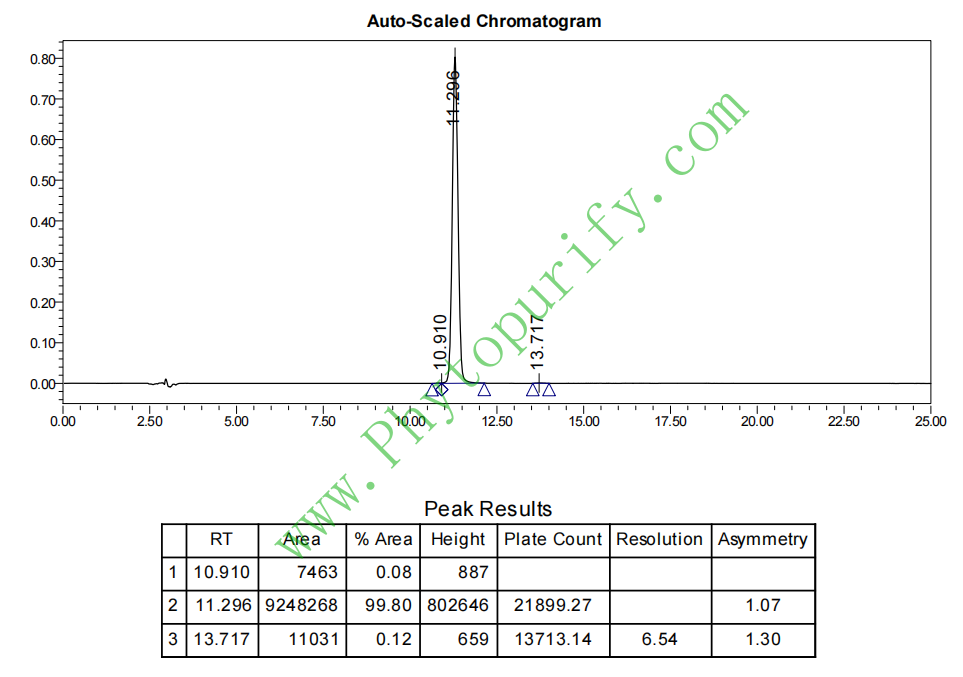
Purity: 95%~99%
Analysis Method: HPLC-DAD or/and HPLC-ELSD
Identification Method: Mass, NMR
Packing: Brown vial or HDPE plastic bottle
Can be supplied from milligrams to grams.
For Reference Standard and R&D, Not for Human Use Directly.
Inquire for bulk scale.
Description:
Dehydrodiisoeugenol has anti-inflammatory activity, it inhibited the expression of the COX-2, proteolysis of inhibitor κB-α and transcriptional activity of NF-κB. Dehydrodiisoeugenol can cross the blood-brain barrier rapidly, it may be developed into an effective anxiogenic agent.
References:
Planta Med. 2011 Oct;77(15):1712-7.
Metabolism of the lignan dehydrodiisoeugenol in rats.
Dehydrodiisoeugenol (DDIE), a major active lignan from the seed and aril of the fruit of Myristica fragrans Houtt., functions as a potential anti-inflammatory agent by inhibiting lipopolysaccharide-stimulated nuclear factor kappa B activation and cyclooxygenase-2 expression in macrophages. However, the metabolism of DDIE remains unknown.
METHODS AND RESULTS:
This report describes the metabolic fate of DDIE in liver microsomes, urine, and feces of rats treated with DDIE. DDIE metabolites were isolated by sequential column chromatography and high-performance liquid chromatography from liver microsomes incubations, urine, and feces. Nine metabolites ( M-1 to M-9), including 5 new metabolites, were determined spectroscopically using ultra-violet (UV), mass spectrometry (MS), nuclear magnetic resonance (NMR), and circular dichroism (CD). Analysis of the isolated metabolites showed that DDIE undergoes four major pathways of metabolism in the rat: oxidation (including hydroxylation, hydroformylation, and acetylation), demethylation, ring-opening, and dehydrogenation. In contrast to the metabolites from liver microsomes, the major metabolites In vivo were generated from DDIE by multiple metabolic reactions.
CONCLUSIONS:
Given these results, we describe a metabolic pathway for DDIE in the rat that gives insight into the metabolism of DDIE and the mechanism of DDIE bioactivity in humans.
HPLC of Dehydrodiisoeugenol
Storage conditions:Short-term storage at 2~8℃, long-term storage at -20 ~ -80℃
47.9200
4.4919
4.4898
.0059
9.1895
9.9736
High
93.0505
3.2798
No
Yes
No
No
No
No
0.0
No
Yes
Yes
Yes
Dehydrodiisoeugenol (CAS number: 2680-81-1) is a traditional spice and medicinal plant nutmeg Natural lignans isolated from Myristica fragrans. Its molecular formula is C20H22O4 and its molecular weight is 326.3920 g/mol. In recent years, with the deepening of pharmacological research on natural products, dihydrodiisobutylphenol has become increasingly popular due to its significant Oral activity It has attracted much attention due to its diverse biological activities. Existing research has identified that it has anti-inflammatory and antitumor Dual pharmacological effects, especially demonstrated clear therapeutic effects in inflammation related disease models such as colorectal cancer and ulcerative colitis.
As an active molecule with multi-target effects, dehydrodiisobutylphenol can exert regulatory effects at key nodes of the inflammatory cascade by inhibiting the activation of nuclear factor kappa B (NF - κ B) and downregulating the expression of cyclooxygenase-2 (COX-2). Meanwhile, it can also induce tumor cells to develop apoptosis、Autophagy、Endoplasmic reticulum stress and cell cycle arrest It demonstrates the potential of multiple pathways for anti-tumor treatment. It is worth noting that this compound has good properties Blood-brain barrier penetration ability This provides the possibility for its application in the study of central nervous system related diseases, such as anxiety disorders. This article will systematically review and interpret this promising natural product from its chemical structure, plant origin, pharmacological mechanism, medicinal evaluation, and research prospects.
The chemical structure of dehydro isoeugenol belongs to lignin dimer, which is formed by oxidative coupling of two isoeugenol units. Its SMILES structural formula (C/C=C/c1cc (OC) c2c (c1))C@HC@@H O2) reveals its core structural features: including a Dihydrofuran ring(O2) connects two phenylpropane units, which exist in the molecule methoxy(-OCH3)、phenolic hydroxyl(- OH) and Allyl side chain The chiral centers ([C @ H] and [C @ @ H]) in the molecule indicate the presence of stereoisomers, and their biological activity may be related to specific stereoconfigurations.
According to the analysis of drug parameters, its molecular weight (MW) is 326.39, which meets the requirement of "molecular weight less than 500" in Lipinski's five rules. The calculated lipid water partition coefficient (LogP) is 4.49, indicating that the compound Strong lipid solubility This is consistent with the properties of most natural lignans. A higher LogP value is usually beneficial for membrane penetration, but it may also lead to a decrease in water solubility. Its water solubility parameter is only 0.0059, which confirms its Poor water solubility This is a challenge that needs to be overcome in the development of subsequent formulations.
The topologically polar surface area (TPSA) is 47.92 Å ², far below the commonly believed membrane permeability threshold (approximately 140 Å ²), which theoretically supports its good membrane permeability. This prediction is highly consistent with experimental data: its Caco-2 cell permeability (Caco2_permeability) is as high as 9.97, indicating that it has Excellent intestinal absorption potential The blood-brain barrier permeability (BBB-permeability) is evaluated as "high", explaining its ability to quickly enter the central nervous system. Overall, dehydrodiisobutanol has demonstrated a good foundation as a lead compound for oral active drugs in terms of physicochemical properties, although water solubility is a key parameter that needs to be optimized.
Dihydrodiisobutylphenol is mainly derived from Nutmeg family Plant nutmeg Dried kernels of Myristica fragrans. Nutmeg is an important spice and medicinal plant with a long history, originating from the Maluku Islands in Indonesia and now widely cultivated in tropical regions. In traditional medical systems, especially Ayurvedic medicine and traditional Chinese medicine, nutmeg is often used for treatment Gastrointestinal diseases(such as diarrhea, bloating, indigestion)Rheumatic diseases And as a nervous system tranquilizer or Doping Use (depending on dosage).
The medicinal value of nutmeg is closely related to its rich volatile oil and non-volatile components. Its volatile oil mainly contains nutmeg ether, elemene, etc., which have anesthetic and hallucinogenic effects. And non-volatile components, such as lignans (including dehydrodiisobutanol), are its anti-inflammatory、antioxidant and antitumor The important material basis of activity. The traditional empirical use for relieving abdominal pain and inflammation has formed an interesting scientific resonance with modern research finding that its lignans can inhibit classic inflammatory pathways such as COX-2 and NF - κ B.
From the perspective of natural product chemistry, the isolation and identification of compounds with novel structures and clear activities (such as dehydrodiisobutanol) from traditional medicinal plants such as nutmeg is a successful case of the research paradigm of "from traditional knowledge to modern drug discovery". It not only validates some scientific basis of traditional drugs, but also provides valuable lead compound structural templates for the development of new anti-inflammatory and anti-tumor drugs.
The pharmacological activity research of dehydrodihydrodiisobutanol mainly focuses on anti-inflammatory and antitumor The mechanism of action involves the regulation of multiple key signaling pathways and targets in two major fields.
4.1 Anti inflammatory effect and mechanism
Dihydrodiisobutanol is clearly classified as an anti-inflammatory agent with oral activity. The core of its anti-inflammatory mechanism lies in its ability to NF - κ B signaling pathway Effective inhibition. NF - κ B is a key transcription factor that plays a central role in regulating inflammatory responses, immune responses, and cell survival. In the resting state, NF - κ B binds to its inhibitory protein I κ B and exists in the cytoplasm. When stimulated by pro-inflammatory factors such as TNF - α and IL-1 β, I κ B is phosphorylated and degraded, and NF - κ B is activated and translocated into the nucleus, initiating gene transcription of downstream pro-inflammatory factors such as COX-2, IL-6, and IL-1 β.
Research shows that dehydrodiisobutylphenol can Inhibition of protein hydrolysis of I κ B - αThereby preventing the activation and nuclear translocation of NF - κ B. This effect directly leads to the downregulation of downstream target gene expression. The database target information clearly lists several key inflammatory mediators that play a role:
- PTGS2(COX-2)Dihydrodiisobutanol can significantly inhibit the expression of COX-2. COX-2 is the rate limiting enzyme for prostaglandin synthesis, induced to be highly expressed at the site of inflammation, and is a classic target of nonsteroidal anti-inflammatory drugs (NSAIDs).
- TNF、IL6、IL1B These are the most important pro-inflammatory cytokines downstream of the NF - κ B pathway. Dihydrodiisobutylphenol indirectly reduces the production of TNF - α, IL-6, and IL-1 β by inhibiting NF - κ B upstream, thereby blocking the amplification and persistence of inflammation.
- NFKB1 This is a subunit of the NF - κ B complex that is necessary for its functional execution.
Through this multi-target, upstream regulation approach, dehydrodiisobutylphenol can more comprehensively suppress the inflammatory cascade reaction, which provides a basis for its application in Ulcerative colitis This provides a solid theoretical basis for chronic inflammatory diseases.
4.2 Antitumor effect and mechanism
In terms of anti-tumor effects, dehydrodiisobutanol exhibits multiple inhibitory effects on colorectal cancer cells:
1. Inhibition of proliferation and cycle arrest This compound can interfere with the normal cycle progression of tumor cells, blocking them at specific checkpoints (such as G1 phase), thereby inhibiting their unlimited proliferation.
2. Inducing cell apoptosis Apoptosis is the main form of programmed cell death. Dihydrodiisobutylphenol can activate the Caspase cascade reaction and induce tumor cell apoptosis through the mitochondrial pathway or death receptor pathway.
3. Induce autophagy Autophagy is a process in which cells degrade their damaged components through lysosomes, and it has a double-edged sword effect. In some cases, excessive autophagy can lead to cell death (type II programmed cell death). Dihydrodiisobutylphenol can activate autophagy related proteins and induce autophagic cell death in tumor cells.
4. Inducing endoplasmic reticulum stress This compound can interfere with the function of the endoplasmic reticulum in tumor cells, leading to the accumulation of unfolded or misfolded proteins and activating the unfolded protein response (UPR). Continuous and intense endoplasmic reticulum stress will ultimately trigger the apoptotic pathway.
It is worth noting that there is an inherent connection between its anti-inflammatory mechanism and anti-tumor mechanism. The chronic inflammatory microenvironment is an important driving force for the occurrence and development of tumors, and the NF - κ B pathway plays a key role in both inflammation and tumors. Therefore, dehydrodiisobutanol can inhibit NF - κ B, which not only has anti-inflammatory effects, but also cuts off the inflammatory support that tumors rely on for survival, and directly promotes tumor cell death, achieving the effect of "killing multiple birds with one stone".
4.3 Potential effects on the central nervous system
Due to its high BBB penetration, the effect of dehydrodiisobutanol on the central nervous system has begun to receive attention. The existing English description suggests that it may be developed as an effective Anxiety inducing agents This seems to contradict its anti-inflammatory effect, as neuroinflammation is often associated with anxiety. This suggests the complexity of its neural function, which may involve effects on the GABAergic system, monoamine neurotransmitters, or other targets that have not yet been identified. This is undoubtedly a direction worthy of further exploration in the future.
Based on the provided detailed pharmacological parameters, we can conduct a systematic evaluation of the potential of dehydrodiisobutylphenol as a drug lead compound.
5.1 Analysis based on Lipinski's Five Rules
The Lipinski Five Rules are empirical rules for evaluating the oral absorption potential of compounds:
1. Molecular weight (MW)<500:Comply with(326.39)。
2. Lipid water partition coefficient (LogP)<5:Comply with(4.49, although close but not exceeding).
3. The number of hydrogen bond donors (HBDs) is less than 5: Based on its structural formula, phenolic hydroxyl groups are the main hydrogen bond donors, with a quantity of 1,Comply with。
4. Number of hydrogen bond acceptors (HBA)<10: Ether bonds and hydroxyl oxygen atoms in the molecule form hydrogen bond acceptors, with a total of 4,Comply with。
5. Number of rotatable keys: Typically less than 10 are required, with a relatively rigid structure and an appropriate number of rotatable keys,Basic compliance。
In summary, dehydrodiisobutanol fully complies with Lipinski's five rules, indicating its excellent properties Oral bioavailability potential。
5.2 Interpretation of Key ADMET Parameters
- Absorption and penetration The extremely high Caco-2 permeability (9.97) and effective predicted intestinal permeability (Peff: 9.19) strongly support its good absorption after oral administration.
- distribution High blood-brain barrier penetration is its significant advantage, opening the door for the development of drugs for the central nervous system. A higher plasma protein binding rate (PPB: 93.05%) means that it is mainly transported in a bound form in the blood, which may affect its free blood drug concentration and tissue distribution, and needs to be considered in actual efficacy evaluation.
- Metabolism The SyneAccess value is 3.28, indicating that its structure may be easily recognized and metabolized by certain metabolic enzymes (such as cytochrome P450), and its metabolic stability and main metabolites need to be studied in the future.
- toxicity:
- Genotoxicity The Ames test result is 0.0, and the chromosomal aberration test is' none ', indicating that it has no mutagenic risk and good safety.
- cardiotoxicity HERG inhibition is' no ', which reduces the risk of causing QT interval prolongation and apical torsion ventricular tachycardia in the heart, which is an important safety indicator in drug development.
- Organ toxicity Serum biomarkers suggest a possible impact on the liver (Ser_LT/AST/GGT is "yes"), and liver toxicity should be given special attention in long-term toxicity studies.
- allergenicity The skin allergenicity (Skid_Sens) is "Yes", indicating the need to pay attention to the risk of allergic reactions during preparation or use.
5.3 Summary and Optimization Direction
Dihydrodiisobutanol exhibits pharmacological properties Outstanding advantages, obvious shortcomings The characteristics. Its advantages lie in excellent oral absorption potential, outstanding BBB penetration, and good initial safety (no genetic toxicity, no cardiac toxicity). Its main weakness lies in Very poor water solubility This will be the biggest challenge in formulation development, which may need to be addressed through salt formation, preparation of nanocrystals, use of solubilizers, or prodrug strategies. In addition, higher plasma protein binding rates and potential liver toxicity risks also need to be avoided through structural optimization or dosing regimen design in subsequent preclinical development.
At present, research on dehydrodiisobutylphenol is still in progress Preclinical stage Mainly focused on in vitro cell models and a few animal models to elucidate its pharmacological activity and preliminary mechanism of action. The existing research has firmly established its activity in anti-inflammatory (especially through the NF - κ B/COX-2 pathway) and anti colorectal cancer, and revealed its unique ability to induce multiple cell death modes.
Future research directions and potential application prospects include:
Deepening and systematizing the mechanism of action Current research mainly focuses on a few pathways such as NF - κ B, and in the future, it is necessary to use proteomics, transcriptomics, and other technologies to comprehensively map its functional network. Especially in its anti-tumor effect, the cross dialogue relationship between apoptosis, autophagy, and endoplasmic reticulum stress deserves further exploration. The specific neuropharmacological effects of it after crossing the blood-brain barrier (whether it causes anxiety or has potential anti anxiety/neuroprotective effects?) urgently need to be clarified.
Research on Structural Optimization and Structure Performance Relationship Using it as the parent nucleus for structural modification, aiming to improve water solubility, reduce protein binding rate, enhance metabolic stability, or enhance specific activity. For example, by modifying its phenolic hydroxyl, methoxy, or double bond groups and systematically studying the effects of these groups on activity and drug formation, it is expected to discover better derivatives.
Expansion of Disease Models The current research focuses on colorectal cancer and ulcerative colitis. Given its clear anti-inflammatory mechanism, its application in other inflammation related disease models is worth exploring, such as rheumatoid arthritis, neuroinflammatory diseases (Alzheimer's disease, Parkinson's disease), etc. Its anti-tumor spectrum also needs to be further expanded.
Research on formulation development It is crucial to conduct research on new drug delivery systems, such as liposomes, micelles, solid dispersions, etc., to address the bottleneck of poor water solubility and improve their bioavailability and efficacy.
Comprehensive preclinical development After selecting the optimal compound (which may be dihydrodiisobutanol itself or its derivatives), it is necessary to conduct systematic pharmacokinetic, safety pharmacology, and long-term toxicity studies in accordance with new drug development standards, laying the foundation for its ultimate clinical trials.
In summary, dihydrodiisobutylphenol, as a natural product derived from traditional medicinal plants, has demonstrated its potential as a novel therapeutic drug, especially for the treatment of inflammation related colorectal cancer and ulcerative colitis, due to its clear multi-target anti-inflammatory and anti-tumor mechanisms and good drug like properties. Although there are still many scientific and technological challenges to overcome, it is undoubtedly an excellent lead compound with great research value and development prospects, reflecting the continuous vitality of natural products in modern innovative drug research and development.
