Introduction/Overview
Natural products, as an important source of drug discovery, play an irreplaceable role in the long history of human struggle against diseases. From ancient medicinal plants to modern medicinal chemistry, the rich chemical diversity contained in nature provides unique molecular frameworks for treating various diseases. Among numerous natural products, lignans are a type of dimer formed by oxidative coupling polymerization of two phenylpropanoid units (C6-C3), widely present in plant roots, stems, leaves, seeds, and resins. These compounds have attracted much attention due to their structural diversity and wide range of biological activities, such as anti-tumor, antiviral, antioxidant, hepatoprotective, and immune regulation. Among them, traditional spices and medicinal plant nutmeg(Myristica fragrans Myrislignan, isolated from Houtt, has become a hot topic in the field of natural product pharmacology research in recent years due to its significant anti-inflammatory activity and unique molecular mechanism.
Inflammation is a complex defensive physiological response of the body to infection, tissue damage, or harmful stimuli, typically manifested as redness, swelling, heat, pain, and functional impairment. However, uncontrolled or excessive inflammatory reaction is the core pathological link in the occurrence and development of many chronic diseases (such as rheumatoid arthritis, inflammatory bowel disease, atherosclerosis, neurodegenerative diseases and cancer). Macrophages, as key effector cells of the innate immune system, play a central role in the initiation, amplification, and resolution of inflammation. When macrophages are activated by pro-inflammatory factors such as lipopolysaccharides (LPS), they release pro-inflammatory mediators such as tumor necrosis factor alpha (TNF - α), interleukin-6 (IL-6), nitric oxide (NO), and prostate-specific hormone E2 (PGE2) through a series of signaling cascades, such as the nuclear factor kappa B (NF - κ B) signaling pathway. Therefore, finding natural small molecules that can effectively regulate macrophage inflammatory response, especially targeting the NF - κ B signaling pathway, has become an important strategy for developing novel anti-inflammatory drugs. Nutmeg lignans stand out in this context by inhibiting the activation of the NF - κ B signaling pathway, demonstrating the potential to alleviate LPS induced macrophage inflammation in mice, providing a new candidate molecule for the development of anti-inflammatory drugs.
This article aims to comprehensively review the research progress of nutmeg lignans, covering their chemical structure and physicochemical properties, plant sources and extraction methods, pharmacological activity research, mechanism of action and molecular targets, pharmacological evaluation and pharmacokinetic characteristics. It also looks forward to their clinical application prospects and future research directions, in order to provide systematic scientific basis for the in-depth development and utilization of this natural product.
Chemical structure and physicochemical properties
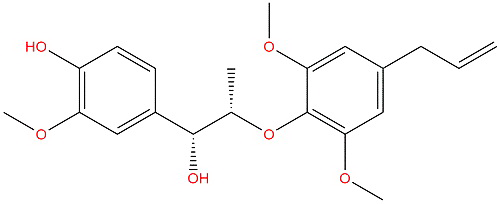
Myrislignan is a typical lignan compound, and its chemical structure determines its unique biological activity and physicochemical properties.
chemical structure
The chemical structure of nutmeg lignans belongs to the tetrahydrofuran type lignans. Its core skeleton is a tetrahydrofuran ring, with phenylpropanoid units connected on both sides. According to existing research, its structure is usually described as: (2R, 3R, 4R) -4- (3,4-dimethoxyphenyl) -2- (3,4-dimethoxyphenyl) -3-methyltetrahydrofuran. Its molecular formula is C ₂₁ H ₂₆ O ₆, and its molecular weight is 374.4330 g/mol. The molecule contains multiple chiral centers, and its stereoconfiguration is crucial for its biological activity. The two benzene rings in the molecule each carry two methoxy groups (- OCH ∝), which increase the lipophilicity of the molecule and may affect its interaction with biological targets. The CAS number is 171485-39-5.
Physicochemical properties
1. Lipid water partition coefficient (LogP)The LogP value of nutmeg lignans is 2.8530. LogP is an important parameter for measuring the lipophilicity of compounds, indicating that nutmeg lignans have a moderate degree of lipophilicity. According to the Lipinski Five Rules, a LogP value less than 5 is one of the characteristics of good oral medication. A LogP value of 2.853 indicates that it can penetrate biological membranes well, facilitating absorption, distribution, and binding to intracellular targets such as proteins in the NF - κ B signaling pathway in vivo.
2. Topological Polarity Surface Area (TPSA)Its TPSA is 77.3800 Å ². TPSA reflects the ability of compounds to form hydrogen bonds and is closely related to oral absorption and blood-brain barrier penetration. Generally, compounds with TPSA less than 140 Å ² have good oral bioavailability, while compounds with TPSA less than 90 Å ² are more likely to penetrate the blood-brain barrier. The TPSA of nutmeg lignan is 77.38 Å ², indicating its good oral absorption potential and the ability to penetrate the blood-brain barrier.
3. Water solubility The water solubility of nutmeg lignans is relatively low, only 0.0945 mg/mL. This is consistent with its higher LogP value. Low water solubility is a challenge faced by many natural products in drug development, which may limit their dissolution and absorption after oral administration. Therefore, in the development of formulations, it may be necessary to use solubilization techniques, such as using co solvents, cyclodextrin inclusion, or preparing nano formulations.
4. Blood-brain barrier penetrability Based on its high LogP value (2.853) and moderate TPSA (77.38 Å ²), it is predicted that nutmeg lignans have high blood-brain barrier penetration. This characteristic makes it potentially valuable in the treatment of inflammatory diseases related to the central nervous system, such as Alzheimer's disease, Parkinson's disease, multiple sclerosis, etc., as many inflammatory mediators and signaling pathways also play key roles in the pathological processes of the central nervous system.
5. HERG inhibition and Ames test In drug efficacy evaluation, hERG (human ether - à - go related gene) potassium channel inhibition is one of the main causes of drug cardiac toxicity. The data shows that nutmeg lignans have no inhibitory activity on hERG channels, greatly reducing their risk of causing QT interval prolongation and arrhythmia. In addition, the Ames test result was 0.0, indicating that it did not exhibit mutagenicity in the bacterial recovery mutation test, suggesting a low risk of genetic toxicity. These preliminary safety data provide favorable conditions for the further development of nutmeg lignans.
Plant sources and extraction methods
The main plant source of nutmeg lignans is the Myristicaceae plant nutmeg(Myristica fragrans Houtt)。 Nutmeg is an evergreen tree native to the Maluku Islands (Spice Islands) in Indonesia, and is now widely planted in tropical regions such as Indonesia, Malaysia, Sri Lanka, India, and the Caribbean. The kernel (i.e. nutmeg) and false seed coat (i.e. nutmeg coat) are famous spices, and are also widely used in traditional medical systems to treat various diseases such as indigestion, inflammation, diarrhea, and rheumatic pain. The chemical composition of nutmeg is complex, rich in volatile oils (such as nutmeg ether, elephantin), lignans, flavonoids, triterpenoids, and other compounds. Nutmeg lignan is one of the lignan components with relatively low content but significant activity.
extraction method
The extraction of nutmeg lignans from nutmeg usually follows the classic process of natural product chemistry, which includes three main steps: extraction, separation, and purification.
- Ingredient Preparation Usually, dried nutmeg seeds are used and crushed into coarse powder to increase the contact area between the solvent and plant tissue, thereby improving extraction efficiency.
- Solvent extraction Due to the moderate lipophilicity of nutmeg lignans, organic solvents with moderate polarity are often used for extraction. The most commonly used method is Ethanol reflux extraction or Methanol cold soaking/percolation extraction For example, the nutmeg powder is refluxed and extracted several times with 95% ethanol at 60-70 ℃, and the extracted solutions are combined and concentrated under reduced pressure to obtain the total extract. Sometimes solvents such as ethyl acetate or dichloromethane are used for extraction to enrich lignin components.
- Preliminary separation Total extract usually contains a large amount of fat soluble impurities (such as oils, volatile oils) and pigments. Firstly, through Liquid-liquid extraction Perform preliminary separation. Suspend the total extract in water and extract it sequentially with solvents such as petroleum ether, ethyl acetate, and n-butanol. Due to the moderate polarity of nutmeg lignans, they are mainly enriched in the ethyl acetate extraction layer.
- Chromatographic Separation and Purification This is a key step in obtaining high-purity nutmeg lignans. Mainly adopt Silica gel column chromatography Gradient elution was performed using a mixture of petroleum ether ethyl acetate or chloroform methanol solvents in different proportions. Collect fractions containing the target compound through thin-layer chromatography (TLC) monitoring. For components that are difficult to separate, they can be combined Gel column chromatography (such as Sephadex LH-20) Perform molecular sieve separation, or use Preparation type high-performance liquid chromatography (Pre HPLC) Refine it. Finally, pure nutmeg lignans were obtained through methods such as recrystallization. Its structure was confirmed by spectroscopic techniques such as nuclear magnetic resonance spectroscopy (NMR) and mass spectrometry (MS).
Pharmacological activity research
The pharmacological activity research of nutmeg lignans is currently mainly focused on the anti-inflammatory field, while there are also some preliminary explorations on its antioxidant and neuroprotective effects.
1. Anti inflammatory activity
This is the most core and extensively studied pharmacological activity of nutmeg lignans. A large number of in vitro cell experiments have confirmed its powerful anti-inflammatory effect.
* Inhibit macrophage inflammatory response In the LPS stimulated mouse macrophage cell line model (such as RAW264.7), nutmeg lignans can significantly inhibit the production of pro-inflammatory cytokines (such as TNF - α, IL-6) and nitric oxide (NO) in a dose-dependent manner. NO is catalyzed by inducible nitric oxide synthase (iNOS, encoded by the NOS2 gene) and is a key mediator of inflammatory response. Nutmeg lignans reduce NO production by downregulating iNOS expression.
* Inhibition of prostaglandin synthesis Prostaglandin E2 (PGE2) is another important pro-inflammatory mediator, whose synthesis depends on cyclooxygenase (COX, encoded by the PTGS1/2 gene). Research has shown that nutmeg lignans can inhibit the activity or expression of COX-2, thereby reducing the production of PGE2 and exerting anti-inflammatory effects.
* In vivo anti-inflammatory model In addition to in vitro experiments, nutmeg lignans have also shown anti-inflammatory potential in animal models. For example, in the carrageenan induced mouse toe swelling model or the acetic acid-induced mouse peritoneal capillary permeability increase model, administration of nutmeg lignan can effectively alleviate inflammatory reactions, manifested as reduced swelling or reduced dye exudation.
2. Other potential pharmacological activities
* antioxidant activity Lignin compounds generally have antioxidant activity. Nutmeg lignans have also been found to have the ability to scavenge free radicals (such as DPPH free radicals, ABTS free radicals) and enhance the activity of endogenous antioxidant enzymes in cells. This antioxidant effect may complement its anti-inflammatory activity.
* Neuroprotective effect Given its high blood-brain barrier penetration, the neuroprotective effect of nutmeg lignans deserves attention. Preliminary research suggests that it may alleviate neuroinflammation by inhibiting the overactivation and inflammatory response of microglia (macrophages in the central nervous system), thereby protecting against neuronal damage in neurodegenerative disease models such as Alzheimer's disease and Parkinson's disease. This is highly related to its anti-inflammatory mechanism.
* Analgesic effect Inflammation is often accompanied by pain. Nutmeg lignans have potential regulatory effects on TRPV1 and TRPA1, two ion channels closely related to pain perception. TRPV1 and TRPA1 are members of the transient receptor potential (TRP) channel family, playing a critical role in inflammatory pain and neuropathic pain. Nutmeg lignans may exert analgesic effects by inhibiting the activation of these channels.
Mechanism of action and molecular targets
The core molecular mechanism by which nutmeg lignans exert their anti-inflammatory effects is Inhibition of NF - κ B signaling pathway activation In addition, it may also synergistically exert anti-inflammatory effects by regulating signaling molecules such as STAT3 and CASP1.
1. Core mechanism: Inhibition of NF - κ B signaling pathway
NF - κ B (nuclear factor kappa B) is a key transcription factor family that plays a central role in regulating processes such as inflammation, immunity, cell proliferation, and apoptosis. In the resting state, NF - κ B (usually a p50/p65 heterodimer, p65 encoded by the RELA gene) binds to its inhibitory protein I κ B (such as I κ B α) and exists in an inactive form in the cytoplasm. When cells are stimulated by pro-inflammatory factors such as LPS and TNF - α, the I κ B kinase (IKK, encoded by the IKBKB gene) complex is activated, which phosphorylates I κ B α and leads to its ubiquitination degradation. The released NF - κ B immediately translocates into the nucleus and binds to the κ B site on the target gene promoter, initiating the transcription of a series of pro-inflammatory genes such as TNF - α, IL-6, iNOS, COX-2.
Nutmeg lignans intervene in this process through the following steps:
* Inhibition of IKK β activity Research has shown that nutmeg lignans can directly or indirectly inhibit the kinase activity of IKK β (encoded by the IKBKB gene). IKK β is the main catalytic subunit responsible for phosphorylating I κ B α in IKK complexes. Inhibiting the activity of IKK β is a key upstream event that blocks the activation of the NF - κ B pathway.
* Preventing the degradation of I κ B αDue to the inhibition of IKK β activity, the phosphorylation level of I κ B α decreases, thereby avoiding its degradation by ubiquitination. This enables I κ B α to stably bind to NF - κ B, trapping it in the cytoplasm.
* Inhibition of p65 nuclear translocation The stable existence of I κ B α directly prevents the translocation of NF - κ B p65 subunit to the nucleus. Therefore, even with LPS stimulation, p65 cannot enter the nucleus to initiate the transcription of inflammatory genes.
* Downregulate the expression of pro-inflammatory genes Ultimately, NF - κ B cannot be activated, leading to a significant decrease in the mRNA expression levels of downstream target genes such as TNF - α, IL-6, iNOS (NOS2), and COX-2 (PTGS2), thereby reducing the production of these pro-inflammatory mediators at the protein level.
2. Regulation of other signaling pathways and targets
* STAT3 signaling pathway STAT3 (Signal Transduction and Transcription Activation Factor 3) is another transcription factor closely associated with inflammation and cancer. Cytokines such as IL-6 can activate STAT3, which in turn can promote the expression of IL-6 and other genes, forming a positive feedback loop and exacerbating inflammation. Nutmeg lignans may block this pathway by inhibiting the production of IL-6 or directly interfering with the phosphorylation activation of STAT3, thereby synergistically exerting anti-inflammatory effects through the NF - κ B pathway.
* CASP1 and cell pyroptosis CASP1 (cysteine aspartate protease 1) is a key effector molecule of inflammasomes. After inflammasome activation, CASP1 is cleaved and activated, which in turn cleaves and activates the precursors of pro-inflammatory cytokines IL-1 β and IL-18, and induces a pro-inflammatory cell death mechanism called "cell pyroptosis". Nutmeg lignans may alleviate inflammation by inhibiting the activation of CASP1, reducing the maturation and release of IL-1 β and IL-18.
* TRPV1 and TRPA1 As mentioned earlier, these two ion channels are important molecules for pain and inflammation perception. Nutmeg lignans may act as their antagonists, directly blocking calcium influx and neuronal excitation caused by stimuli such as capsaicin (TRPV1 agonist) or mustard oil (TRPA1 agonist), thereby exerting analgesic and anti-inflammatory effects.
In summary, the anti-inflammatory mechanism of nutmeg lignans is multi-target and multi pathway, but Inhibition of NF - κ B signaling pathway It is its most core mechanism of action. By targeting IKK β, it effectively blocks the transmission of inflammatory signals from cell membrane receptors to the nucleus, thereby "turning off" the overall switch of inflammatory response at the transcriptional level.
Evaluation of drug properties and pharmacokinetics
The evaluation of drug properties and pharmacokinetic studies are essential steps in advancing a natural product from laboratory research to clinical application. Preliminary evaluation of the pharmacological properties of nutmeg lignans based on existing data.
Drugability assessment
1. drug-likeness According to Lipinski's five rules (molecular weight<500, LogP<5, hydrogen bond donor<5, hydrogen bond acceptor<10), nutmeg lignans fully comply with (molecular weight 374.43, LogP 2.85, hydrogen bond donor 0, hydrogen bond acceptor 6). This indicates that it has the basic chemical skeleton characteristics as an oral medication.
2. safety The preliminary safety evaluation results are encouraging. HERG inhibition negative (no) and Ames test negative (0.0) indicate a lower risk of cardiac and genetic toxicity. Of course, this is only preliminary in vitro and bacterial level testing, and further comprehensive in vivo toxicology studies are needed, including acute toxicity, subchronic toxicity, reproductive toxicity, and carcinogenicity.
3. Metabolic stability At present, there is insufficient data on the metabolic stability of nutmeg lignans in liver microsomes or in vivo. The methoxy group and tetrahydrofuran ring in its molecular structure are potential metabolic sites for cytochrome P450 enzyme (CYP450). In the future, it is necessary to study its half-life, metabolic pathways, and whether it will produce toxic or active metabolites in human liver microsomes.
4. Water solubility The low water solubility of 0.0945 mg/mL is a major weakness in its medicinal properties. Low water solubility can lead to poor dissolution after oral administration, thereby affecting bioavailability. This is a common challenge faced by many natural products, which needs to be overcome through formulation methods.
Pharmacokinetic (PK) characteristics (prediction and outlook)
* absorb Due to its good lipid solubility and compliance with Lipinski rules, it is predicted that nutmeg lignans can be absorbed by the gastrointestinal tract after oral administration. But low water solubility may limit its absorption rate and degree. Its absorption may be affected by food effects.
* distribution A high LogP value and moderate TPSA indicate that it has a large distribution volume and can be widely distributed in various tissues throughout the body. Especially its High blood-brain barrier penetrability It is crucial for the development of drugs for treating neuroinflammation to achieve high drug concentrations in central nervous system tissues.
* Metabolism The main metabolic pathway is likely to be oxidative metabolism in the liver through the CYP450 enzyme system (such as CYP3A4, CYP2D6, etc.), such as O-demethylation, hydroxylation, etc. Metabolites may have different pharmacological activities.
* excretion Metabolites and small amounts of prototype drugs may be mainly excreted through bile and urine.
Strategies for enhancing medicinal properties
Given its low water solubility, the following strategies can be considered for future development:
1. Formulation technology Adopting technologies such as solid dispersion, liposomes, nanoemulsions, phospholipid complexes, etc., to improve their solubility and dissolution rate.
2. Prodrug design Introducing hydrophilic groups (such as phosphate groups, amino acids, etc.) into the phenolic hydroxyl or other modifiable sites of the molecule to make prodrugs, which are released in vivo after enzymatic hydrolysis.
3. Structural modification On the basis of maintaining its core pharmacophores (tetrahydrofuran ring and aromatic ring), modifications are made to methoxy and other functional groups to improve its physicochemical properties and metabolic stability, while maintaining or enhancing its activity.
Clinical application prospects and prospects
Nutmeg lignans have shown broad application prospects in the treatment of various inflammation related diseases due to their clear anti-inflammatory mechanism, multi-target action characteristics, and preliminary good safety.
1. Chronic inflammatory diseases
* Rheumatoid arthritis (RA)RA is an autoimmune disease characterized by chronic inflammation of the joint synovium, with TNF - α and IL-6 being key pathogenic factors. Nutmeg lignans can effectively inhibit the production of these cytokines by suppressing the NF - κ B pathway, and are expected to become candidate drugs for the treatment of RA.
* Inflammatory bowel disease (IBD)Including Crohn's disease and ulcerative colitis, the excessive inflammatory response of the intestinal mucosa is its core pathology. Nutmeg lignans may alleviate intestinal inflammation and repair the intestinal mucosal barrier by inhibiting the activation of intestinal macrophages.
* Atherosclerosis Chronic vascular inflammation is the initiating and promoting factor of atherosclerosis. The anti-inflammatory and antioxidant effects of nutmeg lignans may delay the process of atherosclerosis by inhibiting the inflammatory reaction of vascular endothelial cells and macrophages.
2. Neurodegenerative diseases
This is one of the most distinctive application directions of nutmeg lignans, thanks to their high blood-brain barrier penetration.
* Alzheimer's disease (AD)Neuroinflammation is one of the important pathological features of AD. The excessive activation of microglia releases a large amount of inflammatory factors, exacerbating the neurotoxicity caused by the deposition of β - amyloid protein (A β) and excessive phosphorylation of tau protein. Nutmeg lignans are expected to alleviate neuroinflammation and protect neurons by inhibiting the NF - κ B pathway in microglia.
* Parkinson's disease (PD)Similarly, neuroinflammation plays an important role in the degeneration and death of dopaminergic neurons in the substantia nigra. The anti-inflammatory and antioxidant effects of nutmeg lignans may have a protective effect on PD models.
* Multiple sclerosis (MS)MS is an autoimmune demyelinating disease of the central nervous system. Nutmeg lignans may regulate the function of immune cells such as T cells and macrophages, inhibit inflammatory responses in the central nervous system, and alleviate myelin damage.
3. Acute inflammation and pain
* sepsis Sepsis is a systemic inflammatory response syndrome caused by infection and is one of the main causes of death in ICU patients. Nutmeg lignan can inhibit LPS induced macrophage inflammatory response, suggesting its potential application value in the treatment of sepsis.
* Inflammatory pain By inhibiting TRPV1 and TRPA1 channels, nutmeg lignans may serve as a novel non opioid analgesic for the treatment of inflammatory pain (such as arthritis, toothache, etc.).
Future research directions
Despite its broad prospects, the development of nutmeg lignans is still in its early stages, and future research should focus on the following aspects:
1. In depth pharmacokinetic research Conduct systematic in vivo PK studies to clarify its absorption, distribution, metabolism, and excretion characteristics in animals and humans, especially its distribution and exposure levels in the central nervous system.
2. Comprehensive toxicological evaluation Conduct standardized preclinical toxicology studies, including long-term toxicity, reproductive toxicity, and immunotoxicity, to comprehensively evaluate its safety.
3. Deepening the mechanism of action Using chemical biology, structural biology and other methods, clarify the direct binding mode between nutmeg lignans and target proteins such as IKK β and TRPV1, providing a basis for structure based drug optimization.
4. Research on Structural Optimization and Structure Performance Relationship Synthesize a series of derivatives of nutmeg lignans, systematically study the relationship between their chemical structure, anti-inflammatory activity, selectivity, and metabolic stability, and search for candidate compounds with stronger activity and better drug properties.
5. In vivo efficacy verification Validate its therapeutic effect in various animal models of diseases (such as RA, AD, IBD models) and explore the optimal administration route and dosage regimen.
Conclusion
Nutmeg lignans, as natural lignans isolated from the traditional spice nutmeg, have shown important research value in the field of natural product pharmacology due to their unique chemical structure and clear anti-inflammatory mechanism. It effectively regulates macrophage inflammatory response by inhibiting the core mechanism of NF - κ B signaling pathway, and may exert synergistic anti-inflammatory effects by affecting multiple targets such as STAT3, CASP1, TRPV1, etc. The preliminary pharmacological evaluation shows that it has good drug like properties and low hERG inhibition and genetic toxicity risks, but its low water solubility is a key challenge that needs to be overcome. Of particular note is its high blood-brain barrier penetration, which opens up unique possibilities for its application in the treatment of neurodegenerative diseases.
The research process of nutmeg lignans, from active ingredients in spices to potential anti-inflammatory drug lead compounds, reflects the classic path of modern medicinal chemistry drawing inspiration from natural products. In the future, with the in-depth elucidation of its pharmacokinetic and toxicological characteristics, as well as the advancement of structure optimization and formulation research based on structure-activity relationships, nutmeg lignans and their derivatives are expected to develop into new drugs for the treatment of various diseases such as chronic inflammation and neuroinflammation. The continuous research on nutmeg lignans will not only deepen our understanding of the pharmacological activities of lignans, but also provide valuable scientific basis for the development of innovative drugs derived from traditional Chinese medicine resources.