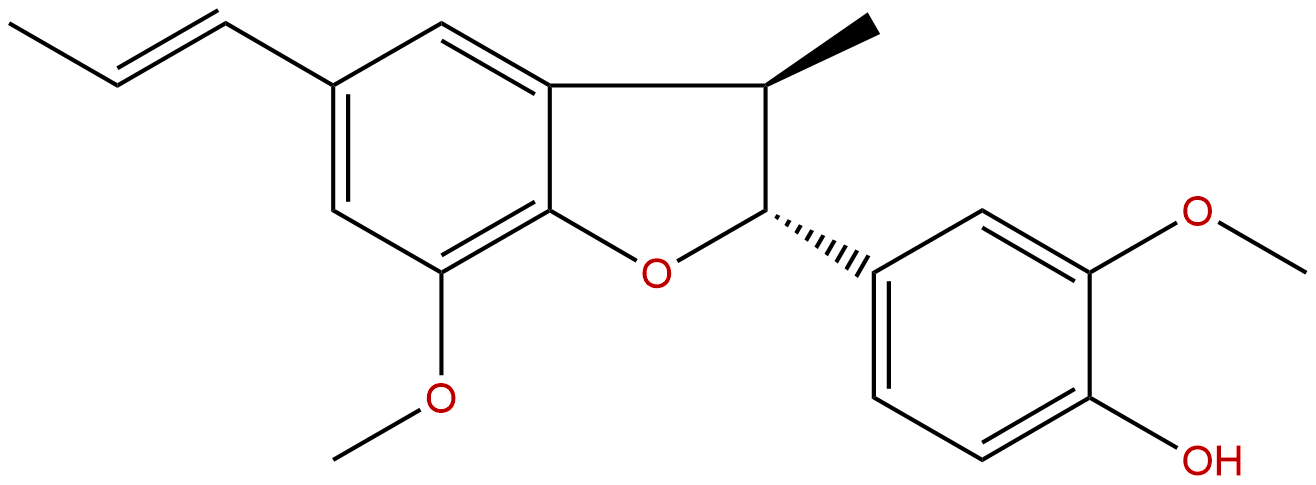


Product name: Licarin A
Synonym name:
Catalogue No.: BP3229
Cas No.: 51020-86-1
Formula: C20H22O4
Mol Weight: 326.392
Botanical Source:
Physical Description:
Type of Compound: Lignans
Purity: 95%~99%
Analysis Method: HPLC-DAD or/and HPLC-ELSD
Identification Method: Mass, NMR
Packing: Brown vial or HDPE plastic bottle
The product could be supplied from milligrams to grams. Inquire for bulk scale.
We provide solution to improve the water-solubility of compounds, thereby facilitating the variety of activity tests and clinic uses.
For Reference Standard and R&D, Not for Human Use Directly.
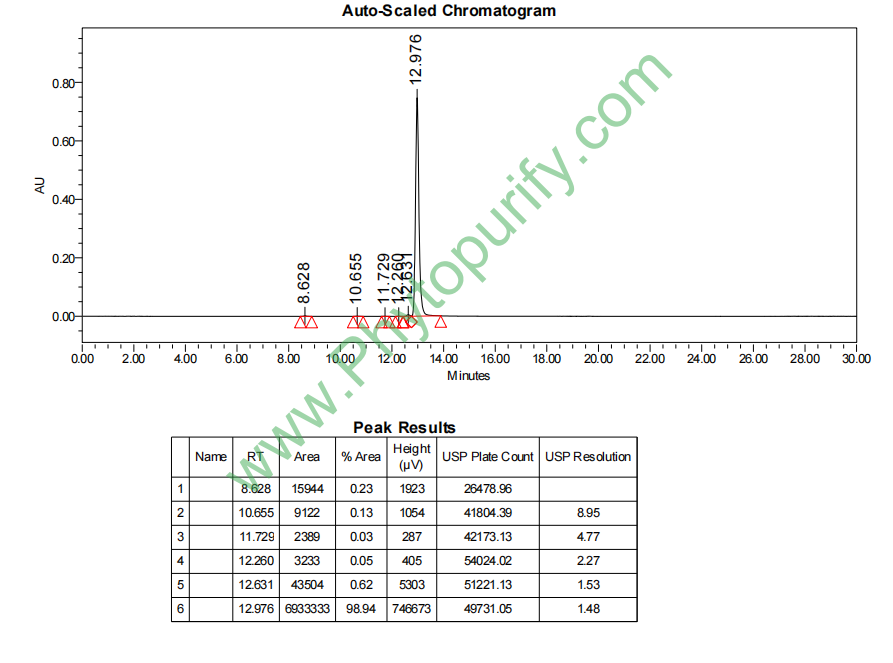
HPLC of Licarin A
Storage conditions:Short-term storage at 2~8℃, long-term storage at -20 ~ -80℃
47.9200
4.4886
4.4867
.0059
9.1636
9.9736
High
93.0638
3.2798
No
Yes
No
No
No
No
0.0
No
Yes
Yes
Yes
Natural products have long been an important source of innovative drug discovery, and their structural diversity and wide range of biological activities provide valuable lead compounds for the treatment of various diseases, especially malignant tumors. Among numerous natural molecules with potential, Licarin A, as a new lignan compound, has attracted much attention in recent years due to its significant anti-tumor activity in various cancer models. Ovarian cancer is the deadliest gynecological malignancy, and its treatment often faces significant challenges due to chemotherapy resistance and recurrence. Therefore, it is crucial to find new treatment strategies that can overcome drug resistance and multi-target intervention. Preliminary research on Licalin A reveals that it can exert multiple pharmacological effects, including inhibiting proliferation, inducing apoptosis, inhibiting invasion and metastasis, and reversing multidrug resistance, by regulating multiple key targets closely related to the occurrence, development, and drug resistance of ovarian cancer, including BCL2, STAT3, ABCB1. This article aims to systematically review the chemical properties, plant sources, pharmacological activities, molecular mechanisms of action, pharmacological characteristics, and application prospects of Licalin A in the treatment of ovarian cancer and other diseases, in order to provide comprehensive scientific references for the in-depth research and future development of this compound.
Licarin A, chemical name (8R, 8'R) -3,4,3 ', 4' - bis (methylenedioxy) -7.0 '. 9.9' - bicyclic lignin, CAS number 51020-86-1. Its molecular formula is C20H18O5 and its molecular weight is 326.3920 g/mol.
From a chemical structure perspective, Licalin A belongs to the furan type of lignin, and its core skeleton is composed of two phenylpropanoid units (C6-C3) connected by C8-C8 'bonds, forming a characteristic double tetrahydrofuran ring (7.0'. 9.9 '- double epoxy) structure. Both benzene rings are attached with methylene dioxy (- O-CH2-O -) substituents, which is a common structural feature in lignin compounds with biological activity and may be related to enhancing their interaction with target proteins and metabolic stability.
Based on its chemical structure calculation, the physicochemical parameters show that the lipophilic water partition coefficient (LogP) of Licalin A is 4.4886, indicating that the compound has high lipophilicity. The topological polar surface area (TPSA) is 47.92 Å ², which is relatively small. These parameters collectively determine its poor apparent water solubility (approximately 0.0059 mg/mL). High lipophilicity and smaller polar surface area typically indicate that compounds are prone to penetrate cell membranes, but may also lead to variability in oral absorption. It is worth noting that the calculation predicts that it has a high blood-brain barrier permeability, which provides clues for its potential central nervous system related activity research. In addition, preliminary pharmacological risk assessment showed that Licalin A was negative in Ames test (predicted value of 0.0) and hERG potassium channel inhibition, indicating its potential genetic and cardiac toxicity risks are low, laying a relatively safe foundation for its further development.
Licalin A is widely present in the roots, stems, bark, and seeds of various plants, especially in Lauraceae, Myristicaceae, and Magnoliaceae plants. Its main plant sources include:
1. Brazilian Nutmeg(Myristica fragrans)Common nutmeg, which is rich in Ricarin A in its false seed coat and seeds.
2. Avocado(Persea americana)Its seeds and skin are important sources for extracting icariin A.
3. Various species of camphor plants(Cinnamomum spp.) and Magnolia plants(Magnolia spp.) It is also often detected in the middle.
The extraction of Licalin A from plant materials mainly uses organic solvent extraction method. Common solvents include methanol, ethanol, ethyl acetate, dichloromethane, etc. The typical extraction process is: dry and crushed plant materials are subjected to cold soaking or heating reflux extraction with appropriate solvents, and the extracted liquids are combined and concentrated under reduced pressure to obtain crude extracts. Subsequently, the crude extract was separated and purified through a series of chromatographic separation technologies (such as silica gel column chromatography, gel column chromatography, high-performance liquid chromatography, etc.) to obtain the high-purity monomer Ricarin A. In recent years, green extraction techniques such as supercritical CO2 extraction have also been attempted to be applied to the extraction of this type of lignin, in order to improve efficiency and reduce the use of organic solvents. The extraction yield varies greatly depending on the plant source, part, harvesting season, and extraction method.
Licalin A exhibits diverse pharmacological activities, among which anti-tumor activity is the core focus of research, especially in the field of ovarian cancer.
1. Antitumor activity
Numerous in vitro studies have shown that Licalin A has significant inhibitory and pro apoptotic effects on various human ovarian cancer cell lines, such as SKOV3, A2780, OVCAR-3, etc. Its effect is concentration and time-dependent. In addition to its direct killing effect, Licalin A can also effectively inhibit the migration and invasion ability of ovarian cancer cells, indicating its potential for anti metastasis. In animal models, administration of lidocaine A significantly inhibited the growth of ovarian cancer xenografts, and no significant weight loss or organ toxicity was observed, indicating that it has a certain therapeutic window.
2. Reverse multidrug resistance (MDR)
Multidrug resistance is the main cause of chemotherapy failure in ovarian cancer. Licalin A has been proven to be an effective inhibitor of P-glycoprotein (P-gp, encoded by the ABCB1 gene). P-gp is an ATP binding cassette transporter protein that can pump chemotherapy drugs (such as paclitaxel and doxorubicin) out of cells, reducing intracellular drug concentrations. Licalin A increases the accumulation of chemotherapy drugs in drug-resistant ovarian cancer cells by inhibiting the function of P-gp, thereby restoring their sensitivity to chemotherapy, and has important value as a combination therapy.
3. Antioxidant and neuroprotective activities
The phenolic hydroxyl group and lignin skeleton in the structure of Licalin A endow it with antioxidant capacity. It can eliminate free radicals and activate cellular defense systems, such as by regulating the nuclear factor E2 related factor 2 (NFE2L2/Nrf2) pathway and upregulating the expression of downstream antioxidant enzymes. This characteristic is associated with its potential neuroprotective effects and has shown improvement in preclinical models of oxidative stress-related neurodegenerative diseases such as Parkinson's disease and Alzheimer's disease.
4. Other activities
The study also reported that Licalin A has anti-inflammatory, antimicrobial (such as antifungal, anti Leishmania), and tyrosinase inhibitory (TYR, related to melanin production) activities, demonstrating its multifaceted potential for application.
The anti ovarian cancer effect of Licalin A involves synergistic regulation of multiple targets and pathways, and its main molecular mechanisms can be summarized as follows:
1. Inducing cell apoptosis
* Regulating the BCL2 family Licalin A can downregulate the expression of anti apoptotic protein BCL2, while possibly upregulating the expression of pro apoptotic proteins (such as BAX), leading to a decrease in mitochondrial membrane potential and release of cytochrome C, thereby activating the caspase cascade reaction and inducing endogenous apoptosis.
* Inhibition of STAT3 signaling pathway Signal transducer and activator of transcription factor 3 (STAT3) is a key oncogenic factor that is continuously activated in ovarian cancer. Licalin A can inhibit the phosphorylation (activation) of STAT3, prevent its nuclear translocation and the transcription of downstream target genes (such as Cyclin D1, Survivor, BCL2), thereby inhibiting cell proliferation and promoting apoptosis.
2. Inhibit tumor invasion and metastasis
* Inhibition of matrix metalloproteinases (MMPs)Licalin A can downregulate the expression and activity of MMP2 (matrix metalloproteinase 2). MMP2 is a key enzyme that degrades extracellular matrix, promotes tumor invasion, and angiogenesis. Its inhibition helps to block the metastatic process of ovarian cancer.
* Inhibition of hypoxia inducible factor-1 α (HIF1A)In the hypoxic microenvironment of tumors, HIF1A is stabilized and activated, thereby promoting angiogenesis and metastasis. Licalin A can disrupt the adaptive response of tumors by interfering with the stability or transcriptional activity of HIF1A.
3. Reverse multidrug resistance
* Directly inhibit ABCB1/P-gp function As mentioned earlier, Licalin A acts as a competitive or allosteric inhibitor that directly binds to P-gp, preventing it from efflux chemotherapy drugs and reversing resistance.
4. Interference with DNA metabolism and causing DNA damage
* Inhibition of Topoisomerase (TOP1/TOP2A)Topoisomerases are key enzymes involved in DNA replication and transcription, and are also targets of various chemotherapy drugs. Research has shown that Licalin A may cause DNA breakage and replication disorders by inhibiting the activity of topoisomerases I (TOP1) and II α (TOP2A).
* Inhibition of tyrosine DNA phosphodiesterase 1 (TDP1)TDP1 is a key enzyme for repairing damage to topoisomerase I-DNA covalent complexes. Inhibition of TDP1 can enhance the cytotoxicity of TOP1 inhibitors. The inhibition of TDP1 by Licalin A provides a theoretical basis for its combination with TOP1 inhibitors such as irinotecan.
5. Activate cellular protective pathways
* Activate NFE2L2/Nrf2 pathway In normal cells or specific backgrounds, Licalin A can enhance the antioxidant stress resistance of cells by activating the Nrf2 pathway, which may partly explain its lower baseline toxicity and neuroprotective effects.
In summary, Licalin A exerts its anti ovarian cancer effects from multiple dimensions, including inducing apoptosis, inhibiting proliferation, anti metastasis, and reversing drug resistance, by acting on a complex target network.
Although Licalin A has shown good activity in vitro and preclinical models, its pharmacological properties still require systematic evaluation.
Pharmacokinetics (PK)Currently, there is relatively limited research data on the pharmacokinetics of the Licalin A system. Based on its physicochemical properties (high LogP, low water solubility), it can be predicted that its oral absorption may be affected by solubility and first pass effects. Preliminary animal studies suggest that its oral bioavailability may be moderate. Licalin A may undergo extensive metabolism in the body, including liver cytochrome P450 enzyme mediated oxidation, demethylation, and glucuronic acid or sulfate binding reactions. Its high lipid solubility may lead to widespread tissue distribution, and the predicted high blood-brain barrier permeability also needs to be validated in vivo. The main pathways of excretion may be through bile and feces.
Pharmaceutical advantages:
1. Multi-target effect It has inhibitory effects on multiple key carcinogenic targets, which may reduce the resistance that single target drugs are prone to develop.
2. Reverse drug resistance potential Clear P-gp inhibitory activity makes it a chemotherapy sensitizer.
3. Preliminary safety Ames test negative, low risk of hERG inhibition, preclinical toxicity controllable.
challenges faced:
1. Poor water solubility: Affects formulation development and administration routes (may require the use of solubilizers or the development of novel drug delivery systems).
2. Metabolic stability May be rapidly metabolized, resulting in a short half-life in the body, requiring optimization of the dosing regimen or structural modification.
3. Potential non-specific As a multi-target compound, its off target effects and potential toxicity need to be carefully evaluated, especially in the case of long-term administration.
4. Lack of systematic ADMET data Complete absorption, distribution, metabolism, excretion, and toxicity studies are required to clarify its pharmacokinetic characteristics and safety window in humans.
Future research needs to focus on identifying its metabolites in vivo, identifying major metabolic enzymes and transporters, and improving its pharmacokinetic behavior through prodrug strategies or nanoformulations.
As a natural lead compound with multi-target anti ovarian cancer activity, the clinical application prospects of Licalin A are mainly reflected in the following aspects:
1. As a candidate for novel anti ovarian cancer drugs For patients with advanced or recurrent ovarian cancer, especially those resistant to platinum or paclitaxel, Licalin A or its structurally optimized derivatives are expected to be developed as monotherapy. Its multiple mechanisms may lead to a more comprehensive inhibition of heterogeneous tumor cell populations.
2. As a chemotherapy sensitizer Utilizing its P-gp inhibition and potential TDP1 inhibition activity, the combination of Licalin A with conventional chemotherapy drugs such as paclitaxel, doxorubicin, and topotecan is an attractive development strategy. This combination therapy is expected to overcome drug resistance, reduce the dosage of chemotherapy drugs, thereby reducing toxic side effects and improving treatment efficacy.
3. Role in combination therapy In addition to being used in combination with chemotherapy, the combination of Ritalin A with targeted therapies (such as PARP inhibitors, anti angiogenic drugs) or immune checkpoint inhibitors is also worth exploring. For example, its ability to inhibit STAT3 may help improve the tumor immune microenvironment.
4. Structural modification and optimization Structural modification using Licalin A as the parent nucleus is a key pathway to enhance its pharmacological properties. Research directions include: introducing hydrophilic groups to improve solubility; Modifying metabolic sites to enhance stability; By studying structure-activity relationships, enhance selectivity and efficacy towards specific targets such as STAT3 and TOP1, while reducing potential toxicity.
5. Expand other indications Based on its antioxidant, neuroprotective, anti-inflammatory and other activities, Licalin A also has certain development potential in the fields of neurodegenerative and inflammatory diseases.
However, there is still a lot of work to be done towards clinical application: conducting standardized preclinical pharmacological evaluations (using human tumor xenograft models, etc.); Complete comprehensive GLP toxicology studies; Optimize the formulation process; Finally, its safety and effectiveness were verified through clinical trials.
Licalin A is a new lignan with rich biological activity isolated from traditional medicinal plants. Its research in the field of ovarian cancer is particularly outstanding, demonstrating comprehensive advantages in inhibiting tumor growth, metastasis, and reversing drug resistance through precise intervention of multiple key targets such as BCL2, STAT3, ABCB1, MMP2, TOP1/2A, etc. Despite facing challenges such as poor water solubility and insufficient pharmacokinetic data, its clear multi-target mechanism of action, unique ability to reverse drug resistance, and preliminary good safety characteristics make it a highly valuable lead compound for development. Future research should focus on optimizing its structure through medicinal chemistry, improving its delivery efficiency using modern formulation technology, and conducting systematic preclinical and clinical translational studies. With the continuous deepening of research, Licalin A is expected to provide a new and synergistic treatment option for malignant tumors such as ovarian cancer, demonstrating the sustained vitality of natural products in innovative drug development.
