


Synonym name: Fucoxanthol
Catalogue No.: BP0603
Cas No.: 3351-86-8
Formula: C42H58O6
Mol Weight: 658.92
Botanical Source: Algae
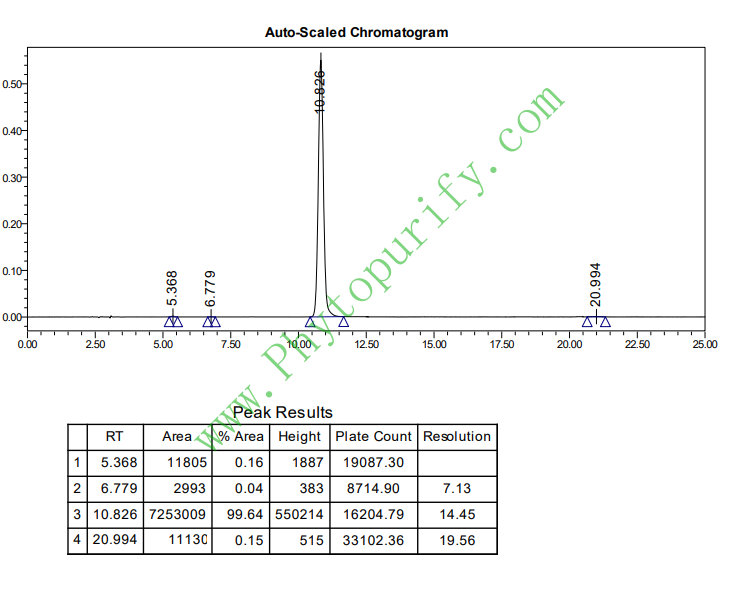
Purity: 10%, 50%, 90%, 95%, 98% by HPLC-DAD
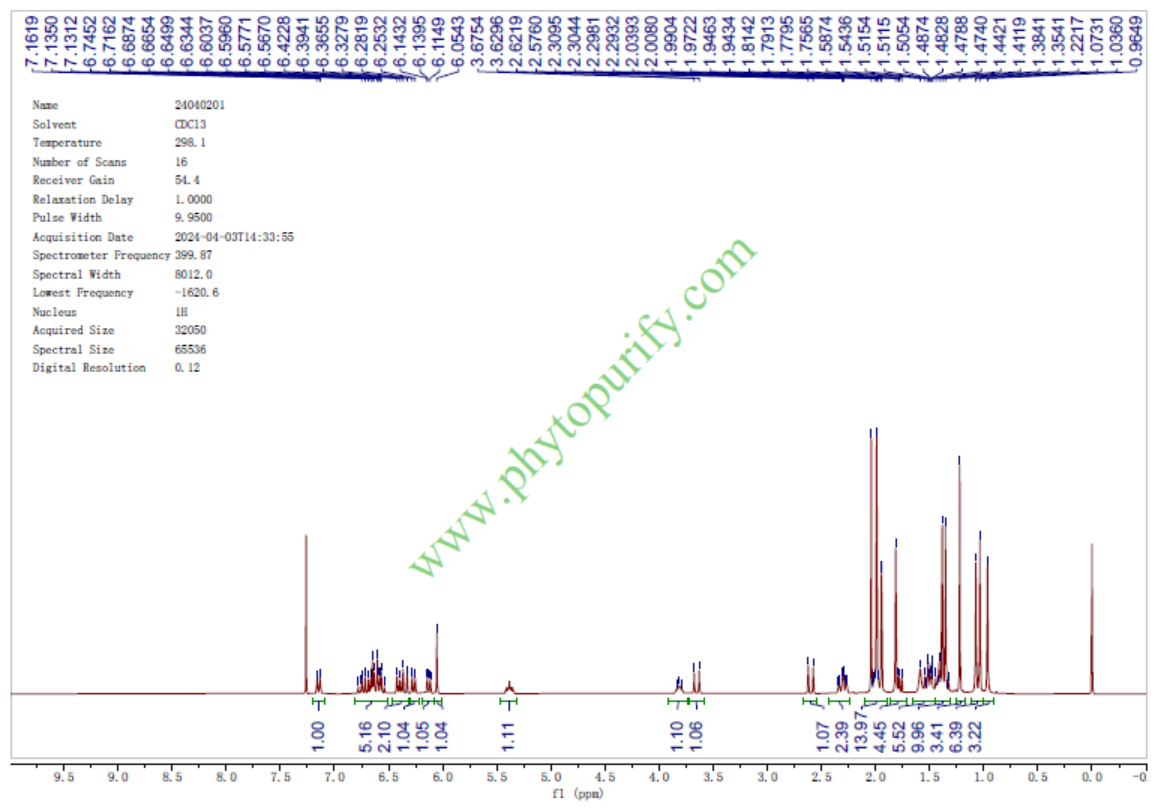
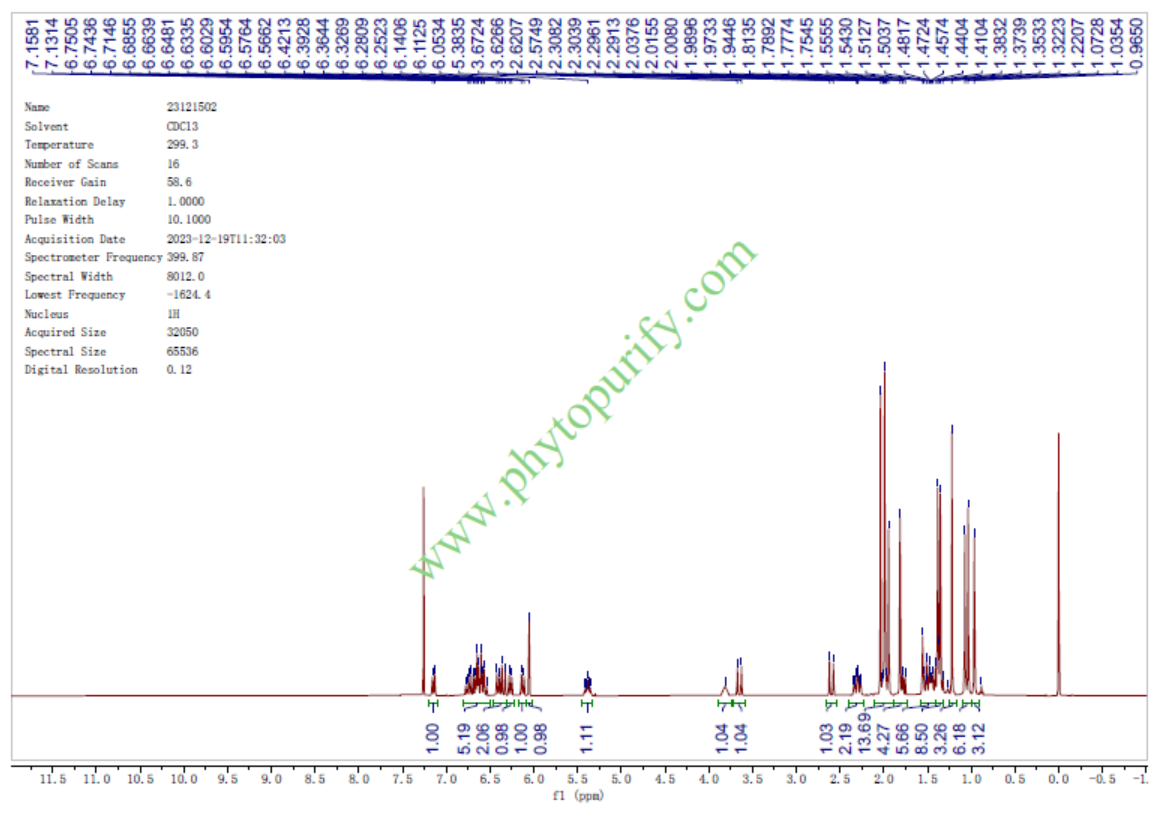
Identification Method: Mass, NMR
Packing: Brown vial or HDPE plastic bottle
Can be supplied from milligrams to grams, up to kgs.
Inquire for bulk scale.
Except supplying the Fucoxanthin for reference standard and R&D, we also supply the Fucoxanthin for food, nutrition and cosmetics request.
Description:
Fucoxanthin is a brown seaweed pigment that is found in most brown seaweeds, as well as a few other marine sources. It is a xanthophyll, which is a molecule structurally similar to beta-carotene and vitamin A; yet fucoxanthin does not possess vitamin-like activity in the body.
Some metabolic and nutritional studies carried out on rats and mice at Hokkaido University indicate that fucoxanthin promotes fat burning within fat cells in white adipose tissue by increasing the expression of thermogenin.A subsequent double-blind placebo-controlled human study of females with liver disease using supplementation with seaweed extract containing fucoxanthin in combination with pomegranate seed oil showed in an average 4.9 kg (11 lb) weight loss in obese women over a 16-week period.
Another 16-week trial is currently underway that is investigating the effects of a combination supplement of brown seaweed extract (containing fucoxanthin) and pomegranate seed oil. This study is looking at the effects of this supplement on body composition, resting energy expenditure, blood pressure, and serum lipid levels and liver enzyme levels of obese men and women following a hypocaloric diet. A manuscript involving the complete results of this study is still pending.
Fucoxanthin is being looked into for its anti-inflammatory, antinociceptive, and anti-cancer effects. A study has shown that fucoxanthin has strong effects on oxidative stress, oxidative stress-related diseases, and cancers.
Research on how fucoxanthin may have preventive effects on cancer is also being done. Many studies show that it aids in anti-proliferation, cell cycle arrest, apoptosis induction, suppression of angiogenesis, and anti-drug potential. Without reducing its therapeutic efficacy, fucoxanthin could also reduce the toxicity that comes with the use of conventional medicine. More research in animal models of disease is needed to be done to obtain more conclusive evidence on the molecular basis of fucoxanthin action.
Fucoxanthin is isolated from a brown algae which has been reported to be a popular health food. The fucoxanthin in this algae induces apoptosis of various cancer cells. It also has anti-tumor activities in various cancer cells. This particular study has shown that fucoxanthin has an inhibitory effect on invasiveness of cancer cells through suppressing the expression of gelatinolytic enzyme MMP-9. This study also found that fucoxanthin suppressed the motility of melanoma cells.
Fucoxanthin, via its metabolites, seems to be stored in fat cells for a prolonged period of time and can induce fat loss while inhibiting fat cell differentiation and proliferation. Although only one human study has been published, it appears to be a promising non-stimulatory fat loss agent but requires time to work (5-16 weeks).
It also possesses other health benefits, such as correcting abnormalities in glucose metabolism in muscle tissue which can help diabetics and might reduce cholesterol levels and triglycerides by currently unverified mechanisms. Reductions in blood pressure and reductions in both liver fat stores and liver enzyme values have been noted with fucoxanthin supplementation in humans. Fucoxanthin, although usage as a supplement is preliminary, appears to be a very promising joint fat loss and health boosting agent.
Fucoxanthin does not appear to induce fat loss acutely, but may take up to 5-16 weeks of 5mg or more in order for fat burning effects to occur. This is probably due to saturating fat mass with fucoxanthin. It may be sufficient to consume dietary seaweed to reach optimal levels of fucoxanthin intake. Fucoxanthin appears to require dietary fat for its absorption from the gut, similar to Vitamin A.
How to take:
A daily dosage of 2.4-8mg fucoxanthin has shown benefit in some human studies over a prolonged period of time, and while within this range the benefits are dose-dependent higher doses have not been tested sufficiently.
If buying a seaweed standardized for fucoxanthin, look for the extract percentage and then backtrack. Buying an undaria pinnafitida supplement that is 1% fucoxanthin by weight would require 240-800mg of the supplement to get 2.4-8mg fucoxanthin.
References:
1,Maeda, H; Hosokawa, M; Sashima, T; Funayama, K; Miyashita, K (2005). "Fucoxanthin from edible seaweed, Undaria pinnatifida, shows antiobesity effect through UCP1 expression in white adipose tissues". Biochemical and Biophysical Research Communications. 332 (2): 392–7. doi:10.1016/j.bbrc.2005.05.002. PMID 15896707.
2,Abidov, M.; Ramazanov, Z.; Seifulla, R.; Grachev, S. (2010). "The effects of Xanthigen in the weight management of obese premenopausal women with non-alcoholic fatty liver disease and normal liver fat". Diabetes, Obesity and Metabolism. 12: 72. doi:10.1111/j.1463-1326.2009.01132.x.
3, {{Lee, Jin-Ching, Ming-Feng Hou, Hurng-Wern Huang, Fang-Rong Chang, Chi-Chen Yeh, Jen Yang Tang, and Hsueh-Wei Chang. “Marine Algal Natural Products with Anti-oxidative, Anti-inflammatory, and Anti-cancer Properties.” Cancer Cell International 13 (2013): n. pag. Scopus. Web. 22 Apr. 2014.}}
4,{{Rengarajan, Thamaraiselvan, Peramaiyan Rajendran, Natarajan Nandakumar, Maruthaiveeran P.Balasubramanian, and Ikuo Nishigaki. “Cancer Preventive Efficacy of Marine Carotenoid Fucoxanthin: Cell Cycle Arrest and Apoptosis.” Nutrients 5.12 (2013): 4978-989. Scopus. Web. 22 Apr. 2014.}}
5, {{Chung, Tae-Wook, Hee-Jung Choi, Ji-Yeon Lee, Han-Sol Jeong, Cheorl-Ho Kim, Myungsoo Joo, Jun-Yong Choi, Chang-Woo Han, So-Yeon Kim, Jae-Sue Choi, and Ki-Tae Ha. “Marine Algal Fucoxanthin Inhibits the Metastatic Potential of Cancer Cells.” Biochemical and Biophysical Research Communications 439.4 (2013): 580-85. Scopus. Web. 22 Apr. 2014.}}
HPLC of Fucoxanthin
HNMR of Fucoxanthin
HNMR of Fucoxanthin
Storage conditions:Short-term storage at 2~8℃, long-term storage at -20 ~ -80℃
Fucoxanthin (CAS number: 3351-86-8) is a natural carotenoid widely found in brown algae and is an important member of marine carotenoids. Its unique structure endows it with significant biological activity, especially in the prevention and treatment of obesity, type 2 diabetes, inflammation, oxidative stress and a variety of cancers. In recent years, with the increasing incidence of global metabolic diseases and chronic inflammatory diseases, fucoidin has become a research hotspot in the field of natural product pharmacology due to its oral activity and multi-target regulation. This article aims to systematically review the chemical structure and physicochemical properties, plant sources and extraction methods, pharmacological activity, mechanism of action, drug evaluation, and clinical application prospects of fucoxanthin, providing theoretical basis and research direction for its drug development and clinical translation.
Fucoidin is a typical all trans configuration carotenoid with a molecular formula of C42H58O6 and a molecular weight of 658.92. Its structural characteristics include the presence of multiple conjugated double bonds, epoxy groups, and aldehyde groups, endowing it with strong antioxidant capacity. The LogP value of fucoxanthin is as high as 7.7562, indicating its high hydrophobicity and extremely low water solubility (0.0008), which poses a challenge to its in vivo absorption and bioavailability. Its topological polar surface area (TPSA) is 96.36, indicating that the molecule has certain polar groups that are conducive to binding with biomolecules. Fucoidin can penetrate the blood-brain barrier, indicating its potential application value in central nervous system diseases. The in vitro hERG channel inhibition experiment showed no significant cardiac toxicity, and the Ames test result was 0, indicating no mutagenicity and good safety.
Fucoidin mainly exists in the Phaeophyceae phylum, such as Laminaria japonica, Undaria Pinnatifida, and Fucus vesiculosus. Its content varies depending on the species, growth environment, and collection season. Traditional extraction methods often use organic solvents such as ethanol, acetone, and ethyl acetate for extraction, combined with ultrasound assisted extraction or Soxhlet extraction to improve extraction efficiency. In recent years, supercritical carbon dioxide extraction technology has become a research hotspot for the extraction of fucoxanthin due to its advantages of green environmental protection, strong selectivity, and no solvent residue. In addition, membrane separation and chromatographic purification techniques are widely used in the purification stage to obtain high-purity fucoxanthin products. The optimization of extraction process not only improves the yield, but also ensures the stability and biological activity of fucoxanthin.
Fucoidin significantly inhibits adipocyte differentiation and fat accumulation by regulating lipid metabolism related genes and signaling pathways. Its targets include PPARG, SREBF1, FASN, LEPR, ADRB3, UCP1, FABP4, LEP, ADIPOQ, and POMC. Fucoidin can activate the non shivering thermogenic protein UCP1 in adipose tissue, promote energy consumption, enhance fat oxidation, reduce fat accumulation, and exhibit good anti obesity effects. Animal experiments have shown that oral administration of fucoxanthin significantly reduces weight gain and adipose tissue weight induced by a high-fat diet, and improves blood lipid abnormalities.
In the model of type 2 diabetes, fucoidin improves cell energy metabolism and promotes glucose uptake and utilization by activating AMPK signaling pathways (PRKAA1, AMPK). Meanwhile, fucoxanthin regulates key targets such as glucokinase (GCK) and protein tyrosine phosphatase 1B (PTPN1), improving insulin resistance and blood glucose homeostasis. Its anti diabetes mechanism also involves antioxidant and anti-inflammatory effects, reducing the damage of pancreatic islet β cells, and improving insulin secretion.
Fucoidin inhibits the expression of pro-inflammatory cytokines and the activation of inflammatory cells by regulating various inflammation related signaling pathways. Its targets include TLR4, PTPN1, STAT3, ALOX15, PRKCA, ALOX5, NFE2L2, CASP1, PIK3CG, and TRPV1. Fucoidin can inhibit the activity of nuclear factor kappa B (NF - κ B) and signal transducer and activator of transcription 3 (STAT3), reduce the production of inflammatory mediators such as TNF - α and IL-6, and alleviate inflammatory responses. Multiple in vitro and in vivo experiments have confirmed its potential for prevention and treatment of chronic inflammatory diseases such as arthritis and inflammatory bowel disease.
Fucoidin has strong free radical scavenging ability, which can activate the NFE2L2 (Nrf2) signaling pathway, induce the expression of downstream antioxidant enzymes such as NQO1, SOD1, SOD2, CAT, GPX1, and enhance the cellular antioxidant defense system. Its protective effect on oxidative stress-related diseases such as neurodegenerative diseases and cardiovascular diseases has been validated in various models. Fucoidin can also inhibit the activity of xanthine oxidase (XDH), reduce the generation of reactive oxygen species (ROS), and decrease cell damage.
Fucoidin regulates the proliferation, apoptosis, migration, and invasion of tumor cells through multiple targets and pathways. Its targets include BCL2, NOTCH1, PTPN1, STAT3, PRKCA, TOP1, TOP2A, MAPK1, NOS2, and PPARG. Fucoidin can induce apoptosis of tumor cells, inhibit tumor related signaling pathways such as STAT3 and MAPK, block tumor cell cycle progression, inhibit angiogenesis and tumor metastasis. Many in vivo and in vitro studies have shown that fucoidin has significant anti-tumor activity in many cancer models, such as breast cancer, colorectal cancer, liver cancer, etc.
The pharmacological basis of fucoxanthin lies in its ability to regulate multiple key molecular targets. Its main mechanism of action includes:
The synergistic effects of these multiple targets and pathways have demonstrated the broad therapeutic potential of fucoxanthin in various disease models.
The high hydrophobicity (LogP 7.7562) and extremely low water solubility (0.0008) of fucoxanthin limit its oral bioavailability, becoming the main bottleneck for its clinical application. However, its ability to penetrate the blood-brain barrier suggests its potential application in neurological diseases. In vitro safety evaluation showed no hERG channel inhibition or mutagenic risk, indicating good safety. Pharmacokinetic studies have shown that fucoxanthin is metabolized rapidly in vivo, mainly through the liver metabolic enzyme system, and the metabolites have certain biological activity. To improve its bioavailability, the development of new drug delivery systems such as nanocarriers, liposome encapsulation, solid dispersions, and composite formulations has become a research hotspot.
Due to its multi-target and multifunctional biological activity, fucoxanthin has broad clinical application prospects. Currently, fucoxanthin has entered partial clinical trials as an adjuvant therapy for obesity and metabolic syndrome, demonstrating good safety and initial efficacy. In the future, with the optimization of extraction and purification technology and drug delivery system, fucoidin is expected to play a greater role in the treatment of diabetes, chronic inflammatory diseases, neurodegenerative diseases and tumors. In addition, the antioxidant and anti-inflammatory properties of fucoxanthin make it a potential natural medicine for preventing aging and related chronic diseases. Multi center, large sample clinical trials and mechanism studies will further promote its clinical translation.
As a marine carotenoid with rich sources and diverse biological activities, fucoidin shows significant pharmacological effects in many fields such as anti obesity, anti diabetes, anti-inflammatory, antioxidant and anti-cancer. Its multi-target mechanism of action provides new ideas for the comprehensive treatment of complex diseases. However, the high hydrophobicity and low bioavailability of fucoxanthin limit its clinical application, and there is an urgent need to improve its in vivo stability and absorption efficiency through pharmaceutical means. In the future, combined with modern molecular biology technology and innovative drug delivery systems, fucoxanthin is expected to become an important drug candidate in the field of natural product pharmacology, promoting the transformation of natural products into clinical drugs.
