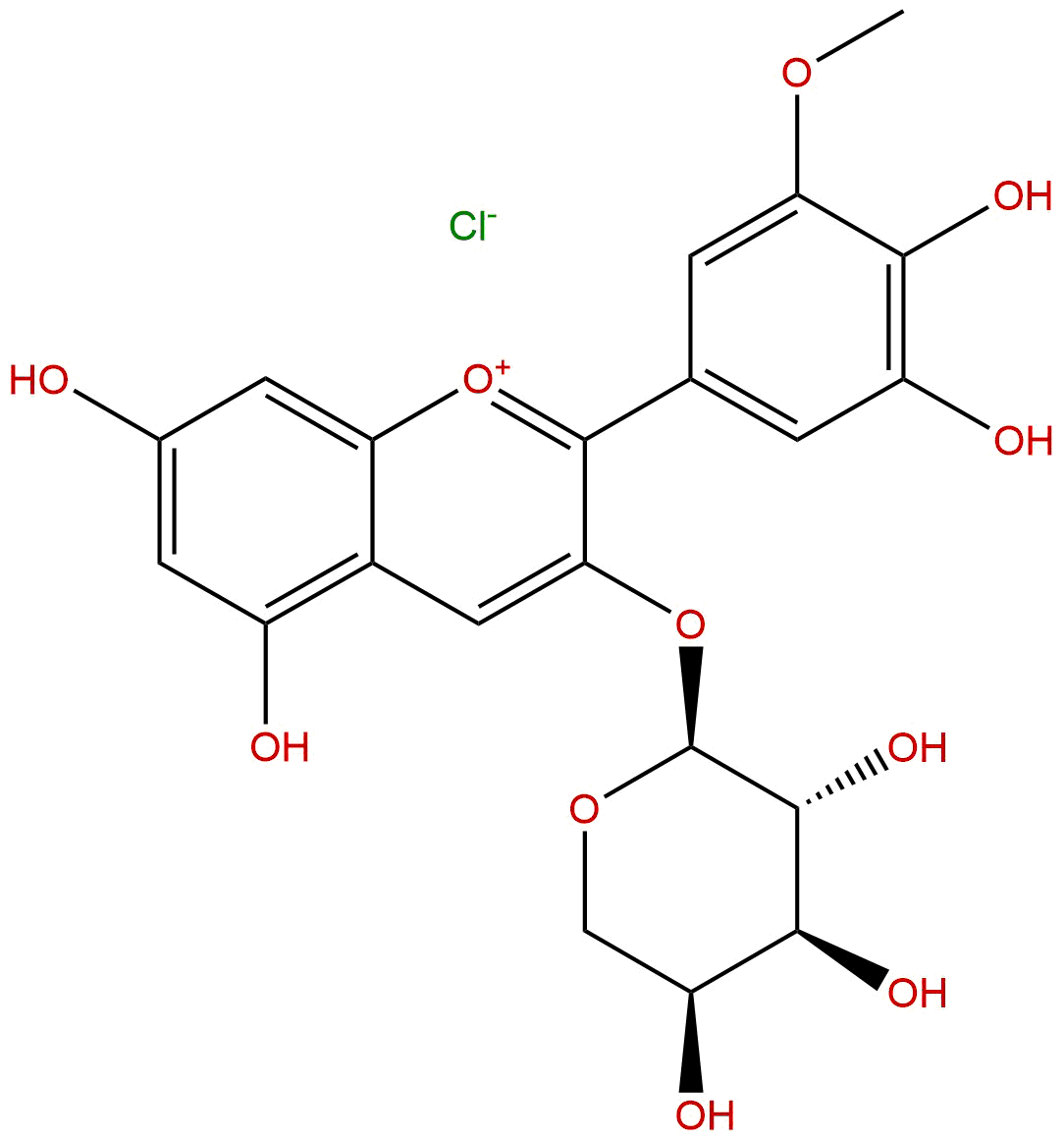


Product name: Petunidin-3-O-arabinoside chloride
Synonym name: Petunidin 3-O-arabinoside
Catalogue No.: BP5302
Cas No.: 28500-03-0
Formula: C21H21ClO11
Mol Weight: 484.838
Botanical Source:
Type of Compound: "Flavonoids,Anthocyanins"
Purity: 95%~99%
Analysis Method: HPLC-DAD or/and HPLC-ELSD
Identification Method: Mass, NMR
Packing: Brown vial or HDPE plastic bottle
Storage: Store in a well closed container, protected from air and light. Put into refrigerate or freeze for long term storage.
Whenever possible, you should prepare and use solutions on the same day. However, if you need to make up stock solutions in advance, we recommend that you store the solution as aliquots in tightly sealed vials at -20℃. Generally, these will be useable for up to two weeks.
The product could be supplied from milligrams to grams
Inquire for bulk scale.
For Reference Standard and R&D, Not for Human Use Directly.
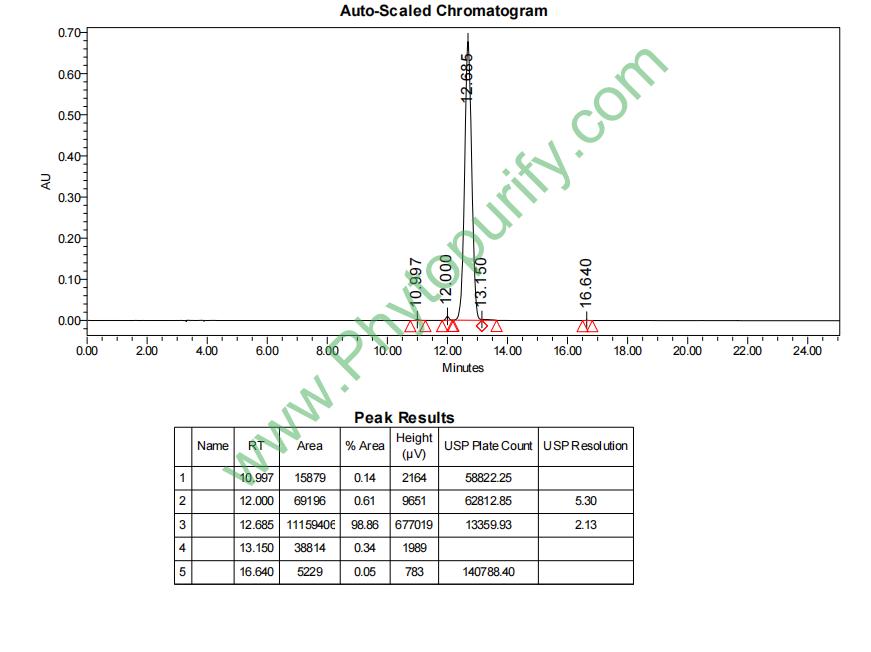
HPLC of Petunidin-3-O-arabinoside chloride
Storage conditions:Short-term storage at 2~8℃, long-term storage at -20 ~ -80℃
180.6000
-1.3399
-2.0430
.7699
.5777
.1714
Low
58.7753
4.2644
Yes
No
Yes
No
Yes
No
1.2
Yes
No
Yes
No
Natural products, as an important source of drug discovery, play an indispensable role in the long-term struggle between humans and diseases. Among them, anthocyanins, as a water-soluble natural pigment widely present in the plant kingdom, not only endow fruits, vegetables, and flowers with brilliant colors, but also attract attention due to their rich biological activity. Anthocyanins belong to the flavonoid compound family, and their basic structure is composed of 2-phenylbenzopyran cations (i.e. anthocyanins) connected to glycosides through glycosidic bonds. Due to the instability of the nuclear structure of anthocyanins, anthocyanins typically exist in the form of glycosides in nature and often form acylated derivatives with organic acids. Among numerous anthocyanin monomers, Petunidin-3-O-arabinoside chloride, as a compound with specific glycosylation modifications, has shown unique pharmacological potential in the fields of anti allergic and anti-inflammatory effects in recent years, gradually becoming one of the hotspots in natural product pharmacology research.
Petunidin is a type of anthocyanin, named after the plant that is rich in this pigment - Petunidin(Petunia hybrida). Compared with common cyanidins, Delphinidins, and Pelargonidin, petunians have two methoxy groups and one hydroxyl group (3 ', 4', 5 '- trihydroxy-3', 5 '- dimethoxy) on the B ring. This unique substitution pattern endows it with special chemical stability and biological activity. When dwarfisin forms a glycosidic bond with arabinose at the 3rd hydroxyl position and exists in the form of a chloride salt, chlorinated dwarfisin-3-O-arabinose is obtained. This compound not only retains the antioxidant properties shared by anthocyanins, but also exhibits multi-target and multi pathway regulatory abilities in anti allergic reactions, providing a new candidate molecule for the treatment of allergic diseases.
Allergic diseases, including allergic rhinitis, bronchial asthma, atopic dermatitis, and food allergies, have become global public health issues. Its pathogenesis involves type I hypersensitivity reactions mediated by immunoglobulin E (IgE) and overactivation of Th2 immune responses. The existing anti allergic drugs, such as antihistamines, glucocorticoids, and mast cell stabilizers, can effectively alleviate symptoms, but long-term use has problems such as side effects, drug resistance, and poor efficacy for some patients. Therefore, searching for efficient and low toxicity new anti allergic active ingredients from natural products has important scientific significance and application value. Chlorinated petunian-3-O-arabinoside stands out in this context, systematically intervening in the cascade process of allergic reactions by inhibiting multiple key targets such as ALOX5, HRH1, IL4, IL5, IL13, FCER1A, TBXA2R, STAT6, TSLP, etc., from the synthesis of inflammatory mediators, blockade of histamine receptors, regulation of Th2 cytokines, and inhibition of epithelial derived alarm factors. This article will provide a systematic review of chlorinated petunian-3-O-arabinoside from the aspects of chemical structure, plant origin, pharmacological activity, mechanism of action, pharmacological evaluation, and clinical application prospects, in order to provide reference for the in-depth research and development of this compound.
The chemical structure of chlorinated petunian-3-O-arabinoside belongs to a typical monoglycoside type anthocyanin. The chemical name of its parent nucleus Petunidin is 3,3 ', 4', 5,5 ', 7-hexahydroxy-3', 5 '- dimethoxyflavylium salt. On the B ring, the 3 'and 5' positions are methoxy (- OCH ∝), and the 4 'position is hydroxyl (- OH). This symmetrical methoxy substitution pattern is a key feature that distinguishes petunians from other anthocyanins. The 5th and 7th positions of the A ring are hydroxyl groups, while the 3rd hydroxyl group of the C ring is connected to arabinose through a β - glycosidic bond. Arabinose is a type of pentose sugar that typically exists in the furan or pyran form. In natural anthocyanins, L-arabinose is more commonly found in the pyran form (α - L-arabinopyranoside). This compound exists in the form of chloride salts, where the yellow cation of the anthocyanin nucleus pairs with the chloride ion (Cl ⁻) to form a stable crystalline powder.
From the perspective of physical and chemical properties, the molecular formula of chlorinated petunian-3-O-arabinoside is C ₂₀ H ₁ O ₁₁ Cl, with a molecular weight of 449.3880 g/mol. The LogP of its lipid water partition coefficient is -1.3399, indicating that the compound has strong hydrophilicity, which is consistent with the good water solubility of anthocyanins. High water solubility (water solubility score 0.7699) gives it good solubility in the body, which is beneficial for absorption after oral administration, but may also limit its ability to penetrate biofilms. The topologically polar surface area (TPSA) is as high as 180.6000 Å ², far exceeding the recommended upper limit of 140 Å ² for oral drugs, mainly due to the large number of hydroxyl and sugar groups in the molecule. A high TPSA value usually indicates poor membrane permeability and lower intestinal absorption rate, but it also suggests that the compound is not easily able to penetrate the blood-brain barrier (blood-brain barrier penetration evaluation is "low"), which to some extent reduces the risk of central nervous system toxicity. In addition, hERG inhibition was evaluated as' no ', indicating that the compound has good potential in terms of cardiac safety. The Ames test result is 1.2, and it is generally believed that when the Ames test value is less than 2, the risk of mutagenicity is low. However, the specific interpretation needs to be combined with the standard threshold (usually 2 as the boundary, and a value greater than 2 indicates potential mutagenicity). This value is in the critical region, indicating the need for further genetic toxicity research to confirm its safety.
In terms of chemical stability, anthocyanin compounds are extremely sensitive to pH values. Under acidic conditions (pH 1-3), the yellow cation structure is stable and appears red or purple red; As the pH increases, the structure will transform into quinone bases (blue), methanol pseudobases (colorless), or chalcones (colorless or pale yellow), resulting in color changes and decreased activity. Due to the presence of methoxy groups on the B ring, the stability of chlorinated petunian-3-O-arabinoside is usually better than that of unmethylated anthocyanins (such as cyanidins). The electron donating effect of methoxy groups helps stabilize yellow cations and delay the occurrence of hydration reactions. In addition, the introduction of arabinose groups also increases the hydrophilicity and steric hindrance of the molecule, helping to protect the chromophore from oxidative degradation. However, the compound is still sensitive to light, heat, and oxidants, and attention should be paid to avoiding light, low temperatures, and inert gas protection during storage and experimental operations.
Chlorinated petunian-3-O-arabinoside is not a rare anthocyanin, it is widely distributed in nature and mainly exists in plants rich in petunian derivatives. Its name "Petunidin" comes from the genus Petunidin, hence Petunidin(Petunia The petals of spp are one of its main sources. In addition, in cranberries(Vaccinium vitis-idaea)Blueberries(Vaccinium corymbosum)Black fruit gland rib Sichuan pepper(Aronia melanocarpa Commonly known as black fruited Chinese elm, purple sweet potato(Ipomoea batatas)Purple corn(Zea mays)And some grape varieties(Vitis vinifera)The presence of this compound was also detected in the skin of the fruit. It is worth noting that there is a significant difference in the content of dwarfisin-3-O-arabinoside among different plants, and it often coexists with other dwarfisin glycosides (such as dwarfisin-3-O-glucoside, dwarfisin-3-O-galactoside) as well as derivatives of cyanidin and delphinidin, forming a complex anthocyanin spectrum.
In terms of extraction methods, traditional solvent extraction methods are still preferred due to the high polarity and poor thermal stability of anthocyanins. Acidic alcohol solutions (such as methanol or ethanol solutions containing 0.1% -1% hydrochloric acid or formic acid) are usually used as extraction solvents. The purpose of acidification is to maintain a low pH environment, allowing anthocyanins to remain in a stable yellow cation form and prevent their degradation. The extraction process is usually carried out at room temperature or low temperature (4-40 ° C) to avoid high temperature causing hydrolysis or oxidation of glycosidic bonds. For plant materials rich in this compound, such as blueberry pomace and purple sweet potato, soaking, percolation, or ultrasound assisted extraction (UAE) can be used. Ultrasound assisted extraction can significantly improve extraction efficiency and shorten time by destroying cell walls through cavitation effect. In recent years, deep eutectic solvents (DES) have also been attempted as a green extraction medium for the extraction of anthocyanins. Their low toxicity and biodegradability are in line with the concept of green chemistry, but the recovery and purification steps still need to be optimized.
The crude extract after extraction contains a large amount of impurities, including sugars, organic acids, proteins, and other phenolic compounds, thus requiring further separation and purification. Macroporous adsorption resin column chromatography is the most commonly used and economically effective method for separating and purifying anthocyanins. The commonly used resin types include XAD-7HP, AB-8, D101, etc. After loading the acidified crude extract, wash it with deionized water or low concentration ethanol (such as 5% -10%) to remove water-soluble impurities, and then use an acid containing ethanol water solution (such as 30% -70% ethanol) for gradient elution to obtain a component rich in anthocyanins. For the separation of monomeric compounds, it is necessary to combine preparative high performance liquid chromatography (HPLC) using a reverse phase C18 column and gradient elution with acidified water (such as 0.1% trifluoroacetic acid aqueous solution) and acetonitrile or methanol as the mobile phase. Due to the similar polarity of isomers such as dwarfisin-3-O-arabinoside and petunian-3-O-galactoside, separation is difficult and requires optimization of chromatographic conditions (such as column temperature, flow rate, gradient slope) to achieve baseline separation. The pure product was ultimately obtained through methods such as rotary evaporation and freeze-drying, and its structure can be confirmed by nuclear magnetic resonance (NMR) spectra (especially ¹ H and ¹ ³ C NMR, as well as two-dimensional spectra such as HSQC and HMBC) and high-resolution mass spectrometry (HR-MS). The correlation signal between the sugar end proton in HMBC spectrum and the C-3 carbon of anthocyanin is key evidence for confirming the glycosidic bond connection position.
The pharmacological activity research of chlorinated petunian-3-O-arabinoside is still in the exploratory stage, but existing evidence shows that it has significant potential in anti allergic, anti-inflammatory, and antioxidant aspects, among which anti allergic activity is its most concerned area.
Antiallergic activity The core of allergic diseases is Th2 immune shift and overactivation of mast cells/eosinophils. Research has shown that petunian-3-O-arabinoside can inhibit key links in various allergic reactions. In vitro cell models, this compound can significantly inhibit the degranulation process of mast cells (such as RBL-2H3 cells) and reduce the release of allergens such as histamine and β - hexosaminase. Meanwhile, it can also downregulate the mRNA and protein expression levels of Th2 cytokines (IL-4, IL-5, IL-13), which are key factors in inducing IgE class switching, eosinophil recruitment, and airway hyperresponsiveness. In addition, the compound also has an inhibitory effect on the epithelial cell-derived alarm cytokine TSLP (thymic stromal lymphopoietin), which is an upstream key factor in initiating Th2 immune response. These in vitro evidences collectively indicate that chlorinated petunian-3-O-actanoside can intervene in multiple stages of allergic reactions, including initiation (TSLP), effector (degranulation of mast cells), and amplification (Th2 cytokines).
anti-inflammatory activity Inflammatory response is an important pathological feature of allergic diseases. This compound exerts anti-inflammatory effects by inhibiting the cyclooxygenase (COX) and lipoxygenase (LOX) pathways. Especially the inhibition of ALOX5 (5-lipoxygenase) can block the synthesis of leukotrienes such as LTB ₄, LTC ₄, LTD ₄. Leukotriene is a potent pro-inflammatory mediator that causes bronchial constriction, mucus secretion, and increased vascular permeability in asthma and allergic rhinitis. In addition, the antagonistic effect on TBXA2R (thromboxane A2 receptor) helps to inhibit platelet aggregation and vascular constriction, further alleviating inflammatory symptoms. In the macrophage inflammation model induced by lipopolysaccharide (LPS), this compound can significantly reduce the production of nitric oxide (NO) and prostaglandin E ₂ (PGE ₂), and inhibit the expression of pro-inflammatory cytokines TNF - α and IL-6, demonstrating broad-spectrum anti-inflammatory properties.
antioxidant activity As a member of the anthocyanin family, chlorinated petunian-3-O-arabinoside inherits strong free radical scavenging ability. Multiple phenolic hydroxyl groups in its molecule (especially the ortho dihydroxy structure of the B ring) can effectively supply hydrogen, neutralize reactive oxygen species (ROS) and reactive nitrogen species (RNS), such as DPPH radicals, ABTS cationic radicals, superoxide anions, and peroxynitrite. Antioxidant activity is the basis for anthocyanins to exert various biological activities. It helps alleviate oxidative stress damage to cells, protect mitochondrial function, and inhibit the activation of redox sensitive transcription factors such as NF - κ B, thereby indirectly exerting anti-inflammatory and anti allergic effects. Compared with unglycosylated petunians, the antioxidant activity of 3-O-arabinoside may be slightly reduced due to the steric hindrance of the sugar group, but its improved water solubility and bioavailability make up for this deficiency.
Other activities Preliminary studies also suggest that the compound may have anti proliferative and vascular protective activities. In tumor cell lines, it can induce cell cycle arrest and apoptosis, but its effect is weaker than some more active flavonoids. In vascular endothelial cells, it can inhibit cell damage and expression of adhesion molecules induced by oxidized low density lipoprotein (ox LDL), suggesting its potential value in the prevention and treatment of atherosclerosis. However, the evidence in these areas is still insufficient and requires further verification.
The pharmacological effects of chlorinated petunian-3-O-arabinoside are not achieved through a single target, but exhibit the characteristics of multi-target and multi pathway synergistic regulation, which is consistent with its properties as a natural polyphenolic compound. Based on existing research, its anti allergic mechanism can be summarized into the following key aspects:
1. Inhibit inflammatory mediator synthase (ALOX5)ALOX5 (5-lipoxygenase) is a key enzyme involved in the synthesis of leukotrienes in the arachidonic acid metabolism pathway. This compound can directly or indirectly inhibit the activity of ALOX5, reducing the production of leukotriene B ₄ (LTB ₄) and cysteine leukotrienes (CysLTs, including LTC ₄, LTD ₄, LTE ₄). Leukotriene is an important effector molecule in allergic inflammation, which can cause bronchial smooth muscle contraction, increased vascular permeability, and eosinophil chemotaxis. By inhibiting ALOX5, this compound blocks the production of a key pro-inflammatory mediator from the source.
2. Antagonistic histamine receptor (HRH1)HRH1 (histamine H1 receptor) is the main receptor mediating histamine allergic reactions. Histamine, as the main mediator of degranulation release from mast cells, binds to HRH1 and causes itching, vasodilation, smooth muscle contraction, and increased glandular secretion. The compound has an antagonistic effect on HRH1, similar to classical antihistamines, which can directly block the biological effects of histamine and quickly alleviate allergic symptoms. It is worth noting that this antagonistic effect may be competitive and does not involve hERG channel inhibition, therefore the risk of cardiac toxicity is low.
3. Regulating Th2 immune response (IL4, IL5, IL13, STAT6, TSLP)Th2 type immune response is the immunological basis of allergic diseases. This compound regulates the Th2 pathway through multiple targets:
- Inhibit TSLP TSLP (thymic stromal lymphopoietin) is mainly produced by epithelial cells when exposed to allergens, pathogens, or physical stimuli, and is a key alarm for initiating dendritic cell (DC) differentiation towards Th2 direction. Inhibiting the expression of TSLP can block the initiation of allergic reactions upstream.
- Inhibit IL-4, IL-5, IL-13 These are typical Th2 cytokines. IL-4 is a key factor in inducing IgE class switching in B cells; IL-5 is an essential factor for the survival, activation, and recruitment of eosinophils; IL-13 is involved in airway remodeling, mucus secretion, and airway hyperresponsiveness. This compound can downregulate the expression of these cytokines, thereby weakening the amplification and effector phase of Th2 immune response.
- Inhibition of STAT6 signaling pathway STAT6 (Signal Transduction and Transcription Activation Factor 6) is a core transcription factor downstream of IL-4 and IL-13 receptors. After binding to the receptor, IL-4/IL-13 activates JAK kinase, phosphorylates STAT6, phosphorylates STAT6 dimerizes into the nucleus, and initiates transcription of downstream target genes such as IgE heavy chain, GATA3, CCL11, etc. This compound may inhibit IgE production and Th2 cell differentiation by suppressing STAT6 phosphorylation, blocking IL-4/IL-13 signaling.
4. Block high affinity IgE receptor (FCER1A)FCER1A encodes the alpha subunit of Fc ε RI, a high affinity receptor for IgE. Fc ε RI is a key receptor on the surface of mast cells and eosinophils. When multivalent allergens crosslink with IgE bound to Fc ε RI, it triggers cell degranulation. This compound may suppress degranulation by downregulating the expression of FCER1A, reducing the sensitivity of mast cells to allergens. This mechanism is similar to the action of omalizumab (anti IgE antibody), but at a different level of action.
5. Antagonistic thromboxane A2 receptor (TBXA2R)TBXA2R (thromboxane A2 receptor) mediates the biological effects of thromboxane A ₂ (TXA ₂). TXA ₂ is mainly produced by activated platelets and macrophages, with strong vasoconstriction and platelet aggregation promoting effects, and participates in airway smooth muscle contraction. The antagonistic effect of this compound on TBXA2R helps to improve microcirculation disorders and airway spasms in allergic inflammation.
In summary, chlorinated petunian-3-O-arabinoside systematically inhibits the initiation, amplification, and effector processes of allergic reactions through a multi-level network of upstream blockade (TSLP, FCER1A), midstream regulation (STAT6, Th2 cytokines), and downstream inhibition (ALOX5, HRH1, TBXA2R). This multi-target mode of action is its unique advantage over single target synthetic drugs, which may bring more comprehensive efficacy and lower resistance risk.
The evaluation of drug properties is a crucial step in pushing natural products from the laboratory to clinical applications. The pharmacological characteristics of chlorinated petunian-3-O-actanoside exhibit a clear "double-edged sword" effect.
Drug like properties and physicochemical properties According to the Lipinski Five Rules, the molecular weight of this compound (449.4) is slightly less than 500, which complies with the rules; But the LogP is -1.34 (far less than 5), and the number of hydrogen bond donors (phenolic hydroxyl and sugar hydroxyl, about 10) and hydrogen bond acceptors (about 20) far exceed the upper limit of the rule (5 and 10, respectively). Therefore, strictly speaking, this compound does not meet the criteria of "drug like properties" and belongs to the category of "polar molecules". High polarity leads to poor membrane permeability, and oral bioavailability is usually low. However, for antiallergic drugs, local administration (such as nasal spray, skin topical application, inhalation administration) may have more advantages than oral administration, which can bypass the absorption barrier and directly act on the target tissue. TPSA can reach up to 180.6 Å ², which is not conducive to intestinal absorption, but ensures that it cannot penetrate the blood-brain barrier, avoiding central nervous system side effects such as drowsiness and dizziness. This is a major safety advantage of its use as an anti allergic drug.
Pharmacokinetic characteristics At present, there are few direct studies on the pharmacokinetics of this compound in vivo, but reference can be made to the metabolic patterns of other similar anthocyanins (such as cyanidin-3-O-glucoside). After oral administration, anthocyanins remain relatively stable in the stomach, but upon entering the small intestine, due to an increase in pH, some structures may transform into open-loop forms such as chalcones. In the small intestine, anthocyanins can be absorbed through glucose transporters (such as SGLT1) or passive diffusion, but the absorption rate is extremely low (usually less than 2%). Most of the unabsorbed anthocyanins enter the colon and are metabolized by gut microbiota, breaking down into phenolic acids (such as protocatechuic acid and vanillic acid) and aldehydes. These metabolites may be absorbed into the bloodstream and exert certain biological activities. Therefore, the in vivo effects of this compound may be partially attributed to its metabolites. Intravenous or local administration can avoid first pass effects and intestinal metabolism, and improve bioavailability. Its high water solubility is beneficial for the preparation of injectable or topical formulations.
safety evaluation As mentioned earlier, the risk of hERG inhibition is low, indicating low cardiac toxicity. The Ames test result of 1.2 is at the critical value and needs to be comprehensively evaluated in combination with in vivo micronucleus test and chromosome aberration test. Given the widespread presence of anthocyanins in the diet and the absence of serious adverse reactions from long-term consumption of fruits and vegetables rich in anthocyanins, the overall safety of this compound is expected to be good. However, as a single high-purity compound, systematic acute toxicity, subchronic toxicity, and reproductive developmental toxicity studies are still needed.
Formulation strategy To address the issue of low oral bioavailability, various formulation techniques can be used to improve it, such as forming complexes with phospholipids (such as phospholipid complexes) to enhance lipid solubility; Prepare nanoparticles, liposomes, or cyclodextrin inclusion complexes to increase stability and membrane permeability; Designed as a prodrug, such as acetylating phenolic hydroxyl groups and releasing the original drug through esterase hydrolysis in the body. For local administration, it can be developed into gel, cream or nasal spray, which can directly act on the focus by taking advantage of its high water solubility and local high concentration.
Chlorinated petunian-3-O-arabinoside, as a natural anthocyanin with multi-target anti allergic activity, has shown broad application prospects in the treatment and prevention of allergic diseases.
Potential indications Based on its mechanism of action, the most direct potential indications for this compound are allergic rhinitis, bronchial asthma, atopic dermatitis, and food allergies. Especially for allergic rhinitis and asthma, their dual effects of simultaneously inhibiting histamine receptors (HRH1) and leukotriene synthesis (ALOX5) may provide more comprehensive symptom control than single mechanism drugs (such as antihistamines or leukotrienes only). In atopic dermatitis, its inhibition of TSLP and Th2 cytokines is expected to fundamentally improve skin barrier dysfunction and inflammatory response. In addition, its antioxidant and anti-inflammatory properties also make it potentially valuable in the adjuvant treatment of chronic obstructive pulmonary disease (COPD), allergic reactions induced by nonsteroidal anti-inflammatory drugs (NSAIDs), and certain autoimmune diseases.
Advantages and Challenges The main advantage of this compound lies in its multi-target mode of action, which can simultaneously intervene in different stages of allergic reactions, potentially producing synergistic effects and reducing common resistance to single target drugs. In addition, its low hERG inhibition risk and low blood-brain barrier penetration endow it with good cardiac and central nervous system safety. However, the challenges it faces are also very prominent: low oral bioavailability is the biggest bottleneck, limiting its development as a systemic drug; Poor chemical stability and sensitivity to pH, light, and heat increase the difficulty of formulation and storage; In addition, its metabolism in the body is complex, and the contribution of active metabolites is not yet clear, which poses difficulties for the precise evaluation of pharmacodynamics and pharmacokinetics.
Future research directions In order to promote the clinical translation of this compound, future research should focus on the following aspects:
1. In depth pharmacokinetic research Using radioactive labeling or LC-MS/MS technology, systematically study its absorption, distribution, metabolism, and excretion (ADME) processes in animal bodies, and clarify the pharmacokinetic characteristics of the original drug and metabolites.
2. Efficient and stable formulation development Focus on developing oral delivery systems based on nanotechnology or phospholipid complexes, as well as transdermal or mucosal drug delivery formulations for local administration, to improve bioavailability and therapeutic efficacy.
3. Pharmacodynamic validation in vivo Establish animal models for various allergic diseases (such as ovalbumin induced asthma mouse model and DNCB induced atopic dermatitis mouse model), verify their in vivo anti allergic efficacy through oral, intraperitoneal injection, or local administration, and explore the optimal administration route and dosage.
4. safety evaluation Complete a comprehensive preclinical safety evaluation, including genetic toxicity, reproductive developmental toxicity, and long-term toxicity testing, to provide data support for clinical trial application.
5. Research on Structural Optimization and Structure Performance Relationship Using petunian-3-O-arabinoside as the lead compound, the sugar, methoxy, or phenolic hydroxyl groups are modified through chemical synthesis or biotransformation to explore the structure-activity relationship and search for derivatives with higher activity, better stability, and better bioavailability.
As a unique member of the anthocyanin family, chlorinated petunian-3-O-actanoside has attracted widespread attention in the fields of natural medicinal chemistry and pharmacology due to its multi-target and multi-level anti allergic mechanism. It systematically intervenes in the pathological process of allergic diseases by inhibiting ALOX5, HRH1, Th2 cytokine axes (IL-4, IL-5, IL-13, STAT6, TSLP), as well as FCER1A and TBXA2R, demonstrating potential beyond traditional single target drugs. Although its low oral bioavailability and poor chemical stability have hindered its direct drug development, these obstacles are expected to be overcome through advanced formulation technology and structural modification. As a natural and relatively safe active molecule, chlorinated petunian-3-O-actanoside provides valuable lead compounds and new research ideas for the development of novel anti allergic drugs. Future research needs to continue to deepen in elucidating its in vivo fate, optimizing delivery strategies, and verifying clinical efficacy, in order to translate the therapeutic potential of this natural product into practical results that benefit patients with allergic diseases.
