


Product name: Rosarin
Synonym name:
Catalogue No.: BP1220
Cas No.: 84954-93-8
Formula: C20H28O10
Mol Weight: 428.434
Botanical Source: Rhodiolae Crenulatae Radixet Rhizoma
Physical Description:
Type of Compound: Phenylpropanoids
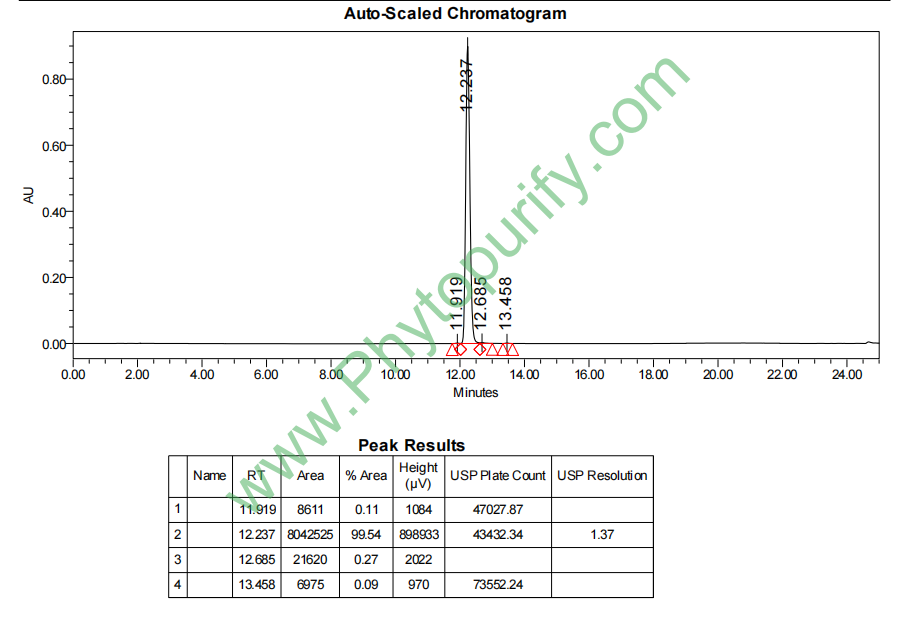
Purity: 95%~99%
Analysis Method: HPLC-DAD or/and HPLC-ELSD
Identification Method: Mass, NMR
Packing: Brown vial or HDPE plastic bottle
Storage: Store in a well closed container, protected from air and light. Put into refrigerate or freeze for long term storage.
Whenever possible, you should prepare and use solutions on the same day. However, if you need to make up stock solutions in advance, we recommend that you store the solution as aliquots in tightly sealed vials at -20℃. Generally, these will be useable for up to two weeks.
The product could be supplied from milligrams to grams
Inquire for bulk scale.
Description:
Rosarin is a natural product from Rhodiola rosea L.
References:
Evid Based Complement Alternat Med. 2013;2013:514049.
Anti-Inflammatory and Neuroprotective Effects of Constituents Isolated from Rhodiola rosea.
METHODS AND RESULTS:
To determine the biological activity of Rhodiola rosea, the protein expression of iNOS and proinflammatory cytokines was measured after the activation of murine microglial BV2 cells by LPS under the exposure of constituents of Rhodiola rosea: crude extract, rosin, Rosarin, and salidroside (each 1-50 μ g/mL). The LPS-induced expression of iNOS and cytokines in BV2 cells was suppressed by the constituents of Rhodiola rosea in a concentration-dependent manner. Also the expression of the proinflammatory factors iNOS, IL-1 β , and TNF- α in the kidney and prefrontal cortex of brain in mice was suppressed by the oral administration of Rhodiola rosea crude extract (500 mg/kg). To determine the neuroprotective effect of constituents of Rhodiola rosea, neuronal cells were activated by L-glutamate, and neurotoxicity was analyzed. The L-glutamate-induced neurotoxicity was suppressed by the treatment with rosin but not by Rosarin. The level of phosphorylated MAPK, pJNK, and pp38 was increased by L-glutamate treatment but decreased by the treatment with rosin and salidroside.
CONCLUSIONS:
These results indicate that Rhodiola rosea may have therapeutic potential for the treatment of inflammation and neurodegenerative disease.
HPLC of Rosarin
Storage conditions:Short-term storage at 2~8℃, long-term storage at -20 ~ -80℃
158.3000
-.5079
-.5076
11.7395
.5138
.2575
Low
38.0955
4.1941
Yes
No
No
No
No
No
0.0
Yes
Yes
Yes
Yes
Natural products have always been an important source of innovative drug discovery, and their structural diversity and wide range of biological activities provide unique molecular frameworks and lead compounds for the treatment of various complex diseases. Sedum plants, especially rose Sedum, have been used for a long time in traditional medicine to resist fatigue, hypoxia, and enhance the body's resistance due to their "adaptogen" characteristics. In recent years, with the advancement of separation and identification techniques, a series of specific components with significant pharmacological activity have been revealed, among which Loserin, as a characteristic cinnamyl glycoside, has increasingly attracted the attention of pharmacological researchers. Loserin not only inherits the traditional neuroprotective and anti stress potential of Rhodiola extract, but also has a clear anti-inflammatory mechanism, especially the ability to inhibit the expression of key pro-inflammatory factors in the central nervous system and kidneys, laying a scientific foundation for its application in neurodegenerative diseases, kidney diseases, and inflammation related tumors. This article aims to systematically review the chemical properties, plant sources, pharmacological activities, molecular mechanisms of action, pharmacological evaluation, and clinical application prospects of Loserin, in order to provide comprehensive academic references for the in-depth development and transformation research of this natural product.
Loserin, also known as specific cinnamyl glycosides, has a CAS number of 84954-93-8. Structurally, Loserin is composed of cinnamyl glycosides and glycosyl moieties connected by glycosidic bonds. Cinnamyl alcohol glycosides provide the basic hydrophobic skeleton and possible active sites, while the connected sugar groups (usually glucose, etc.) greatly enhance the water solubility and recognition ability of the molecule towards biological targets. This glycosylation modification is a key strategy for many natural products to exert activity and regulate pharmacokinetic properties.
Its molecular weight is 428.4340 daltons, belonging to the category of small molecule compounds. The calculated LogP value of the lipid water partition coefficient is -0.5079, indicating that the molecule has moderate lipophilicity but overall leans towards hydrophilicity. The topologically polar surface area (TPSA) is as high as 158.30 Å ², mainly attributed to the hydroxyl and ether oxygen atoms abundant in the sugar moiety of the molecule. These polar groups are the key to forming intermolecular hydrogen bonds and determine their high polarity. The theoretically calculated water solubility value is 11.7395 mg/L. Combined with its LogP and TPSA values, it can be inferred that Loserin has moderate solubility characteristics in water. These basic physicochemical parameters provide preliminary basis for its bioavailability and formulation development: higher polarity may facilitate its dissolution in aqueous media, but may also limit its passive transmembrane diffusion ability.
Loselin is mainly isolated from the Sedum genus of the Sedum family, Sedum roseum. Rhodiola rosea mainly grows in high-altitude, cold and hypoxic areas, and this special growth environment may be related to its synthesis of secondary metabolites with anti stress and neuroprotective activity. The content of Loserin in plants is usually low and belongs to trace active ingredients, so its efficient and targeted extraction and purification are the basis of research.
At present, the extraction of Loserin is mostly carried out using organic solvent extraction combined with modern chromatographic separation techniques. The common process is as follows: first, the dried rhizomes of Rhodiola rosea are crushed, and then subjected to reflux extraction or ultrasound assisted extraction using methanol, ethanol, or ethanol water mixed solvents to fully dissolve the glycoside components. After vacuum concentration, the crude extract obtained was subjected to liquid-liquid distribution extraction using solvents such as petroleum ether, ethyl acetate, and n-butanol. Loserin is usually enriched in n-butanol or aqueous layers due to its polarity. Further purification relies on column chromatography techniques such as silica gel column chromatography, macroporous adsorption resin column chromatography (such as D101, AB-8 type), and high-performance liquid chromatography. Among them, reverse phase high performance liquid chromatography is the key step in obtaining high-purity Loserin monomers, often using C18 chromatography columns and gradient elution with methanol water or acetonitrile water as mobile phases. The optimization of extraction processes, such as solvent selection, temperature, time, and the use of green technologies such as supercritical fluid extraction, is a research focus for improving the yield and purity of Loserin.
Numerous in vitro and in vivo pharmacological studies have confirmed that Loserin has multiple biological activities, among which anti-inflammatory and neuroprotective effects are the most prominent.
1. Anti inflammatory effect
The anti-inflammatory activity of Loserin is one of its core pharmacological properties. In the acute inflammation model induced by lipopolysaccharide in mice, Loserin can significantly inhibit the overexpression of a series of key pro-inflammatory mediators in kidney tissue and prefrontal cortex of the brain. Research has shown that treatment with Loserin can dose dependently reduce mRNA and protein levels of inducible nitric oxide synthase, interleukin-1 β, and tumor necrosis factor - α. The inhibition of iNOS reduces the production of excessive nitric oxide, while IL-1 β and TNF - α are core cytokines in the inflammatory cascade, and their downregulation indicates that Loserin can effectively suppress the amplification of inflammatory signals from upstream. This effect suggests that Loserin has potential value in the treatment of diseases closely related to local or systemic inflammation, such as acute kidney injury, cerebral ischemia-reperfusion injury, and neuroinflammation.
2. Neuroprotective effect
Based on its strong anti-inflammatory ability and permeability to brain tissue (although the blood-brain barrier permeability is low, it is not completely inaccessible), Loserin has demonstrated neuroprotective effects in various models of nerve injury. In neuronal cell injury models induced by oxidative stress, glutamate excitotoxicity, or β - amyloid protein, pretreatment with Loserin can improve cell survival, reduce lactate dehydrogenase leakage, and inhibit cell apoptosis. Its neuroprotective mechanism is not only related to inhibiting neuroinflammation, but may also involve directly clearing free radicals, enhancing endogenous antioxidant defense systems, and stabilizing mitochondrial function. Animal behavioral experiments have also shown that Loserin may improve learning and memory dysfunction caused by inflammation or stress.
3. Antitumor potential
Although direct research on the anti lung cancer effects of Loserin is still in its early stages, its anti-tumor potential based on its regulated target network deserves attention. Loserin may exert its effects by affecting multiple signaling pathways closely related to the occurrence and development of lung cancer. For example, its potential inhibitory effect on the STAT3 signaling pathway may directly inhibit the proliferation, survival, and immune escape of tumor cells; The regulation of the PI3K/Akt pathway may affect the metabolism and growth of tumor cells; The regulation of BCL2 family proteins may promote tumor cell apoptosis. In addition, its anti-inflammatory properties also help to suppress chronic inflammation in the tumor microenvironment, which is an important factor in promoting tumor occurrence, invasion, and metastasis. These theoretical associations provide direction for the study of Loserin as an adjuvant therapy or chemopreventive agent for anti-tumor treatment.
The pharmacological effects of Loserin are not achieved through a single target, but through a complex molecular network, and its multi-target nature is a typical manifestation of the comprehensive therapeutic effect of natural products. According to existing research and target prediction analysis, its mechanism of action involves the following key nodes:
1. Regulating inflammation and immune response pathways
The core mechanism of the anti-inflammatory effect of Loserin is the inhibition of classical inflammatory signaling pathways such as NF - κ B. Toll like receptor 4 is an important membrane receptor that recognizes endogenous or exogenous danger signals and initiates inflammatory responses. Loserin may inhibit the nuclear translocation of NF - κ B by interfering with the activation of TLR4 or the recruitment of downstream adaptor proteins, thereby suppressing the expression of genes such as iNOS, IL-1 β, TNF - α at the transcriptional level. Meanwhile, it may also directly act on STAT3 signaling. STAT3 is not only an important inflammatory transcription factor, but also a key hub connecting inflammation and tumors. Inhibiting the abnormal activation of STAT3 can simultaneously achieve anti-inflammatory and potential anti-tumor effects.
2. Affects the balance between cell apoptosis and survival
BCL2 is a core anti apoptotic protein that regulates mitochondrial pathway cell apoptosis. Loserin may induce apoptosis in abnormal cells (such as tumor cells) by downregulating the expression or function of BCL2, promoting the release of cytochrome C, activating the Caspase cascade reaction. This mechanism is directly related to its potential anti-tumor activity.
3. Regulating oxidative stress response
Nuclear factor E2 related factor 2 is the overall switch of cellular antioxidant response. Loserin may act as an activator of Nrf2, promoting the detachment of Nrf2 from its cytoplasmic inhibitory protein Keap1 and translocation to the nucleus, initiating the transcription of a series of phase II detoxifying enzymes and antioxidant proteins including heme oxygenase-1 and quinone oxidoreductase-1, thereby enhancing the cell's ability to resist oxidative damage, which is closely related to its neuroprotective effect.
4. Intervention in extracellular matrix remodeling and metastasis
Matrix metalloproteinase-2 is a key enzyme that degrades extracellular matrix and promotes tumor invasion and metastasis. Loserin may reduce the invasion and migration ability of tumor cells by inhibiting the expression or activity of MMP2.
5. Other potential targets
Loserin may also exert neuroprotective and cardiovascular protective effects by acting on estrogen receptor beta; By affecting ATP binding cassette transporter A1 and regulating cholesterol efflux, it indirectly affects related pathological processes; Or by inhibiting the phosphatidylinositol 3-kinase gamma subtype, regulating immune cell function and inflammatory response.
Although Loserin has shown good pharmacological activity in vitro and animal models, its potential as a drug still requires systematic pharmacological evaluation.
1. Preliminary assessment of drug properties
According to the provided parameters, the molecular weight of Loserine is less than 500 and the LogP value is moderate, meeting the general requirements of Lipinski's "Five Rules" for oral medication. However, its higher TPSA (>140 Å ²) is often associated with lower oral bioavailability, as excessive hydrogen bond donors and acceptors may affect its passive diffusion through intestinal epithelial cells. Theoretical water solubility data indicates that it does not belong to poorly soluble compounds, which is beneficial for the development of formulations.
2. Preliminary safety prediction
The key safety warning indicator shows that Loserin does not inhibit hERG potassium channels in the initial prediction (prediction result is "no"), which reduces its potential risk of inducing QT interval prolongation and apical torsion type ventricular tachycardia, and is a favorable safety signal. The predicted result of Ames test is 0.0, indicating that it may not have direct genetic toxicity, but it needs to be verified through experiments.
3. Pharmacokinetic challenges
The main challenge facing the pharmacological properties of Loserin may lie in its pharmacokinetic properties. The prediction of its "low" blood-brain barrier permeability, although seemingly contradictory to experimental observations of its anti-inflammatory effects in the brain, may indicate limited efficiency in entering the brain or effective entry under specific pathological conditions such as blood-brain barrier disruption. This suggests that if it is developed for central nervous system diseases, it may be necessary to improve its brain delivery through structural modifications (such as prodrug preparation), the use of delivery systems (such as nanoparticles, liposomes), or the combination of osmolytes. In addition, as a glycoside compound, Loserin may be hydrolyzed by glycosidases in the gut microbiota or intestinal epithelial cells, leading to a decrease in its oral bioavailability. The absorption, distribution, metabolism, and excretion processes of it in the body still require further experimental research to clarify.
As a natural active molecule with multiple targets and functions, Loserin has broad clinical application prospects, but also faces many challenges.
1. Potential therapeutic areas
* Neurodegenerative diseases and nerve damage Given its clear anti neuroinflammatory and anti oxidative stress effects, Loserin is a potential candidate drug for the treatment of Alzheimer's disease, Parkinson's disease, stroke, and traumatic brain injury. It can be considered as an adjuvant therapy drug and used in combination with existing therapies.
* Inflammatory related diseases Including acute/chronic kidney disease, arthritis, inflammatory bowel disease, etc. Its mechanism of action by inhibiting key pro-inflammatory factors is applicable to various chronic low-grade inflammatory states.
* Tumor adjuvant therapy and chemoprevention Especially in tumors closely related to inflammation such as lung cancer, Loserin may enhance sensitivity, reduce toxicity, and prevent recurrence by inhibiting pathways such as STAT3 and PI3K, and combining with chemotherapy, radiotherapy, or immunotherapy.
* Anti fatigue and anti stress Continuing the traditional use of Rhodiola rosea, develop functional products for improving chronic fatigue syndrome or enhancing the body's adaptability in special environments.
2. Future research directions and challenges
* In depth mechanism research At present, the understanding of the mechanism of action of Loserin is still mainly based on association analysis and target prediction. It is necessary to use techniques such as gene knockout, reporter genes, co precipitation, and surface plasmon resonance to directly verify its interaction mode and affinity with key targets such as TLR4, STAT3, and Nrf2.
* Systematic pharmacokinetic study Comprehensive in vivo ADME research must be conducted to clarify its absolute bioavailability, tissue distribution characteristics, major metabolites, and excretion pathways, which are the basis for formulation development and drug administration design.
* Structural optimization and derivative development To address issues such as poor blood-brain barrier permeability and potential first pass effects of oral administration, reasonable medicinal chemical modifications should be carried out, such as structural modification of glycosides or glycosides, synthesis of a series of derivatives, and screening of candidate compounds with higher activity and better pharmacokinetic properties.
* Research on a new drug delivery system Explore advanced drug delivery technologies such as nanocrystals, self microemulsions, liposomes, etc. to improve the solubility, stability, and targeting of Loserin, particularly enhancing its brain targeted delivery efficiency.
* Preclinical and clinical research After completing the toxicological evaluation of the system, promote standardized preclinical pharmacological validation and ultimately enter the clinical trial phase to confirm its safety and efficacy in humans.
Loserin, as an active cinnamyl glycoside isolated from the traditional medicinal plant Rhodiola rosea, has become a highlight molecule in natural product pharmacology research due to its significant anti-inflammatory, neuroprotective, and potential anti-tumor pharmacological activities. It exerts a comprehensive therapeutic effect through multiple pathways and links by regulating key signaling targets such as TLR4/NF - κ B, STAT3, Nrf2, BCL2, reflecting the complexity advantage of natural product mechanisms. Despite facing challenges in drug development, particularly in pharmacokinetic properties such as low blood-brain barrier permeability, these challenges also point the way for future research. Through in-depth mechanism exploration, systematic pharmacokinetic studies, rational structural optimization, and the application of innovative drug delivery technologies, Loserin is expected to be successfully transformed from a potential natural active ingredient into an innovative drug or lead compound for the treatment of neuroinflammatory diseases, chronic inflammation, and even tumors, contributing its unique value to human health.
