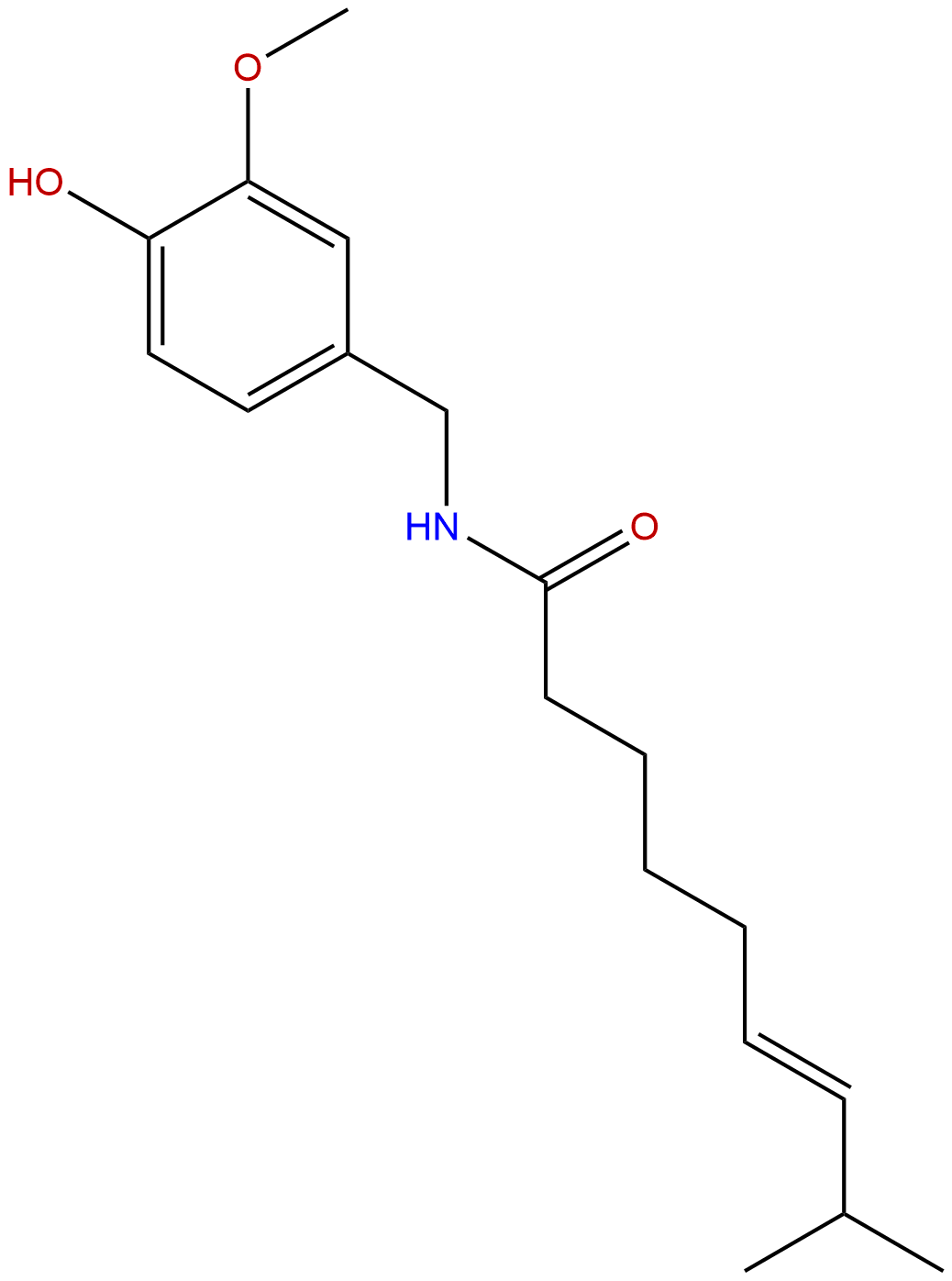


Product name: Capsaicin
Synonym name: Capillarisin
Catalogue No.: BP0312
Cas No.: 404-86-4
Formula: C18H27NO3
Mol Weight: 305.418
Botanical Source: CapsicumannuumL.
Physical Description:
Type of Compound: Alkaloids
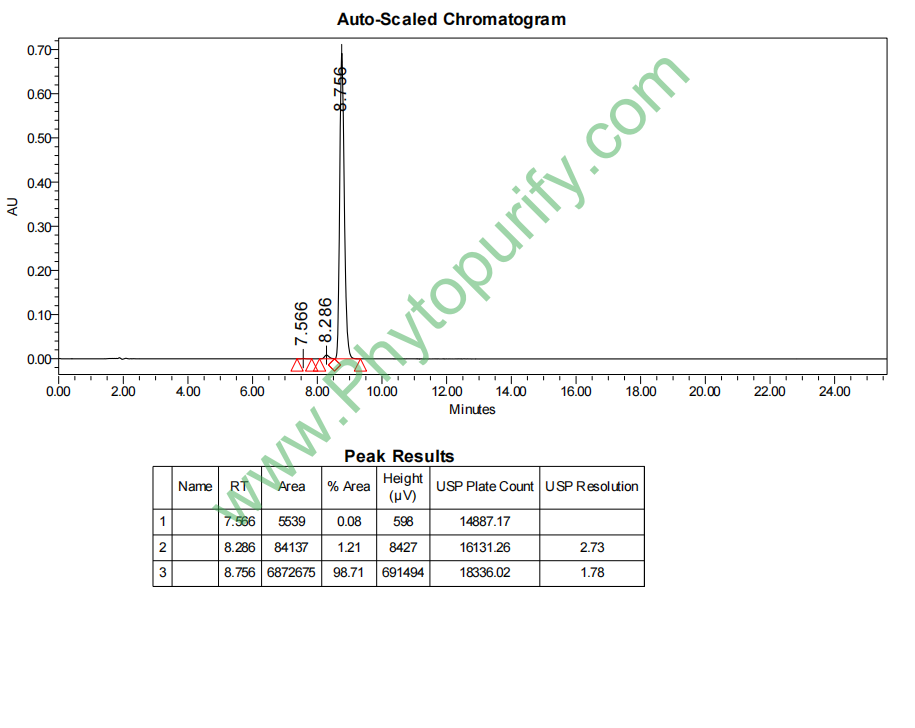
Purity: 95%~99%
Analysis Method: HPLC-DAD or/and HPLC-ELSD
Identification Method: Mass, NMR
Packing: Brown vial or HDPE plastic bottle
Storage: Store in a well closed container, protected from air and light. Put into refrigerate or freeze for long term storage.
Whenever possible, you should prepare and use solutions on the same day. However, if you need to make up stock solutions in advance, we recommend that you store the solution as aliquots in tightly sealed vials at -20℃. Generally, these will be useable for up to two weeks.
The product could be supplied from milligrams to grams
Inquire for bulk scale.
Chengdu Biopurify Phytochemicals Ltd. is a leading company in the research, development, manufacture and marketing of High Quality Phytochemicals and Extracts(especially Active Ingredients from Traditional Chinese Medicine,TCM), Natural Active Pharmaceutical Ingredients worldwide.
The main services:
A. Supply active ingredients and reference standards of TCM, from mgs to kgs scale
B. Custom extraction and purification, target Herb Active Ingredients
C. Custom synthesis and semi-synthesis for Natural Active Ingredients
D. CR(contract research), CM(contract manufacture) and PD(process development) services from lab scale, pilot scale to commercial scale(GMP is also available)
E. TCM compounds library for drug screen,more than 3000 compounds available, many of them are rare and unique.
HPLC of Capsaicin
Storage conditions:Short-term storage at 2~8℃, long-term storage at -20 ~ -80℃
58.5600
3.5755
3.5738
.0557
2.9369
4.0278
High
90.5446
2.1900
Yes
Yes
Yes
No
No
No
0.6
No
No
No
Yes
Capsaicin, also known as (E) - N - [(4-hydroxy-3-methoxyphenyl) methyl] -8-methyl-6-nonenamide, is the main active alkaloid component that gives chili peppers a spicy sensation. Since its first isolation in the 19th century, capsaicin has evolved from a simple sensory stimulus to a star molecule in modern pharmacological research. Its unique dual action mode of "burning pain first, then relieving pain" reveals its enormous potential in the field of pain management. As a classic exogenous agonist of transient receptor potential vanillic acid subtype 1 (TRPV1), capsaicin exerts its analgesic effect by activating and subsequently desensitizing TRPV1 channels on nociceptive sensory neurons. However, modern research continues to broaden the boundaries of its biological significance, confirming its multifaceted pharmacological activities in anti-inflammatory, antioxidant, anti obesity, and anti-tumor fields. This article aims to systematically review the chemical properties, plant sources, multi-target pharmacological activities, complex mechanisms of action, pharmacological characteristics, and clinical application prospects of capsaicin, in order to provide a comprehensive academic perspective for the in-depth development and transformation research of this natural product.
The molecular formula of capsaicin is C ₁₈ H ₂₇ NO ∝, with a molecular weight of 305.4180. Its structure consists of three parts: a hydrophobic vanilloamine group (4-hydroxy-3-methoxybenzylamine), a connecting amide bond, and a lipophilic 9-carbon unsaturated straight chain (with a methyl group at position 8). The key structural feature is the double bond configuration between the amide bond and the unsaturated carbon chain, and the naturally occurring biologically active form is mainly the trans (E) configuration.
These structural features determine its unique physicochemical properties. Capsaicin has a high lipid solubility, with a calculated LogP value of 3.5755, indicating that it is easy to penetrate cell membranes, which is closely related to its ability to directly act on TRPV1 receptors on neuronal membranes. Its topological polar surface area (TPSA) is 58.5600 Å ², which is relatively small and further supports its good membrane permeability. However, its high lipid solubility also leads to extremely low water solubility, only 0.0557 mg/mL, which poses a challenge for its formulation development, usually requiring the use of organic solvents, cyclodextrin inclusion or nanocarriers to improve its bioavailability. Capsaicin can efficiently penetrate the blood-brain barrier, indicating its potential direct effects on the central nervous system. In terms of safety, the Ames test result is 0.6, indicating a low risk of mutagenicity and no significant inhibitory effect on hERG potassium channels. The risk of cardiac toxicity is low, laying a preliminary foundation for its drug development. Capsaicin is relatively sensitive to light, heat, and oxidation conditions, and is easily hydrolyzed in alkaline environments. These are factors that need to be considered during extraction, storage, and formulation processes.
Capsaicin is mainly found in the fruits of plants in the Solanaceae family, particularly in the placenta and septa, with the highest levels. Its content varies greatly depending on the variety, maturity, growth environment, and cultivation conditions of chili peppers, ranging from a few tens of thousands to a few percent. In addition to capsaicin itself, there are also a series of structurally similar substances called capsaicin, such as dihydrocapsaicin, dihydrocapsaicin, and high capsaicin, which together constitute the spicy components of chili peppers.
The process of extracting capsaicin from chili peppers has undergone development from traditional to modern times. The traditional method is mainly based on organic solvent extraction, and commonly used solvents include acetone, ethanol, ethyl acetate, etc. The process generally includes steps such as drying and crushing of raw materials, solvent extraction, filtration, and concentration. This method is simple, but has poor selectivity and is prone to co extracting large amounts of impurities such as oils and pigments. Subsequently, complex purification processes (such as column chromatography) are required to obtain high-purity products.
Modern extraction technology is dedicated to improving efficiency, selectivity, and environmental friendliness. Supercritical CO ₂ extraction technology utilizes the high permeability and solubility selectivity of CO ₂ in a supercritical state, allowing for operation at lower temperatures and effectively avoiding the degradation of thermosensitive components. The resulting extract has high purity and no solvent residue, making it the main industrial method for producing high-purity capsaicin. In addition, microwave-assisted extraction and ultrasound assisted extraction can significantly shorten extraction time and improve yield. Biotechnology methods, such as plant cell culture and microbial synthesis, are also being explored to achieve sustainable and controllable production, but have not yet been widely applied. The extracted crude product is usually refined through techniques such as crystallization and preparative high-performance liquid chromatography to meet the requirements of pharmaceutical grade raw materials.
The pharmacological activity research of capsaicin has far exceeded its initial analgesic scope, forming a multidimensional and multi system spectrum of activity.
1. Analgesic effect: This is the most classic and extensively studied effect of capsaicin. Local application of low concentration capsaicin can immediately activate TRPV1 cation channels, causing Ca ² ⁺ and Na ⁺ influx and producing a burning sensation. However, sustained or high concentration application can lead to desensitization of TRPV1, depletion of pain neurotransmitters such as substance P in nociceptive neuronal endings, and ultimately reversible degeneration of nerve endings, resulting in long-lasting analgesic effects. This effect has significant effects on neuropathic pain (such as post herpetic neuralgia, diabetes peripheral neuropathic pain), osteoarthritis pain, musculoskeletal pain, etc.
2. Anti inflammatory effect: Capsaicin exerts anti-inflammatory effects through multiple pathways. On the one hand, by depleting neuropeptides (such as substance P and calcitonin gene-related peptide) in sensory nerve endings, neurogenic inflammation can be suppressed. On the other hand, capsaicin can downregulate the expression of various pro-inflammatory mediators (such as tumor necrosis factor - α, interleukin-1 β, prostaglandin E ₂), and its effect is related to the inhibition of inflammatory signaling pathways such as nuclear factor kappa B and mitogen activated protein kinase.
3. Anti cancer effect: A large number of in vitro and in vivo studies have shown that capsaicin can inhibit proliferation, induce apoptosis, block cell cycle, and inhibit invasion and metastasis of many cancer cell lines (such as prostate cancer, breast cancer, colon cancer, and lung cancer). Its mechanism involves inducing reactive oxygen species generation, disrupting mitochondrial membrane potential, activating caspase cascade reactions, and regulating various cancer-related signaling pathways (such as PI3K/Akt, NF - κ B, STAT3). It is worth noting that capsaicin exhibits selective toxicity to certain cancer cells, while causing less damage to normal cells, but its specific selection mechanism still needs to be elucidated.
4. Antioxidant and metabolic regulatory effects: Capsaicin is an effective antioxidant that can eliminate free radicals and enhance the activity of endogenous antioxidant enzymes such as superoxide dismutase and glutathione peroxidase. In terms of metabolism, capsaicin can activate TRPV1 and the sympathetic nervous system, promote energy consumption, fat oxidation, and browning of white adipose tissue, thereby demonstrating anti obesity potential. In addition, it can also improve insulin sensitivity, which has potential benefits for diabetes and its complications.
5. Other activities: The study also suggests that capsaicin has certain effects in protecting the cardiovascular system (lowering blood pressure, improving endothelial function), protecting the gastrointestinal tract (adaptive cell protection, but high doses pose a risk of damage), and relieving itching.
The diverse pharmacological activities of capsaicin stem from its interactions with multiple molecular targets, among which the TRPV1 channel is its most core and characteristic target of action.
Core target: TRPV1
TRPV1 is a non selective cation channel mainly expressed on primary sensory neurons (A δ and C fibers), which can be activated by various stimuli such as heat (>43 ° C), acid (pH<6), and capsaicin. Capsaicin specifically binds to the intracellular segment of TRPV1, causing conformational changes in the channel, resulting in a large influx of Ca ² ⁺ and Na ⁺, depolarization of neurons, and the generation of action potentials and pain signals. Under long-term or high-intensity stimulation, Ca ² ⁺ overload triggers channel desensitization (i.e. reduced responsiveness to subsequent stimuli) and reversible degradation of nerve endings, which is the cytological basis for its analgesic effect.
Multi target collaborative network
However, the action of capsaicin is not solely mediated by TRPV1. Modern pharmacological research has revealed a complex multi-target action network, which explains its wide range of biological effects:
- Endogenous cannabinoid system: Capsaicin can indirectly affect the endogenous cannabinoid system, possibly interacting with the cannabinoid receptor CNR1 to regulate pain and inflammation.
- Opioid system: Research has shown that the analgesic effect of capsaicin can be partially blocked by opioid receptor antagonists, suggesting that its effects involve the activation of μ, δ, and κ opioid receptors (OPRM1, OPRD1, OPRK1) or the release of endogenous opioid peptides.
- Cyclooxygenase pathway: Capsaicin can inhibit the activity of cyclooxygenases COX-1 and COX-2 (PTGS1, PTGS2), reduce the synthesis of pain and inflammatory mediators such as prostaglandins.
- Other ion channels and transporters: Capsaicin can activate or regulate other nociceptive pathways, such as TRPA1. In addition, its regulatory effects on dopamine D2 receptor (DRD2) and serotonin transporter (SLC6A4) may be related to its impact on emotion and reward pathways.
- Mitochondria and cellular signaling pathways: In its anti-cancer effect, capsaicin directly acts on the mitochondria of cancer cells, inducing mitochondrial dysfunction and apoptosis, and extensively intervening in key survival and proliferation signaling pathways such as PI3K/Akt, MAPK, NF - κ B.
This multi-target characteristic presents a networked pharmacological effect of capsaicin, but also increases the complexity of its mechanism of action analysis and side effect prediction.
Although capsaicin has significant pharmacological activity, its medicinal process faces a series of challenges, mainly due to its physicochemical properties and pharmacokinetic characteristics.
Pharmacokinetic characteristics:
Capsaicin is rapidly but incompletely absorbed after oral administration, with significant first pass effects and low bioavailability. It is widely distributed in the body and quickly spreads to areas rich in neural tissue due to its high lipid solubility. Capsaicin is mainly metabolized through the liver cytochrome P450 enzyme system (especially CYP2E1 and CYP3A4), with the main metabolic pathways being aromatic ring hydroxylation and alkyl chain oxidation, generating various hydroxylated metabolites. Its metabolites are mainly excreted through the kidneys. The elimination half-life of capsaicin is relatively short, about 1-2 hours.
Challenges and strategies for drug development:
1. Local irritation and dose limitation: The initial burning sensation is the main factor limiting patient compliance. The strategy includes using low concentration formulations (such as 0.025% -0.075% cream) to gradually induce patient tolerance, or using high concentration (such as 8%) patches for single short-term application under clinical supervision to achieve long-lasting analgesia.
2. Low water solubility and low oral bioavailability: This limits its application for systemic administration. Current research focuses on novel drug delivery systems, such as nanostructured lipid carriers, polymer nanoparticles, microemulsions, self microemulsifying systems, etc., to improve their solubility, stability, and intestinal absorption.
3. Insufficient targeting: Systemic administration may cause non target organ effects. Developing nano formulations that can actively or passively target lesion sites (such as tumor tissue, inflamed joints) is an important direction for improving efficacy and reducing systemic toxicity.
4. Formulation stability: It is necessary to consider its photosensitivity and thermosensitivity in the formulation to ensure the stability of the product within its shelf life.
At present, topical preparations of capsaicin (cream, patch, gel) have been approved for pain treatment in many countries and regions. Oral and injectable forms are still in the preclinical or early clinical research stage due to their systemic side effects (such as hypertension, gastrointestinal discomfort) and pharmacokinetic defects.
The clinical application of capsaicin has gradually expanded from the traditional analgesic field to a wider range of treatment windows.
Current and Recent Clinical Applications:
- Pain management: High concentration capsaicin patches (such as Qutenza) ®) It has become a first-line or second-line option for treating postherpetic neuralgia and HIV related peripheral neuropathy. Low concentration topical preparations are widely used for osteoarthritis, muscle pain, and other conditions. Its application in postoperative pain, cluster headache, and other aspects is also being explored.
- the skin department: Used for treating psoriasis, pruritus (such as nodular prurigo), etc., mainly utilizing its neural regulation and anti-inflammatory effects.
- Other potential areas: The local or adjuvant treatment of tumors based on their anticancer activity, obesity management based on their metabolic regulatory effects, and treatment of bladder overactivity syndrome are all in the active clinical research stage.
Future prospects and research directions:
1. Structural modification and development of analogues: By structurally modifying capsaicin molecules, the aim is to preserve or enhance their therapeutic efficacy while reducing initial irritation and improving pharmacokinetic properties. For example, research on non irritating TRPV1 agonists such as resin toxin analogues.
2. In depth development of advanced drug delivery systems: Intelligent responsive nanocarriers (such as pH responsive and enzyme responsive), transdermal enhancement technology, and long-acting sustained-release injections will be the key to solving the bottleneck of drug development.
3. Deep exploration of the mechanism of action: Using systems biology and computational biology methods, comprehensively map the molecular interaction network of capsaicin in multiple disease models, discover new targets and biomarkers, and guide precise medication.
4. Combination therapy strategy: Explore the synergistic effects of capsaicin with other analgesics (such as nonsteroidal anti-inflammatory drugs, opioid drugs), anticancer drugs, or radiotherapy to reduce their respective doses, minimize side effects, and improve efficacy.
5. Expansion of clinical indications: Under the support of rigorously designed clinical trials, gradually verify its therapeutic potential in new fields such as metabolic diseases and neurodegenerative diseases.
Capsaicin, a natural compound derived from everyday food, has embarked on an extraordinary journey from kitchen seasoning to modern medicine, starting with its unique interaction with TRPV1 receptors. Behind its philosophy of "treating pain with pain" lies a complex multi-target pharmacological network, covering multiple biological effects such as analgesia, anti-inflammatory, anti-cancer, and metabolic regulation. Although the inherent irritancy and unfavorable pharmacokinetic properties pose major obstacles on the path of drug development, these challenges are gradually being overcome through structural optimization, dosage form innovation, and delivery system innovation. From the successful launch of high concentration analgesic patches to the flourishing research on targeted therapy strategies based on nanotechnology, the future of capsaicin is full of hope. It is not only a valuable tool molecule for studying the mechanism of nociception, but also a highly valuable lead compound for development. With the continuous deepening of understanding of its mechanism of action and the continuous advancement of translational medicine research, capsaicin and its derivatives are expected to play a more important therapeutic role in multiple fields such as pain medicine, oncology, and metabolic diseases, continuing to write a brilliant chapter from natural products to modern drugs.
