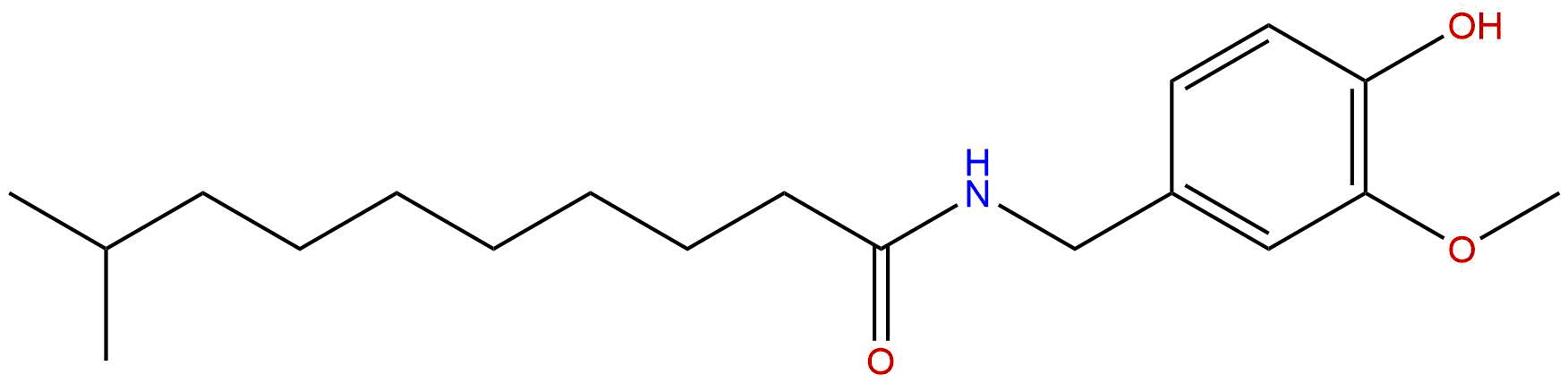


Product name: Homodihydrocapsaicin I
Synonym name: Homodihydrocapsaicin
Catalogue No.: BP4826
Cas No.: 20279-06-5
Formula: C19H31NO3
Mol Weight: 321.461
Botanical Source:
Type of Compound: Alkaloids
Purity: 95%~99%
Analysis Method: HPLC-DAD or/and HPLC-ELSD
Identification Method: Mass, NMR
Packing: Brown vial or HDPE plastic bottle
Storage: Store in a well closed container, protected from air and light. Put into refrigerate or freeze for long term storage.
Whenever possible, you should prepare and use solutions on the same day. However, if you need to make up stock solutions in advance, we recommend that you store the solution as aliquots in tightly sealed vials at -20℃. Generally, these will be useable for up to two weeks.
The product could be supplied from milligrams to grams
Inquire for bulk scale.
For Reference Standard and R&D, Not for Human Use Directly.
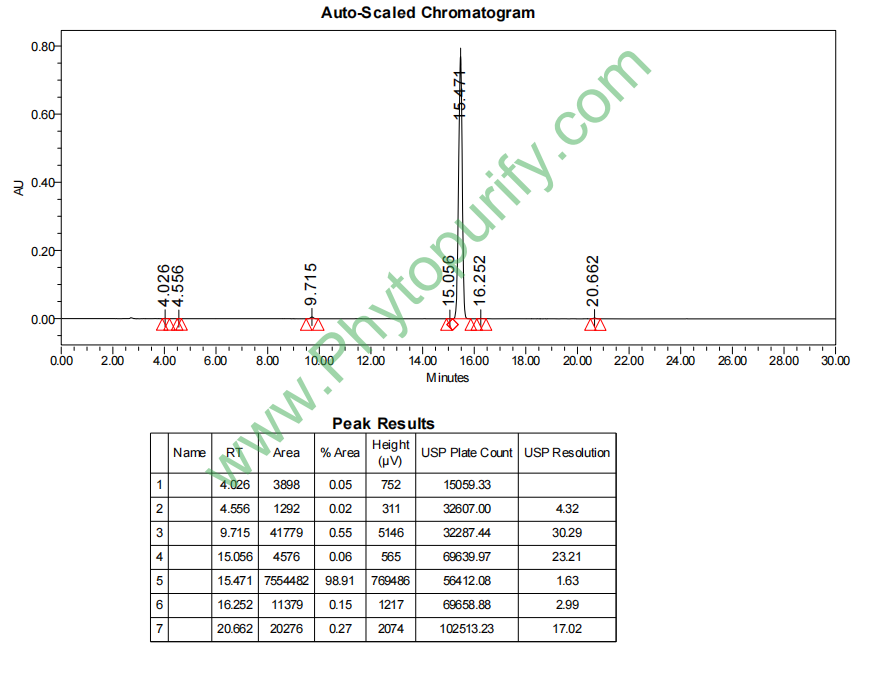
HPLC of Homodihydrocapsaicin I
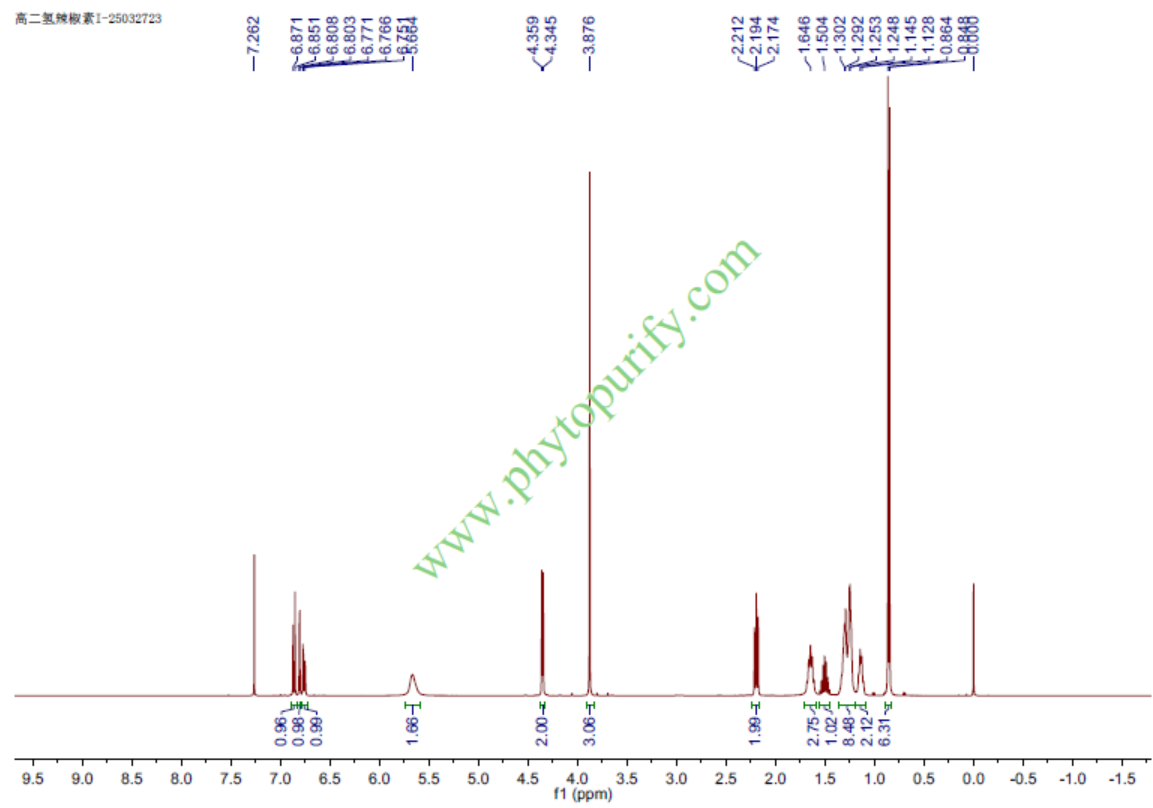
HNMR of Homodihydrocapsaicin I
Storage conditions:Short-term storage at 2~8℃, long-term storage at -20 ~ -80℃
58.5600
4.5279
4.5267
.0234
2.4490
6.0446
High
93.0105
1.9023
No
No
Yes
No
No
No
0.0
No
No
No
No
Natural products have always been an important source of drug discovery and development, and their diverse chemical structures and unique biological activities have made indelible contributions to human health. Among numerous natural products with biological activity, those originating from the chili genus(Capsicum)Capsaicinoids in plants have attracted much attention due to their unique spiciness and extensive pharmacological activities. Capsaicin and dihydrocapsaicin are the two most abundant and extensively studied components among them. However, in the complex chemical composition library of chili peppers, there are also a series of homologous compounds with similar structures and relatively low content, but equally important biological significance. Homodihydrocapsaicin I is one of them.
Dihydrocapsaicin I, as a naturally occurring capsaicin analogue, has a chemical structure highly similar to classical capsaicin and dihydrocapsaicin, with only differences in the length of the fat chain. This small structural difference endows it with unique physicochemical properties and biological activity spectrum. For a long time, due to its much lower content in chili fruits compared to capsaicin and dihydrocapsaicin, research on dihydrocapsaicin I has been relatively lagging behind. However, with the advancement of analytical chemistry techniques and a deeper understanding of the Structure Activity Relationship (SAR) of capsaicin like substances, dihydrocapsaicin I has gradually entered the field of researchers. Its unique molecular structure makes it an ideal tool molecule for exploring the activation mechanism of capsaicin receptor 1 (TRPV1), developing novel analgesic drugs, and understanding the metabolic pathways of capsaicin like substances.
In recent years, research has continuously revealed the potential application value of dihydrocapsaicin I in pain relief, anti-inflammatory, antioxidant, and metabolic regulation. Especially its interaction with multiple targets closely related to pain and inflammation signaling pathways, such as transient receptor potential vanillic acid subtype 1 (TRPV1), cannabinoid receptor 1 (CNR1), opioid receptors (OPRD1, OPRM1, OPRK1), and cyclooxygenase (PTGS1/2), indicates its unique advantages in the treatment of complex diseases such as chronic pain and neuropathic pain. In addition, its excellent blood-brain barrier penetration ability and low risk of hERG inhibition also provide favorable conditions for its development as a central nervous system (CNS) drug or peripheral analgesic.
This article aims to provide a systematic professional review of high dihydrocapsaicin I, starting from its chemical structure, physicochemical properties, plant sources, and extraction methods, to deeply explore its pharmacological activity, mechanism of action, and molecular targets. Combined with its pharmacological parameters and pharmacokinetic characteristics, it evaluates its clinical application prospects and challenges, in order to provide comprehensive references for further research and development of this natural product.
The chemical structure of dihydrocapsaicin I is the basis for understanding all of its biological functions. From a chemical classification perspective, it belongs to the Vanilloids class of compounds, with its core skeleton consisting of a vanilla group (4-hydroxy-3-methoxybenzyl) connected to a long-chain fatty acid through an amide bond. Unlike capsaicin (containing an 8-methyl-6-nonenamide chain) and dihydrocapsaicin (containing an 8-methylnonanamide chain), the fatty chain of dihydrocapsaicin I is a 9-methyldecanamide chain. Its system is named: (E) - N - (4-hydroxy-3-methoxybenzyl) -9-methyldecanamide, or simply N-vanillyl-9-methyldecanamide. Its chemical formula is C19H31NO3, with a molecular weight of 321.4610 g/mol.
The structural characteristics of this molecule determine its unique physicochemical properties. Firstly, the vanilla group provides a polar head, giving it a certain degree of water solubility, while the long-chain alkyl tail endows it with significant lipid solubility. This amphiphilic structure is key to its ability to interact with cell membranes and transmembrane proteins such as TRPV1. The calculated LogP value is 4.5279, indicating that it has strong lipid solubility and is easy to penetrate biofilms. This characteristic is highly consistent with its prediction of high blood-brain barrier (BBB) penetration ability. A higher LogP value also means a lower solubility in water, with a calculated water solubility of only 0.0234 mg/mL, which may become a challenge for formulation development in practical applications.
The topological polar surface area (TPSA) is 58.5600 Å ², which is lower than the commonly believed threshold for CNS drugs (approximately 60-70 Å ²), further supporting its prediction of effective penetration of the blood-brain barrier. In terms of safety, key pharmacokinetic parameters show that dihydrocapsaicin I has a low risk of inhibiting hERG potassium channels (hERG inhibition: no), which reduces its risk of causing QT interval prolongation and arrhythmia in the heart, and is an important safety advantage. Meanwhile, the Ames test result was 0.0, indicating that it did not exhibit mutagenicity in the standard bacterial recovery mutation test, suggesting a low risk of genetic toxicity. These physicochemical properties and early safety assessment results provide positive signals for dihydrocapsaicin I as a candidate drug molecule.
Dihydrocapsaicin I is a naturally occurring trace capsaicin substance in the fruits of chili plants. There are significant differences in its content among different chili varieties, growth stages, and tissue parts. Generally speaking, in common chili varieties such as Chaotian pepper(Capsicum annuum)Xiaomi Spicy(Capsicum frutescens)And Havana chili peppers(Capsicum chinense)It can be detected in all samples, but its concentration is usually much lower than that of capsaicin and dihydrocapsaicin, accounting for only a small part of the total capsaicin content (usually less than 5%). Therefore, directly extracting high-purity dihydrocapsaicin I from natural plants is quite challenging, usually requiring a large amount of starting materials and efficient separation and purification techniques.
The traditional extraction method is mainly based on solvent extraction. Due to the good solubility of capsaicin like substances in organic solvents, commonly used extraction solvents include ethanol, methanol, acetone, or ethyl acetate. Usually, Soxhlet extraction or room temperature soaking method is used to fully contact the dried and crushed chili fruit powder with the solvent, and extract the target compound into the solvent by heating reflux or long-term soaking. The crude extract is obtained by filtering and concentrating the extract under reduced pressure. However, the crude extract contains a large amount of pigments, oils, resins, and other capsaicin homologs with highly similar structures, making subsequent separation and purification complex.
In order to obtain high-purity single compounds, modern chromatographic separation techniques must be combined. High performance liquid chromatography (HPLC) is the most commonly used and effective method for separating and purifying capsaicin like substances. Usually, a reverse phase C18 chromatographic column is used, with acetonitrile water or methanol water system as the mobile phase, to achieve baseline separation of different capsaicin homologues through gradient elution program. Due to the extremely similar structures of dihydrocapsaicin I, dihydrocapsaicin, and dihydrocapsaicin II, their retention times are very close. Therefore, it is necessary to finely optimize the chromatographic conditions (such as mobile phase ratio, column temperature, and flow rate) to achieve the desired separation effect. Prepa HPLC is the preferred method for obtaining high-purity standards or research samples ranging from milligrams to grams. In addition, high-speed countercurrent chromatography (HSCCC), as a liquid-liquid distribution chromatography technique, has been successfully applied in the separation and purification of capsaicin compounds in recent years due to its advantages such as no solid stationary phase, high sample recovery rate, and resistance to irreversible adsorption, especially for processing large amounts of samples.
Due to the limitations of natural sources, chemical synthesis has become another important pathway for obtaining dihydrocapsaicin I. The synthesis route is usually based on the amide condensation reaction of Vanillylamine with corresponding fatty acid derivatives (such as 9-methyldecanoic acid or its acyl chloride). By controlling the reaction conditions and selecting appropriate condensing agents (such as EDC/HOBt or DCC), the target product can be efficiently and selectively synthesized. Chemical synthesis can not only overcome the yield bottleneck of natural extraction, but also prepare tracer molecules for pharmacokinetic studies through techniques such as isotope labeling, which is of great significance for in-depth research on their in vivo processes.
The pharmacological activity research of dihydrocapsaicin I mainly focuses on its commonality as a capsaicin like substance and its unique characteristics. Its core pharmacological activity is undoubtedly its analgesic effect.
Analgesic effect Similar to capsaicin, the analgesic effect of dihydrocapsaicin I is mainly achieved by activating and subsequently desensitizing the transient receptor potential vanillic acid subtype 1 (TRPV1) channel. TRPV1 is a non selective cation channel primarily expressed on sensory neurons and can be activated by capsaicin, heat (>43 ° C), acid (pH<5.9), and endogenous inflammatory mediators. As an agonist of TRPV1, dihydrocapsaicin I initially binds to the receptor, causing Ca ² ⁺ and Na ⁺ influx, leading to neuronal excitation and a burning sensation. However, under sustained or high concentration exposure, TRPV1 channels undergo desensitization, resulting in a significant decrease in responsiveness to subsequent stimuli, leading to long-lasting analgesic effects. This "agonist desensitization" mechanism is the classic paradigm of capsaicin based substance analgesia. Research has shown that the activation efficacy of dihydrocapsaicin I on TRPV1 may be slightly lower than capsaicin, but its induced desensitization process may be more persistent or have different kinetic characteristics, which may give it an advantage in avoiding initial intense burning sensation. In addition, its analgesic effect also involves interactions with other pain related targets, such as opioid receptors (OPRM1, OPRD1, OPRK1) and cannabinoid receptors (CNR1), which together form a complex analgesic network.
anti-inflammatory effect Multiple studies have confirmed that dihydrocapsaicin I has significant anti-inflammatory activity. The mechanism is not limited to regulating neurogenic inflammation through TRPV1, but also involves inhibition of cyclooxygenase (COX). PTGS1 (COX-1) and PTGS2 (COX-2) are key enzymes involved in prostaglandin synthesis, and prostaglandins are important inflammatory mediators. High dihydrocapsaicin I can inhibit the activity of these two enzymes, thereby reducing the production of prostaglandins and exerting a direct anti-inflammatory effect. This dual mechanism of action - both through neural pathways and by directly inhibiting inflammatory mediators - makes it potentially valuable in treating inflammatory pain, such as arthritis.
Antioxidant effect The vanilla group endows high dihydrocapsaicin I with certain antioxidant capacity. It can act as a free radical scavenger, directly neutralizing reactive oxygen species (ROS) and reactive nitrogen species (RNS), and reducing oxidative stress damage to cells. In neurodegenerative disease models, this antioxidant activity may help protect neurons from damage. In addition, it may indirectly exert antioxidant effects by regulating the intracellular antioxidant defense system, such as the Nrf2 pathway.
Metabolic regulation effect Some preliminary studies suggest that capsaicin like substances, including dihydrocapsaicin I, may have an impact on energy metabolism, such as promoting fat oxidation, increasing energy expenditure, and improving insulin sensitivity. These effects may be related to the expression of TRPV1 in adipose tissue and liver, but their specific mechanisms and clinical significance still need further investigation.
The pharmacological activity of dihydrocapsaicin I is the result of its interaction with multiple molecular targets. Its mechanism of action is complex, involving multiple levels from cell membrane receptors to intracellular signaling pathways.
Core target: TRPV1 TRPV1 is the most classic and extensively studied target of dihydrocapsaicin I. The vanilloid group of dihydrocapsaicin I binds to the intracellular binding site of TRPV1 channel protein (located between the S3-S4 transmembrane fragments), causing conformational changes in the channel and resulting in pore opening. This process leads to a large influx of Ca ² ⁺, activating downstream signaling pathways including calmodulin dependent kinase (CaMK), protein kinase C (PKC), and mitogen activated protein kinase (MAPK). Continuous exposure to agonists leads to channel desensitization, which includes: ① Ca ² ⁺ influx activates calcineurin, leading to dephosphorylation of TRPV1; ② Hydrolysis of phosphatidylinositol 4,5-diphosphate (PIP2); ③ Receptors are internalized from the cell membrane. The ultimate result is the loss of TRPV1 responsiveness to subsequent stimuli, thereby blocking the transmission of pain signals.
Opioid receptor system Research has shown that the analgesic effect of dihydrocapsaicin I is partially mediated by activating the endogenous opioid system. It can bind to μ - opioid receptor (OPRM1), δ - opioid receptor (OPRD1), and κ - opioid receptor (OPRK1), although its affinity may be lower than classical opioid drugs. This activation may occur at the spinal cord and spinal cord levels, through the G protein coupled receptor (GPCR) signaling pathway, inhibiting adenylate cyclase, reducing cAMP levels, and regulating ion channels such as potassium and calcium channels, thereby inhibiting neuronal excitability and neurotransmitter release. This multi-target opioid receptor activation pattern may help generate synergistic analgesic effects and reduce the tolerance and dependency risks associated with single opioid receptor activation.
Cannabinoid receptor system Cannabinoid receptor 1 (CNR1) is mainly expressed in the central nervous system. High dihydrocapsaicin I, as an agonist of CNR1, can simulate certain effects of endogenous cannabinoids. Activation of CNR1 also inhibits cAMP production through Gi/o protein and regulates ion channels, thereby suppressing neurotransmitter release and producing analgesic, anti anxiety, and neuroprotective effects. This cross interaction with the cannabinoid system further enriches its analgesic mechanism.
Cyclooxygenase (COX)As mentioned earlier, dihydrocapsaicin I can directly inhibit the activity of PTGS1 and PTGS2. This inhibitory mechanism may be achieved by competitively binding to the active site of the enzyme, preventing the conversion of arachidonic acid to prostaglandins. This explains its direct anti-inflammatory and analgesic effects, especially in peripheral inflammatory sites.
Other targets In addition, high dihydrocapsaicin I can also interact with transient receptor potential anchor protein subtype 1 (TRPA1). TRPA1 is another ion channel associated with pain and inflammation, which can be activated by various irritating compounds. The effect of dihydrocapsaicin I on TRPA1 may be complex, with both activation and desensitization effects. At the same time, its potential effects on serotonin transporter (SLC6A4) and dopamine receptor D2 (DRD2) suggest that it may also have certain effects on emotion regulation and reward pathways, which may be related to its overall analgesic experience and potential antidepressant like effects.
Based on the provided pharmacological parameters, dihydrocapsaicin I exhibits some encouraging prospects for drug development, but also faces some challenges.
Pharmaceutical advantages:
1. Good central nervous system penetrability One of its most prominent advantages is its ability to penetrate the blood-brain barrier. This means that it can effectively target targets in the central nervous system, such as TRPV1, CNR1, and opioid receptors in the spinal cord and brain, with innate advantages for treating chronic pain related to central sensitization, such as fibromyalgia and neuropathic pain.
2. Low risk of cardiac toxicity The risk of hERG inhibition is' no ', which is a very favorable safety signal. HERG channel inhibition is the main cause of drug-induced QT interval prolongation and fatal arrhythmias, such as apical torsion ventricular tachycardia. This feature greatly reduces its cardiovascular safety risk.
3. Low genetic toxicity risk The Ames test was negative, preliminarily ruling out the possibility of it as a DNA mutagen, laying the foundation for subsequent long-term toxicity studies.
Drug Challenge:
1. Extremely low water solubility The water solubility of 0.0234 mg/mL is the biggest obstacle to its medicinal properties. Low water solubility not only affects the bioavailability of oral formulations, but also poses significant challenges to the development of injectable formulations. Advanced formulation technologies such as nanoemulsions, liposomes, cyclodextrin inclusion complexes, solid dispersions, etc. are needed to improve their solubility and dissolution rate.
2. High lipid solubility and metabolism Although a high LogP value (4.5279) is beneficial for penetrating biofilms, it also means that it may be rapidly metabolized by the cytochrome P450 enzyme system (especially CYP3A4) in the liver, leading to significant first pass effects and low oral bioavailability. In addition, high fat soluble drugs are also prone to accumulate in adipose tissue, leading to prolonged half-life and potential accumulation toxicity. Its metabolic pathways may include O-demethylation of vanilla groups, hydroxylation of fatty chains, and hydrolysis of amide bonds.
3. Initial stimulus problem As a TRPV1 agonist, its clinical application faces an inherent challenge - the burning and stinging sensation during initial administration. This is a problem that all TRPV1 agonist analgesics (such as capsaicin patches) need to overcome. How to alleviate this initial discomfort through dosage form design (such as sustained-release, local administration) or combination therapy is the key to successful clinical translation.
Pharmacokinetic characteristics (speculated)Based on the physicochemical properties and data of similar compounds (such as capsaicin), it can be inferred that the pharmacokinetic characteristics of dihydrocapsaicin I are: oral absorption may be poor and irregular, with low bioavailability; High plasma protein binding rate; Widely distributed in tissues, especially in the brain, liver, and adipose tissue; Mainly metabolized through the liver, metabolites may be excreted through urine and feces; The elimination half-life may be longer, depending on its degree of accumulation and metabolic rate. Intravenous injection or transdermal administration may be more effective routes of administration.
The unique pharmacological effects and good pharmacological basis of dihydrocapsaicin I have opened up prospects for its application in multiple therapeutic fields.
Application in the field of analgesia This is its most direct and promising application direction. especially for chronic pain and Neuropathic Pain, such as diabetes peripheral neuropathy, post herpetic neuralgia, peripheral neuropathy caused by chemotherapy, etc. Its multi-target mechanism of action (TRPV1 desensitization, opioid receptor activation, COX inhibition) may make it more effective than single target drugs and may have lower tolerance and dependence risks. Developed into Long acting local analgesic preparations(such as patches and creams) are highly attractive strategies that can minimize systemic exposure and initial burning sensation. In addition, utilizing its high BBB penetration, it has been developed for Central pain Systemic drugs for pain after spinal cord injury and stroke are also worth exploring.
Anti inflammatory application Its direct COX inhibitory activity and neurogenic anti-inflammatory effect make it effective in treatment Inflammatory arthritis(such as rheumatoid arthritis, osteoarthritis)dermatitis and Irritable bowel syndrome Has potential in inflammatory diseases. Local administration may be an ideal choice for treating skin and joint inflammation.
Metabolic diseases Given its potential regulatory effect on energy metabolism, dihydrocapsaicin I or its analogues may be developed as lose weight or Improving insulin resistance Adjuvant therapeutic drugs. However, this requires extensive preclinical and clinical research to confirm its effectiveness and safety.
neuroprotection Its antioxidant activity and regulatory effect on cannabinoid/opioid receptors suggest its potential in Neurodegenerative diseases It may have neuroprotective effects in conditions such as Parkinson's disease and Alzheimer's disease. But this is still in a very early stage of exploration.
Future research directions:
1. In depth analysis of structure-activity relationship A systematic study was conducted to investigate the relationship between the length, saturation, and branch position of the high dihydrocapsaicin I fatty chain and the affinity, excitatory/antagonistic activity, and desensitization kinetics of targets such as TRPV1 and opioid receptors, in order to provide guidance for designing better analogs.
2. Formulation development Focus on tackling the challenges of poor water solubility and initial irritation. Develop new drug delivery systems based on nanotechnology, liposomes, microneedles, etc., to achieve efficient delivery and controlled release.
3. Comprehensive evaluation of pharmacokinetics and toxicology Conduct systematic pharmacokinetic studies in vivo to clarify its absorption, distribution, metabolism, and excretion (ADME) characteristics. Conduct comprehensive toxicological evaluations on long-term toxicity, reproductive toxicity, carcinogenicity, etc. to ensure their safety.
4. Clinical translational research Design rigorous clinical trials that first validate the concept in the field of local analgesia (such as postherpetic neuralgia), and then gradually expand to other pain and inflammation indications.
5. Exploration of Combination Therapy To investigate the synergistic effects of dihydrocapsaicin I with nonsteroidal anti-inflammatory drugs (NSAIDs), opioid drugs, or anticonvulsants (such as gabapentin) in order to achieve a "multi-target, low-dose, high efficacy and low toxicity" therapeutic effect.
Dihydrocapsaicin I, as a long neglected "pearl" in the capsaicin family, is showing great potential as a new generation of analgesic and anti-inflammatory drugs due to its unique chemical structure and multi-target pharmacological activity. Its interactions with multiple key targets such as TRPV1, opioid receptors, cannabinoid receptors, and cyclooxygenase form a complex and intricate pharmacological network, which is expected to surpass traditional single target drugs in the treatment of complex diseases such as chronic pain. Its excellent blood-brain barrier penetration ability, low cardiac toxicity, and low genetic toxicity risk have added important weight to its drug development.
However, the path from natural products to clinical drugs remains challenging. The extremely low water solubility, potential metabolic instability, and initial stimulation of TRPV1 agonists are the main bottlenecks restricting its clinical translation. Future research needs to focus on in-depth structure-activity relationship studies, innovative formulation technology development, and comprehensive preclinical and clinical evaluations. With the continuous deepening of understanding of the biological activity of capsaicin like substances, as well as advances in modern medicinal chemistry and pharmaceutical technology, we have reason to believe that dihydrocapsaicin I and its derivatives have the potential to provide new, safer, and more effective treatment options for patients suffering from pain and inflammation in the near future, writing their own chapter in the history of natural product drug development.
