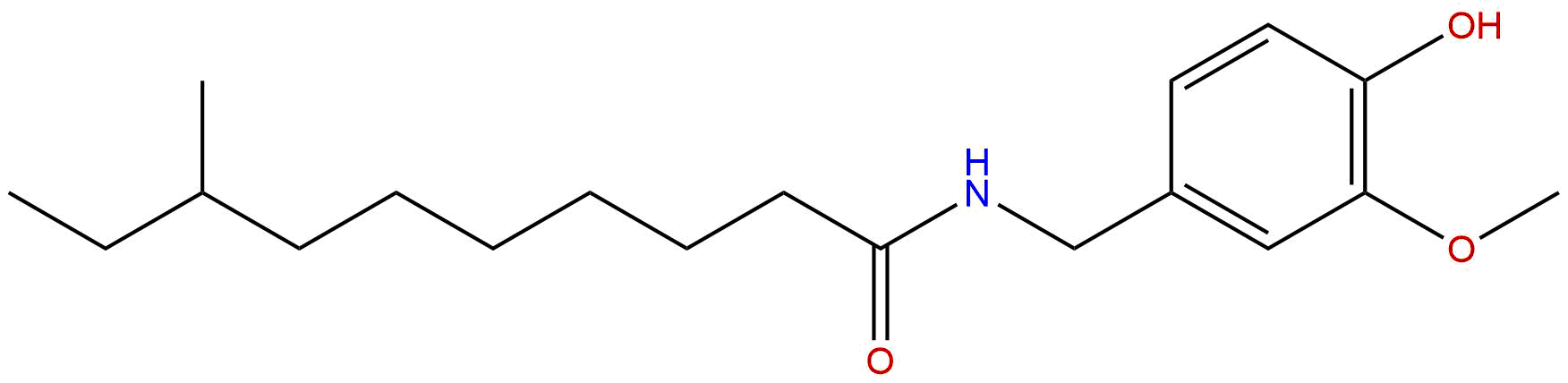


Product name: Homodihydrocapsaicin II
Synonym name: N-(4-Hydroxy-3-methoxybenzyl)-8-methyldecanamide
Catalogue No.: BP5043
Cas No.: 71239-21-9
Formula: C19H31NO3
Mol Weight: 321.461
Botanical Source:
Type of Compound: Alkaloids
Purity: 95%~99%
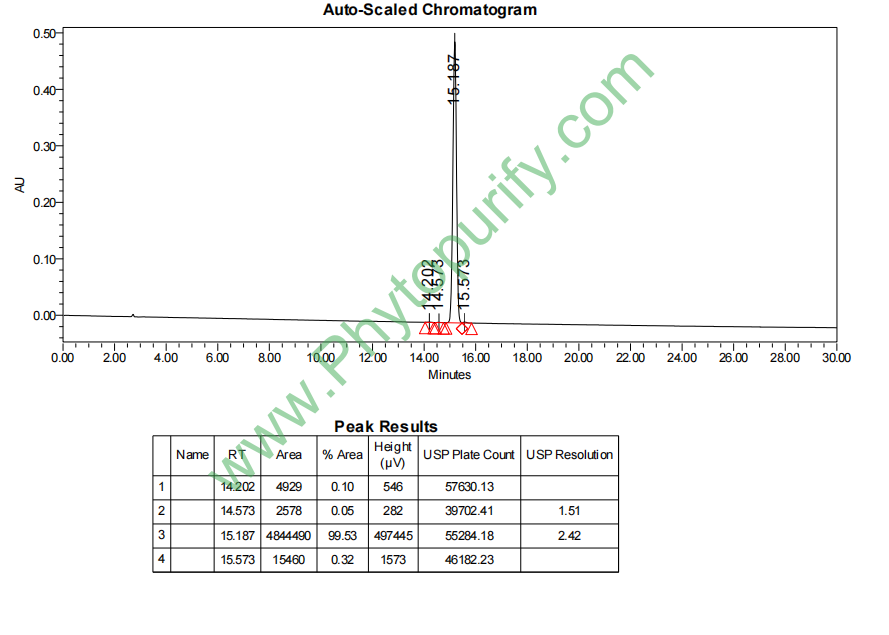
Analysis Method: HPLC-DAD or/and HPLC-ELSD
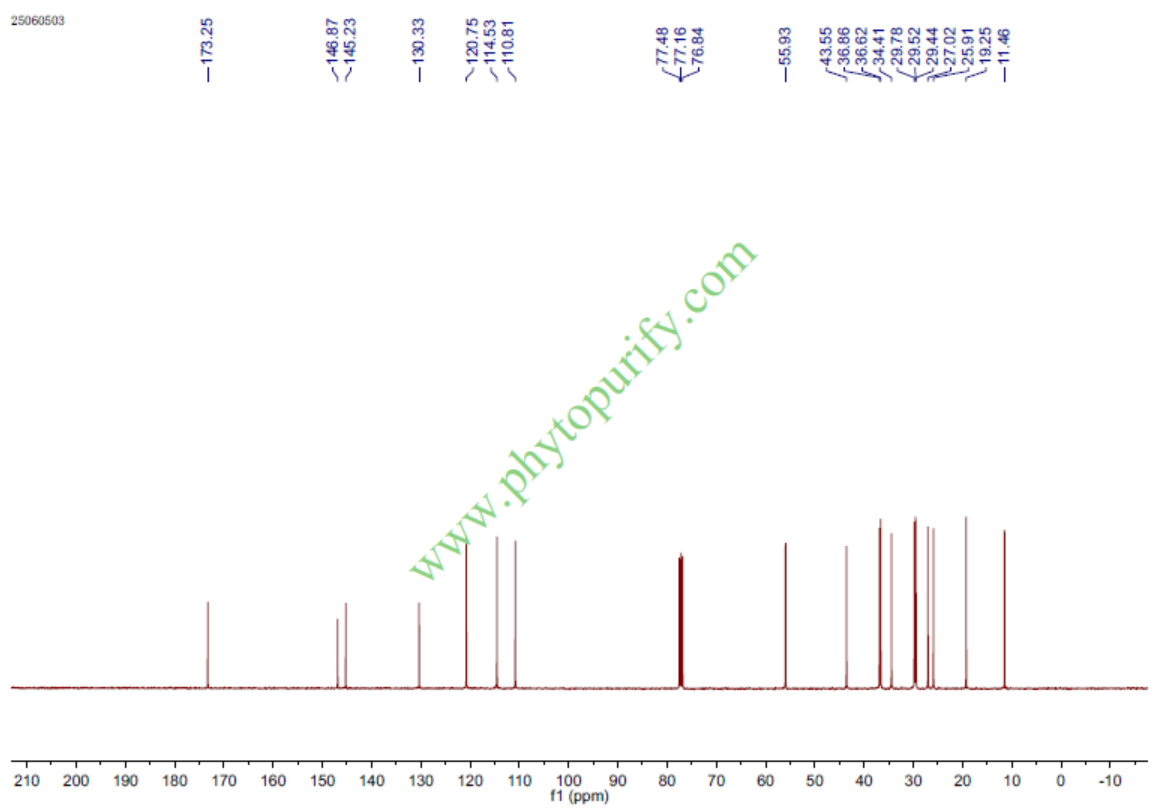
Identification Method: Mass, NMR
Packing: Brown vial or HDPE plastic bottle
Storage: Store in a well closed container, protected from air and light. Put into refrigerate or freeze for long term storage.
Whenever possible, you should prepare and use solutions on the same day. However, if you need to make up stock solutions in advance, we recommend that you store the solution as aliquots in tightly sealed vials at -20℃. Generally, these will be useable for up to two weeks.
The product could be supplied from milligrams to grams
Inquire for bulk scale.
For Reference Standard and R&D, Not for Human Use Directly.
HPLC of Homodihydrocapsaicin II
NMR of Homodihydrocapsaicin II
Storage conditions:Short-term storage at 2~8℃, long-term storage at -20 ~ -80℃
Homodihydrocapsaicin II (CAS number: 71239-21-9) is a natural capsaicin compound mainly found in the fruits of chili peppers (Capsicum spp.). As an important member of the capsaicin family, dihydrocapsaicin II has received widespread attention in the field of natural product pharmacology in recent years due to its unique molecular structure and significant biological activity. Research has shown that dihydrocapsaicin II not only has the spicy sensation of classical capsaicin, but also exhibits good analgesic and anti-inflammatory effects, especially in the treatment of inflammatory diseases and neuropathic pain, demonstrating potential application value.
Capsaicin compounds participate in the regulatory mechanisms of pain transmission and inflammatory response by regulating multiple ion channels and receptors. As a derivative of capsaicin, the unique molecular structure of dihydrocapsaicin II endows it with high biological activity and good pharmacokinetic properties. This article will systematically review the chemical structure and physicochemical properties, plant sources and extraction methods, pharmacological activity and mechanism of action, pharmacological evaluation and pharmacokinetic characteristics of dihydrocapsaicin II. Finally, it will explore its clinical application prospects and future research directions, providing reference for researchers in related fields.
The molecular formula of dihydrocapsaicin II is C20H33NO3, with a molecular weight of 321.4610. Its chemical structure belongs to the capsaicin class compounds, with a core structure consisting of an aromatic ring connected to a long-chain fatty acid amide. Compared with capsaicin, dihydrocapsaicin II has a higher saturation on the fatty acid chain, making its chemical properties more stable, and its metabolic pathways in organisms may be different.
In terms of physicochemical properties, the LogP value of dihydrocapsaicin II is 4.5496, indicating its strong lipophilicity, which is beneficial for passing through cell membranes and the blood-brain barrier. Its polar surface area (TPSA) is 58.56 Å ², indicating that the molecule has moderate polarity, which is conducive to binding with biomolecules. The low water solubility (0.0223 mg/mL) is consistent with its high lipid solubility, suggesting that suitable carrier or formulation techniques may be needed in vivo to improve its bioavailability.
In addition, high dihydrocapsaicin II did not exhibit hERG channel inhibition, reducing the risk of cardiac toxicity; The Ames test result is 0.0, indicating no significant genetic toxicity and high safety. Its molecular structure and physicochemical properties provide a solid foundation for its use as a drug candidate molecule.
High dihydrocapsaicin II is mainly present in the fruits of chili plants, especially varieties such as Capsicum annuum and Capsicum frutescens. During the ripening process of chili fruits, the content of capsaicin like substances gradually increases, and different varieties and growth environments have a significant impact on their content and composition.
The traditional method for extracting dihydrocapsaicin II typically involves organic solvent extraction, such as ethanol, methanol, or ethyl acetate, combined with ultrasound assisted extraction or reflux extraction techniques to improve extraction efficiency. The extraction solution undergoes concentration, liquid-liquid separation, and column chromatography purification, and is ultimately subjected to component identification and purity analysis using techniques such as high-performance liquid chromatography (HPLC) or gas chromatography-mass spectrometry (GC-MS).
In recent years, green extraction techniques such as supercritical CO2 extraction and microwave-assisted extraction have also been applied to the extraction of capsaicin compounds, which have the advantages of low solvent residue, environmental friendliness, and high extraction efficiency. Optimizing the extraction conditions and purification process for the extraction of high dihydrocapsaicin II is the key to achieving its large-scale production and application.
The pharmacological activities of dihydrocapsaicin II mainly focus on two aspects: analgesia and anti-inflammatory. Multiple in vitro and in vivo experiments have shown that this compound can effectively alleviate inflammatory and neuropathic pain, and its mechanism of action involves multiple molecular targets.
High dihydrocapsaicin II exerts its analgesic effect by activating and regulating the TRPV1 (transient receptor potential vanillic acid receptor 1) channel. TRPV1 is an important ion channel in sensory nerve endings, involved in the transmission and regulation of pain signals. High grade dihydrocapsaicin II can bind to TRPV1, inducing desensitization and reducing pain sensation.
In addition, high school dihydrocapsaicin II also affects neurotransmitter receptors such as CNR1 (cannabinoid receptor 1), OPRD1 (delta opioid receptor), OPRM1 (μ - opioid receptor), and OPRK1 (κ - opioid receptor), regulating the pain transmission pathway of the central nervous system. Its regulatory effect on multiple opioid receptors suggests that it may have a similar effect to opioid analgesics, but with fewer side effects.
Research on the anti-inflammatory properties of dihydrocapsaicin II has shown that it can inhibit the activity of PTGS1 (cyclooxygenase-1) and PTGS2 (cyclooxygenase-2), reduce the synthesis of inflammatory mediators such as prostaglandins, and alleviate inflammatory reactions. Its regulation of TRPA1 (transient receptor potential vanillic acid receptor subfamily A1) channels is also involved in the alleviation of inflammatory pain.
In addition, dihydrocapsaicin II indirectly affects the neural regulation of inflammation and pain by regulating neurotransmitter systems such as SLC6A4 (serotonin transporter) and DRD2 (dopamine receptor D2). Overall, the multi-target mechanism of action of dihydrocapsaicin II makes it a potential candidate drug for treating complex pain and inflammatory diseases.
The pharmacological effects of dihydrocapsaicin II depend on its interactions with various molecular targets, mainly including the following aspects:
TRPV1 is one of the main targets of dihydrocapsaicin II. This receptor is a non selective cation channel widely distributed in sensory neurons, involved in pain signal transduction caused by thermal and chemical stimuli. High dihydrocapsaicin II activates TRPV1, induces its desensitization and endocytosis, reduces neuronal excitability, and thus achieves analgesic effects.
High grade dihydrocapsaicin II can bind to three types of opioid receptors, namely δ, μ, and κ, regulate the endogenous opioid system, and exert analgesic effects. Unlike traditional opioid analgesics, dihydrocapsaicin II may reduce the risk of addiction and drug resistance by partially stimulating or modulating receptor activity.
CNR1 receptors are mainly distributed in the central nervous system and participate in pain regulation, emotion, and inflammatory responses. The regulatory effect of dihydrocapsaicin II on CNR1 can help alleviate neuropathic pain and inflammation related symptoms.
PTGS1 and PTGS2 are key enzymes involved in prostaglandin synthesis and regulation of inflammatory responses. High dihydrocapsaicin II inhibits the activity of these two enzymes, reduces the production of inflammatory mediators, and exerts anti-inflammatory effects.
The TRPA1 receptor is closely related to inflammatory pain, and dihydrocapsaicin II reduces pain caused by inflammation by regulating the activity of TRPA1. SLC6A4 and DRD2 are involved in the neural transmission of serotonin and dopamine, respectively, regulating emotions and pain perception. The regulation of these targets by high dihydrocapsaicin II helps to comprehensively alleviate pain and improve patients' quality of life.
High grade dihydrocapsaicin II exhibits good characteristics in terms of pharmacological properties:
In terms of pharmacokinetics, although specific in vivo metabolism and clearance data are not yet complete, based on its physicochemical properties and structure, it is speculated that dihydrocapsaicin II may undergo biotransformation through the liver metabolic enzyme system, with good in vivo stability and central distribution ability. Further in vivo pharmacokinetic studies are needed in the future to clarify its absorption, distribution, metabolism, and excretion (ADME) characteristics, providing a basis for clinical development.
High grade dihydrocapsaicin II has broad clinical application prospects due to its significant analgesic and anti-inflammatory activities. Especially in the following areas, it has potential:
Treatment of inflammatory diseases High dihydrocapsaicin II, such as rheumatoid arthritis and inflammatory bowel disease, is expected to alleviate symptoms and improve patients' quality of life by inhibiting the synthesis of inflammatory mediators and regulating neuroinflammatory responses.
Management of neuropathic pain: diabetes neuropathy, post herpetic neuralgia and other intractable pain, high dihydrocapsaicin II may become a new non opioid analgesic through a multi-target mechanism, reducing the side effects of traditional analgesics.
Adjuvant therapy for central nervous system diseases Its excellent blood-brain barrier penetration makes it potentially valuable in the treatment of pain related to neuroinflammation and neurodegenerative diseases.
Future research should focus on in-depth analysis of the pharmacological mechanism, pharmacokinetic optimization, and safety evaluation of dihydrocapsaicin II, combined with modern drug delivery technologies such as nanocarriers and sustained-release formulations, to enhance its clinical feasibility and efficacy.
In addition, the development of preclinical and clinical trials will be key to promoting the process of drugization of dihydrocapsaicin II, especially in dose optimization, toxicological evaluation, and long-term safety monitoring.
As a natural capsaicin compound, dihydrocapsaicin II exhibits significant analgesic and anti-inflammatory potential due to its unique chemical structure and multi-target pharmacological effects. Its good pharmacological parameters and safety characteristics provide a solid foundation for the development of new natural source analgesic and anti-inflammatory drugs. In the future, through in-depth mechanism research and clinical validation, dihydrocapsaicin II is expected to become an effective drug for treating inflammatory diseases and neuropathic pain, bringing new treatment options to patients.
With the continuous advancement of natural product pharmacology and modern drug development technology, the research and application prospects of dihydrocapsaicin II will be even broader, and it is worth the continuous attention and investment of scientific research and the pharmaceutical industry.
