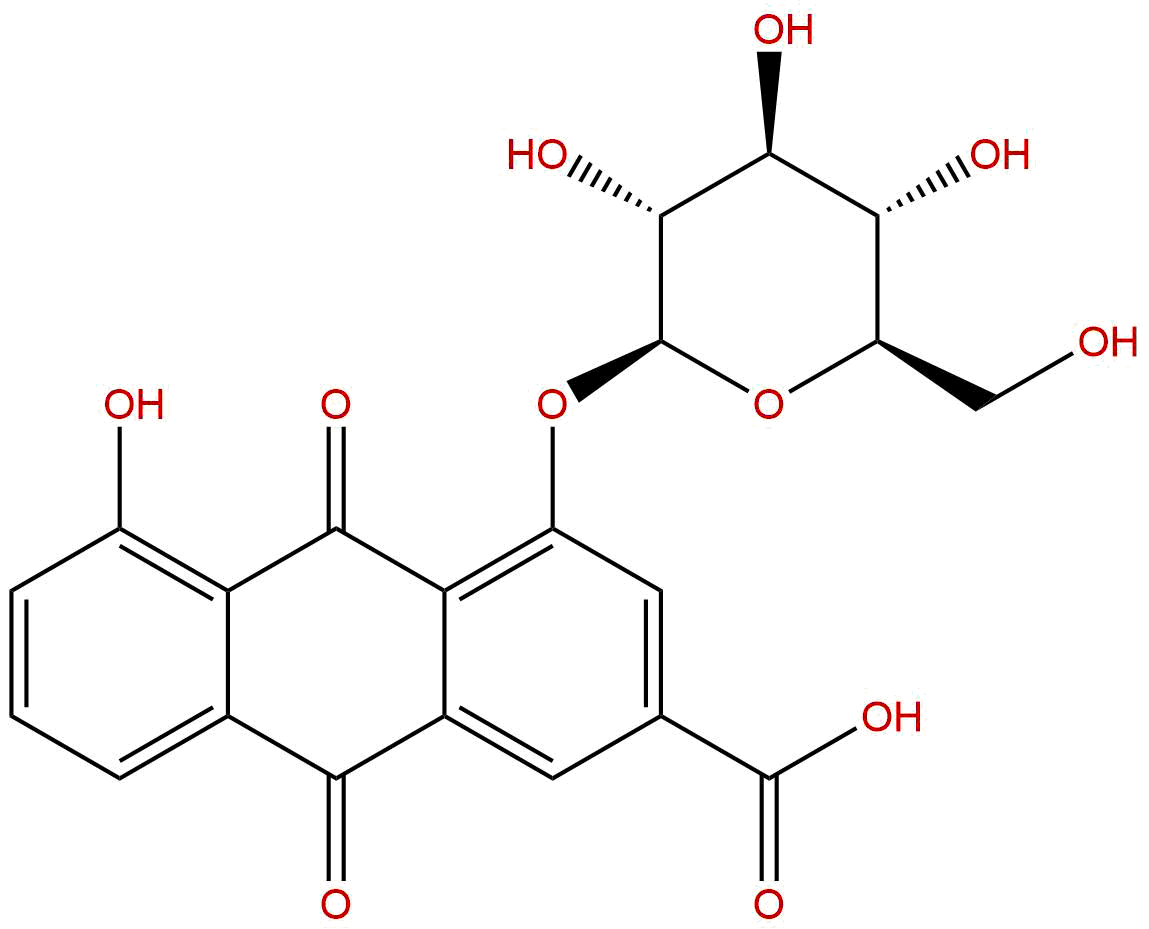
Product name: Rhein-1-glucoside
Synonym name:Rhein-1-O-glucoside
Catalogue No.: BP2422
Cas No.: 114005-89-9
Formula: C21H18O11
Mol Weight: 446.364
Botanical Source:
Type of Compound: Quinones
Purity: 95%~99%
Analysis Method: HPLC-DAD or/and HPLC-ELSD
Identification Method: Mass, NMR
Packing: Brown vial or HDPE plastic bottle
Storage: Store in a well closed container, protected from air and light. Put into refrigerate or freeze for long term storage.
Whenever possible, you should prepare and use solutions on the same day. However, if you need to make up stock solutions in advance, we recommend that you store the solution as aliquots in tightly sealed vials at -20℃. Generally, these will be useable for up to two weeks.
The product could be supplied from milligrams to grams
Inquire for bulk scale.
For Reference Standard and R&D, Not for Human Use Directly.
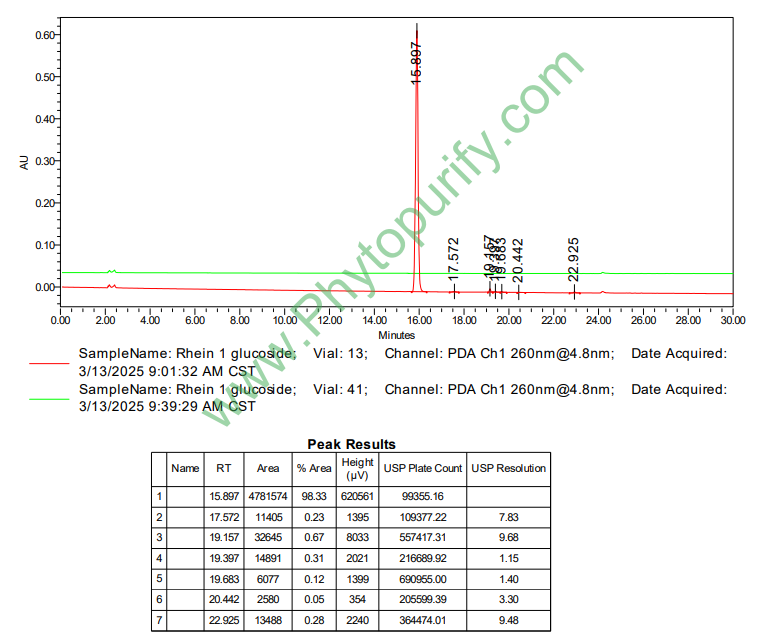
HPLC of Rhein-1-glucoside
Storage conditions:Short-term storage at 2~8℃, long-term storage at -20 ~ -80℃
205.8900
.5000
Low
Unknown
Unknown
Unknown
Unknown
Unknown
Unknown
Unknown
Natural products have always been an important source of drug discovery and development, especially demonstrating irreplaceable value in the fields of anti-inflammatory, anti-tumor, and metabolic disease treatment. Anthraquinone compounds, as a class of active ingredients widely present in plants such as Polygonaceae and Leguminosae, have attracted much attention due to their diverse biological activities. Rhein, as one of the main anthraquinone components in traditional Chinese medicines such as rhubarb and Polygonum multiflorum, has been proven to have multiple pharmacological effects including anti-inflammatory, anti fibrotic, anti-tumor, and regulation of glucose and lipid metabolism. However, the water solubility of rhein in the body is poor, its bioavailability is limited, and there is a certain risk of liver and kidney toxicity, which to some extent limits its clinical application.
Rhein-1-glucoside (CAS number: 114005-89-9) is a natural glycosylated derivative of rhein, formed by attaching a molecule of glucose to the hydroxyl group at position 1 of rhein. This structural modification not only significantly changes the physicochemical properties of the compound, but also endows it with unique pharmacokinetic characteristics and biological activity spectrum. Glycosylation is a common drug molecule modification strategy in nature, which can usually increase the water solubility of compounds, improve intestinal absorption, reduce toxicity, and may achieve prodrug effects through glycoside hydrolysis mediated by intestinal microbiota. In recent years, with the deepening of research on the glycosidic components of natural products, rhein-1-O-glucoside has gradually transformed from a minor plant metabolite to a candidate molecule with unique pharmacological value.
This review aims to systematically review the research progress on the chemical properties, plant sources, extraction methods, pharmacological activities, mechanisms of action, and pharmacological evaluation of emodin 1-O-glucoside, in order to provide comprehensive academic references for the further development and clinical application of this compound.
The chemical structure of rhein-1-O-glucoside consists of two parts: rhein and glucose. Rhubarb acid (1,8-dihydroxy-3-carboxyanthraquinone) belongs to the anthraquinone class of compounds. Its parent nucleus structure is 9,10-anthraquinone, with one hydroxyl group at positions 1 and 8 and one carboxyl group at position 3. Glycosylation occurs on the hydroxyl group at position 1, which is linked to D-glucose via a β - glycosidic bond to form 1-O - β - D-glucopyranoside. The molecular formula of this compound is C ₂₁ H ₁₈ O ₁₁, with a molecular weight of 446.3600 g/mol.
From the perspective of physical and chemical properties, rhein-1-O-glucoside exhibits typical glycosidic compound characteristics. Its lipid water partition coefficient (LogP) is 0.5000, indicating that the compound has moderate lipophilicity, neither highly lipophilic like the aglycone rhein (LogP of about 2.5-3.0), nor completely water-soluble small molecule sugars. This moderate lipophilicity facilitates its transmembrane transport and distribution within the organism. The polar surface area (TPSA) is as high as 205.8900 Å ², far exceeding the recommended upper limit of 140 Å ² for oral medications, mainly due to the contribution of multiple hydroxyl groups on the glucose group and the carboxyl groups of the aglycone. A high TPSA value usually indicates poor passive transmembrane diffusion ability, suggesting that the absorption of the compound may depend on active transport mediated by transporters or paracellular pathways.
There are 11 hydrogen bond acceptors, including 5 hydroxyl oxygen on glucose, 2 hydroxyl oxygen on aglycone, 1 carboxyl oxygen, and 2 carbonyl oxygen on anthraquinone nucleus. The abundant hydrogen bond donor acceptor sites enable the compound to form a broad hydrogen bond network with biomolecules, which is both the structural basis of its pharmacological activity and an important factor affecting its pharmacokinetic behavior. It is worth noting that this compound contains multiple phenolic hydroxyl groups and one carboxyl group, and can undergo varying degrees of ionization in aqueous solution. Its pKa value is expected to be in the acidic to weakly acidic range, which will affect its solubility and ionic state in different pH environments of the gastrointestinal tract.
Compared with rhein, glycosylation significantly altered the spectral characteristics of the compound. In the UV visible absorption spectrum, emodin 1-O-glucoside retains the characteristic absorption peaks of anthraquinone mother nucleus (approximately 230 nm, 260 nm, 430 nm), but the fine structure of the absorption peaks may undergo slight changes due to the introduction of sugar groups. In infrared spectroscopy, the C-O-C stretching vibration of glycosidic bonds (approximately 1050-1150 cm ⁻¹) and the broad absorption peak of glucose hydroxyl groups (approximately 3200-3600 cm ⁻¹) become new characteristic signals. In the nuclear magnetic resonance hydrogen spectrum, the chemical shift of the glucose end proton (H-1 ') is usually in the range of δ 5.0-5.5 ppm, and its coupling constant (J value of about 7-8 Hz) can confirm the β - configuration.
Rhubarb 1-O-glucoside is mainly found in plants of the Polygonaceae family, especially in the Rheum and Fallopia genera. In the rhizomes of Rheum officinale, Rheum palmatum, and Rheum tanguticum, this compound has been detected as one of the anthraquinone glycosides, but its content is usually lower than that of major anthraquinone glycosides such as emodin glucoside and emodin glucoside. The root tubers of Polygonum multiflorum (formerly known as Fallopia multiflorum) also contain this ingredient, and it is considered one of the active ingredients in Polygonum multiflorum for its anti-aging and neuroprotective effects in some studies. In addition, trace amounts are also present in plants such as Reynoutria japonica.
From the perspective of plant chemical taxonomy, the distribution of emodin 1-O-glucoside is closely related to the biosynthetic pathways of anthraquinone compounds in plants. The anthraquinone mother nucleus is synthesized through the polyketide pathway, followed by modifications such as hydroxylation, methylation, carboxylation, etc. Finally, it combines with activated sugar donors (such as UDP glucose) under the catalysis of glycosyltransferase to form glycosides. The differential expression of glycosyltransferases in different plants determines the types and content distribution of anthraquinone glycosides.
In terms of extraction methods, solvent extraction is commonly used to extract rhein 1-O-glucoside, utilizing its solubility in medium polarity solvents. Common extraction solvents include methanol, ethanol, and their aqueous solutions. Due to the presence of carboxyl and phenolic hydroxyl groups in the compound, it can form salts and increase water solubility under alkaline conditions, making alkaline water extraction an effective strategy. In the specific operation, the dried plant material is crushed and soaked or percolated with a 70% -80% ethanol aqueous solution at room temperature or heating conditions. After concentration, the extraction solution is adjusted to acidity with acid to precipitate anthraquinone components, and then purified preliminarily through liquid-liquid extraction (such as ethyl acetate, n-butanol).
Modern separation techniques have significantly improved the purification efficiency of this compound. High speed counter current chromatography (HSCCC) utilizes the difference in distribution coefficients of compounds in a two-phase solvent system to achieve the separation of anthraquinone glycosides in a relatively short period of time. Preparation type high performance liquid chromatography (Prep HPLC) combined with C18 reverse phase chromatography column, using acetonitrile water or methanol water (containing 0.1% formic acid or trifluoroacetic acid) as mobile phase, can obtain high-purity target compounds. In recent years, green extraction techniques such as molecular imprinting and supercritical fluid extraction have also been applied to the separation of anthraquinone components, but the specific extraction method for rhein-1-O-glucoside still needs to be optimized.
It is worth noting that during the extraction process, attention should be paid to avoiding hydrolysis of glycosidic bonds. Acidic conditions, high temperatures, and prolonged heating can all lead to glycosidic bond cleavage, resulting in the formation of aglycone rhein. Therefore, mild extraction conditions (such as room temperature soaking, short-term ultrasound assisted extraction) and appropriate pH control (pH 3-5) are crucial for maintaining the integrity of glycosides.
Rhubarb acid-1-O-glucoside exhibits significant anti-inflammatory effects in various inflammatory models. In a macrophage model stimulated by lipopolysaccharide (LPS), this compound can dose dependently inhibit the production of nitric oxide (NO) and prostaglandin E ₂ (PGE ₂), while reducing the expression levels of pro-inflammatory cytokines such as tumor necrosis factor - α (TNF - α), interleukin-1 β (IL-1 β), and interleukin-6 (IL-6). Its anti-inflammatory activity is closely related to the inhibition of the activation of the nuclear factor kappa B (NF - κ B) signaling pathway, manifested by the inhibition of phosphorylation and degradation of I κ B α, thereby reducing the nuclear translocation of p65 subunit. In animal models of acute inflammation, oral or intraperitoneal injection of rhein-1-O-glucoside can significantly alleviate carrageenan induced paw swelling in rats, reduce myeloperoxidase (MPO) activity and malondialdehyde (MDA) content in inflammatory tissues.
In vitro studies have shown that rhein 1-O-glucoside can inhibit the proliferation of many tumor cell lines, including human liver cancer cells (HepG2, Huh7), human breast cancer cells (MCF-7, MDA-MB-231), human colorectal cancer cells (HT-29, Caco-2) and human lung cancer cells (A549). The half maximal inhibitory concentration (IC ₅₀) is usually in the range of 10-50 μ M, and the specific value varies depending on the cell type and treatment time. Compared with rhein, the glycoside form exhibits stronger cytotoxicity in certain cell lines and lower toxicity in normal cells, suggesting that it may have better selectivity. Mechanism studies have revealed that this compound can exert anti-tumor effects by inducing cell cycle arrest (mainly in the G ₂/M phase) and activating mitochondrial pathway apoptosis (upregulating Bax/Bcl-2 ratio, releasing cytochrome c, activating caspase-3/9). In addition, in colorectal cancer cells, rhein-1-O-glucoside can also inhibit the Wnt/β - catenin signaling pathway and downregulate the expression of target genes such as c-Myc and cyclin D1.
The liver protective effect is one of the more in-depth fields of research on rhein-1-O-glucoside. In a mouse model of acute liver injury induced by carbon tetrachloride (CCl ₄), pretreatment with this compound significantly reduced serum transaminase (ALT, AST) levels, alleviated liver tissue necrosis and inflammatory infiltration. In the non-alcoholic fatty liver disease (NAFLD) model, rhein 1-O-glucoside can improve liver steatosis, reduce triglyceride and free fatty acid content, and inhibit endoplasmic reticulum stress and oxidative stress response. In the liver fibrosis model, this compound reduces the deposition of extracellular matrix (ECM) by inhibiting the activation of hepatic stellate cells (HSC), resulting in decreased expression of α - smooth muscle actin (α - SMA), type I collagen, and type III collagen. The inhibition of the transforming growth factor - β 1 (TGF - β 1)/Smad signaling pathway is considered the core mechanism of its anti fibrotic effect.
Given the traditional use of rhein in the treatment of chronic kidney disease, the renal protective effects of its glycoside derivatives have also received attention. In the model of diabetes nephropathy, rhein -1-O-glucoside can reduce urinary protein excretion, alleviate glomerulosclerosis and tubulointerstitial fibrosis. Its mechanism of action involves inhibiting high glucose induced mesangial cell proliferation and extracellular matrix synthesis, as well as reducing mesenchymal transition (EMT) of renal tubular epithelial cells by inhibiting the TGF - β 1/Smad and MAPK signaling pathways.
In addition to the main activities mentioned above, rhein 1-O-glucoside also exhibits antioxidant, antibacterial (against Gram positive bacteria such as Staphylococcus aureus and Streptococcus), antiviral (such as inhibiting influenza virus neuraminidase activity), and neuroprotective (in a β - amyloid protein induced neurotoxicity model) effects. These diverse biological activities make it a natural product molecule with multi-target effects.
The pharmacological mechanism of action of emodin 1-O-glucoside involves multiple molecular targets and signaling pathways, exhibiting network pharmacology characteristics. The following will elaborate from two levels: key signaling pathways and molecular targets.
NF - κ B signaling pathway As the core regulatory pathway of inflammatory response, the activation of NF - κ B is significantly inhibited by rhein-1-O-glucoside. This compound inhibits the activity of I κ B kinase (IKK), preventing the phosphorylation and ubiquitination degradation of I κ B α, thereby causing NF - κ B dimers (mainly p50/p65) to remain in the cytoplasm and unable to enter the nucleus to initiate the transcription of pro-inflammatory genes. This mechanism explains its role in reducing the expression of TNF - α, IL-6, COX-2, and iNOS in various inflammatory models.
TGF - β 1/Smad signaling pathway In liver fibrosis and kidney fibrosis models, rhein 1-O-glucoside can inhibit the binding of TGF - β 1 to its receptor, reduce the phosphorylation of Smad2/3, and promote the expression of inhibitory Smad7. This effect blocks the activation of fibroblasts and ECM synthesis induced by TGF - β 1, which is the main molecular basis for anti fibrotic activity.
PI3K/Akt/mTOR signaling pathway In tumor cells, this compound can inhibit the activity of PI3K, reduce the phosphorylation level of Akt, and thereby inhibit the activation of mTOR and its downstream effector factors p70S6K and 4E-BP1. Inhibition of the PI3K/Akt pathway not only affects cell proliferation and survival, but also participates in regulating autophagy processes, and can induce protective or apoptotic autophagy in certain tumor cells.
Wnt/β - catenin signaling pathway In colorectal cancer cells, rhein-1-O-glucoside upregulates the expression of Axin and GSK-3 β, promotes the phosphorylation and degradation of β - catenin, reduces its nuclear translocation, and thus inhibits the transcription of Wnt target genes (such as c-Myc, cyclin D1, MMP-7). This mechanism is closely related to its anti proliferative and anti metastatic activities.
Toll like receptor 4 (TLR4)Molecular docking and surface plasmon resonance (SPR) experiments have shown that rhein-1-O-glucoside can directly bind to the MD-2 domain of TLR4, competitively inhibiting the binding of LPS to TLR4, thereby blocking the activation of downstream MyD88- and TRIF dependent signaling pathways. This target provides a direct molecular explanation for its anti-inflammatory activity.
NLRP3 inflammasome In macrophages, this compound can inhibit the assembly and activation of NLRP3 inflammasomes, reduce the cleavage of caspase-1 and mature secretion of IL-1 β. The mechanism may involve inhibiting the production of reactive oxygen species (ROS) and potassium ion efflux, as well as directly interacting with the NACHT domain of NLRP3 protein.
Mitochondrial complex I In metabolic studies, it has been found that rhein-1-O-glucoside can mildly inhibit the activity of mitochondrial complex I, reduce the overactivity of the electron transport chain, and thus decrease the production of mitochondrial ROS. This role is of great significance in protecting mitochondrial function and maintaining energy metabolism balance.
Glucose transporters (GLUTs)Given its glycosidic structure, rhein-1-O-glucoside may serve as a substrate or inhibitor of GLUTs. Preliminary studies show that this compound can competitively inhibit GLUT2 and GLUT5 mediated glucose transport, which may be one of the mechanisms of its regulation of glucose metabolism and its anti diabetes effect.
Based on the Lipinski Rule of Five and Veber Rule, the pharmacological characteristics of rhein 1-O-glucoside are as follows: molecular weight of 446.36 Da, slightly above the threshold of 500 Da; LogP is 0.50, which falls within the recommended range of -0.4 to 5.6; The number of hydrogen bond donors (phenolic hydroxyl and carboxyl groups) is about 6, slightly higher than the threshold of 5; The number of hydrogen bond acceptors is 11, exceeding the threshold of 10; The TPSA is 205.89 Å ², far exceeding the recommended upper limit of 140 Å ². These parameters indicate that the compound may face challenges in oral absorption and belongs to Class III or IV compounds in the Biopharmaceutical Classification System (BCS) (high solubility, low permeability or low solubility, low permeability).
It is worth noting that the blood-brain barrier (BBB) penetration of the compound was evaluated as "Low", which is consistent with the presence of high TPSA and multiple polar groups. This characteristic is a disadvantageous factor for the development of drugs that require central nervous system action, but for indications that primarily target peripheral organs such as the liver, kidneys, and intestines, it can reduce the risk of central nervous system side effects. The liver toxicity, cardiac toxicity (hERG inhibition), and Ames test results are all "unknown", indicating a lack of systematic data for these key safety evaluations, which is an area that needs to be focused on in future research.
absorb The oral absorption of rhein-1-O-glucoside is limited by its high polarity and glycoside structure. In the gastrointestinal tract, this compound may be partially hydrolyzed by β - glucosidase in the gut microbiota into aglycone rhein, which is then absorbed into the systemic circulation. Therefore, after oral administration, both the prototype drug and the aglycone form are present in the plasma. This prodrug effect makes it difficult to accurately evaluate its oral bioavailability, but overall, the direct absorption rate of the prototype drug is relatively low. The active transport mediated by transporters (such as SGLT1 and GLUT2) may be involved in their absorption process in the small intestine.
distribution After intravenous administration, rhein-1-O-glucoside is mainly distributed in organs with abundant blood perfusion, such as the liver, kidneys, and lungs. Its apparent distribution volume (Vd) is expected to be small, indicating a low tissue binding rate. Due to its strong binding ability with plasma proteins (especially albumin) (expected binding rate>90%), the concentration of free drugs is low, which not only affects their efficacy but also prolongs their in vivo retention time.
Metabolism The liver and intestines are its main metabolic sites. The metabolic pathways include: ① hydrolysis of glycosidic bonds to produce rhein; ② Rhubarb acid undergoes further glucuronidation and sulfation binding reactions; ③ Reduction (formation of anthraquinone derivatives) and hydroxylation of anthraquinone parent nucleus. It is worth noting that gut microbiota plays a crucial role in glycoside hydrolysis, and differences in gut microbiota composition between individuals may lead to inter individual variations in pharmacokinetics.
excretion Rhein-1-O-glucoside and its metabolites are mainly excreted into the intestine through bile, partially excreted in feces, and a small amount excreted in urine through the kidneys. The presence of bile excretion and enterohepatic circulation may lead to prolonged half-life and multimodal blood drug concentration. Patients with renal insufficiency may need to adjust their dosage to avoid drug accumulation.
At present, there is insufficient systematic toxicological research on emodin 1-O-glucoside. Based on the known toxicity of its glycoside element rhein (such as hepatotoxicity, nephrotoxicity, gastrointestinal irritation), glycosylation may reduce toxicity to some extent, but this hypothesis requires experimental verification. In cytotoxicity studies, the toxicity of this compound to normal liver cells (such as L02 cells) and renal tubular epithelial cells (HK-2 cells) was lower than that of rhein, suggesting that glycosylation may improve selectivity. However, there is still a lack of long-term toxicity, reproductive toxicity, and carcinogenicity data, which are necessary tasks to promote its preclinical development.
Based on existing pharmacological activity data, rhein-1-O-glucoside has potential for development in the following disease areas:
chronic liver disease This includes non-alcoholic steatohepatitis (NASH), liver fibrosis, and early cirrhosis. Its multi-target effects (anti-inflammatory, antioxidant, anti fibrotic, regulating lipid metabolism) make it an ideal candidate molecule for treating complex liver diseases. Especially through its dual effects of inhibiting the TGF - β 1/Smad pathway and NLRP3 inflammasome, it may have better therapeutic efficacy than single target drugs.
Chronic kidney disease Especially diabetes nephropathy and renal fibrosis. The traditional application of rhein compounds in renal protection provides a clinical translational basis, and the glycoside form may have advantages by improving pharmacokinetic characteristics and reducing toxicity.
Inflammatory bowel disease (IBD)Including ulcerative colitis and Crohn's disease. The high concentration exposure of this compound in the intestinal tract (metabolism mediated by gut microbiota after oral administration) and anti-inflammatory activity make it suitable for treating intestinal inflammation. In addition, its role in regulating gut microbiota (by affecting microbiota composition and metabolites) may further enhance therapeutic efficacy.
Metabolic syndrome Including obesity, insulin resistance, and dyslipidemia. By regulating glucose transport, improving mitochondrial function, and inhibiting chronic low-grade inflammation, rhein-1-O-glucoside may have beneficial effects on multiple components of metabolic syndrome.
Drug delivery system Given its limited oral absorption, developing novel drug delivery systems is key to improving bioavailability. Nanoformulations such as liposomes, polymer nanoparticles, and solid lipid nanoparticles can protect glycosides from degradation by intestinal enzymes and promote their absorption through intestinal epithelial cells. The prodrug strategy (such as preparing ester prodrugs to increase lipid solubility) is also worth exploring. In addition, targeted delivery systems (such as mannose modified nanoparticles targeting hepatic stellate cells) can further enhance efficacy and reduce systemic exposure for indications such as liver fibrosis and renal fibrosis.
structural optimization Based on the study of structure-activity relationship, structural modification of emodin 1-O-glucoside may yield better candidate molecules. For example, changing the type of sugar group (such as lactose, xylose) or the linking position (such as 8-O-glucoside), introducing methyl or acetyl protecting groups to regulate lipid solubility, or esterifying carboxyl groups to improve membrane permeability.
combination therapy The combination use with existing therapeutic drugs (such as metformin, metformin, sorafenib, metformin) may produce synergistic effects. For example, combined with metformin for diabetes nephropathy, combined with sorafenib for liver cancer, and combined with metformin for NASH. These combination schemes require systematic pharmacological and pharmacokinetic studies to optimize dosage ratios.
safety evaluation Future research must systematically evaluate its genetic toxicity, reproductive developmental toxicity, long-term carcinogenicity, and cardiac safety (hERG channel inhibition, QT interval prolongation). Especially, considering the structural similarity between anthraquinone compounds and anthraquinone laxatives such as senna glycosides, it is necessary to pay attention to their long-term effects on intestinal function and gut microbiota.
Although rhein-1-O-glucoside exhibits various pharmacological activities, there are still several key issues that urgently need to be addressed:
Pharmacokinetic Pharmacodynamic Dynamics (PK-PD) Relationship It is necessary to establish reliable biological analysis methods (such as LC-MS/MS), systematically study their absorption, distribution, metabolism, and excretion characteristics in animal bodies, and establish PK-PD models to guide drug administration design.
The role of gut microbiota The metabolic transformation of this compound by gut microbiota and its feedback regulation on microbiota composition require further research. How individual differences in microbiota affect drug efficacy and toxicity is an important topic from the perspective of precision medicine.
Target validation Although multiple potential targets have been identified, it is necessary to use techniques such as gene knockout animal models and chemical proteomics for target validation to clarify the core targets that exert the main pharmacological effects.
structure-activity relationship The system compares the activity differences of different anthraquinone glycosides (such as emodin glucoside and aloe emodin glucoside), elucidates the impact of glycosylation on drug efficacy and toxicity, and provides a basis for rational drug design.
clinical translation After completing sufficient preclinical research, design a reasonable clinical trial protocol, first conduct tolerance and pharmacokinetic studies in healthy volunteers, and then conduct concept validation trials in target indication patients.
As a natural glycosylated derivative of rhein, 1-O-glucoside of rhein retains its core pharmacological activity while obtaining unique physicochemical properties and pharmacokinetic characteristics through glycosylation modification. Its multi-target mechanism of action, covering key signaling pathways such as NF - κ B, TGF - β 1/Smad, PI3K/Akt, and Wnt/β - catenin, has shown broad prospects in the treatment of complex diseases such as chronic liver disease, chronic kidney disease, inflammatory bowel disease, and metabolic syndrome. However, the development of this compound is still in its early stages, and challenges such as low oral bioavailability, lack of safety data, and unclear mechanism of action urgently need to be overcome.
From the perspective of natural product drug discovery, rhein-1-O-glucoside represents a typical case of "new use of old drugs" and "structural optimization". It reminds us that while pursuing a completely new chemical framework, we should not neglect the derivatization research of known active natural products. Glycosylation, as one of the most commonly used molecular modification strategies in nature, provides valuable insights for improving the medicinal properties of natural products. In the future, with advances in drug delivery technology, structural biology, and systems pharmacology, rhein 1-O-glucoside is expected to move from the laboratory to clinical practice, providing patients with new treatment options. At the same time, the experience of in-depth research on it will also provide reference for the development of other anthraquinone glycosides natural products, promoting the development of natural product drug discovery.