Introduction/Overview
Avenanthramide D (CAS number: 115610-36-1) is a class of phenolic natural products mainly found in oats (Avena sativa L.), and belongs to the Avenanthramides (Avns) family. Oat anthracene amide was first identified in the late 20th century, and due to its unique chemical structure and significant biological activity, especially its potential applications in anti-inflammatory, antioxidant, and anti-tumor fields, it has gradually become a hot topic in natural product pharmacology research. Oat anthracene amide D, as an important representative compound, exhibits multi-target regulatory ability, especially in inhibiting tumor cell proliferation, inducing apoptosis, and regulating the tumor microenvironment, demonstrating good pharmacological activity.
In recent years, with the in-depth study of multi-target regulation mechanisms of natural products, oat anthracene amide D has become a potential candidate molecule for the development of new anti-tumor drugs due to its low toxicity, high biocompatibility, and wide range of targets. In addition, its good safety indicators, such as no mutagenicity (Ames test negative) and no inhibition of hERG channels, further enhance its pharmacological evaluation. This article will systematically review the chemical structure and physicochemical properties, plant sources and extraction methods, pharmacological activity and mechanism of action, pharmacological evaluation and pharmacokinetic characteristics of oat anthracene amide D, and explore its clinical application prospects and future research directions.
Chemical structure and physicochemical properties
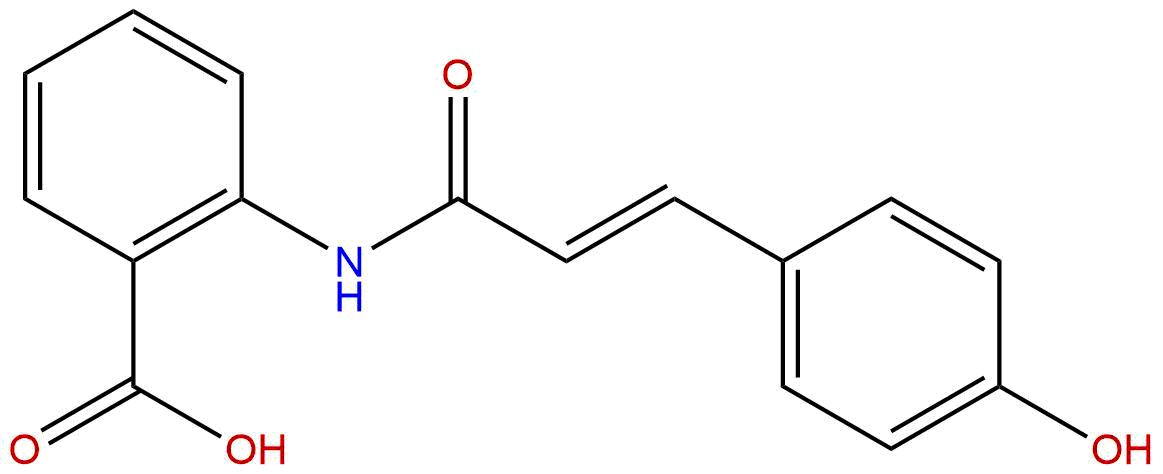
Oat anthracene amide D belongs to phenolic acid derivatives, with a chemical structure composed of anthracene amide skeleton and phenolic hydroxyl group. Its molecular formula is C17H17NO4 and its molecular weight is 283.2830. Its structure contains an aromatic ring system and an amide bond, endowing it with strong biological activity. The LogP value is 3.6728, indicating that it has moderate lipid solubility, which is beneficial for membrane penetration. However, its water solubility is low (0.0659 mg/mL), suggesting that its solubility in water is limited and may affect its absorption and distribution in vivo.
The polar surface area (TPSA) is 86.63 Å ², and moderate polarity facilitates the formation of hydrogen bonds and other non covalent interactions with biological targets, enhancing binding affinity. The low permeability of the blood-brain barrier indicates limited distribution in the central nervous system, which has certain advantages for targeted peripheral tumor treatment and reduces the risk of central neurotoxicity. The hERG channel inhibition test was negative, indicating a low risk of cardiac toxicity. The Ames test result is 0.0, indicating no mutagenicity and high safety.
In summary, the physicochemical properties of oat anthracene amide D support its potential as a drug molecule, especially in the design of drug delivery systems and structural optimization, which has important reference value.
Plant sources and extraction methods
Oat anthracene amide D mainly exists in the seeds and seedlings of oats (Avena sativa L.). As an important cereal crop and functional food, oats have attracted much attention in natural product research due to their rich bioactive components. The content of anthracene amide D in oats is greatly affected by variety, planting environment, maturity, and processing method.
The extraction method is mainly based on solvent extraction technology. Common extraction solvents include methanol, ethanol, and their aqueous solution systems. High extraction rates can be achieved using ultrasound assisted extraction (UAE), microwave-assisted extraction (MAE), or conventional extraction methods. After liquid-liquid separation, column chromatography, and high-performance liquid chromatography (HPLC) purification, high-purity oat anthracene amide D can be obtained. In recent years, green extraction techniques such as supercritical CO2 extraction and membrane separation have also been applied to the extraction of oat anthracene amide, aiming to improve extraction efficiency and reduce the use of organic solvents.
In addition, enzymatic assisted extraction technology has been proven to significantly improve the extraction efficiency of oat anthracene amide D by disrupting the cell wall structure and promoting the release of active ingredients. The optimization of extraction process not only helps to obtain high-purity compounds, but also lays the foundation for their industrial production and large-scale application.
Pharmacological activity research
The pharmacological activity research of oat anthracene amide D covers multiple aspects such as anti-inflammatory, antioxidant, anti-tumor, and immune regulation, with anti-tumor activity being the most significant.
Antitumor activity
Numerous in vitro cell experiments and partial in vivo model studies have shown that oat anthracene amide D can inhibit the proliferation of various tumor cells, induce cell apoptosis, and suppress tumor cell migration and invasion. Its function involves the regulation of multiple signaling pathways, including inhibiting anti apoptotic proteins (such as MCL1, BCL2), blocking the activation of pro tumor transcription factor STAT3, and regulating the expression of matrix metalloproteinase MMP2, thereby inhibiting the matrix degradation and metastasis ability of tumor cells.
In addition, oat anthracycline D has a regulatory effect on the hypoxia inducible factor HIF1A in the tumor microenvironment, which can inhibit the adaptive response of tumor cells under hypoxic conditions, reduce tumor drug resistance and malignancy. Its effect on topoisomerases TOP1 and TOP2A suggests that it may enhance the apoptotic signal of tumor cells by interfering with DNA replication and repair mechanisms.
Anti inflammatory and antioxidant effects
Oat anthracycline D has significant anti-inflammatory activity, which can inhibit the release of inflammatory mediators and alleviate inflammatory reactions. Its antioxidant capacity is mainly achieved by clearing free radicals, inhibiting lipid peroxidation, and regulating the intracellular antioxidant enzyme system. These effects not only help alleviate chronic inflammation, but also prevent inflammation related tumors from occurring.
Other pharmacological effects
Oat anthracene amide D also exhibits certain immune regulatory functions, which can regulate the activity of immune cells and promote the body's immune surveillance ability. In addition, its regulatory effect on estrogen receptor ESR1 and aromatase CYP19A1 suggests its potential application in hormone related tumors (such as breast cancer).
Mechanism of action and molecular targets
The multi-target mechanism of action of oat anthracene amide D is an important basis for its pharmacological activity. By regulating multiple key proteins and signaling pathways, oat anthracene amide D achieves multi-level intervention on tumor cells.
Inhibition of anti apoptotic proteins
MCL1 and BCL2 are key anti apoptotic proteins in cell apoptosis regulation, and overexpression is common in various tumors, leading to cell apoptosis resistance. Oat anthracene amide D downregulates the expression of MCL1 and BCL2, relieves inhibition of the apoptotic pathway, and promotes programmed cell death in tumor cells.
Regulation of signal transduction pathways
STAT3, as an important transcription factor for tumor cell proliferation, survival, and immune escape, is closely related to the occurrence and development of various cancers due to its abnormal activation. Oat anthracene amide D can inhibit the phosphorylation and nuclear translocation of STAT3, blocking the expression of downstream oncogenes.
The MAPK1 (ERK2) signaling pathway is involved in cell proliferation and differentiation, and oat anthracycline D affects the growth cycle and apoptosis of tumor cells by regulating MAPK1 activity.
Matrix degradation and transfer inhibition
MMP2, as a matrix metalloproteinase, promotes the degradation and metastasis of tumor cell matrix. Oat anthracene amide D inhibits the expression and activity of MMP2, preventing the invasion and metastasis of tumor cells.
Interference of DNA Topoisomerase
TOP1 and TOP2A are essential enzymes in DNA replication and transcription processes. Inhibition of their activity by oat anthracene amide D may lead to DNA damage accumulation, induce cell cycle arrest, and apoptosis.
Regulation of hypoxia inducible factor
HIF1A promotes angiogenesis and metabolic reprogramming in hypoxic tumor environments, while oat anthracycline D inhibits the expression of HIF1A, which helps to suppress tumor growth and drug resistance.
Hormone receptors and metabolic enzyme regulation
ESR1 and CYP19A1 play a key role in hormone dependent tumors, and oat anthracamide D regulates them, suggesting their potential in the treatment of hormone related tumors such as breast cancer.
Evaluation of drug properties and pharmacokinetics
The pharmacological evaluation of oat anthracene amide D shows that it has good safety and reasonable pharmacokinetic characteristics.
safety indicator
- HERG channel inhibition No inhibitory effect, indicating low risk of cardiac toxicity.
- Ames test Negative, indicating no mutagenicity and high safety.
- Blood-brain barrier permeability Low, reducing the risk of central nervous system toxicity.
Pharmacokinetic characteristics
Although oat anthracene amide D has moderate lipid solubility (LogP=3.6728), its low water solubility may limit oral absorption. The metabolism in the body is mainly carried out through the liver enzyme system, and the specific metabolic pathways still need further research. Preliminary animal experiments have shown limited oral bioavailability, and it may be necessary to enhance absorption and stability through drug delivery systems or structural modifications.
In terms of distribution, low blood-brain barrier permeability allows it to mainly act on peripheral tissues, making it suitable for the treatment of non central nervous system tumors. The main excretion pathways are the kidneys and bile, with a moderate clearance rate.
Clinical application prospects and prospects
Oat anthracene amide D has broad clinical application prospects due to its multi-target anti-tumor effect and good safety. Its potential in anti-tumor therapy is mainly reflected in the following aspects:
- neoadjuvant therapy As an adjuvant drug, it enhances the efficacy of traditional chemotherapy drugs, reduces drug resistance and side effects.
- Hormone related tumor treatment: It may be used for the treatment of hormone dependent tumors such as breast cancer by regulating ESR1 and CYP19A1.
- Anti metastasis and anti invasion Inhibiting MMP2 and other targets reduces the risk of tumor metastasis.
- Inflammation related tumor prevention Its anti-inflammatory and antioxidant effects help prevent the occurrence of tumors caused by chronic inflammation.
Future research should focus on optimizing its in vivo pharmacokinetics, developing dosage forms, and conducting preclinical safety evaluations. At the same time, based on its multi-target mechanism of action, combined with modern drug design techniques, structural analogues or derivatives can be developed to enhance their bioavailability and targeting.
In addition, clinical trial design should consider its mechanism of action, select appropriate tumor types and treatment stages, and explore the efficacy and safety of monotherapy or combination therapy.
Conclusion
Oat anthracene amide D, as a representative phenolic acid natural product in oats, has shown significant potential as a new type of anti-tumor drug due to its unique chemical structure, multi-target anti-tumor activity, and good safety. Its multiple mechanisms of action in regulating tumor cell apoptosis, inhibiting tumor metastasis, and regulating the tumor microenvironment provide rich scientific basis for natural product pharmacology research.
Although research on oat anthracycline D is still in its basic and preclinical stages, its pharmacological parameters and activity data support further in-depth development. In the future, through structural optimization, pharmacokinetic improvement, and clinical trial verification, oat anthracycline D is expected to become an innovative drug in the field of anti-tumor therapy, bringing new treatment options for cancer patients.
In summary, oat anthracene amide D not only enriches the research system of natural product anti-tumor drugs, but also provides an example for multi-target therapeutic strategies in natural product pharmacology, which is worthy of continuous attention and in-depth exploration in future drug development.