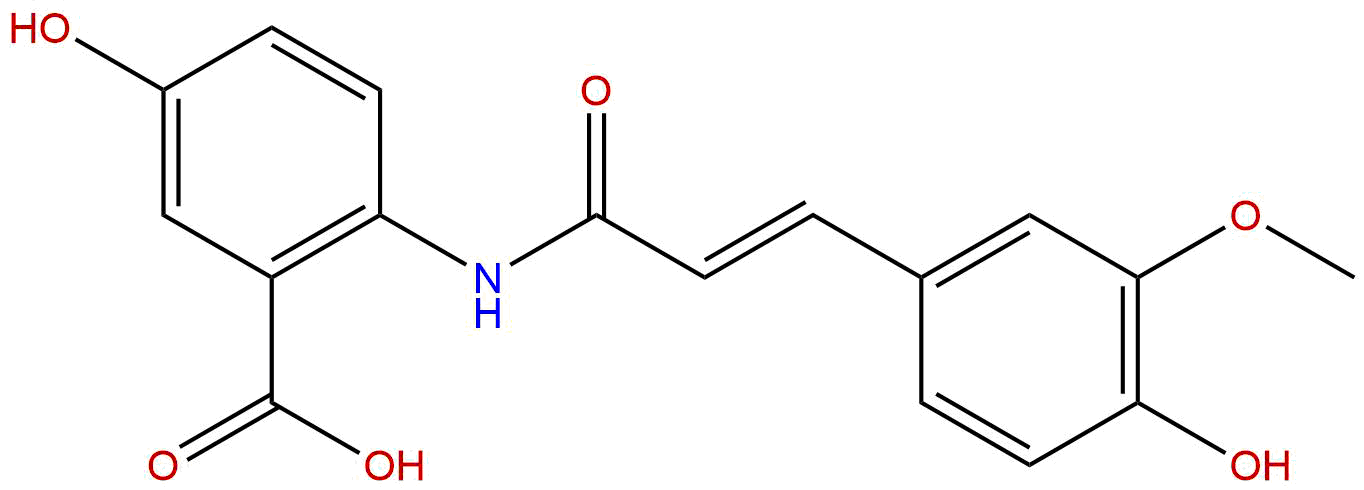


Product name: Avenanthramide B
Synonym name: Avenanthramide Bf;Avenanthramide 1; Avenanthramide 2f
Catalogue No.: BP5206
Cas No.: 108605-69-2
Formula: C17H15NO6
Mol Weight: 329.308
Botanical Source:
Type of Compound: Alkaloids
Purity: 95%~99%
Analysis Method: HPLC-DAD or/and HPLC-ELSD
Identification Method: Mass, NMR
Packing: Brown vial or HDPE plastic bottle
Storage: Store in a well closed container, protected from air and light. Put into refrigerate or freeze for long term storage.
Whenever possible, you should prepare and use solutions on the same day. However, if you need to make up stock solutions in advance, we recommend that you store the solution as aliquots in tightly sealed vials at -20℃. Generally, these will be useable for up to two weeks.
The product could be supplied from milligrams to grams
Inquire for bulk scale.
For Reference Standard and R&D, Not for Human Use Directly.
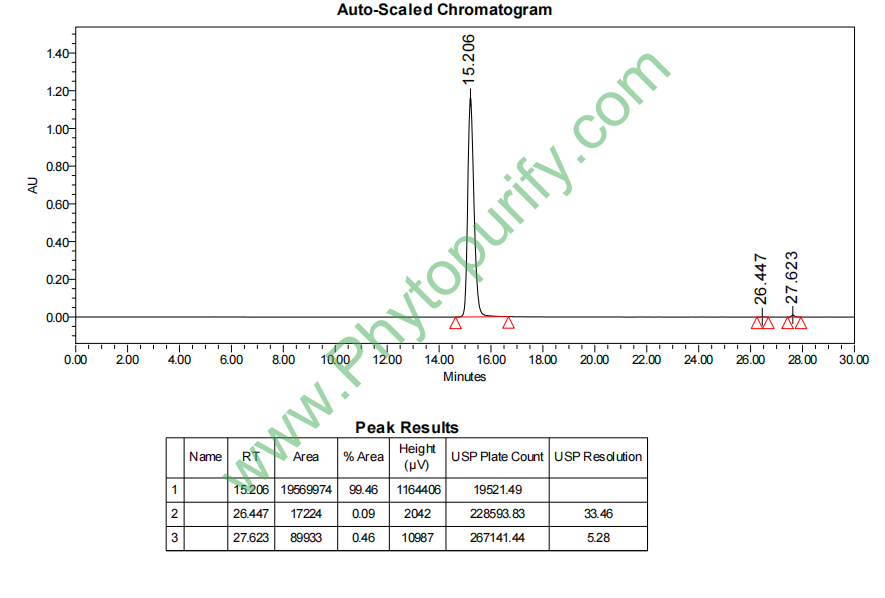
HPLC of Avenanthramide B
Storage conditions:Short-term storage at 2~8℃, long-term storage at -20 ~ -80℃
116.0900
3.0721
.1742
.1278
2.4267
2.3875
Low
90.8645
2.1039
Yes
Yes
No
No
No
No
0.0
Yes
No
Yes
Yes
Avenanthramide B (CAS number: 108605-69-2) is a natural phenolic compound found in oats (Avena sativa L.) and belongs to the avenanthramides family. As a unique secondary metabolite of oats, oat anthracene amide B mainly acts as an antitoxin in the plant body to exert defensive functions and resist the invasion of pathogenic microorganisms. In recent years, with the deepening of research on the pharmacological activity of natural products, oat anthracene amide B has gradually attracted widespread attention in the fields of pharmacology and natural product chemistry due to its diverse biological activities, especially its potential in antioxidant, anti-inflammatory, anti-tumor, and cell apoptosis regulation.
In addition, the potential role of oat anthracene amide B in visual function maintenance related diseases has also become a research hotspot. Its target proteins involve key proteins such as retinal pigment epithelial 65 enzyme (RPE65), ATP binding cassette transporter ABCA4, rhodopsin protein (RHO), and members of the retinal dehydrogenase family (RDH5, RDH12), suggesting that it may play an active role in retinal metabolism and functional regulation. This article aims to systematically review the chemical structure, physicochemical properties, plant sources, and extraction methods of oat anthracycline B, explore its pharmacological activity and mechanism of action in depth, analyze its pharmacokinetic characteristics based on drug parameters, and finally prospect its clinical application prospects, providing theoretical basis and reference for subsequent related research.
The chemical name of oat anthracene amide B is a monohydroxybenzoic acid derivative formed by the connection of ferulic acid and 2-amino-5-hydroxybenzoic acid through amide bonds. The molecular formula is C18H17NO6 and the molecular weight is 329.3080. Its structural features include:
In terms of physical and chemical properties, the LogP value of oat anthracene amide B is 3.0721, indicating its moderate lipid solubility, which is beneficial for cell membrane permeation. The topological polar surface area (TPSA) is 116.09 Å ², indicating moderate polarity that may affect its bioavailability and penetration ability. Low water solubility (0.1278 mg/mL) suggests limited solubility in the aqueous phase and may require formulation optimization to improve bioavailability. The low permeability of the blood-brain barrier indicates limited distribution in the central nervous system. The negative result of hERG channel inhibition experiment indicates a low risk of cardiac toxicity. The Ames mutagenicity test showed 0, indicating a low risk of genotoxicity and good safety.
In summary, the chemical structure of oat anthracene amide B endows it with various biological activities, and its physicochemical properties provide basic information for its pharmacokinetic behavior.
Oat anthracycline B is mainly present in the seeds and seedlings of oats, especially in the ectoderm and endosperm, where its content is relatively high. As a secondary metabolite of oats, it exerts an antitoxin effect by inducing a significant increase in synthesis when plants are attacked by pathogens or environmental stress.
The extraction of oat anthracene amide B usually uses polar solvents such as methanol, ethanol, or ethyl acetate, combined with ultrasound assisted extraction or hot reflux extraction techniques. The extraction process mainly includes:
In recent years, green extraction techniques such as supercritical CO2 extraction, microwave-assisted extraction, enzyme assisted extraction, etc. have also been attempted for the extraction of oat anthracene amide B to improve extraction efficiency and environmental friendliness.
The pharmacological activity research of oat anthracene amide B covers multiple aspects such as antioxidant, anti-inflammatory, anti-tumor, apoptosis regulation, and visual function protection, demonstrating its potential as a natural drug candidate molecule.
As a natural product containing phenolic hydroxyl groups, oat anthracene amide B has significant free radical scavenging ability. In vitro DPPH and ABTS free radical scavenging experiments showed that its antioxidant activity was superior to most common phenolic compounds. Its antioxidant mechanism is mainly achieved by directly capturing free radicals and regulating the intracellular antioxidant enzyme system (such as superoxide dismutase (SOD) and glutathione peroxidase (GPx)).
Oat anthracycline B can inhibit the production of inflammatory mediators such as tumor necrosis factor alpha (TNF - α), interleukin-6 (IL-6), and nitric oxide (NO). Its mechanism of action involves inhibition of the NF - κ B signaling pathway, reduction of transcription levels of inflammatory factors, and alleviation of inflammatory response. In animal models, oat anthracycline B showed a reducing effect on inflammatory damage, indicating its potential application in inflammatory diseases.
Oat anthracene amide B exhibits inhibitory activity on proliferation and induces apoptosis in various tumor cell lines. The mechanism includes:
In addition, oat anthracene amide B has low toxicity to normal cells and shows good selectivity.
Retinal pigment epithelium 65 enzyme (RPE65), ATP binding cassette transporter ABCA4, rhodopsin protein (RHO), and retinal dehydrogenases (RDH5, RDH12) are key proteins for maintaining visual function. Oat anthracene amide B promotes retinal pigment metabolism and rhodopsin cycle by regulating the expression and activity of these proteins, protecting retinal cells from oxidative stress and light damage, thereby maintaining visual function.
Animal experiments have shown that oat anthracene amide B can alleviate retinal degenerative diseases and improve visual indicators, indicating its potential application value in diseases such as macular degeneration and retinitis pigmentosa.
The multi-target mechanism of action of oat anthracene amide B is the basis of its biological activity. Mainly involving the following molecular targets and signaling pathways:
RPE65 is a key enzyme in retinal pigment epithelial cells, involved in the rhodopsin cycle. Oat anthracene amide B enhances the regeneration of rhodopsin and improves visual signal transduction by promoting the expression and enzyme activity of RPE65.
ABCA4 is an ATP binding cassette transporter protein on the membrane of retinal photoreceptor cells, responsible for the transport of rhodopsin metabolites. Oat anthracene amide B regulates ABCA4 function, helps to clear retinal toxic metabolites, and prevents retinal damage.
RHO is the main protein of photoreceptor in rod cells. Oat anthracene amide B can stabilize the RHO structure, protect rod cells from light damage, and maintain retinal photoreceptive function.
These two types of retinal dehydrogenases are involved in key steps of rhodopsin metabolism. Oat anthracene amide B promotes the balance of rhodopsin metabolism and prevents retinal degeneration by regulating the activity of RDH5 and RDH12.
Oat anthracycline B enhances cellular antioxidant defense by activating the Nrf2/ARE antioxidant signaling pathway. Simultaneously inhibiting the NF - κ B pathway, reducing the expression of inflammatory mediators, and alleviating cell damage.
By regulating Bcl-2 family proteins and mitochondrial membrane potential, oat anthracene amide B induces tumor cell apoptosis and inhibits tumor growth.
In summary, oat anthracycline B exerts its wide-ranging biological effects through multi-target and multi pathway synergistic effects.
The pharmacological parameters of oat anthracene amide B show that it has good potential for drug development:
In terms of pharmacokinetics, existing research is relatively limited. Metabolism in the body may mainly occur through phase I (oxidation, reduction) and phase II (binding) reactions mediated by the liver enzyme system. Its low water solubility and blood-brain barrier permeability suggest that oral bioavailability may be limited and mainly distributed in peripheral tissues. In the future, systematic pharmacokinetic studies need to be conducted, including absorption, distribution, metabolism, and excretion (ADME) characteristics, to guide clinical dosage and dosing regimen design.
Oat anthracene amide B, as a natural product, has multiple biological activities and good safety, and has broad clinical application potential.
Based on its regulatory effect on key proteins in the retina, oat anthracycline B is expected to become a new candidate drug for the treatment of age-related macular degeneration (AMD), retinitis pigmentosa (RP) and other retinal degenerative diseases. Its antioxidant and anti-inflammatory effects can slow down the process of retinal damage and protect visual function.
The ability of oat anthracene amide B to induce apoptosis in tumor cells provides a theoretical basis for the development of its anti-tumor drugs. In the future, nanocarrier technology can be combined to improve its targeting and bioavailability, enhancing anti-tumor efficacy.
Its natural source and safety make it suitable for the development of anti-inflammatory and antioxidant functional health products to help prevent chronic inflammation related diseases, such as cardiovascular disease, diabetes and neurodegenerative diseases.
Given its low water solubility, future research needs to focus on innovative formulation technologies such as liposomes, nanoparticles, solid dispersions, etc., to enhance oral absorption and bioavailability. At the same time, explore local administration (such as ophthalmic preparations) to improve targeted therapy efficacy.
Despite abundant in vitro and animal experimental data, clinical research on oat anthracene amide B is still in its infancy. In the future, it is necessary to conduct systematic clinical safety and efficacy evaluations, clarify dosage ranges and potential side effects, and promote their clinical translation.
Oat anthracene amide B, as a natural phenolic compound unique to oats, exhibits a wide range of biological functions and good safety due to its unique chemical structure and multi-target pharmacological activity. Its potential applications in visual function maintenance, anti-tumor, anti-inflammatory, and antioxidant fields provide new ideas and directions for the development of natural product drugs. In the future, with the deepening of extraction and purification technology, pharmacokinetic research, and clinical trials, oat anthracycline B is expected to become an innovative drug or functional health product with practical clinical value. Strengthening the molecular level analysis and formulation optimization of its mechanism of action will be the key to promoting its clinical application. In summary, oat anthracene amide B, as an important object of pharmacological research on natural products, has broad development prospects and application value.
