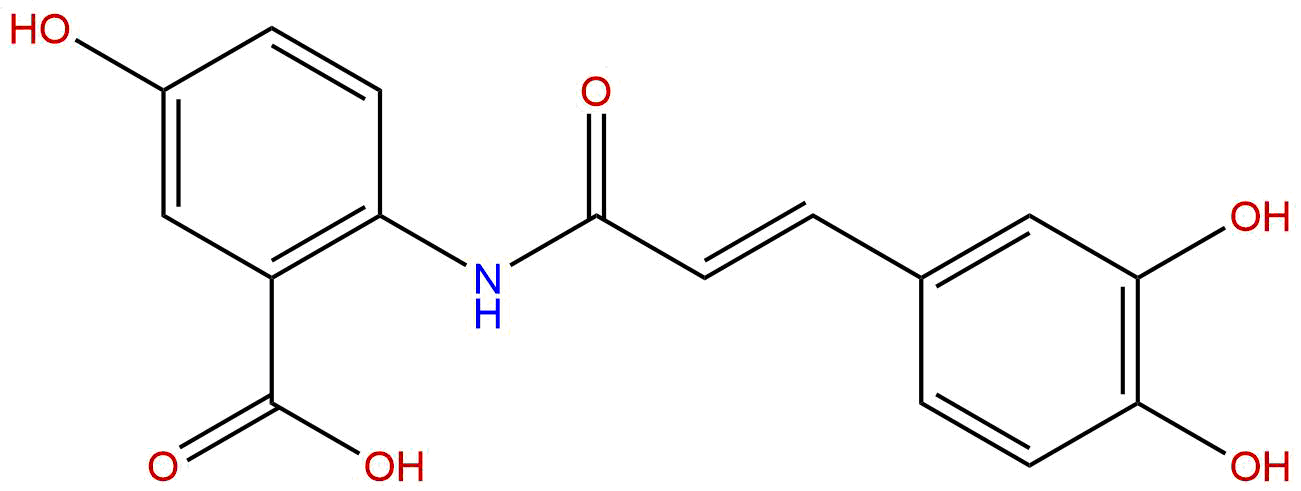


Product name: Avenanthramide C
Synonym name: Avenanthramide 2c;Avenanthramide Bc
Catalogue No.: BP5207
Cas No.: 116764-15-9
Formula: C16H13NO6
Mol Weight: 315.281
Botanical Source:
Type of Compound: Alkaloids
Purity: 95%~99%
Analysis Method: HPLC-DAD or/and HPLC-ELSD
Identification Method: Mass, NMR
Packing: Brown vial or HDPE plastic bottle
Storage: Store in a well closed container, protected from air and light. Put into refrigerate or freeze for long term storage.
Whenever possible, you should prepare and use solutions on the same day. However, if you need to make up stock solutions in advance, we recommend that you store the solution as aliquots in tightly sealed vials at -20℃. Generally, these will be useable for up to two weeks.
The product could be supplied from milligrams to grams
Inquire for bulk scale.
For Reference Standard and R&D, Not for Human Use Directly.
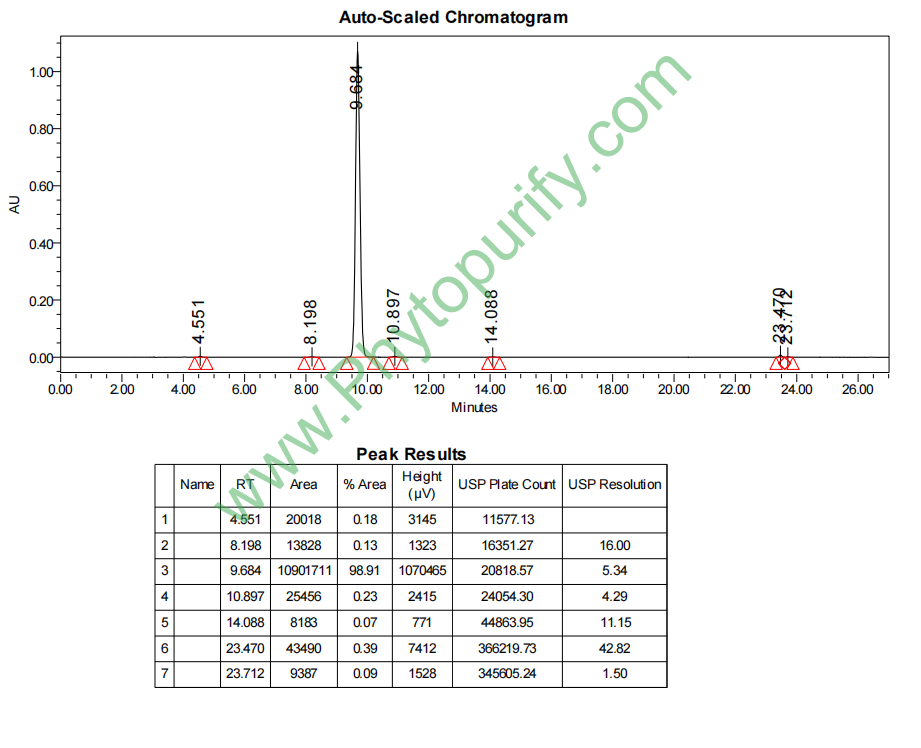
HPLC of Avenanthramide C
Storage conditions:Short-term storage at 2~8℃, long-term storage at -20 ~ -80℃
127.0900
2.8670
.0851
.0961
1.8713
1.6963
Low
89.2384
2.1794
Yes
Yes
No
No
No
Yes
0.0
Yes
No
Yes
Yes
Avenanthramide C (CAS number: 116764-15-9) is a unique natural phenolic compound mainly found in oat (Avena sativa L.) seeds. As an important bioactive component in oats, oat anthracene amide C has received widespread attention in the field of natural product pharmacology in recent years due to its unique chemical structure and diverse biological functions. It has significant antioxidant, anti-inflammatory, and neuroprotective effects, especially in the research of neurodegenerative diseases such as Alzheimer's disease (AD), demonstrating potential therapeutic value. In addition, oat anthracycline C has shown positive effects in regulating cholesterol metabolism, involving multiple key targets, providing a theoretical basis for its development as an adjuvant therapy for cardiovascular disease.
This article aims to systematically review the chemical structure and physicochemical properties, plant sources, and extraction methods of oat anthracycline C, analyze its pharmacological activity and mechanism of action in depth, and explore its clinical application prospects and future research directions based on drug parameters and pharmacokinetic characteristics, providing comprehensive reference materials for researchers in related fields.
Oat anthracene amide C belongs to the amide class of natural products, with a molecular formula of C18H17NO5 and a molecular weight of 315.2810. Structurally, it is composed of an anthracene amide skeleton, containing an aromatic phenolic hydroxyl system and a benzene ring connected to an amide, endowing it with excellent biological activity and chemical stability. Its LogP value is 2.8670, indicating moderate lipid solubility that facilitates membrane penetration, but its water solubility is low (0.0961 mg/mL), suggesting limited solubility in vivo and potential impact on its bioavailability.
The polar surface area (TPSA) is 127.09 Å ², indicating that it has strong polar groups, especially hydroxyl and amide groups, which help to form hydrogen bonds with biomolecules and enhance its binding affinity with target proteins. The low permeability of the blood-brain barrier suggests that its direct role in the central nervous system may be limited, but it may still indirectly affect neurological function by regulating the peripheral system or metabolites. The hERG channel inhibition experiment showed a negative result, indicating a low risk of cardiac toxicity. The Ames test showed 0.0, indicating no significant genetic toxicity.
Oat anthracene amide C is mainly present in the outer bran and embryo of oat seeds, and is a unique secondary metabolite of oats. Its content is significantly affected by oat varieties, planting environment, and processing methods. In the traditional oat processing, the content of anthracene amide compounds may be lost, so selecting appropriate raw materials and extraction processes is crucial for obtaining high-purity oat anthracene amide C.
The extraction method often uses organic solvent extraction combined with liquid chromatography separation technology. Common solvents include methanol, ethanol, and their aqueous solutions, which utilize their good solubility for polar phenolic compounds. The extraction process generally includes sample crushing, solvent soaking, ultrasound assisted extraction, or hot reflux extraction, followed by purification through liquid-liquid partitioning, solid-phase extraction, or high-performance liquid chromatography (HPLC). In recent years, the application of supercritical CO2 extraction and membrane separation technology has also provided new ideas for the efficient extraction of oat anthracene amide C, which combines environmental protection and high efficiency advantages.
The pharmacological activity research of oat anthracene amide C covers multiple aspects such as antioxidant, anti-inflammatory, neuroprotective, and regulation of lipid metabolism.
Antioxidant effect
Oat anthracene amide C can effectively eliminate free radicals and alleviate oxidative stress damage. Its phenolic hydroxyl structure endows it with strong electron donor ability, which can neutralize excess reactive oxygen species (ROS) and protect cells from oxidative damage. In vitro experiments have shown that oat anthracycline C significantly increases intracellular glutathione (GSH) levels and reduces lipid peroxidation product content, indicating its important role in the antioxidant defense system.
anti-inflammatory effect
Oat anthracycline C exerts anti-inflammatory effects by regulating the expression of inflammatory mediators. Research has found that it can inhibit the secretion of pro-inflammatory cytokines TNF - α and IL-6, while upregulating the expression of anti-inflammatory factor IL-10, regulating immune balance, and reducing inflammatory response. This characteristic has potential therapeutic value for chronic inflammation related diseases such as atherosclerosis, neuritis, etc.
Neuroprotective effect
In the model study of Alzheimer's disease, oat anthracene amide C showed significant neuroprotective effects. It can reduce the expression of lytic caspase-3 protein, inhibit cell apoptosis, and promote the survival of nerve cells. At the same time, oat anthracycline C increased the expression of p-GSK3 β (Ser9), inhibited the activity of GSK3 β, thereby reducing the abnormal phosphorylation of Tau protein and delaying the progression of neurodegenerative diseases. In addition, upregulation of IL-10 helps alleviate neuroinflammation and improve cognitive function.
Regulating cholesterol metabolism
Oat anthracene amide C exhibits multi-target effects in regulating cholesterol metabolism. The key targets affected by it include cholesterol ester transfer protein (CETP), 3-hydroxy-3-methylglutaryl-CoA reductase (HMGCR), low-density lipoprotein receptor (LDLR), apolipoprotein B (APOB), proprotein converting enzyme subtilisin 9 (PCSK9), cholesterol 7 α - hydroxylase (CYP7A1), and peroxisome proliferator activated receptor alpha (PPARA). By regulating these targets, oat anthracene amide C promotes cholesterol metabolism and excretion, reduces plasma cholesterol levels, and helps prevent and treat hyperlipidemia and related cardiovascular diseases.
The biological effects of oat anthracene amide C depend on its interactions with multiple molecular targets, involving signal transduction, gene expression regulation, and metabolic pathway regulation.
Inhibition of cell apoptosis pathway
Oat anthracene amide C can reduce the expression level of caspase-3 and block the apoptotic signaling pathway. Caspase-3, as a key executive enzyme of cell apoptosis, its reduced activity helps maintain neuronal survival and slow down neurodegenerative diseases.
Regulating the GSK3 β signaling pathway
Oat anthracycline C promotes phosphorylation of GSK3 β at the Ser9 site (p-GSK3 β (Ser9)) and inhibits its kinase activity. GSK3 β plays a central role in Tau protein phosphorylation and beta amyloid production, and inhibition of its activity helps alleviate the pathological progression of AD.
Regulating the expression of inflammatory mediators
By upregulating anti-inflammatory cytokine IL-10 and regulating immune response with oat anthracycline C, neuroinflammation can be alleviated. IL-10, as an important immune regulatory factor, can inhibit the production of pro-inflammatory cytokines and protect nerve tissue from inflammatory damage.
Regulation of cholesterol metabolism targets
Oat anthracycline C regulates multiple targets such as CETP, HMGCR, LDLR, APOB, PCSK9, CYP7A1, and PPARA, comprehensively affecting the synthesis, transport, and metabolism of cholesterol. HMGCR is the rate limiting enzyme in cholesterol biosynthesis, and its inhibition helps to reduce endogenous cholesterol synthesis; LDLR and PCSK9 regulate the clearance of low-density lipoprotein and affect plasma cholesterol levels; CYP7A1 promotes bile acid synthesis and enhances cholesterol metabolism and excretion; PPARA regulates the expression of genes related to lipid metabolism and promotes lipid homeostasis.
The pharmacological parameters of oat anthracene amide C indicate that it has certain potential for drug development. The molecular weight of 315.2810 conforms to the ideal range of Lipinski rule, and the LogP value of 2.8670 indicates moderate lipid solubility, which is conducive to cell membrane penetration. Although a higher TPSA (127.09 Å ²) may limit its oral absorption, appropriate polarity facilitates target binding.
Low water solubility (0.0961 mg/mL) may limit its bioavailability, and drug formulation techniques such as nanocarriers and solid dispersions are needed to improve solubility. The low permeability of the blood-brain barrier suggests that its direct entry into the central nervous system is limited. In the future, structural modifications or the use of carrier systems can be considered to enhance brain delivery.
In terms of safety, oat anthracycline C did not exhibit hERG channel inhibition, reducing the risk of cardiac toxicity; The Ames test is negative, indicating no genetic toxicity and good safety.
At present, there is relatively little systematic research on its pharmacokinetics. Preliminary data shows that it can be absorbed by the body and exert biological activity after oral administration, but the specific absorption, distribution, metabolism, and excretion (ADME) characteristics still need to be further studied. Especially the evaluation of its metabolic pathways and the activity of metabolites in the body will provide important basis for its clinical development.
Oat anthracene amide C has broad application prospects in the fields of neurodegenerative diseases and cardiovascular diseases due to its multi-target and multi mechanism pharmacological properties.
Alzheimer's disease treatment
As a natural neuroprotective agent, oat anthracene amide C exhibits the potential to delay the progression of Alzheimer's disease by inhibiting cell apoptosis, reducing neuroinflammation, and regulating Tau protein phosphorylation. In the future, drug delivery systems can be combined to improve brain bioavailability and promote its progress towards clinical trials.
Cardiovascular disease adjuvant therapy
By regulating the key target of cholesterol metabolism, oat anthracamide C is expected to be used as a natural supplement for cholesterol reduction to assist in the prevention and treatment of hyperlipidemia and atherosclerosis. It has good safety and is suitable for long-term application.
Anti inflammatory and antioxidant therapy
Its anti-inflammatory and antioxidant properties make it potentially valuable for applications in chronic inflammatory diseases, metabolic syndrome, and other fields.
Future research should focus on:
Oat anthracene amide C, as a unique natural phenolic compound in oats, has become an important object of natural product pharmacology research due to its unique chemical structure and diverse biological activities. Its multiple mechanisms of action in neuroprotection, anti-inflammatory, antioxidant, and cholesterol metabolism regulation provide new ideas for the prevention and treatment of Alzheimer's disease and cardiovascular disease. Although it has shown certain advantages in medicinal properties, it still needs to overcome the limitations of poor water solubility and low blood-brain barrier permeability. In the future, through interdisciplinary collaboration and modern drug development technology, oat anthracycline C is expected to become a new highlight in natural drug development, promoting its clinical translational application and benefiting a large number of patients.
