![Benzoic acid,2-[[3-(4-hydroxyphenyl)-1-oxopropyl]amino]-,potassium salt (1:1)](/upload/0201/06/2768430-39-1.png)


Product name: Benzoic acid,2-[[3-(4-hydroxyphenyl)-1-oxopropyl]amino]-,potassium salt (1:1)
Synonym name:
Catalogue No.: BP5433
Cas No.: 2768430-39-1
Formula: C16H16KNO4
Mol Weight: 325.405
Botanical Source:
Type of Compound: Alkaloids
Purity: 95%~99%
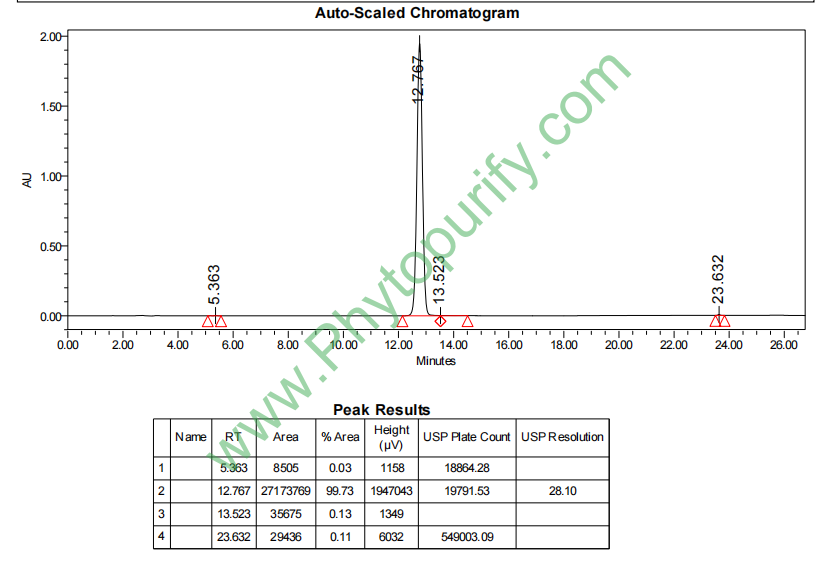
Analysis Method: HPLC-DAD or/and HPLC-ELSD
Identification Method: Mass, NMR
Packing: Brown vial or HDPE plastic bottle
Storage: Store in a well closed container, protected from air and light. Put into refrigerate or freeze for long term storage.
Whenever possible, you should prepare and use solutions on the same day. However, if you need to make up stock solutions in advance, we recommend that you store the solution as aliquots in tightly sealed vials at -20℃. Generally, these will be useable for up to two weeks.
The product could be supplied from milligrams to grams
Inquire for bulk scale.
For Reference Standard and R&D, Not for Human Use Directly.
HPLC of Benzoic acid
Storage conditions:Short-term storage at 2~8℃, long-term storage at -20 ~ -80℃
Natural products, as an important source of drug discovery, play an irreplaceable role in the long history of human fight against diseases. Oats(Avena sativa L. As a globally grown cereal, it is highly regarded not only for its nutritional value, but also for its various bioactive ingredients, which have increasingly attracted the attention of pharmaceutical researchers. Among the numerous secondary metabolites of oats, Avenanthramides are a unique class of phenolic amine compounds primarily found in the bran and grains of oats. These compounds have become one of the hot spots in natural product chemistry and pharmacology due to their outstanding biological activities such as anti-oxidation, anti-inflammatory, anti atherosclerosis and anti pruritus.
Dihydro oat alkaloid D potassium salt (Benzoic acid, 2- [[3- (4-hydroxyphenyl) -1-oxopropyl] amino] -, potassium salt (1:1)), as a member of the oat alkaloid family, is chemically linked to para hydroxybenzoic acid (or related phenolic acid) through amide bonds. Compared with common oat alkaloids A, B, and C, dihydroavenanthramide D and its potassium salt form have unique structures, and the saturation of its side chains may endow it with different physicochemical properties and biological activity spectra. The design of potassium salt forms aims to improve its water solubility and bioavailability, paving the way for its potential medicinal development. Although the overall research on oat alkaloids has been relatively in-depth, there is still a lack of systematic studies on the potassium salt of dihydrooat alkaloid D, especially in its unique pharmacological activity, mechanism of action, and comprehensive evaluation of drug properties.
This review aims to systematically review the research status of potassium salt of dihydrooat alkaloid D, from its chemical structure, plant origin, pharmacological activity, mechanism of action, pharmacological evaluation to clinical application prospects, providing a comprehensive analysis and outlook, in order to provide valuable references for the in-depth research and future development of this natural product.
The chemical structure core of dihydrooat alkaloid D potassium salt consists of two parts: an anthranilic acid parent nucleus and a 3- (4-hydroxyphenyl) propionic acid side chain connected by an amide bond. Its structural formula can be represented as potassium salt of 2- [[3- (4-hydroxyphenyl) -1-oxopropyl] amino] benzoic acid. Compared with Avenanthramide D, whose side chain is p-hydroxycinnamic acid and contains a double bond, the propionic acid portion of the side chain of dihydro oat alkaloid D is a saturated structure, with the C2-C3 bond being a single bond. This subtle structural difference may lead to changes in its molecular conformation, polarity, and chemical reactivity.
From the perspective of physical and chemical properties, the molecular formula of this compound is C ₁₆ H ₁₄ KNO ₄, with a molecular weight of 325.40 g/mol. There are multiple polar functional groups in its structure: one carboxylate (in the form of potassium salt), one amide bond, and one phenolic hydroxyl group. These functional groups give it a certain degree of water solubility, especially in the form of potassium salts, which significantly increases its solubility in aqueous phase, which is crucial for the development of oral administration or topical formulations. Meanwhile, the benzene ring structure in the molecule endows it with a certain degree of lipophilicity, enabling it to interact with biofilms. This compound exhibits characteristic absorption in the ultraviolet region, mainly attributed to the conjugated system of the benzene ring and amide bond. Its pKa value is mainly determined by the phenolic hydroxyl and carboxylic acid groups, and the potassium salt form mainly exists in a dissociated state under physiological pH conditions. Its stability is affected by pH, temperature, and light, and under acidic or strongly alkaline conditions, amide bonds may undergo hydrolysis. Overall, the potassium salt of dihydrooat alkaloid D has both hydrophilicity and lipophilicity, providing a structural basis for its transmembrane transport and interaction with multiple biological targets.
Dihydrooat alkaloid D potassium salt mainly comes from oats(Avena sativa L.), Especially in its bran, whole grains, and grains. Oat alkaloids are defensive secondary metabolites unique to oats, playing an important role in plants' response to environmental stresses such as pathogen infection and ultraviolet radiation. The content of oat alkaloids in oat seeds is influenced by various factors such as variety, planting environment, harvest time, and processing methods. Usually, colored oat varieties (such as black and red oats) have a higher total content of oat alkaloids than regular white oats. Dihydro oat alkaloid D, as a component of the oat alkaloid family, has a relatively low proportion in the total oat alkaloids, but can be obtained through specific extraction and purification processes.
Traditional extraction methods often use solvent extraction. Given the polarity of the potassium salt of dihydrooat alkaloid D, commonly used extraction solvents include aqueous ethanol, methanol, or acetone. In order to improve extraction efficiency, solvent systems with acidification or alkalization are often used to regulate the dissociation state of the target compound. For example, the use of acidic ethanol (such as ethanol containing 0.1% hydrochloric acid) can effectively destroy cell walls and promote the dissolution of phenolic compounds. The extraction process usually includes steps such as defatting, solvent extraction, filtration, and concentration. In recent years, green extraction techniques such as ultrasound assisted extraction, microwave-assisted extraction, and supercritical fluid extraction have also been applied to the extraction of oat alkaloids. These methods have the advantages of short extraction time, low solvent dosage, and high yield.
The crude extract after extraction contains a large amount of impurities, such as proteins, polysaccharides, lipids, and other phenolic compounds. Therefore, purification is a key step in obtaining high-purity potassium salt of dihydrooat alkaloid D. Common purification methods include liquid-liquid extraction (such as using ethyl acetate to remove lipophilic impurities), macroporous adsorption resin column chromatography (such as XAD-7HP or HP-20 resin, which separates oat alkaloids of different polarities through gradient elution), and preparative high-performance liquid chromatography (Pre HPLC). Among them, the preparative HPLC combined with a reverse phase C18 chromatographic column, using acetonitrile water (containing a small amount of formic acid or acetic acid) as the mobile phase, can efficiently separate dihydrooat alkaloid D from other structurally similar oat alkaloids (such as A, B, C, D, F, etc.). Finally, high-purity dihydrooat alkaloid D can be obtained by freeze-drying or rotary evaporation, and then reacted with potassium hydroxide to prepare its potassium salt form.
Although the pharmacological activity of potassium salt of dihydro oat alkaloid D is not as extensive as its parent compound oat alkaloids, previous studies have revealed its multifaceted biological activity potential, particularly in antioxidant, anti-inflammatory, and skin protective aspects.
antioxidant activity This is one of the most classic activities of oat alkaloids. Dihydrooat alkaloid D potassium salt can effectively scavenge various free radicals, including 1,1-diphenyl-2-trinitrophenylhydrazine (DPPH) free radical, 2,2 '- diazo-bis-3-ethylbenzothiazoline-6-sulfonic acid (ABTS) cationic free radical, and hydroxyl free radical. Its antioxidant mechanism is mainly attributed to the phenolic hydroxyl group in the molecule, which can provide hydrogen atoms or electrons to reduce free radicals to stable inert products, thereby interrupting the free radical chain reaction. Compared with oat alkaloid D containing double bonds, the saturated side chain of dihydrooat alkaloid D may affect its reaction kinetics with free radicals, but its antioxidant activity remains significant. In addition, it can chelate transition metal ions (such as Fe ² ⁺, Cu ² ⁺), inhibit Fenton reaction, and reduce the generation of reactive oxygen species (ROS). In cell models, the potassium salt of dihydrooat alkaloid D can significantly reduce intracellular ROS levels induced by hydrogen peroxide (H ₂ O ₂) or ultraviolet radiation, protecting cells from oxidative damage.
anti-inflammatory activity Inflammation is the core pathological process of many chronic diseases (such as cardiovascular diseases, diabetes, neurodegenerative diseases). Research has shown that dihydrooat alkaloid D potassium salt can inhibit the production of nitric oxide (NO) and prostaglandin E2 (PGE2) in macrophages stimulated by lipopolysaccharide (LPS), which is related to its downregulation of inducible nitric oxide synthase (iNOS) and cyclooxygenase-2 (COX-2) expression. Meanwhile, it can also inhibit the release of pro-inflammatory cytokines such as tumor necrosis factor - α (TNF - α), interleukin-6 (IL-6), and interleukin-1 β (IL-1 β). In the skin inflammation model, local application of potassium salt of dihydrooat alkaloid D can alleviate ear swelling and epidermal hyperplasia caused by phorbol ester (TPA) or ultraviolet B (UVB), demonstrating its potential as a local anti-inflammatory drug.
Antipruritic and skin protective activity Oat extract is commonly used in skincare products to relieve dryness and itching of the skin. Dihydrooat alkaloid D potassium salt is considered one of the main components of its anti itch activity. The mechanism may involve inhibiting histamine release, blocking transient receptor potential vanillic acid subtype 1 (TRPV1) channels, or regulating neuropeptide release. In the keratinocyte model, it can enhance the expression of tight junction proteins such as Claudin-1 and Occludin, improve skin barrier function, and reduce transcutaneous water loss (TEWL). In addition, it can also inhibit the activity of matrix metalloproteinases (MMPs), especially MMP-1 and MMP-9, thereby protecting skin collagen and delaying skin photoaging.
Other potential activities: The preliminary study also suggested that potassium dihydrooat alkaloid D may have anti atherosclerotic activity by inhibiting the oxidative modification of low-density lipoprotein (LDL) and the formation of foam cells; And neuroprotective activity, by inhibiting the aggregation of β - amyloid protein (A β) and reducing oxidative stress-induced neuronal damage. However, the in vivo validation and specific mechanisms of these activities still require further exploration.
The pharmacological activity of dihydrooat alkaloid D potassium salt originates from its interaction with multiple molecular targets, and its mechanism of action exhibits the characteristics of multi-target and multi pathway.
Nuclear factor E2 related factor 2 (Nrf2)/antioxidant response element (ARE) pathway This is the core mechanism by which it exerts antioxidant effects. Dihydrooat alkaloid D potassium salt can activate Nrf2, causing it to dissociate from the inhibitory protein Keap1 in the cytoplasm and translocate into the nucleus. In the nucleus, Nrf2 binds to ARE and initiates the transcription of a series of antioxidant enzyme and phase II detoxifying enzyme genes, such as heme oxygenase-1 (HO-1), quinone oxidoreductase 1 (NQO1), glutathione S-transferase (GST), and superoxide dismutase (SOD). By enhancing the endogenous antioxidant defense system of cells, dihydrooat alkaloid D potassium salt can more persistently and effectively combat oxidative stress.
Nuclear factor kappa B (NF - κ B) pathway This is the key target of its anti-inflammatory effect. In the resting state, NF - κ B binds to the inhibitory protein I κ B in the cytoplasm. When stimulated by inflammation such as LPS and TNF - α, I κ B kinase (IKK) is activated, phosphorylating I κ B and leading to its ubiquitination degradation. The released NF - κ B enters the nucleus and initiates the transcription of various pro-inflammatory genes. Dihydrooat alkaloid D potassium salt can inhibit the activity of IKK, prevent the degradation of I κ B, thereby blocking the nuclear translocation of NF - κ B, and ultimately downregulating the expression of inflammatory mediators such as iNOS, COX-2, TNF - α, IL-6.
Mitogen activated protein kinase (MAPK) pathway The MAPK family includes extracellular signal regulated kinase (ERK), c-Jun N-terminal kinase (JNK), and p38 MAPK, which play important roles in inflammation, cell proliferation, and apoptosis. Research has shown that the potassium salt of dihydrooat alkaloid D can inhibit the phosphorylation of p38 MAPK and JNK induced by LPS or oxidative stress, thereby reducing the production of downstream inflammatory factors. The impact on the ERK pathway may vary depending on cell type and stimulation conditions.
Transient receptor potential (TRP) channel TRPV1 and TRPA1 are important targets in anti itching and skin sensation regulation. Dihydrooat alkaloid D potassium salt may inhibit the activity of these ion channels directly or indirectly, thereby reducing the transmission of itch signals. In addition, it may also act on cannabinoid receptors (such as CB2 receptors) or opioid receptors to exert analgesic and anti itch effects, but further evidence is needed to support these mechanisms.
Enzyme activity regulation In addition to the aforementioned signaling pathways, the potassium salt of dihydrooat alkaloid D can also directly bind to certain enzymes and regulate their activity. For example, it can inhibit tyrosinase activity, which may be related to its potential skin whitening effect; It can also inhibit hyaluronidase and elastase, helping to maintain skin matrix stability.
To promote the natural phenological selection of dihydrooat alkaloid D potassium salt into clinical drugs, a systematic evaluation of its pharmacological properties is required, with pharmacokinetic (ADME) characteristics being a key step.
absorb The design of potassium salt form significantly improves its water solubility, which is beneficial for dissolution and absorption after oral administration. However, as a polar molecule, its passive diffusion ability through intestinal epithelial cells may be limited. Its oral absorption may rely on active transport mediated by transporters such as monocarboxylate transporters (MCTs) or organic anion transporters (OATPs). Preliminary animal experiments (such as in rats) have shown that after oral administration of potassium salt of dihydrooat alkaloid D, its absolute bioavailability may be lower (estimated to be between 5-20%), which may be due to first pass effects (intestinal and liver metabolism) and the role of intestinal efflux transporters (such as P-glycoprotein). When applied topically, due to its moderate molecular weight and lipophilicity, it can penetrate the stratum corneum, reach the epidermis and dermis, and exert local pharmacological effects.
distribution After absorption into the bloodstream, the potassium salt of dihydrooat alkaloid D mainly binds to plasma proteins, especially albumin. Its apparent distribution volume (Vd) may be small, indicating that it is mainly distributed in the extracellular fluid. Due to molecular polarity, its ability to penetrate the blood-brain barrier may be weak, which limits its application in central nervous system diseases but also reduces central side effects.
Metabolism Dihydrooat alkaloid D potassium salt undergoes extensive metabolism in the body. The main metabolic pathways include: 1)Phase II metabolism Phenolic hydroxyl and carboxylic acid groups are the main metabolic sites. Phenolic hydroxyl groups can undergo glucuronidation (catalyzed by UGT enzyme) and sulfation (catalyzed by SULT enzyme), generating more water-soluble complexes that are easily excreted from urine and bile. Carboxylic acid groups may also undergo glucuronidation. 2)Phase I metabolism The propionic acid portion of the side chain may undergo β - oxidation, generating shorter side chain metabolites. In addition, benzene rings may also undergo hydroxylation (catalyzed by CYP450 enzymes). The gut microbiota also participates in its metabolism, possibly hydrolyzing amide bonds and releasing ortho aminobenzoic acid and para hydroxyphenylpropionic acid.
excretion Metabolites are mainly excreted through the kidneys (urine) and bile (feces). The renal excretion of the prototype drug may be minimal because its molecular weight and polarity make it easily reabsorbed by renal tubules. Bile excretion is an important pathway for its clearance. Metabolites that enter the intestine with bile can be partially unbound by gut microbiota and reabsorbed, forming enterohepatic circulation and prolonging their retention time in the body.
Drugability assessment Overall, the medicinal properties of potassium salt of dihydrooat alkaloid D have the following characteristics:Advantages This includes good water solubility, clear antioxidant and anti-inflammatory activities, multi-target mechanisms of action, and a good safety foundation as a natural product.challenge Mainly including low oral bioavailability, rapid metabolism in the body, and possibly short half-life. Future strategies for optimizing drug properties may include designing prodrugs (such as esterification prodrugs) to improve oral absorption; Developing new formulations (such as nanoemulsions, liposomes, phospholipid complexes) to improve bioavailability and targeting; And explore non oral administration routes (such as transdermal and nasal administration) to avoid first pass effects.
Based on its unique pharmacological activity spectrum, the potassium salt of dihydrooat alkaloid D has shown broad application prospects in multiple therapeutic fields.
Dermatology field This is the most direct and promising application direction. Its antioxidant, anti-inflammatory, anti itch, and skin barrier repair functions make it an ideal candidate ingredient for treating inflammatory skin diseases such as atopic dermatitis, contact dermatitis, and psoriasis. As a topical preparation (such as cream, gel and lotion), it can effectively relieve itching, erythema and scaling, and repair damaged skin barrier. In addition, its potential in anti photoaging and skin whitening also makes it promising for use in functional skincare products to prevent and improve skin damage, pigmentation, and wrinkles caused by ultraviolet radiation.
Cardiovascular disease field Atherosclerosis is the main pathological basis of cardiovascular disease. Potassium dihydrooat alkaloid D may play an anti atherosclerotic role by inhibiting LDL oxidation, reducing the inflammatory reaction of vascular endothelial cells, inhibiting the formation of foam cells and other mechanisms. Long term oral administration or as a dietary supplement may help reduce the risk of cardiovascular events. However, the challenge of oral bioavailability needs to be addressed first.
The field of neurodegenerative diseases Oxidative stress and neuroinflammation are common features of neurodegenerative diseases such as Alzheimer's disease and Parkinson's disease. The antioxidant and anti-inflammatory activities of dihydrooat alkaloid D potassium salt, as well as its potential ability to inhibit A β aggregation, make it a candidate molecule for neuroprotective agents. But as mentioned earlier, its ability to penetrate the blood-brain barrier is the main obstacle. Developing nano formulations capable of delivering drugs into the brain or exploring nasal delivery pathways is a future research direction.
Anti inflammatory and immune regulatory fields In addition to skin and blood vessels, its anti-inflammatory activity can also be applied to other inflammatory diseases such as inflammatory bowel disease (IBD), arthritis, etc. Oral or local administration (such as rectal administration) may alleviate inflammatory reactions in the intestines or joints.
Future Prospects Despite the promising prospects, the clinical translation of dihydrooat alkaloid D potassium salt still faces many challenges. Firstly, more systematic and in-depth preclinical pharmacology research is needed, especially using gene knockout mice or disease models, to clarify their in vivo pharmacological effects and molecular mechanisms. Secondly, it is necessary to address its pharmacokinetic bottlenecks by improving its bioavailability and targeting through drug chemical modifications (such as prodrug design) or advanced drug delivery systems (such as nanocarriers, microneedle patches). Thirdly, it is necessary to establish large-scale, high-purity, and low-cost green synthesis or biosynthetic processes to meet the needs of future clinical research and commercial production. Finally, strict safety evaluation (including long-term toxicity, reproductive toxicity, mutagenicity, etc.) is a necessary prerequisite for entering clinical trials.
Dihydrooat alkaloid D potassium salt, as a unique and diverse member of the oat alkaloid family, has shown important research value and development potential in the field of natural product pharmacology due to its excellent antioxidant, anti-inflammatory, anti itch, and skin protective activities. The design of its potassium salt form cleverly improves its water solubility, providing convenience for formulation development. Although research on this specific compound is still in its early stages, its clear pharmacological mechanism of action (involving multiple signaling pathways such as Nrf2, NF - κ B, MAPK, etc.) and potential clinical application prospects (especially in dermatology and cardiovascular fields) have attracted widespread attention.
However, the road from laboratory discovery to clinical application is still long and challenging. The main bottleneck in its transformation research is the low oral bioavailability and rapid metabolism in vivo, which lead to drug formation. Future research should focus on: further elucidating its pharmacokinetic characteristics and metabolic pathways in vivo; Overcoming absorption and metabolic barriers through structural modifications or novel formulation technologies; Using modern molecular biology and omics techniques to comprehensively reveal its multi-target action network; And on the basis of strict preclinical safety evaluation, promote its entry into the clinical trial stage.
In summary, the potassium salt of dihydrooat alkaloid D is a natural product lead compound worthy of further exploration. With the continuous deepening of research and advances in technology, it is expected to become a new type of drug or functional ingredient for treating inflammatory skin diseases, cardiovascular diseases, and even neurodegenerative diseases in the future, contributing to the cause of human health.
