


Synonym name:
Catalogue No.: BP1136
Cas No.: 78478-28-1
Formula: C24H28O7
Mol Weight: 428.481
Botanical Source: Peucedanum praeruptorum
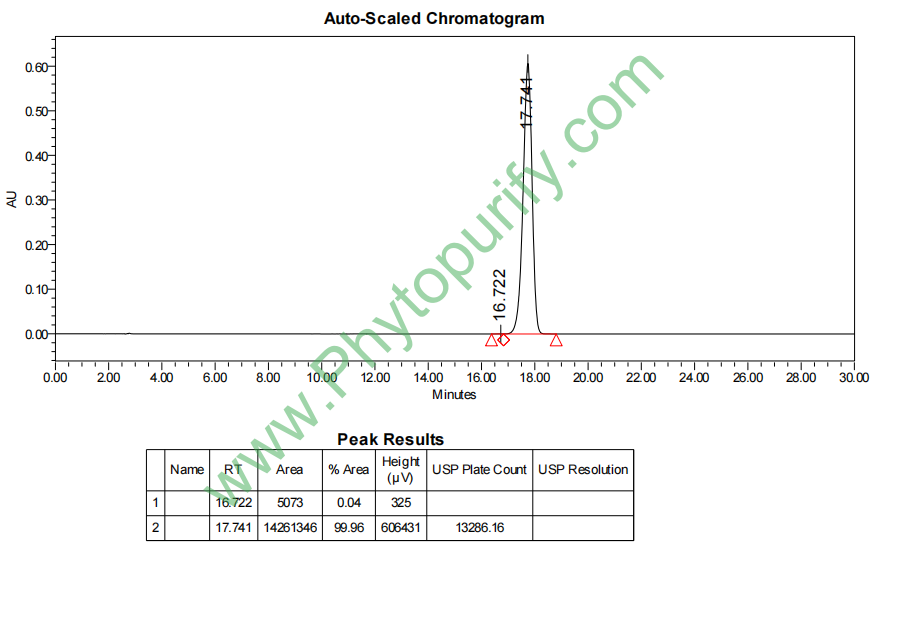
Purity: 95%~99%
Analysis Method: HPLC-DAD or/and HPLC-ELSD
Identification Method: Mass, NMR
Packing: Brown vial or HDPE plastic bottle
Can be supplied from milligrams to grams.
For Reference Standard and R&D, Not for Human Use Directly.
Inquire for bulk scale.
HPLC of Praeruptorin E
Storage conditions:Short-term storage at 2~8℃, long-term storage at -20 ~ -80℃
92.0400
4.3205
4.3207
.0067
2.7789
6.2078
High
88.1987
3.8050
Yes
Yes
No
No
No
Yes
0.0
No
Yes
Yes
Yes
Natural products, as an important source of drug discovery, play an irreplaceable role in the history of human disease prevention and treatment. Among them, coumarin compounds have always been a hot topic in medicinal chemistry and pharmacology research due to their extensive and significant biological activities. Praeruptorin E, derived from the traditional Chinese medicine Praeruptorin E(Peucedanum praeruptorum)A horn shaped pyranocoumarin compound isolated from the middle has attracted much attention since its discovery due to its unique chemical structure and diverse pharmacological activities. Early studies have revealed its calcium channel blocking effect, suggesting its potential value in the field of cardiovascular disease. In recent years, with the deepening of research, its antiviral activity, especially its inhibitory effect on herpes virus and human immunodeficiency virus (HIV), has opened up new directions for the development of anti infective drugs. This article aims to systematically review the chemical structure, plant origin, pharmacological activity, mechanism of action, pharmacological characteristics, and clinical application prospects of Peucedanum praeruptorum E, in order to provide comprehensive scientific references for the in-depth research and development of this compound.
The chemical name of Baihua Qianhu Su E is (+) -3 ′ (S), 4 ′ (S) - didecyloxy-3 ′, 4 ′ - dihydroartemisinin, with a CAS number of 78478-28-1. Its molecular formula is C24H28O7, with a molecular weight of 428.4810 Da. Structurally, it belongs to the classic angular pyran coumarin, and its basic skeleton is composed of a coumarin parent nucleus (benzo [a] - pyranone) and a dihydropyran ring fused at the C-7 and C-8 positions. Its structural feature is that there is an angeloyloxy substituent attached to each of the C-3 'and C-4' positions, and these two chiral centers are usually in the S configuration, which determines its stereochemical properties.
In terms of physicochemical properties, berberine E exhibits typical coumarin lipophilic characteristics. Its calculated lipid water partition coefficient (LogP) is 4.3205, indicating that it has high lipophilicity. The topological polar surface area (TPSA) is 92.0400 Å ², which is relatively small. These parameters collectively determine its poor water solubility, with a calculated value of approximately 0.0067 mg/mL, indicating that solubilization strategies may need to be considered in formulation development. In addition, its molecular weight is moderate and meets the basic requirements of the five rules for generic drugs. It is worth noting that its blood-brain barrier permeability is predicted to be "high", suggesting its potential to act on the central nervous system. In the early safety screening, the hERG inhibition risk was "no", and the Ames test result was 0.0 (negative), indicating a low risk of cardiac toxicity and genetic toxicity, providing a favorable safety starting point for its further development.
The main source of Peucedanum praeruptorum E is from Peucedanum praeruptorum, a plant in the Umbelliferae family(Peucedanum praeruptorum Dunn's dry roots. As one of the main original plants of traditional Chinese medicine "Qianhu", Baihua Qianhu has a long history of medicinal use and is commonly used to treat cough, phlegm accumulation, asthma, and chest fullness. Modern plant chemistry research has shown that its roots are rich in various horn type pyranose coumarin compounds, among which gibberellin E is one of the main active ingredients.
The extraction of berberine E from white flowers usually follows the conventional process of natural product chemistry. Firstly, crush the dried roots of Peucedanum praeruptorum and extract them using organic solvents. Common extraction methods include:
1. Solvent extraction method Polar organic solvents such as methanol, ethanol, or acetone are often used for cold soaking or reflux extraction. This method is easy to operate and has high extraction efficiency.
2. Ultrasonic assisted extraction method Utilizing the cavitation effect of ultrasound to accelerate solvent penetration and component dissolution can shorten extraction time and improve the yield of target components.
3. Supercritical fluid extraction method Using supercritical CO ₂ as the extractant, it has the advantages of high selectivity, no solvent residue, and low operating temperature, especially suitable for the extraction of thermosensitive coumarin components, but the equipment cost is relatively high.
After vacuum concentration, the crude extract needs to undergo a series of separation and purification steps to obtain high-purity Peucedanum praeruptorum E. Silica gel column chromatography is commonly used for preliminary separation using gradient elution systems such as petroleum ether ethyl acetate or chloroform methanol. Subsequently, purification was carried out using techniques such as preparative thin-layer chromatography, medium or high pressure liquid chromatography, and recrystallization. High performance liquid chromatography (HPLC) is a commonly used method for final purification and quality control. In recent years, liquid-liquid distribution chromatography techniques such as high-speed countercurrent chromatography have also been applied to the efficient preparation and separation of coumarin monomers due to their high recovery rate and avoidance of irreversible adsorption.
Baihua Qianhusin E exhibits various pharmacological activities, and its research has expanded from the initial cardiovascular system to multiple fields such as antiviral and anti-inflammatory effects.
Calcium channel blockade and cardiovascular activity As a classic calcium antagonist, berberine E can non selectively block voltage dependent calcium channels and inhibit the influx of extracellular calcium ions. Its pD2 'value is 5.2, indicating that it has a certain antagonistic effect. This characteristic enables it to relax vascular smooth muscle, reduce peripheral vascular resistance, and produce antihypertensive effects; At the same time, it may have negative muscle strength and frequency effects on the heart. This provides a pharmacological basis for its application in cardiovascular diseases such as hypertension and angina.
Antiviral activity This is the most widely studied active field of Peucedanum praeruptorum E in recent years, and research has shown that it has inhibitory effects on various viruses.
Other activities In addition to the main activities mentioned above, some studies have also reported that Peucedanum praeruptorum E has anti-inflammatory, antioxidant, and certain anti-tumor activities, but its strength and mechanism of action still need further systematic research to confirm and clarify.
The pharmacological effects of berberine E depend on its interactions with multiple molecular targets, and its mechanism of action has multi-target characteristics.
Calcium ion channel As a direct calcium channel blocker, berberine E binds to the alpha 1 subunit of L-type voltage dependent calcium channels, changes channel conformation, and inhibits calcium ion influx, which is the core molecular basis of its cardiovascular effects.
Virus target protein:
Host factor The regulatory effect of MPO may indirectly regulate the antiviral immune microenvironment by affecting the oxidative burst and inflammatory response of neutrophils, but its specific mode of action is still unclear.
In summary, berberine E exerts its pharmacological effects through a "multi-target, multi link" approach, especially in the field of antiviral therapy. This multi-target characteristic may help reduce the risk of virus developing single target resistance, but it also poses challenges for the precise analysis of its mechanism of action.
Based on its physicochemical properties and preliminary biological data, a preliminary evaluation of the medicinal properties of Peucedanum praeruptorum E was conducted.
Advantage:
1. Moderate molecular weight, clear structure, easy chemical synthesis or semi synthetic modification for structural optimization.
2. Preliminary safety warning (hERG negative, Ames negative) is good.
3. High blood-brain barrier permeability is a significant advantage of it as an anti central nervous system virus infection drug or a central target drug.
4. The multi-target antiviral mechanism may bring synergistic effects and resistance barriers.
challenge:
1. Poor water solubility This is the main obstacle to its development into oral or injectable formulations. It may be necessary to improve its solubility and bioavailability through strategies such as salt formation, formation of inclusion complexes, nano formulations (such as liposomes, nanocrystals), and prodrug modification.
2. Lack of pharmacokinetic data Currently, there are few reports on the systematic pharmacokinetic studies (such as absorption, distribution, metabolism, and excretion) of resveratrol E. Its high LogP value suggests that it may have a wide distribution in the body, and its metabolism may mainly be catalyzed by the liver cytochrome P450 enzyme system. The acyl structure of Angelica sinensis may be easily hydrolyzed by esterases, affecting its stability in vivo. Therefore, comprehensive ADME research is a key step towards preclinical development.
3. The selectivity needs further verification Although its initial safety is good, whether its calcium channel blocking activity will lead to cardiovascular system side effects, as well as its strength and selectivity towards numerous virus/host targets, need to be evaluated in detail in a more physiological model.
The unique pharmacological activity of Peucedanum praeruptorum E demonstrates its potential application prospects in multiple therapeutic fields.
However, its clinical application still faces many challenges: it requires systematic preclinical pharmacological evaluation (especially validation in animal infection models), comprehensive pharmacokinetic and toxicological studies, and ultimately human clinical trials. The issues of water solubility and stability must be effectively addressed through pharmaceutical methods.
As a natural horn shaped coumarin derived from traditional Chinese medicine, Baihua Qianhusin E has become an attractive molecular entity in natural product pharmacology research due to its unique chemical structure and multi-target pharmacological activity. From the initial calcium antagonistic activity to the highly anticipated broad-spectrum antiviral potential in recent years, its research value has been continuously explored and deepened. Although there are challenges in drug formulation, especially in terms of solubility and systemic pharmacokinetics, its good initial safety and high blood-brain barrier permeability provide unique advantages for its development, especially as an anti central nervous system virus infection drug. In the future, through interdisciplinary cooperation, combined with the joint efforts of medicinal chemistry, formulation, pharmacology, and clinical medicine, in-depth research on its mechanism of action, structural optimization, and drug properties will be carried out. Peucedanum praeruptorum E is expected to gradually develop from a potential lead compound into a new drug for treating viral infections and other related diseases, and also provide a useful example for the modernization research and development of active ingredients in traditional Chinese medicine.
