Introduction/Overview
Natural products, as an important source of drug discovery, play an irreplaceable role in the long history of human fight against diseases. From ancient plant medicine to modern target based drug screening, the diverse secondary metabolites in nature continue to provide valuable lead compounds for the development of innovative drugs. Among numerous natural products with biological activity, coumarin compounds have attracted much attention due to their extensive pharmacological activities, such as anti-inflammatory, antioxidant, anti-tumor, anticoagulant, etc. Among them, cis chelactone, as a typical linear dihydropyranose coumarin, has shown remarkable potential in the field of anti leukemia research in recent years, arousing strong interest among researchers.
Baihua Qianhu lactone, also known as cis K hellactone and CAS number 15645-11-1, is a plant in the Umbelliferae family, Baihua Qianhu(Peucedanum praeruptorum One of the main active ingredients of Dunn. According to traditional Chinese medicine theory, Baihua Qianhu has the effects of dispersing wind heat, reducing qi and resolving phlegm, and is commonly used to treat wind heat, cold, cough and phlegm. Modern pharmacological research has revealed its richer biological activities, including cardiovascular protection, anti-inflammatory, antioxidant, and anti-tumor effects. Especially for leukemia, resveratrol and its derivatives have shown significant ability to inhibit tumor cell proliferation, induce apoptosis and differentiation. Its mechanism of action involves multiple key signaling pathways and molecular targets, such as AMPK, MCL1, BCL2, NOTCH1, STAT3, etc. These findings not only provide modern scientific basis for understanding the anti-cancer effects of traditional Chinese medicine, Baihua Qianhu, but also open up new directions for the development of novel and low toxicity anti leukemia drugs.
The purpose of this article is to provide a systematic professional review of the lactone content in Scutellaria baicalensis. The article will first explain its chemical structure and physicochemical properties, then trace its plant origin and extraction methods, focus on reviewing its pharmacological activity research progress in leukemia and related diseases, deeply explore its mechanism of action and molecular targets, evaluate its pharmacokinetic characteristics and development prospects based on drug parameters, and finally look forward to its clinical application potential. Through comprehensive and in-depth literature integration and analysis, this article aims to provide researchers in the field of natural product pharmacology with a clear and systematic knowledge framework about paeoniflorin, and to provide valuable references for its subsequent drug development and transformation research.
Chemical structure and physicochemical properties
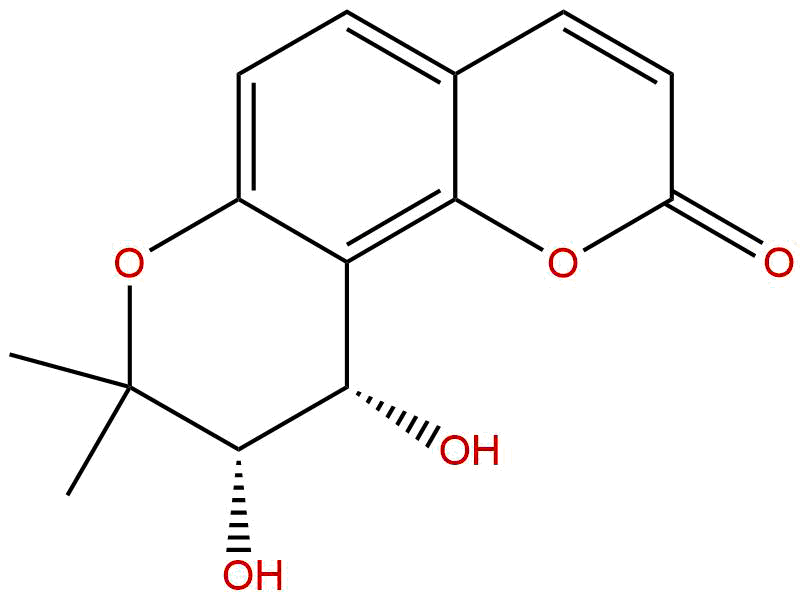
Baihua Qianhu lactone belongs to the linear dihydropyran coumarin class compounds, and its core skeleton is composed of a coumarin mother nucleus (benzo [a] - pyranone) fused with a dihydropyran ring. Specifically, its chemical structure is (2S, 3S) -2,3-dihydro-2- (1-hydroxy-1-methylethyl) -8-methoxy-3-methyl-4H-furano [3,2-g] benzopyran-4-one. There are two chiral centers (C-2 and C-3) in this structure, and cis Hellactone specifically refers to the cis configuration of substituents at positions C-2 and C-3. This specific stereoconfiguration is crucial for its biological activity, as there are often significant differences in pharmacological activity between its trans isomers or other derivatives.
From the perspective of physical and chemical properties, the molecular formula of paeoniflorin is C ₁₄ H ₁₄ O ₅, with a molecular weight of 262.2610 g/mol. Its lipid water partition coefficient (LogP) is 1.2188, indicating that the compound has a certain lipophilicity, but not extreme hydrophobicity, which is beneficial for its transmembrane transport and distribution in organisms. The topological polar surface area (TPSA) is 79.9000 Å ², which is at a moderate level. Molecules with TPSA less than 140 Å ² are generally considered to have good oral bioavailability potential. The water solubility parameter is 0.3042 mg/mL, indicating its low solubility in water, which may affect its formulation development and in vivo absorption. It is worth noting that its blood-brain barrier (BBB) penetration ability is predicted to be "high", which means that resveratrol may enter the central nervous system, which may be of great significance for the treatment of certain types of leukemia (such as central nervous system leukemia) or brain tumors. In addition, the predicted result of hERG inhibition is' no ', indicating a low risk of causing QT interval prolongation and arrhythmia in the heart, which is a positive pharmacological indicator. The Ames test result is 0.9, usually a positive Ames test (>0.5) indicates a risk of mutagenicity, but this value is close to the critical point and needs to be comprehensively evaluated in conjunction with more in-depth genetic toxicity studies. Overall, paeoniflorin has some ideal drug like properties, such as moderate lipophilicity and low risk of cardiac toxicity, but also faces challenges such as poor water solubility and potential genetic toxicity.
Plant sources and extraction methods
White flowered Houttuynia cordata lactone mainly comes from the Apiaceae genus of Houttuynia(Peucedanum)Plants, the most important source of which is the white flowered beard(Peucedanum praeruptorum Dunn), This plant is also one of the authentic origins of the commonly used traditional Chinese medicine "Qianhu" recorded in the Chinese Pharmacopoeia. In addition, in other plants of the Peucedanum genus, such as the purple flowered Peucedanum(Peucedanum decursivum Maxim.)、 Binhai Qianhu(Peucedanum japonicum Thunb.) and certain attributes(Angelica)This component is also found in plants, but the content is usually low. White flowered Houttuynia cordata is mainly distributed in the eastern, central, and southwestern regions of China. Its roots, as a medicinal part, are the main raw material for extracting white flowered Houttuynia cordata lactone.
Traditional extraction methods often use solvent extraction. Due to the polar characteristics of paeoniflorin, commonly used extraction solvents include methanol, ethanol, or their aqueous solutions. For example, after crushing the dried roots of Peucedanum praeruptorum, soaking or reflux extraction is carried out with 95% ethanol or methanol at room temperature or heating conditions. The extract is concentrated under reduced pressure to obtain the total extract. Subsequently, the total extract was preliminarily separated using liquid-liquid extraction methods (such as sequential extraction with petroleum ether, ethyl acetate, and n-butanol), and paeoniflorin is usually enriched in the ethyl acetate extraction layer. In order to obtain high-purity monomer compounds, multiple chromatographic separation techniques need to be combined. The classic separation processes include silica gel column chromatography, ODS (octadecylsilane bonded silica gel) reverse phase column chromatography, Sephadex LH-20 gel column chromatography and preparative high-performance liquid chromatography (Prep HPLC). By gradient elution and repeated purification, high purity crystals of paeoniflorin can ultimately be obtained.
In recent years, in order to improve extraction efficiency and purity, some modern extraction techniques have also been applied to the preparation of paeoniflorin. For example, ultrasound assisted extraction (UAE) and microwave-assisted extraction (MAE) can significantly shorten extraction time and improve yield by disrupting cell walls and accelerating solvent permeation. Supercritical fluid extraction (SFE), especially using carbon dioxide as a solvent, has also been attempted for the extraction of active ingredients from Houttuynia cordata due to its green, environmentally friendly, and solvent-free advantages. In addition, high-speed counter current chromatography (HSCCC), as an efficient liquid-liquid distribution chromatography technique, has shown unique advantages in the separation and purification of paeoniflorin, enabling the one-step separation of high-purity compounds. The application of these modern technologies provides strong support for the large-scale preparation and in-depth research of paeoniflorin.
Pharmacological activity research
The pharmacological activity research of paeoniflorin mainly focuses on its anti-tumor effect, especially its inhibitory effect on leukemia, and also involves multiple aspects such as anti-inflammatory, antioxidant, and cardiovascular protection.
1. Anti leukemia activity
This is currently the most in-depth and active field of research. Numerous in vitro studies have shown that paeoniflorin can effectively inhibit the proliferation of various leukemia cell lines, including acute myeloid leukemia (AML) cell lines (such as HL-60, U937, KG-1a) and acute lymphocytic leukemia (ALL) cell lines (such as Jurkat). Its mechanism of action is complex, mainly achieved by inducing cell apoptosis and differentiation.
* Inducing apoptosis Berberine can induce apoptosis in leukemia cells through the mitochondrial pathway (endogenous pathway) and death receptor pathway (exogenous pathway). It can downregulate the expression of anti apoptotic proteins BCL2 and MCL1, while upregulating the expression of pro apoptotic protein BAX, leading to a decrease in mitochondrial membrane potential, release of cytochrome c, and activation of Caspase-9 and Caspase-3, ultimately triggering cell apoptosis. In addition, it can activate the AMPK signaling pathway, which is believed to be closely related to energy metabolism stress and cell apoptosis.
* Inducing differentiation In addition to inducing apoptosis, resveratrol can also induce differentiation of certain leukemia cells (such as HL-60) towards normal granulocytes or monocytes/macrophages. This process is usually accompanied by upregulation of cell surface differentiation antigens (such as CD11b, CD14) expression, as well as maturation of cell morphology and function. Induced differentiation is an effective strategy for treating acute promyelocytic leukemia (APL), and the activity of resveratrol provides a new perspective for its application in leukemia treatment.
* Overcoming drug resistance Leukemia cells developing resistance to chemotherapy drugs is one of the main reasons for clinical treatment failure. Research has shown that paeoniflorin can reverse multidrug resistance (MDR) in leukemia cells. The mechanism may be related to the inhibition of the expression and function of ABC transporter family members (such as ABCB1/P-gp), thereby increasing the accumulation of chemotherapy drugs in cells and restoring the sensitivity of drug-resistant cells to drugs. In addition, it can inhibit the self-renewal ability of leukemia stem cells by downregulating the STAT3 signaling pathway, which is the root cause of disease recurrence and drug resistance.
2. Anti inflammatory and antioxidant activity
White flowered gibberellin exhibits significant anti-inflammatory and antioxidant activities. In a macrophage model stimulated by lipopolysaccharide (LPS), it can inhibit the production of pro-inflammatory factors such as tumor necrosis factor - α (TNF - α), interleukin-6 (IL-6), and nitric oxide (NO). The mechanism may be related to the inhibition of the activation of the nuclear factor kappa B (NF - κ B) signaling pathway. In terms of antioxidant properties, paeoniflorin can eliminate free radicals and increase the activity of antioxidant enzymes such as superoxide dismutase (SOD) and glutathione peroxidase (GSH Px) in cells, thereby reducing oxidative stress damage. These activities are of great significance for their potential applications in cardiovascular and neurodegenerative diseases.
3. Cardiovascular protective effect
Traditionally, Baihua Qianhu has been used to treat cardiovascular diseases. Modern research has confirmed that paeoniflorin has effects such as vasodilation, blood pressure reduction, and anti myocardial ischemia-reperfusion injury. Its vasodilatory effect may be related to the inhibition of voltage dependent calcium channels and receptor regulated longitudinal calcium channels. In addition, it can also activate the PI3K/Akt/eNOS signaling pathway to promote the production of nitric oxide (NO), thereby protecting endothelial function.
4. Other pharmacological activities
Preliminary studies also suggest that paeoniflorin may have antiviral, antibacterial, and anti liver fibrosis activities. For example, there are reports that it has inhibitory effects on certain influenza virus strains and can inhibit the activation of hepatic stellate cells, reducing the degree of liver fibrosis. However, research in these fields is still in its infancy and requires more evidence to support it.
Mechanism of action and molecular targets
The pharmacological activity of paeoniflorin, especially its anti leukemia effect, is achieved by regulating multiple intracellular signaling pathways and molecular targets, reflecting the multi-target and multi pathway nature of natural products. The following will elaborate on its key mechanisms of action and molecular targets related to its anti leukemia activity.
1. AMPK signaling pathway
AMPK (AMP activated protein kinase, encoded by the PRKAA1 gene) is a core sensor of cellular energy metabolism. White flowered gibberellin has been proven to be a potent activator of AMPK. In leukemia cells, activated AMPK can inhibit the mTOR signaling pathway, thereby suppressing protein synthesis and cell proliferation. More importantly, activation of AMPK can lead to cell cycle arrest (such as G0/G1 phase arrest) and induce apoptosis. In addition, AMPK can promote cell apoptosis by phosphorylating tumor suppressor proteins such as p53. Therefore, targeting AMPK is one of the important mechanisms by which resveratrol exerts its anti leukemia effects.
2. BCL2 family proteins
BCL2 family proteins play a central role in regulating mitochondrial pathway apoptosis. Berberine can significantly downregulate the expression of anti apoptotic proteins MCL1 and BCL2, while upregulating the expression of pro apoptotic protein BAX. The overexpression of MCL1 and BCL2 is a key factor in various leukemia cells evading apoptosis and developing drug resistance. White flowered gibberellin disrupts the balance of mitochondrial outer membrane permeability by reducing the ratio of MCL1/BAX to BCL2/BAX, leading to the release of cytochrome c and activating the Caspase cascade reaction, ultimately inducing cell apoptosis. Directly targeting BCL2 family proteins is currently a hot topic in the development of anti-tumor drugs, and the regulation of this pathway by paeoniflorin makes it of significant research value.
3. NOTCH1 signal pathway
The NOTCH1 signaling pathway plays a key role in the pathogenesis of T-cell acute lymphoblastic leukemia (T-ALL), with over 50% of T-ALL patients having NOTCH1 activation mutations. Research has shown that paeoniflorin can inhibit the activity of the NOTCH1 signaling pathway. The mechanism may involve inhibiting the cleavage and activation of NOTCH1 receptors, or downregulating the expression of downstream target genes such as HES1 and MYC. Inhibition of the NOTCH1 signaling pathway can induce apoptosis and differentiation of T-ALL cells, and inhibit self-renewal of leukemia stem cells. Therefore, paeoniflorin may become a potential therapeutic drug targeting NOTCH1 mutant T-ALL.
4. STAT3 signaling pathway
STAT3 (Signal Transduction and Transcription Activation Factor 3) is an important transcription factor that is continuously activated in many malignant tumors, including leukemia, promoting cell proliferation, survival, angiogenesis, and immune escape. Berberine can inhibit the phosphorylation of STAT3 (Tyr705 site), thereby blocking its dimerization and nuclear translocation, and reducing its transcriptional activity. The downregulation of STAT3 leads to a decrease in the expression of its target genes, such as anti apoptotic proteins (BCL2, MCL1, Survivor) and cell cycle regulatory protein (Cyclin D1). In addition, the inhibition of STAT3 is also related to overcoming the resistance of leukemia cells to chemotherapy drugs.
5. Other key targets
* ABCB1 (P-glycoprotein)Berberine can inhibit the expression and function of ABCB1, thereby reversing multidrug resistance in leukemia cells and increasing the concentration of chemotherapy drugs in cells.
* PRKCA (protein kinase C alpha)The PKC signaling pathway is involved in the regulation of cell proliferation, differentiation, and apoptosis. White flowered gibberellin may affect the fate of leukemia cells by regulating the activity of PKC.
* MAPT (microtubule associated protein Tau)The abnormal expression of Tau protein is associated with drug resistance in certain tumors. Further research is needed to investigate the effect of paeoniflorin on MAPT expression.
* IDH1 (isocitrate dehydrogenase 1)IDH1 mutations are common in AML, leading to the accumulation of the carcinogenic metabolite 2-hydroxyglutarate (2-HG). It is worth exploring whether resveratrol affects the activity or metabolic pathways of IDH1 mutants.
* NFE2L2(NRF2)NRF2 is the main transcription factor for cellular antioxidant response. Although the activation of NRF2 is generally considered to have a protective effect, in some tumors, excessive activation of NRF2 can actually promote tumor growth and drug resistance. The effect of paeoniflorin on the NRF2 pathway may have a dual nature and needs to be analyzed based on specific cellular environments.
In summary, paeoniflorin forms a complex regulatory network by simultaneously acting on multiple key signaling nodes such as AMPK, BCL2 family, NOTCH1, STAT3, etc., effectively inhibiting the proliferation, inducing apoptosis and differentiation of leukemia cells, and overcoming drug resistance. This multi-target mode of action is the core basis of its pharmacological activity.
Evaluation of drug properties and pharmacokinetics
To promote the clinical application of paeoniflorin from laboratory research, it is necessary to conduct a systematic evaluation of its pharmacological properties and gain a deeper understanding of its pharmacokinetic (ADME) characteristics. Based on the parameters provided earlier and existing literature, the following analysis can be conducted.
1. Evaluation of drug properties
* Physicochemical properties The molecular weight (262.26 Da) conforms to the Lipinski Five Rules (<500 Da). LogP (1.22) is moderate, with both lipophilicity and hydrophilicity, which is beneficial for absorption and distribution. The TPSA (79.9 Å ²) is less than 140 Å ², indicating its good oral absorption potential. However, the water solubility (0.3042 mg/mL) is poor and belongs to low solubility compounds, which may be the main challenge facing its oral bioavailability. Formulation strategies, such as the use of solubilizers, liposomes, nanocrystals, or cyclodextrin inclusion complexes, are necessary means to improve their solubility and dissolution rate.
* safety HERG inhibition is predicted as' no ', which is a very favorable safety signal and reduces the risk of cardiac toxicity. However, the Ames test result was 0.9, close to the positive threshold, indicating potential genetic toxicity. This requires high attention and must be rigorously validated through in vitro and in vivo genetic toxicity tests, such as micronucleus tests and chromosome aberration tests. If genetic toxicity is confirmed, it will seriously hinder its development as an oral drug, and local administration or structural modification may need to be considered to reduce toxicity.
* Target and selectivity White flowered gibberellin has multi-target properties, which are both advantages (synergistic effect, less likely to develop drug resistance) and challenges (may lead to off target effects and toxic side effects). It is necessary to conduct in-depth research on the selectivity of its main targets, such as AMPK and STAT3, and systematically evaluate their toxicity to normal cells and tissues.
2. Pharmacokinetic characteristics
* absorb Based on its moderate LogP and TPSA, Baihua Qianhu lactone should theoretically be able to be absorbed by the gastrointestinal tract through passive diffusion. However, its low water solubility severely limits its dissolution and absorption rate, resulting in potentially lower oral bioavailability. At present, there is insufficient in vivo research data on its absolute bioavailability, which will be the focus of future research.
* distribution Its high blood-brain barrier penetration prediction indicates that the compound can enter the central nervous system. This is a potential advantage for treating central nervous system leukemia or brain tumors, but it may also increase the risk of central nervous system toxicity. The parameters such as plasma protein binding rate and apparent distribution volume need to be experimentally determined.
* Metabolism Coumarin compounds are usually mainly metabolized in the liver by cytochrome P450 enzymes (especially CYP3A4, CYP2C9, etc.), and the main metabolic pathways include hydroxylation, O-demethylation, etc. The metabolic stability, main metabolites and their activity/toxicity, as well as their inhibitory or inducing effects on CYP enzymes, are key issues that need to be clarified, which are related to their potential drug drug interactions.
* excretion White flowered gibberellin and its metabolites are mainly excreted through bile and/or urine. The parameters such as half-life and clearance rate still need to be determined through in vivo pharmacokinetic experiments.
Summary Baihua Qianhu lactone has certain drug like properties, especially its good cardiac safety (hERG negative) and potential central nervous system penetration ability. However, its low water solubility and potential genetic toxicity are the two core obstacles to its drug development. Future research should prioritize addressing these two issues, such as improving water solubility and reducing toxicity through structural modifications (such as prodrug design, introducing polar groups), while developing appropriate formulation technologies to enhance their bioavailability.
Clinical application prospects and prospects
Despite facing challenges in drug development, the unique anti leukemia mechanism and clear molecular targets of paeoniflorin have shown promising prospects in clinical applications, particularly in the following areas:
1. As a new candidate drug for anti leukemia treatment
* combination therapy Given its multi-target mechanism of action, it is highly likely that paeoniflorin will have a synergistic effect with existing chemotherapy drugs such as cytarabine, doxorubicin, imatinib, etc. For example, by downregulating MCL1 and BCL2, it can enhance chemotherapy induced apoptosis; By inhibiting ABCB1, it can reverse multidrug resistance. Therefore, the development of a combination therapy based on paeoniflorin is expected to improve efficacy, reduce the dosage and related toxicity of chemotherapy drugs.
* Targeting specific subtypes For T-ALL patients with NOTCH1 activating mutations, paeoniflorin may become a promising targeted therapy drug. Similarly, the potential role of IDH1 mutation in AML is worth further exploration. This biomarker based precision medicine strategy can maximize its therapeutic benefits.
* Overcoming drug resistance For relapsed/refractory leukemia, especially those patients who develop resistance due to overexpression of ABCB1 or sustained activation of STAT3, resveratrol may provide a new treatment option.
2. Optimize the structure as a lead compound
The natural skeleton of paeoniflorin provides an excellent modification platform for medicinal chemists. By conducting systematic structure-activity relationship (SAR) studies on its structure, a series of derivatives can be designed and synthesized in order to obtain:
* Higher activity and selectivity Enhance affinity for specific targets such as AMPK and STAT3, and improve anti leukemia activity.
* Improved pharmacokinetic properties Introducing hydrophilic groups (such as phosphate groups and amino acid esters) to make prodrugs to improve water solubility and oral bioavailability.
* Reduce toxicity Eliminating or reducing its potential genetic toxicity through structural modification.
3. Expand to other disease areas
* solid tumor In view of its broad-spectrum anti proliferation and apoptosis inducing activities, the anti-tumor potential of Peucedanolide in other solid tumors (such as lung cancer, breast cancer, liver cancer) is worth exploring.
* Inflammation and immune related diseases Its anti-inflammatory and antioxidant activities suggest that it may have practical value in chronic inflammatory diseases such as rheumatoid arthritis and inflammatory bowel disease.
* Cardiovascular and metabolic diseases Its cardiovascular protective effect and AMPK activation effect make it potentially valuable in the treatment of metabolic diseases such as atherosclerosis, diabetes, nonalcoholic fatty liver, etc.
Future research directions:
1. In depth in vivo pharmacological research Establish animal models (including xenograft models and genetically engineered mouse models) for various types of leukemia (such as AML and T-ALL), and systematically evaluate the in vivo anti-tumor efficacy and toxicity of Baihua Qianhulide monotherapy and combination therapy.
2. Comprehensive pharmacokinetic and toxicological studies Complete the ADME study in animals and conduct long-term toxicity, reproductive toxicity, and genetic toxicity evaluations to provide key data for clinical trials.
3. Deepening mechanism research Using omics techniques such as proteomics and metabolomics to further reveal its multi-target regulatory network and identify its direct molecular targets (such as through drug affinity reaction target stability DARTS technology or cell thermal transition analysis CETSA technology).
4. Formulation development To address the issue of poor water solubility, new drug delivery systems such as liposomes, nanoparticles, and solid dispersions have been developed to improve their bioavailability and achieve targeted delivery.
Conclusion
Baihua Qianhu lactone, a natural coumarin compound derived from the traditional Chinese medicine Baihua Qianhu, has become a remarkable new star in the field of natural product pharmacology due to its unique chemical structure and multi-target pharmacological activity, especially its significant inhibitory effect on leukemia. It effectively inhibits leukemia cell proliferation, induces apoptosis and differentiation by regulating multiple key signaling pathways such as AMPK, BCL2 family, NOTCH1, STAT3, and demonstrates the potential to overcome drug resistance, providing valuable lead compounds for the development of novel anti leukemia drugs.
However, the path from laboratory discovery to clinical application remains challenging. Its poor water solubility and potential genetic toxicity are the key bottlenecks that restrict its drug development. Future research requires close collaboration among multidisciplinary teams such as medicinal chemistry, pharmacology, pharmacy, toxicology, etc., gradually overcoming these obstacles through structural optimization, formulation innovation, and in-depth mechanism research. We have reason to believe that with the continuous deepening of research, paeoniflorin and its derivatives have the potential to become new members of the leukemia treatment arsenal in the future, bringing new hope to patients. At the same time, in-depth analysis of its mechanism of action will further reveal the scientific connotation of natural products in the treatment of complex diseases, and promote the modernization process of traditional Chinese medicine.