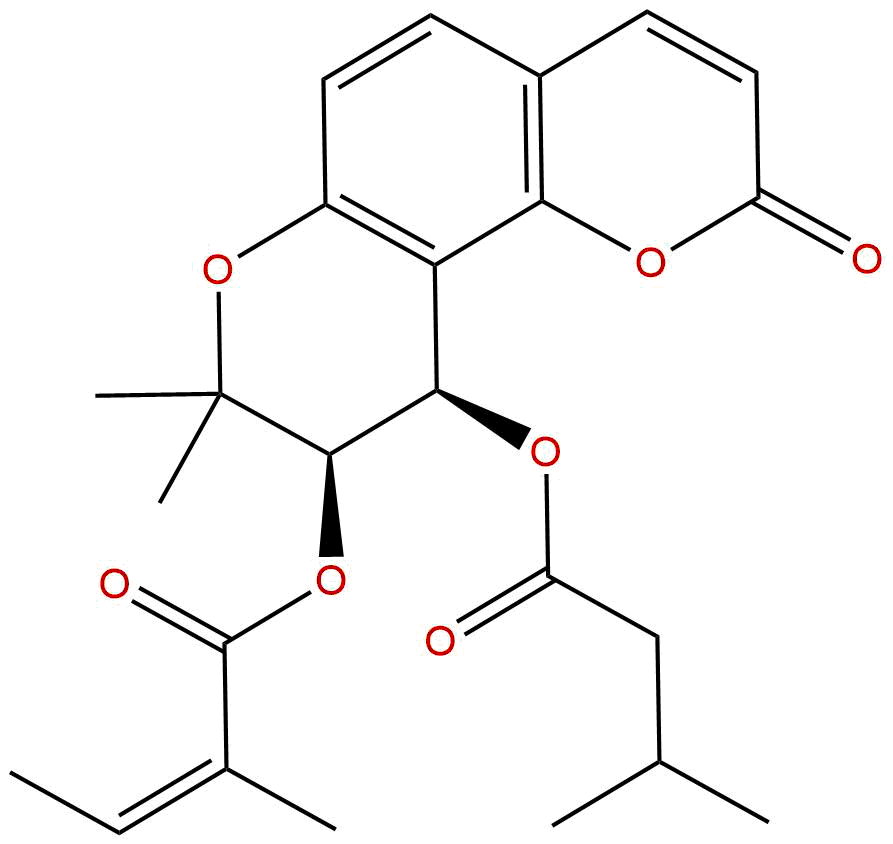


Product name: Praeruptorin C
Synonym name: Wulongensin A
Catalogue No.: BP1135
Cas No.: 72463-77-5
Formula: C24H28O7
Mol Weight: 428.481
Botanical Source: Peucedanum spp., Musineon sp. and Seseli sp.
Physical Description: Powder
Type of Compound: Coumarins
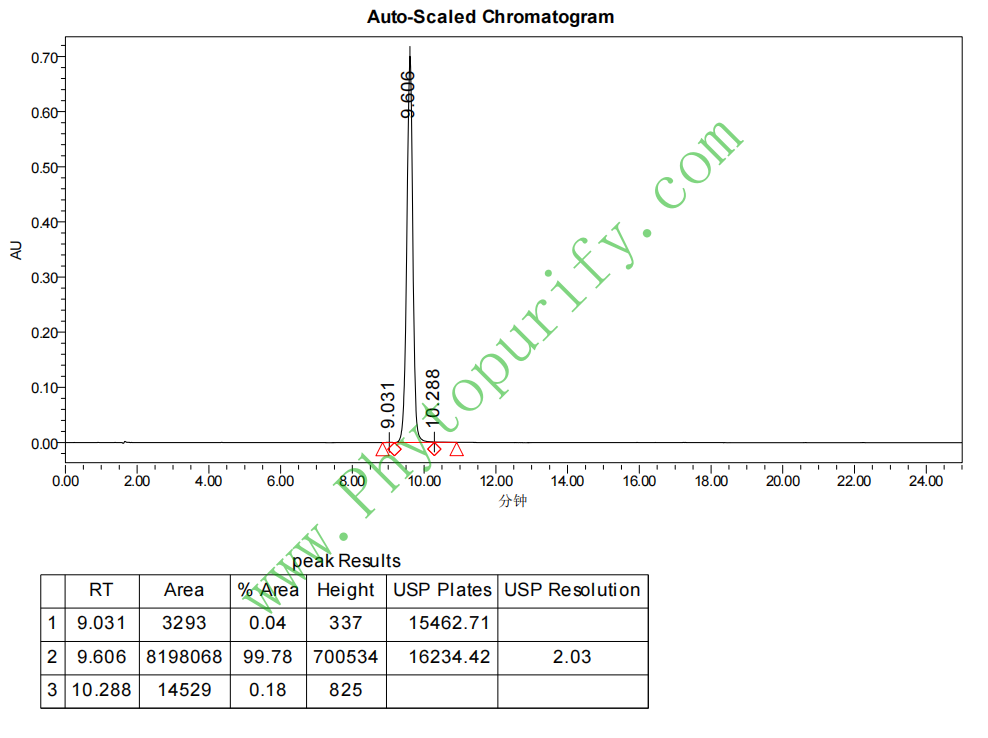
Purity: 95%~99%
Analysis Method: HPLC-DAD or/and HPLC-ELSD
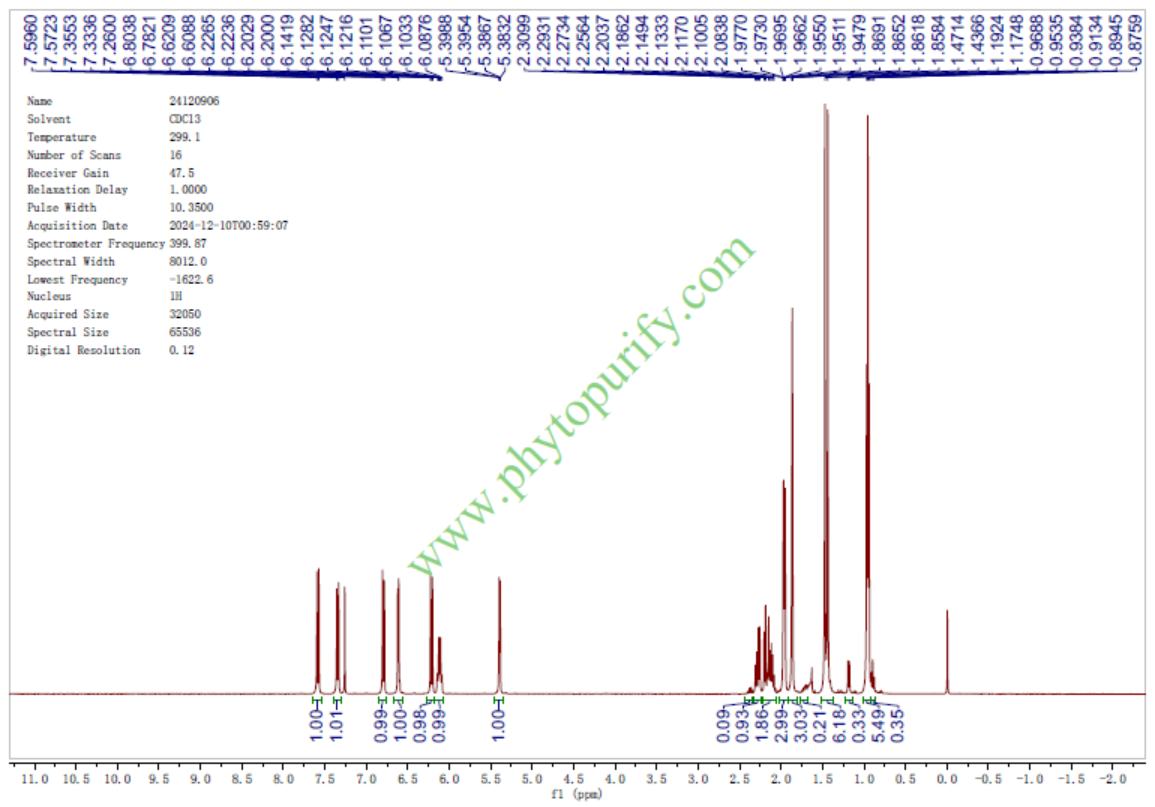
Identification Method: Mass, NMR
Packing: Brown vial or HDPE plastic bottle
Storage: Store in a well closed container, protected from air and light. Put into refrigerate or freeze for long term storage.
Whenever possible, you should prepare and use solutions on the same day. However, if you need to make up stock solutions in advance, we recommend that you store the solution as aliquots in tightly sealed vials at -20℃. Generally, these will be useable for up to two weeks.
The product could be supplied from milligrams to grams, up to kilograms
Inquire for bulk scale.
Descriptions:
Praeruptorin C (Pra-C), one of the principal bioactive components derived from the root of Peucedanum praeruptorum Dunn, has been widely used as an antioxidant and a calcium antagonist to treat diseases, Pra-C partially also protects cortical neurons by inhibiting the expression of GluN2B-containing NMDA receptors and regulating the Bcl-2 family.[1]
Praeruptorin C can completely inhibit SMC proliferation induced by Ang II and partly inhibit the growth of SMC- induced by bovine serum, which is important in prevention and treatment of vascular hyperplastic disease.[2]
Praeruptorin C can attenuate the level of NCX mRNA , has cardioprotective effect on NCX mediates during ischemia/reperfusion in the neonatal rat cardiomyocytes I/R model; cardioprotection induced by hypoxia preconditioning and praeruptorin C preconditioning against hypoxia-reoxygenation injury may be related with upregulating phospholamban phosphorylation.[3,4]
References:
[1] Yang L, Li X B, Yang Q, et al. Toxicol in Vitro, 2013, 27(2):908-14.
[2] Wei E H, Rao M R, Chen X Y, et al.Acta Pharmacol Sin, 2002, 23(2):129-32.
[3] Qun-Ying X I, Zhu B H, Liu C, et al. Chinese Heart Journal, 2008(5):513-6.
[4] Chen K X, Zhu B H, Liu C. Chinese Journal of Geriatric Heart Brain & Vessel Diseases, 2008, 10(3):210-3.
[5] Xu G B, Liu S J, Liang Y M, et al.Traditional Chinese Medicine, 2007, 32 (19): 2069-71.
HPLC of Praeruptorin C
HNMR of Praeruptorin C
Storage conditions:Short-term storage at 2~8℃, long-term storage at -20 ~ -80℃
92.0400
4.3199
4.3199
.0071
2.8303
6.2220
High
88.2521
3.8050
Yes
Yes
No
No
No
Yes
0.0
No
Yes
Yes
Yes
Natural products, as an important source of drug discovery, occupy a pivotal position in the history of human disease treatment. Among them, coumarin compounds have attracted much attention due to their structural diversity and wide range of biological activities. Praeruptorin C, as one of the main active coumarin components of traditional Chinese medicine Peucedanum praeruptorum Dunn, has been a hot topic in pharmacological research since its isolation and identification. Early studies have revealed its clear calcium channel antagonistic activity (pD2 ′=5.7), suggesting its potential value in the field of cardiovascular disease. However, in recent years, with the deepening of research, berberine C has shown broader pharmacological prospects, especially in the field of anti-tumor effects, showing multi-target and multi pathway characteristics, involving the regulation of multiple key biological processes such as cell apoptosis, invasion and metastasis, hormone metabolism, etc. Its CAS number is 72463-77-5, with a unique molecular structure. Preliminary evaluation of its pharmacological parameters shows that it has certain development potential. This article aims to systematically review the chemical properties, plant sources, pharmacological activities, molecular mechanisms of action, pharmacological evaluation, and clinical application prospects of Peucedanum praeruptorum C, in order to provide comprehensive scientific references for the in-depth research and future drug development of this compound.
Baihua Qianhu Su C belongs to the class of horn type pyranocoumarin compounds, and its chemical name is (+) - (3'S, 4'S) -3 '- acetoxy-4' - isovaleryloxy-3 ', 4' - dihydroartemisinin. Its molecular formula is C24H28O7 and its molecular weight is 428.4810. Its core structure is the coumarin mother nucleus, which is replaced by acetoxy and isovaleryloxy groups at C-3 'and C-4' positions, respectively. These two chiral centers determine its specific stereochemistry and are crucial for its biological activity.
From the analysis of physical and chemical properties, the lipid water partition coefficient (LogP) of Peucedanum praeruptorum C is 4.3199, indicating that the compound has high lipophilicity. Its topological polar surface area (TPSA) is 92.0400 Å ². Its water solubility is extremely low, about 0.0071 mg/mL, which is consistent with its high LogP value, suggesting that it may need to improve solubility through techniques such as salt formation, cyclodextrin inclusion, or nanoformulation in formulation development. Preliminary pharmacological predictions indicate that its blood-brain barrier permeability is high, which provides a possibility for its application in central nervous system related diseases such as certain brain tumors. Preliminary safety screening showed that the hERG inhibition risk was negative, and the Ames test result was 0.0, indicating a low potential risk of cardiac and genetic toxicity, laying a preliminary safety foundation for its further development.
The main source of Peucedanum praeruptorum Dunn, a plant in the Umbelliferae family, is the dried roots of Peucedanum praeruptorum Dunn. As a traditional Chinese medicine, Baihua Qianhu has the effects of dispersing wind, clearing heat, reducing qi, and resolving phlegm. It is commonly used to treat symptoms such as wind heat, cough, excessive phlegm, phlegm heat, and wheezing. Berberine C is one of the characteristic coumarins with high content in its roots, often coexisting with other coumarin components such as Berberine A, B, D, E, etc.
The extraction and separation methods mainly follow the conventional process of natural product chemistry. Firstly, alcohol solvents (such as methanol, ethanol) or polar mixed solvents are usually used for reflux extraction or ultrasound assisted extraction of dried Peucedanum praeruptorum powder to fully obtain coumarin components. Subsequently, crude extract was obtained by vacuum concentration. The crude extract was subjected to liquid-liquid extraction and segmentation using organic solvents such as petroleum ether and ethyl acetate. Berberine C was mainly enriched in the ethyl acetate fraction. Further purification depends on a variety of chromatographic techniques, including silica gel column chromatography, reverse phase silica gel column chromatography (such as ODS), dextran gel column chromatography (such as Sephadex LH-20), and high performance liquid chromatography (HPLC). Among them, preparative HPLC has become a key technology for obtaining high-purity Peucedanum praeruptorum C monomer due to its high resolution and efficiency. In recent years, green extraction technologies such as supercritical fluid extraction have also been explored for application, aiming to improve extraction efficiency and reduce the use of organic solvents.
The pharmacological activity research of Peucedanum praeruptorum C has expanded from the initial cardiovascular system to multiple fields such as anti-tumor and anti-inflammatory effects, among which anti-tumor activity is currently the core focus of research.
1. Antitumor activity:
A large number of in vitro studies have shown that Peucedanum praeruptorum C has significant proliferation inhibition and apoptosis promoting effects on a variety of human tumor cell lines, including lung cancer, breast cancer, liver cancer, colon cancer, prostate cancer and ovarian cancer. Its function is not limited to inducing cell apoptosis, but can also effectively inhibit the migration, invasion, and formation of vascular mimicry of tumor cells, indicating its potential for anti metastasis. In in vivo animal models, the administration of Peucedanum praeruptorum C (usually via intraperitoneal injection or gavage) can significantly inhibit the growth of transplanted tumors and exhibit synergistic effects when combined with certain chemotherapy drugs, while reducing the cachexia state of model animals.
2. Calcium antagonistic activity:
As a classic calcium channel antagonist, resveratrol C can competitively inhibit calcium influx with a pD2 ′ value of 5.7. This characteristic gives it a relaxing effect on vascular smooth muscle, which may have therapeutic potential for cardiovascular diseases such as hypertension and angina, although modern research in this area is relatively limited.
3. Other activities:
In addition, the study also suggests that Peucedanum praeruptorum C has certain anti-inflammatory and antioxidant activities. It can inhibit the excessive production of inflammatory factors induced by lipopolysaccharides and clear free radicals, which may complement its anti-tumor and potential cardiovascular and cerebrovascular protective effects.
The anti-tumor effect of Baihua Qianhu Su C involves a complex molecular network, and its multi-target properties are its outstanding advantage. Existing research has revealed that it acts on multiple key signaling pathways and specific targets:
1. Regulating apoptosis related proteins:
Baihua Qianhu Su C can significantly downregulate the expression of anti apoptotic proteins MCL1 and BCL2, and may upregulate the expression of pro apoptotic proteins such as Bax, thereby disrupting mitochondrial membrane potential, promoting cytochrome C release, and ultimately activating the Caspase cascade reaction, inducing the intrinsic apoptotic pathway of tumor cells.
2. Inhibition of STAT3 signaling pathway:
Signal transducer and activator of transcription factor 3 (STAT3) is an important oncogenic transcription factor. Baihua Qianhu Su C can inhibit the phosphorylation activation of STAT3, prevent its nuclear translocation, and subsequently downregulate the expression of downstream target genes related to cell proliferation (such as Cyclin D1), survival (such as Survivin), and angiogenesis (such as VEGF).
3. Intervention in cell cycle and DNA metabolism:
Research has shown that resveratrol C can arrest the cell cycle in the G0/G1 or G2/M phase. Its function is related to inhibiting the activity of topoisomerase I (TOP1) and topoisomerase II alpha (TOP2A), interfering with DNA replication and repair. At the same time, it can downregulate the expression of matrix metalloproteinase 2 (MMP2), which is a key enzyme for tumor cell invasion and metastasis.
4. Effects on hypoxia inducible factors and MAPK pathway:
Baihua Qianhu Su C can inhibit the stability and activity of hypoxia inducible factor-1 α (HIF1A), thereby weakening the adaptability and angiogenesis signals of tumor cells in the hypoxic microenvironment. In addition, it can regulate the phosphorylation level of mitogen activated protein kinase 1 (MAPK1/ERK), affecting cell proliferation and differentiation decisions.
5. Intervention of hormone related targets:
In response to hormone dependent tumors (such as breast cancer), Peucedanum praeruptorum C shows a regulatory effect on estrogen receptor alpha (ESR1) signaling pathway and can inhibit the activity of aromatase (CYP19A1). The latter is the key enzyme of estrogen synthesis, and its inhibition can reduce the level of endogenous estrogen, providing a potential mechanism for the treatment of estrogen receptor positive breast cancer.
In summary, Peucedanum praeruptorum C forms a synergistic anti-tumor network by simultaneously acting on multiple targets such as MCL1, BCL2, STAT3, MMP2, TOP1, HIF1A, TOP2A, MAPK1, ESR1, CYP19A1, etc.
Although the pharmacological activity of Peucedanum praeruptorum C is significant, its pharmacological properties still need to be systematically evaluated. Based on calculations and preliminary experimental data:
Pharmacokinetic characteristics:
The high lipophilicity (LogP 4.32) and low water solubility of berberine C indicate that its oral absorption may be limited by dissolution rate, but it may have good tissue distribution after absorption. High blood-brain barrier permeability is its characteristic. At present, limited pharmacokinetic studies (mainly in animal models) indicate that its oral bioavailability may not be high, and it is metabolized quickly in vivo, mainly through liver metabolism. It may involve phase I metabolic reactions such as ester bond hydrolysis (deacetylation, dehydroisoamyl) and hydroxylation of coumarin nucleus, and then combine with glucuronic acid or sulfuric acid to form phase II metabolites for excretion. Systematic absorption, distribution, metabolism, and excretion (ADME) research is urgently needed.
Challenges and Strategies in Pharmaceutical Science:
The main challenges lie in low solubility and potential metabolic instability. Future formulation development can consider the following directions: ① Preparation into nanocrystals, liposomes, micelles, or solid dispersions to improve solubility and dissolution rate; ② Perform prodrug modification, such as introducing hydrophilic groups on phenolic hydroxyl or carboxyl groups, to improve water solubility and pharmacokinetic properties; ③ Develop targeted delivery systems to enhance tumor tissue accumulation and reduce systemic exposure.
Preliminary safety assessment:
HERG inhibition negative and Ames test negative are positive early safety signals. However, a comprehensive preclinical safety evaluation is still needed, including acute toxicity, chronic toxicity, reproductive toxicity, etc., to clarify its safety window.
The clinical application prospects of Baihua Qianhusin C mainly focus on the field of anti-tumor, but may also be expanded to other directions.
1. Development of anti-tumor drugs:
Its multi-target characteristics make it promising to be developed into a novel multi-target anti-tumor drug, especially suitable for malignant tumors that develop resistance to single target drugs. The potential application directions include: ① as a single drug, it can be used to treat liver cancer, non-small cell lung cancer, triple negative breast cancer and other refractory tumors; ② Combined with existing chemotherapy drugs (such as topoisomerase inhibitors, paclitaxel) or targeted drugs to enhance efficacy, reverse drug resistance, and reduce side effects; ③ Based on its activity of inhibiting CYP19A1 and ESR1, it is developed as an adjuvant treatment or prevention drug for hormone dependent breast cancer.
2. Potential for other diseases:
Its calcium antagonistic activity suggests that it still has exploratory value in cardiovascular diseases such as hypertension and arrhythmia. In addition, its anti-inflammatory activity may also be applicable to certain chronic inflammatory diseases.
Future research focus outlook:
Firstly, it is necessary to use techniques such as X-ray crystallography or cryo electron microscopy to analyze the three-dimensional structure of the complex between Peucedanum praeruptorum C and key targets (such as STAT3 and TOP2A), laying the foundation for structure based optimization. Secondly, it is necessary to conduct systematic and standardized preclinical pharmacological, pharmacokinetic, and toxicological studies to obtain complete data required for IND application. Thirdly, strengthen the study of structure-activity relationships, rationalize their structures, and optimize solubility, metabolic stability, and targeting while maintaining activity. Finally, actively explore its new drug delivery system and combination therapy regimen.
As a natural coumarin compound derived from traditional Chinese medicine, Baihua Qianhu Su C has become an attractive candidate molecule in the field of natural product drug development due to its unique chemical structure and multi-target anti-tumor pharmacological activity. The evolution of roles from calcium channel antagonists to multi-target anti-tumor agents reflects the deep exploration and re understanding of traditional Chinese medicine active ingredients by modern pharmacological research. Although it faces challenges in terms of solubility and metabolic stability in drug development, these challenges are expected to be overcome through the intervention of modern medicinal chemistry, pharmacology, and pharmacokinetics. In the future, with more detailed elucidation of its mechanism of action and continuous deepening of preclinical research, Baihua Qianhusin C is expected to move from the laboratory to clinical practice, providing new weapons for the treatment of major diseases such as malignant tumors, and also providing classic examples for the modernization and internationalization of traditional Chinese medicine. The research process fully demonstrates the eternal value of searching for innovative drug lead compounds from natural treasure trove.
