


Product name: Picropodophyllotoxin
Synonym name: Picropodophyllin
Catalogue No.: BP1098
Cas No.: 477-47-4
Formula: C22H22O8
Mol Weight: 414.41
Botanical Source: Dysosma versipellis
Physical Description:
Type of Compound: Lignans
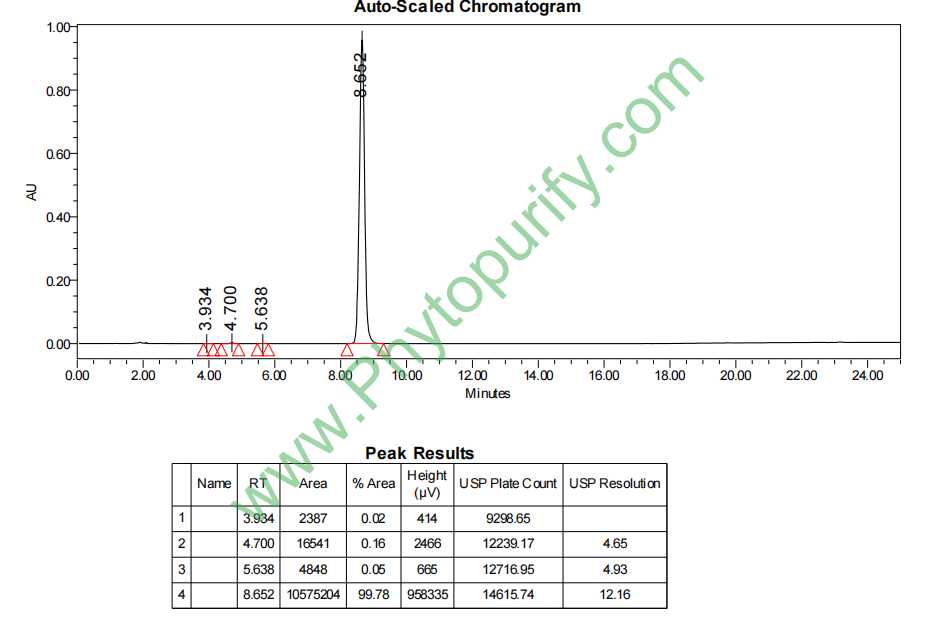
Purity: 95%~99%
Analysis Method: HPLC-DAD or/and HPLC-ELSD
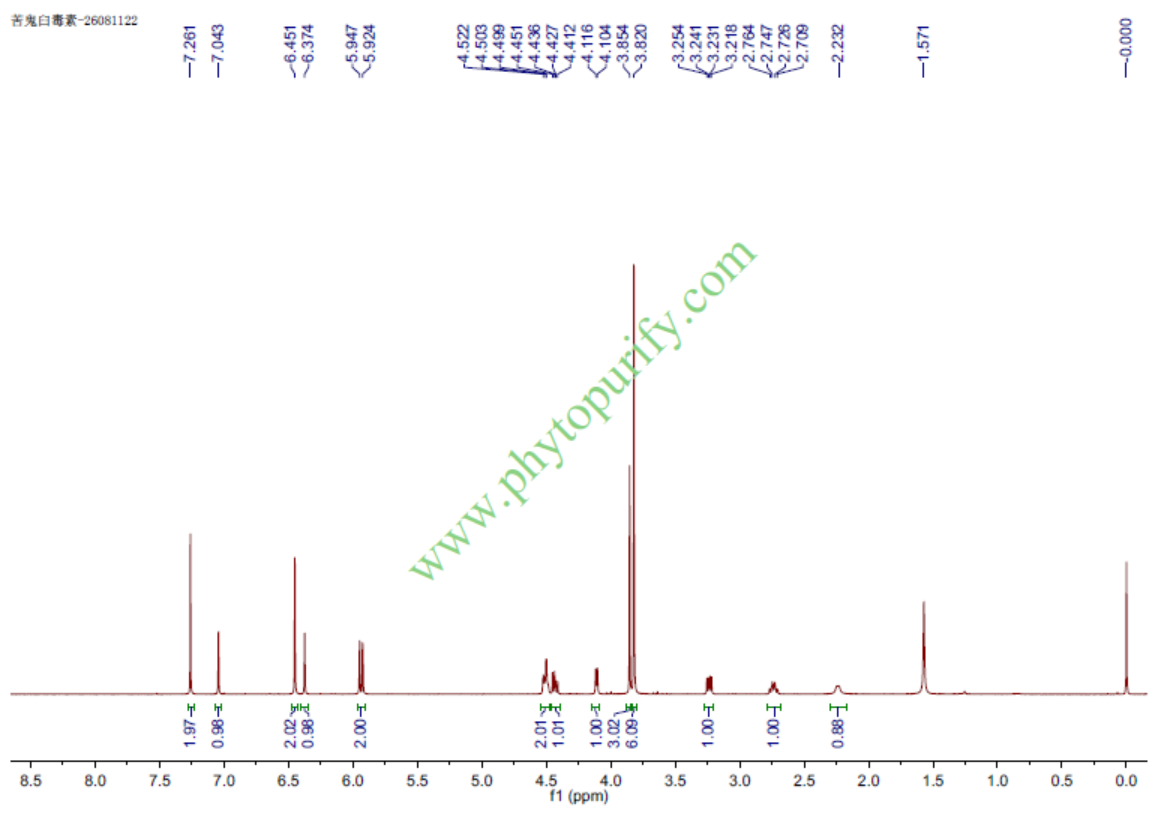
Identification Method: Mass, NMR
Packing: Brown vial or HDPE plastic bottle
Storage: Store in a well closed container, protected from air and light. Put into refrigerate or freeze for long term storage.
Whenever possible, you should prepare and use solutions on the same day. However, if you need to make up stock solutions in advance, we recommend that you store the solution as aliquots in tightly sealed vials at -20℃. Generally, these will be useable for up to two weeks.
The product could be supplied from milligrams to grams
Inquire for bulk scale.
Chengdu Biopurify Phytochemicals Ltd. is a leading company in the research, development, manufacture and marketing of High Quality Phytochemicals and Extracts(especially Active Ingredients from Traditional Chinese Medicine,TCM), Natural Active Pharmaceutical Ingredients worldwide.
The main services:
A. Supply active ingredients and reference standards of TCM, from mgs to kgs scale
B. Custom extraction and purification, target Herb Active Ingredients
C. Custom synthesis and semi-synthesis for Natural Active Ingredients
D. CR(contract research), CM(contract manufacture) and PD(process development) services from lab scale, pilot scale to commercial scale(GMP is also available)
E. TCM compounds library for drug screen,more than 3000 compounds available, many of them are rare and unique.
HPLC of Picropodophyllotoxin
HNMR of Picropodophyllotoxin
Storage conditions:Short-term storage at 2~8℃, long-term storage at -20 ~ -80℃
92.6800
1.9902
1.9902
.1306
3.5367
8.7187
High
82.8805
3.7523
Yes
No
No
No
Yes
No
0.0
Yes
Yes
Yes
Yes
Natural products, as an important source of drug discovery, play an irreplaceable role in the long history of human fight against diseases. Among them, podophyllotoxin and its derivatives have attracted much attention due to their significant anti-tumor activity. Picropodophyllotoxin (PPT), as a differential isomer of podophyllotoxin, has become a rising star in the field of anti-tumor drug research in recent years due to its unique chemical structure and mechanism of action different from traditional podophyllotoxin drugs. Traditional derivatives of podophyllotoxin, such as etoposide and tiniposide, cause DNA double strand breaks by inhibiting topoisomerase II (TOP2A). Although widely used in clinical practice, they have serious toxic side effects such as bone marrow suppression and secondary leukemia. And the bitter podophyllotoxin has opened up a new pathway, with its core target being insulin-like growth factor 1 receptor (IGF-1R), which exerts anti-tumor effects by interfering with key cell growth and survival signaling pathways, demonstrating higher selectivity and potential safety advantages. This article aims to provide a systematic review of the chemical properties, plant sources, pharmacological activities, molecular mechanisms of action, pharmacological evaluation, and clinical translation prospects of the compound Quercus acutissima, in order to provide comprehensive academic references for the in-depth research and development of this compound.
Ku Gui Wu toxin (CAS number: 477-47-4) is an organic heterocyclic lignan compound with a furan naphthalene dioxolane skeleton. Its molecular formula is C22H22O8 and its molecular weight is 414.4100. Structurally, its core is a four ring system consisting of an aromatic tetrahydronaphthalene skeleton, a trans lactone ring, and a 1,3-dioxolane ring (methylenedioxy). The key difference from Podophyllotoxin lies in the configuration of the C-2 chiral center: Podophyllotoxin has a 2 α, 3 β - trans lactone configuration, while bitter Podophyllotoxin has a 2 β, 3 β - cis lactone configuration. This slight difference in stereochemistry leads to fundamental changes in its spatial conformation and biological activity. The 3,4,5-trimethoxyphenyl group in its structure is an important pharmacophore.
In terms of physical and chemical properties, the lipid water partition coefficient (LogP) of bitter podophyllotoxin is 1.9902, indicating its moderate lipophilicity. The topological polar surface area (TPSA) is 92.68 Å ², reflecting the presence of multiple hydrogen bond acceptors (such as lactone carbonyl and ether oxygen atoms) in the molecule. Its water solubility is relatively poor, about 0.1306 mg/mL, which to some extent limits its formulation development. The prediction of pharmacological parameters shows that the compound has a high potential for blood-brain barrier penetration, which provides a possibility for its treatment of central nervous system tumors. In addition, preliminary toxicity predictions showed no significant risk of hERG channel inhibition (hERG inhibition: No), and the Ames test result was 0.0, indicating a low potential genetic toxicity risk. These characteristics lay a favorable foundation for its subsequent development.
The main source of bitter podophyllum toxin comes from plants in the Podophyllum genus, especially Podophyllum hexandrum Royle (also known as Taoerqi) and Podophyllum peltatum L. in the Berberidaceae family. In these plants, bitter podophyllotoxin usually coexists with more active and abundant podophyllotoxin, but the content is relatively low. In addition, some plants of other families and genera, such as Cupressaceae and Arhat, have also been isolated.
Its extraction and separation is a delicate process of obtaining target compounds from complex plant matrices. Traditional methods usually use plant roots and rhizomes as raw materials, which are dried, crushed, and then subjected to cold soaking or reflux extraction using organic solvents such as methanol, ethanol, or acetone. After the crude extract is concentrated under reduced pressure, the difference in solubility between podophyllotoxin and bitter podophyllotoxin is used for preliminary separation, such as liquid-liquid distribution using chloroform or dichloromethane. Further purification is highly dependent on chromatographic techniques. Silica gel column chromatography is the most commonly used method, which uses gradient elution (such as petroleum ether ethyl acetate or chloroform methanol system) to gradually separate. High performance liquid chromatography (HPLC), especially preparative HPLC, is a key step in obtaining high-purity bitter podophyllotoxin. It typically uses a reverse phase C18 column with methanol water or acetonitrile water as the mobile phase. In recent years, modern separation technologies such as high-speed countercurrent chromatography have also been applied to improve separation efficiency and yield. Due to limited natural sources, full chemical synthesis or semi synthesis is also an important way to obtain bitter podophyllotoxin. It is usually prepared from podophyllotoxin as the starting material through stereoselective conversion or isomerization reaction.
The most notable pharmacological activity of Kudou toxin is its broad-spectrum and highly effective anti-tumor effect. A large number of preclinical studies have shown that PPT has significant proliferation inhibition and apoptosis promoting activities on a variety of human tumor cell lines, including melanoma, neuroblastoma, multiple myeloma, lung cancer, breast cancer, prostate cancer, glioblastoma, etc.
Its anti-tumor effect is multifaceted. Firstly, PPT can effectively induce apoptosis of tumor cells. Research has found that it can downregulate the expression of anti apoptotic proteins MCL1 and BCL2, disrupt mitochondrial membrane potential, promote cytochrome C release, and activate the caspase cascade reaction. Secondly, PPT has strong anti invasion and anti metastasis potential. It can significantly inhibit the activity and expression of matrix metalloproteinase 2 (MMP2), which is a key enzyme in degrading extracellular matrix and promoting tumor invasion and metastasis. In addition, PPT can also inhibit tumor angiogenesis, which is related to its downregulation of hypoxia inducible factor 1 alpha (HIF1A) and its downstream vascular endothelial growth factor (VEGF) expression. In in vivo experiments, PPT has shown clear tumor growth inhibitory effects in various mouse xenograft tumor models (such as melanoma and neuroblastoma), and compared with chemotherapy drugs, it has lower toxicity to normal tissues and good animal tolerance.
In addition to its direct anti-tumor effect, research also suggests that PPT may have an intervention effect on hormone dependent tumors. It has been found to antagonize the activity of estrogen receptor alpha (ESR1) and inhibit the expression of aromatase (CYP19A1), which provides a new idea for the treatment of estrogen receptor positive breast cancer. In summary, the bitter podophyllotoxin exerts anti-tumor effects through multiple targets and pathways, demonstrating great potential as a new generation of multi effect anti-tumor drugs.
The study of the mechanism of action of bitter podophyllotoxin is the core of its field, and its most significant feature is its different mode of action from classical podophyllotoxin. Its core molecular target is insulin-like growth factor 1 receptor (IGF-1R).
IGF-1R signaling pathway antagonism IGF-1R is a member of the receptor tyrosine kinase family and plays a key role in cell growth, proliferation, differentiation, and anti apoptosis. Its abnormal signal activation is closely related to the occurrence and development of various tumors. PPT can specifically bind to the intracellular kinase domain of IGF-1R, inhibiting its autophosphorylation and downstream signal transduction. This leads to significant inhibition of two main downstream pathways - phosphatidylinositol 3-kinase/protein kinase B (PI3K/AKT) pathway and mitogen activated protein kinase (MAPK/ERK) pathway. PPT has a direct inhibitory effect on the activation of MAPK1 (ERK2). The downregulation of AKT and ERK signals leads to the inactivation of a series of pro survival and pro proliferative transcription factors.
Inhibition of Signal Transduction and Transcription Activation Factor 3 (STAT3)STAT3 is an important oncogenic transcription factor, and sustained activation of STAT3 promotes tumor cell survival, proliferation, and immune escape. PPT can effectively inhibit the phosphorylation (activation) and nuclear translocation of STAT3, thereby downregulating the expression of its target genes (such as MCL1, BCL2, MMP2, HIF1A). The inhibition of STAT3 signaling is an important link in PPT induced apoptosis and inhibition of metastasis.
Cell cycle and apoptosis regulation By inhibiting IGF-1R/AKT and STAT3 signaling, PPT downregulated the levels of anti apoptotic proteins MCL1 and BCL2, and may also affect other apoptosis related proteins. It is worth noting that existing evidence suggests that PPT does not directly act on topoisomerase I (TOP1) or topoisomerase II alpha (TOP2A), which is completely different from drugs such as etoposide, avoiding the DNA damage related side effects caused by this.
Other potential targets In addition to the above core targets, PPT's antagonism to ESR1 and inhibition to CYP19A1 provide an additional dimension for its application in the treatment of breast cancer. Its inhibition of HIF1A is closely related to its anti angiogenic effect.
Therefore, the mechanism network of action of bitter podophyllotoxin can be summarized as follows: starting from specific inhibition of IGF-1R tyrosine kinase activity, blocking its downstream PI3K/AKT and MAPK/ERK survival signals, and synergistically inhibiting STAT3, a key oncogenic transcription factor, ultimately achieving a comprehensive anti-tumor effect by inducing tumor cell apoptosis, inhibiting cell proliferation, blocking invasion and metastasis, and anti angiogenesis through multi node regulation.
Although bitter podophyllotoxin has shown excellent activity in preclinical studies, its pharmacological properties still require systematic evaluation. From the calculation predictions and preliminary experimental data, its prospects are optimistic but there are also challenges.
Advantage aspects As mentioned earlier, its molecular weight is moderate, the LogP value shows good membrane permeability, and there is no significant hERG inhibition or genotoxicity alert, indicating a high safety threshold. A higher predicted value of blood-brain barrier penetration is its unique advantage in treating brain tumors.
Challenge and pharmacokinetics (PK)The main challenges faced by PPT in drug formulation are its low water solubility and potential metabolic stability issues. As a small molecule, it may be easily metabolized by the liver cytochrome P450 enzyme system (such as CYP3A4). Limited animal pharmacokinetic studies have shown that PPT may have moderate clearance and distribution volume after intravenous administration, while oral bioavailability may be limited due to its solubility and first pass effect. This means that in the development of formulations, strategies need to be adopted to improve their solubility and bioavailability, such as making nanocrystals, liposomes, cyclodextrin inclusion complexes, or prodrugs.
Formulation strategy To overcome the problem of poor water solubility, researchers are exploring various new delivery systems. For example, encapsulating PPT in poly (lactic acid glycolic acid) copolymer (PLGA) nanoparticles or solid lipid nanoparticles can not only improve solubility and stability, but also achieve tumor targeted delivery by enhancing penetration and retention (EPR) effects, improve efficacy, and reduce systemic toxicity. In addition, rational chemical modification based on PPT structure to synthesize derivatives or prodrugs with higher water solubility is also an important research and development direction.
Comprehensive preclinical pharmacokinetic studies, including detailed evaluations of absorption, distribution, metabolism, and excretion (ADME) properties, as well as toxicology studies (acute toxicity, chronic toxicity, reproductive toxicity, etc.), are essential for promoting PPT into clinical trials.
The clinical application prospects of bitter podophyllotoxin are broad, but its transformation path requires precise planning and in-depth exploration.
A new option for targeted therapy For tumors with abnormal activation of IGF-1R signaling pathway, such as melanoma, Ewing's sarcoma, multiple myeloma, certain types of breast cancer and lung cancer, PPT can be used as a potential targeted therapeutic drug. Especially for patients who have developed resistance to existing chemotherapy or targeted therapy, PPT may provide new treatment opportunities due to its unique mechanism of action.
Combination therapy strategy Given that PPT works by inhibiting the survival signaling pathway, its combination with chemotherapy drugs that induce DNA damage (such as platinum), other signaling pathway inhibitors, or immune checkpoint inhibitors (such as PD-1/PD-L1 antibodies) may produce synergistic effects. For example, PPT downregulates tumor cell anti apoptotic proteins, which may make tumor cells more sensitive to chemotherapy; Its role in regulating the tumor microenvironment may also enhance the efficacy of immunotherapy.
Overcoming drug resistance The resistance of tumors to traditional chemotherapy drugs (such as topoisomerase inhibitors) is a clinical challenge. PPT does not rely on DNA damage mechanisms, so it may be effective for this type of drug-resistant tumor. Studying its interaction with resistance related proteins such as P-glycoprotein will help clarify its potential application in reversing multidrug resistance.
Challenges and Prospects of Clinical Development At present, the study of bitter podophyllotoxin is still in the transition stage from preclinical research to clinical research. The primary task is to complete a systematic preclinical safety evaluation (GLP toxicology) and pharmacokinetic study that meets regulatory requirements, and optimize the formulation suitable for clinical administration. Subsequently, phase I clinical trials will be conducted to determine its safety, tolerability, maximum tolerated dose, and preliminary pharmacokinetic characteristics in humans. Future research directions should include: using biomarkers such as IGF-1R and p-STAT3 levels in tumor tissue to screen the most likely patient population to benefit; Deeply explore its immune regulatory function; Develop more efficient and low toxicity derivatives or analogues.
As a special member of the natural tetrodotoxin family, bitter tetrodotoxin has successfully broken free from the toxicity constraints of traditional tetrodotoxin drugs and opened up a new direction for the development of anti-tumor drugs, thanks to its unique cis lactone structure and non DNA damage mechanism centered on IGF-1R. From plant extraction to structural identification, from elucidating the mechanism of action to exploring medicinal properties, a complete knowledge framework has been constructed around PPT research, from basic to applied. It exhibits multi effect, potent, and highly selective anti-tumor potential by precisely targeting key signaling networks such as IGF-1R/STAT3 that tumor cells rely on for survival. Although challenges still exist in terms of solubility, metabolic stability, and clinical translation, these obstacles are expected to be overcome one by one with the help of modern medicinal chemistry and novel drug delivery systems. Looking ahead to the future, the bitter podophyllotoxin and its optimized derivatives are expected to develop into a new class of targeted anti-tumor drugs, not only providing new treatment options for cancer patients, but also further confirming the immortal value of natural products in innovative drug discovery. The subsequent clinical translation process deserves continuous attention and investment from both academia and industry.
