


Synonym name:
Catalogue No.: BP0076
Cas No.: 40505-27-9
Formula: C21H20O8
Mol Weight: 400.383
Botanical Source: Podophyllum emodi, Podophyllum polygama and other Podophyllum spp. also root of Dysosma majorense
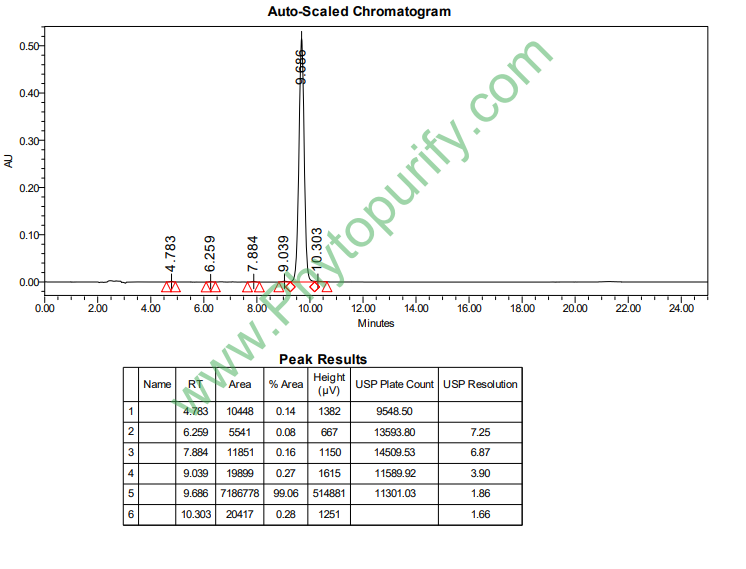
Purity: 95%~99%
Analysis Method: HPLC-DAD or/and HPLC-ELSD
Identification Method: Mass, NMR
Packing: Brown vial or HDPE plastic bottle
Can be supplied from milligrams to grams.
For Reference Standard and R&D, Not for Human Use Directly.
Inquire for bulk scale.
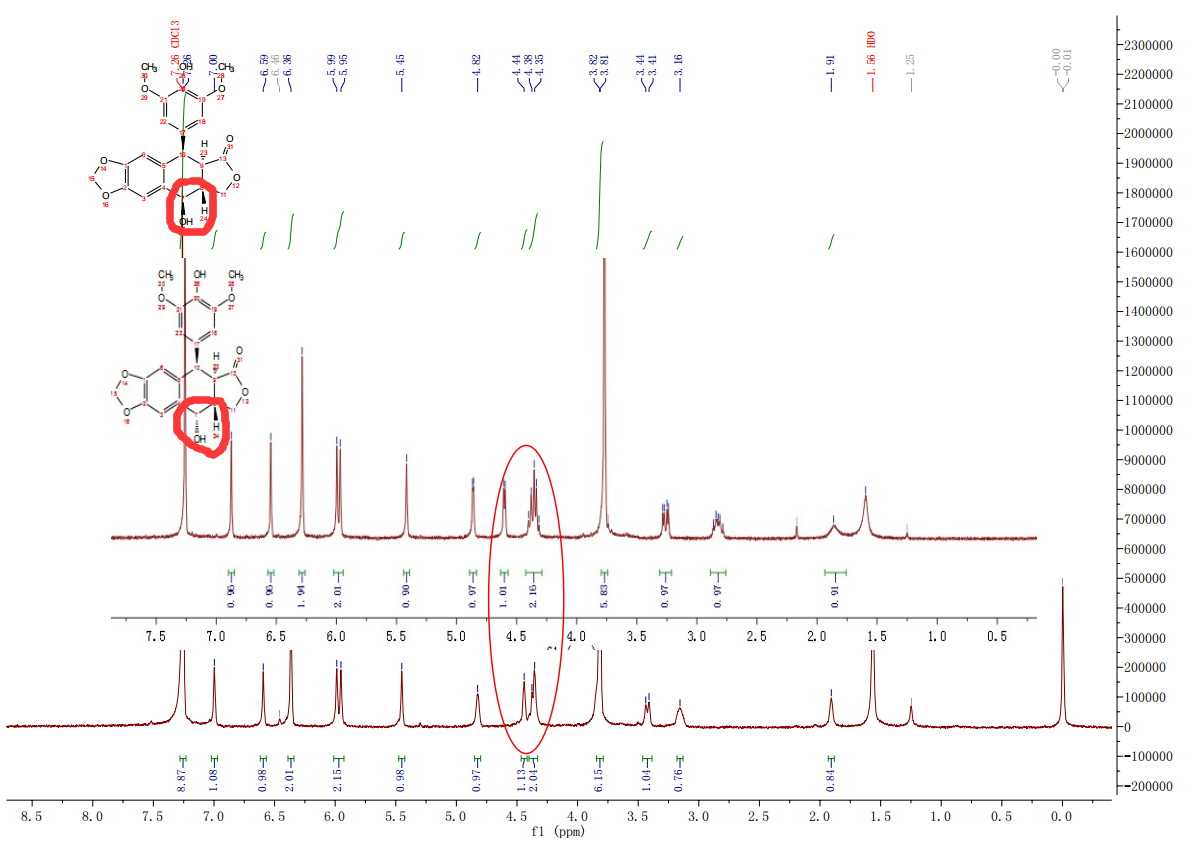
NMR of the 4'-Demethylepipodophyllotoxin and 4'-Demethylpodophyllotoxin
HPLC of 4'-Demethylpodophyllotoxin
Storage conditions:Short-term storage at 2~8℃, long-term storage at -20 ~ -80℃
131.3900
1.7800
No
No
Unknown
Unknown
No
Unknown
No
4 '- Demethylpodophyllotoxin (CAS number: 40505-27-9) is an important natural product derivative, belonging to the Podophylloxin class of organic heterocyclic compounds. As one of the metabolites of podophyllotoxin, 4 '- demethylated podophyllotoxin has its unique chemical and biological properties due to the cleavage of the methyl ether group at the 4-position of trimethoxyphenyl into the corresponding phenol in its molecular structure. Podophyllotoxin and its derivatives have been widely studied for their significant anti-tumor activity, especially in the field of microtubule resistant drug development. In contrast, the pharmacological activity, molecular mechanism, and potential clinical applications of 4 '- demethylated podophyllotoxin as a metabolite are still in the exploratory stage.
In recent years, with the deepening development of natural product pharmacology, 4 '- demethylated podophyllotoxin has attracted the attention of researchers due to its multi-target regulatory properties. Especially in the field of neurological and psychiatric disorders, such as anxiety disorders, this compound exhibits interactions with multiple neurotransmitter receptors and transporters, suggesting that it may regulate neural function through complex molecular networks. In addition, its physicochemical properties demonstrate good drug compatibility, providing a foundation for further drug development.
This article aims to systematically review the chemical structure and physicochemical properties, plant sources and extraction methods, pharmacological activity and mechanism of action, pharmacological evaluation and pharmacokinetic characteristics of 4 '- demethylated podophyllotoxin, and explore its potential application value and future development direction in anxiety disorders and other diseases based on current research progress.
4 '- demethylated podophyllotoxin is a complex organic heterocyclic compound with the molecular formula C22H22O7 and a molecular weight of 388.38. Its structure is based on the core skeleton of podophyllotoxin and has the characteristic ring system of furan naphthalene dioxolane. Compared with the parent compound podophyllotoxin, 4 '- demethylated podophyllotoxin has its methyl ether group removed at position 4 of the trimethoxyphenyl group, forming the corresponding phenolic hydroxyl group. This structural change significantly affects its polarity and intermolecular interaction ability.
In terms of physical and chemical properties, the LogP value of 4 '- demethylated podophyllotoxin is approximately 1.78, indicating its moderate lipophilicity, which facilitates passive diffusion through the cell membrane. Its topological polar surface area (TPSA) is 131.39 Å ², reflecting a high number of polarity and hydrogen bond acceptors (8), which may affect its solubility and bioavailability. The number of hydrogen bond donors for this compound has not been clearly reported, but the presence of phenolic hydroxyl groups increases its potential for hydrogen bond formation.
From the perspective of chemical stability, the furan ring and polyhydroxy structure of 4 '- demethylated podophyllotoxin make it sensitive to acidic and alkaline conditions, and it needs to be stored and processed under appropriate conditions. In addition, the multiple hydroxyl and phenolic hydroxyl groups in its structure provide abundant chemical modification sites, providing possibilities for structural optimization and derivative design.
4 '- demethylated podophyllotoxin mainly comes from the rhizomes and roots of Podophyllum spp. plants. The genus Guijiu is widely distributed in temperate regions of the Northern Hemisphere, especially in parts of Asia and North America. In traditional medicinal literature, the plant Podophyllotoxin is used to treat various diseases, and the study of its active ingredient, Podophyllotoxin, and its metabolites has become an important direction in modern pharmacology.
The common methods for extracting 4 '- demethylated podophyllotoxin include solvent extraction, liquid-liquid partitioning, and column chromatography separation. Generally, ethanol or methanol is used as the extraction solvent to obtain the crude extract through reflux extraction. Subsequently, separation and purification were performed using silica gel column chromatography or high-performance liquid chromatography (HPLC) techniques. Due to the higher polarity of 4 '- demethylated podophyllotoxin compared to the parent podophyllotoxin, the solvent system needs to be optimized during the separation process to improve purity and recovery rate.
In recent years, new technologies such as ultrasound assisted extraction and microwave-assisted extraction have also been applied to improve extraction efficiency and reduce solvent usage. In addition, biotransformation methods use microorganisms or enzyme catalysis to convert podophyllotoxin into 4 '- demethylated podophyllotoxin, which has become a potential pathway for green synthesis and large-scale production.
The pharmacological activity research of 4 '- demethylated podophyllotoxin mainly focuses on its neuroregulatory effects and potential anti anxiety effects. Although its anti-tumor activity is not as significant as that of podophyllotoxin and its semi synthetic derivatives, it exhibits unique biological activity in the field of neurological diseases.
Animal models and cell experiments have shown that 4 '- demethylated podophyllotoxin can regulate various neurotransmitter systems, affecting neuronal excitability and synaptic transmission. Its effects on anxiety related targets are particularly prominent, including acetylcholinesterase (ACHE), nicotinic acetylcholine receptor alpha 7 subtype (CHRNA7), opioid delta receptor (OPRD1), and adenosine A3 receptor (ADORA3). These targets play a crucial role in the pathological mechanisms of anxiety disorders, and regulating their activity can help alleviate anxiety symptoms.
In addition, 4 '- demethylated podophyllotoxin also has a certain regulatory effect on dopamine, glutamate, and endothelin receptors (EDNRA, EDNRB), suggesting that it may achieve neuroprotection and emotional regulation through multi-target synergistic effects. The activation of SIGMAR1 receptor further supports its potential in neuroprotection and anti anxiety.
Although there is currently limited toxicological data on 4 '- demethylated podophyllotoxin, its hepatotoxicity, cardiotoxicity, and genotoxicity are not yet clear, and preliminary in vitro experiments have not shown significant cytotoxicity, suggesting that its safety may be high, but a systematic toxicological evaluation is still needed.
The mechanism of action of 4 '- demethylated podophyllotoxin involves multiple targets related to the nervous system, reflecting its multi-target and multi pathway regulatory characteristics. The main targets and their mechanisms of action are as follows:
ABCB1 (P-glycoprotein)
As an efflux pump on the cell membrane, ABCB1 regulates the transmembrane transport of drugs and the permeability of the cerebrospinal fluid barrier. 4 '- demethylated podophyllotoxin may affect its own and other neuroactive substances' brain distribution by regulating ABCB1 activity, enhancing drug efficacy.
TOP1 (Topoisomerase I)
TOP1 is an important enzyme for DNA replication and transcription, and podophyllotoxin compounds often exert anti-tumor effects by inhibiting TOP1. The effect of 4 '- demethylated podophyllotoxin on TOP1 is not fully understood, but its structural characteristics suggest that it may have certain enzyme inhibitory activity, affecting cell proliferation and neuronal function.
EDNRB and EDNRA (endothelin receptor B and A)
The endothelin receptor is involved in vascular constriction and neural regulation. 4 '- demethylated podophyllotoxin may affect cerebral blood flow and neuronal excitability by regulating these two receptors, and participate in the pathological regulation of anxiety disorders.
CHRNA7 (nicotinic acetylcholine receptor alpha 7 subtype)
This receptor plays an important role in cognitive and emotional regulation. The regulation of CHRNA7 by 4 '- demethylated podophyllotoxin may improve neurotransmission and alleviate anxiety related symptoms.
OPRD1 (opioid delta receptor)
The opioid receptor system is closely related to emotion regulation. The effect of 4 '- demethylated podophyllotoxin on OPRD1 may mediate its anti anxiety and analgesic effects.
ADORA3 (adenosine A3 receptor)
Adenosine receptors regulate neuroprotection and inflammatory response. This compound may exert neuroprotective and anti anxiety effects by activating ADORA3.
SIGMAR1 (σ -1 receptor)
The σ -1 receptor is an important target for neuroprotection and regulation of neurotransmitter release. The activation effect of 4 '- demethylated podophyllotoxin can help improve neurological dysfunction.
ACHE (Acetylcholinesterase)
By inhibiting ACHE, 4 '- demethylated podophyllotoxin enhances acetylcholine neurotransmission and improves cognitive and emotional states.
GRM2 (metabolic glutamate receptor 2)
Regulating glutamate neurotransmission and participating in emotional regulation. The regulation of GRM2 by 4 '- demethylated podophyllotoxin may alleviate symptoms of anxiety and depression.
In summary, 4 '- demethylated podophyllotoxin regulates the neurotransmitter system and neuroprotective pathways through multi-target action, demonstrating a complex pharmacological network and potential therapeutic value.
From the analysis of pharmacological parameters, 4 '- demethylated podophyllotoxin exhibits ideal drug properties. Its molecular weight of 388.38 meets the Lipinski rule's requirement for the molecular weight of orally active drugs (<500). The LogP value of 1.78 indicates moderate lipid solubility, which is beneficial for cell membrane permeation and oral absorption. The TPSA is 131.39 Å ², slightly higher than the ideal range (usually<140 Å ²), indicating its good water solubility and polarity, which may affect its ability to pass through the blood-brain barrier, but it is still expected to achieve effective distribution in the central nervous system.
The number of hydrogen bond acceptors is 8, indicating the presence of more polar groups in its molecule, which is conducive to stable binding with biomolecules. However, excessive hydrogen bond acceptors may limit membrane permeability. The number of hydrogen bond donors for this compound is not clear, but the presence of phenolic hydroxyl groups increases its likelihood of binding to the target.
At present, there is no clear data on the hepatotoxicity, cardiotoxicity, and hERG channel inhibition of 4 '- demethylated podophyllotoxin, and the Ames mutagenicity test results have not been reported. Further systematic safety evaluation is needed. In terms of pharmacokinetics, there is a lack of detailed in vivo absorption, distribution, metabolism, and excretion (ADME) data. Future research should focus on its bioavailability, metabolic pathways, and brain distribution characteristics.
It is worth noting that as a metabolite of podophyllotoxin, 4 '- demethylated podophyllotoxin may have lower toxicity and better pharmacokinetic properties, providing advantages for its clinical development.
4 '- demethylated podophyllotoxin, as a multi-target regulated natural metabolite, has broad clinical application prospects. Its potential therapeutic effect in neurological and psychiatric disorders such as anxiety disorders is particularly noteworthy. The current treatment methods for anxiety disorders mostly rely on drugs such as benzodiazepines and selective serotonin reuptake inhibitors (SSRIs), but there are problems with dependence, drug resistance, and side effects. 4 '- demethylated podophyllotoxin may provide new therapeutic strategies by regulating multiple neurotransmitter pathways, improving patients' symptoms and quality of life.
In addition, its effect on neuroprotective targets suggests its potential application value in fields such as neurodegenerative diseases and cognitive impairment. Combining modern drug design techniques to optimize its structure and develop more selective and safe derivatives will help promote its clinical translation.
Future research should focus on addressing the following issues:
In summary, 4 '- demethylated podophyllotoxin, as a natural metabolite with multi-target effects, has the potential to become a novel therapeutic drug for neurological and psychiatric disorders and deserves further research and development.
4 '- demethylated podophyllotoxin, as an important metabolite of podophyllotoxin, has shown significant research value in the field of natural product pharmacology due to its unique chemical structure and multi-target pharmacological activity. Its potential application in neurological and psychiatric disorders such as anxiety disorders has opened up new directions for the development of natural product new drugs. Although the understanding of its pharmacokinetics and safety is currently insufficient, with the development of modern medicinal chemistry and molecular biology techniques, 4 '- demethylated podophyllotoxin is expected to become an important candidate molecule for future multi-target neuromodulatory drugs.
Future research should strengthen the correlation analysis between its structure and function, systematically elucidate its mechanism of action, promote its transformation from basic research to clinical application, and ultimately realize its clinical value in the treatment of neurological and psychiatric disorders.
