
| Catalog No | Package | Original Price | Price | Inventory | Quantity | Operating |
|---|---|---|---|---|---|---|
| BP1114-20mg | 20mg | $30.00 | Sign in |
|


Synonym name: Podofilox
Catalogue No.: BP1114
Cas No.: 518-28-5
Formula: C22H22O8
Mol Weight: 414.41
Botanical Source: Lignan from Podophyllum emodi rhizomes. Also Podophyllum peltatum, other Podophyllum spp., Diphylleia grayi, Callitris drummondii, Juniperus spp., Linum flavum and others
Purity: 95%~99%
Analysis Method: HPLC-DAD or/and HPLC-ELSD
Identification Method: Mass, NMR
Packing: Brown vial or HDPE plastic bottle
Can be supplied from milligrams to grams.
For Reference Standard and R&D, Not for Human Use Directly.
Inquire for bulk scale.
HPLC of Podophyllotoxin
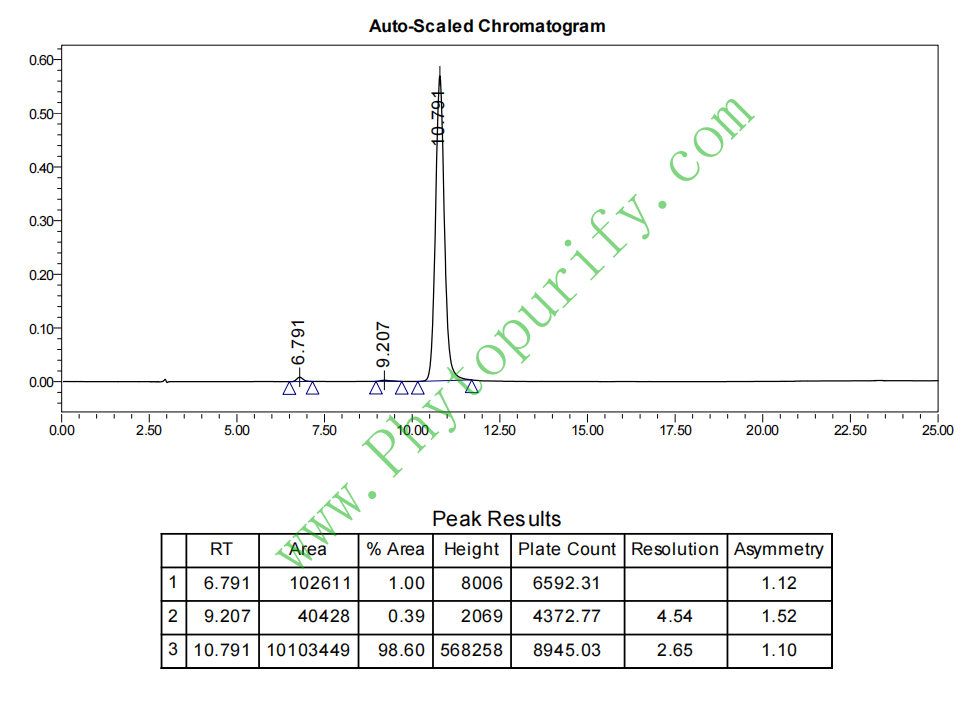
Storage conditions:Short-term storage at 2~8℃, long-term storage at -20 ~ -80℃
92.6800
1.9461
1.9461
.1219
3.5722
8.6549
High
82.1608
3.7523
Yes
No
No
No
Yes
No
0.0
Yes
Yes
Yes
Yes
Podophyllotoxin, as a natural lignan compound with a long history of medicinal use, can be traced back to ancient folk medicine for its discovery and application. It mainly comes from the roots and stems of various plants such as Podophyllum, and has traditionally been used to treat warts, snake bites, and as a laxative. With the deepening of modern pharmacological research, the core biological activity of podophyllotoxin and its derivatives - strong anti mitotic effect - has gradually been revealed, making it an important lead compound in the field of anti-tumor drug development. Its unique furan naphthalene dioxolane skeleton enables it to specifically target cellular microtubule proteins, inhibit microtubule assembly, thereby blocking the cell cycle in the metaphase of mitosis and inducing cell apoptosis. In addition, the study also found that it has an inhibitory effect on DNA topoisomerase II and is involved in regulating various signaling pathways and molecular targets related to tumor occurrence and development. Although the serious systemic toxicity of podophyllotoxin itself (such as bone marrow suppression and gastrointestinal reactions) limits its direct application as a systemic anti-tumor drug, it has been widely recognized as a first-line drug for local treatment of genital warts. More importantly, semi synthetic derivatives derived from it, such as Etoposide and Teniposide, have become key chemotherapy drugs for the clinical treatment of various malignant tumors such as small cell lung cancer, testicular cancer, and lymphoma. This article aims to systematically review the chemical structure, plant origin, pharmacological activity, multi-target mechanism of action, pharmacological characteristics, and clinical application prospects of podophyllotoxin, in order to provide a comprehensive academic perspective for further research and development of this important natural product.
The chemical name of podophyllotoxin is 5R, 5aR, 8aR, 9S-9-hydroxy-5- (3,4,5-trimethoxyphenyl) -5a, 6,8a, 9-tetrahydro-5H - [2] benzofuran [5,6-f] [1,3] benzodioxolane-8-one, CAS number 518-28-5. Its molecular formula is C22H22O8 and its molecular weight is 414.4100.
Structurally, podophyllotoxin belongs to the lignan class compounds and has a complex organic heterocyclic core skeleton: a trans fused furan naphthalene dioxolane system. This skeleton is composed of two benzene rings (A ring and C ring) connected by a dioxolane ring (E ring) and a lactone ring (D ring), and coupled with a tetrahydrofuran ring (B ring). The C-4 position of its C-ring is connected to a key 3,4,5-trimethoxyphenyl substituent. There are multiple chiral centers in a molecule, and their absolute configurations (5R, 5aR, 8aR, 9S) are crucial for its biological activity. Changes in stereoconfiguration can significantly affect its binding ability with target proteins such as microtubules.
In terms of physicochemical properties, the lipid water partition coefficient (LogP) of podophyllotoxin is 1.9461, indicating its lipophilicity but not high hydrophobicity. Its topological polar surface area (TPSA) is 92.6800 Å ², reflecting the presence of multiple oxygen atoms (methoxy, hydroxyl, lactone carbonyl, ether bonds) in the molecule. The water solubility data (0.1219 mg/mL) shows that its solubility in water is low, which is related to its crystal structure and intramolecular hydrogen bonds. These properties collectively affect its pharmacokinetic behavior, such as higher blood-brain barrier permeability (predicted as "high"), suggesting potential effects on central nervous system tumors or related diseases, but may also pose neurotoxic risks. In addition, preliminary pharmacological prediction data shows that it has no inhibitory activity on hERG potassium channels (predicted as "no"), reducing the risk of causing QT interval prolongation in the heart; The Ames test predicted a value of 0.0, indicating that it may not have direct genetic toxicity, but attention should be paid to the potential indirect genetic material damage caused by interference with cell division and DNA topoisomerase.
The main source of podophyllum toxin comes from plants in the Podophyllum genus of the Berberidaceae family. The most famous sources are the North American podophyllum peltatum (commonly known as "beautiful podophyllum") and Xizang podophyllum hexagon (also known as "peach seven" or "printed podophyllum"). The content of podophyllotoxin in the roots and stems of the latter is usually higher than that of the former. In addition, this ingredient is also present in closely related plants such as Diphylleia and Dysosma.
The extraction and separation of podophyllotoxin is a classic natural product chemical process. Traditional methods usually use dried and crushed plant roots and rhizomes as raw materials. Firstly, polar organic solvents such as methanol, ethanol, or acetone are used for cold soaking or hot reflux extraction, and the crude extract is obtained after concentration. Subsequently, preliminary purification was carried out by utilizing the difference in solubility of podophyllotoxin in different solvents, such as liquid-liquid extraction using chloroform or ethyl acetate to remove water-soluble impurities such as sugars and proteins. Further purification relies on column chromatography technology, often using silica gel as the stationary phase, with different ratios of petroleum ether ethyl acetate or chloroform methanol gradient elution. Depending on the polarity and structural characteristics of the target component, alumina column chromatography or high-performance liquid chromatography (HPLC) may sometimes be used for final refinement. Modern extraction techniques such as ultrasound assisted extraction, microwave-assisted extraction, and supercritical CO2 fluid extraction have also been explored and applied to improve extraction efficiency and reduce solvent consumption. The direct extraction of podophyllotoxin from plants is an important industrial raw material source for subsequent semi synthetic derivatives such as etoposide.
The most significant and core pharmacological activity of podophyllotoxin is its powerful Anti mitotic and anti-tumor activity It can effectively inhibit the proliferation of a variety of human tumor cells, including leukemia, lung cancer, breast cancer, cervical cancer and other cell lines. Its characteristic function is to arrest the cell cycle in the G2/M phase, leading to abnormal spindle formation, inability of chromosomes to separate normally, and ultimately triggering cell apoptosis.
Secondly, podophyllotoxin has outstanding properties Antiviral activity Especially for human papillomavirus (HPV). This characteristic is the pharmacological basis for its use as a local medication to treat genital warts and common warts. The main mechanism is to inhibit the division of keratinocytes infected with HPV, causing necrosis and shedding of the wart body.
In addition, the study also reported other potential biological activities of podophyllotoxin, such as immunosuppression、anti-inflammatory and antioxidant Activity. These activities may be related to their regulation of intracellular signaling pathways (such as NF - κ B) and their impact on immune cell function, providing research clues for their application in the field of autoimmune diseases.
Podophyllotoxin exerts its multiple pharmacological effects, especially anti-tumor effects, by acting on multiple molecular targets and interfering with multiple cellular signaling pathways, reflecting the characteristics of multi-target action.
Directly acting on the microtubule system This is the most classic mechanism of action of podophyllotoxin. It is similar to the binding site of colchicine, directly binding to the β - subunit of microtubule protein, inhibiting microtubule polymerization into microtubules, and promoting the depolymerization of formed microtubules. This dynamic destruction of the cytoskeleton directly leads to the inability of the mitotic spindle to form normally, causing the cell cycle to stagnate in the mid division stage and triggering cell apoptosis.
Inhibition of DNA Topoisomerase II (TOP2A)Podophyllotoxin itself is a weak inhibitor of TOP2A, but its important semi synthetic derivatives (such as etoposide) mainly act by stabilizing the "cleavable complex" formed between TOP2A and DNA cleavage intermediates, preventing DNA reconnection and causing DNA double strand breaks, thereby triggering the apoptotic pathway. This is one of the key mechanisms underlying its systemic anti-tumor effect.
Inducing cell apoptosis and regulating apoptosis related proteins Podophyllotoxin can induce cell apoptosis through the mitochondrial pathway and endoplasmic reticulum stress pathway. It can downregulate the expression of anti apoptotic proteins Bcl-2 and Mcl-1, and may also affect pro apoptotic proteins, disrupt mitochondrial membrane potential, lead to the release of cytochrome C, and activate the caspase cascade reaction.
Affects cellular signaling pathways:
Inhibit tumor invasion and metastasis By inhibiting the activity or expression of matrix metalloproteinase-2 (MMP-2), podophyllotoxin can reduce the degradation ability of tumor cells to extracellular matrix, thereby inhibiting the invasion and metastasis process of tumors.
In summary, podophyllotoxin exerts its powerful anti-tumor effect through its core function of "microtubule inhibition", synergistic mechanisms such as "DNA damage", "signal pathway interference", and "apoptosis regulation".
Although the pharmacological activity of podophyllotoxin is significant, its pharmacological properties as a systemic drug have obvious shortcomings, which directly promotes the development of its derivatives.
Pharmacokinetic defects The oral absorption of podophyllotoxin is irregular and its bioavailability is low. It is rapidly metabolized in the body, mainly through extensive hydroxylation and demethylation reactions by the liver cytochrome P450 enzyme system (such as CYP3A4), generating various metabolites. The prototype drug and its metabolites are mainly excreted through bile and kidneys. One of the reasons for its insufficient systemic exposure is its rapid metabolic clearance and extensive first pass effect.
adverse effects Severe dose limiting toxicity is the main obstacle to its systemic application. Toxic reactions include severe bone marrow suppression (leukopenia and thrombocytopenia), severe gastrointestinal reactions (nausea, vomiting, diarrhea), hepatotoxicity, and neurotoxicity (sensory abnormalities, consciousness disorders). These toxicities are related to the lack of selectivity towards tumor cells due to their anti mitotic effect.
Structural modification and derivative development In order to improve drug properties, medicinal chemists systematically modified the C and E rings of podophyllotoxin. The most successful example is the glycosylation of the 4-hydroxy group of the C ring, resulting in Etoposide (VP-16) and Teniposide (VM-26). These derivatives Changed the main mechanism of action Transitioning from potent microtubule inhibitors to primarily inhibiting TOP2A. This transformation significantly reduces its direct toxicity to the microtubule system of normal cells, especially rapidly dividing bone marrow and gastrointestinal cells, thereby obtaining a better therapeutic window. The water solubility of etoposide was further improved by making a phosphate prodrug (etoposide phosphate). However, these derivatives still pose risks such as bone marrow suppression, drug resistance (associated with P-glycoprotein efflux or TOP2A mutation/downregulation), and secondary leukemia (associated with TOP2A suppression).
New delivery system In order to reduce the systemic toxicity of podophyllotoxin and improve its local treatment efficacy, researchers have developed various novel drug delivery systems for the local treatment of genital warts. This includes liposomes, nanoparticles, microspheres, polymer micelles, and transdermal patches. These systems aim to improve the retention time of drugs at the lesion site, control release rate, enhance skin permeability, while reducing the amount of transdermal absorption into the systemic circulation, thereby enhancing safety.
At present, the clinical application of podophyllotoxin and its derivatives is mainly reflected in the following aspects:
Future research and development directions may focus on:
As a unique and highly active lignan molecule endowed by nature, podophyllotoxin has played a milestone role in the history of drug discovery. From ancient folk medicine, to the core components of modern antiviral topical drugs, and to the inspiration for a series of life-saving anti-cancer star drugs (such as etoposide), its development process perfectly interprets the successful transformation path from natural products to modern drugs. The in-depth analysis of its multi-target mechanism of action not only reveals the complex network of its anti-tumor activity, but also provides rich clues for mechanism based drug design. Although it is difficult to directly apply to systemic treatment due to its toxicity, scientists have successfully transformed it into a drug through clever chemical structural modifications, opening up a new mechanism of action and greatly enriching the arsenal of anti-cancer drugs. Looking ahead to the future, with the continuous advancement of medicinal chemistry, molecular pharmacology, and drug delivery technology, the development of new, efficient, and low toxicity anti-tumor and antiviral drugs starting from podophyllotoxin is still full of opportunities and challenges. Continued in-depth research on it will undoubtedly contribute more strength to humanity's victory over major diseases such as malignant tumors.
