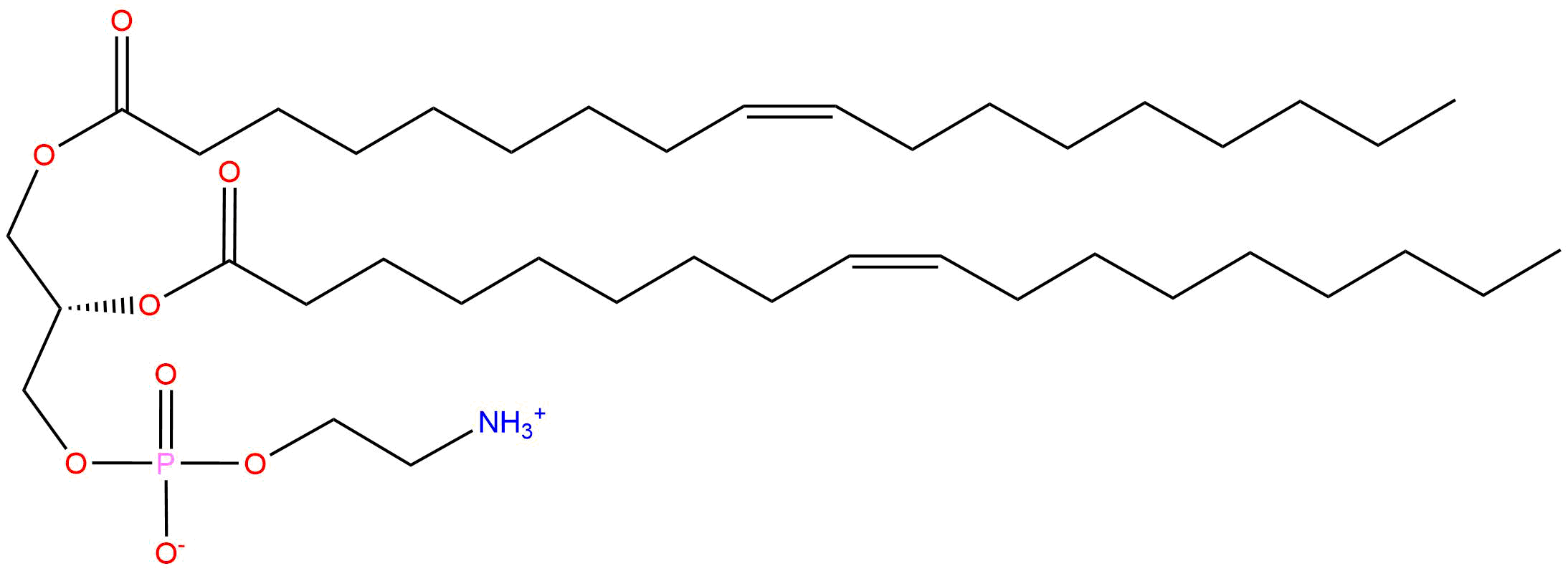


Product name: Phosphatidylethanolamine(from Soybean)
Synonym name:
Catalogue No.: BP2456
Cas No.: 97281-51-1
Formula: C41H78NO8P
Mol Weight: 744.0336
Botanical Source: Soybean
Type of Compound:
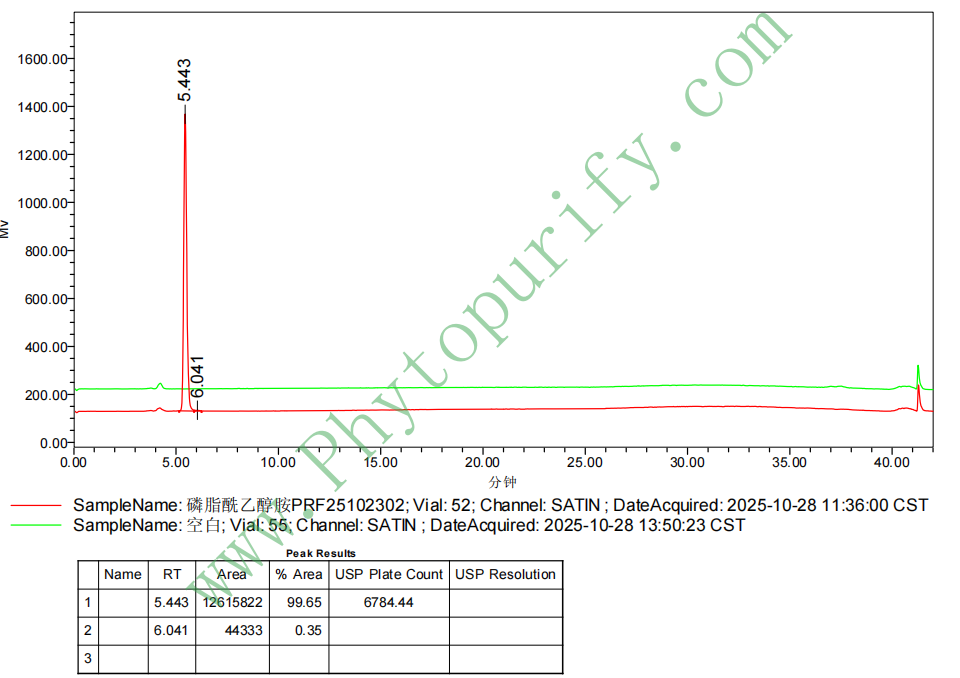
Purity: 95%~99%
Analysis Method: HPLC-DAD or/and HPLC-ELSD
Identification Method: Mass, NMR
Packing: Brown vial or HDPE plastic bottle
Storage: Store in a well closed container, protected from air and light. Put into refrigerate or freeze for long term storage.
Whenever possible, you should prepare and use solutions on the same day. However, if you need to make up stock solutions in advance, we recommend that you store the solution as aliquots in tightly sealed vials at -20℃. Generally, these will be useable for up to two weeks.
The product could be supplied from milligrams to grams
Inquire for bulk scale.
For Reference Standard and R&D, Not for Human Use Directly.
HPLC of Phosphatidylethanolamine(from Soybean)
Storage conditions:Short-term storage at 2~8℃, long-term storage at -20 ~ -80℃
165.1700
No
No
No
No
No
No
No
Phospholipids are the fundamental backbone of biological membranes, and the diversity of their structure and function determines the complexity of cellular life activities. Among various types of phospholipids, phosphatidylethanolamine (PE) is the second most abundant glycerophospholipid after phosphatidylcholine (PC), widely present in the cell membranes of mammals, plants, and microorganisms. PE plays an indispensable role in maintaining membrane curvature, promoting membrane fusion, participating in cell signal transduction, and protein sorting processes. In recent years, with the deepening of research on the molecular mechanism of autophagy, the core biological function of PE has been redefined: as a lipid anchor of autophagy related protein Atg8/LC3, it directly participates in the extension and closure of autophagosome membrane, becoming a key lipid molecule regulating cellular homeostasis and stress response.
Phosphatidylethanolamine (from soybean, CAS number: 97281-51) is an orally active natural phospholipid derived from soybeans. Soybean, as an important global oil crop, has its phospholipid extract as the main source of commercial phospholipids. Compared with PE from animal sources, soybean PE has a unique fatty acid composition, rich in polyunsaturated fatty acids such as linoleic acid (C18:2) and linolenic acid (C18:3), which endows it with special physical and chemical properties and biological activity. Research has shown that soybean PE not only enhances autophagy flux, promotes cell differentiation, regulates lipid droplet fusion, but also demonstrates potential in delaying aging, improving lipid metabolism disorders, and maintaining membrane integrity. Given its good safety (no hepatotoxicity, cardiotoxicity, or genotoxicity) and clear biological activity, soybean PE is gradually transforming from a traditional food emulsifier and dietary supplement ingredient to a research hotspot in the fields of natural product pharmacology and nutritional pharmacology. This article will provide a systematic professional review of soybean phosphatidylethanolamine from the aspects of chemical structure, plant origin, pharmacological activity, mechanism of action, medicinal properties, and clinical application prospects.
Phosphatidylethanolamine belongs to the glycerophospholipid class of compounds, and its molecular structure consists of three basic modules: a glycerol skeleton, two fatty acid chains (hydrophobic tails), and a polar head group of phosphoethanolamine (hydrophilic head). Specifically, at the sn-1 and sn-2 sites of glycerol molecules, two long-chain fatty acids are connected through ester bonds, while at the sn-3 site, they are connected to ethanolamine groups through phosphodiester bonds. This amphiphilic structure is the basis for PE to form lipid bilayers and participate in membrane dynamic behavior.
The molecular formula of soybean PE is C ₄∝ H ₈₂ NO ₈ P, with an average molecular weight of about 756.04 Da. Its polar surface area (TPSA) is 165.17 Å ², and the high TPSA value reflects its strong hydrogen bonding ability of polar head groups (with 9 hydrogen bond acceptors), which is consistent with its interaction characteristics at the water lipid interface. It is worth noting that the fatty acid composition of soybean PE has significant characteristics: unlike PE from animal sources such as cow brain or egg yolk, which are rich in saturated or monounsaturated fatty acids, the sn-2 site of soybean PE is usually connected to a large number of polyunsaturated fatty acids, especially linoleic acid (C18:2, omega-6) and alpha linolenic acid (C18:3, omega-3). This high degree of unsaturation results in soybean PE having a lower phase transition temperature at room temperature, tending to form hexagonal II phase (HII phase) rather than atypical layered phase. This characteristic endows PE with a unique "non bilayer" structural tendency, enabling it to play a critical role in membrane fusion, membrane curvature regulation, and autophagosome membrane formation.
In terms of physical and chemical properties, soybean PE is a light yellow to brown waxy solid or powder with a typical lipid odor. It is insoluble in water, but soluble in organic solvents such as chloroform, methanol, ethanol, and ether. Due to the presence of unsaturated fatty acid double bonds in its molecules, soybean PE is prone to oxidation in air and needs to be stored under low temperature, light avoidance, and inert gas (such as nitrogen) conditions. In addition, the ethanolamine head group of PE carries a positive charge at physiological pH (pKa of approximately 9.5-10.0), which gives it cationic properties in acidic environments and zwitterionic properties in neutral or alkaline environments. This pH dependent charge characteristic affects the electrostatic interactions between PE and proteins and other lipids.
Phosphatidylethanolamine is widely present in the seeds of soybean (Glycine max), mainly enriched in cotyledons and hypocotyl tissues. In soybean seeds, the total phospholipid content accounts for about 1.5% -3.0% of the dry weight, of which PE accounts for about 15% -25% of the total phospholipid content, second only to PC (about 30% -40%). The composition of soybean phospholipids varies depending on the variety, planting environment, maturity, and processing technology.
In industry, soybean PE is usually obtained as a component of Lecithin, a byproduct of soybean oil refining process. The traditional extraction process mainly includes the following steps: firstly, obtaining crude oil through mechanical pressing or organic solvent (n-hexane) extraction; Secondly, during the degumming stage of crude oil, phospholipids are hydrated and precipitated through hydration, and then separated by centrifugation to obtain wet gum; Wet glue is vacuum dried to obtain crude phospholipids. The content of PE in crude phospholipids is usually 15% -25%, and it also contains PC, phosphatidylinositol (PI), and other neutral lipids.
In order to obtain high-purity PE, further separation and purification techniques are required. Common methods include:
Solvent fractionation method Separate using the difference in solubility between PE and PC in lower alcohols such as ethanol. PC has a higher solubility in ethanol, while PE has a lower solubility. By controlling the ethanol concentration and temperature, PE can be enriched in the precipitate phase. This method is easy to operate and suitable for large-scale production, but the purity is limited (usually up to 60% -70%).
Column chromatography Using silica gel or alumina as the stationary phase and chloroform methanol water system as the mobile phase for gradient elution. PE is usually washed off after PC. This method can obtain PE with a purity of over 95%, but the cost is relatively high and it is mainly used for laboratory research or high value-added product preparation.
Supercritical fluid extraction (SFE)Using supercritical CO ₂ as a solvent, PE is selectively extracted by adding entrainers such as ethanol. This method is environmentally friendly and avoids residual organic solvents, but the equipment investment is large and the yield is limited by the solubility of PE in supercritical CO ₂.
Enzymatic modification Using the phosphatidyltransferase reaction of phospholipase D (PLD), PE is synthesized catalyzed by PC as a substrate in the presence of ethanolamine. This method has high selectivity and can selectively produce PE with specific fatty acid compositions.
In recent years, significant progress has been made in the pharmacological activity research of soybean PE, and its biological effects have surpassed traditional membrane structure component functions, expanding to multiple fields such as cell signaling regulation, metabolic regulation, and anti-aging.
Autophagy is a highly conserved process of cellular self degradation and recycling, which is crucial for maintaining cellular homeostasis, clearing damaged organelles, and misfolded proteins. PE is a key lipid involved in the formation of autophagosomal membranes. After autophagy initiation, the Atg8/LC3 protein is catalyzed by Atg7 (E1 like enzyme) and Atg3 (E2 like enzyme), covalently linked to the ethanolamine head of PE via amide bonds, forming the LC3-PE complex (i.e. LC3-II). LC3-II is anchored to the autophagosome membrane, driving membrane extension, bending, and closure. Research has shown that exogenous supplementation of soybean PE can increase the availability of intracellular PE pools, thereby enhancing LC3 lipidation efficiency and increasing autophagy flux. In neurodegenerative disease models such as Huntington's disease and Parkinson's disease, soybean PE treatment can promote autophagic clearance of mutant protein aggregates (such as mHTT and alpha synuclein), reducing cell toxicity. In addition, in liver cells, PE reduces lipid droplet accumulation by activating the autophagy pathway, improving the pathological state of non-alcoholic fatty liver disease (NAFLD).
PE also plays an important role in the process of cell differentiation. In neural stem cell and PC12 cell models, supplementing with PE can promote neurite outgrowth and expression of neuronal markers such as MAP2 and NeuN. The mechanism may be related to PE regulating membrane fluidity, affecting the localization and signal transduction of growth factor receptors (such as TrkA) on the membrane. In osteoblast differentiation, PE activates the Wnt/β - catenin signaling pathway, upregulates the expression of key osteogenic transcription factors such as Runx2 and Osterix, and promotes the formation of mineralized nodules. These findings suggest that PE has potential application value in tissue regeneration and repair.
PE is an important component of mitochondrial membrane and endoplasmic reticulum membrane. In mitochondria, PE participates in the assembly and functional maintenance of respiratory chain complexes. Supplementing soybean PE can improve mitochondrial membrane potential, reduce reactive oxygen species (ROS) production, and protect mitochondrial function. In the liver, PE regulates systemic lipid metabolism by affecting the assembly and secretion of very low-density lipoprotein (VLDL). PE deficiency can lead to endoplasmic reticulum stress and lipid metabolism disorders, while exogenous PE supplementation can reverse these effects. In addition, PE plays a crucial role in membrane fusion events such as vesicle transport and virus invasion, maintaining the dynamic balance of the membrane through its non bilayer structural tendency.
During the aging process, the PE content in the cell membrane decreases, accompanied by a decrease in membrane fluidity and an increase in oxidative stress. Soy PE is rich in polyunsaturated fatty acids, which can restore the composition of membrane fatty acids and improve membrane function after supplementation. In the C. elegans aging model, PE treatment significantly prolonged the average lifespan and improved stress resistance. In mammalian cells, PE exhibits anti-inflammatory activity by inhibiting the NF - κ B pathway and reducing the release of pro-inflammatory cytokines such as TNF - α and IL-6. These effects are partially attributed to the activation of autophagy by PE, as autophagy itself has the function of inhibiting inflammasome activation.
The pharmacological activity of soybean PE is rooted in its unique molecular interaction network, mainly involving the following key mechanisms and targets:
This is the core molecular function of PE. During autophagy, PE participates as a substrate in the lipid modification of Atg8/LC3. Specifically, Atg4 protease first cleaves the C-terminus of pro-LC3, exposing the glycine residue (LC3-I). Subsequently, under the catalysis of Atg7 (E1) and Atg3 (E2), the C-terminal glycine of LC3-I formed an amide bond with the ethanolamine head group of PE, resulting in the formation of LC3-II. LC3-II was recruited to the autophagosome membrane as a scaffold protein for membrane extension. The supplementation of soybean PE increased local PE concentration, improved LC3 lipidation efficiency, and thus enhanced autophagic flux. This process is regulated by the affinity between Atg3 and PE, and the fatty acid composition of PE (especially chain length and unsaturation) affects its binding efficiency with Atg3.
PE tends to form negative curvature film structures (such as hexagonal II phase) due to its smaller polar head group and larger hydrophobic volume. This characteristic makes PE a key regulatory factor for membrane fusion and membrane bending. During the formation of autophagosomes, PE accumulates in the curved part of the autophagosome membrane, promoting membrane extension and closure. In addition, PE participates in the fusion process between vesicles and target membranes by regulating the assembly of SNARE protein complexes. The high unsaturation of soybean PE enhances its ability to form non bilayer structures, thereby more effectively promoting membrane fusion events.
PE is one of the most abundant phospholipids in the mitochondrial membrane, accounting for approximately 20% -30% of mitochondrial phospholipids. In the inner membrane of mitochondria, PE works synergistically with cardiolipin to maintain the stability and activity of respiratory chain complexes, especially complexes I, III, and IV. PE regulates the opening of mitochondrial permeability transition pore (mPTP) through direct interaction with mitochondrial proteins such as ADP/ATP translocase ANT. Supplementation with soybean PE can improve mitochondrial respiration efficiency, reduce electron leakage, and ROS production.
PE and its metabolites (such as lysophosphatidylethanolamine LPE) can act as signaling molecules to activate specific receptors or signaling pathways. For example, PE affects the aggregation and activation of receptor tyrosine kinases (such as EGFR, TrkA) by regulating the composition of membrane microdomains (lipid rafts). In addition, ethanolamine produced by PE metabolism can enter the CDP ethanolamine pathway, affecting phospholipid synthesis and cell proliferation. At the transcriptional level, PE affects the expression of unfolded protein response (UPR) and lipid metabolism related genes by regulating the activity of endoplasmic reticulum stress sensors such as IRE1 and PERK.
From the perspective of drug development, soybean PE has a series of ideal pharmacological characteristics, but also faces several challenges.
According to existing toxicological data, soybean PE exhibits good safety. The Ames test result is negative, indicating that it has no genetic toxicity. No cardiac toxicity risk was observed in the hERG inhibition assay, and there were no clear liver toxicity signals. These data support its safety as an oral formulation. However, it should be noted that the hemolytic phospholipids and free fatty acids produced by PE metabolism in the body may cause membrane disruption at high doses, and long-term toxicity studies are needed to determine the safe dose range.
The oral bioavailability of soybean PE is influenced by its lipophilic nature and gastrointestinal environment. After oral administration, PE is first hydrolyzed by phospholipase A2 (PLA2) in the intestine, releasing sn-2 fatty acids and generating lysophosphatidylethanolamine (LPE). LPE can be absorbed by intestinal epithelial cells through passive diffusion or transport proteins such as MFSD2A. Within the cell, LPE is reacylated to form PE or enters the lymphatic circulation in the form of LPE. Due to the high molecular weight (>700 Da) and TPSA (>160 Å ²) of PE, its blood-brain barrier penetration ability is extremely low (BBB: No), which limits its direct application in central nervous system diseases. PE is mainly metabolized by the liver, hydrolyzed by phospholipase and esterase, and the final product enters the β - oxidation or phospholipid recycling pathway.
Multiple formulation strategies are being explored to improve the oral bioavailability and targeting of PE. Liposome technology can encapsulate PE in phospholipid bilayers, improving its water dispersibility and stability. Nanoemulsions and self microemulsifying drug delivery systems (SMEDS) can promote the dissolution and absorption of PE in the gastrointestinal tract. In addition, by coupling PE with polyethylene glycol (PEG) or other targeting ligands, targeted delivery of PE can be achieved, such as targeting liver or tumor tissues.
Based on the multi effect pharmacological activity of soybean PE, its application prospects in the following disease fields are worth paying attention to:
Non alcoholic fatty liver disease (NAFLD) and non-alcoholic steatohepatitis (NASH) are increasingly severe global health issues. PE is expected to become an adjuvant therapy for NAFLD/NASH by enhancing autophagic flux, promoting lipid droplet degradation, and improving mitochondrial function. Preclinical studies have confirmed that PE supplementation can alleviate hepatic steatosis, inflammation, and fibrosis. In the future, randomized controlled clinical trials are needed to verify its efficacy and safety in NAFLD patients.
Although PE is difficult to penetrate the blood-brain barrier, it is still possible to achieve central delivery through intranasal administration or liposome encapsulation. In the Alzheimer's disease (AD) model, PE improves cognitive function by promoting autophagic clearance of A β and inhibiting tau protein phosphorylation. In Parkinson's disease (PD), PE protects dopaminergic neurons from MPTP induced toxicity. Given that autophagy dysfunction is a common pathological feature of neurodegenerative diseases, PE as an autophagy enhancer has broad application prospects.
The potential of PE in delaying aging has attracted attention from the cosmetics and nutritional supplements industries. Local application of PE can improve skin barrier function and reduce wrinkle formation. Oral PE supplements may delay organ aging through systemic anti-inflammatory and antioxidant effects. However, there is currently a lack of large-scale human research data, and its anti-aging effect still needs further validation.
Autophagy plays a dual role in the occurrence and development of tumors: in the early stages of tumors, autophagy inhibits tumor growth; In the late stage, autophagy promotes the survival of tumor cells. Therefore, the application of PE as an autophagy enhancer should be approached with caution. In some specific tumor types (such as liver cancer and pancreatic cancer), PE may play an anti-tumor role by inducing autophagic cell death or enhancing chemotherapy sensitivity. In addition, PE, as a membrane component, can affect the uptake and resistance of tumor cells to chemotherapy drugs.
Phosphatidylethanolamine (soybean), as a natural, safe, and biologically active phospholipid molecule, is transforming from a traditional membrane structure component to a natural product with significant pharmacological value. It exhibits unique biological effects in autophagy regulation, cell differentiation, lipid metabolism, and anti-aging by participating in Atg8/LC3 lipidation, regulating membrane curvature, and maintaining mitochondrial function. Soy derived PE may have better biological activity than animal derived PE due to its rich composition of polyunsaturated fatty acids. Although its oral bioavailability and blood-brain barrier penetration are limited, advanced formulation technology is expected to overcome these obstacles. In the future, with the deepening understanding of the molecular mechanism of PE and the advancement of clinical translational research, soybean PE is expected to have greater therapeutic potential in metabolic diseases, neurodegenerative diseases, anti-aging and other fields. However, the path from basic research to clinical application is still full of challenges, including determining the optimal dosage, establishing standardized extraction processes, conducting long-term safety evaluations, and designing rigorous clinical trials. The research on phosphatidylethanolamine (soybean) not only deepens our understanding of lipid biological functions, but also provides important directions for the development of new natural medicines and functional foods.
